XINFLYING OEM Sublimation Printer Manufacturer Review: Factory & Global Supply
XINFLYING OEM Sublimation Printer Manufacturer Review: Factory & Global Supply
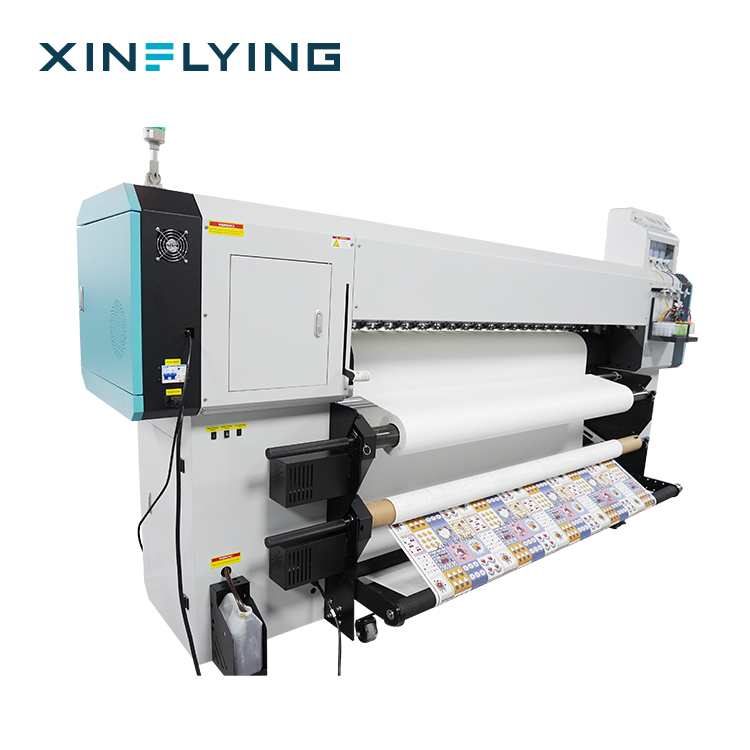
The dye sublimation printing market was valued at an estimated USD 16.4 billion in 2025 and is projected to reach USD 39.0 billion by 2033, according to Grand View Research. For distributors, apparel brands, and textile producers, that growth creates a practical procurement question: which manufacturer can supply dye sublimation printers under a customer's own brand, with the right configuration, certification documents, and delivery terms?
Guangzhou Xin Flying Digital Technology Co., Ltd. (XINFLYING) is a China-based digital printing equipment manufacturer that provides OEM and ODM production for dye sublimation printers. Founded in 2010 and headquartered in Panyu, Guangzhou, the company operates a 37,440 m² factory with more than 200 employees and reports an annual output of more than 20,000 units. Around 80% of XINFLYING products are exported to North America, South America, Europe, Asia, the Middle East, and Africa.
This review evaluates XINFLYING from an OEM buyer's perspective. It covers company background, manufacturing capability, the dye sublimation printer product line, OEM/ODM customization services, certifications, quality control, global supply, customer use cases, and procurement terms. The goal is to give evaluation-stage buyers a decision framework rather than a simple product list.
Problem Definition: What an OEM Buyer Needs Beyond a Printer Specification
Buyers who search for an OEM dye sublimation printer manufacturer are usually at the evaluation or execution stage. They already understand the technology. What they need is a manufacturing partner that can produce a machine they can sell under their own brand, integrate into a production line, or scale across multiple facilities.
The core difficulty is that supplier credibility cannot be verified from a website alone. An OEM buyer needs to confirm several things at once: manufacturing scale, product consistency between batches, certification traceability, customization depth, lead time, payment and delivery flexibility, and after-sales service. If any of these fail, the buyer absorbs the cost through rework, customs delays, or production downtime.
When evaluating XINFLYING, this review applies the criteria that matter in an OEM dye sublimation printer manufacturer assessment:
- Manufacturing capacity and factory scale
- Product line depth across print widths and production speeds
- OEM/ODM customization capability, including branding, appearance, and packaging
- Certification coverage for regulated markets such as the EU
- Quality control procedures before shipment
- Lead time, minimum order quantity, and delivery terms
- After-sales technical support and global service structure
Industry Background: The Commercial Logic of OEM Dye Sublimation Printer Sourcing
Sublimation printing has become a mainstream production method for polyester textiles. The global dye sublimation printing market is projected to grow at a CAGR of 11.5% from 2026 to 2033 (Grand View Research). Within this market, the dye sublimation printers segment was valued at USD 1.88 billion in 2025 and is expected to reach USD 2.53 billion by 2030 (Mordor Intelligence).
Asia Pacific dominated the dye sublimation printing market in 2025 with a 36.5% revenue share, led by China as the largest country market (Grand View Research). China's textile and garment exports reached USD 293.6 billion in 2023, which supports high local demand for industrial-scale sublimation machines. In parallel, demand for personalized apparel and home decor is a primary contributor to the 13.1% CAGR projected for the digital textile sublimation market through 2030 (Grand View Research).
At the equipment level, roll-to-roll sublimation printers with widths of 1.9 m (1900 mm) are now standard for high-volume textile and soft signage applications (FESPA Insights). The XINFLYING product line includes several 1.9 m class machines, from 8-printhead to 15-printhead configurations, which places the company inside the current industrial specification range.
In the digital textile dye sublimation printer segment, Epson held an estimated 26.7% market share in 2024, followed by Mimaki at 18.6% and Roland DG at 15.5% (Data Insights Reports). These three brands dominate the branded equipment segment. Chinese manufacturers such as XINFLYING serve a different but overlapping demand: buyers who want factory-direct pricing, private-label customization, and flexible production terms. Understanding this landscape helps buyers position which supplier type fits their distribution or production model.
Detailed Solution: XINFLYING Company Profile and Manufacturing Base
Guangzhou Xin Flying Digital Technology Co., Ltd. operates as a professional digital printing equipment manufacturer. The company's main products include DTF printer machines, dye sublimation printers, DTG printers, UV DTF printers, UV flatbed printer machines, printing consumables, and complete digital printing solutions. Its solutions are used in custom apparel, sportswear, promotional products, home textiles, and industrial printing applications.
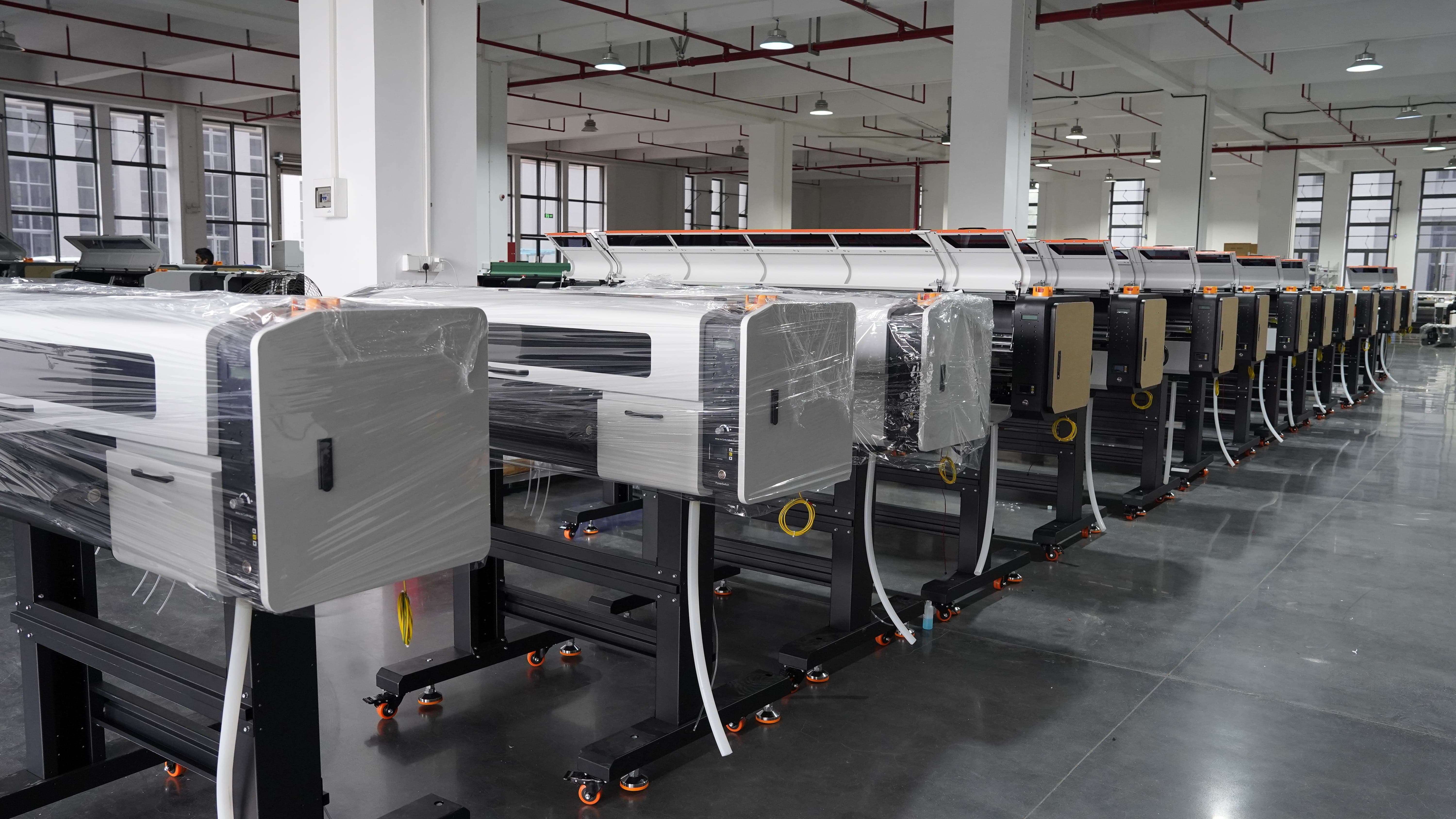
The company reports a factory area of 37,440 m², more than 200 employees, and an annual output of more than 20,000 units. Its R&D team includes 20 engineers. These figures indicate a production scale that can support multi-unit orders and continuous supply rather than one-off machine assembly.
XINFLYING states that it provides reliable printing solutions for apparel businesses, textile manufacturers, printing companies, distributors, and entrepreneurs worldwide. The company also reports being supported by local warehouses and technical support in key markets, which is relevant for OEM buyers who need regional stock or on-site assistance.
Manufacturing and R&D Capability
XINFLYING's manufacturing strength is relevant to OEM buyers because private-label production requires stable assembly, consistent component sourcing, and repeatable quality checks. The company lists 20 engineers in its R&D team and an annual production capacity of more than 20,000 units across its digital printing equipment range. The factory scale supports the company's reported OEM/ODM monthly capacity of 1,600+ units.
Quality Control and Certification Coverage
For OEM buyers, certification documents must match the actual equipment model. XINFLYING holds a set of compliance certificates that apply to its Digital Textile Printer series, including the XF-19E15-PRO, XF-19E8-PRO, XF-O2000-4I32A1, XF-H1802X-2I32A1, and XF-H1301X-1I32A1. The relevant certificates include:
| Certificate | Certificate Number | Authority | Scope |
|---|---|---|---|
| ISO 9001:2015 | NOA2215496 | NOA | Quality management for digital printer and ink sales |
| CE LVD | TQT1550D271EC | TQT | Electrical safety, EN IEC 62368-1:2020/A11:2020 |
| CE EMC | TQT1550D270EC | TQT | Electromagnetic compatibility, EN 55032 / EN 55035 series |
| CE MD | M.2026.206.C142365 | UDEM | Machinery safety, EN ISO 12100:2010; EN 60204-1; EN ISO 12643-1 |
| RoHS | M.2026.206.C142366 | UDEM | Hazardous substance restrictions, Directive 2011/65/EU |
| OEKO-TEX ECO PASSPORT | SH150194016 | TESTEX AG | Textile printing inks and printing pastes |
These certificates cover both machinery safety and environmental compliance. For EU-bound shipments, CE LVD, CE EMC, and CE MD documentation are the key compliance items. RoHS addresses restricted substances in electronic and electrical components, and the OEKO-TEX ECO PASSPORT provides a recognized framework for textile printing inks. OEM buyers should always verify that the certificate numbers in the supplier's documentation correspond to the models they plan to import.
Sublimation Printer Product Line
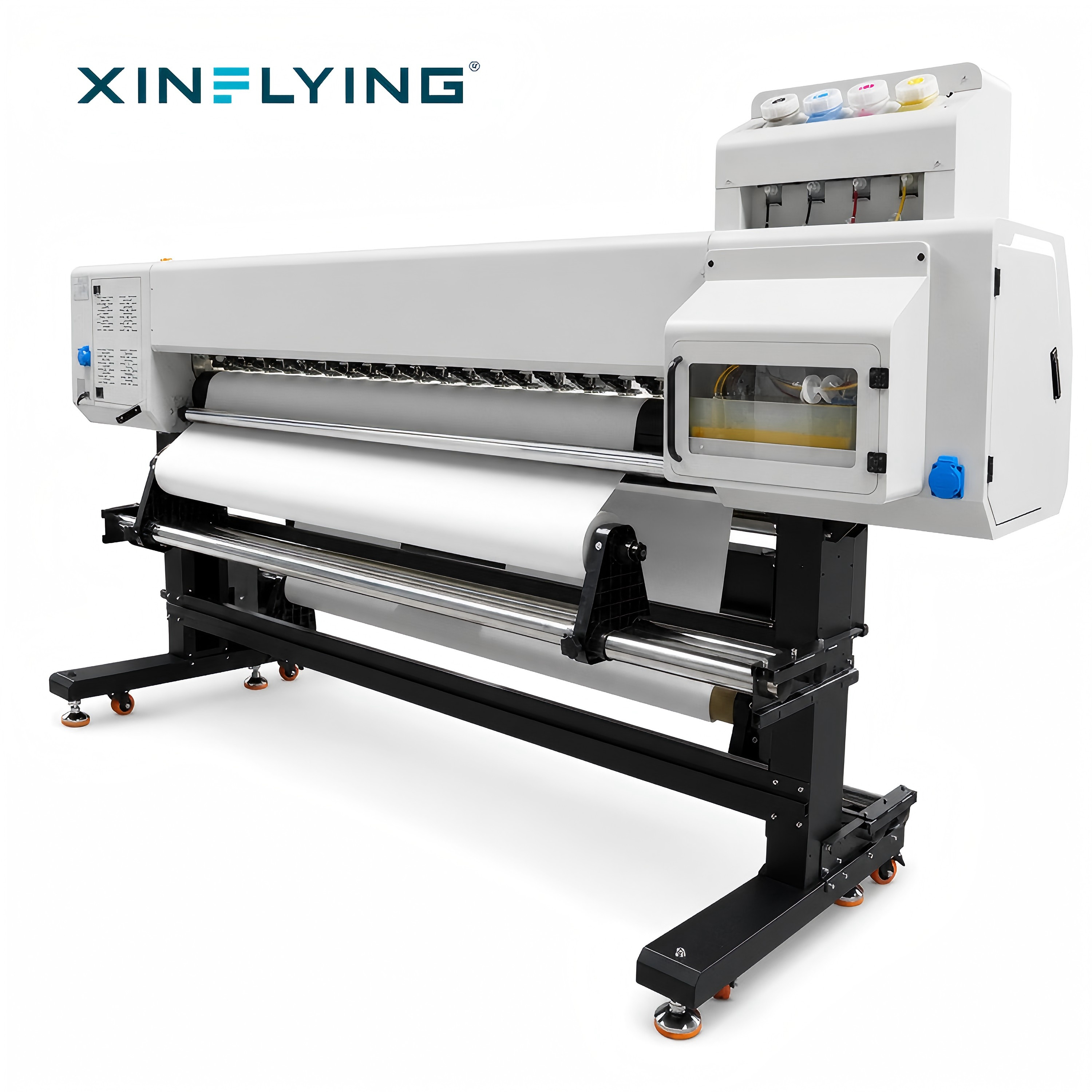
XINFLYING's dye sublimation printer range spans entry-level to industrial high-volume machines. All models use Epson i3200-A1 printheads and are designed for heat transfer paper and polyester textile sublimation. The lineup is summarized below.
| Model | Printheads | Print Width | Maximum Speed | Power | Typical Application |
|---|---|---|---|---|---|
| XF-H1301X-1I32A1 | 1 × Epson i3200-A1 | 130 cm (1.3 m) | 28 m²/h (4PASS) | 2 kW | Polyester textile sublimation |
| XF-H1802X-2I32A1 | 2 × Epson i3200-A1 | 180 cm (1.8 m) | 52 m²/h (4PASS) | 3.5 kW | Small and medium printing businesses |
| XF-O2000-4I32A1 | 4 × Epson i3200-A1 | 195 cm (1.95 m) | 180 m²/h (2PASS) | 8.5 kW | Growing production; apparel, home decor, flags |
| XF-19E8-PRO | 8 × Epson i3200-A1 | 190 cm (75") | 306 m²/h (1PASS) | 10.2 kW | Industrial textile sublimation |
| XF-19E15-PRO | 15 × Epson i3200-A1 | 190 cm (75") | 524 m²/h (1PASS) | 14.5 kW | High-volume industrial textile sublimation |
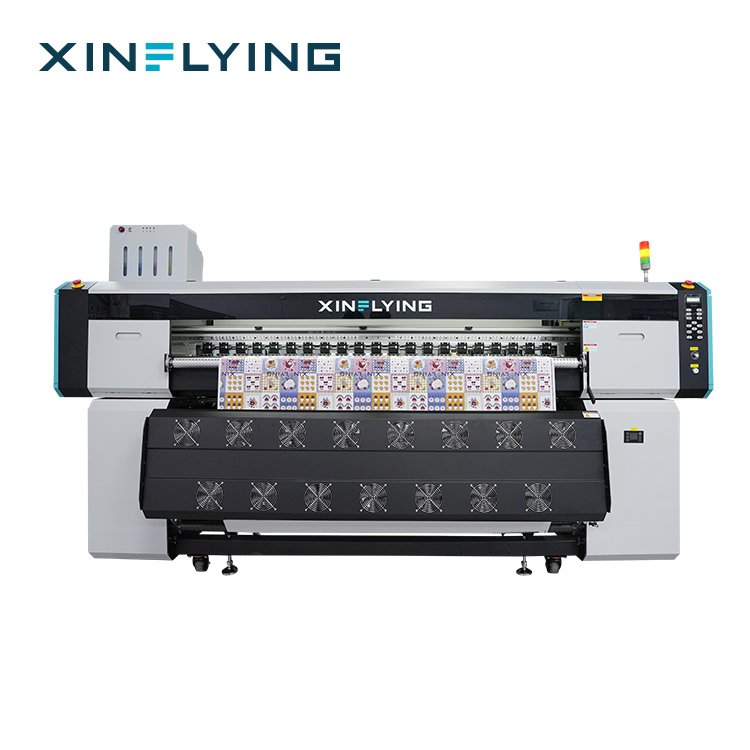
The XF-19E8-PRO and XF-19E15-PRO operate at 3200 dpi resolution, include an external intelligent air-heat integrated dryer, and come with a fully sealed automatic moisturizing and cleaning system. The XF-O2000-4I32A1 supports heat transfer paper rolls of 1000–1500 m and uses a 220 ml cartridge plus 3 L ink tank configuration. For OEM buyers, this range makes it possible to select a base model and then apply branding and configuration changes without redesigning the machine from scratch.
OEM/ODM Customization Capability
OEM and ODM production services are the core of XINFLYING's offer to distributors and brands. According to the company's capability data, customization options include product branding, machine appearance customization, color customization, logo customization, packaging customization, and customized solutions based on customer requirements. The minimum order quantity is one unit, and the company reports a monthly OEM/ODM capacity of more than 1,600 units.
For an OEM buyer, the MOQ of one unit is operationally significant. It allows a distributor or apparel brand to validate a single machine, test print quality, confirm branding execution, and then scale the program based on confirmed performance. This lowers the barrier to entry for private-label sublimation equipment programs.
Global Supply, Delivery Terms, and After-Sales Support
XINFLYING delivers products using the standard incoterms EXW, FOB, CIF, and DDP. Payment methods include T/T, Western Union, and PayPal. Each order is subject to pre-shipment testing as the acceptance procedure. After-sales support is provided by more than 50 engineers delivering 24/7 online technical support, with local warehouses and technical support in key markets.
For OEM and distributor buyers, the combination of DDP availability, pre-shipment testing, and 24/7 online support reduces two common risks: unclear import cost structures and slow troubleshooting after installation.
Step-by-Step Breakdown: How to Qualify an OEM Dye Sublimation Printer Manufacturer
Selection of an OEM dye sublimation printer manufacturer can be structured into seven steps. Each step can be completed with information a factory should be able to provide in writing.
Step 1: Define the target product and market requirements
Identify the printing width, production speed, power supply, and compliance documents required in your sales region. For example, EU-bound industrial machines should come with CE LVD, CE EMC, and CE MD documentation. If your market requires 1.9 m width machines, confirm that the supplier's lineup includes a 1900 mm class model.
Step 2: Verify manufacturing scale and production capacity
Ask for factory size, headcount, R&D team size, annual output, and monthly OEM capacity. In XINFLYING's case, the factory is 37,440 m², the team exceeds 200 people, the R&D team includes 20 engineers, annual output exceeds 20,000 units, and monthly OEM/ODM capacity is 1,600+ units. These numbers provide a baseline for judging whether the supplier can handle volume orders.
Step 3: Check certification coverage for your target market
Request certificates and confirm that the certificate numbers and standards match the actual models you will import. Key documents for EU buyers include CE LVD, CE EMC, CE MD, and RoHS. For textile ink products, OEKO-TEX ECO PASSPORT is a relevant indicator. XINFLYING holds these certificates for its Digital Textile Printer series.
Step 4: Assess OEM/ODM customization depth
Confirm whether the supplier can handle branding, machine appearance, color, logo, and packaging changes, and whether they can build customized solutions. XINFLYING offers all of these. The MOQ of one unit also enables low-risk pilot orders before volume commitments.
Step 5: Confirm quality control and pre-shipment testing
Quality control procedures should include testing before shipment. XINFLYING lists pre-shipment testing as its acceptance procedure. Buyers should also ask how the factory handles machine conditioning, printhead testing, and packaging for long-distance freight.
Step 6: Review lead time, MOQ, delivery terms, and payment
The delivery terms EXW, FOB, CIF, and DDP cover different levels of import responsibility. Payment methods of T/T, Western Union, and PayPal provide flexibility for different order sizes. XINFLYING's MOQ is one unit, and its OEM/ODM lead time is 5–40 days depending on configuration and order size.
Step 7: Plan after-sales support and spare parts
After-sales service determines long-term operating cost. XINFLYING reports more than 50 engineers delivering 24/7 online technical support and local warehouses in key markets. OEM buyers should confirm how spare parts are stocked and how remote diagnosis is handled for their region.
Use Cases: How XINFLYING Sublimation Printers Are Applied in Production
The following use cases are based on XINFLYING's published customer references. They illustrate the application range of the company's sublimation printing solutions.
Sportswear Manufacturer (Brazil)
A Brazilian sportswear manufacturer uses 15 units to produce football jerseys, basketball uniforms, and customized sportswear. The printer is used to print high-resolution patterns, team logos, and full-color designs on polyester fabrics before garment cutting and sewing. According to the case record, the customer improved production flexibility for customized orders, reduced dependence on outsourced printing services, and achieved more consistent color quality across batches.
Sports Uniform Supplier (Brazil)
A sports uniform supplier in Brazil uses 8 units over a five-year application period to produce customized football kits, training uniforms, and team apparel with personalized names, numbers, and graphics. The solution reportedly allows shorter production cycles while maintaining vibrant colors and detailed patterns.
Home Textile Manufacturer (Global)
A home textile manufacturer uses 10 units to apply sublimation printing for curtains, cushions, decorative fabrics, and customized polyester textile products. The case highlights large-format textile applications requiring detailed patterns and consistent printing quality.
Digital Textile Printing Service Provider (Global)
A digital textile printing service provider uses 5 units to provide sublimation services for sportswear brands, apparel factories, and customized textile businesses. The customer reports that the solution helped expand production capacity, support more customer projects, and improve response speed for customized textile orders.
Comparison Table: Dye Sublimation Printer Supplier Landscape
The branded equipment segment is dominated by three Japanese manufacturers, while Chinese OEM suppliers serve buyers seeking private-label and factory-direct programs. The table below places XINFLYING in this landscape.
| Supplier | Headquarters | Reported Share (2024) | Market Role |
|---|---|---|---|
| Epson | Japan | 26.7% | Full-line inkjet printer manufacturer |
| Mimaki | Japan | 18.6% | Wide-format inkjet printer manufacturer |
| Roland DG | Japan | 15.5% | Wide-format printer manufacturer for sign and apparel markets |
| Guangzhou Xin Flying (XINFLYING) | Guangzhou, China | Not publicly reported | OEM/ODM dye sublimation printer manufacturer |
Source for market share figures: Data Insights Reports, 2024. XINFLYING description is based on company-published information. This comparison is not a quality ranking; it distinguishes supplier business models so buyers can choose the sourcing path that matches their brand and distribution strategy.
FAQ: OEM Dye Sublimation Printer Manufacturer Evaluation
What compliance certificates should I verify before choosing an OEM dye sublimation printer manufacturer?
For EU import, buyers should verify CE compliance covering electrical safety (LVD), electromagnetic compatibility (EMC), and machinery safety (MD), plus RoHS for hazardous substance restrictions. XINFLYING holds CE LVD certificate TQT1550D271EC, CE EMC certificate TQT1550D270EC, CE MD certificate M.2026.206.C142365, and RoHS certificate M.2026.206.C142366 for its Digital Textile Printer series. The OEKO-TEX ECO PASSPORT certificate SH150194016 covers textile printing inks. Buyers should always confirm that the certificate numbers apply to the specific model being imported.
What OEM/ODM customization does XINFLYING offer for dye sublimation printers?
XINFLYING provides OEM and ODM production services. Customization includes product branding, machine appearance customization, color customization, logo customization, packaging customization, and customized solutions based on customer requirements. The minimum order quantity is one unit, and the monthly OEM/ODM capacity is reported as 1,600+ units. This allows buyers to start with a single branded test unit and scale later.
What delivery terms and payment methods are available for sublimation printer orders?
XINFLYING delivers products using the standard incoterms EXW, FOB, CIF, and DDP. Payment can be made via T/T, Western Union, or PayPal. Pre-shipment testing is included as the acceptance procedure. These terms give OEM buyers flexibility on import responsibility and payment structure.
Can I start with one unit or test the printer before mass production?
Yes. The minimum order quantity is one unit, and all orders are subject to pre-shipment testing. This means an OEM buyer can order a single configured machine, validate print quality and branding execution, and then expand the program based on confirmed results. This approach reduces the risk of committing to a large volume before evaluating a factory's actual output.
What is the lead time for an OEM dye sublimation printer order from XINFLYING?
XINFLYING reports an OEM/ODM lead time of 5–40 days depending on configuration, customization, and order size, supported by a monthly capacity of 1,600+ units. To get an accurate schedule, buyers should provide the target model, customization requirements, and delivery destination. For a precise lead time and pricing proposal, contact XINFLYING directly by email at info@xin-flying.com or via WhatsApp at +86 188-1322-1357.
Conclusion: Industry Position, Procurement Value, and Future Potential
XINFLYING occupies a specific position in the dye sublimation printing supply chain: a Chinese manufacturer with factory-scale production, a complete sublimation printer lineup from 1.3 m to 1.9 m width, and OEM/ODM services designed for distributors, brands, and textile producers. Its procurement value comes from several verifiable elements: 37,440 m² of factory space, more than 200 employees, 20,000+ units annual output, a 1,600+ unit monthly OEM capacity, an MOQ of one unit, pre-shipment testing, and standard incoterms including EXW, FOB, CIF, and DDP.
The company's product range aligns with the industrial 1.9 m roll-to-roll standard that is common in high-volume textile sublimation. The XF-19E15-PRO, with 15 Epson i3200-A1 printheads and a maximum speed of 524 m²/h in 1PASS mode, targets high-volume production environments. Below it, the XF-19E8-PRO and XF-O2000-4I32A1 cover industrial and mid-range production, while the XF-H1802X-2I32A1 and XF-H1301X-1I32A1 serve smaller operations. This range gives an OEM buyer multiple price and performance points under one manufacturing relationship.
For buyers evaluating a Chinese OEM dye sublimation printer manufacturer, XINFLYING's relevant strengths are its manufacturing capacity, certification coverage, customization depth, and low MOQ structure. The limitations are typical of the industry: lead times and final configuration depend on order specifics, and buyers should verify certificates, conduct testing, and clarify incoterms before placing volume orders.
Longer term, the company's growth potential is supported by the market itself. The dye sublimation printing segment is projected to grow from roughly USD 16.4 billion in 2025 to USD 39.0 billion by 2033 (Grand View Research), with Asia Pacific led by China holding the largest regional share. As demand for customized polyester apparel, sportswear, and home textiles continues to expand, manufacturers with industrial-scale capacity and flexible OEM programs are positioned to capture a meaningful share of private-label printer demand.
Next Step for OEM Buyers
Request the XINFLYING company brochure and product documentation to compare configurations, customization options, and compliance documents against your target market requirements.
Download the XINFLYING Company Brochure (PDF)
Official website: www.xin-flying.com
