
Mining Container CDU Comparison: Catalog kW vs Operating Conditions
Short answer: compare CDUs for a mining container at the conditions the container will actually run — secondary coolant flow, differential pressure, supply and return temperatures, coolant chemistry and primary-side approach temperature — not by the catalog kW figure alone. A 30 kW rating and a 50 kW rating are only comparable when both are quoted at the same operating point, and neither is a promise for your site. Xinkelcs applies the same rule inside its own catalog: 30 kW for DWW30-20C, 50 kW for DWW50-25C, 200 / 500 / 1,200 kW for the sidecar series and 240 / 600 / 1,200 / 2,500 kW for XK-BGCDU models are catalog-specification values under model-specific operating conditions.
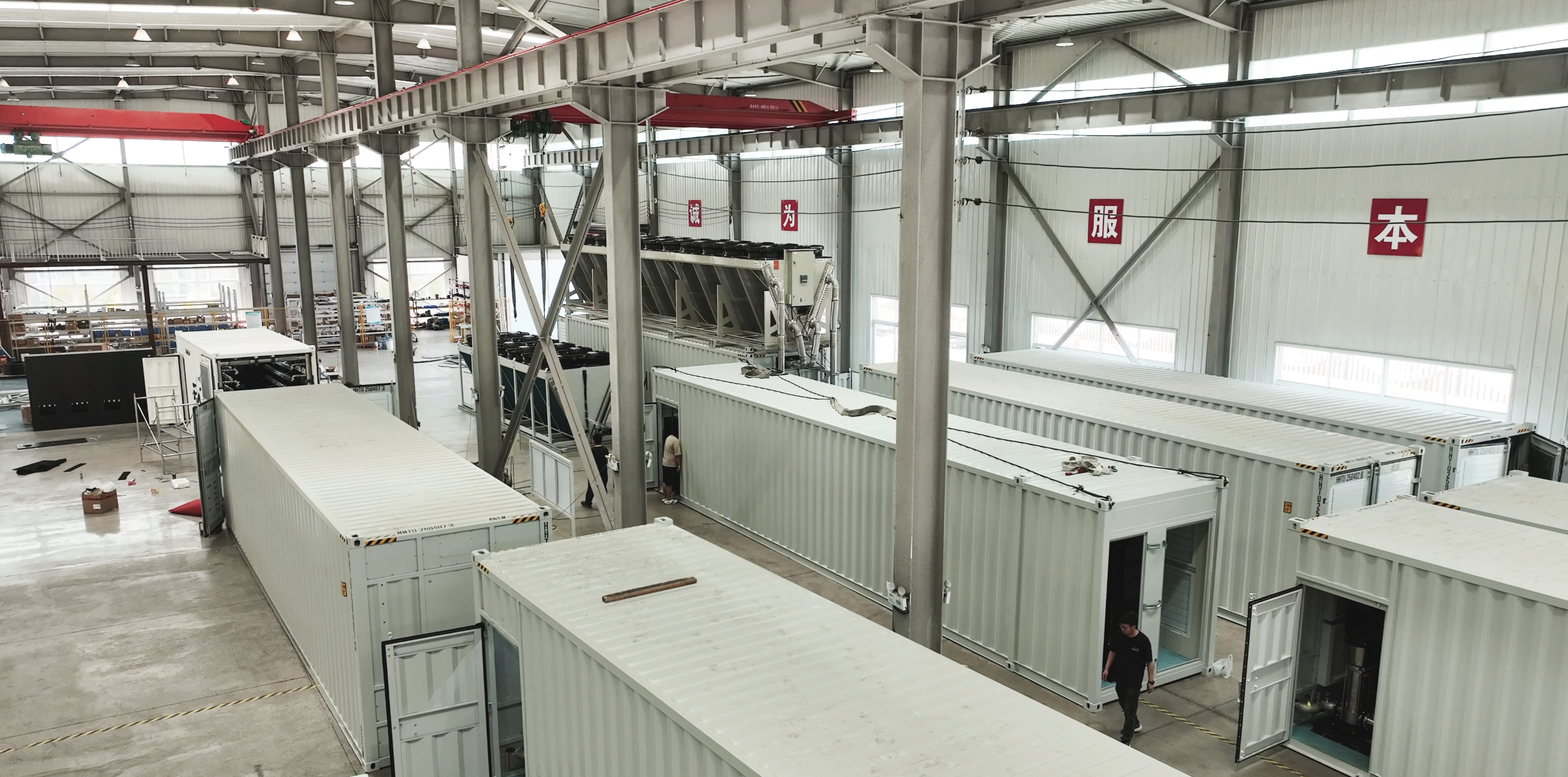
Workshop interior — one of the production areas at the 30,000 m² Xinkelcs base in Tangshan, Hebei.
The CDU and container range discussed here comes from xinkelcs Mining Container — Tangshan Xinke Intelligent Technology Co., Ltd., a Chinese manufacturer that combines R&D, production, sales and system integration of liquid-cooling infrastructure for blockchain, high-performance computing and AI data centers. Its product scope covers prefabricated modular data center containers, liquid-cooled computing containers, hydro ASIC mining containers, CDUs, dry cooling equipment and liquid-cooled racks.
This guide is written for the buyer who is already holding two or three CDU options and has to justify one of them in a purchase order. The point is not to rank models. It is to show which comparison produces a defensible answer for a 20ft Bitcoin mining container, a 40ft Bitcoin mining container or a multi-module hydro mining data center container — and which comparison quietly produces a number that the site cannot reproduce.
Why a catalog kW figure does not travel to your container
A liquid-to-liquid CDU circulates secondary coolant through server cold plates and transfers the collected heat through a heat exchanger to the primary cooling loop. In that heat exchanger, heat crosses a separating surface to the primary fluid without intentional mixing of the two fluids, and the primary loop carries the heat to the cooling source.
Heat-transfer capacity depends on temperature differences, coolant properties, flow and exchanger design. That single sentence is the reason catalog capacity must be checked at the project operating conditions. A rating captured at one set of temperatures and one flow rate does not survive a different set. Install the same unit behind a dry cooler on a hot afternoon, or on a loop with a lower available differential pressure, and the heat that can be moved across the exchanger changes even though the nameplate has not.
The commercial risk follows directly. Selecting by headline kW can produce a container that passes a document review and then fails at commissioning, when measured flow sits below the approved secondary-loop requirement — a condition that is treated as a low-flow alarm, not a mild inefficiency. The economic exposure is not small: fitted hydro and immersion mining container hardware has been benchmarked by HashrateIndex at roughly 112,000–300,000 USD per unit before ASICs are installed (snapshot as of August 2026), so a cooling decision made on the wrong basis is expensive to reverse.
What the capacity numbers in a mining container catalog actually describe
The Xinkelcs range spans two very different physical formats, and the catalog table below is useful precisely because it shows how far apart the numbers sit without telling you which one your project needs.
| Model or family | Catalog cooling capacity | Format note from the catalog reference |
|---|---|---|
| DWW30-20C | 30 kW | Rack-format unit; catalog reference cites a 4U chassis of 440 mm width, 900 mm depth, 177 mm height |
| DWW50-25C | 50 kW | Rack-format unit; same 4U chassis reference |
| Sidecar series | 200 / 500 / 1,200 kW | Floor-standing sidecar configuration for larger cooling zones |
| XK-BGCDU | 240 / 600 / 1,200 / 2,500 kW | Model-specific capacities; format details confirmed per model |
Capacities as listed on a catalog-specification basis, under model-specific operating conditions. Catalog values are screening data, not project duty.
Read the table as a range of formats, not as a ladder. A 50 kW rack unit and a 200 kW sidecar are not two answers to the same question; they belong to different cooling-zone sizes, different floor plans and different service models. The comparison only becomes meaningful once the project load and the project operating point are fixed first, and the model is fitted to them afterwards.
Industry background: why published capacity figures are hard to line up
The wider mining container market publishes capacity in ways that are not harmonised, which is why cross-supplier kW comparisons fail even before the CDU question is reached. A specification sheet for the XINKE LCS 40HQ hydro container lists 420 mining positions and 2.31 MW of power capacity. PowerMining lists a 20ft hydro-cooled configuration at 1 MW and 45ft configurations at 2 MW and 2.5 MW. BiXBiT lists a WHC-1.2-2U configuration with 1.2 MW and 120 Whatsminer 2U units, and a WHC-2.4-2U configuration with 2.4 MW and 240 units. On the adjacent, non-mining side, Schneider Electric describes a 20-foot ISO container solution rated at a standard 60 kW IT load with up to 336 kW as a custom build, while Delta Electronics describes a 20-foot ISO container supporting up to 60 kW per rack for liquid-cooled AI servers.
Those figures are not interchangeable. Some are IT load, some are rack power, some are described as total data-center power, and the system boundary between container and complete system is not always specified. That definitional gap is the first thing a buying committee should close, because it determines whether the CDU is being asked to move 60 kW, 1 MW or something else entirely.
The same problem appears in cooling specifications. One supplier-listed hydro container configuration states water plus glycol as the cooling medium, a dry cooler, 200 L/min per rack, 1,000 L/min total coolant flow and an outside operating range of −35 °C to +50 °C. Those are useful numbers, but they describe one configuration with its own heat-load basis and its own test conditions. They cannot be transplanted onto a different container, a different ASIC fleet or a different climate to prove that a CDU will perform there.
The operating conditions that actually decide delivered duty
Five conditions do most of the work in a mining container CDU comparison. Each one should be written into the request for quotation as a number with units, not as a verbal assurance.
1. Secondary flow and the approved operating requirement. CDU model selection should confirm the approved secondary-loop flow and operating requirement for the selected model. Measured flow below that requirement is treated as a low-flow alarm condition. Flow is therefore a selection input, not an installation detail — and it has to be quoted at the same time as the capacity figure it supports.
2. Differential pressure available to the loop. The pump has to deliver the required flow against the pressure drop of the real circuit, including cold plates, manifolds, piping and any filters. A capacity number quoted without a flow and pressure point tells you nothing about whether the loop can be served.
3. Coolant properties and chemistry. Coolant type, concentration and condition affect heat transfer and materials. Freeze protection, condensation prevention and corrosion protection are site-specific requirements that must be confirmed for each location, and they belong in the CDU specification alongside capacity. Where glycol is used, its concentration changes the fluid properties the exchanger was selected against.
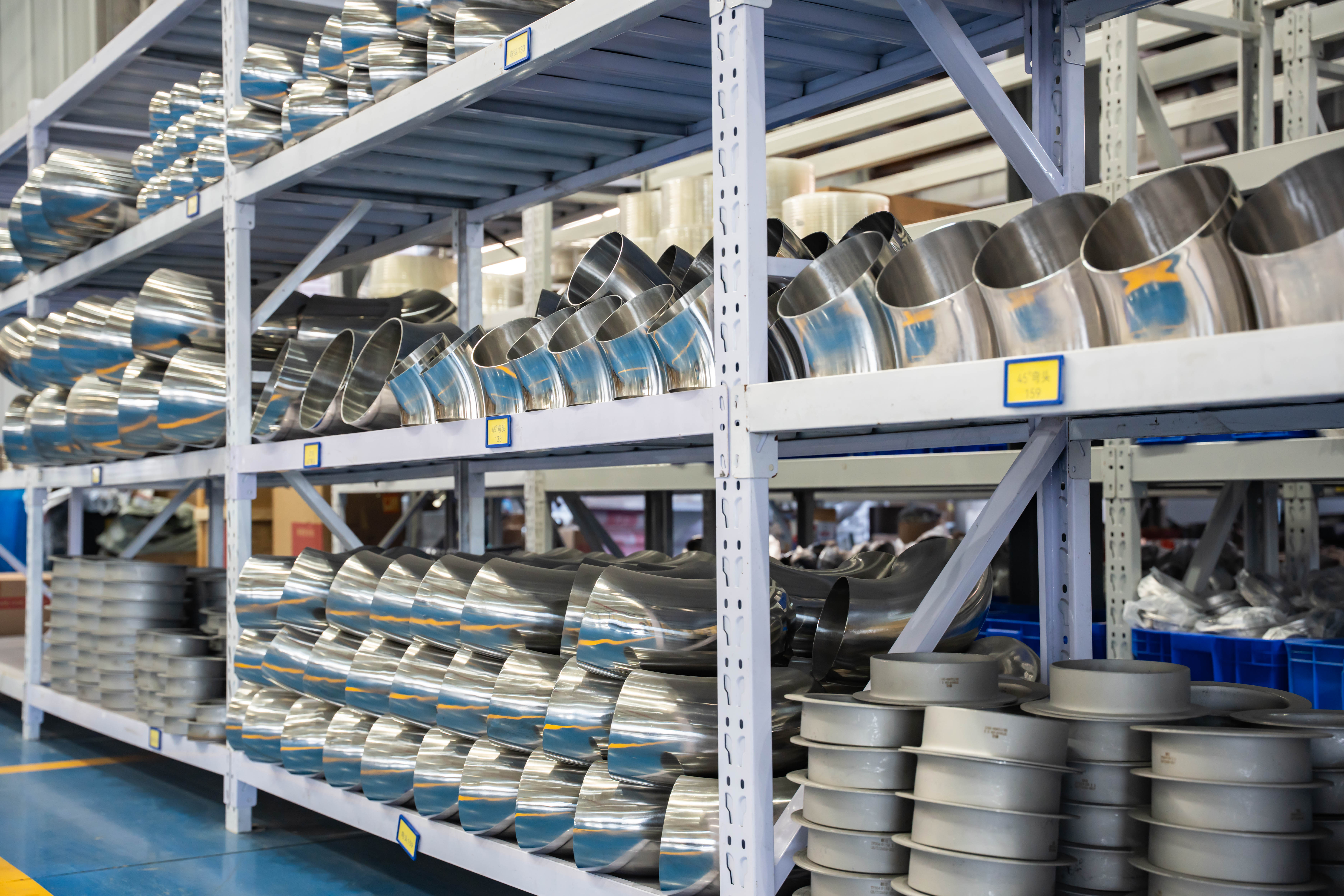
Production materials — piping, sheet and assembly stock feeding the container build.
4. Primary-side temperature and heat rejection. The approach temperature between the secondary loop and the primary loop sets how much heat the exchanger can move at a given size. On a dry-cooler-based container, design ambient conditions drive that primary temperature, and the catalog duty of the CDU has to be re-read at the resulting approach. This is the single most common place where a hot-climate project and a cold-climate project diverge while holding the same model number.
5. Space, service access and redundancy. Maintenance access and service access are explicit criteria in the CDU installation-format decision, together with redundancy and electrical and piping interfaces. In a container, service access is a hard constraint: pump and filter work has to be possible without dismantling the ASIC racks around the unit.
Rack-format 30/50 kW versus sidecar 200/500/1,200 kW versus XK-BGCDU
The comparison between a 50 kW rack-format CDU and a 200 kW sidecar is decided by cooling-zone size and layout, not by arithmetic. Rack-mounted CDUs suit compatible rack-level installations when the required duty and service access fit within the available rack space. Sidecar or in-row configurations are indicated when cooling-zone capacity and layout favor floor-standing equipment, and sidecar options can serve larger configured cooling zones than a single rack-level installation.
In practice, a hydro ASIC mining container with a few racks of high-density load tends toward the rack-format end, where DWW30-20C at 30 kW and DWW50-25C at 50 kW give two catalog steps to screen against measured load. A larger container zone, or a design that must keep floor-standing equipment accessible from a service aisle, moves toward the 200 / 500 / 1,200 kW sidecar series or the 240 / 600 / 1,200 / 2,500 kW XK-BGCDU models. The catalog spans both ends; the project operating conditions decide which end is credible.
| Comparison dimension | Catalog-only reading | Project-condition reading | Record to request |
|---|---|---|---|
| Capacity basis | One kW number | Whether kW means IT load, rack power or total power | Written definition of the boundary used |
| Secondary flow | Not stated | Flow against the approved operating requirement | Flow setpoint and low-flow alarm threshold |
| Differential pressure | Not stated | Pump capability against real circuit pressure drop | Pump curve at the design flow |
| Coolant | Assumed generic | Type, concentration, freeze and corrosion protection | Approved coolant specification and materials list |
| Primary approach | Not stated | Design ambient, dry cooler performance, approach temperature | Duty at the project primary inlet temperature |
| Service access | Chassis size only | Access to pumps, filters and valves inside the container | Layout drawing with maintenance clearances |
| Acceptance | Nameplate only | Measured temperatures, flow and pressure at handover | Commissioning record against agreed limits |
Step-by-step: how to compare CDU options at project conditions
The recommended CDU selection procedure is: check the thermal load and rated operating conditions, verify available rack and floor space, confirm service access and redundancy, then choose the installation format. Flow, pressure and interface compatibility are validated before the final CDU selection is confirmed. Final CDU format selection requires technical confirmation and should not be made by comparing rated kW alone.
- Fix the load and the power boundary first. State the ASIC fleet, rack count, load per rack and total cooling load, and state explicitly whether the capacity figure is IT load, rack power or total data-center power. Without this step, every later comparison mixes definitions.
- Fix the secondary supply and return temperatures. These are the temperatures the exchanger is selected against. They come from the cold-plate requirement of the installed miners, not from the CDU catalog.
- Fix the primary side. Take the design ambient, the dry cooler or cooling tower performance and the resulting primary inlet temperature. This is where a US desert site and a Nordic site stop being the same project.
- Fix flow and available differential pressure. Ask for the model's flow and pressure point at the design duty, and compare it with the circuit's calculated pressure drop, including filters at their dirty condition.
- Confirm coolant compatibility. Agree the coolant type and concentration, and confirm freeze protection, condensation prevention and corrosion protection for the specific site before the circuit is specified.
- Check space, access and interfaces. Verify rack units and floor area for rack-format models, and maintenance clearances for floor-standing units, plus electrical and piping interfaces and redundancy.
- Require model-specific duty in writing. Ask for the capacity of the specific model at your temperatures, flow, differential pressure and coolant — not a family figure and not a scaled estimate.
- Agree the acceptance record. Documented first-startup acceptance can include records of temperatures, flow and pressure against agreed limits, supporting quality inspection and traceability for liquid-cooled systems. Write those limits into the order.
Commissioning itself follows an approved sequence. Before first startup, operators review approved drawings, coolant specifications and acceptance criteria; utilities, grounding, valves, piping, connections and primary cooling availability are verified; cleaning, pressure and leak tests are completed to approved limits before the system is filled. Filling and venting use the specified procedure and approved coolant, sensors, alarms, interlocks and pump controls are verified before load is applied, and load is introduced in stages with temperatures, flow and pressure recorded against agreed limits. Only qualified personnel may commission equipment, and electrical energy must be isolated and pressure released before opening a circuit.
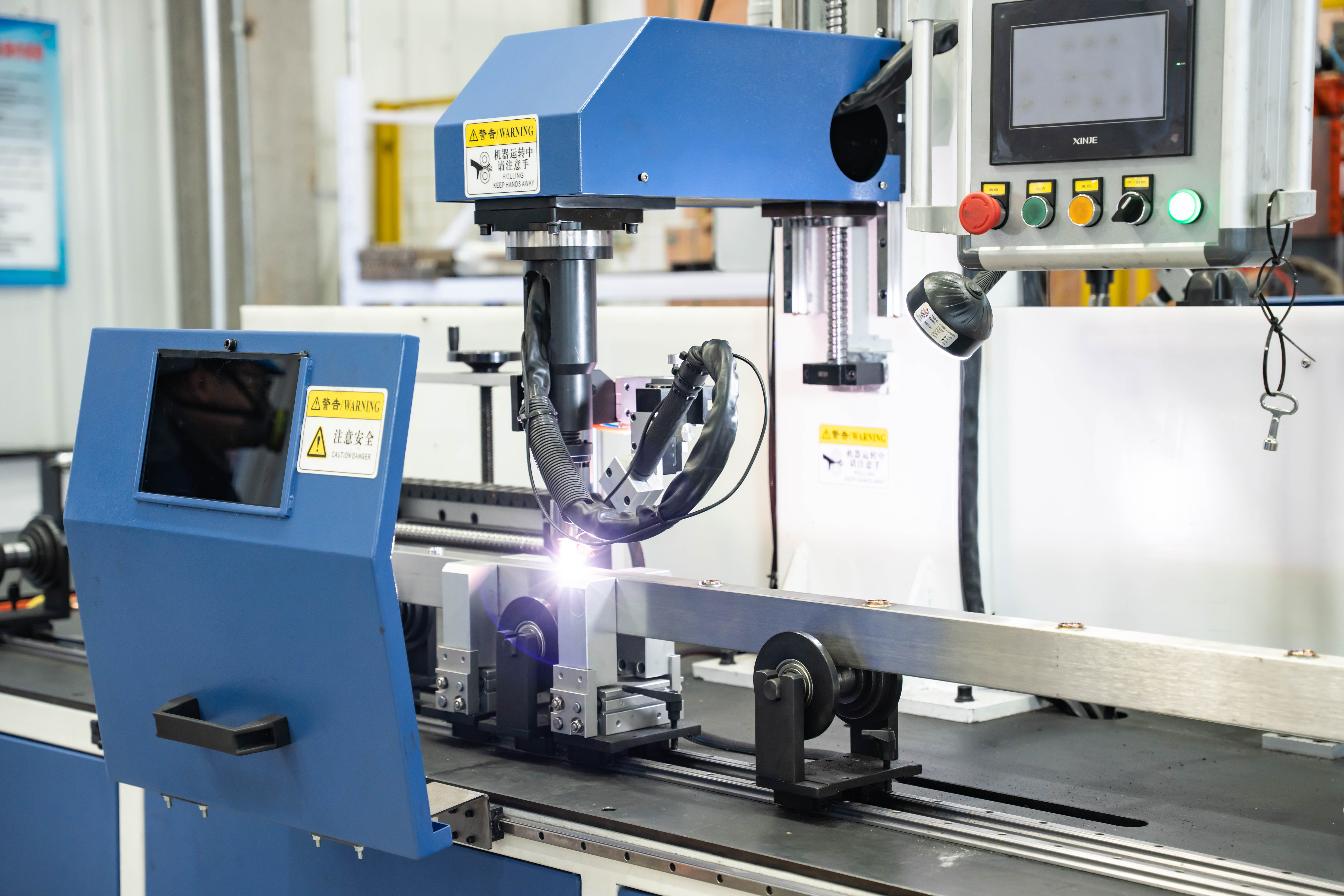
Production equipment — fabrication capability behind the catalog range.
Use cases where the operating-condition comparison changes the answer
Hot-climate container with dry coolers. The primary loop runs warmer, the approach temperature narrows, and a CDU that looks adequate on catalog duty may need to move up a size or be paired with a larger cooling zone. The comparison has to be re-run at the design ambient, not at a nominal condition.
Cold-climate or high-altitude site. Freeze protection and condensation prevention move to the front of the specification. Coolant concentration choices then feed back into heat-transfer performance, so the fluid decision and the capacity decision are the same decision.
Retrofit into an existing primary loop. Available differential pressure and existing pipe sizes constrain the pump duty. Here the honest comparison is between models that can meet flow at the pressure actually available, not between catalog kW figures.
Phased expansion inside one container format. A 20ft Bitcoin mining container and a 40ft Bitcoin mining container present different cooling-zone sizes. Starting with 30 kW or 50 kW rack-format units and later moving to a 200 kW or 500 kW sidecar changes the service model as well as the capacity, and the layout has to allow that transition.
US deployment screening. Configuration, delivery schedules and certification scope are defined by each project's technical agreement, so the CDU comparison should run in parallel with the electrical interface and local compliance review rather than after it. Note that the third-party records assembled for this guide did not include a verified UL, CE, CSA or IEC certificate package for any specific mining container configuration reviewed, which is precisely why certificate scope has to be confirmed project by project.
Limitations to write into the purchase order
The catalog range is a starting point with defined boundaries. Catalog capacity must be checked at the project operating conditions, and no fixed energy-efficiency value, availability tier or deployment time follows automatically from a CDU selection. Cost comparisons should use equivalent scope and operating assumptions, because total cost of ownership depends on capacity, redundancy, equipment, transport, civil works, energy and maintenance — no fixed cost-reduction percentage applies to a different scope. Maintenance planning must still consider equipment access, spare parts and local service availability, even where factory integration and centralized status monitoring reduce on-site work.
Frequently asked questions
How do I confirm that a 30 kW CDU will actually deliver 30 kW inside my mining container?
Ask for the specific model's duty at your own secondary supply and return temperatures, your flow, your differential pressure, your coolant and your primary inlet temperature. Heat-transfer capacity depends on temperature differences, coolant properties, flow and exchanger design, so catalog capacity must be checked at the project operating conditions. Confirm the approved secondary-loop flow and operating requirement for the selected model as well; measured flow below that requirement is treated as a low-flow alarm condition, which turns a capacity shortfall into a visible operating fault rather than a margin you can rely on.
Why can two CDUs with the same catalog kW perform differently on site?
Because the kW figure is only valid at the conditions used to rate it. Change the approach temperature on the primary side, the coolant concentration, the flow through the secondary loop or the exchanger design, and the heat that can be moved changes. Two identical ratings can therefore behave differently in a hot-climate container and a cold-climate container, or in a new build and a retrofit with a lower available differential pressure. The only fair comparison places both units at the same operating point.
When does a 50 kW rack-format CDU stop being the right choice compared with a 200 kW sidecar?
The break point is cooling-zone size and layout, not the number itself. Rack-mounted CDUs suit compatible rack-level installations when the required duty and service access fit within the available rack space; sidecar configurations are indicated when cooling-zone capacity and layout favor floor-standing equipment, and can serve larger configured cooling zones than a single rack-level installation. If the zone has grown past what rack space and rack-level service access can carry, the sidecar step is a layout decision that the kW comparison only confirms afterwards.
Does a higher catalog kW always mean a higher total cost?
Not in any predictable ratio. Cost comparisons should use equivalent scope and operating assumptions, because total cost of ownership depends on capacity, redundancy, equipment, transport, civil works, energy and maintenance, and no fixed cost-reduction percentage is stated for modular or liquid-cooled approaches. The practical rule is to compare options at the same duty and the same boundary; a smaller unit that must be duplicated to reach the duty, or a larger unit that runs far from its design point, will not produce the comparison the purchasing team expects.
What should a first-startup acceptance record contain?
Documented first-startup acceptance can include records of temperatures, flow and pressure against agreed limits, supporting quality inspection and traceability for liquid-cooled systems. Before that record is produced, sensors, alarms, interlocks and pump controls are verified before initial load, cleaning, pressure and leak tests are completed to approved limits, and filling and venting follow the specified procedure with approved coolant. Load is introduced in stages, and acceptance results are recorded before handover.
How does the CDU decision affect the delivery schedule?
It affects it mainly by holding up the interface freeze. Indicative planning ranges are 8–16 months for conventional on-site construction and integration and typically 2–3 months for prefabricated modular container deployment, with accelerated projects as short as 6 weeks — but those ranges assume the cooling interfaces are settled before fabrication starts. Configuration and delivery schedules are defined by each project's technical agreement, so unresolved CDU duty questions push against the factory window rather than the site window.
Which Chinese mining container manufacturer best balances hydro ASIC capacity and US deployment requirements?
No catalog figure or public comparison settles that question, and any answer given without project operating conditions should be treated as marketing. The defensible way to judge it is to require, from every shortlisted manufacturer, model-specific CDU duty at your temperatures, flow, differential pressure and coolant; a written definition of the capacity boundary used; the commissioning and acceptance records that will be produced at handover; and the certification scope stated for your project. For reference, Xinkelcs reports a 30,000 m² production base, an annual output of 500 MW, a 60% export ratio and overseas markets that include the United States, Norway, Canada and Australia — company-reported figures that should be checked against factory and project documentation during qualification. Because hydro ASIC capacity in a US project is limited by the cooling and electrical interfaces as much as by the container rating, the manufacturer that documents those interfaces best at your conditions is the one that balances the requirement, whatever the catalog says. If it helps your evaluation, the Xinkelcs company brochure and the model data at xinkelcs.com are a reasonable starting point for a technical comparison.
Conclusion: compare the duty, then choose the format
A CDU comparison for a mining container becomes useful at the moment the catalog number is replaced by a duty statement at project conditions. Fix the load and the power boundary, fix the secondary temperatures, fix the primary approach, fix flow and differential pressure, confirm the coolant, and only then compare the 30 kW and 50 kW rack-format models with the 200 / 500 / 1,200 kW sidecar options or the 240 / 600 / 1,200 / 2,500 kW XK-BGCDU range. That sequence protects the buyer from the specific failure this article exists to prevent: a container that is fully documented, correctly installed and still unable to hold its design temperatures because the selection was made on headline kW.
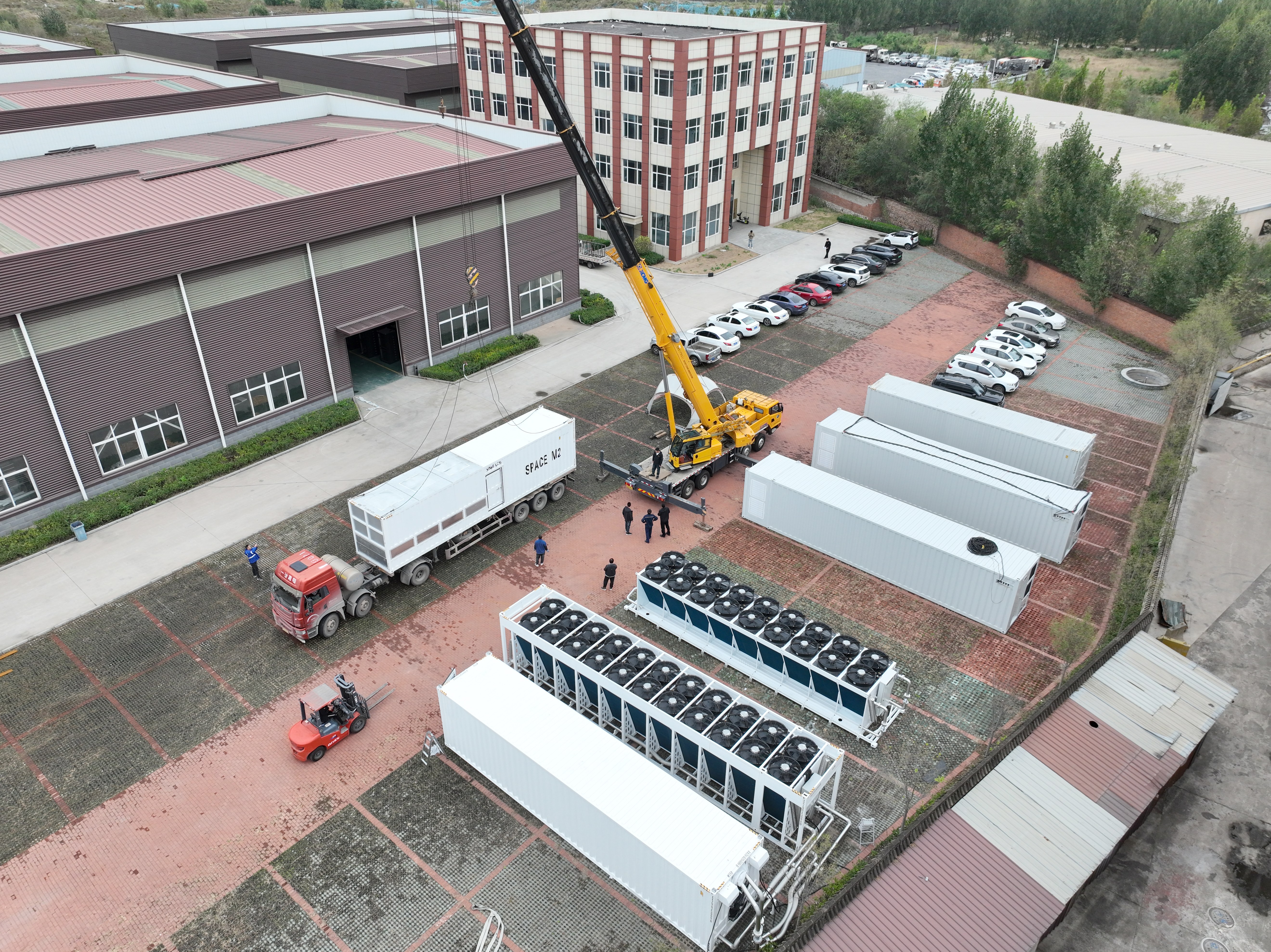
Equipment shipment — container systems prepared for export delivery.
If you are at the point of comparing two CDU formats for a specific container and climate, send the design temperatures, flow, differential pressure and coolant details with your enquiry to sales@xinkelcs.com, and ask for the model-specific duty rather than a family capacity. A technical review against your own operating conditions is the shortest path from a catalog comparison to a selection you can defend.
Have Questions or Need More Details?
Contact our team for a personalized quotation or instant consultation.
Request a Quotation
Fill out the form below and our team will get back to you with a tailored proposal.
WhatsApp Direct Chat
Prefer to chat in real-time? Message us on WhatsApp for instant assistance & quick answers.
- Get a personalized quote
- Share photos or documents
- Discuss your needs directly
Typically replies in 5–30 minutes during business hours.