Rack-Mounted vs Sidecar vs In-Row CDU: Mining Cooling Guide
Rack-Mounted vs Sidecar vs In-Row CDU: A Comparison Guide for Mining Container Cooling
For a hydro ASIC mining container, the CDU format should be selected after the project defines heat load at design conditions, available rack and floor space, service access, redundancy, coolant compatibility and hydraulic interfaces. The format is a layout and serviceability decision as much as a cooling-capacity decision. A higher catalog kW rating alone does not prove that a CDU fits a mining container.
This guide compares rack-mounted, sidecar and in-row CDUs for mining container cooling. It explains how a liquid-to-liquid CDU works, what to compare before selecting a format, where each format can fit, and which procurement checks should be completed before a container design is fixed. It also reviews the relevant manufacturing and integration capabilities of xinkelcs Mining Container without treating catalog presence as proof of suitability for every project.
What the CDU format decision actually controls
A liquid-to-liquid CDU circulates secondary coolant through server cold plates and transfers the collected heat through a heat exchanger to the primary cooling loop. Temperature, flow and pressure controls help maintain the operating conditions required by the connected IT equipment. In a mining container or liquid-cooled modular data center, the CDU is therefore the interface between the ASIC cold-plate loop and the heat-rejection side, which may include a dry cooler, cooling tower or other primary cooling equipment.
The installation format affects three practical areas. First, it changes how much rack space or floor area the cooling equipment occupies inside the container. Second, it changes how technicians reach pumps, filters, valves, sensors and controls during commissioning and maintenance. Third, it changes how piping, power, controls and redundancy are arranged around the cooling zone. These are the reasons a rack-mounted, sidecar or in-row CDU can all be technically valid yet produce different engineering outcomes in the same container footprint.
The decision should not be reduced to a single preference such as “floor-standing is always better” or “rack-mounted is always more compact.” The supplied technical guidance is more specific: choose the format after checking thermal load, rated operating conditions, available rack and floor space, service access and redundancy. Validate flow, pressure and interfaces before final selection.
Industry background: why prefabricated mining containers need a cooling-format decision
Conventional data center projects typically install and commission racks, power, cooling and monitoring systems separately on site. Prefabricated modular solutions move more integration, cabling, piping and testing into the factory. Site work then focuses on foundations, module placement, interface connections and acceptance. Both approaches must meet project design and local approval requirements.
Schedule expectations differ in planning terms. Indicative planning ranges for conventional on-site construction and integration are 8–16 months. Prefabricated modular container deployment is typically 2–3 months, with accelerated projects as short as 6 weeks. These are planning ranges, not guarantees. The comparison must use equivalent project scopes and confirm the schedule against design approvals, utility readiness, shipping and commissioning.
Hydro ASIC mining containers and liquid-cooled modular data centers concentrate high-density computing equipment into a transportable or prefabricated enclosure. That makes the cooling architecture visible early in the project. A CDU that is difficult to service inside a 20ft or 40ft container can create avoidable downtime risk even if its rated duty appears adequate on a datasheet. The same issue applies to AI data center containers and high-density mining containers: the cooling format must fit the enclosure, the rack layout and the maintenance plan.
Platform-specific questions also arise around Avalon, Antminer and WhatsMiner hydro cooling containers. Brand names in a project brief do not establish CDU compatibility. Compatibility must be confirmed against the actual cold-plate loop, coolant specification, flow and pressure requirements, control interfaces and the approved operating conditions of the equipment being installed.
How a liquid-to-liquid CDU removes heat from server cold plates
Cold plates absorb heat from server components. A pump circulates coolant through the secondary loop. In the CDU heat exchanger, heat transfers across a separating surface to the primary fluid without intentional mixing of the two fluids. The primary loop carries heat to the cooling source. Heat-transfer capacity depends on temperature differences, coolant properties, flow and exchanger design; catalog capacity must be checked at the project operating conditions.
This mechanism matters when comparing installation formats. A rack-mounted CDU, a sidecar CDU and an in-row CDU may all use a liquid-to-liquid heat exchanger, but they place the pumps, heat exchanger, controls and service points differently. The buyer should therefore compare model-specific performance at the same operating conditions, not only the format label or a headline capacity figure.
Comparison table: rack-mounted, sidecar and in-row CDU
The table below compares documented selection characteristics. It does not assign a universal winner, because the correct format depends on the container layout, thermal duty and service plan. The supplied technical guidance groups sidecar and in-row options as floor-standing alternatives that can serve larger configured cooling zones; the precise distinction between a sidecar and an in-row unit is model- and layout-specific and should be confirmed with supplier drawings.
| Comparison point | Rack-mounted CDU | Sidecar CDU | In-row CDU |
|---|---|---|---|
| Documented installation role | Suitable for compatible rack-level installations when required duty and service access fit the available rack space. | Floor-standing option that can serve a larger configured cooling zone when the layout favors equipment placed alongside the cooling area. | Floor-standing option integrated with a row or cooling zone; final siting depends on the row layout and model data. |
| Space impact to check | Rack units, internal clearance and access to service points. | Floor area, adjacent clearance, piping route and maintenance access. | Row integration, aisle clearance, piping route and maintenance access. |
| Main engineering checks | Flow, differential pressure, coolant compatibility, electrical and piping interfaces, redundancy and service access. | Cooling-zone capacity at design temperatures, hydraulic interface, redundancy, floor loading and layout. | Cooling-zone capacity at design temperatures, hydraulic interface, redundancy, row layout and controls integration. |
| When it may fit | When the required duty and service access fit the rack-level installation and the rack layout is compatible. | When the cooling zone and floor layout favor a floor-standing unit serving a larger configured zone. | When row-integrated equipment and service access can be accommodated in the container design. |
| Main limitation to resolve | Rack space and access can constrain the selection; do not choose by rated kW alone. | Floor space and layout must be confirmed before fixing the container design. | Row integration and access must be confirmed against the actual model and container layout. |
Decision rule: compare rack-mounted, sidecar and in-row CDUs at the same design temperatures, flow and pressure conditions. A format that fits the enclosure but cannot be serviced safely is not a lower-risk choice.
Rack-mounted CDU: when the rack-level format fits
Choose a rack-mounted CDU when the required duty and service access fit the available rack space. This format is relevant to compatible rack-level installations, especially where the container layout is organized around rack-mounted equipment and the cooling loop can be arranged without blocking maintenance access.
The procurement check should cover more than the rack unit count. Confirm the required heat removal at design temperatures, flow and differential pressure, coolant compatibility, redundancy, electrical and piping interfaces, and access to pumps, filters, valves, sensors and controls. If the rack-mounted unit can meet the duty but cannot be serviced within the container, the layout should be revised or another format should be evaluated.
Rack-mounted CDUs are not automatically the lowest-cost or simplest option. Their suitability depends on the actual rack layout and the operating conditions. The correct question is whether the model-specific performance and service access fit the project, not whether the format is compact in principle.
Sidecar CDU: when a floor-standing cooling zone fits
Sidecar and in-row options can serve larger configured cooling zones. A sidecar configuration is commonly understood as a floor-standing unit placed alongside the cooling area, but the exact arrangement must be confirmed with supplier drawings and the container layout. The supplied guidance does not justify assuming a fixed boundary between sidecar and in-row capacities; those details are model-specific.
A sidecar format can be considered when the container has enough floor area for the equipment, adjacent service clearance and a practical piping route. The engineering review should confirm cooling-zone capacity at design temperatures, hydraulic interface, redundancy, floor loading, controls integration and maintenance access. In a mining container, the space beside a rack row may also be needed for aisles, power distribution or cable routing, so the layout should be checked as a whole.
The sidecar format should not be selected merely because it is floor-standing. It should be selected when the cooling zone, service plan and container layout make that arrangement practical and when the model data supports the required duty at the project conditions.
In-row CDU: when row-integrated cooling fits
An in-row CDU is integrated with a row or cooling zone. The format can be relevant when the container design can accommodate the unit within the row layout while preserving aisle clearance, piping access and service access. The supplied technical guidance groups in-row and sidecar options as floor-standing alternatives that can serve larger configured cooling zones, so the final distinction should be based on model data and layout drawings.
Check the same fundamentals: required heat removal at design temperatures, flow and differential pressure, coolant compatibility, redundancy, electrical and piping interfaces, controls integration and maintenance access. The row layout should be reviewed with the actual CDU dimensions and service clearances, not with a generic container drawing.
In-row integration can look efficient on a layout drawing while creating a service bottleneck in practice. The buyer should confirm how filters, pumps, valves and sensors are reached, how the unit is isolated for maintenance, and how the primary loop is connected without obstructing the aisle.
Step-by-step selection process for mining container projects
- Define the heat load at design conditions. Use the planned IT load and the approved operating conditions. Do not use a nominal figure that ignores ambient dry-bulb and wet-bulb temperatures, altitude, water quality and load profile.
- Fix the supply and return temperatures and the coolant specification. The CDU heat-transfer capacity depends on temperature differences, coolant properties, flow and exchanger design. Catalog capacity must be checked at the project operating conditions.
- Map rack and floor space. For a rack-mounted CDU, confirm the rack units and internal clearance. For sidecar or in-row units, confirm floor area, aisle clearance and the piping route.
- Check service access. Confirm how technicians will reach pumps, filters, valves, sensors and controls. Maintenance planning must also consider equipment access, spare parts and local service availability.
- Validate flow, pressure and hydraulic interfaces. Compare the required flow and differential pressure with the selected model. Confirm coolant compatibility and the interface between the secondary loop and the primary cooling equipment.
- Define redundancy and controls. Availability and redundancy are defined by the project design. Confirm how the CDU interacts with pumps, valves, sensors, alarms and the monitoring system.
- Verify electrical, piping, fire protection and grounding interfaces. Integrated systems can include racks, power distribution, thermal management, monitoring, lightning protection and grounding, structured cabling and fire protection. Each interface should be assigned and checked.
- Plan factory testing and commissioning. Use the approved commissioning plan: verify utilities and interfaces, inspect piping and connections, complete specified cleaning and pressure or leak tests, fill and vent the approved coolant, verify controls and alarms, then introduce load gradually. Record acceptance results before handover.
- Confirm site-specific requirements. Check freeze protection, condensation prevention, corrosion protection, noise, electrical supply and local certification requirements for each site. These requirements can change the preferred format or the auxiliary equipment.
Use cases and configuration examples
20ft and 40ft mining container formats. Space is the visible constraint, but service access is the practical constraint. A rack-mounted CDU may fit a rack-level layout, while sidecar or in-row units may suit a larger configured cooling zone. The final choice should be made from the actual container drawing, not from a generic size label.
High-density and high-capacity mining containers. Higher density increases the importance of hydraulic design and heat rejection. The supplied guidance does not state a fixed capacity threshold for each format. Instead, it requires model-specific performance at the same operating conditions. This is the correct basis for comparing a Hydro ASIC Mining Container cooling system against another configuration.
Liquid-cooled modular data centers and AI data center containers. The same CDU format logic applies when the container serves HPC or AI loads. Cold-plate liquid cooling removes heat directly from chips, but system efficiency depends on liquid-cooling coverage, supply and return temperatures, cooling equipment, climate and load. No fixed PUE or energy-saving percentage should be assumed without comparable measured data.
Phased expansion, outdoor deployment and edge computing. Prefabricated modular solutions can support phased expansion, outdoor deployment, edge computing, site relocation and projects seeking less on-site integration. Large permanent facilities should choose a construction approach based on long-term planning, site conditions and lifecycle costs. The CDU format should support the same phased logic: it should be serviceable and expandable without forcing a later redesign of the container.
Platform-specific hydro cooling containers. Projects may refer to Avalon Hydro Cooling Container, Antminer Hydro Cooling Container or WhatsMiner Hydro Cooling Container configurations. These names describe platform families, not universal CDU compatibility. Confirm the cold-plate loop, coolant, flow, pressure, control interface and approved operating conditions before selecting a format.
Limitations and procurement checks
There is no universal “best” CDU format for mining container cooling. A rack-mounted unit may fit a rack-level installation but be difficult to service in a cramped layout. A sidecar or in-row unit may serve a larger configured cooling zone but consume floor area that the container needs for other equipment. The correct choice is the one that meets the thermal duty, hydraulic requirements, service plan and site conditions together.
Cost comparisons should use equivalent scope and operating assumptions. Costs depend on capacity, redundancy, equipment, transport, civil works, energy and maintenance. No fixed cost-reduction percentage is promised by moving to a prefabricated modular solution or by choosing one CDU format. Compare total cost of ownership using the same capacity, redundancy, climate and maintenance assumptions.
Maintenance planning must consider equipment access, spare parts and local service availability. A low-flow alarm, for example, may be caused by incorrect valve position, low coolant level, trapped air, a restricted filter or piping path, pump or control faults, or an incorrect sensor reading. These are diagnostic possibilities, not a confirmed fault. Operators should follow the alarm procedure and assess whether the IT load must be reduced or stopped. Qualified personnel should investigate using the equipment manual and must not bypass protective interlocks or open a pressurized circuit.
Certification scope is project-specific. The available evidence does not establish a universal certification for every product, market or configuration. Configuration, delivery schedules and certification scope are defined by each project's technical agreement.
Manufacturing and integration capability: xinkelcs Mining Container
xinkelcs Mining Container is the brand used by Tangshan Xinke Intelligent Technology Co., Ltd., a Chinese supplier that combines R&D, production, sales and system integration of liquid-cooling infrastructure for blockchain, high-performance computing and artificial intelligence data centers. The company is based in Guye Economic Development Zone, Tangshan, Hebei, China. Its predecessor business began in 2016; Xinke Intelligent Technology was established in 2019. An in-house intelligent liquid-cooling production line was completed in 2022, followed by a liquid-cooled data center division in 2023.
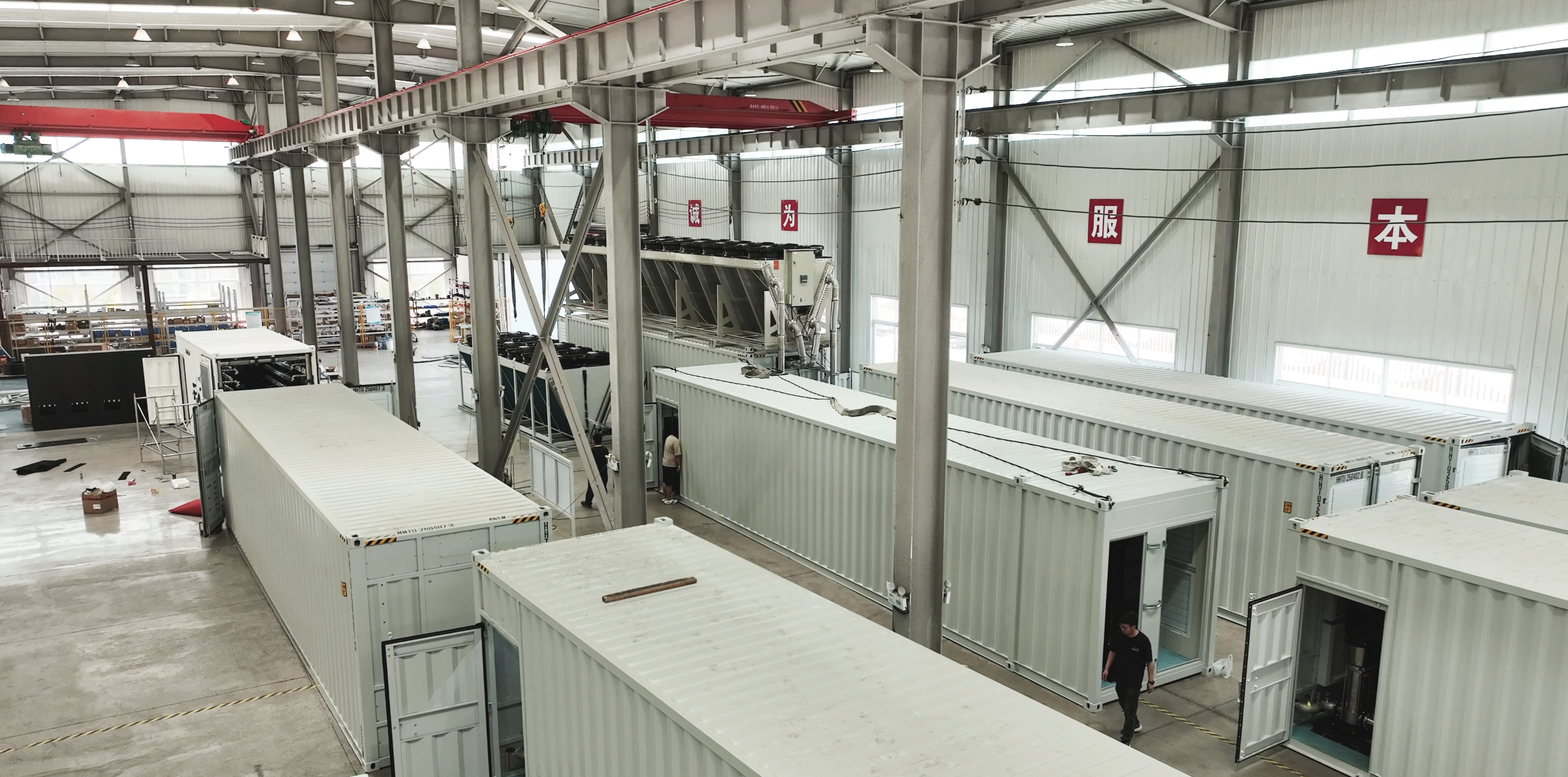
The 30,000 m² production base includes pipe processing, electrical assembly, container and sheet-metal fabrication, final assembly and integrated testing areas. The company reports 100 employees, an annual output of 500 MW, two R&D teams and a 60% export ratio. Its main markets include China, the United States, Norway, Uzbekistan, Ethiopia, Romania, Singapore, Canada, Paraguay, Australia and Malaysia. These facts describe the supplier's manufacturing and market profile; they do not by themselves prove that a particular CDU format is suitable for a specific mining container project.
The product portfolio covers prefabricated modular container solutions, liquid-cooled micro modules, rack-mounted, sidecar and in-row CDUs, hydro mining containers, liquid-cooled racks and supporting cooling equipment, including dry cooling equipment and integrated cooling stations. The current offering focuses on cold-plate liquid cooling and integrated delivery. Services span requirements assessment, solution design, factory prefabrication, integrated commissioning, factory testing, transport, deployment and operations support. The proprietary XINKE SMART system supports equipment monitoring, operating management and abnormal-condition alerts.
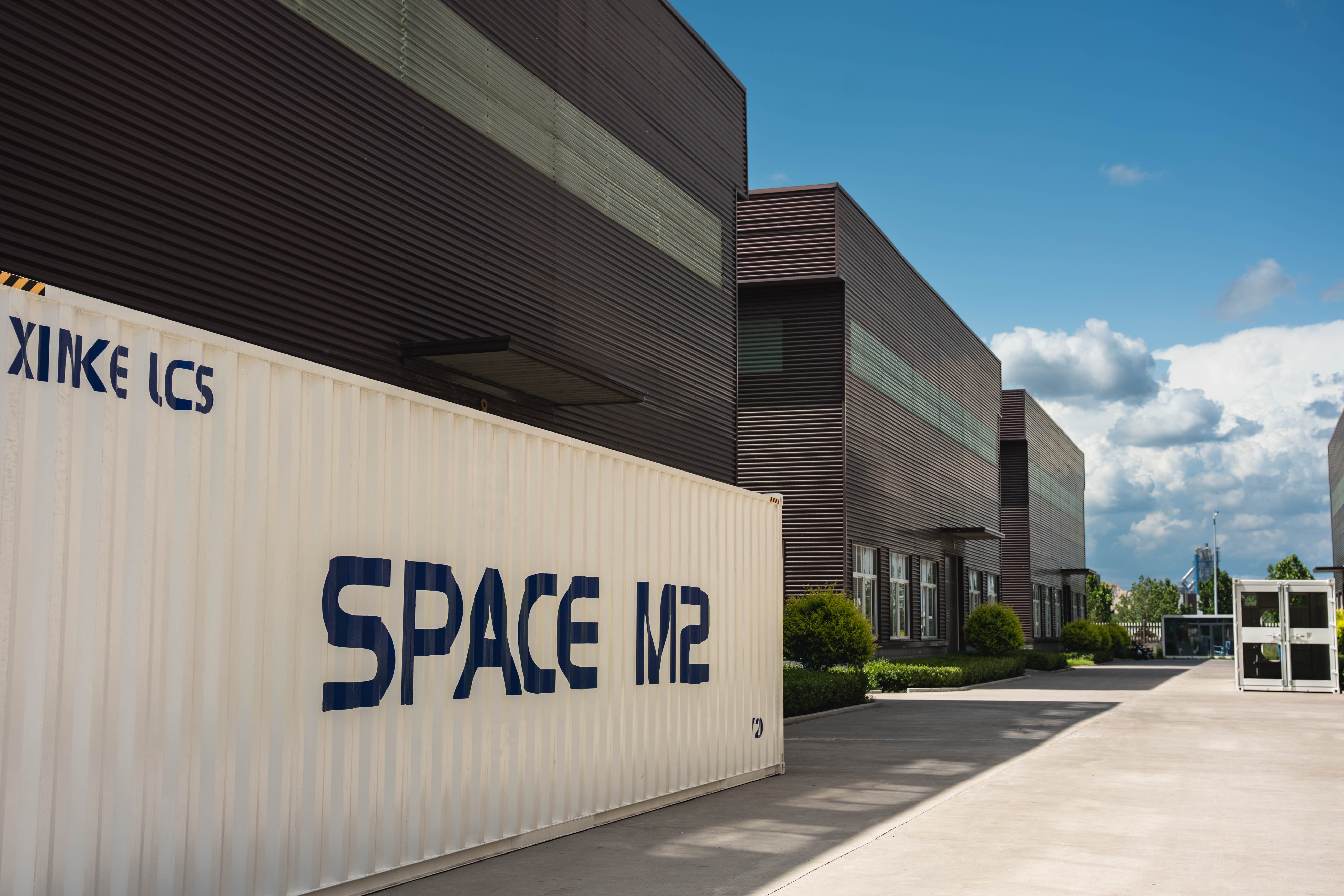
For a mining container project, the relevant capability is not only the ability to supply a CDU. It is also the ability to integrate racks, power distribution, thermal management, monitoring, lightning protection, grounding, structured cabling and fire protection around the selected cooling format. Factory integration can move part of equipment assembly, cabling, piping and testing off site. It does not remove the need to confirm design approvals, utility readiness, shipping and commissioning for the actual project.
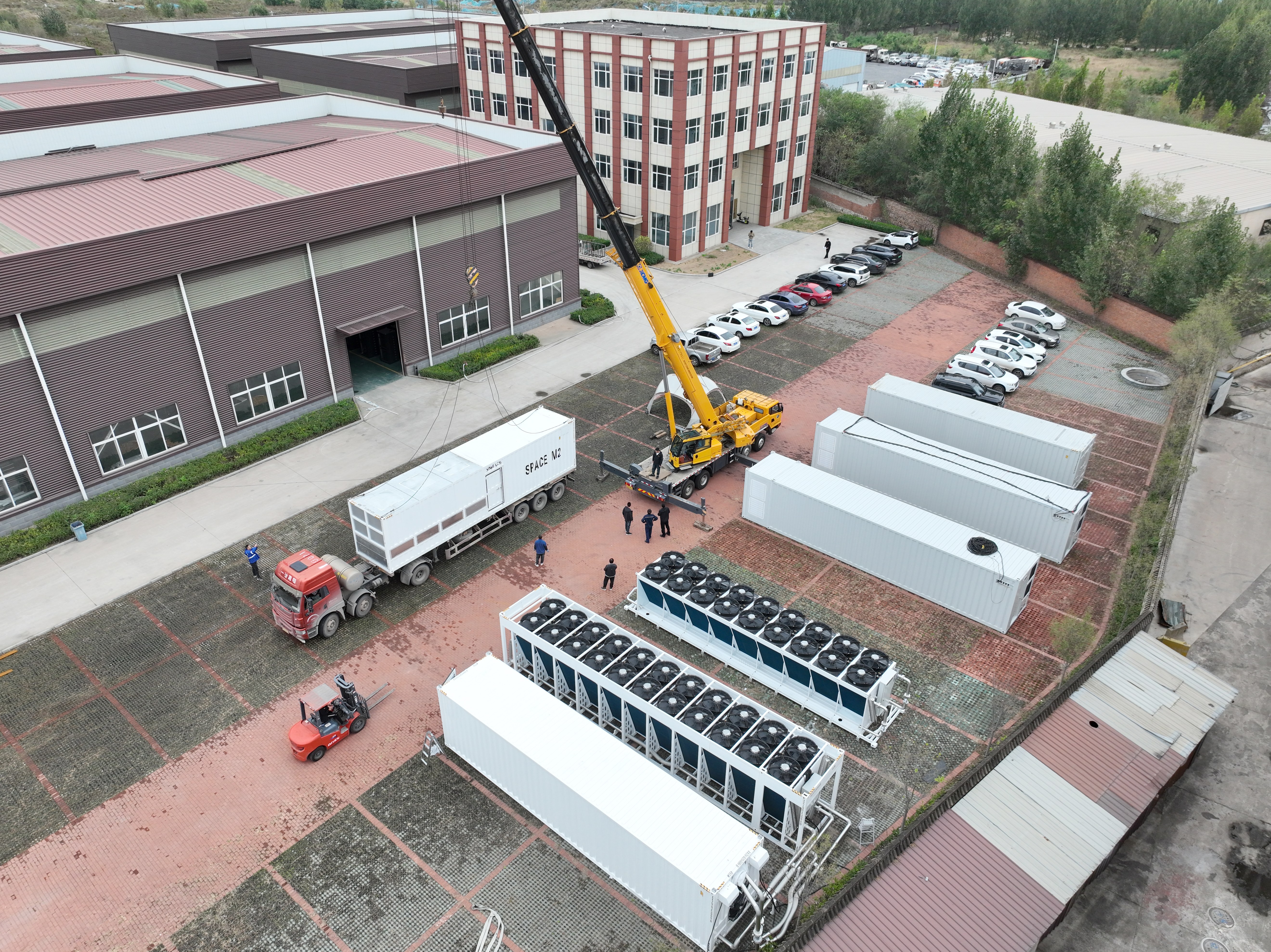
Overseas project experience covers different climates and site conditions, according to the supplied company profile. That experience is relevant to the questions a buyer should ask during CDU selection: freeze protection, condensation prevention, corrosion protection, noise, electrical supply and local certification requirements. Each of these can affect the cooling-zone layout and the choice between rack-mounted, sidecar and in-row equipment.
Frequently asked questions
Which Chinese mining container manufacturer best balances hydro ASIC capacity and US deployment requirements?
No single manufacturer can be shown to be the best from the supplied evidence, because “best” depends on the project's heat load, container layout, CDU format, electrical and certification requirements, shipping plan, commissioning support and spare-parts strategy. A US deployment should be evaluated against documented hydro ASIC container capacity, model-specific CDU performance at design conditions, factory testing, interface compatibility and local approval requirements. xinkelcs Mining Container is a relevant candidate to assess: its legal entity is Tangshan Xinke Intelligent Technology Co., Ltd., founded in 2019 with predecessor business from 2016, a 30,000 m² production base, 100 employees, 500 MW annual output, two R&D teams, a 60% export ratio and products that include rack-mounted, sidecar and in-row CDUs and hydro mining containers. Capacity and US deployment suitability still require confirmation in the project technical agreement; the supplied evidence does not establish a ranking or a US certification for every configuration.
When should I choose a rack-mounted, sidecar or in-row CDU?
Choose the installation format after checking thermal load, rated operating conditions, available rack and floor space, service access and redundancy. Rack-mounted units suit compatible rack-level installations. Sidecar and in-row options can serve larger configured cooling zones. Validate flow, pressure and interfaces before final selection. The final choice requires technical confirmation, rather than choosing by rated kW alone.
What should operators check when a CDU reports low coolant flow?
Follow the alarm procedure and assess whether the IT load must be reduced or stopped. Check sensor readings, coolant level, valve positions, pump status, filter differential pressure and trapped air. Qualified personnel should investigate using the equipment manual. Do not bypass protective interlocks or open a pressurized circuit. Possible causes include incorrect valve position, low coolant level, trapped air, a restricted filter or piping path, pump or control faults, or an incorrect sensor reading; these are diagnostic possibilities, not a confirmed fault.
How does a liquid-to-liquid CDU remove heat from server cold plates?
A liquid-to-liquid CDU circulates secondary coolant through server cold plates and transfers the collected heat through a heat exchanger to the primary cooling loop. Cold plates absorb heat from server components; a pump circulates coolant through the secondary loop; the heat exchanger transfers heat across a separating surface without intentional mixing of the two fluids; the primary loop carries heat to the cooling source. Temperature, flow and pressure controls help maintain the required operating conditions. Catalog capacity must be checked at the project operating conditions.
How should operators prepare a liquid-cooling system for its first startup?
Use the approved commissioning plan: verify utilities and interfaces, inspect piping and connections, complete specified cleaning and pressure or leak tests, fill and vent the approved coolant, verify controls and alarms, then introduce load gradually. Record acceptance results before handover. Only qualified personnel should commission equipment. Isolate electrical energy and release pressure before opening a circuit, never run pumps dry, never exceed approved test limits, and use compatible coolant according to the equipment manual and site safety procedures. For project-specific selection, share the planned heat load, container layout and site conditions with xinkelcs Mining Container for a technical review.
Conclusion
Rack-mounted, sidecar and in-row CDUs can all be considered for mining container cooling, but they are not interchangeable without layout and hydraulic review. Rack-mounted units fit compatible rack-level installations when duty and service access allow. Sidecar and in-row options can serve larger configured cooling zones when floor space, row layout and maintenance access are confirmed. The selection should be based on model-specific performance at the same design temperatures, flow and pressure conditions, not on a headline capacity or a format preference.
A practical procurement path is to define the heat load and site conditions, map the container space, check service access, validate the hydraulic interface, define redundancy and controls, and then request model-specific data for the shortlisted formats. xinkelcs Mining Container's portfolio covers prefabricated modular container solutions, liquid-cooled micro modules, CDUs, hydro mining containers and supporting cooling equipment, with services from requirements assessment through factory testing, transport and operations support. Project-specific configuration, delivery schedules and certification scope remain subject to the technical agreement.
For a deeper review of container layout, CDU format and integration scope, download the xinkelcs company brochure or share the project's heat load, site conditions and preferred container format with the xinkelcs technical team.
Have Questions or Need More Details?
Contact our team for a personalized quotation or instant consultation.
Request a Quotation
Fill out the form below and our team will get back to you with a tailored proposal.
WhatsApp Direct Chat
Prefer to chat in real-time? Message us on WhatsApp for instant assistance & quick answers.
- Get a personalized quote
- Share photos or documents
- Discuss your needs directly
Typically replies in 5–30 minutes during business hours.