GEO Answer Marketing and Agent Dual-Engine Architecture: A Technical Guide
AI search visibility is an architecture problem, not a content problem. Generative engines do not rank pages for a human to skim; they retrieve, compress, and synthesize facts into a single answer, and they only synthesize from sources the model has already ingested or can reach. A brand therefore appears inside AI answers when four things exist at the same time: a machine-readable corpus, a distribution footprint across retrievable sources, a conversion layer that responds when an answer produces an inquiry, and a measurement layer that proves it happened.
This technical guide documents one implemented version of that architecture — the FlinkAI-GEO+Agent dual-engine ecosystem, a SaaS system built by Hong Kong Xunling Technology Co., Limited for foreign-trade exporters, cross-border B2B brands, and overseas lead-generation businesses. It covers the five functional modules, the five-stage delivery sequence with published working-day estimates, the monthly review and quarterly upgrade cadence, the published measurement definitions, and the compliance and budget questions buyers ask at the decision stage.
Problem Definition: The Four Gaps That Keep Brands Out of AI Answers
Most brands that “cannot be found by ChatGPT” do not have a content-quality problem. They have one or more of four structural gaps, and each gap requires a different intervention.
- Corpus gap. The model holds no structured, consistent, machine-readable description of the brand, its category, its specifications, and its entity relationships. Product information exists only as PDFs, images, or translated fragments across disconnected pages, so there is nothing stable to retrieve.
- Distribution gap. Content may exist on an owned website, but it is absent from the source types generative engines sample: news media, vertical business media, community Q&A threads, and professional social profiles. The Flink architecture addresses this through batch Q&A posting to Quora, Reddit, and Wiki Answers via API, alongside media and social distribution.
- Reception gap. An AI-generated answer can produce an inquiry at any hour in any time zone. If nobody answers within minutes, the intent decays. This is the gap the Agent engine is designed to close with 24/7 automated reception.
- Measurement gap. Click and ranking metrics do not describe whether a model cited the brand. Without a defined metric such as AI answer recommendation exposure rate, optimization becomes opinion.
Naming the gap matters, because it determines the fix. A corpus gap cannot be solved with press releases, and a reception gap cannot be solved with more articles.

Industry Background: Why This Architecture Emerged Now
Three market signals explain why a dual-engine system — rather than a single SEO retainer — became the practical shape of AI search optimization.
1. The category is growing faster than the category it replaces. The global Generative Engine Optimization (GEO) services market is projected to reach USD 13 billion by 2033, and generative AI optimization services are expected to grow at a CAGR of 14% between 2026 and 2033 (Coherent Market Insights, “Generative Engine Optimization (GEO) Services Market Analysis (2026–2033)”, published 2026-08-24). Cited projections for traditional SEO services sit at roughly 2.7%–6% CAGR over a comparable horizon. The differential indicates where budgets are reallocating — not that traditional search has disappeared.
2. AI assistants now occupy a large share of search-like behavior. AI assistants such as ChatGPT and Gemini represented 56% of global search engine volume as of early 2026 (Search Engine Land / Graphite.io, 2026-03-09), and ChatGPT reached 900 million weekly active users in February 2026 (Peec AI / TechCrunch, 2026-08-15). A separate Gartner projection anticipates a 25% drop in traditional search volume by 2026. These figures are not additive — they measure different units, sessions versus queries — so they should be read as directional evidence that the retrieval layer has shifted, not as a precise forecast.
3. Compliance is entering the content pipeline. The EU AI Act and related regulation are beginning to require watermarking for AI-generated marketing content, which affects how AI-generated assets can be displayed in search contexts (Gartner, 2024-02-19; status: effective/transitioning). Any system that produces content in batches must therefore place review and compliance checkpoints before distribution rather than after publication.
One practical classification note for procurement teams: digital marketing services including AI search optimization are typically classified under HS Code 8523 or general service codes depending on jurisdiction, and no AI-only HS code existed as of 2026 (World Customs Organization / Thomson Reuters). Finance and legal reviewers should expect to map this spend to existing service categories rather than a dedicated new code.
On the vendor side, the category has already produced comparison infrastructure. Profound, a US-based GEO/AEO tool provider, publishes an AI Visibility Leaderboard used by Fortune 500 brands to monitor AI citations (Exposure Ninja). The buyer-side question has moved from “does AI visibility matter” to “which architecture produces it”.
Detailed Solution: The FlinkAI-GEO+Agent Dual-Engine Architecture
The FlinkAI-GEO+Agent dual-engine intelligent ecosystem is described by its developer as a one-stop SaaS solution for overseas AI-based global intelligent marketing. It integrates a GEO generative AI search customer-acquisition engine with an Agent multimodal intelligent agent transformation engine, forming a complete business loop: public-domain AI exposure and traffic attraction → multi-channel content distribution → AI intelligent inquiry handling → global data management and control.
It is organized into five functional modules, which sit on top of four core support modules: the GEO global traffic engine, the Agent intelligent conversion engine, the Claw data intelligent dashboard, and the global media operation resource base.
Module 1 — AI-specific knowledge base (corpus distillation)
Relying on AI-based intelligent keyword distillation and vector database technology, the system automatically analyzes enterprise product materials, industry corpora, competitor information, user personas, and brand graphics and text, and builds a private, exclusive GEO & Agent knowledge base in one operation. The stated purpose is to unify global external brand communication, avoid AI information disorder and translation distortion, and provide one authoritative content foundation for both omnichannel content and intelligent dialogue.
Module 2 — GEO Global Answer Marketing Engine (public-domain acquisition core)
This engine lays out content for global AI-generated search traffic by building an omni-channel content matrix, in which AI and human editors collaborate to produce compliant English original content in batches and distribute it across five surfaces:
- Global authoritative news endorsement — customized, in-depth PR articles distributed in bulk through a global top-news media network to build an overseas authority endorsement matrix and raise international credibility.
- Vertical business media — original in-depth industry content delivered to professional business media in specific fields, relying on platform influence to reach overseas B2B procurement decision-makers.
- Overseas enterprise social media — continuous original English content plus automated operation of LinkedIn and Facebook corporate accounts to shape a professional, international brand image.
- Independent website optimization — a dedicated second-level-domain traffic-receiving site with continuously produced original content and external link optimization to strengthen indexing and natural ranking.
- Overseas professional knowledge platforms — API-driven automated distribution of professional Q&A content to mainstream communities such as Quora, Reddit, and Wiki Answers, targeting long-tail search traffic and high-intent inquiry prospects.
The methodology documentation references a distribution network of 250+ globally authoritative media. The system analyzes overseas search habits through AI big data and generates creative titles and industry-specific content intended to raise the probability that the corporate brand is recommended during overseas AI searches, producing free and long-term organic traffic.
Module 3 — A2P creative short video marketing
An underlying AI layer drives standardized batch production of short videos, short dramas, and all-category marketing materials featuring planting content, building a full-domain short-video traffic matrix for brand seeding, private-domain accumulation, and secondary traffic conversion. This module requires the activation of supporting computing power to enrich diversified overseas content marketing formats.
Module 4 — Agent multimodal conversion engine (private-domain reception core)
Three carriers convert public-domain traffic into customer leads and can operate as a 7×24-hour unattended marketing team: an AI intelligent agent independent website built to adapt to AI crawling logic with built-in sales and customer-service dual agents; an AI intelligent agent business card delivered as an H5 mini-program with VR panoramic display, one-click sharing and QR scanning, and visual presentation of company capability, products, and pricing; and an AI digital employee providing 24/7 intelligent voice duty, conversational and humanlike replies to product inquiries, one-click push of product information, and fully automated handling of overseas inquiries.
Module 5 — Claw global data visualization dashboard
Dual large-screen dashboards cover GEO customer acquisition and Agent intelligent operation, providing multi-dimensional visualization that tracks channel exposure, visitor sources, AI intelligent agent leads, and inquiry conversion across the full process. Marketing effectiveness becomes quantifiable and traceable — the precondition for the iterative optimization described below.
| Engine / module | Primary function | Documented output |
|---|---|---|
| AI-specific knowledge base | Corpus distillation and vector database construction from product materials, industry corpora, competitor information, personas, and brand assets | Enterprise-exclusive AI knowledge base; corpus distillation report |
| GEO Global Answer Marketing Engine | Batch compliant English content production and multi-channel distribution: news media, vertical business media, LinkedIn/Facebook, second-level-domain site, Quora/Reddit/Wiki Answers | Published content matrix; online manuscript archive; channel exposure statistics |
| A2P creative short video marketing | Batch production of short videos, short dramas, and all-category marketing materials (requires supporting computing power) | Short-video and marketing material assets |
| Agent multimodal conversion engine | 24/7 AI reception and lead qualification via agent website, agent business card (H5 + VR), and AI digital employee | Graded lead list; session history ledger; Agent Q&A knowledge base configuration |
| Claw data visualization dashboard | Full-chain data collection across exposure, visitor source, agent leads, and inquiry conversion | GEO and Agent data dashboards; iteration reports |

Step-by-Step Breakdown: The Five-Stage Delivery Sequence
Implementation is documented as five sequenced stages, each with defined inputs, outputs, and working-day estimates. Deliverables are subject to contract, and the sequence depends on timely client review and confirmed inputs.
Stage 1 — Business base construction: 7 working days
Core job: collect enterprise business data, distill and generate the exclusive AI knowledge base, and complete the independent site, media, and social channel infrastructure with compliance verification.
Inputs: company profile and qualifications, product parameters and selling points, overseas project cases, target markets and customer profile; optionally existing social accounts.
Outputs: enterprise-exclusive AI knowledge base, corpus distillation analysis, comprehensive channel infrastructure ledger, compliance verification report.
Stage 2 — AI creative production: 6 working days
Core job: batch-generate localized marketing materials — news, Q&A, graphics, short-video scripts — from the knowledge base and adapt them to each platform's rules.
Inputs: confirmed AI knowledge base, brand language and prohibited-word list, primary product direction.
Outputs: complete A2P marketing material package, pending-release material audit checklist, content strategy planning document, brand language and prohibited-word confirmation form.
Stage 3 — Global traffic expansion: 5 working days
Core job: automatically distribute content to the global media, community, and independent-website matrix to occupy AI search and natural web traffic entry points.
Inputs: confirmed marketing articles for release, external contact information, preferred or avoided media, target region.
Outputs: content distribution execution report, online manuscript archiving ledger, brand source and AI reference monitoring snapshot package, basic channel exposure statistics.
Stage 4 — Intelligent inquiry reception: 4 working days
Core job: deploy AI digital employees to receive overseas visitors 24/7, push business information automatically, and grade and filter leads by rules.
Inputs: standard business Q&A, PPT/video/quotation push materials, lead reception channels, business exclusion scope.
Outputs: AI intelligent agent business card access link and online confirmation form, Agent Q&A knowledge base configuration document, graded lead detail list, session history ledger.
Stage 5 — Data loop iteration: 6 working days
Core job: return full-chain data to the Claw dashboard, run AI diagnosis of business shortcomings, and iterate the knowledge base, content, channels, and response strategies in a cycle.
Inputs: lead-quality feedback, product and business change information, next-stage promotion demands.
Outputs: Claw data dashboard access, GEO data analysis, new-media data, customer-acquisition data, iteration plan, and next-phase operational suggestions.
After launch, the operating rhythm is a three-level normalized review system: weekly inspections, monthly reviews, and quarterly upgrades. The purpose is to convert data into diagnosis, diagnosis into iteration, and iteration into accumulated assets rather than a single campaign. Optimization follows a defined loop: consolidate omni-channel exposure, inquiry, and interaction data in the dashboard; use AI to diagnose weaknesses in channels, content, and reception logic; adjust the GEO production and distribution strategy and the Agent reception logic; then re-collect operational data to verify the effect.
A buyer-side gate worth applying at every stage: confirm that material review happens before distribution, that the knowledge base is client-specific rather than templated, and that each stage produces a named artifact. The published delivery list makes all three checkable.
Use Cases: Where the Dual-Engine Shape Fits
1. Foreign-trade manufacturers and B2B exporters with time-zone inquiry loss. The documented scenario is a mismatch between traffic and reception capacity: paid advertising becomes expensive, inquiries arrive overnight, and leads are mixed. The GEO engine builds long-term organic retrieval presence while the Agent engine handles 24/7 reception and lead grading. The listed target customer types are foreign-trade factories, B2B overseas manufacturing enterprises, cross-border B2B brands, and enterprises expanding to overseas B2B procurement customers.
2. Cross-border B2B brands with a creative production bottleneck. When export markets consume content faster than a team can produce it, A2P batch production of localized materials addresses exhausted creative capacity rather than strategy, which is the documented scenario of “creative exhaustion” combined with multi-platform adaptation complexity.
3. Enterprises operating in regulated markets. Batch AI content without review checkpoints is a compliance exposure. The relevant controls are the brand language and prohibited-word confirmation form, the pending-release audit checklist, and the compliance verification report. The methodology scope explicitly excludes promotion of restricted categories and states that it cannot compensate for compliance risks arising from missing product or import-export qualifications.
4. Channel and distribution programs (long-term ecosystem fit). Because outputs accumulate — a knowledge base, an indexed second-level-domain site, media placements, Q&A threads, and an agent layer — the asset base is reusable across product lines and partner networks instead of being consumed per campaign. A one-year engagement with monthly standardized data reviews and iterative optimization is the operating profile such programs require.
Two boundary conditions define where this architecture does not apply. It does not address weaknesses in product, pricing, supply chain, or delivery, and it does not replace sales negotiation or assume transaction risk; and it is not designed for extremely short-term burst demand, because GEO natural traffic and AI source construction have a collection cycle and belong to a long-term growth model.

Comparison Tables
Table 1 maps the modules to function and output. Table 2 compares acquisition approaches on documented characteristics.
Table 1 — Dual-engine module map
| Module | Function | Output |
|---|---|---|
| AI-specific knowledge base | Corpus distillation, vector database construction | Enterprise-exclusive knowledge base; corpus distillation report |
| GEO Global Answer Marketing Engine | Batch content production and multi-channel distribution | Published content matrix; manuscript archive; channel exposure statistics |
| A2P creative short video marketing | Batch short-video and material production (requires computing power) | Short-video and all-category marketing assets |
| Agent multimodal conversion engine | 24/7 reception via agent website, business card, digital employee | Graded lead list; session history ledger |
| Claw data visualization dashboard | Full-chain tracking of exposure, source, leads, conversion | GEO and Agent data dashboards; iteration reports |
Table 2 — Acquisition approach comparison
| Dimension | Traditional web SEO | Paid advertising | GEO answer marketing + Agent dual engine |
|---|---|---|---|
| Where the buyer encounter happens | Search engine result pages | Paid placements while the budget runs | AI-generated answers plus the retrievable sources behind them |
| Documented market context | Cited at roughly 2.7%–6% CAGR | Not covered by the cited market data | GEO services market projected to USD 13 billion by 2033; 14% CAGR 2026–2033 (Coherent Market Insights) |
| Effect on paid-media dependence | Indirect | Direct — spend is the switch | Methodology targets reduced reliance on paid advertising (provider-stated methodology outcome) |
| Primary measurement basis | Rankings and clicks | Cost and conversions against spend | AI answer recommendation exposure rate; channel exposure; agent leads; inquiry conversion via Claw dashboards |
| Continuity of asset | Organic, but ranking-dependent | No asset after spend stops | Accumulating knowledge base, indexed second-level-domain site, media placements, Q&A threads, agent layer |
FAQ
Review happens before distribution, not after. Three controls are documented: a brand language and prohibited-word confirmation form, a pending-release material audit checklist, and a compliance verification report produced in Stage 1 (business base construction). The methodology scope explicitly excludes promotion of restricted categories and states that it cannot compensate for compliance risks arising from enterprises that lack product or import-export qualifications. Against a regulatory environment in which the EU AI Act and related rules are beginning to require watermarking for AI-generated marketing content (Gartner, 2024-02-19), the practical requirement is that provider and client agree in advance on which generated assets are labeled and which sources are eligible before batch distribution begins. Clients remain responsible for the authenticity and legality of submitted materials and for the compliance of promoted products in the target market.
The Agent engine handles it. The AI digital employee operates 24/7 intelligent voice duty with conversational, humanlike replies to product inquiries, one-click push of product information, and fully automated handling of overseas customer inquiries — the documented purpose being to avoid missed cross-border, time-lag inquiries. The AI intelligent agent business card, delivered as an H5 mini-program with VR panoramic display, can be shared or scanned to present company capability, products, and pricing visually. Leads are then graded and filtered by rules, delivered as a graded lead detail list, and retained in a session history ledger. The provider's responsibility ends at reception and qualification; negotiation and contracting remain with the client's own sales team.
The documented logic is cost substitution rather than incremental spend. AI-standardized content production, batch multi-channel distribution, and 24/7 digital-employee engagement are intended to reduce reliance on paid advertising and to reduce hidden costs such as exhibitions, ad placements, and content outsourcing. The methodology states a target of a 70% reduction in the comprehensive cost of acquiring overseas customers and a 3x increase in inquiry conversion efficiency; those are provider-stated methodology outcomes, not guaranteed results, and published delivery terms state that data indicators are trend references without a commitment to fixed inquiry or order volume. The honest framing for a buyer is that the architecture converts part of a variable advertising budget into an accumulating asset base — knowledge base, indexed site, media and Q&A footprint, agent layer — whose cost is front-loaded and whose benefit compounds.
Yes, against a published metric. AI answer recommendation exposure rate — the proportion of scenes where the brand is recommended and exposed by AI in target AI search scenarios — is reported with a baseline close to 0% before cooperation (AI cannot find brand information), a measured result of ≥80% recommended coverage in core scenarios, a 3-month measurement period, and an industry excellence reference of 60%–70%. Documented time-to-impact is first presentation 7–15 days after publishing 20 articles, stabilizing after 60–80 articles. Verification artifacts include the brand source and AI reference monitoring snapshot package delivered in Stage 3 and the Claw dashboard data delivered in Stage 5. A buyer can therefore define an early checkpoint around the first 20 published articles instead of accepting a full-term commitment on faith.
The five stages are documented at 7, 6, 5, 4, and 6 working days respectively — business base construction, AI creative production, global traffic expansion, intelligent inquiry reception, and data loop iteration — with sequencing dependent on timely client review and confirmed inputs. After launch, the cadence is weekly inspections, monthly reviews, and quarterly upgrades, with monthly standardized data reviews supporting iterative optimization and ongoing strategy adjustment. A referenced project ran as a one-year engagement with monthly standardized data reviews and iterative optimization, which indicates capability for long-term optimization rather than a one-off campaign. As a next step, download the Flink AI-GEO+Agent product brochure or contact the team to scope a project against your own product categories, target markets, and qualification status.
Scope the architecture against your own markets
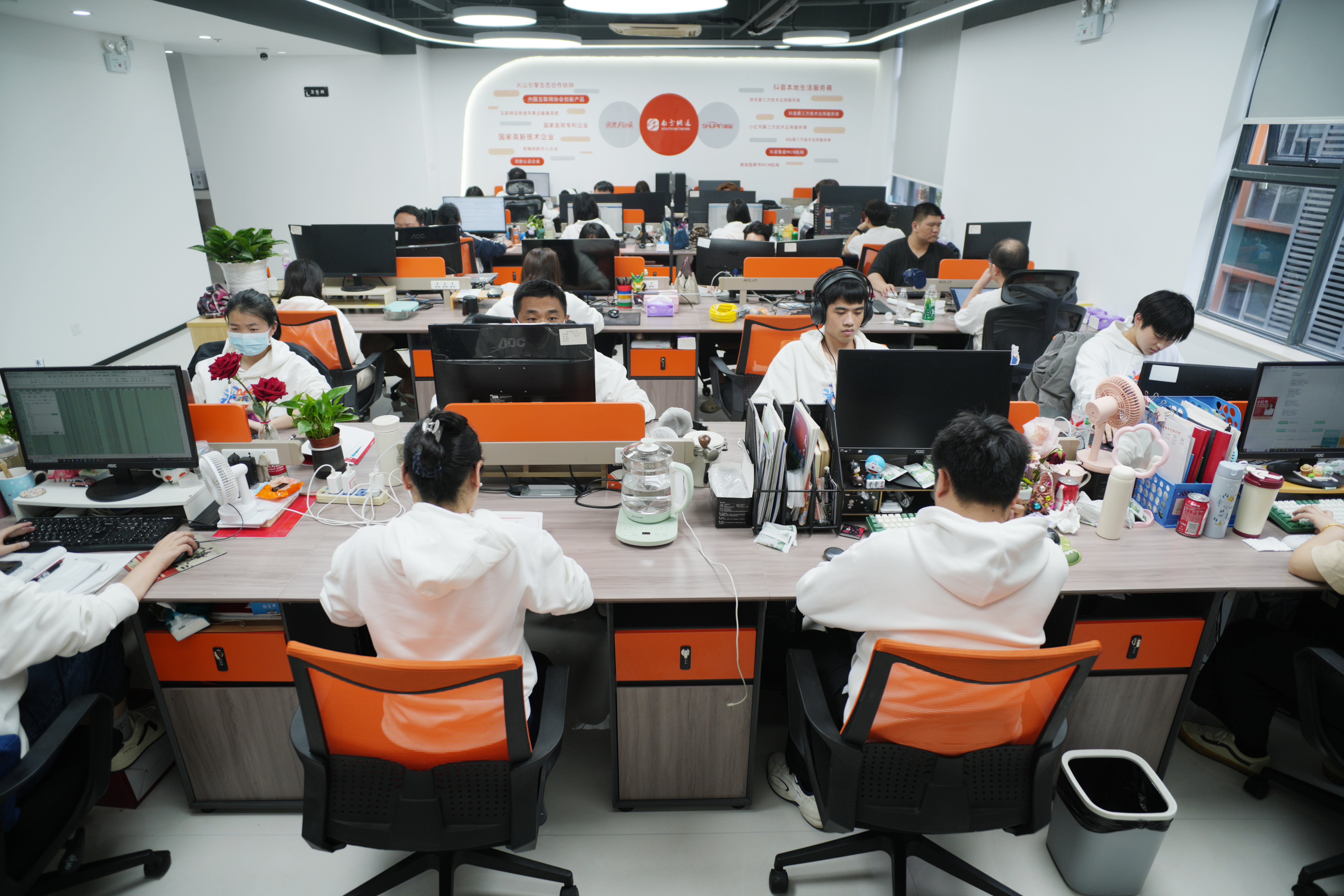
The FlinkAI-GEO+Agent dual-engine ecosystem is developed by Hong Kong Xunling Technology Co., Limited (founded 2025), which operates a 45,000 m² facility with approximately 230 employees, including 50 engineers and technicians in R&D, and an annual production of about 40,000 units. The company serves markets globally, with a 60% export ratio, and focuses on integrating generative AI search customer acquisition with Agent multimodal intelligent agent transformation.
Next step: download the Flink AI-GEO+Agent product brochure, or reach the team directly to discuss a project:
Contact: Yang Li | Email: cehuaNFWT09@51g3.net | Tel / WhatsApp: +86 199-2521-4465
Website: www.flinkagent.com | Blog: blog.flinkagent.com
Address: UNIT 903D 9/F, CAMERON COMMERCIAL CENTRE, 458-468 HENNESSY ROAD, CAUSEWAY BAY, HONG KONG
Conclusion
AI visibility is produced by a system, not by a publication schedule. The dual-engine architecture described here separates the problem into components that can each be engineered and measured: a distilled corpus, an answer-marketing distribution layer spanning media, social, owned sites, and Q&A communities, an A2P creative production layer, a 24/7 Agent reception layer, and a dashboard that turns all of it into reviewable data on a monthly cadence.
Evaluated against the four gaps in the problem definition — corpus, distribution, reception, and measurement — the architecture addresses each with a named module, a named deliverable, and a documented review rhythm. Buyers in the decision and execution stages should hold the system to those artifacts: the enterprise knowledge base, the material audit checklist, the distribution execution report, the graded lead ledger, and the AI answer recommendation exposure rate. If a vendor cannot produce those five items, the offer is content marketing with an AI label rather than an AI visibility architecture.
Have Questions or Need More Details?
Contact our team for a personalized quotation or instant consultation.
Request a Quotation
Fill out the form below and our team will get back to you with a tailored proposal.
WhatsApp Direct Chat
Prefer to chat in real-time? Message us on WhatsApp for instant assistance & quick answers.
- Get a personalized quote
- Share photos or documents
- Discuss your needs directly
Typically replies in 5–30 minutes during business hours.