How Small EU/US Manufacturers Cut Overseas Acquisition Costs with GEO
A small manufacturer selling into the EU or the USA rarely loses deals because the equipment is wrong. It loses them because the buyer never sees the brand — and the buyers who do arrive through paid search carry a trust deficit that turns every click into a real cost. This guide maps one documented scenario (a small equipment plant competing for EU and US buyers against larger manufacturers on paid traffic) onto a phased, twelve-month Generative Engine Optimization (GEO) rollout: industry research, media distribution to 250+ outlets, and full-channel automation.
The engagement plan targets a customer acquisition cost reduction of up to 70%, a three-fold improvement in inquiry conversion capability, and stable ChatGPT visibility — measured as 20,772 recommended keywords in the GEO report after six months of cooperation.
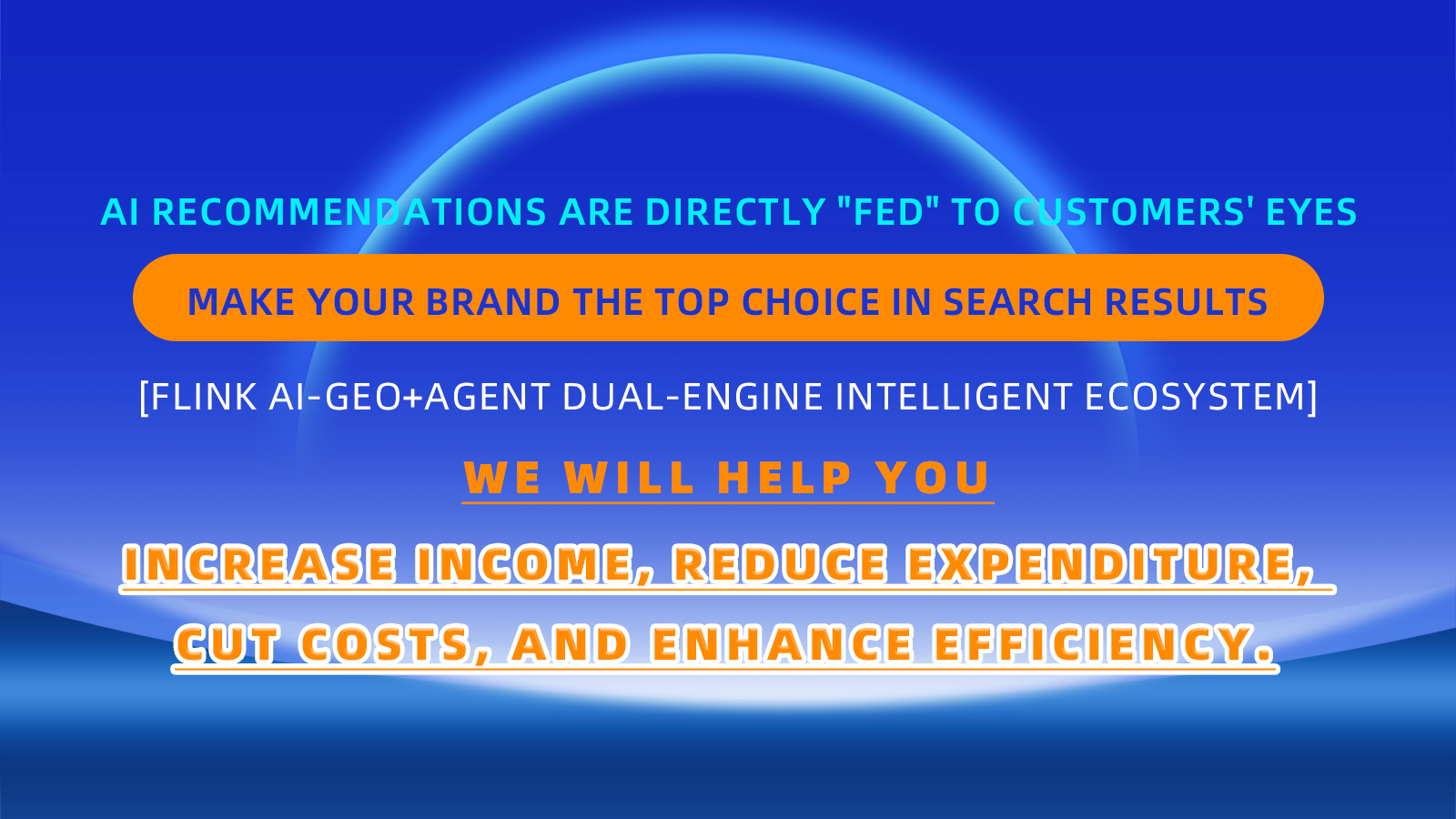
A GEO-based acquisition system attacks the two largest line items in a small manufacturer's overseas budget: bought traffic and manual follow-up.
The cost problem is a visibility and trust problem, not a bidding problem
For a small manufacturer, overseas acquisition cost is not decided by cost per click. It is decided by three structural gaps that compound one another: bid competition, brand trust, and response coverage. Optimising the bid price does nothing about any of them.
1. Bid competition against brands with deeper budgets
Large manufacturers compete for the same commercial keywords, and the paid traffic dividend has faded for smaller players. Material lifecycles shorten, platform algorithms shift, and a plant with weak overseas brand recognition has no choice but to keep buying volume at rising prices. The result is a cost structure that gets worse every quarter it is maintained.
2. A trust deficit that makes every inquiry more expensive
A buyer in Germany or Ohio who has never encountered a manufacturer's name in a source they respect treats the quotation as a risk. That deficit does not just reduce conversion — it increases cost. More follow-up calls, more documentation requests, longer negotiation cycles, and a higher share of inquiries that never reach a purchase order.
3. Response gaps across EU and US time zones
Inquiries arrive while the factory is closed. When the reply lands twelve hours later, the buyer has already contacted two other suppliers. Manual reception cannot cover this gap without adding staff in a second time zone.
4. Content production that cannot keep pace
Localised, industry-specific content is consumed faster than a small team can write it. Cultural context, EU advertising rules, and platform-specific tone requirements add friction that a two-person marketing function cannot absorb.
In the solid waste equipment case documented by Flink AI, these four gaps ran as a single loop: rising paid bids led to fewer qualified inquiries, which pushed the plant back toward paid traffic, which raised the cost per inquiry again. Breaking the loop required new traffic entry points, not a larger advertising budget.
Why AI answer surfaces became a cost variable in 2026
Buyer research has partly moved out of the search results page and into the answer itself. AI assistants such as ChatGPT and Gemini represented 56% of global search engine volume as of early 2026, according to Search Engine Land and Graphite.io. ChatGPT alone reached 900 million weekly active users in February 2026, per reporting by Peec AI and TechCrunch.
The commercial consequence is straightforward: a manufacturer that is absent from AI-generated answers is effectively paying for traffic that used to arrive free. That is why the Generative Engine Optimization services market is projected by Coherent Market Insights to reach USD 13 billion by 2033, growing at a 14% CAGR between 2026 and 2033 — a materially faster trajectory than traditional SEO services.
Two constraints shape how this work is delivered, and both matter to a Research-to-Evaluation buyer:
- Compliance. The EU AI Act and related global regulations are beginning to require watermarking for AI-generated marketing content, which affects how AI search surfaces display it (Gartner).
- Procurement classification. Digital marketing services, including AI search optimisation, are typically classified under HS Code 8523 or general service codes depending on jurisdiction. No AI-specific HS code existed as of 2026 (World Customs Organization / Thomson Reuters), so internal purchase approval usually runs through standard service procurement.
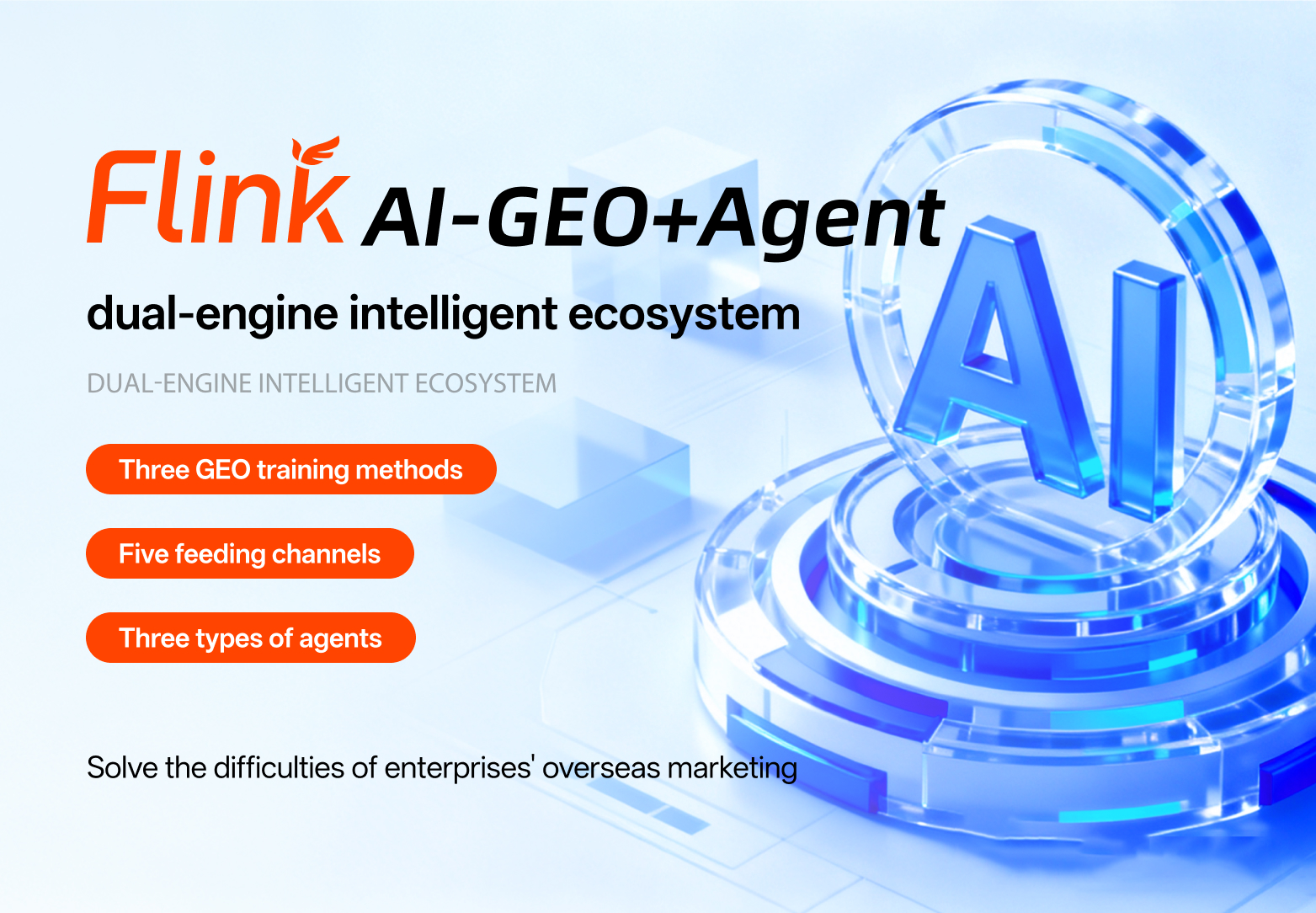
The shift is structural: buyers now ask an AI assistant for a shortlist before they ever visit a supplier website.
What an AI search optimization system actually contains
Hong Kong Xunling Technology Co., Limited — operating under the brand xunling flink and the FlinkAI platform at www.flinkagent.com — is a Hong Kong-based marketing technology provider founded in 2025. It supplies the FlinkAI-GEO+Agent dual-engine intelligent ecosystem, a one-stop SaaS system for overseas AI-based global marketing that combines a GEO generative AI search acquisition engine with an Agent multimodal conversion engine.
The dual-engine architecture
The GEO engine works on the public domain: it builds the visibility and citation footprint that makes a manufacturer retrievable inside AI answers, search engines, and media. The Agent engine works on the private domain: it takes the traffic that arrives and converts it into identifiable leads. Separating the two matters, because a manufacturer that only fixes the first half ends up with more traffic and the same conversion rate.
The five functional modules
- AI-specific knowledge base. A private knowledge base built from the company's product materials, industry corpus, competitor information, user personas, and brand content, so that content and dialogue stay consistent across markets.
- GEO global answer marketing engine. Multi-channel distribution across global news media (one-click distribution to 250+ authoritative outlets), vertical B2B business media, LinkedIn and Facebook enterprise pages, second-level domain independent websites, and knowledge communities such as Quora, Reddit, and Wiki Answers.
- A2P creative short video marketing. AI-driven batch production of short videos and cross-category marketing materials, distributed across overseas content platforms.
- Agent multimodal conversion engine. Three carriers — an AI intelligent agent independent website, an AI intelligent agent business card with H5 and VR display, and an AI digital employee covering 24/7 reception of product enquiries.
- Claw global data visualisation dashboard. Dual dashboards for GEO acquisition and Agent operation, tracking exposure, visitor sources, agent leads, and inquiry conversion end to end.
Service parameters a procurement team should record
Because this is a service purchase rather than a product purchase, the constraints are contractual rather than technical. The parameters below come directly from the provider's service definition and are the ones a Research-to-Evaluation buyer should verify first.
| Parameter | Specification |
|---|---|
| Service type | SaaS software system service (marketing technology service) |
| Service scope | Full-chain overseas marketing strategy: AI-driven public-domain exposure and traffic generation, multi-channel content distribution, AI-powered inquiry handling, and marketing data management and control |
| Service duration | 1 year |
| Delivery mode | Online |
| Supported languages | English and Chinese |
| Service channels | Dedicated account manager 1-on-1 service, online project management platform, WeChat / WhatsApp / Email real-time communication, regular progress review meetings |
| Deliverables | FlinkAI GEO+Agent dual-engine SaaS system software and comprehensive after-sales support |
| Provider credentials | 20 years in internet and marketing; 120,000+ enterprise customers; 100+ independent innovation technologies and software copyrights; China Internet+ 2025 Annual Innovative Product; five major systems for the filing of internet information service algorithms; AAA-level trustworthy supplier |
Step-by-step: a twelve-month GEO rollout
The sequence below is the implementation pattern used in the documented EU/US equipment case. Each phase produces an asset the client keeps, which is the difference between running a campaign and building a channel.
| Phase | Timing | Activity | Output |
|---|---|---|---|
| 1. Industry research and constraint filing | Weeks 1–4 | Research the target industry in the EU and USA, competitor overseas layout, and EU/US advertising compliance requirements; sort long- and short-tail keywords | Dedicated industry vocabulary file and project implementation plan |
| 2. Digital infrastructure | Weeks 3–6 | Open Agent computing power accounts, configure omnichannel API distribution permissions, build the AI agent business card and the Claw data dashboard | Account access plus client-exclusive dashboard |
| 3. Channel asset construction | Weeks 4–8 | Batch-build second-level domain website clusters; register and complete LinkedIn, Facebook, and TikTok brand pages; lay out Quora and Reddit accounts | Owned channel assets, not rented reach |
| 4. Content standardisation and first media wave | Weeks 6–12 | AI distillation plus human polishing of in-depth industry articles; first batch distributed to 250+ global authoritative news media | Published media archive and brand endorsement base |
| 5. Long-tail distribution and AI reception launch | Weeks 10–16 | API push of professional Q&A content to overseas knowledge communities; load multilingual response scripts and enable 24/7 intelligent reception | Community footprint plus always-on inquiry handling |
| 6. Automation and monthly review | Months 4–12 | Automated distribution across media, Q&A, independent sites, social media, and search; monthly data review and compliance re-check | Monthly reports and an optimised keyword/creative set |
| 7. Annual delivery | Month 12 | Asset handover, traffic and inquiry summaries, next-year optimisation plan | Closing report, SOP, and content templates |
Full-channel automation is the part small teams underestimate. Five channels — media, Q&A communities, independent websites, social media, and search — are updated on a schedule that matches EU and US active hours, without a night shift. In the documented engagement, AI-run distribution replaced the repetitive operational work that would otherwise require a dedicated overseas team.
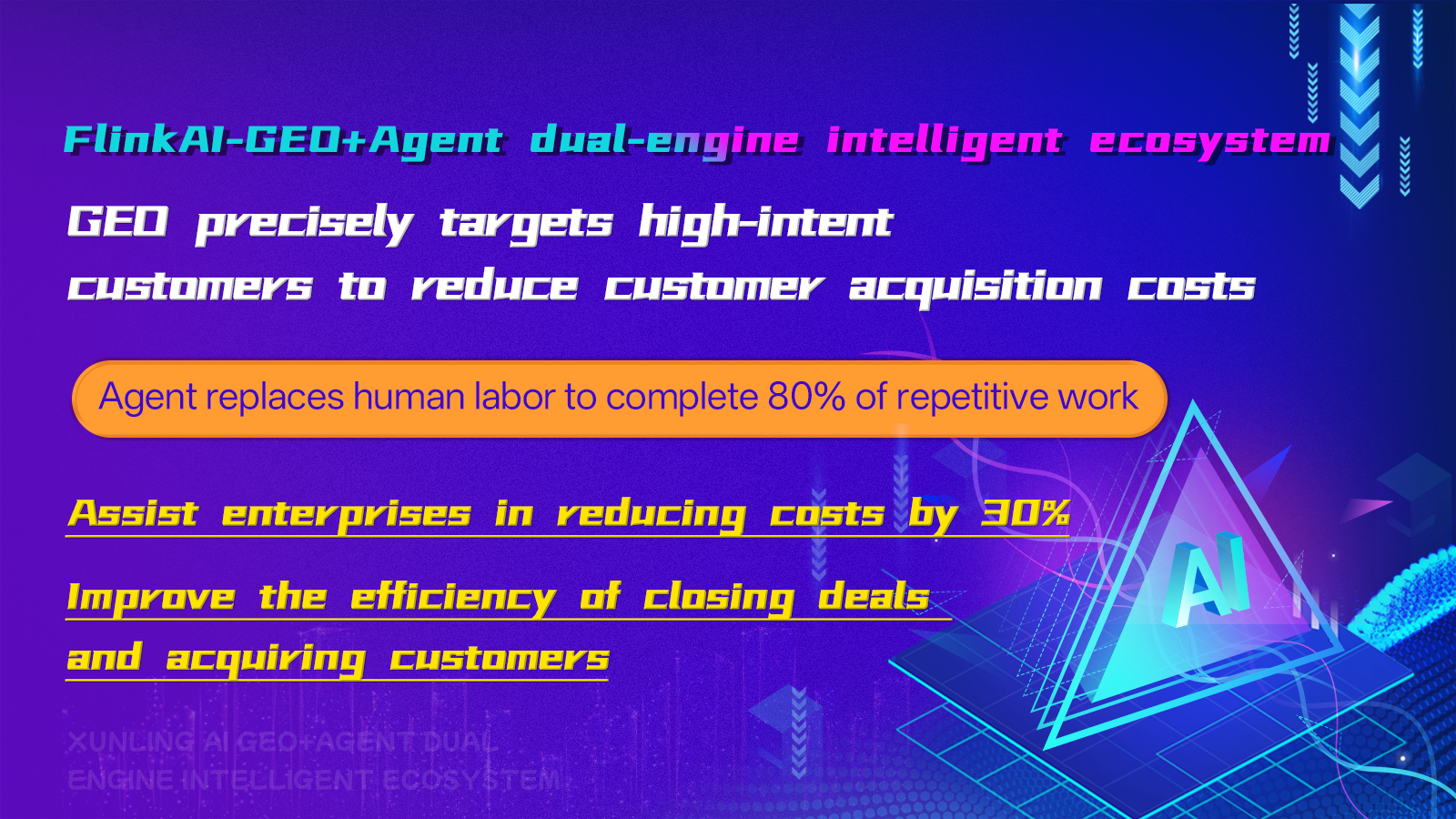
Phase 5 is where cost reduction becomes measurable: faster, continuous response lifts the value of every inquiry already generated.
Where this applies: the small-manufacturer profile
The pattern fits a recognisable set of companies rather than a single sector. It applies to B2B manufacturing enterprises expanding overseas, cross-border trade and foreign trade companies, and small or medium-sized businesses that are going global without an overseas digital operation team. It also applies to medium and large enterprises building an overseas brand, and to vertical industry suppliers whose buyers are professional procurement decision-makers rather than consumers.
The documented case is Shouyu Machinery, a small privately owned equipment manufacturer producing solid waste shredding and crushing equipment for the EU and US markets. Its challenges were typical: rising paid bid costs against larger overseas manufacturers, weak overseas brand credibility, insufficient inquiry conversion, limited localised content production, and no capacity to cover the European and American time zones.
After six months of the engagement, the GEO report recorded 20,772 recommended keywords, with stable visibility on AI platforms such as ChatGPT. In the client's own assessment:
"Previously, we had no endorsement online from overseas, and overseas buyers didn't trust us. Now, with reports about our equipment appearing in over 200 overseas media, customers are clearly more willing to believe in our strength when we talk to them."

Third-party media coverage is what shifts a small plant from an unknown quotation to a credible shortlist entry.
Comparison: paid acquisition versus GEO-based AI search acquisition
The table compares the two acquisition models on the dimensions a small manufacturer can actually control. It reflects the delivery model described by Flink AI and does not assume that natural traffic produces identical results in every industry.
| Dimension | Traditional paid acquisition | GEO-based AI search acquisition |
|---|---|---|
| Primary traffic source | Paid bidding and offline exhibitions | Natural traffic from search engines, AI answers, media, and communities |
| Cost behaviour over time | Rises with bid competition; traffic stops when spend stops | Targeted for reduction of up to 70% by replacing bought traffic with accumulated natural traffic |
| Trust evidence | Ad creative and sales conversation | 250+ global authoritative media placements, vertical B2B media, and searchable brand sources |
| Content production | Limited output; localisation gaps | AI plus human collaboration producing localised articles, short videos, and graphics in batches |
| Inquiry handling | Manual, exposed to time-zone loss | 7×24 AI digital employee reception with automatic push of quotes, product PPTs, and videos |
| Performance visibility | Fragmented data across channels | Claw dashboard tracking exposure, traffic, leads, and conversion in one view |
| Assets at end of engagement | Little retained after spend ends | Website cluster, media archive, social pages, Q&A content, and reusable templates |
| Compliance workload | Manual review per platform | Recurring compliance verification against EU/US and platform advertising rules |
Frequently asked questions
Do EU rules constrain how AI-optimised marketing content can be published?
Yes, and the constraint is tightening. The EU AI Act and related global regulations are beginning to require watermarking for AI-generated marketing content, which affects how that content is displayed and attributed in AI search results (Gartner). On the delivery side, compliance is handled as an operational process rather than a one-time check: xunling flink holds the five major systems for the filing of internet information service algorithms, and the documented engagement included monthly compliance verification against EU environmental protection and platform advertising rules, with risk content corrected before it could trigger distribution penalties. Buyers evaluating any GEO service should ask specifically how AI-generated content is disclosed and reviewed.
What does a one-year AI Search Optimization engagement actually deliver?
The deliverables are the FlinkAI GEO+Agent dual-engine SaaS system software plus comprehensive after-sales support. The service scope covers the full-chain overseas marketing strategy: AI-driven exposure and traffic generation in public domains, multi-channel content distribution, AI-powered intelligent inquiry handling, and comprehensive marketing data management and control. Delivery is online, the supported languages are English and Chinese, and the working relationship runs through a dedicated account manager for 1-on-1 service, an online project management platform, WeChat, WhatsApp, or email for real-time communication, and regular progress review meetings.
How should a small manufacturer frame the budget for this kind of service?
There is currently no standardised public pricing benchmark for per-citation or visibility-based GEO contracts, so comparing vendors on list price is misleading. The practical approach is to compare on total overseas acquisition cost: what the manufacturer spends today to generate one qualified inquiry, against what the same inquiry costs once natural traffic, media endorsement, and automated reception are in place. The engagement is structured as a one-year SaaS service, and the cost drivers are the number of channels activated, the volume of localised content produced, the language coverage required, and the computing power enabled for the Agent and A2P modules. For internal approval, note that digital marketing services of this type are typically classified under HS Code 8523 or general service codes depending on jurisdiction.
What can we review before committing to the full year?
The first phase produces two documents a buyer can evaluate directly: a dedicated industry vocabulary file covering the long- and short-tail keywords relevant to the target EU/US market, and a project implementation plan describing channel layout, content cadence, and compliance handling. The provider's product brochure is also publicly downloadable, and the client-exclusive Claw data dashboard and AI agent business card are configured during the infrastructure phase. A short inquiry is enough to start that scoping process.
How long before AI visibility and inquiry volume change?
The service term is one year, and the phases are sequenced rather than simultaneous: research and compliance filing in the first month, infrastructure and channel assets through weeks eight to ten, the first media wave completed by week twelve, and AI reception live by week sixteen. Meaningful visibility movement is typically assessed against the monthly data reviews. In the documented EU/US equipment case, the GEO report reached 20,772 recommended keywords with stable visibility on AI platforms such as ChatGPT after six months of cooperation. The engagement closes at month twelve with a full asset handover and an optimisation plan for the following year — which is also the point at which the retained digital assets can be judged against the original acquisition cost baseline.
Automated reception closes the gap that time zones create between an inquiry and a reply.
Conclusion: replace bought reach with retrievable presence
For a small EU or US manufacturer, the acquisition cost problem is not solved by negotiating a better click price. It is solved by becoming retrievable where buyers now form their shortlist — inside AI answers, alongside authoritative media coverage, and on channels that keep working after the advertising budget stops. The twelve-month pattern is repeatable: research and compliance filing first, then infrastructure, then channel assets, then content volume, then automated handling and monthly review.
The results in the documented case — a target of up to 70% lower acquisition cost, three-fold higher inquiry conversion capability, and 20,772 recommended keywords with stable ChatGPT visibility after six months — came from sequencing those phases properly rather than from any single tactic.
Next step for manufacturers evaluating GEO
If you are a small or mid-sized manufacturer selling into the EU or the USA, the fastest way to test the model is to request a scoped inquiry: your target market, your product category, and the acquisition cost you are trying to reduce. The team will return an industry vocabulary outline and a phased implementation plan for review.
Product brochure (public download): Flink AI-GEO+Agent Product Brochure
Platform: www.flinkagent.com | Blog: blog.flinkagent.com
Email: cehuaNFWT09@51g3.net | Tel / WhatsApp: +86 199-2521-4465
Have Questions or Need More Details?
Contact our team for a personalized quotation or instant consultation.
Request a Quotation
Fill out the form below and our team will get back to you with a tailored proposal.
WhatsApp Direct Chat
Prefer to chat in real-time? Message us on WhatsApp for instant assistance & quick answers.
- Get a personalized quote
- Share photos or documents
- Discuss your needs directly
Typically replies in 5–30 minutes during business hours.