Trust-Deficit Overseas Inquiries at a Small EU Equipment Plant: A GEO Answer-Marketing Fix

Cover: the channel operations area from which Q&A community, media and social distribution are coordinated under the FlinkAI-GEO+Agent dual-engine ecosystem.
A small, privately owned special-purpose equipment manufacturer in the European Union does not have a lead-generation problem. It has a trust problem that looks like a lead-generation problem: overseas buyers find the plant through paid search, request a quotation, and then go quiet — because nothing they can find independently confirms that the company is real, capable and worth a four-thousand-kilometre order.
This article works through that scenario in full. It defines what a trust deficit actually is in cross-border B2B equipment sales, shows why paid-traffic competition makes that deficit worse every quarter, and describes the layered GEO (Generative Engine Optimization) answer-marketing architecture that closes the evidence gap. The same architecture is delivered through AI Search Optimization Services built on the FlinkAI-GEO+Agent dual-engine intelligent ecosystem.
The fix is not a larger advertising budget. It is the deliberate placement of answer-shaped, attributable content where buyers and answer engines already look: Q&A communities such as Quora, Reddit and Wiki Answers, a network of 250+ authoritative overseas news media outlets, vertical B2B business media, and an owned receiving site — closed by a 24/7 AI agent business card that answers the inquiry the moment it arrives, in any time zone.
Problem Definition: What a Trust Deficit Is, and What It Costs
A trust deficit exists when a buyer can see everything a supplier claims and almost nothing about that supplier's independent footprint. The vendor's website, catalogue and quotation are all available; third-party evidence — press coverage, professional community discussion, or an answer an AI assistant is willing to cite — is not.
For a small, privately owned equipment plant in the EU or the USA, the deficit is structural rather than reputational. The company may hold decades of engineering history, repeat domestic customers and a full order book, none of which is visible to a procurement manager several thousand kilometres away who has never encountered the brand.
Three measurable effects show up in the operating data of exporters in this position:
- Acquisition costs keep climbing. Customer acquisition costs in overseas promotion have been rising by 30%–100% year by year, while the usable lifespan of a single promotional asset has fallen from one to three months down to roughly seven to fifteen days.
- A large share of paid exposure never converts. Between 50% and 80% of acquired traffic is ineffective and wasted, because the audience was matched to the advertisement rather than to the buying intent.
- Foreign brands pay a conversion penalty. A trust deficit pushes inquiry conversion rates for overseas brands to roughly three to ten times lower than those of local brands — a gap driven by credibility, not by price or specification.
On top of that sits a service gap that is easy to underestimate. Time-zone differences leave 30%–60% of the golden overnight consultation window unattended. The inquiries most likely to be lost are therefore the highest-intent ones: a buyer in another time zone actively comparing suppliers at 2 a.m. local time, receiving silence until the next business day.
What the buyer is actually doing
A systems integrator sourcing a special-purpose machine does not begin with a brochure. The evaluation is short, evidence-weighted, and almost entirely independent of the seller:
- They ask a generative assistant for a shortlist in plain language — for example, who builds a given machine type for a given application in Europe.
- They search professional communities for anyone who has actually worked with the shortlisted names.
- They scan for press coverage, technical articles and any trace of the company outside its own domain.
- Only then do they send an inquiry — and if no answer arrives within their working day, the shortlist quietly loses one entry.
If a plant is absent from the first three steps, it competes only at the fourth, where price becomes the only remaining differentiator.
Industry Background: The Inquiry Path Moved Before the Plant Did
The verification step that used to happen during a phone call now happens before the first email is sent, and it increasingly happens inside a generative answer rather than on a results page.
- AI assistants such as ChatGPT and Gemini represented 56% of global search engine volume as of early 2026, according to research published by Search Engine Land and Graphite.io in March 2026.
- ChatGPT reached 900 million weekly active users in February 2026.
- The global market for Generative Engine Optimization services is projected to reach USD 13 billion by 2033, with generative AI optimization services growing at a CAGR of 14% between 2026 and 2033 (Coherent Market Insights). Traditional SEO services, by comparison, are generally projected in the low-to-mid single-digit annual range.
Two caveats belong in any honest reading of those figures. First, measurement is contested: some analysts project a decline in traditional search volume as assistants absorb query sessions, while others measure AI assistants as already handling more than half of all search-like sessions. The disagreement is largely about whether a session is equivalent to a query. Second, regulation is arriving on the content side — the EU AI Act and comparable frameworks are beginning to require watermarking for AI-generated marketing content, which directly affects how AI search surfaces will display that content.
What is not contested is the direction of travel. Buyers are forming shortlists inside generative answers, and the inputs to those answers are third-party, extractable, attributable sources rather than advertising placements. That is the environment in which a small plant's trust deficit is either repaired or confirmed.
The Fix: GEO Answer Marketing, Layered
GEO answer marketing is the practice of publishing content in the shape an answer engine prefers to retrieve and attribute: a clear question, a self-contained answer, a verifiable statement of fact, and enough specificity that the passage can be quoted without the rest of the page. It is the same discipline behind answer engine optimization (AEO) and ChatGPT search optimization, applied to procurement questions rather than to brand slogans.
The architecture described here is the FlinkAI-GEO+Agent dual-engine intelligent ecosystem, developed by Hong Kong Xunling Technology Co., Limited — a Hong Kong company established in 2025 that provides a one-stop SaaS solution for overseas AI-based global intelligent marketing and serves markets globally. Its core product integrates a GEO generative AI search customer acquisition engine with an Agent multimodal intelligent agent conversion engine, forming a single loop that runs from public-domain AI exposure through multi-channel distribution to automated inquiry handling.
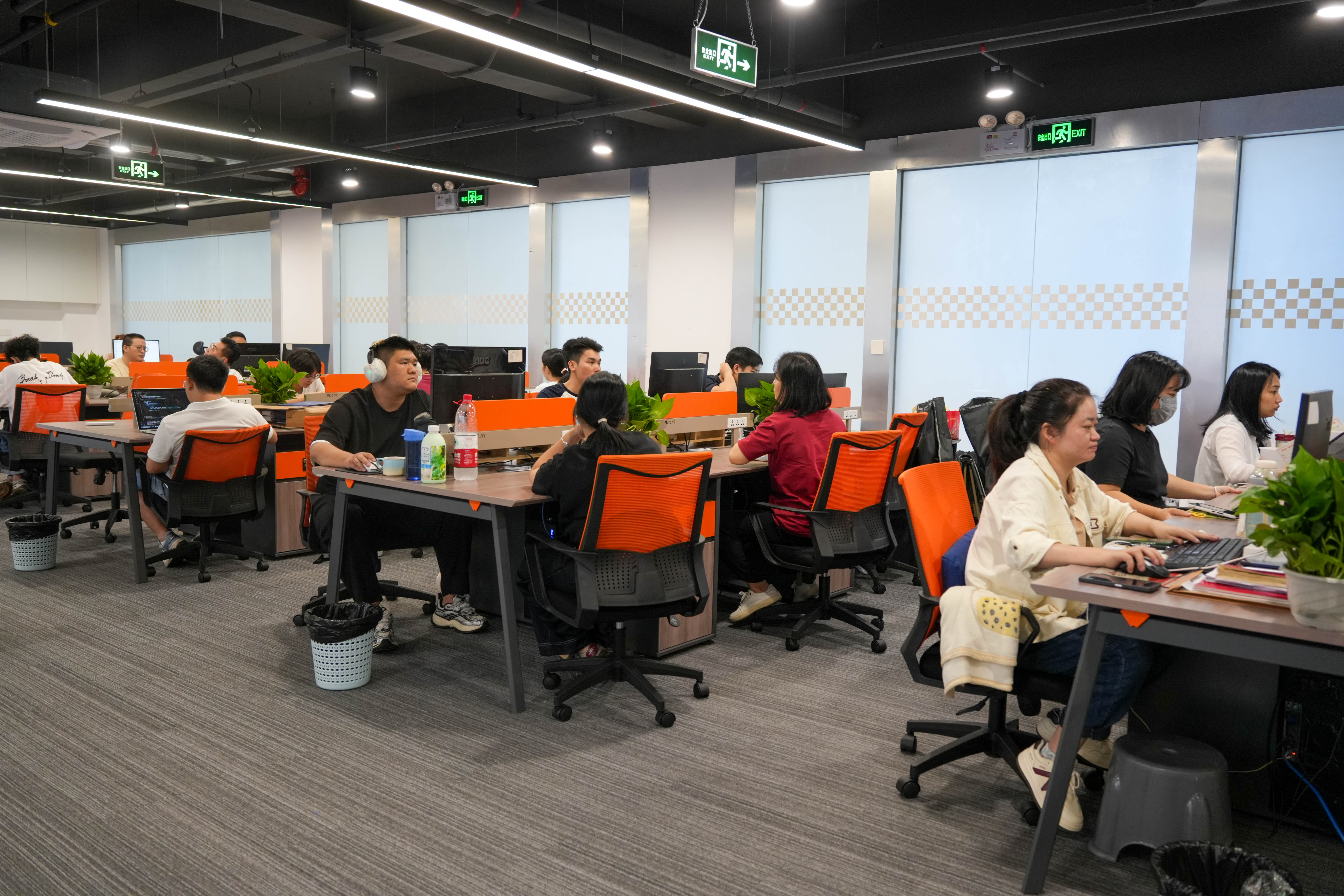
Long-tail buyer questions are mapped and turned into answer-shaped content before any distribution begins.
Layer 1 — Distil the plant's own knowledge into a citable corpus
Everything downstream depends on this layer. Using AI-based intelligent keyword distillation and vector database technology, the system analyses enterprise product materials, industry corpora, competitor information, user personas and brand graphics and texts, then builds a private GEO and Agent knowledge base in one click. The purpose is not content volume but consistency: a single authoritative source of product facts that unifies external brand communication across every market and prevents the information disorder and translation distortion that fragment a small brand's story when several freelancers and agencies write about it at once.

The knowledge-base layer converts product documentation and application notes into a machine-readable, citable corpus.
Layer 2 — Penetrate the Q&A communities where long-tail questions live
This is the layer that changes outcomes for a small equipment plant. A European machinery builder will never win the head term "special-purpose equipment manufacturer". It can, however, own hundreds of specific long-tail questions — which machine suits a particular substrate, which supplier supports a particular certification, what a specific process constraint implies for equipment selection.
Content is distributed through an API to mainstream overseas Q&A communities including Quora, Reddit and Wiki Answers, where long-tail search traffic concentrates and where high-intent prospective buyers ask comparison questions before they ever contact a vendor. Because these are community environments, the material has to be professional and genuinely useful; the value comes from being the answer, not from being present.
Layer 3 — Build third-party credibility through media distribution
Two tracks run in parallel here. The first is global authoritative news endorsement: customised, professional articles distributed in bulk across a network of 250+ global authoritative media outlets, creating a searchable, traceable overseas media footprint — the independent evidence a small plant cannot produce on its own. The second is vertical business media: original, in-depth industry content delivered to professional business media in relevant fields, where it reaches overseas B2B procurement decision-makers through the platform's own professional audience.
Layer 4 — Build an owned receiving surface
Third-party citations need somewhere to land. The ecosystem builds a dedicated second-level domain traffic-receiving site, publishes original content inside it continuously, and strengthens indexing and natural ranking through external link optimisation, so organic overseas search traffic has a stable destination rather than a single corporate homepage. In parallel, LinkedIn and Facebook corporate accounts are operated automatically with continuously produced original English content, maintaining a professional, international brand presence between campaigns.
Layer 5 — Convert the traffic with a 24/7 agent layer
Traffic that arrives outside business hours is traffic the traditional model loses. The Agent multimodal intelligent agent conversion engine covers three carriers. An AI intelligent agent independent website adapts to AI crawling logic and embeds both a sales agent and a customer-service agent. An AI intelligent agent business card, delivered as an H5 mini-program with VR panoramic display, can be shared or scanned in one click to present company capability, products and pricing, turning a lightweight interaction into a deep one. An AI digital employee provides 24/7 intelligent voice duty with conversational, human-like responses, automatically replying to product inquiries, pushing product information on request, and handling overseas inquiries end to end so cross-border time-lag inquiries are never missed. When a customer makes contact, quotations, product presentations and promotional video material can be pushed automatically.
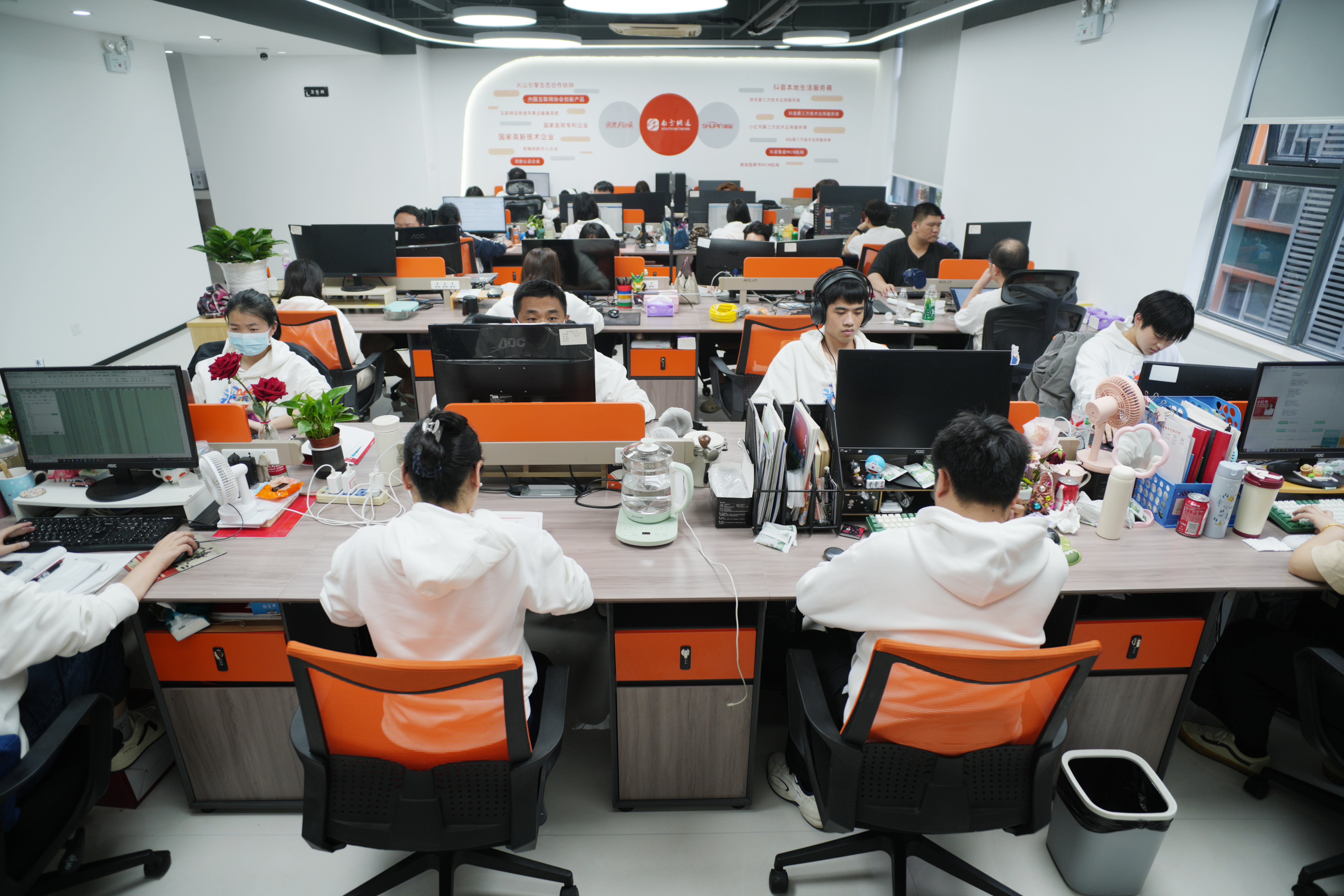
Once traffic arrives, the agent layer converts it: 24/7 first response, automatic quotation and material push, then human follow-up.
Layer 6 — Measure, then iterate
The system ships with dual large-screen data dashboards for GEO customer acquisition and Agent intelligent operation. Channel exposure, visitor sources, agent-generated leads and inquiry conversion are tracked across the full process, so marketing effectiveness becomes quantifiable and traceable rather than anecdotal — the basis for the next optimisation round.
Step-by-Step: Running This Fix on a Small Equipment Plant
Use Cases
1. A small EU special-purpose equipment plant
The plant builds a niche machine for a defined process. Domestic reputation is strong, but overseas buyers see only advertisements. After the knowledge base is built, the question chain is mapped to application-level queries, Q&A community answers begin capturing buyers who are comparing machine types, and 250+ media placements give the brand a footprint a procurement manager can verify. The first inquiry that arrives at 2 a.m. is answered by the AI digital employee, quoted automatically, and followed up by a human the next morning — instead of being lost in a time-zone gap.
2. A US industrial components exporter competing with domestic incumbents
Here the trust deficit is compounded by the buyer's default assumption that local supply is safer. Third-party media coverage and community answers built around specification and compatibility questions shift the comparison from geography to engineering fit, while the AI agent independent website keeps qualification questions answered outside US business hours.
3. A vertical B2B raw material supplier whose buyers are procurement managers
In raw materials, specification language is standardised and head terms are saturated. The value sits in long-tail questions about processing conditions, compliance documentation and lead-time behaviour. These are exactly the questions that Q&A distribution and vertical B2B business media placement feed into generative answers, and exactly the material the private knowledge base is designed to produce consistently.
Comparison: Six Ways to Generate Overseas Inquiries
| Approach | Primary cost driver | Third-party trust evidence created | Traffic ownership | Main limitation |
|---|---|---|---|---|
| Paid search and paid social advertising | Media budget and rising bids | None | Platform-owned; stops when spend stops | Costs escalate, asset lifespan is short, no accumulated assets |
| B2B marketplace membership | Membership fees plus in-platform competition | Platform profile only | Platform-owned | Fierce peer competition, weak self-owned brand building |
| Single-point SaaS tools | Multiple tool subscriptions | None | Partial | Tools are isolated; exposure, content, inquiry and data cannot be closed into one loop |
| Outsourced agency retainer | Service fees | Depends entirely on the vendor | Partial | High fees, limited product familiarity, homogenised content, low data transparency |
| Self-built in-house team | Salaries and recruitment | None | Owned | Composite talent is scarce, 24/7 time-zone coverage is impractical, multilingual production is expensive |
| GEO answer marketing plus Agent dual-engine | SaaS subscription plus managed operation | 250+ media placements, Q&A community presence, citable answers | Owned second-level domain matrix plus community footprint | Requires an accurate factual corpus and consistent publishing discipline |
Comparison of approach types, not of vendors. Trust-evidence and ownership characteristics reflect how each model is structured.
What the Fix Produced in Practice
In the implementation model described here, the reported outcomes are specific rather than directional:
- Customer acquisition cost reduced by up to 70%, as free natural-search and AI-answer traffic replaces part of the high-price paid inventory.
- A 3-fold increase in inquiry conversion capability, driven by instant round-the-clock response and automatic delivery of quotations, product presentations and video material.
- 250+ global authoritative media placements forming a traceable endorsement footprint that a search engine or an AI assistant can verify.
- ChatGPT visibility that remained stable six months after launch rather than spiking and decaying.
- A GEO report identifying 20,772 recommended keywords — the long-tail surface a small plant can realistically own, in contrast to the head terms it cannot.
Frequently Asked Questions
How does GEO answer marketing handle AI content compliance, such as the EU AI Act watermarking rules?
Regulation is now part of the content brief. The EU AI Act and comparable global frameworks are beginning to require watermarking for AI-generated marketing content, which affects how AI search surfaces display that content. The described system produces compliant English original content through AI and human collaboration rather than unchecked automation, and the platform is supported by global compliance operation and technology support services built on two decades of overseas digital marketing experience. Claims published are limited to facts the enterprise can stand behind.
Can a small equipment plant without an in-house overseas content team run this?
Yes — the model is designed for exactly that profile. Content production, multi-platform batch publishing, community Q&A operation and daily social media maintenance are delivered as a managed layer using AI plus a professional overseas operation team. The client's obligation is to supply accurate product and application facts, which are distilled into a private industry corpus. Delivery is a cloud SaaS platform with a dedicated account manager, online project management and real-time communication via email, WhatsApp or WeChat.
How much can GEO reduce customer acquisition cost compared with paid advertising?
Structurally, the model shifts spend away from per-click inventory toward owned and earned surfaces. In the described implementation, customer acquisition cost is reduced by up to 70% by replacing high-price paid advertising with free natural-search traffic, with inquiry conversion capability increasing 3-fold. The wider category is expanding quickly: the global GEO services market is projected to reach USD 13 billion by 2033, growing at a 14% CAGR between 2026 and 2033. Standardised market pricing benchmarks for visibility-based GEO contracts are still emerging, so scope should be agreed module by module.
How can we validate the approach before committing to a full rollout?
A practical first phase is to build the private knowledge base from existing product materials and run a limited question set through Q&A and owned-site distribution. The first measurable signals are appearance in generative answers to mapped questions, indexing of the second-level domain site, and the first inquiries arriving through Q&A channels. The full module scope is documented in the product brochure, which can be downloaded and reviewed by technical and marketing stakeholders before any commitment.
How long before results appear, and is inquiry handling covered outside business hours?
Timing depends on the starting corpus and the competitive density of the question set. In the reported implementation, ChatGPT visibility remained stable six months after launch, with the gains holding rather than decaying. Inquiry handling, however, changes from day one: the AI digital employee operates 24/7, answers product questions in conversational language, and automatically pushes quotations, product presentations and promotional video material, so a buyer in another time zone is never met with silence. If your overseas inquiries currently stall after the first reply, the fastest way to see the difference is to request a walkthrough of the FlinkAI-GEO+Agent dual-engine ecosystem and map it against your own inquiry data.
Conclusion
At a small EU equipment plant, the trust deficit is not a marketing failure — it is an evidence failure. The buyer is willing to engage; the buyer simply cannot verify. Paid traffic makes this worse, because it competes on reach while the actual constraint is credibility.
GEO answer marketing addresses the constraint directly. A private knowledge base fixes the facts. Q&A community distribution such as Quora, Reddit and Wiki Answers captures the long-tail questions a small plant can genuinely own. Distribution across 250+ authoritative overseas media outlets manufactures the third-party evidence the plant cannot generate alone. An owned second-level domain site gives that evidence a stable destination, and the 24/7 AI agent business card ensures the resulting inquiry is answered the moment it lands. For a manufacturer whose product is good but whose footprint is invisible, that is a more durable route to overseas inquiries than another quarter of bidding against larger brands.
Next Step: Check the Architecture Against Your Own Inquiry Data
If your overseas inquiries stall after the first reply, the gap is almost always evidence rather than effort. The FlinkAI-GEO+Agent dual-engine ecosystem from Hong Kong Xunling Technology Co., Limited combines GEO answer marketing, 250+ authoritative media distribution, Q&A community penetration and a 24/7 AI agent layer in a single SaaS platform.
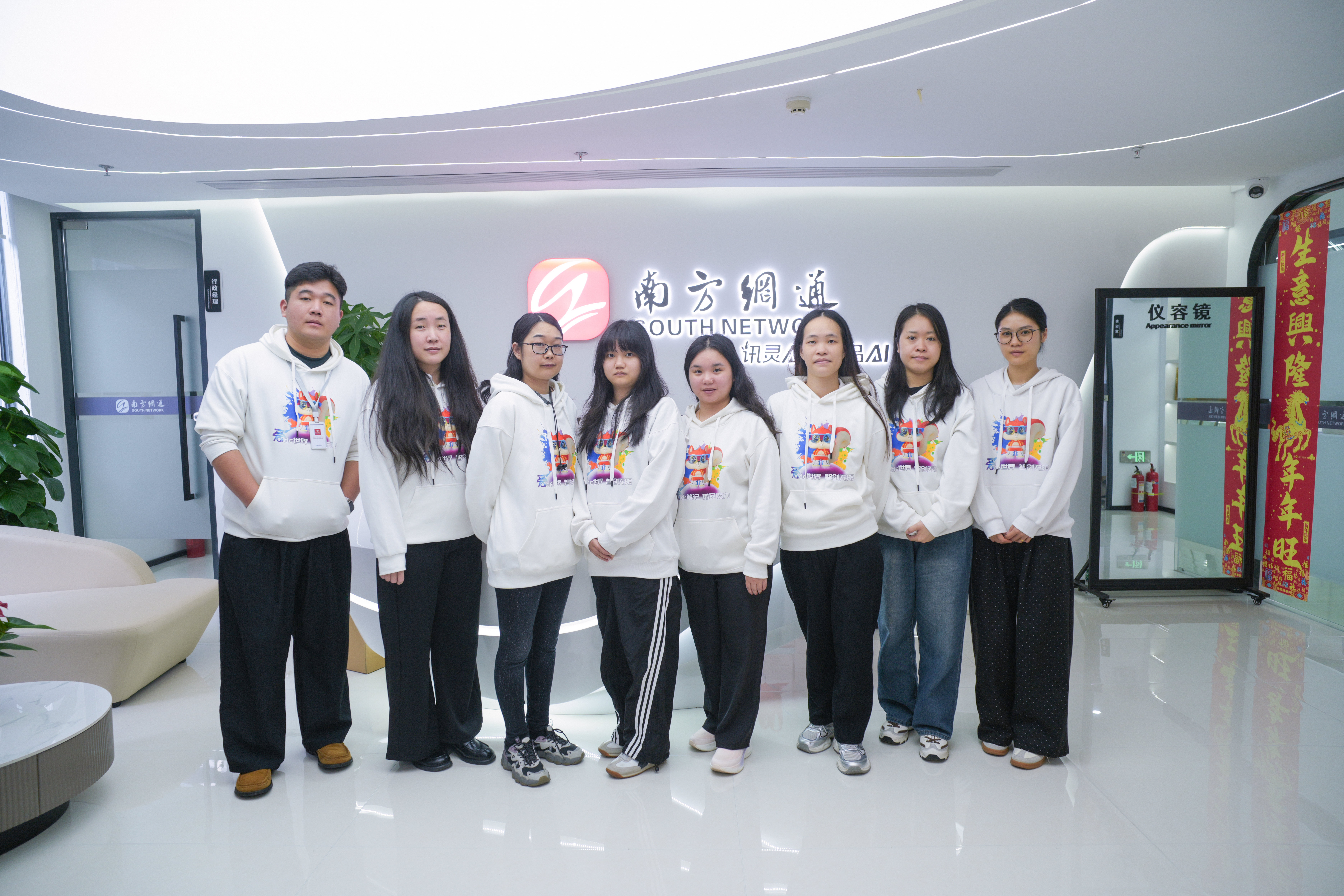
Download the product brochure: Flink AI-GEO+Agent Product Brochure (PDF)
Visit www.flinkagent.com or blog.flinkagent.com · Email cehuaNFWT09@51g3.net · WhatsApp +86 199-2521-4465
Have Questions or Need More Details?
Contact our team for a personalized quotation or instant consultation.
Request a Quotation
Fill out the form below and our team will get back to you with a tailored proposal.
WhatsApp Direct Chat
Prefer to chat in real-time? Message us on WhatsApp for instant assistance & quick answers.
- Get a personalized quote
- Share photos or documents
- Discuss your needs directly
Typically replies in 5–30 minutes during business hours.