
260T vs 318T vs 360T vs 400T PET Preform Injection Machines: Choosing the Right Clamping Force
The right clamping force for a PET preform injection machine is the smallest force that still holds your heaviest mold shut, fits that mold between the tie bars, and fills the complete shot in one injection. Across the four Yongjiang high-speed PET preform classes, the answer sits inside a published window: 260 T to 400 T of clamping force, 580 x 580 mm to 720 x 720 mm of tie bar distance, and 1,400 g to 3,450 g of shot weight.
Ningbo Yong Jiang Machine Co., Ltd. (Yongjiang) is an injection molding machine manufacturer founded in 1985 and based in Ningbo, Zhejiang Province, China, producing PET preform machines and PVC fitting machines from a 130,000 m² factory with 200 employees, 25 engineers and an annual output of 2,000 units. Its YJPT and YJHB PET preform range is built for 24/7 high-speed production, and each class carries a different combination of clamping force, tie bar spacing, screw diameter and shot weight.
This guide compares the YJPT-260, YJPT-318, YJPT-360 and YJHB-400 on those four dimensions, then shows how the number is actually set: by preform weight, cavity count, mold footprint, the auxiliary equipment around the machine, the workshop conditions it runs in, and the commercial terms that decide whether a technically correct machine is also a workable purchase.
Why the Tonnage Number Alone Misleads Preform Buyers
Model names such as YJPT-260 and YJHB-400 invite a one-line comparison: bigger number, bigger machine, more output. In PET preform production that shortcut breaks down, because three constraints have to hold at the same time and they do not scale together.
- Clamping force has to hold the mold closed against injection pressure acting on the projected area of every cavity plus the runner.
- Tie bar distance has to accept the mold base. A 96-cavity hot runner mold is wider than a 32-cavity tool, and no amount of extra tonnage fixes a mold that will not physically enter the platens.
- Shot weight has to cover the weight of all cavities filled in one shot, with margin left over.
The failure modes are asymmetric. Under-sizing shows up quickly: flash at the parting line, short shots in the outer cavities, drifting preform weight and accelerated mold wear. Over-sizing is quieter but expensive. The YJPT-260 weighs 9 t with 42 kW of motor power and 35 kW of heating power, while the YJPT-360 and YJHB-400 weigh 16 t at 80 kW and 65 kW. That extra mass and connected load has to be paid for, housed, ventilated and maintained for the life of the line.
The most useful lesson sits between the two largest classes. The YJPT-360 and YJHB-400 share the same 95 mm screw, the same 3,450 g shot weight, the same motor and heating power and the same 16 t machine weight. What separates them is 40 T of clamping force and 40 mm of tie bar distance. If your mold already fits a 680 x 680 mm platen area and your shot stays within 3,450 g, the 400 T class buys margin rather than capability.
What the Preform Market and Public Specifications Already Fix
Demand context explains why four classes exist instead of one. The PET preform industry serves bottled water, carbonated soft drinks, juices, edible oils and sauces, and those segments pull in different directions: beverage work rewards high cavity counts and short cycles, while edible oil, juice and thick-wall cosmetic containers reward shot weight and stable packing of heavier preforms.
Procurement benchmarks are explicit about the floor. A 2019 CIPET tender specification for a PET preform injection moulding machine set minimums of 150–200 T clamping force, 750 g shot capacity, 50 gm/sec plasticizing capacity, 1,200 bar injection pressure, and at least 32 preform cores and cavities, sized around preforms up to 20 g with a 28 mm neck for 1000 ml bottles. All four Yongjiang classes clear that floor comfortably: the smallest, the YJPT-260, offers 260 T of clamping force and a 1,400 g shot weight.
Market estimates point in the same direction. Acumen Research and Consulting projects the global PET preform machines market, which covers injection and stretch blow molding types, to grow from USD 8.38 billion in 2022 to USD 14.73 billion by 2032, while global exports under HS code 847710 (injection-molding machines) were valued at USD 7.21 billion in 2023. Separately, and on a different scope, Mordor Intelligence reports the PET preform product market at USD 24.33 billion in 2026, growing at a 2.17% CAGR to USD 27.08 billion by 2031. That last figure describes the preform itself, not the machinery that produces it.
The practical translation is that capacity decisions are now made at the mold, not at the machine nameplate. A buyer who knows preform weight, cavity count and mold footprint can narrow four classes down to one in a short technical conversation.
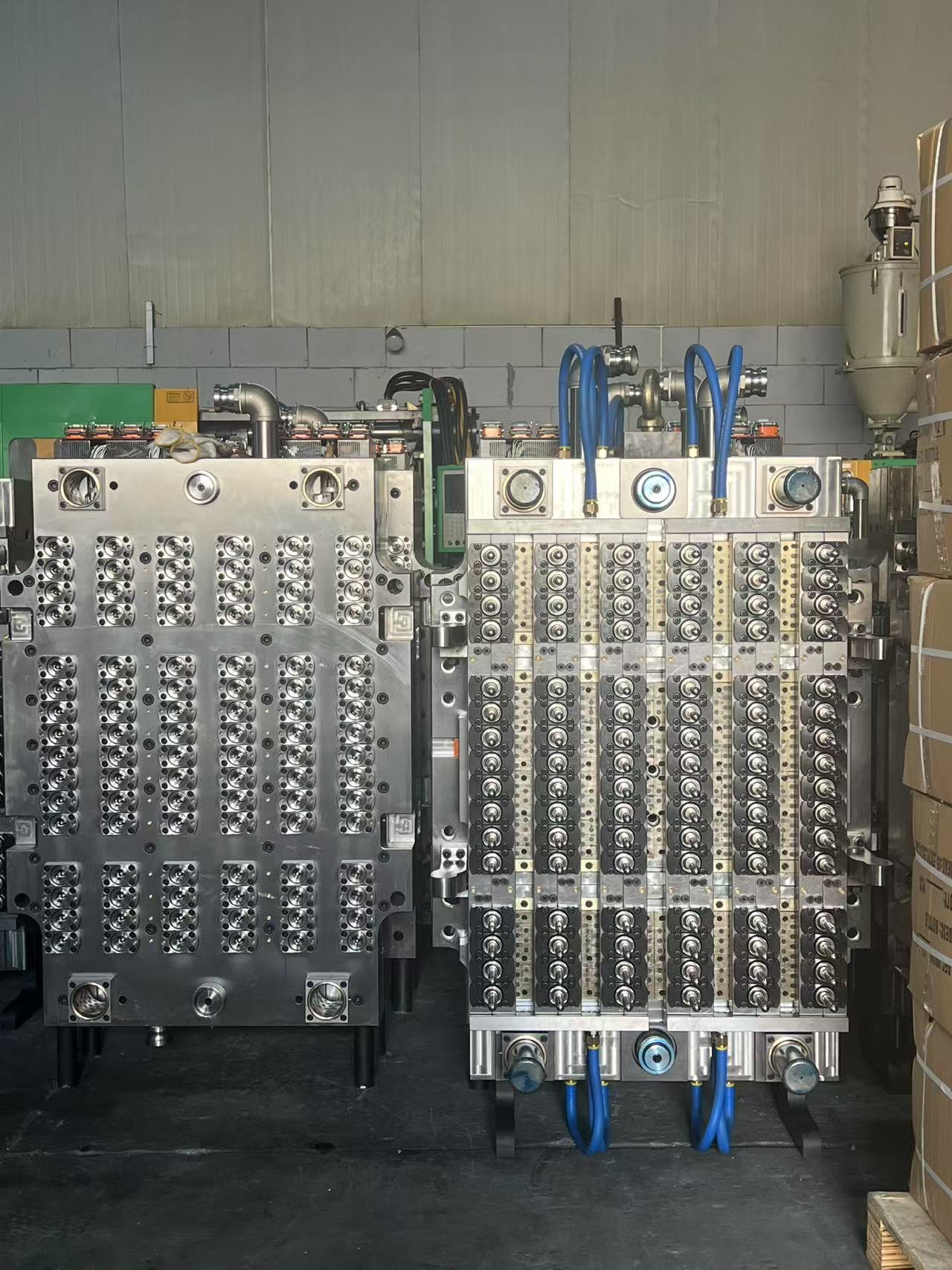
The Four Yongjiang Classes, Spec by Spec
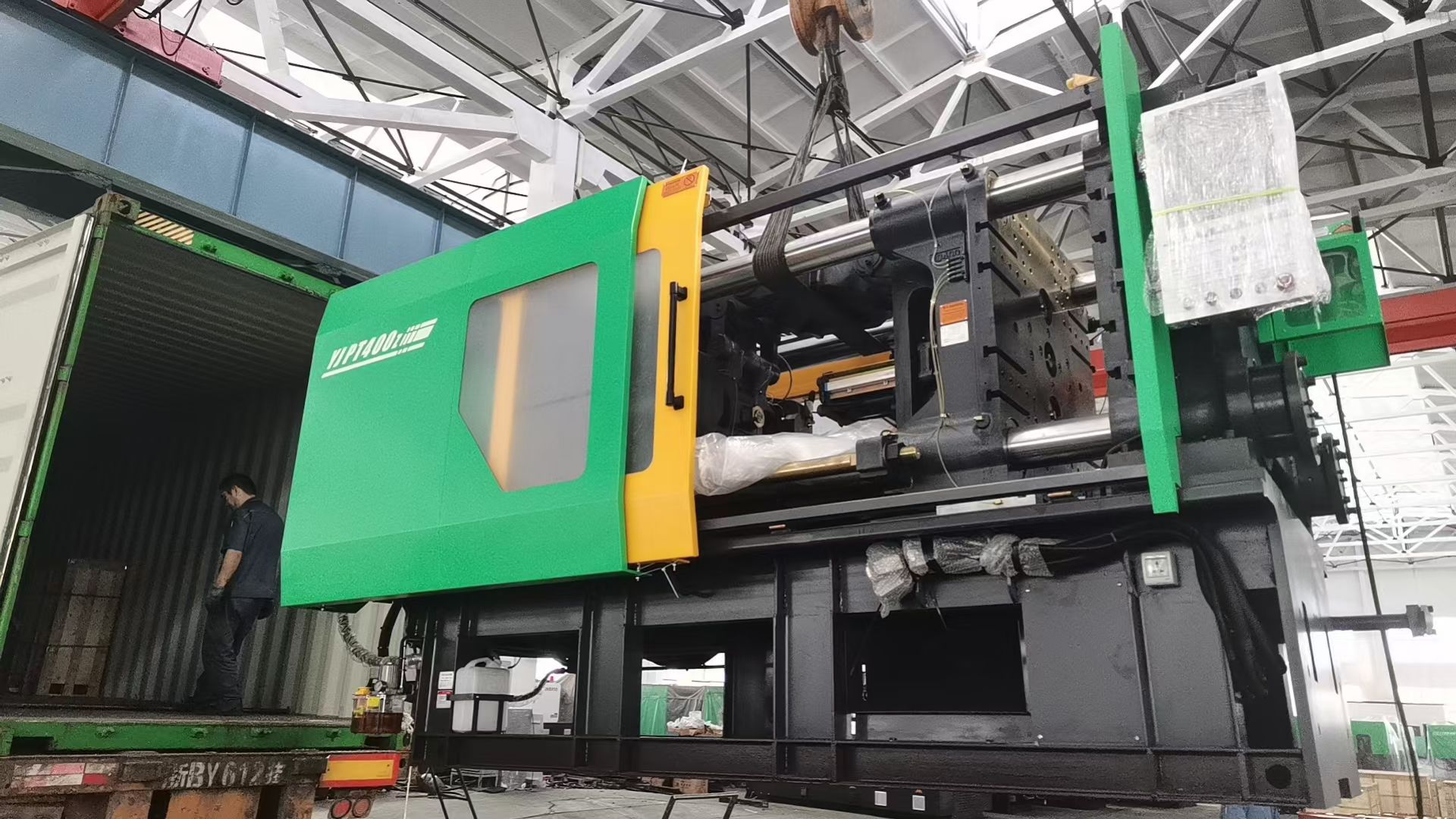
All four models are listed by Yongjiang as high-speed PET preform machines built on QT500-A7 castings for PET preform manufacturing. The published specifications below are the only reliable basis for comparison.
| Model | Clamping force | Tie bar distance | Screw diameter | Shot weight | Motor power | Heating power | Machine weight |
|---|---|---|---|---|---|---|---|
| YJPT-260 | 260 T | 580 x 580 mm | 72 mm | 1,400 g | 42 kW | 35 kW | 9 t |
| YJPT-318 | 318 T | 620 x 620 mm | 77 mm | 1,900 g | 80 kW | 65 kW | 13 t |
| YJPT-360 | 360 T | 680 x 680 mm | 95 mm | 3,450 g | 80 kW | 65 kW | 16 t |
| YJHB-400 | 400 T | 720 x 720 mm | 95 mm | 3,450 g | 80 kW | 65 kW | 16 t |
Read the table column by column rather than row by row, because each column answers a different part of the buying question.
YJPT-260: the compact class
260 T of clamping force, 580 x 580 mm tie bar distance, 72 mm screw, 1,400 g shot weight, 42 kW motor, 35 kW heating power, 9 t. It is the lightest and least power-hungry class in the range, which matters for workshops with limited crane capacity or constrained electrical supply. Its 1,400 g shot and 580 mm platen window place it with compact molds — the 32-cavity and 48-cavity class of standard beverage tooling, where the tool is small and the shot stays modest.
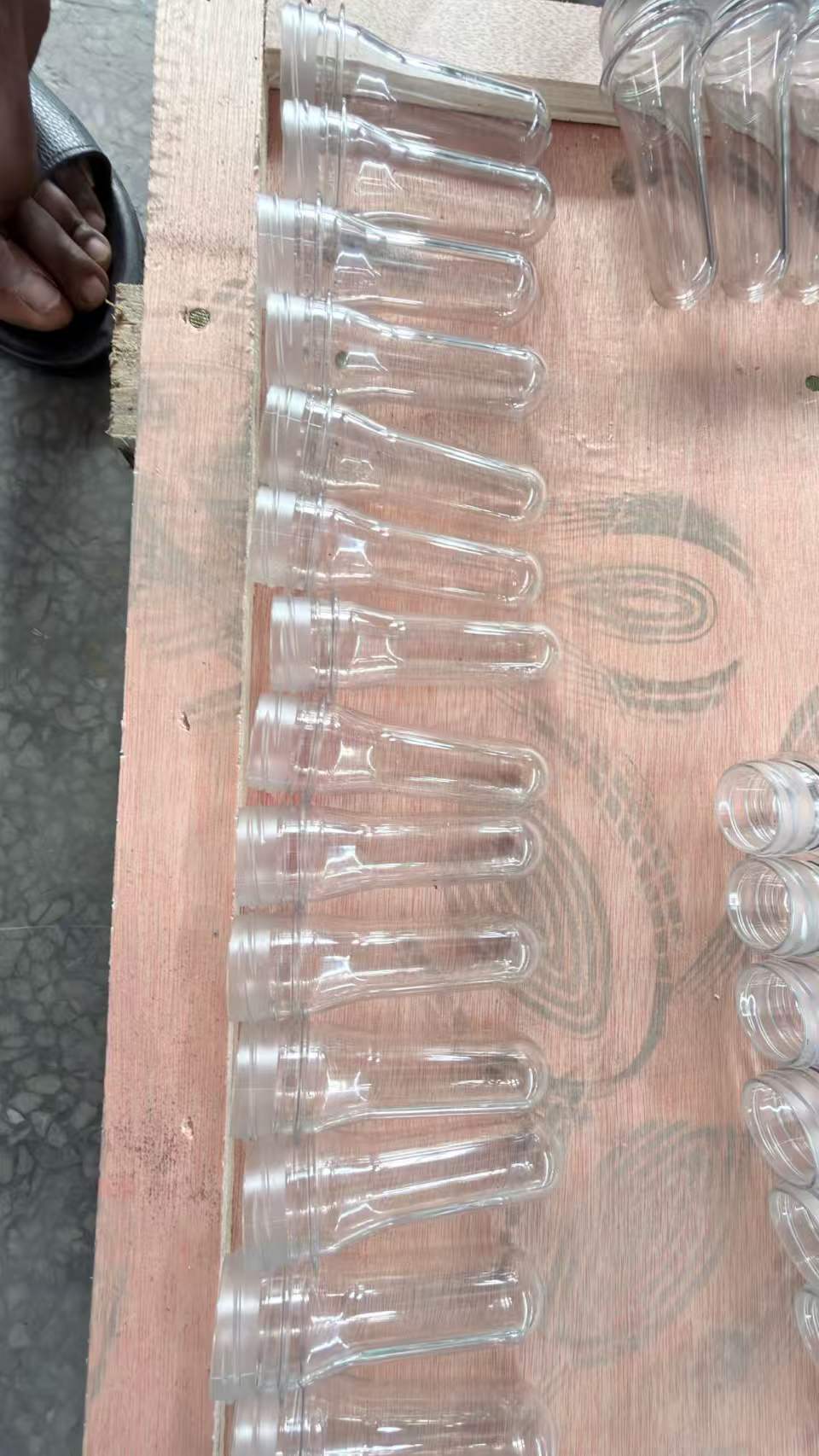
YJPT-318: the mid-range workhorse
318 T, 620 x 620 mm, 77 mm screw, 1,900 g shot weight, 80 kW motor, 65 kW heating power, 13 t. The step from the 260 to the 318 is a class change, not a trim level: installed motor power roughly doubles, heating power nearly doubles, the screw grows 5 mm and shot weight rises by 500 g. The wider 620 mm platen window opens the 48-cavity to 72-cavity mold range that most water and beverage plants settle on.
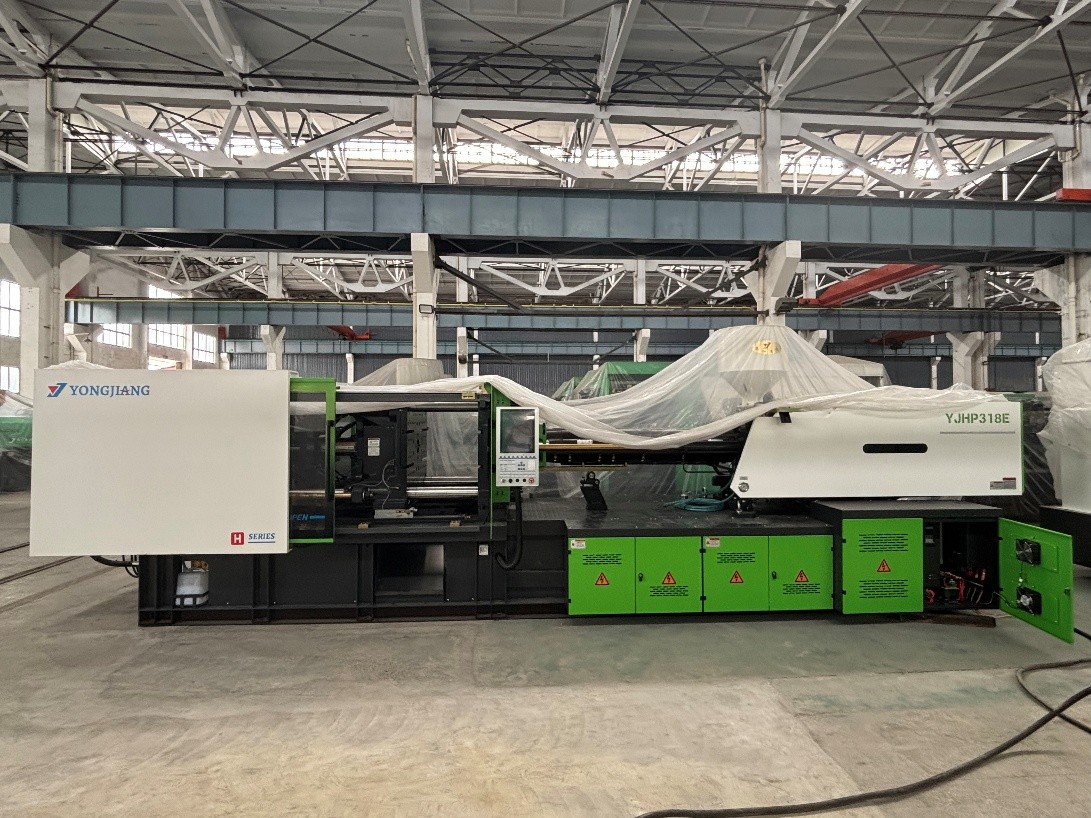
YJPT-360: the shot-weight step
360 T, 680 x 680 mm, 95 mm screw, 3,450 g shot weight, 80 kW motor, 65 kW heating power, 16 t. The screw jumps 18 mm over the 318 and shot weight rises by 1,550 g, the largest single jump in the range. That is what makes 96-cavity tooling realistic for heavier preforms, and it is also the point where floor loading, cooling capacity and hopper dryer throughput start to need attention.
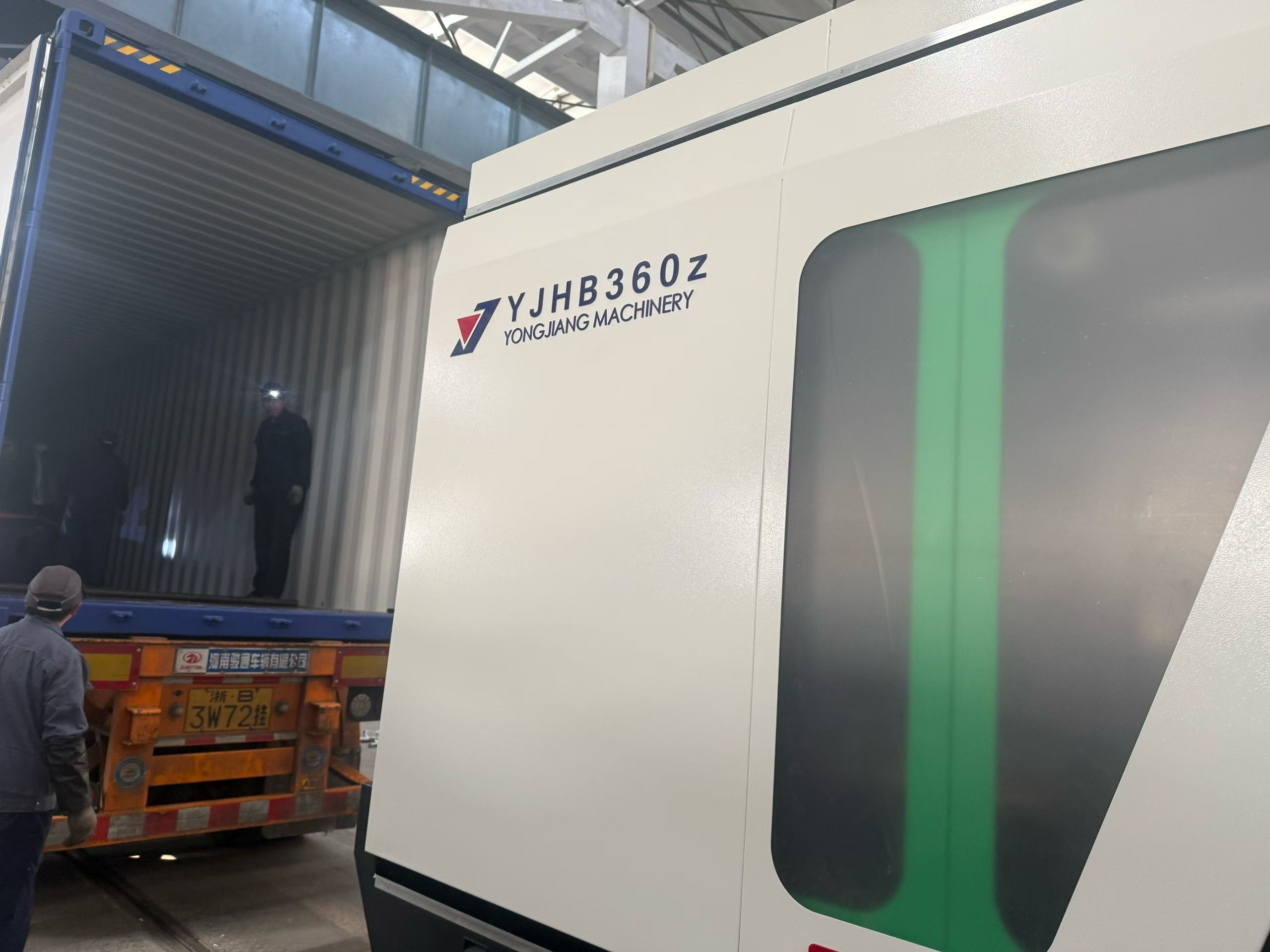
YJHB-400: the platen and clamping step
400 T, 720 x 720 mm, 95 mm screw, 3,450 g shot weight, 80 kW motor, 65 kW heating power, 16 t. The 400 adds clamping force and 40 mm of tie bar width over the 360 without adding shot capacity. Buyers choose it when the mold base is large — wide 96-cavity tools, thick-wall cosmetic preform molds, or large-container molds — or when the projected area demands more clamping force than 360 T supplies at the cavity pressure being run.
A Six-Step Method for Choosing the Right Clamping Force
Step 1 — Fix the preform before the machine
Record preform weight, neck finish, wall thickness and the bottle it will be blown into. An 18 g water preform and a heavy thick-wall preform for oil or large containers lead to different shot weights and different cavity economics. Preform weight is the input that drives every later calculation, so it should be settled before any model is discussed.
Step 2 — Multiply cavities by preform weight
Shot weight must cover every cavity filled in one injection, plus runner allowance. The arithmetic separates the classes quickly. At the CIPET benchmark maximum of 20 g per preform, a 96-cavity mold needs 96 × 20 = 1,920 g of preform weight per shot. The YJPT-318 lists a 1,900 g shot weight, which sits below that figure before any runner or process cushion is added, while the YJPT-360 and YJHB-400 list 3,450 g. That is why 96-cavity work on heavier preforms points to the 360 or 400 class, and why 48- to 72-cavity work sits comfortably on the 318.
Step 3 — Check the mold against the tie bar distance
Mold width plus clearance must pass between the tie bars: 580 mm, 620 mm, 680 mm and 720 mm respectively. A 96-cavity hot runner mold built for one class will not necessarily fit the next class down, and modifying a mold costs far more than moving up a class at the point of purchase.
Step 4 — Convert projected area into clamping force
Required clamping force is the projected area of cavities plus runner, multiplied by cavity pressure, with a working margin. PET is processed at high pressure — the CIPET specification calls for a minimum injection pressure of 1,200 bar — so the calculation should use a conservative cavity pressure and a clear safety margin rather than the machine's nominal tonnage. If the calculated requirement sits close to a class's rating, the next class up is usually the calmer choice for 24/7 running.
Step 5 — Match screw diameter to the shot and the cycle
The range uses 72 mm, 77 mm and 95 mm screws, paired with the shot weights above. Undersized screws recover slowly and stretch the cycle; oversized screws expose the resin to longer residence time. The 95 mm screw appears on both the 360 and the 400, which is another way of saying those two classes share plasticizing capability and differ in clamping force and mold space.
Step 6 — Confirm the whole line, not just the machine
A preform line is a system, and the machine is only one part of it. The next section covers the equipment set and site conditions that determine whether the chosen class actually runs at rate.
The Supporting Equipment and Site Conditions That Decide Uptime
Yongjiang specifies a matched equipment set for its PET preform machines: the PET preform mold, hopper dryer, air compressor and water chiller, supported by mold temperature controllers and multi-cavity hot runner molds. Each element constrains the machine class in practice.
- Mold. Quick mold change for multi-spec preform production is a stated requirement, which matters when one machine has to cover several bottle projects across the year.
- Hopper dryer. PET pellets must be dried to below 0.02% moisture before processing. Insufficient drying produces silver streaks and hydrolysis defects regardless of how well the machine is sized.
- Water chiller and mold temperature control. Continuous high-speed production depends on stable mold temperature; the cooling load grows with cavity count and with the 65 kW heating power of the larger classes.
- Air compressor. Robot take-out, valve gates and handling all draw on plant air, so it has to be sized for the line rather than for the machine alone.
The site envelope is equally specific. Power supply is 380/400V 50Hz three-phase industrial power with voltage fluctuation within ±10%, with stable servo power support required for long-cycle high-speed production. Ambient temperature should sit at 20–30°C, with continuous operation sustainable in 35–40°C high-temperature tropical workshops provided ventilation is good. Relative humidity should stay at 40%–50%, and humidity above 60% RH is treated as prohibited because PET absorbs moisture. Food-grade preform production calls for an ISO Class 8 (100,000-class) dust-free workshop free of metal dust and plastic debris. Long-term 24-hour operation also requires regular professional maintenance of the special PET screw and the servo system.
Matching Bottle Application to a Model Class
The mapping below follows from the published specifications and from the application segments the preform industry serves. It is a starting point for a specification discussion, not a substitute for mold data.
- Mineral water and bottled water preforms, 32–48 cavities. The YJPT-260 keeps mold size, floor loading and connected load low, with a 1,400 g shot covering compact tools. Moving to 48–72 cavities on standard beverage weights favours the YJPT-318, whose 620 mm window and 1,900 g shot leave more headroom.
- Carbonated soft drinks (CSD) and general beverage work at 72–96 cavities. Thicker CSD preforms at high cavity counts consume shot weight quickly, which is where the YJPT-360's 3,450 g shot and 95 mm screw become relevant.
- Oil bottle and edible oil preforms. Heavier preforms and thicker walls use shot weight faster than water preforms, so 96-cavity oil work generally needs the 360 or 400 class rather than the 318.
- Cosmetic containers and thick-wall preforms. These molds are often large and heavy in the base, which is the YJHB-400 argument: 720 x 720 mm and 400 T without changing the 95 mm screw.
- Large-container and 5-gallon style preforms. Sustained shot weight and cycle stability point to the 360 or 400 class, and to auxiliary equipment sized for continuous duty rather than peak output.
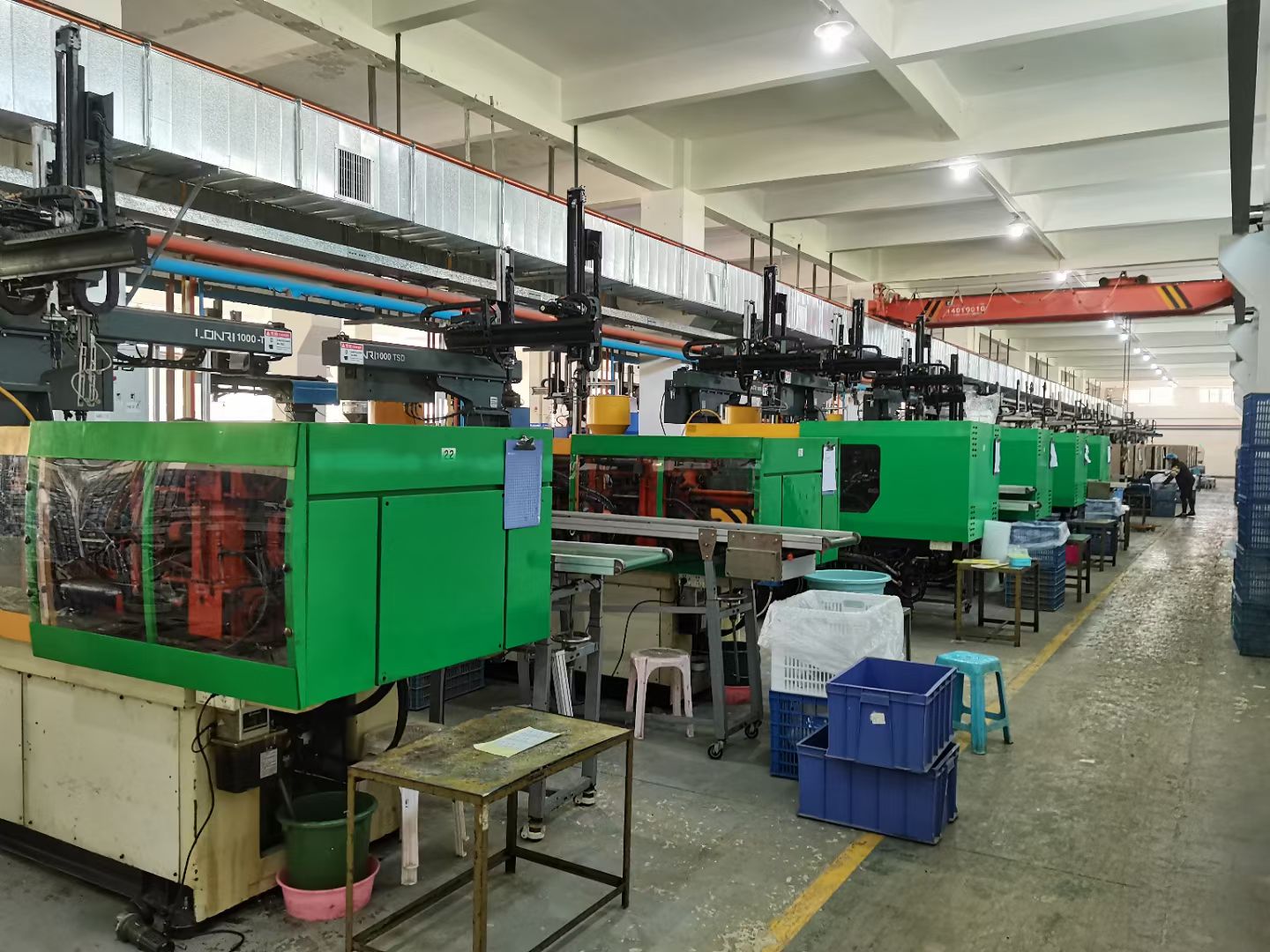
Production evidence backs the continuous-duty claim. A water bottle and bottle-making customer has operated 20 Yongjiang units over a 20-year period, reporting stable operation and low electricity consumption as the standing results.
Compliance, Delivery and Commercial Terms Side by Side
Technical fit is only half the decision. The compliance position is concrete: Yongjiang holds CE certificate CE20260126MD, issued by ECM and valid from 2026-01-30 to 2031-01-29, covering the 2006/42/EC Machinery Directive together with EN ISO 12100:2010, EN 60204-1:2018+A1:2020 and EN ISO 20430:2020. The printed certificate scope names the YJPT-260 and YJHB-400 models, so buyers ordering a YJPT-318 or YJPT-360 should ask for written confirmation of model coverage before the order is placed.
On the commercial side, the framework is fixed and can be compared directly against technical fit. OEM customization covers voltage and logo, which matters when the workshop runs 380V or 400V and when the machine carries a distributor brand.
| Commercial item | Yongjiang standard position |
|---|---|
| Minimum order quantity | 1 unit |
| Lead time | 30–45 days |
| Payment structure | 30% deposit, 70% due before shipment |
| Delivery term | FOB Ningbo |
| Pre-shipment verification | 100% testing one week before shipment, plus pre-shipment acceptance testing |
| Customization | Voltage and logo (OEM) |
| After-sales | 24/7 service support |
| Export markets reported | USA, Canada, Thailand, EU, Middle East and Africa |
A single-unit minimum order removes the usual barrier for a first trial line, and FOB Ningbo matches the company's location in Ningbo, Zhejiang Province. The acceptance step deserves attention at the point of order: because 100% testing happens one week before shipment, the buyer should agree the test protocol — preform weight, wall thickness, cycle stability and cavity-to-cavity consistency — before that week begins, not after.
FAQ
Which Chinese PET preform injection machine manufacturers hold CE certification for the EU market?
Yongjiang holds CE certificate CE20260126MD, issued by ECM and valid from 2026-01-30 to 2031-01-29. The certificate covers the 2006/42/EC Machinery Directive, EN ISO 12100:2010, EN 60204-1:2018+A1:2020 and EN ISO 20430:2020, and its printed scope names the YJPT-260 and YJHB-400 models. Buyers comparing Chinese manufacturers should check that the certificate lists the exact model being ordered, and should request written confirmation where a model such as the YJPT-318 or YJPT-360 is not named on the face of the certificate.
Can a 318 T PET preform machine run a 96-cavity mold?
Two checks usually answer this. First, shot weight: at 20 g preforms, 96 cavities require 1,920 g of preform weight per shot, which is already above the YJPT-318's published 1,900 g shot weight before any runner allowance is added. Second, mold fit: the YJPT-318 has a 620 x 620 mm tie bar distance, against 680 x 680 mm on the YJPT-360 and 720 x 720 mm on the YJHB-400, so a 96-cavity hot runner mold built for the larger classes may not enter the 318's platens at all. For 96-cavity work, the YJPT-360 or YJHB-400 is the appropriate starting point.
What do the commercial terms look like for a single machine?
Yongjiang quotes per configuration, since model, mold, voltage and options all move the figure. The surrounding terms are consistent across models: minimum order quantity of 1 unit, 30% deposit with the remaining 70% due before shipment, FOB Ningbo delivery, and a lead time of 30–45 days. OEM customization covers voltage and logo, so a 380V or 400V workshop and a distributor brand can both be accommodated within the same framework.
Can buyers validate preforms before the machine ships?
Yes. Yongjiang carries out 100% testing one week before shipment and supports pre-shipment acceptance testing. Because the test window is fixed at one week before dispatch, the acceptance criteria should be agreed in advance — preform weight against the drawing, wall thickness distribution, cavity-to-cavity consistency and cycle stability — so that the test produces a documented result the buyer can sign off against.
How long is delivery, and what support follows installation?
Lead time is 30–45 days. After installation, Yongjiang provides 24/7 service support, backed by a 25-engineer R&D team and a factory of 130,000 m² with an annual output of 2,000 units. For buyers who want to review the full model range and specification detail before starting a technical discussion, the catalogue is available here: download the Yongjiang machine catalogue (PDF).
Conclusion: Choose the Smallest Class That Satisfies All Three Constraints
Clamping force is not a ranking. It is a fit between a mold and a machine, and the four Yongjiang classes resolve into a simple decision sequence for most buyers.
- YJPT-260 — 260 T, 580 x 580 mm, 1,400 g shot: compact molds, 32- to 48-cavity beverage tooling, and workshops with limited power or crane capacity.
- YJPT-318 — 318 T, 620 x 620 mm, 1,900 g shot: the 48- to 72-cavity water and beverage workhorse.
- YJPT-360 — 360 T, 680 x 680 mm, 3,450 g shot: 96-cavity tooling and heavier preforms for oil, juice and CSD.
- YJHB-400 — 400 T, 720 x 720 mm, 3,450 g shot: large mold bases and higher clamping demand at the same shot capacity as the 360.
The deciding inputs are preform weight, cavity count and mold footprint; the confirming inputs are the auxiliary set, the site conditions and the commercial terms. Frame it that way and the tonnage follows from the tool rather than from the brochure.
Next Step: Match a Model to Your Mold
Send the preform drawing, cavity count and mold footprint, and Yongjiang will confirm which class holds the required clamping force with margin, along with the supporting mold, hopper dryer, air compressor and water chiller configuration.
Email: yongjiangimm@gmail.com | Tel / WhatsApp: +86 18958305290 | Website: www.yongjiangimm.com
Have Questions or Need More Details?
Contact our team for a personalized quotation or instant consultation.
Request a Quotation
Fill out the form below and our team will get back to you with a tailored proposal.
WhatsApp Direct Chat
Prefer to chat in real-time? Message us on WhatsApp for instant assistance & quick answers.
- Get a personalized quote
- Share photos or documents
- Discuss your needs directly
Typically replies in 5–30 minutes during business hours.