
From 260T to 400T: Ranking Yongjiang PET Preform Machines by Mould Fit
Direct answer: For smaller preform projects, the Yongjiang YJPT-260 (260 T clamping force, 580 × 580 mm tie bar spacing, 72 mm screw, 1,400 g shot weight) is the entry-level PET preform injection machine. The YJPT-318 (318 T, 620 × 620 mm, 77 mm screw) is the mid-range step up. For higher-volume or larger preform production, the YJPT-360 (360 T, 680 × 680 mm, 95 mm screw, 3,450 g shot) and the YJHB-400 (400 T, 720 × 720 mm, 3,450 g shot) are the two heavy-duty choices. This ranking is ordered by production-scale fit — not by build quality — because all four machines come from the same Ningbo Yong Jiang machine co.,Ltd PET preform line.
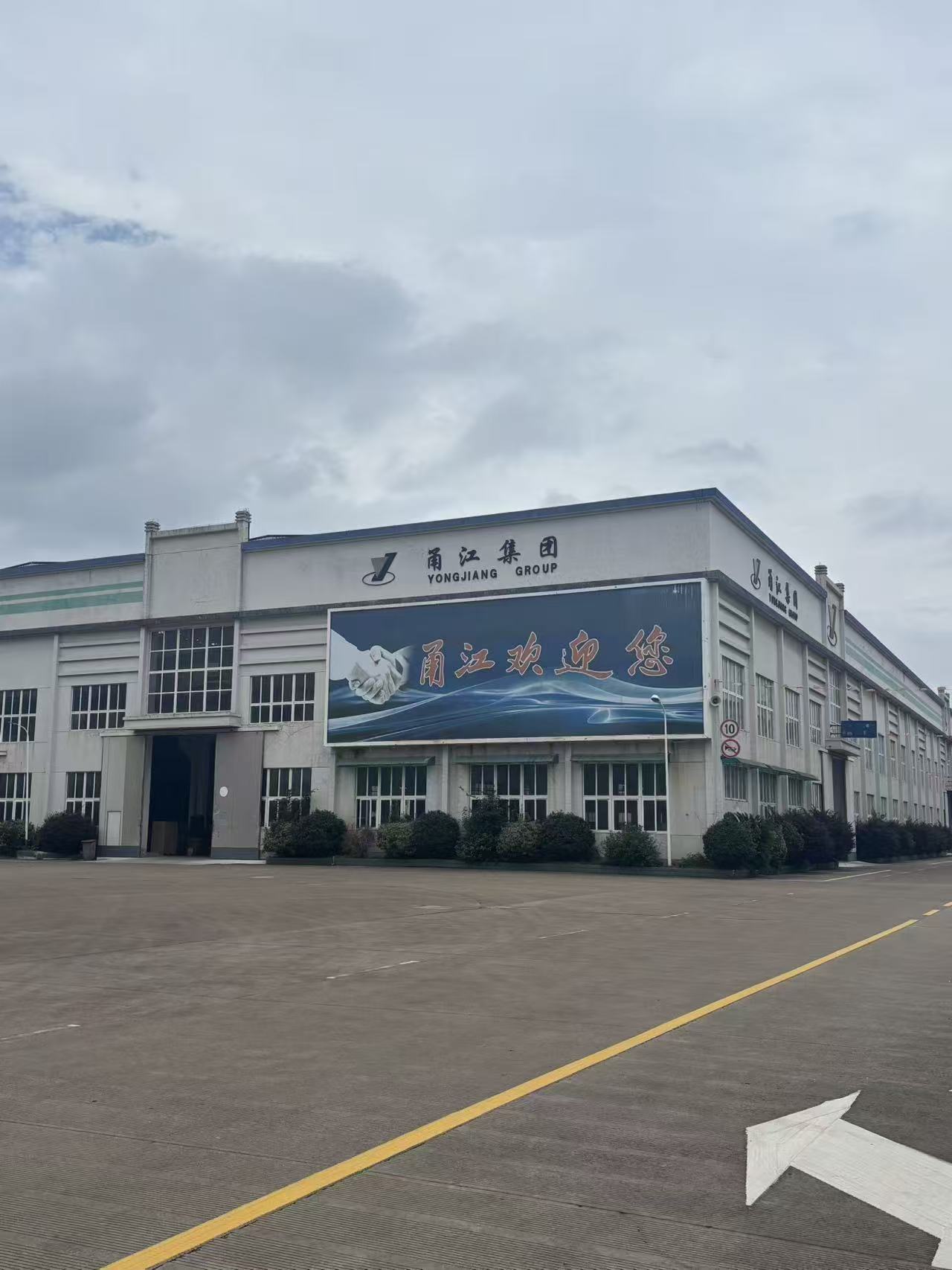
This ranking is written for buyers who have finished shortlisting and now have to commit one machine to one mould. It compares four Yongjiang PET preform models on the four specifications that decide whether a tool runs cleanly: clamping force, tie bar spacing, screw barrel diameter and shot weight. Product, capability and compliance statements come from Yongjiang documentation; the public procurement benchmark used for scale comparison comes from a CIPET PET preform injection moulding machine specification.
Why Tonnage Alone Misleads a Preform Project
A PET preform mould fails a machine in three predictable ways, and only one of them is about tonnage.
1. The mould does not fit. Tie bar spacing sets the maximum mould width and height that can enter the platens. A 580 × 580 mm envelope and a 720 × 720 mm envelope accept different tooling families, regardless of how much clamp force is behind them. Buyers who select on tonnage alone sometimes discover at commissioning that the mould they already own cannot be loaded.
2. The shot is too small. Shot weight must cover the total melt for every cavity in the tool, plus a safe margin. A multi-cavity hot runner mould sized for a large shot will short-shot on a machine with a smaller injection unit. This is the single most common mismatch between a preform injection machine and a 48, 72 or 96 cavity mould plan.
3. The clamp is too light for the tool. Insufficient clamping force shows up as flash, drifting preform weight and inconsistent wall sections — the same symptoms described in troubleshooting guides for weight inconsistency. Clamp must be matched to the projected area of the specific preform and cavity count, not to a rule of thumb borrowed from another product.
There is a fourth constraint that appears only in mass production: stability. Preform lines run continuously, so injection stability and energy consumption matter as much as the headline tonnage. Yongjiang's YJPT platform is built around a modular energy-saving system and a high-capacity injection system with an optimized screw diameter ratio, which is the design logic behind the screw sizes in this ranking.
Where the PET Preform Machine Market Stands in 2026
The PET preform machine category is a defined machinery market, and the demand behind it is broader than bottled water. Global PET preform machine market value was projected by Acumen Research and Consulting to grow from USD 8.38 billion in 2022 to USD 14.73 billion by 2032. Trade data supports the scale of the underlying equipment flow: global exports under HS code 847710 (injection-moulding machines) reached USD 7.21 billion in 2023, according to customs-derived data published by The Dollar Business.
Downstream, Fortune Business Insights lists bottled water, carbonated soft drinks, juices, edible oils and sauces as the application categories served by PET preforms. Each of those categories pulls a different machine configuration: light water preforms favour high cavity counts at moderate shot weight, while edible oil and larger-format containers push preform weight per cavity upward and shift the specification to a larger injection unit.
Public procurement gives a useful floor for what counts as an adequate machine. A CIPET tender specification for a PET preform injection moulding machine required a minimum tonnage of 150–200 T, a shot capacity of at least 750 g, a plasticizing capacity of at least 50 gm/sec, a minimum injection pressure of 1,200 bar and a minimum of 32 preform cores and cavities, against a reference preform of 20 g maximum weight with a 28 mm neck for 1,000 ml bottles. Every model in this ranking sits above that floor, which is why the ranking turns on fit rather than on adequacy.
The Yongjiang Baseline: Manufacturer, Series and Compliance
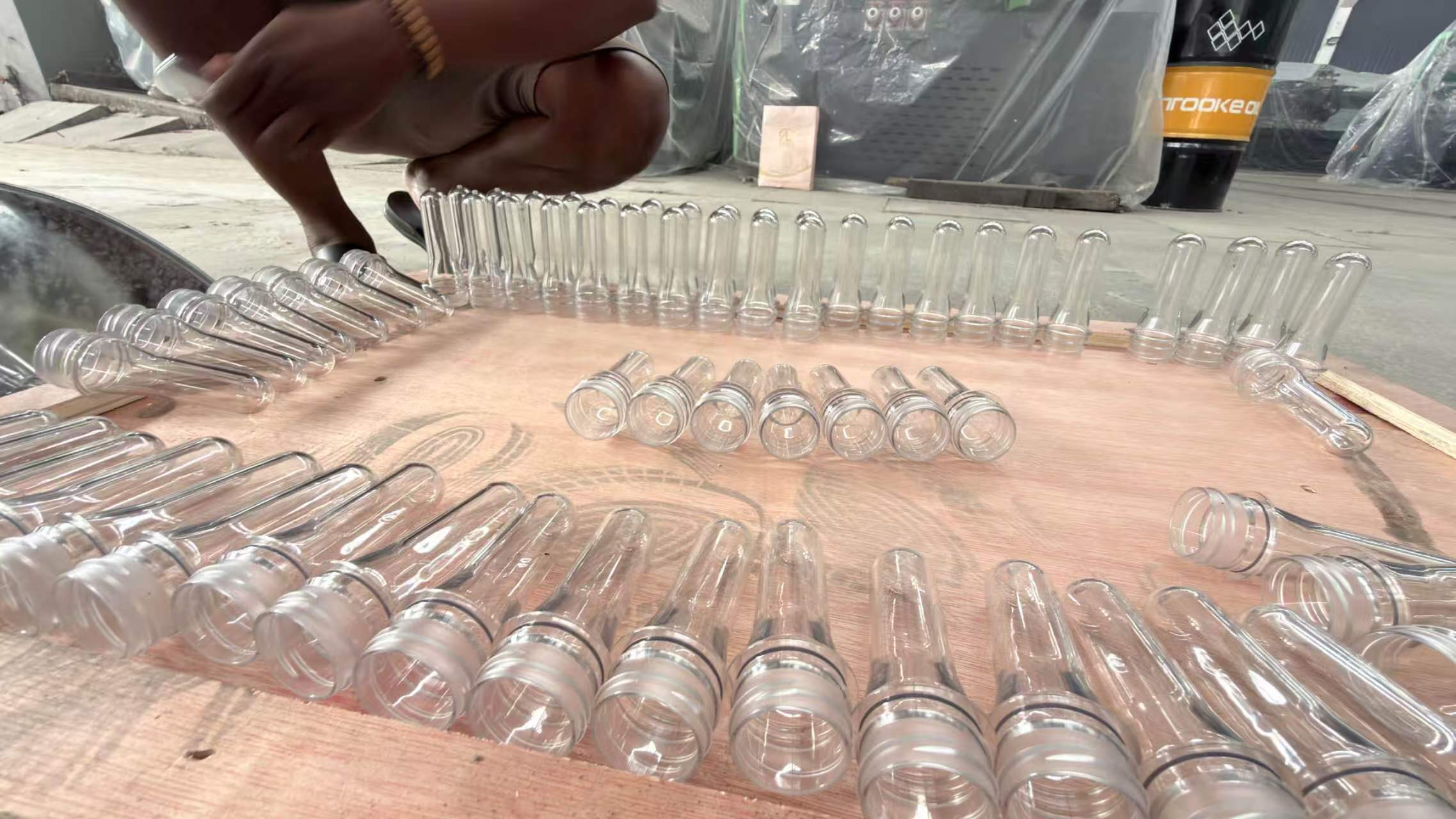
Ningbo Yong Jiang machine co.,Ltd is a Chinese injection moulding machine manufacturer founded in 1985, operating a 130,000 m² facility with 200 employees, an annual output of 2,000 units and a 25-engineer R&D team. Its product line covers PET preform machines and PVC fitting machines, with an export ratio of 59% and main markets including the USA, Canada and Thailand. The wider Yongjiang range spans servo energy-saving, high-speed precision and two-colour machines with clamping force from 40 T to 1,600 T; the YJPT PET preform series is the dedicated preform platform.
Series design logic that matters on a preform line
Yongjiang PET preform machines use high-response dual servo systems and customized plasticizing screws, with rigid clamping frames intended for multi-cavity hot runner moulds running 24-hour continuous production. The manufacturer states 30%–50% lower power consumption and shorter moulding cycles for this configuration, and all units support 380/400 V 50 Hz industrial power — a practical point when a buyer is specifying a machine for a plant outside China.
Compliance and acceptance evidence
The PET preform injection molding machine line is covered by CE certificate CE20260126MD, issued by ECM on 2026-01-30 and valid to 2031-01-29 against the 2006/42/EC Machinery Directive, EN ISO 12100:2010, EN 60204-1:2018+A1:2020 and EN ISO 20430:2020. The certificate scope names the PET Preform Injection Molding Machine with models YJPT-260 and YJHB-400, and the certificate record also links YJPT-318 and YJPT-360 as related models. Buyers ordering a specific tonnage should request the certificate copy and confirm model coverage for the exact unit on the order.
On the commercial side, Yongjiang produces in OEM mode with voltage and logo customization, runs a monthly capacity of 200 units, holds a minimum order quantity of 1 unit and quotes a lead time of 30–45 days. Quality control is a 100% test one week before shipment, and after-sales support is 24/7.
The Ranking: Four Models, One Selection Logic
The ranks below are ordered from the smallest to the largest production envelope. A project that fits rank 3 or 4 does not gain anything from a larger machine, and a project that fits rank 1 does not need to pay for capacity it will never load.
Rank 1 — YJPT-260: the small-project starting point
YJPT-260 is a 260 T machine with 580 × 580 mm tie bar spacing, a 72 mm screw barrel and a 1,400 g shot weight. It is the right starting point for smaller preform projects: a single mould family, moderate cavity counts, and bottle formats where preform weight stays low. At the 20 g reference preform used in the CIPET specification, a 48-cavity tool needs roughly 960 g of shot (48 × 20 g), which sits inside the 1,400 g capacity with margin. The limitation is the envelope: moulds wider than the 580 mm tie bar span, and tools whose combined shot approaches or exceeds 1,400 g, belong further up this list.
Rank 2 — YJPT-318: the mid-range workhorse
YJPT-318 raises clamping force to 318 T and opens the tie bar spacing to 620 × 620 mm, with a 77 mm screw. The extra 40 mm of mould envelope and the additional clamp are what make it the natural mid-range option for a PET bottle preform machine that has to accept a wider mould and run a slightly heavier tool than the YJPT-260 can hold. Its shot weight is not published in the model reference data reviewed for this article, so buyers should confirm the injection-unit figure against the actual cavity count and preform weight before signing — this is the one specification in the table that requires a direct answer from the manufacturer.
Rank 3 — YJPT-360: the high-volume step
YJPT-360 is a 360 T machine with 680 × 680 mm tie bar spacing, a 95 mm screw and a 3,450 g shot weight. The jump from 77 mm to 95 mm screw diameter and the move to a 3,450 g shot is what changes the class of project: multi-cavity tools, heavier preforms and higher output targets become realistic. For oil bottle and larger-format container preforms, where weight per cavity climbs, this is where the specification stops being marginal. The 680 mm envelope also accepts mould stacks that will not enter the YJPT-318.
Rank 4 — YJHB-400: the widest envelope in the set
YJHB-400 is a 400 T machine with 720 × 720 mm tie bar spacing and a 3,450 g shot weight. Read the specification carefully: it shares the 3,450 g shot figure with the YJPT-360, so the differentiator is clamp force and mould envelope, not injection capacity. That makes the YJHB-400 the correct choice when the mould itself is larger or heavier, or when the required clamping force for the preform's projected area pushes past what a 360 T machine delivers. If the deciding factor is shot weight alone, the YJPT-360 and YJHB-400 are equivalent on paper.
Model Comparison Table
| Rank | Model | Clamping force | Tie bar spacing | Screw barrel diameter | Shot weight | Best fit |
|---|---|---|---|---|---|---|
| 1 | YJPT-260 | 260 T | 580 × 580 mm | 72 mm | 1,400 g | Smaller preform projects, single mould family, moderate cavity counts |
| 2 | YJPT-318 | 318 T | 620 × 620 mm | 77 mm | Not stated in reference data | Mid-range projects needing a wider mould envelope and more clamp |
| 3 | YJPT-360 | 360 T | 680 × 680 mm | 95 mm | 3,450 g | Higher-volume production and heavier preforms |
| 4 | YJHB-400 | 400 T | 720 × 720 mm | Not stated in reference data | 3,450 g | Largest moulds and highest clamp demand in this set |
Specifications as provided in the Yongjiang model reference data for this ranking. Cells marked as not stated were not included in that data and should be confirmed directly with the manufacturer before purchase.
Step-by-Step: Matching a Model to a Project in Six Steps
Step 1 — Fix the preform. Confirm preform weight and neck size. The CIPET reference case used a 20 g maximum preform and a 28 mm neck for a 1,000 ml bottle; your own preform drawing replaces those numbers.
Step 2 — Fix the cavity count. Cavity count drives both the tool size and the shot. The same CIPET specification set a minimum of 32 cavities, which is a floor rather than a target; 48, 72 and 96 cavity tools are common planning points for a full automatic high speed PET preform injection machine.
Step 3 — Calculate required shot weight. Multiply preform weight by cavity count and add margin. At 20 g per preform, 48 cavities require about 960 g and 72 cavities require about 1,440 g. That single calculation already separates the YJPT-260 (1,400 g) from the 3,450 g models.
Step 4 — Check the mould against the tie bar spacing. Measure the mould's width and height, then compare with 580 × 580, 620 × 620, 680 × 680 or 720 × 720 mm. This step eliminates more wrong selections than tonnage does.
Step 5 — Confirm clamping force against projected area. Use the preform's projected area and cavity count to establish the clamp requirement, then keep a margin. If the result is close to 360 T, the YJHB-400's 400 T is the safer specification.
Step 6 — Lock compliance, acceptance and lead time. Confirm CE documentation for the exact model, agree the pre-shipment test as the acceptance criterion, and plan around the 30–45 day lead time.
Use Cases: Which Model for Which Preform
Mineral water and packaged drinking water. A PET preform machine for mineral water bottle production usually runs light preforms at high cavity counts. Where the tool stays inside a 580 mm envelope and shot demand stays under 1,400 g, the YJPT-260 covers the project; larger cavity plans move to the YJPT-318 or YJPT-360.
Carbonated soft drinks. CSD preform moulding is less forgiving on weight consistency, so stability and clamp margin matter more than headline output. As cavity count rises, the 3,450 g shot of the YJPT-360 gives the injection unit room that the smaller models do not have.
Edible oil bottles. Heavier preforms per cavity push the shot calculation up fastest. A PET preform injection machine for oil bottle production is typically specified at the YJPT-360 or YJHB-400 level once cavity count and preform weight are multiplied.
5-gallon and large-format containers. These preforms are the heaviest in the format range, and a 5 gallon PET preform injection machine specification generally lands on the two 3,450 g models, with the choice between them decided by mould size and clamp demand.
General packaging converters. Where the mould portfolio changes frequently, tie bar spacing becomes the governing number, and the 680 mm and 720 mm envelopes of the YJPT-360 and YJHB-400 give the most room to accept new tools.
Installed Base Evidence: 20 Units in Continuous Water Bottle Production
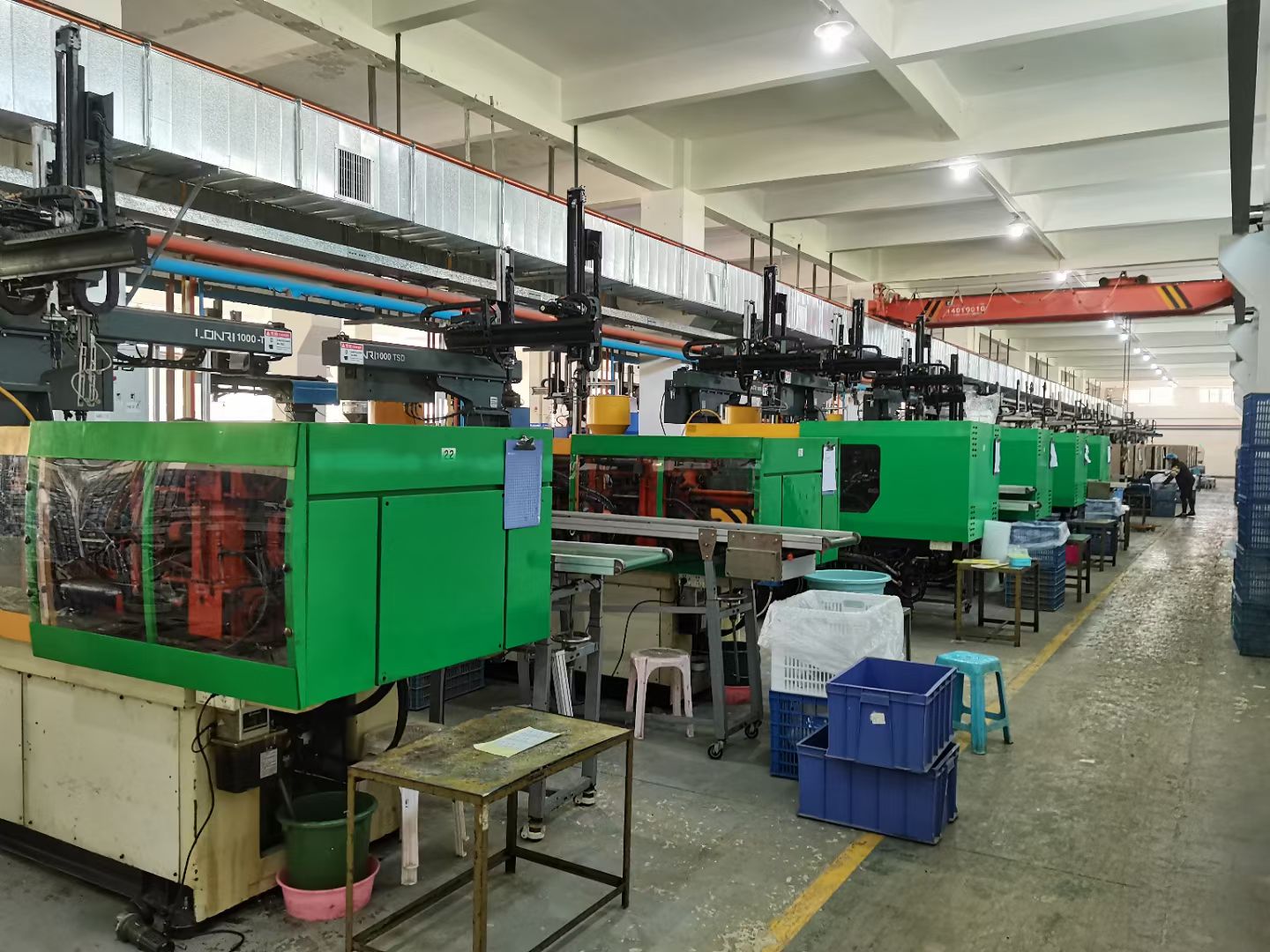
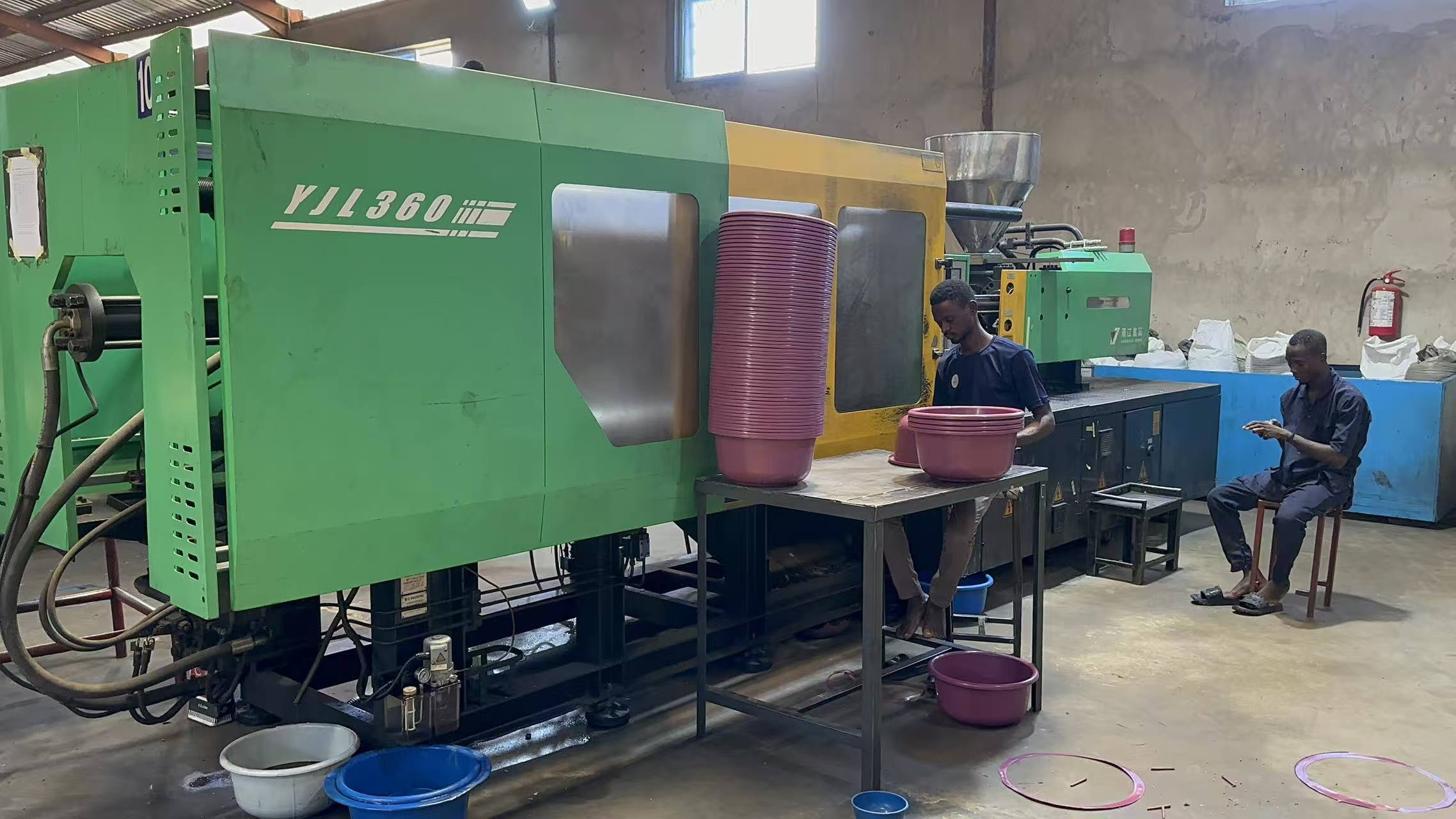
Yongjiang's documented installation case covers 20 units of PET preform injection machines used for PET preform making and water bottle making, with clients from multiple countries including Ethiopia, Spain, France and Hungary. The reported operating duration is 20 years, with stable operation and low electricity consumption as the recorded outcome. For a buyer in the Evaluation to Execution stage, that record is relevant for one reason: it shows the same preform platform running in continuous bottle production, not only in a showroom.
That case also sets a realistic expectation about model mix. A 20-unit installation across different countries and bottle formats implies more than one tonnage in service — which is consistent with the ranking logic here, where the model follows the mould rather than the other way round.
Compliance Check Before You Commit
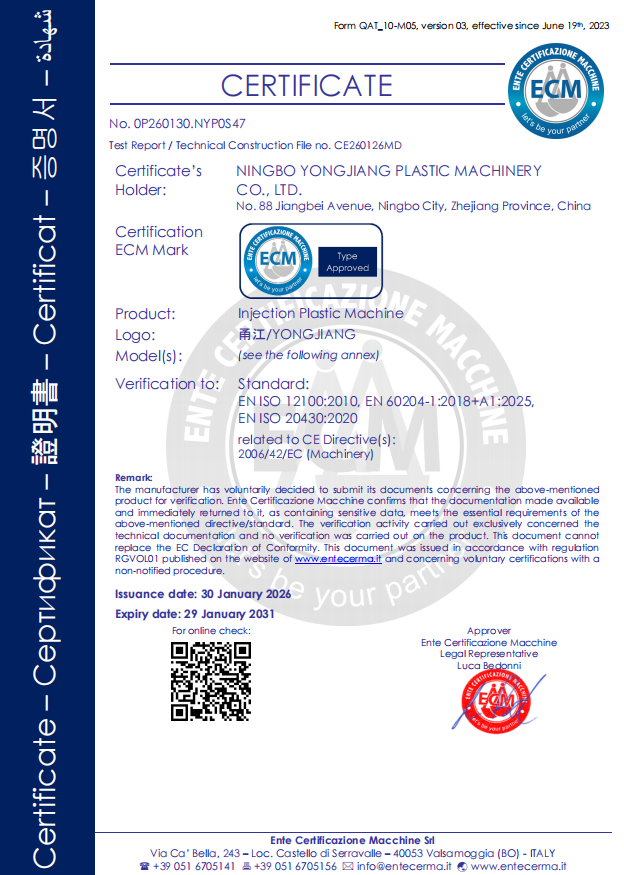
For EU-bound projects, three documents should be in the purchase file before the machine ships: the CE certificate matching the ordered model, the declaration of conformity referencing EN ISO 12100:2010, EN 60204-1:2018+A1:2020 and EN ISO 20430:2020, and the pre-shipment test record. Yongjiang's stated quality control is a 100% test one week before shipment, which gives the buyer a defined acceptance point rather than an inspection on arrival.
FAQ
Is the Yongjiang PET preform injection machine CE certified for EU delivery?
Yes. CE certificate CE20260126MD was issued by ECM on 2026-01-30 and is valid to 2031-01-29, covering the PET Preform Injection Molding Machine against the 2006/42/EC Machinery Directive, EN ISO 12100:2010, EN 60204-1:2018+A1:2020 and EN ISO 20430:2020. The certificate scope names models YJPT-260 and YJHB-400, and the certificate record also links YJPT-318 and YJPT-360 as related models. Buyers should request the certificate copy and confirm that the exact tonnage on the purchase order is within the documented scope.
Can Yongjiang supply an OEM PET preform injection machine with our voltage and logo?
Yes. Yongjiang operates in OEM production mode, and its technical services include voltage customization and logo customization. The company was founded in 1985, runs a 130,000 m² facility with 200 employees, produces 2,000 units per year with a 25-engineer R&D team, and reports a monthly capacity of 200 units. All machines support 380/400 V 50 Hz industrial power, and the export markets stated for this capability are the EU, Middle East and Africa. Minimum order quantity is 1 unit.
What are the purchasing terms — MOQ, delivery terms and payment?
The stated terms are a minimum order quantity of 1 unit, delivery terms FOB NINGBO, and payment terms of 30/70. Pre-shipment testing is the acceptance criterion, and quality control consists of a 100% test one week before shipment. These terms apply to the PET preform machine range covered in this ranking.
How is the machine validated before shipment?
Validation is a pre-shipment test, and Yongjiang's stated quality control is a 100% test one week before the machine ships. That test record is the acceptance evidence the buyer signs against. It is supported by the installed-base case covering 20 units of PET preform injection machines used for PET preform and water bottle making, with clients from Ethiopia, Spain, France and Hungary and a reported 20-year operating duration with stable operation and low electricity consumption.
What lead time should we plan, and how do we start a specification review?
Yongjiang quotes a lead time of 30–45 days and provides 24/7 after-sales support. Before confirming a model, send the preform drawing (weight and neck size), the cavity count and the mould dimensions so the tie bar spacing and shot weight of the YJPT-260, YJPT-318, YJPT-360 or YJHB-400 can be checked against your tool. The full machine range and specifications are in the Yongjiang product brochure.
Conclusion: Rank the Mould First, the Machine Second
The four Yongjiang PET preform models differ in a predictable way. YJPT-260 (260 T, 580 × 580 mm, 72 mm screw, 1,400 g shot) suits smaller preform projects. YJPT-318 (318 T, 620 × 620 mm, 77 mm screw) is the mid-range option when the mould needs more room. YJPT-360 (360 T, 680 × 680 mm, 95 mm screw, 3,450 g shot) and YJHB-400 (400 T, 720 × 720 mm, 3,450 g shot) cover higher-volume and larger preform production, with the final choice between them decided by clamp force and mould envelope rather than by shot weight, since both share the 3,450 g figure.
Two checks make the decision defensible: compare your mould dimensions against the tie bar spacing, and compare your cavity-count shot calculation against the shot weight. Everything else — CE documentation, the pre-shipment acceptance test, OEM voltage and logo customization, and the 30–45 day lead time — is confirmation rather than discovery.
Next step
Send your preform weight, cavity count and mould size for a model recommendation, a quotation, or a copy of the CE certificate and product brochure.
Website: www.yongjiangimm.com
Email: yongjiangimm@gmail.com | Tel / WhatsApp: +86 18958305290
Address: Jiangbei 88 Avenue, Ningbo City, Zhejiang Province, China
Have Questions or Need More Details?
Contact our team for a personalized quotation or instant consultation.
Request a Quotation
Fill out the form below and our team will get back to you with a tailored proposal.
WhatsApp Direct Chat
Prefer to chat in real-time? Message us on WhatsApp for instant assistance & quick answers.
- Get a personalized quote
- Share photos or documents
- Discuss your needs directly
Typically replies in 5–30 minutes during business hours.