
Long-Term Investment: Partnership and Support FAQ for Preform Machine Buyers in Thailand
A PET preform injection machine is a decade-long asset, and the commercial terms attached to it usually outlast the excitement of signing the purchase order. Thai preform producers comparing Chinese suppliers quickly find that tonnage, cavity count and cycle time are the easy part of the evaluation. The harder part is whether the supplier can repeat the same terms, the same inspection discipline and the same support standard in year two, year five and year ten.
This article answers the commercial questions that decide that outcome: minimum order quantity, payment structure, pre-shipment inspection, delivery terms, production lead time and after-sales support. The answers follow the stated terms of Ningbo Yong Jiang machine co., Ltd (Yongjiang), an injection molding machine manufacturer based in Ningbo, Zhejiang Province, China, whose listed main export markets include Thailand alongside the USA and Canada, and which reports exports at 59% of its business.

Why Partnership Risk Sits in the Commercial Layer, Not the Spec Sheet
Most preform machine evaluations spend 80% of their time on technical comparison and 20% on commercial terms. In practice, the failures that damage a long-term relationship happen in that 20%. Four exposures matter most to a Thai buyer sourcing from China.
1. Cash-flow exposure. The split between deposit and balance determines how much capital is committed before the buyer has seen a working machine. An unstated or ambiguous split becomes a negotiation point exactly when the buyer has the least leverage — after the machine is built.
2. Quality escape at shipment. A preform container that fails a bottle-blowing trial in Thailand is expensive to remedy: freight, re-inspection and lost production time all sit with the buyer. Without a defined acceptance test before loading, quality risk is effectively transferred to the buyer at the factory gate.
3. Schedule risk under the delivery term. Under any FOB arrangement, supplier responsibility ends at a defined point. A buyer who does not know exactly where that line sits will discover it during the first shipment, not before.
4. Downtime risk after installation. Preform lines serving water, carbonated soft drinks, juice or edible oil customers usually run continuously. Response time on a stoppage is a production cost, not a service nicety.
A long-term partnership is therefore not defined by a discount at the first order. It is defined by whether the terms, the inspection routine and the support commitment can be repeated on order two, five and twenty without renegotiation.
The Market Context Thai Buyers Are Working In
A PET preform is an intermediate product through which the manufacture of bottles is achieved. It is produced by injection molding and then expanded into a finished bottle at the blow molding stage. Demand for preform capacity therefore follows the demand of the filling industry rather than the machinery industry itself.
The end-use categories driving that demand are broad and stable: bottled water, carbonated soft drinks, juices, edible oils and sauces (Fortune Business Insights, PET Preforms Market). Mordor Intelligence reports the global PET preforms product market at USD 24.33 billion in 2026, growing at a CAGR of 2.17% to reach USD 27.08 billion by 2031 — a figure for the preform product, not for the machinery that makes it, and one that points to steady rather than explosive capacity growth.
The machinery side is a large and traded category. Acumen Research and Consulting projects the global PET preform machines market to grow from USD 8.38 billion in 2022 to USD 14.73 billion by 2032, with a scope covering both injection and stretch blow molding types. Customs-derived trade data for HS Code 847710 (injection-molding machines) puts global exports at USD 7.21 billion in 2023, which confirms that cross-border purchase of this equipment class is routine rather than exceptional.
Moderate downstream growth has a practical consequence for buyers: capacity does not get absorbed automatically, so competition is decided on cost per preform and uptime. That shifts weight onto machine stability, service response and the commercial terms that protect the buyer between orders.
Public procurement documents also give buyers a usable benchmark. A CIPET tender specification for a PET preform injection moulding machine sets the following thresholds, which remain a reasonable reference point when reviewing a quotation:
| Reference parameter | Tender threshold (CIPET, 2019) | Why a buyer tracks it |
|---|---|---|
| Machine tonnage | 150–200 T minimum | Clamping capability for multi-cavity preform molds |
| Shot capacity | Minimum 750 g | Cavity count versus preform weight |
| Plasticizing capacity | Minimum 50 g/sec | Cycle time at continuous output |
| Injection pressure | Minimum 1200 bar | Process feasibility for thin-wall preforms |
| Preform cores and cavities | Minimum 32 | Tooling plan and output target |
| Preform for 1000 ml bottle | Maximum 20 g; 28 mm neck | Matching the machine to the bottle the customer fills |
Yongjiang's Stated Commercial Framework for Repeat Buyers
The terms below are the manufacturer's stated conditions. They are simple enough to be checked line by line in a sales contract, which is exactly what a long-term buyer needs.
Order quantity and production capacity
The minimum order quantity is 1 unit. That single-unit threshold matters for a Thai buyer entering preform production incrementally: the first machine can be ordered, validated and paid back before a second cavity block or second line is committed. Monthly production capacity is 200 units, which is the figure to reference when a purchase is tied to a plant commissioning date or to a seasonal bottle program.
Payment structure: the 30/70 term
Payment terms are stated as 30/70. For a buyer planning cash flow across a multi-year equipment program, the useful discipline is to write the two milestones explicitly into the contract — which event releases the 30% portion and which event releases the 70% portion — rather than relying on an assumed convention. This is the single clause most often left vague in first orders and most often disputed in repeat orders.
A second practical point: because acceptance is defined as a pre-shipment test, a buyer can align the balance payment with the inspection outcome. That linkage is what converts a payment term into a quality control instrument.
Delivery: FOB Ningbo
Delivery terms are FOB Ningbo. Under FOB, the seller clears export and delivers the machine on board at Ningbo; the buyer arranges ocean freight, marine insurance, Thai import clearance and duty. For Thai importers routing containers through Laem Chabang, this is a familiar structure and it keeps freight negotiation in the buyer's hands — an advantage for anyone with an existing forwarder relationship, and a planning task for a first-time importer.
Acceptance: pre-shipment test and 100% testing
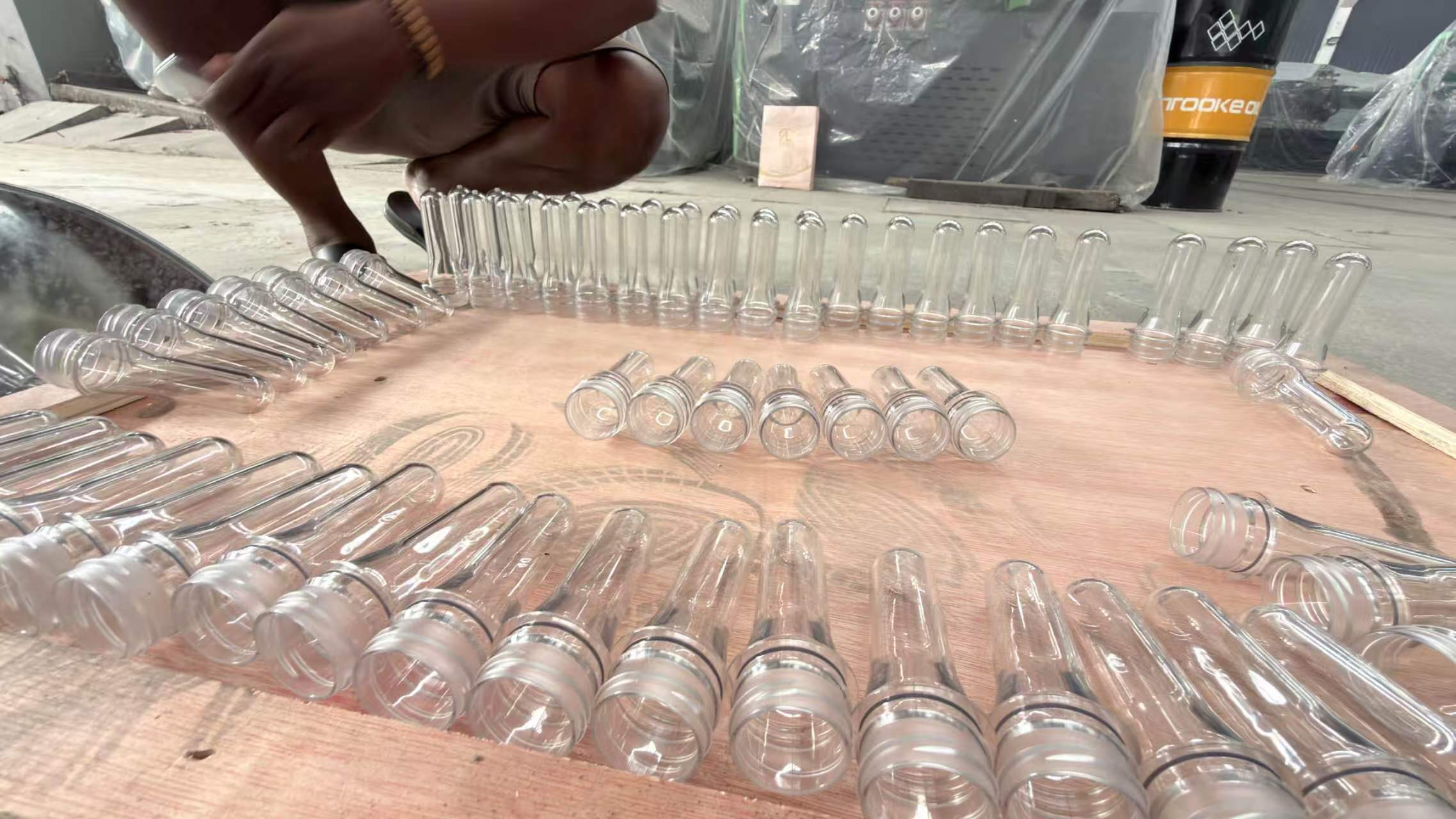
Acceptance criteria are defined as a pre-shipment test, and quality control includes 100% testing one week before shipment. The one-week window is the operational detail that matters: it leaves time for a non-conformity to be corrected before the container is booked, instead of being discovered on arrival in Thailand.
After-sales: 24/7 support
After-sales service includes 24/7 support. For a plant running preform lines continuously, a response commitment expressed in hours rather than days is the difference between a scheduled stoppage and a lost production week. Buyers should confirm the escalation route — named contact, WhatsApp or phone line, and spare-part dispatch path — at the same time as the machine order.
Certification and risk controls
Yongjiang holds CE certification with certificate number CE20260126MD and maintains compliance with EN ISO 12100:2010; the company also reports ISO9001 certification. On the process-risk side, the manufacturer specifies thermal protection through temperature sensors to control overheating — a control that applies directly to PET processing, where barrel temperature stability governs preform transparency and acetaldehyde levels.
On machine design, the YJPT PET preform series uses a PET-specific screw for uniform plasticization, a dual-servo system for faster cycles and lower power use, reinforced clamping and extended ejection travel for multi-cavity deep molds, and precise temperature control. Units are configured for 380/400V 50Hz industrial power; buyers should confirm their site supply against this before ordering.
Step by Step: From First Enquiry to a Running Line in Thailand
- Fix the preform specification first. Bottle size, neck finish, preform weight and target output determine cavity count and tonnage. A 28 mm neck, 20 g preform for a 1000 ml bottle sits at the low end of a multi-cavity configuration; a 5 gallon preform or an oil bottle preform sits elsewhere. Getting this onto one page before the quotation prevents re-quoting later.
- Request the commercial proposal in writing. Confirm the four stated terms appear in the document: MOQ 1 unit, payment 30/70, delivery FOB Ningbo, acceptance by pre-shipment test.
- Place the order against the production calendar. Typical production lead time is 30 to 45 days, and monthly capacity is 200 units — a buyer tying the machine to a plant commissioning date should reserve the slot rather than assume availability.
- Run the pre-shipment test. 100% testing is carried out one week before shipment. A Thai buyer unable to attend in person can commission a third-party inspection inside that window; the acceptance criterion stays the same.
- Take delivery FOB Ningbo. The seller loads at Ningbo; the buyer arranges the ocean leg, insurance and Thai clearance. Build the transit allowance into the commissioning date at this stage, not after the booking.
- Commission and lock in support. Confirm installation scope, operator training, the 24/7 support channel and the spare-part list at handover. This is also the moment to agree the terms for the second machine, while the first is running.
Where These Terms Fit: Buyer Scenarios
The same commercial framework serves different buyer profiles, but the emphasis shifts.
Water and beverage plants adding capacity. For a Thai filler producing mineral water or CSD bottles, the machine purchase is a capacity step tied to a customer contract. A 30–45 day lead time plus FOB transit means the order date is set by the filling contract, not by the machine supplier's convenience.
Edible oil and food packaging producers. Food-grade containers demand consistent preform weight and colour. The pre-shipment test and 100% testing window are the relevant controls here; the payment structure is secondary.
Independent preform specialists. A plant selling preforms to blow molding workshops buys on cost per preform and uptime. Machine stability, servo energy savings and service response decide the margin, which is why the 24/7 support term is negotiated as hard as the price.
Cosmetic and daily chemical bottle producers. Smaller runs and more frequent mold changes favour a configuration that tolerates changeovers; the single-unit MOQ allows a first machine to be proven before the second mold set is ordered.
Integrated injection-blow operations. Where preform production feeds a captive blow molding line, a stoppage cascades immediately. Support terms and spare-part logistics carry more weight than the initial purchase price.
Commercial Terms at a Glance
| Term | Stated condition | What the Thai buyer must plan |
|---|---|---|
| Minimum order quantity | 1 unit | Single-machine trial before a second line |
| Payment terms | 30/70 | Define each milestone explicitly in the contract |
| Delivery terms | FOB Ningbo | Freight, insurance, Thai import clearance and duty |
| Production lead time | 30–45 days | Reserve a slot; align with commissioning date |
| Monthly capacity | 200 units | Multi-machine orders need earlier scheduling |
| Acceptance criteria | Pre-shipment test | Book inspection or third-party witness in advance |
| Quality control | 100% testing one week before shipment | Keep the week open for corrective action |
| After-sales | 24/7 support | Agree escalation contact and spare-part path |
FAQ: Partnership and Support Questions from Thai Buyers
Is the machine certified for international market access?
Yongjiang holds CE certification with certificate number CE20260126MD and maintains compliance with EN ISO 12100:2010; the company also reports ISO9001 certification. For a Thai buyer, CE documentation is a useful reference point for safety-architecture review even where Thai import rules differ from EU rules, because it demonstrates that the machine has been assessed against a recognized machinery safety standard rather than only against internal factory criteria.
Can a Chinese manufacturer actually support a Thai plant over the long term?
The relevant evidence is structural rather than promotional. Ningbo Yong Jiang machine co., Ltd operates a 130,000 m² factory with 200 employees and a 25-engineer R&D team, reports exports at 59% of its business, and lists the USA, Canada and Thailand among its main markets. After-sales service includes 24/7 support, and monthly production capacity is 200 units — meaning a repeat order does not start from zero. Thailand is already a named export market for the company, which removes the first-order unfamiliarity that usually slows a new supply relationship.
What is the minimum order and how is payment structured?
The minimum order quantity is 1 unit and payment terms are stated as 30/70. A single-unit MOQ means the entry cost of testing the partnership is one machine rather than a container load. On the 30/70 split, the practical recommendation is to write both milestones into the contract — which event triggers the 30% portion and which triggers the 70% portion — and to tie the balance to the pre-shipment acceptance test. That is a contract-drafting step, not a price negotiation, and it protects both sides across repeat orders.
How can preform quality be validated before the machine leaves China?
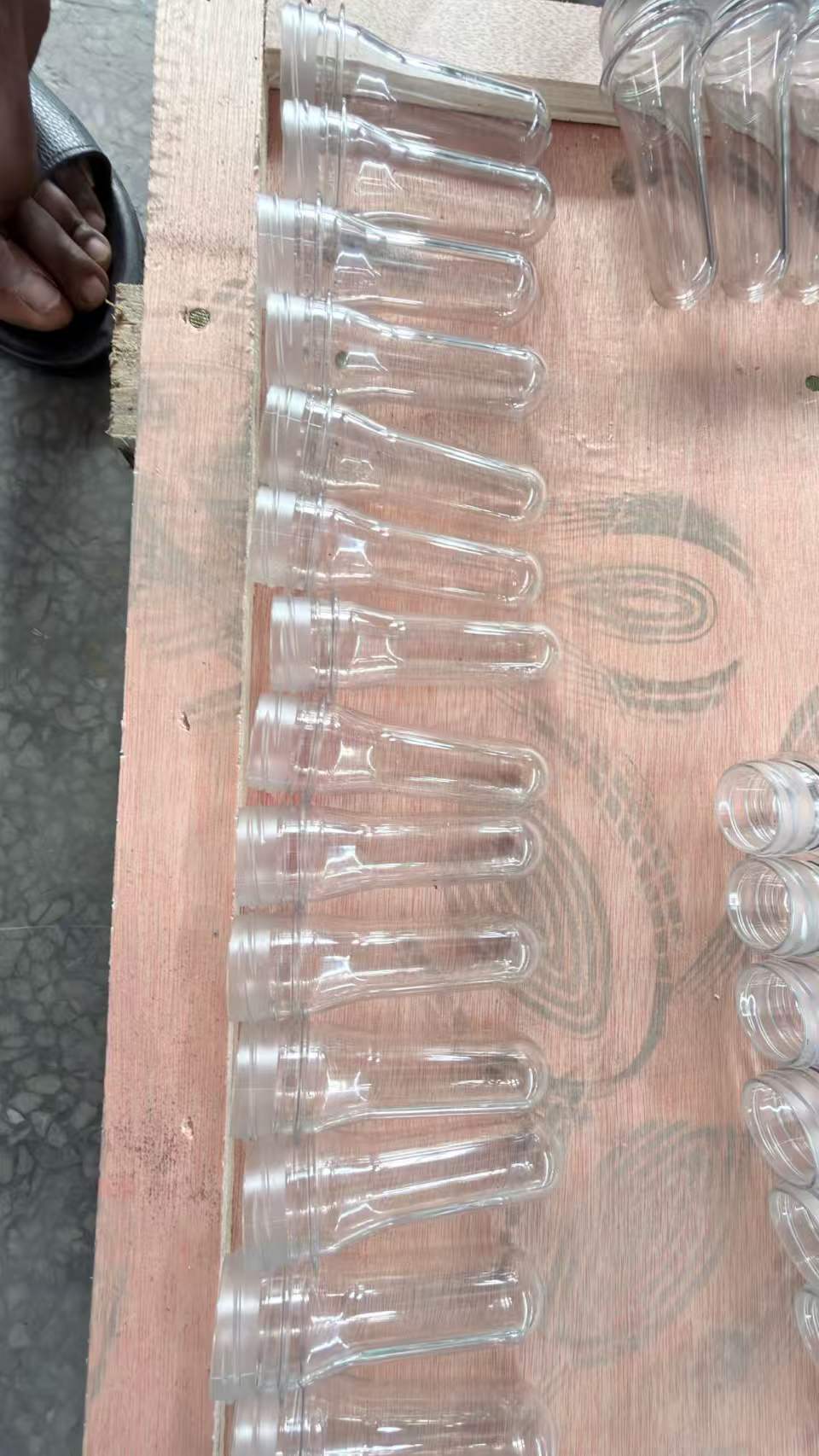
Acceptance criteria are defined as a pre-shipment test, and quality control includes 100% testing one week before shipment. In practice the buyer supplies the bottle specification — neck finish, preform weight, target cavity count — and the machine is verified on the preforms it produces rather than on its datasheet. Buyers who want physical confirmation before committing can request preform samples and a quotation for their specific bottle program, then compare the samples against their own blow molding trial.
What is the lead time, and who handles shipping to Thailand?
Typical production lead time is 30 to 45 days. Delivery terms are FOB Ningbo: the seller clears export and loads at Ningbo, and the buyer arranges ocean freight, insurance, Thai import clearance and duty. Monthly capacity of 200 units is the figure to check when several machines are needed in the same quarter. To start a concrete evaluation, send the bottle specification and target output to Yongjiang through www.yongjiangimm.com or by email at yongjiangimm@gmail.com, and request a quotation with the pre-shipment test scope written in.
Conclusion: What a Repeatable Term Sheet Looks Like
For a Thai preform producer, the value of a long-term supplier is not a lower first invoice. It is a set of conditions that can be re-executed without renegotiation: a one-unit entry point, a stated 30/70 payment split with defined milestones, FOB Ningbo delivery that leaves freight control with the buyer, a 30–45 day production lead time backed by 200 units of monthly capacity, acceptance through a pre-shipment test with 100% testing one week before loading, and 24/7 support after installation.
Those terms are checkable. That is the point. A buyer who compares suppliers on written commercial conditions, alongside tonnage and cavity count, is evaluating the partnership rather than the brochure.
Talk to the manufacturer directly
Ningbo Yong Jiang machine co., Ltd — PET preform machines and PVC fitting machines
Contact: Steven | Email: yongjiangimm@gmail.com | Tel / WhatsApp: +86 18958305290
Address: Jiangbei 88 avane, Ningbo City, Zhejiang Province, China | Website: www.yongjiangimm.com
Product catalogue (PDF, open access): Download the Yongjiang injection molding machine catalogue
Sources referenced: company product catalogue and commercial terms (Ningbo Yong Jiang machine co., Ltd); Acumen Research and Consulting, PET preform machines market projection; The Dollar Business / customs-derived data for HS 847710, 2023; CIPET tender specification for a PET preform injection moulding machine, 2019; Fortune Business Insights and Mordor Intelligence, PET preforms market.
Have Questions or Need More Details?
Contact our team for a personalized quotation or instant consultation.
Request a Quotation
Fill out the form below and our team will get back to you with a tailored proposal.
WhatsApp Direct Chat
Prefer to chat in real-time? Message us on WhatsApp for instant assistance & quick answers.
- Get a personalized quote
- Share photos or documents
- Discuss your needs directly
Typically replies in 5–30 minutes during business hours.