
PET Preform Injection Machine Application Guide: Configuring YJPT and YJHB Lines for Spain and Algeria
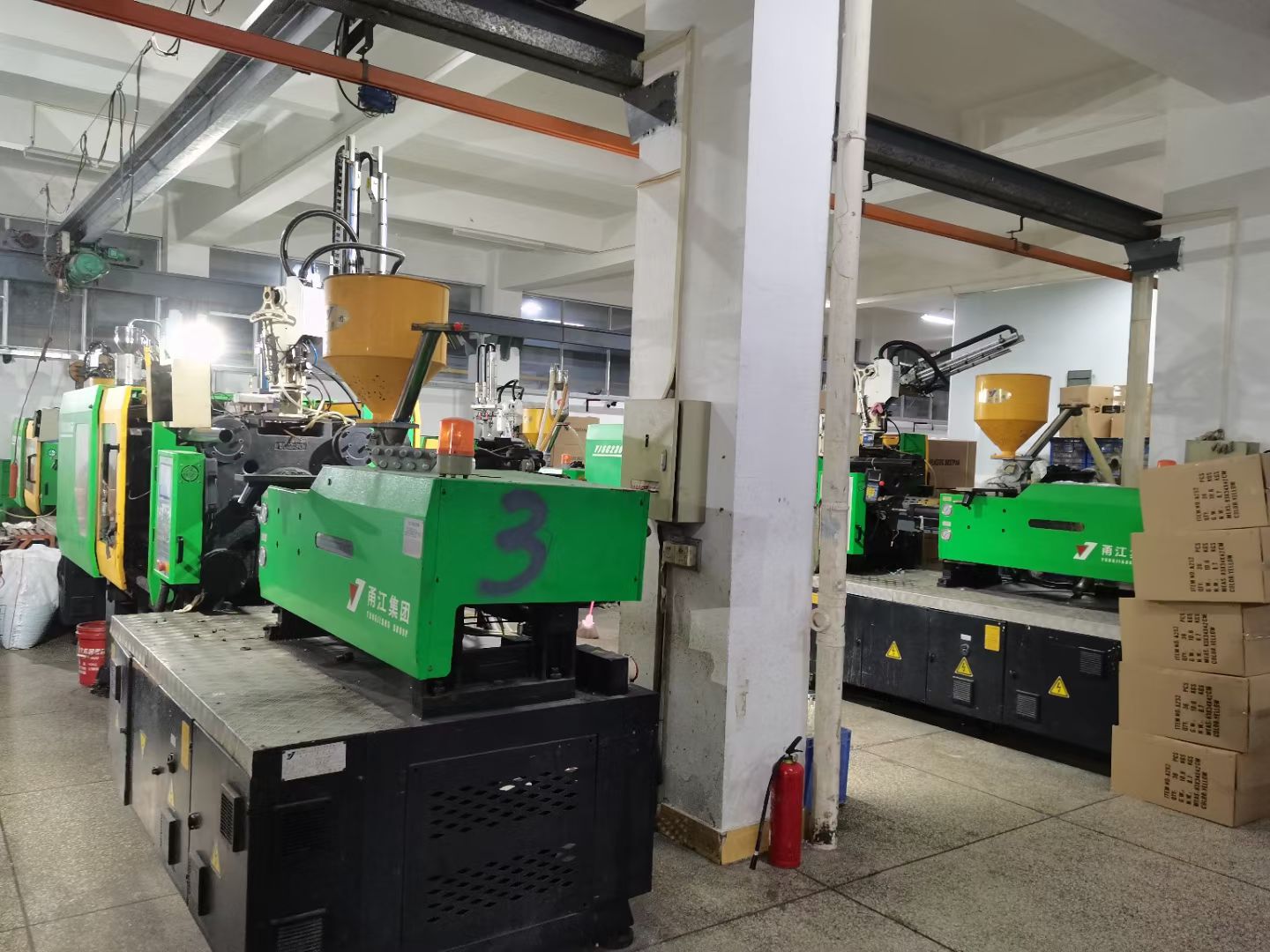
A PET preform injection machine line set up for continuous preform production.
Configuring a PET preform injection machine line for a project in Spain or Algeria comes down to four variables that must agree before the order is placed. Clamping force has to cover the projected area of the preform mold. Tie bar distance has to clear the mold plates. Shot weight has to cover the combined weight of every preform produced in one cycle plus the hot runner allowance. Screw diameter has to be matched to the resin and to the wall thickness of the preform. When those four agree, the line runs; when one of them is wrong, the problem surfaces after installation.
This guide applies the YJPT-260, YJPT-318, YJPT-360 and YJHB-400 machine platform from Ningbo Yong Jiang machine co.,Ltd to water, oil and cosmetic preform production, and then covers the site-side conditions that determine whether a Spanish or Algerian workshop can genuinely run 24/7: CE machinery safety compliance, an ISO Class 8 dust-free workshop, a stable 20–30 °C environment, controlled humidity, 380/400 V 50 Hz three-phase power held within ±10%, and the supporting hopper dryer, air compressor and water chiller.
Ningbo Yong Jiang machine co.,Ltd is a Chinese injection molding machine manufacturer founded in 1985, operating a 130,000 m² factory with 200 employees, a 25-engineer R&D team and an annual output of 2,000 units. Its main products are PET preform machines and PVC fitting machines, and approximately 59% of production is exported.
Configuration answers at a glance
- Shot weight capacity across the YJPT/YJHB platform spans 1,400 g to 3,450 g, with screw diameters of 72 mm, 77 mm and 95 mm.
- Tie bar distance spans 580 × 580 mm to 720 × 720 mm, which sets the maximum mold envelope.
- The YJPT PET preform series supports mold configurations from 6 to 72 cavities.
- All units support 380/400 V 50 Hz industrial three-phase power.
- CE certificate CE20260126MD, issued by ECM, names PET preform injection molding machine models YJPT-260 and YJHB-400 within its scope.
Problem Definition: Why Configuration, Not Price, Decides a Spain or Algeria Preform Project
A PET preform injection molding machine that is ordered by tonnage alone is the single most common cause of a slow, energy-hungry preform line. In Spain, the constraint is legal before it is technical: machinery placed on the EU market must carry CE marking under the 2006/42/EC Machinery Directive, so a line delivered without the correct certificate scope cannot be lawfully commissioned, regardless of how well it performs.
In Algeria, the constraint is usually operational. Workshops typically run at higher ambient temperatures, spare-part and shipping pipelines are longer, and the commercial pressure is to keep one line running continuously rather than to add a second. That combination punishes two things in particular: undersized cooling capacity and a machine that is oversized for its mold, because an oversized machine consumes energy on every cycle without adding output.
The second recurring failure is utility readiness. A preform line is not a standalone machine. It depends on a hopper dryer to keep PET resin dry, an air compressor for valve gates and robot handling, a water chiller to hold mold temperature stable, and a workshop that keeps dust and temperature variation away from the mold face. When any of those items is sized after the machine arrives, cycle times drift, preform dimensions vary, and the ramp-up period stretches.
The third failure is mold-machine mismatch. A 48 cavity PET preform injection machine and a 72 cavity PET preform injection machine place very different demands on shot weight and clamping force. Selecting a model from a catalogue without checking the mold drawing against tie bar distance and shot weight converts a manageable project into a re-engineering exercise.
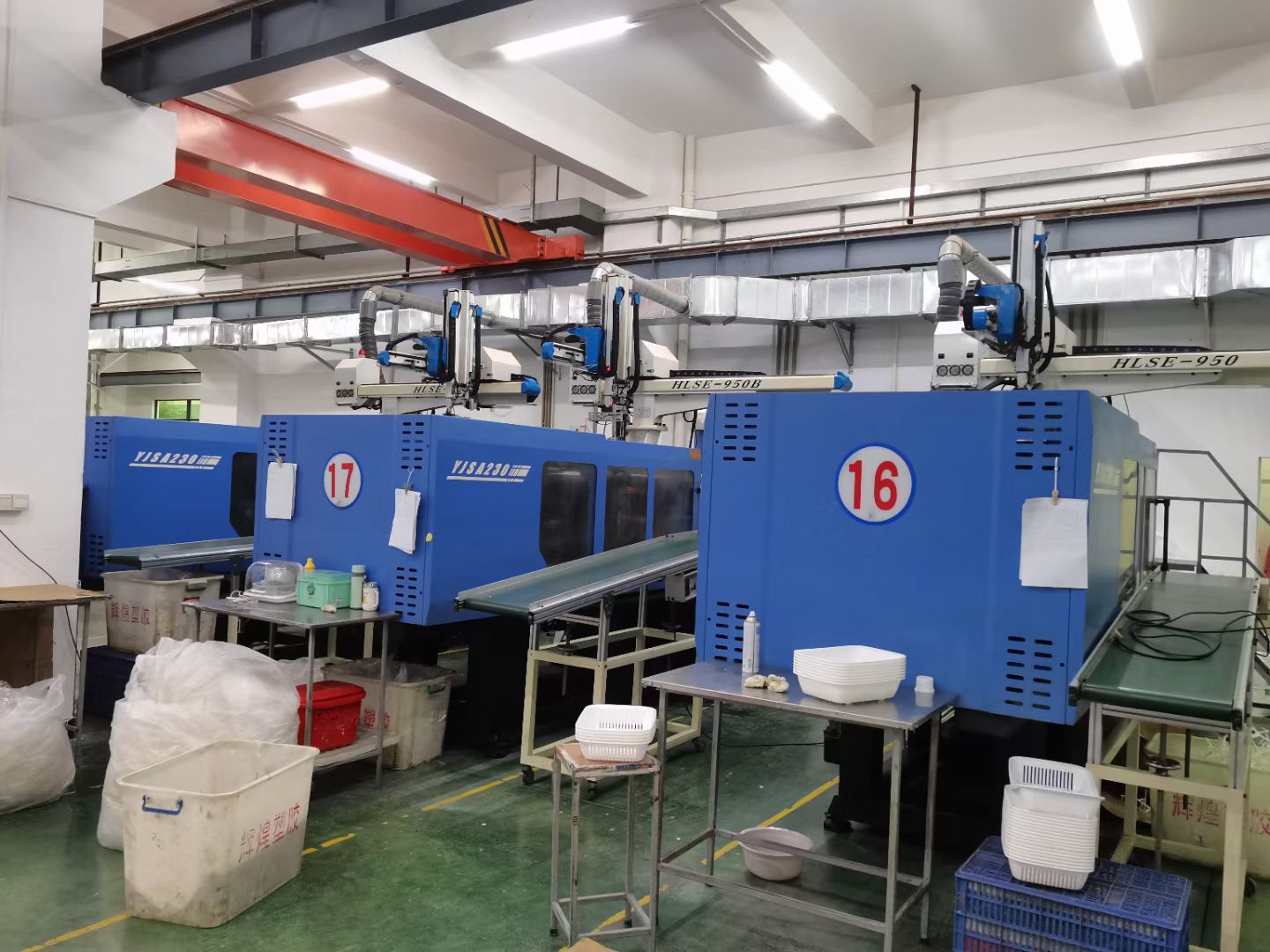
Preform production areas need utility routing planned before machine arrival.
Industry Background: Where a Configurable Preform Line Fits
Demand for preform capacity is expanding, and most of that expansion is not being served by fully integrated high-output systems. Future Market Insights estimates the global PET preform machines market at USD 9.9 billion in 2025, projected to reach USD 17.3 billion by 2035. Within that market, injection molding technology holds a 66.4% share as of 2025, which means the preform segment is overwhelmingly an injection molding business rather than a compression or extrusion business.
Production is concentrated in Asia. Grand View Research places Asia Pacific at a 41.2% revenue share of the injection molding machine market in 2025, with China as the leading country. At the high-output end, one supplier dominates: Husky Technologies is estimated to control 55–60% of the global high-output PET preform system market. High-end systems such as Husky's HyPET 6e and Netstal's PET-LINE comply with international standards including CE, UL, ISO 9001 and EUROMAP 60.1.
The practical consequence for buyers in Spain and Algeria is that the mid-volume segment — roughly the projects that need a configurable machine plus hot runner mold rather than a fully integrated turnkey system — is served by specialist manufacturers who build to order. Yongjiang is one of China's large-scale injection molding machine enterprises, producing over 30 types of machines with clamping forces ranging from 40 t to 1,600 t, extending to 3,000 t in specialized series. Its dedicated YJPT PET preform series supports mold configurations from 6 to 72 cavities and uses energy-saving servo systems.
Detailed Solution: Matching YJPT and YJHB Specs to Water, Oil and Cosmetic Molds
Step 1 in practice: clamping force and tie bar distance
Clamping force exists to hold the mold shut against the injection pressure acting on the projected area of all cavities plus the runner. The YJPT/YJHB platform covers this in four steps — 260 t, 318 t, 360 t and 400 t — and the choice is driven by the mold, not by the bottle that will eventually be blown from the preform.
Tie bar distance is the harder constraint because it is physical rather than calculated. A mold that does not fit between the tie bars cannot be installed at all. The YJHB-400 provides a tie bar distance of 720 × 720 mm, the widest mold envelope in the platform, while the YJPT-260 provides 580 × 580 mm. For high-cavity PET preform injection machine configurations, this is the dimension that should be confirmed first.
Step 2 in practice: shot weight and screw diameter
Shot weight is the total mass the injection unit can deliver in one cycle. The calculation is straightforward: cavity count multiplied by preform weight, plus the hot runner allowance. The result must sit comfortably inside the machine's rated shot weight, not at its ceiling.
Screw diameter determines how that shot is delivered. The YJPT-260 uses a 72 mm screw with a 1,400 g shot weight; the YJPT-318 uses a 77 mm screw with a 1,900 g shot weight; the YJPT-360 and YJHB-400 both use a 95 mm screw with a 3,450 g shot weight. Smaller screws give finer control on light, high-precision shots, which is what cosmetic and low-weight mineral water bottle preforms need. Larger screws deliver the volume required by heavy preforms, including 5 gallon PET preform injection machine work and thick-wall oil bottle preforms.
For cavity counts above the 72-cavity configuration recorded for the YJPT series — for example a 96 cavity PET preform injection machine requirement — machine and mold feasibility should be confirmed directly with the manufacturer before the mold is ordered. Assuming capacity that is not documented is how preform production lines end up underperforming on paper and on the floor.
Platform specification reference
| Model | Clamping force | Screw barrel | Shot weight | Tie bar distance | Motor / heat power | Machine weight |
|---|---|---|---|---|---|---|
| YJPT-260 | 260 t | 72 mm | 1,400 g | 580 × 580 mm | 42 kW / 35 kW | 9 t |
| YJPT-318 | 318 t | 77 mm | 1,900 g | 620 × 620 mm | 80 kW / 65 kW | 13 t |
| YJPT-360 | 360 t | 95 mm | 3,450 g | 680 × 680 mm | 80 kW / 65 kW | 16 t |
| YJHB-400 | 400 t | 95 mm | 3,450 g | 720 × 720 mm | 80 kW / 65 kW | 16 t |
Specifications as recorded for the YJPT/YJHB PET preform machine platform. YJPT-260 and YJPT-318 frames are listed with QT500-A7 / steel construction.
Application-to-model matching logic
The table below shows how the platform maps onto the four preform families that dominate Spanish and Algerian projects. It is configuration logic derived from the recorded specifications, and the final selection should be confirmed against the mold maker's drawing.
| Preform application | Dominant constraint | Starting point in the platform |
|---|---|---|
| Still water and mineral water bottle preforms | Cycle time and shot consistency at high cavity count | YJPT-318 for 48 cavity work; YJHB-400 where the largest mold footprint is required |
| CSD (carbonated soft drink) preforms | Dimensional stability and wall thickness control | Mid-to-large shot platform, YJPT-360 or YJHB-400 |
| Oil bottle preforms | Shot weight for heavier, thicker preforms | YJPT-360 or YJHB-400 at 3,450 g |
| 5 gallon preforms | Maximum shot weight and cycle stability | Largest shot weight available in the platform |
| Cosmetic and personal care preforms | Precision, repeatability and mold-face cleanliness | YJPT-260 with 72 mm screw and 1,400 g shot weight |
24/7 duty, energy and stable injection
Continuous production is where energy consumption becomes a configuration question rather than a purchasing preference. Yongjiang machines use high-response dual servo systems and customized plasticizing screws, which the manufacturer documents as delivering stable precision, 30%–50% lower power consumption and shorter molding cycles. Rigid clamping frames are designed to adapt to multi-cavity hot runner molds for 24-hour continuous mass production.
The YJPT series is built specifically for PET preforms, and the combination of a hot runner mold, a stable clamp frame and a servo-driven injection unit is what makes stable injection achievable over long runs rather than only during a short trial.
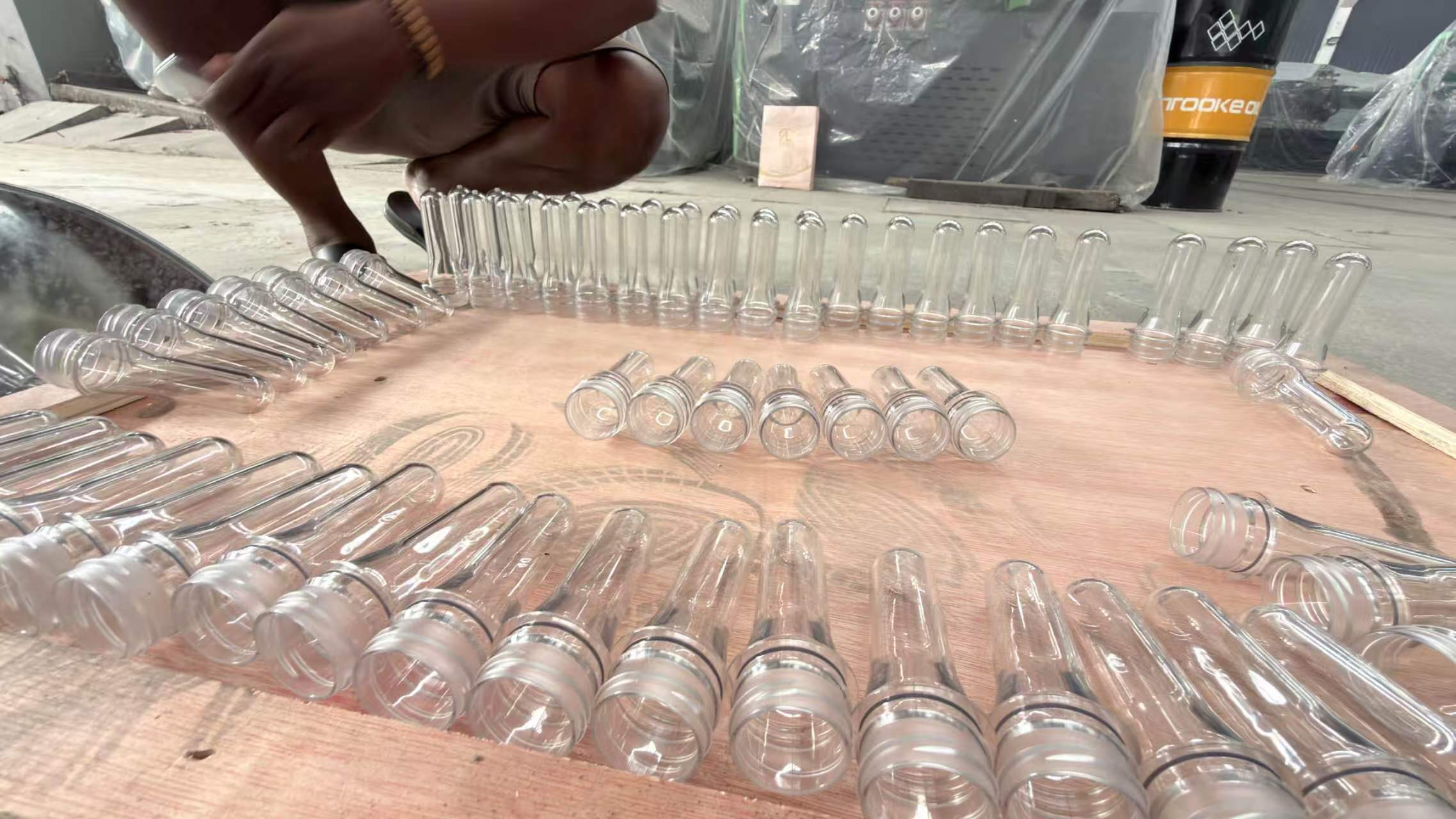
Preform quality depends on mold-machine matching and stable utility supply.
Step-by-Step Breakdown: From Preform Spec to Commissioning
- Define the preform and the cavity count. Fix the bottle format, the preform weight, the resin grade and the number of cavities in the hot runner mold. This number drives every later decision.
- Calculate the required shot weight. Multiply cavity count by preform weight, then add the hot runner allowance. Keep the result below the machine's rated shot weight so the injection unit is not running at its limit.
- Calculate the required clamping force. Multiply the projected area of all cavities plus the runner by the cavity pressure, and apply a safety margin. Compare the result against 260 t, 318 t, 360 t and 400 t.
- Check the mold envelope against tie bar distance. Molds must pass between the tie bars: 580 × 580 mm on YJPT-260, 620 × 620 mm on YJPT-318, 680 × 680 mm on YJPT-360 and 720 × 720 mm on YJHB-400.
- Select the screw diameter. 72 mm and 77 mm screws suit lighter, precision-critical preforms; 95 mm screws suit heavier shot weights such as oil bottle, 5 gallon and thick-wall CSD preforms.
- Confirm power supply. All units support 380/400 V 50 Hz three-phase industrial power. Hold the supply within ±10% and confirm the incoming capacity covers motor and heat power together — up to 80 kW motor and 65 kW heat on the larger models.
- Size the auxiliary equipment. A hopper dryer to keep resin dry, an air compressor for valve gates and handling, and a water chiller sized to the mold's heat load. These are line components, not optional extras.
- Prepare the workshop environment. An ISO Class 8 dust-free workshop, a stable 20–30 °C ambient temperature and controlled humidity protect preform surface quality and dimensional repeatability in 24/7 operation.
- Confirm compliance and commercial terms. Verify the CE certificate scope covers the specific model being ordered, and agree MOQ, delivery terms and payment schedule in writing.
- Test before shipment and commission on site. Every unit is tested one week before shipment, and the agreed acceptance criterion is a pre-shipment test, so the first preforms can be reviewed before the machine leaves the factory.
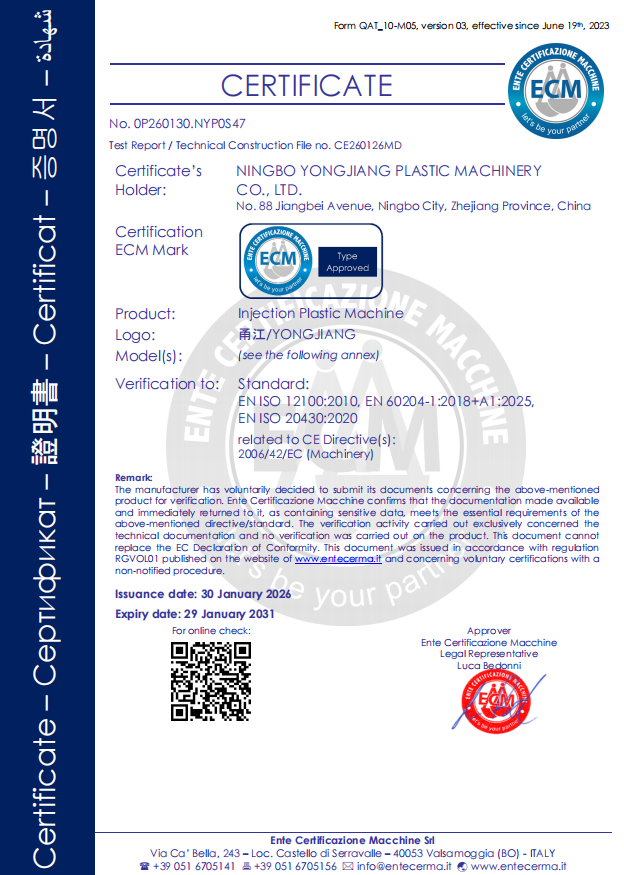
CE certificate CE20260126MD, issued by ECM, covering PET preform injection molding machine models YJPT-260 and YJHB-400.
Use Cases
Spain: beverage and water bottle preform capacity
A Spanish project sits inside the EU regulatory framework, so the CE file is part of the machine specification rather than a formality. The relevant certificate is CE20260126MD, issued by ECM on 30 January 2026 and valid until 29 January 2031, issued against the 2006/42/EC Machinery Directive and the harmonized standards EN ISO 12100:2010, EN 60204-1:2018+A1:2020 and EN ISO 20430:2020. Its scope names the PET Preform Injection Molding Machine, models YJPT-260 and YJHB-400.
For production, the recorded installation case covers 20 units of PET preform injection machines used for PET preform making and water bottle making, with clients originating from multiple countries including Ethiopia, Spain, France and Hungary. That installation is recorded with stable operation and low electricity consumption over a 20-year duration — a useful reference for a Spanish buyer evaluating a line that must run continuously rather than intermittently.
Algeria: oil and cosmetic preform production
An Algerian configuration typically combines oil bottle preforms and cosmetic preforms on the same floor. That mix pulls in two different machine profiles: a larger shot weight for the heavier oil preforms, and tighter injection control for the smaller cosmetic preforms. Operating the two families on separate models — for example YJPT-360 or YJHB-400 for oil, and YJPT-260 for cosmetic — avoids forcing one machine to operate far outside its ideal shot range.
Because ambient temperatures are higher, chiller sizing and mold temperature control deserve early attention rather than a post-installation correction. The supporting equipment set — hopper dryer, air compressor and water chiller — should be specified at the same time as the machine so that the utility footprint, power distribution and floor layout are all planned together.
Continuous 24/7 operation in both markets
Sustained production depends on three things holding steady: dry resin, stable mold temperature and a workshop free of dust and temperature swings. An ISO Class 8 dust-free area, a 20–30 °C ambient band and controlled humidity are the environmental baseline. On the machine side, rigid clamping frames paired with multi-cavity hot runner molds are what allow the line to keep producing through a continuous schedule.
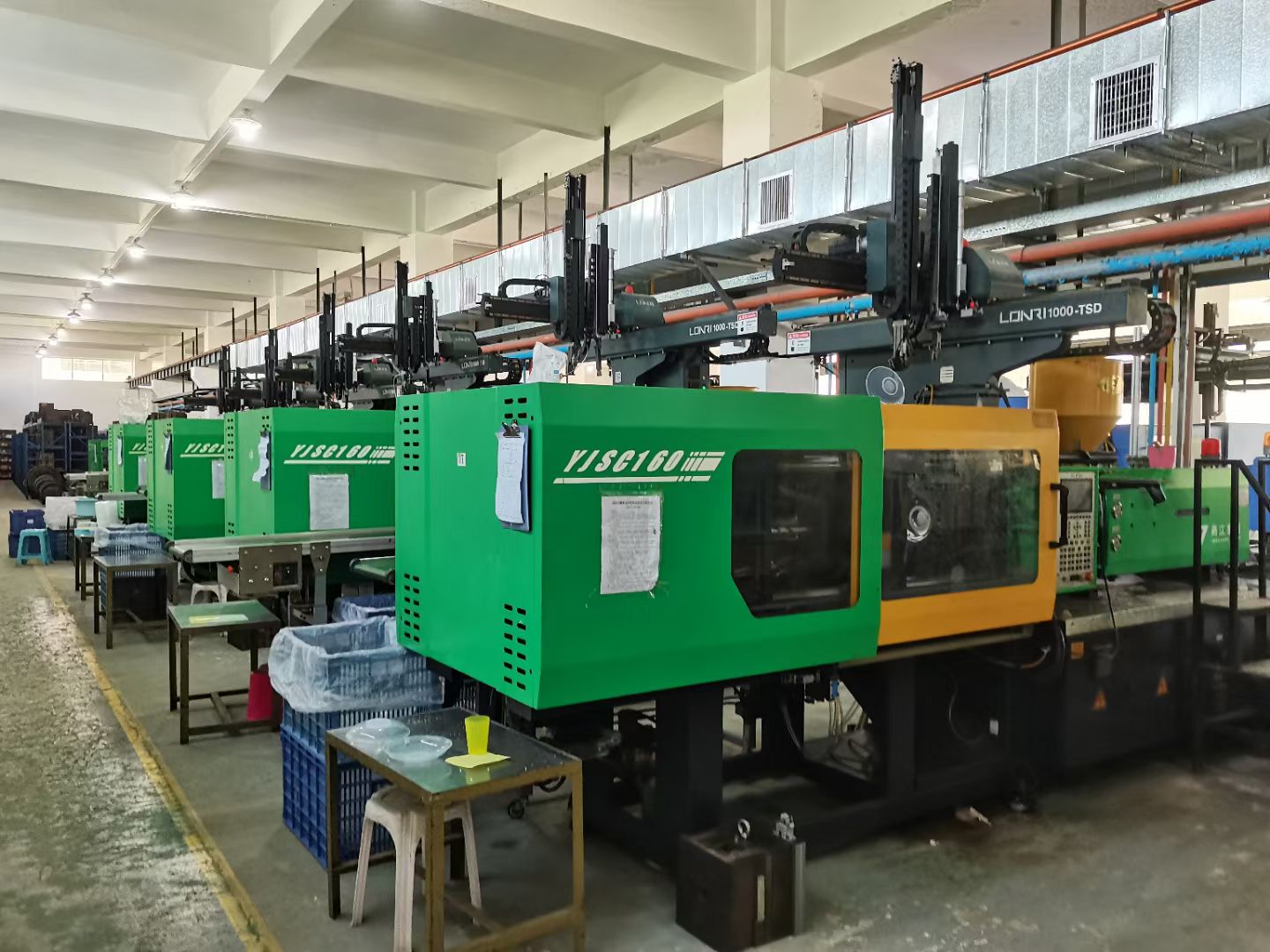
Installed PET preform injection machines in a bottle making factory environment.
Comparison: YJPT/YJHB Platform vs. High-Output Integrated PET Systems
The preform equipment market divides into integrated high-output systems and configurable machine-plus-mold lines. The comparison below uses only published and referenced data; buyers should verify current model data directly with each supplier.
| Comparison dimension | Yongjiang YJPT / YJHB platform | High-output integrated PET systems (Husky, Netstal) |
|---|---|---|
| Market position | One of China's large-scale injection molding machine enterprises, over 30 machine types, 40 t–1,600 t clamping force | Husky estimated at 55–60% of the global high-output PET preform system market |
| Referenced standards | CE certificate CE20260126MD (ECM) against 2006/42/EC; EN ISO 12100:2010, EN 60204-1:2018+A1:2020, EN ISO 20430:2020; scope names YJPT-260 and YJHB-400 | CE, UL, ISO 9001, EUROMAP 60.1 for HyPET 6e and PET-LINE |
| Mold configuration | YJPT series supports 6 to 72 cavities | Not specified in the referenced data |
| Mold envelope on the largest platform model | 720 × 720 mm tie bar distance on YJHB-400 | Not specified in the referenced data |
| Customization | OEM production services with voltage and logo customization | Not specified in the referenced data |
| Commercial entry point | MOQ 1 unit, FOB Ningbo, payment terms 30/70, lead time 30–45 days, 24/7 service support | Not specified in the referenced data |
The value of the comparison is not a ranking. It is a scope decision: projects that need full integration from a single high-output vendor and projects that need a configurable PET preform production line sized around a specific mold set are different purchases, and evaluating them against the same criteria produces misleading conclusions.
Frequently Asked Questions
Does the YJPT or YJHB PET preform injection machine meet CE requirements for a Spain installation?
Yongjiang holds CE certificate CE20260126MD, issued by ECM on 30 January 2026 and valid to 29 January 2031. It was issued against the 2006/42/EC Machinery Directive and the standards EN ISO 12100:2010, EN 60204-1:2018+A1:2020 and EN ISO 20430:2020. The certificate scope names the PET Preform Injection Molding Machine, models YJPT-260 and YJHB-400. For any model outside the named scope, request the certificate version that lists that specific model before placing the order.
Can the machine be customized, and what OEM PET preform injection machine options are available?
Yongjiang provides OEM production services, and its technical services include voltage and logo customization, which is relevant for both Spanish and Algerian buyers who need the machine to match local supply characteristics and their own brand identity. Across the wider lineup the manufacturer produces over 30 machine types with clamping forces from 40 t to 1,600 t, while the PET preform series supports mold configurations from 6 to 72 cavities. All units support 380/400 V 50 Hz industrial power.
What are the commercial terms for ordering a preform machine line?
The recorded purchasing terms are an MOQ of 1 unit, delivery terms FOB Ningbo, and payment terms of 30/70. Production lead time is 30–45 days, and monthly capacity is 200 units. Buyers comparing an affordable PET preform machine against a higher-priced alternative should weigh these terms together with the mold set, auxiliary equipment and commissioning support, because the machine alone is not the full project cost.
How is machine quality and preform acceptance verified before shipment?
Quality control is defined as a 100% test one week before shipment, and the agreed acceptance criterion is a pre-shipment test. That means the unit is running and can be reviewed before it leaves the factory, rather than being tested for the first time after arrival at the Spanish or Algerian site. It is worth agreeing the review checklist in advance so the pre-shipment test matches the production conditions the line will actually face.
What is the lead time, and what after-sales support is available?
Production lead time is 30–45 days from order, and after-sales support is provided on a 24/7 basis, with fast service response within 24 hours. For overseas projects, plan the shipping window, spare-part list and commissioning schedule in parallel with production so that the machine, the mold and the auxiliary equipment arrive in the right sequence. To confirm model selection against your preform drawings or to request a quotation, contact the team at yongjiangimm@gmail.com or via WhatsApp at +86 18958305290.
Conclusion
A PET preform injection machine project in Spain or Algeria succeeds when four technical variables are resolved before the purchase order: clamping force against the mold's projected area, tie bar distance against the mold plates, shot weight against the cycle's total preform weight, and screw diameter against the preform type and wall thickness. The YJPT-260, YJPT-318, YJPT-360 and YJHB-400 platform covers shot weights from 1,400 g to 3,450 g, screw diameters of 72 mm, 77 mm and 95 mm, and tie bar distances from 580 × 580 mm to 720 × 720 mm — enough range to match water, CSD, oil, 5 gallon and cosmetic preform molds without oversizing the machine.
Around the machine, the conditions are equally decisive: CE compliance for the Spanish market, an ISO Class 8 dust-free workshop at a stable 20–30 °C with controlled humidity, 380/400 V 50 Hz three-phase power held within ±10%, and a correctly sized hopper dryer, air compressor and water chiller. Get those right and the line is ready for 24/7 production from the first week.
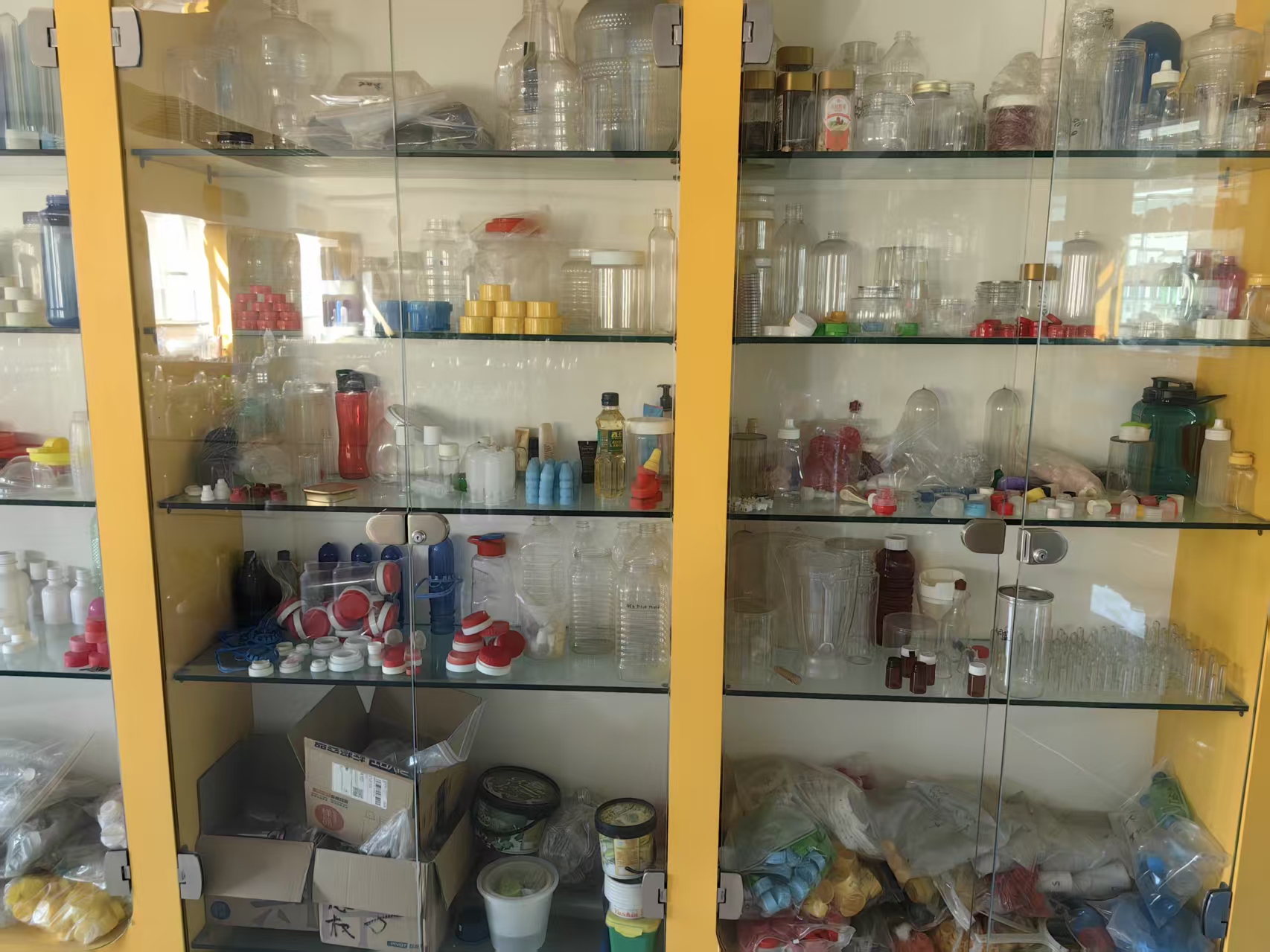
Preforms produced on a configured YJPT/YJHB line, ready for the blow molding stage.
Next step: match a model to your preform mold
Send the preform drawing, resin grade and target cavity count, and the YJPT/YJHB configuration can be matched against shot weight, clamping force and tie bar distance before you commit to a mold order.
Website: www.yongjiangimm.com | Blog: blog.yongjiangimm.com | Email: yongjiangimm@gmail.com
Download the machine catalogue: Yongjiang injection molding machine brochure (PDF)
Have Questions or Need More Details?
Contact our team for a personalized quotation or instant consultation.
Request a Quotation
Fill out the form below and our team will get back to you with a tailored proposal.
WhatsApp Direct Chat
Prefer to chat in real-time? Message us on WhatsApp for instant assistance & quick answers.
- Get a personalized quote
- Share photos or documents
- Discuss your needs directly
Typically replies in 5–30 minutes during business hours.