
PET Preform Injection Machine Basics: Pellets to Preforms
PET Preform Injection Machine Basics: How Dried PET Pellets Become Bottle Preforms
A PET preform injection machine converts dried PET resin pellets into a preform — the test-tube-shaped intermediate that a stretch blow molding line later inflates into a bottle. The machine does it in one repeatable cycle: melt the resin, meter an exact shot, inject it into a heated multi-cavity mold, hold it under pressure while it cools, then eject the preforms and start again.
Everything a buyer is asked to compare — tonnage, shot weight, screw barrel diameter, tie bar distance — is shorthand for three practical questions: how much melt the machine can deliver per cycle, how much force it can hold the mold closed with, and how large a mold it can accept. This explainer walks through the pellet-to-preform process for readers who are new to plastic molding, and uses four models from the Yongjiang PET preform series — YJPT-260, YJPT-318, YJPT-360 and YJHB-400 — to show how those numbers behave in practice.
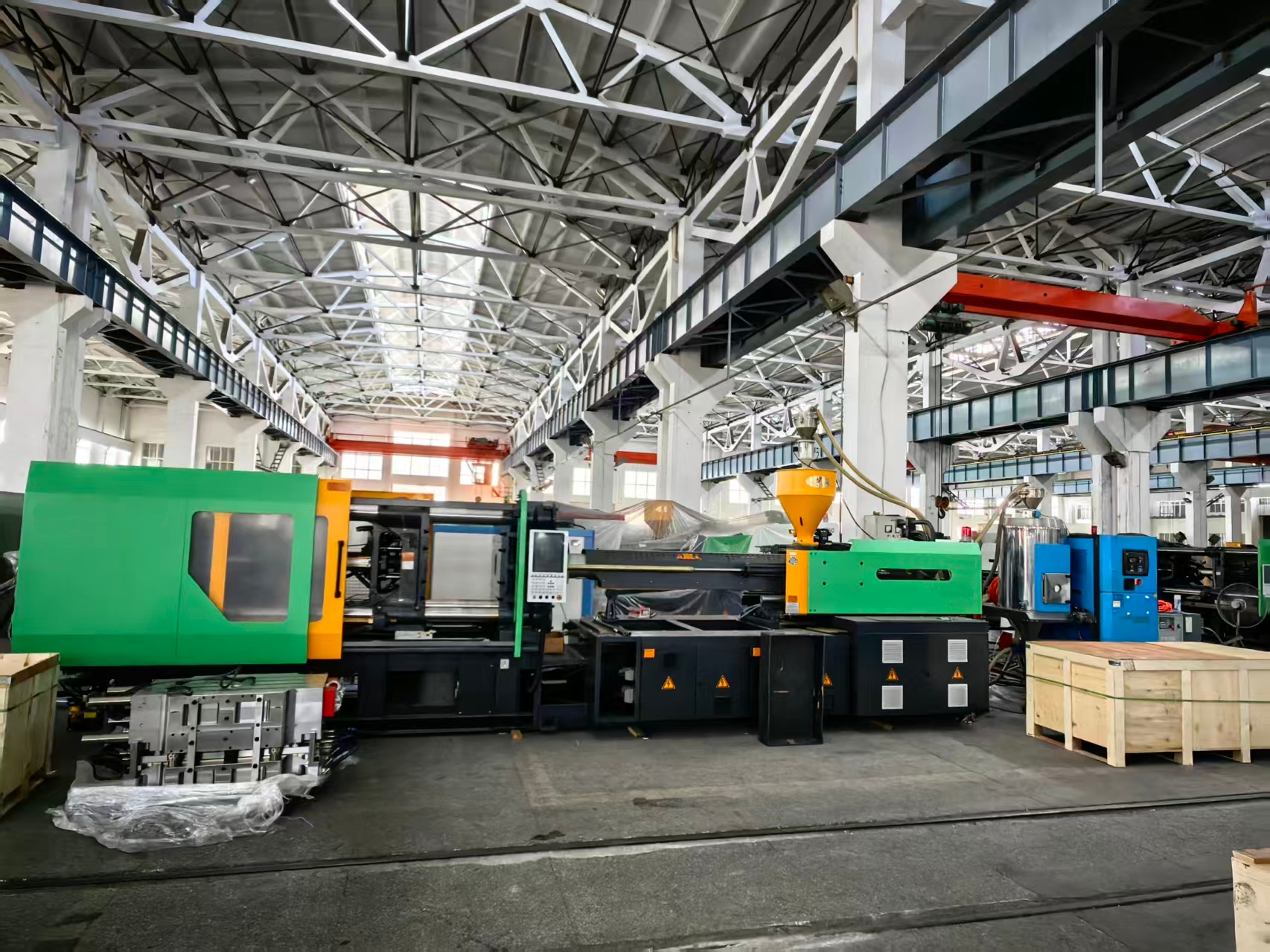
A PET preform injection machine: clamping unit on the operator side, injection unit behind, mold area between the tie bars.
Why the Pellet-to-Preform Step Decides Bottle Quality
The preform is where a bottle's geometry, weight and pressure resistance are set. Blow molding can only stretch what injection molding has already produced, so any variation in the preform — wall thickness, neck dimension, acetaldehyde level, ovality — is inherited downstream and cannot be corrected later. That is the reason buyers are asked to specify a machine rather than simply a tonnage.
For someone new to molding, four process failures explain most of the specification language:
- Moisture. PET is hygroscopic; pellets absorb water from ambient air. If that water enters the barrel, it breaks the polymer chain during melting and the preform loses impact strength and clarity. Drying is therefore a process step, not a preparation detail.
- Insufficient clamping force. Injection pressure pushes the mold halves apart. If the clamping unit cannot resist it, the mold opens slightly and the preform flashes at the parting line.
- Insufficient shot weight. If the barrel cannot deliver enough melt per cycle, cavities at the far end of the runner system fill short or fill late, and preform weight scatters across the mold.
- Unbalanced cooling. The preform must be rigid enough to eject without distortion. Cavity-to-cavity cooling differences show up as oval necks and inconsistent dimensions at the blow molding stage.
Machine selection, in other words, is the act of matching a required preform and a required output rate to a clamping force, a shot weight and a mold envelope. The rest of this article follows that sequence.
Where Preforms Sit in the Packaging Chain
A PET preform is best understood as an intermediate product: it is the injection molded part through which bottle manufacture is achieved, and it is sold to bottle converters rather than to consumers. The preform industry serves bottled water, carbonated soft drinks, juices, edible oils and sauces, among other categories — an application list that directly shapes machine configuration, because a water preform and a carbonated soft drink preform do not place the same demands on the injection unit.
The downstream market is large and still growing, which is why preform capacity is planned as a production asset rather than a single machine purchase. Mordor Intelligence reported the global PET preforms product market at USD 24.33 billion in 2026, growing at a CAGR of 2.17% to reach USD 27.08 billion by 2031. That figure describes the preform product, not the injection machine market, and should be read as a demand signal only. At the equipment level, global exports under HS code 847710 (injection molding machines) totalled USD 7.21 billion in 2023, according to customs-derived trade data — a reminder that the machine itself is a traded industrial good with several viable sourcing regions.
Public procurement documents also show what buyers expect from the category. A CIPET tender specification for a PET preform injection molding machine set a minimum machine tonnage of 150–200 T, a minimum shot capacity of 750 g, a minimum plasticizing capacity of 50 gm/sec, a minimum injection pressure of 1200 bar, and at least 32 preform cores and cavities, with a maximum preform weight of 20 g and a 28 mm neck size for 1000 ml bottles. These are not universal rules, but they are a useful public reference point for what a mid-size preform machine is normally asked to do.
The Machine in Plain Terms: Clamping, Injection and Mold
A PET preform injection machine has two working halves. The clamping unit opens and closes the mold and holds it shut during injection; the injection unit melts, mixes and pushes the resin. A control system coordinates them with the mold's hot runner, cooling circuits and take-out device.
Clamping force and tie bar distance
Clamping force, expressed in tonnes, is the force that keeps the mold closed while molten PET is injected under pressure. It must exceed the separating force created by the injection pressure acting over the projected area of the preforms and runner. A mold with more cavities has a larger projected area, so cavity count and tonnage rise together.
Tie bar distance is the clearance between the four tie bars, given as width × height in millimetres. It defines the largest mold that physically fits into the machine. A mold can be well within the tonnage limit and still not fit, which is why the tie bar figure should be checked against the mold base drawing before a model is confirmed. On the Yongjiang models in this article, tie bar distance runs from 580 × 580 mm on the YJPT-260 to 720 × 720 mm on the YJHB-400 — and that dimension, not shot weight, is the main difference between the 360-tonne YJPT-360 and the 400-tonne YJHB-400, both of which share a 95 mm screw and a 3450 g shot weight.
Shot weight and screw barrel diameter
Shot weight is the maximum mass of melt the injection unit can deliver in one cycle, expressed in grams. It has to cover every cavity's preform weight plus the material held in the hot runner and the cushion left in front of the screw. Screw barrel diameter drives that figure: a larger screw plasticizes more material per revolution and supports a heavier shot, while a smaller screw gives finer resolution when preforms are light.
Plasticizing capacity and injection pressure complete the picture. The CIPET specification's minimums of 50 gm/sec plasticizing capacity and 1200 bar injection pressure describe a machine that can melt fast enough to keep up with a short cycle and push the melt through a multi-cavity hot runner before it freezes.
Hot runner multi-cavity tooling
A hot runner keeps the melt in the sprue and runners at processing temperature so that the shot reaches the cavities instead of being scrapped as a cold runner. In preform production, hot runner molds commonly run 32, 48, 72 or 96 cavities. The engineering difficulty is balance: every cavity must fill at the same rate and hold the same packing pressure, otherwise preforms differ in weight and dimensions within the same shot. This is why machine frames need rigidity and repeatability rather than peak speed alone; Yongjiang describes its clamping frames as rigid designs built to carry multi-cavity hot runner molds through 24-hour continuous production.
Drive, energy and power supply
Yongjiang's machines use high-response dual servo systems with customized plasticizing screws; the manufacturer reports 30%–50% lower power consumption and shorter molding cycles compared with conventional hydraulic drive, together with support for 380/400 V 50 Hz industrial power. For a plant running three shifts, motor and heating power — listed per model in the table below — are the two figures that feed directly into the electricity budget.
Four Reference Models and What Separates Them
Yongjiang (Ningbo Yong Jiang machine co.,Ltd) is a Ningbo-based injection molding machine manufacturer with a 130,000 m² factory, around 200 employees and a 25-engineer R&D team; its product portfolio covers PET preform machines alongside other injection molding machine types. The PET preform part of that portfolio is the YJPT and YJHB series, and four models illustrate how the specification logic scales.
The YJPT-260 is the entry point of the group: 260-tonne class, 72 mm screw, 1400 g shot weight, 580 × 580 mm tie bars, 42 kW motor and 35 kW heating power, with a machine weight of 9 tonnes and platens in QT500-A7 cast steel. It suits small and medium multi-cavity molds where the preforms are light and the mold base is compact.
The YJPT-318 raises the screw to 77 mm and the shot to 1900 g, keeps tie bars at 620 × 620 mm, and moves to an 80 kW motor with 65 kW heating; machine weight is 13 tonnes. It sits in the middle of the range and is the natural step up when cavity count grows but the mold envelope does not.
The YJPT-360 and the YJHB-400 share a 95 mm screw, a 3450 g shot weight, 80 kW motor power, 65 kW heating power and a 16-tonne machine weight, both built on QT500-A7 steel. What separates them is mold space: 680 × 680 mm tie bars on the YJPT-360 against 720 × 720 mm on the YJHB-400, at 360 and 400 tonnes of clamping force respectively. A buyer with a large mold stack but a moderate preform weight gains more from the wider tie bar distance than from additional shot capacity.
Step by Step: From Dried Pellets to a Finished Preform
The cycle below is the standard sequence for PET preform injection. Drying and material handling happen continuously in the background; steps 2 to 8 repeat every cycle.
- Material intake and drying. Resin is transferred from the silo or bag into a drying hopper. Because PET is hygroscopic, it is dried with dehumidified air before it reaches the barrel. The drying conditions are set by the resin supplier for the specific grade; they are process parameters, not machine specifications.
- Feeding and plasticizing. Dried pellets fall onto the rotating screw. Shear and barrel heaters melt them, and the screw retracts as melt accumulates in front of it, building the shot.
- Injection. The screw advances as a piston and pushes the melt through the nozzle, the hot runner and the gates into every cavity. Injection pressure has to overcome the flow resistance of the runner system; the CIPET specification's 1200 bar minimum indicates the order of magnitude expected for preform work.
- Packing and holding. Pressure is maintained while the gate freezes so that shrinkage is compensated and cavity dimensions stay stable.
- Cooling. Water circulates through the mold and, in most preform tools, through the core. The preform must be rigid at ejection, so cooling is a substantial part of the cycle and must be even across cavities.
- Mold opening and ejection. The clamping unit opens, the ejector system pushes the preforms off the cores, and a take-out device removes them.
- Inspection and packing. Preforms are checked for weight, neck dimensions, wall thickness and appearance, then packed for the blow molding line or for shipment.
- Repeat. The cycle restarts while the next shot plasticizes. Continuous operation is the norm: preform plants typically run 24 hours a day, which makes mechanical stability and thermal consistency more valuable than a fast single cycle.
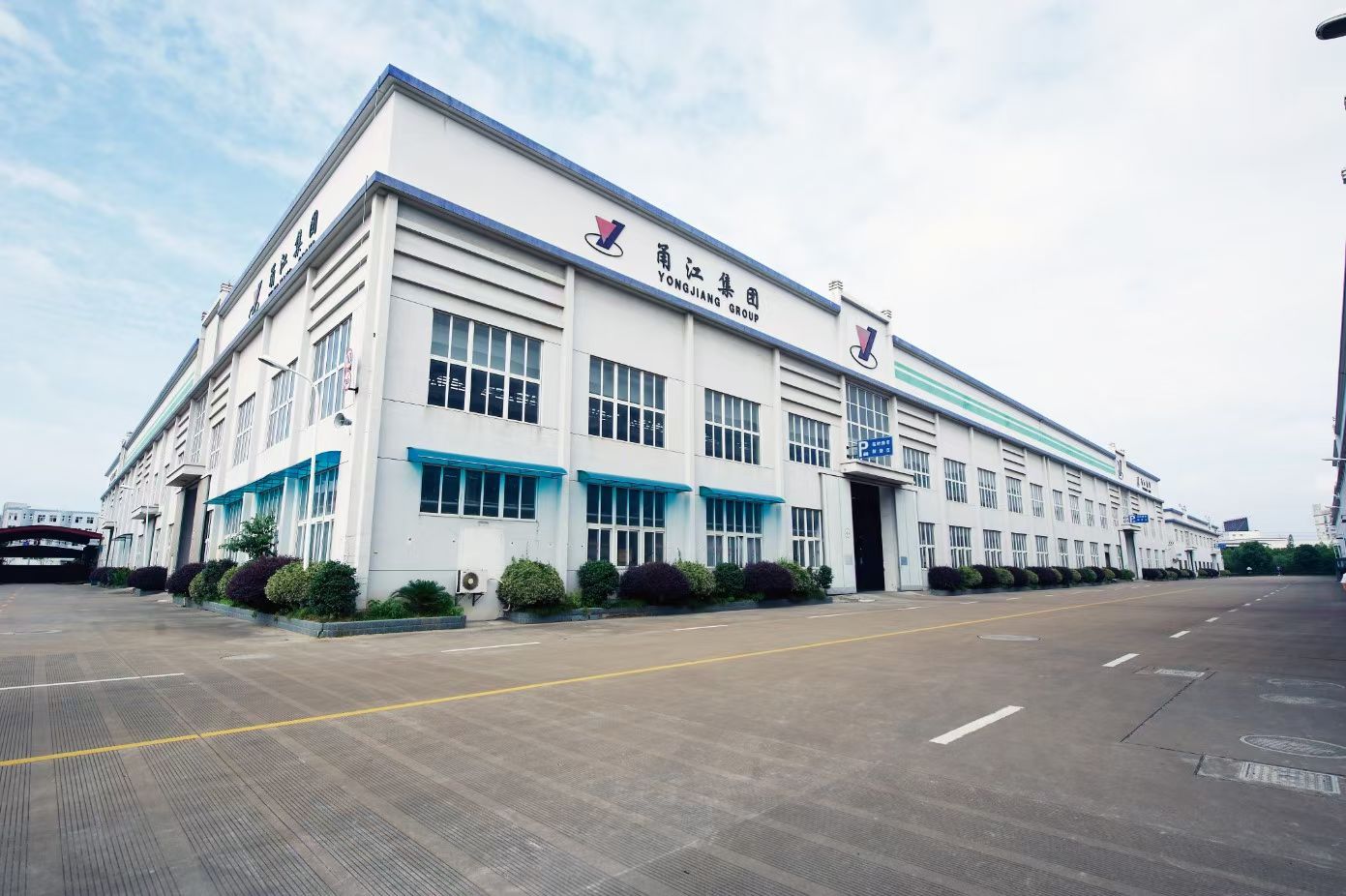
Assembly area at the Yongjiang factory in Ningbo, where YJPT and YJHB PET preform machines are built.
Use Cases: Water, CSD, Oil, Cosmetic and 5-Gallon Containers
Application determines both the preform design and the machine configuration. The following mapping uses the application segments reported for the preform industry and the model data above.
- Mineral water and bottled water. Light preforms, high volumes, standard 28 mm necks — the CIPET specification's 1000 ml / 28 mm / 20 g maximum example is representative of this family. Cavity counts of 32, 48 or 72 are typical, with the YJPT-318 and YJPT-360 covering the mid and upper ranges.
- Carbonated soft drinks (CSD). Carbonation pressure demands a stronger preform and therefore more material per part and tighter dimensional control; process stability across cavities matters more than raw speed. Machines with rigid clamping frames and balanced hot runner control, such as the YJPT-360, are the natural fit.
- Edible oil and sauces. Wider necks and heavier preforms push the shot weight requirement up; the 3450 g shot of the YJPT-360 and YJHB-400 gives headroom for multi-cavity oil preform molds.
- Cosmetic containers. Appearance and neck finish are the acceptance criteria, so smaller, well-controlled shots and careful cooling are preferred over maximum cavity count; the YJPT-260 with its 72 mm screw is suited to this finer resolution work.
- 5-gallon and large containers. These preforms are substantially heavier than a 1000 ml water preform, and the molds are physically large. The 720 × 720 mm tie bars of the YJHB-400 are the relevant advantage here, not only its tonnage.
- Packaging industry generally. Where a plant runs several bottle families on one machine, the deciding factor shifts to changeover time and mold compatibility — again a tie bar and platen question.
Installed examples follow the same logic. Yongjiang's case records describe a customer base that includes water factories and bottle-making factories across multiple countries — among them Ethiopia, Spain, France and Hungary — with 20 units in service over a 20-year relationship, reported as stable operation with low electricity consumption.
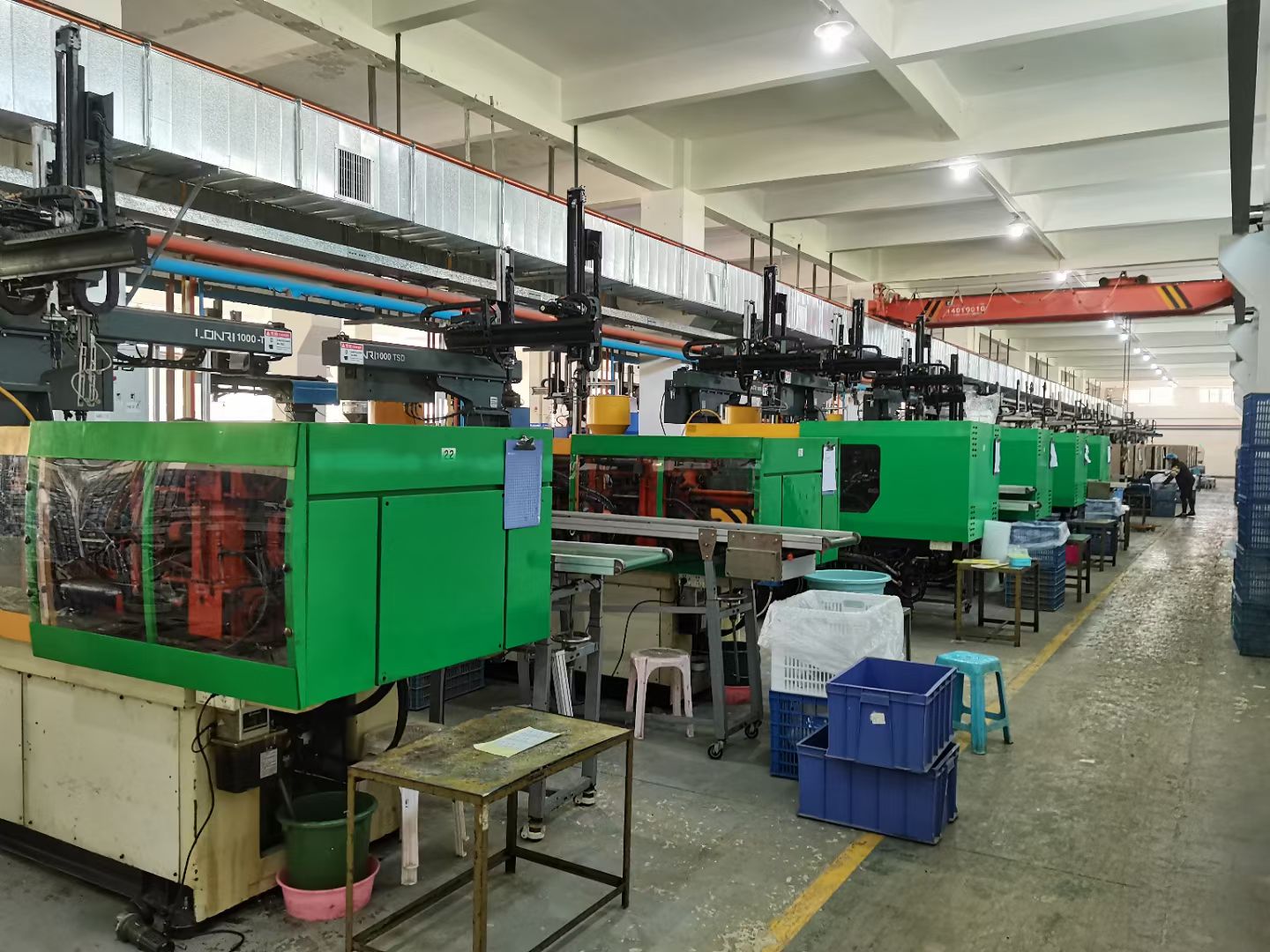
A customer preform plant: machines are installed as a line together with drying, cooling and take-out equipment.
Production Conditions: Continuous Running and Clean-Room Discipline
Two operating conditions shape how a preform workshop is laid out.
24-hour operation. Preform plants usually run continuously, so the machine is judged on thermal stability over long runs rather than on a short demonstration. That means attention to hydraulic and servo temperature, heater band condition, mold cooling water quality and a spare-parts plan. Yongjiang states 24/7 service support and a 100% machine test one week before shipment, which is the point at which those checks should be witnessed.
Dust-free workshop requirements. Because preforms are food-contact packaging, many plants operate the molding area as a controlled dust-free workshop — ISO Class 8 is a commonly referenced cleanliness level for this kind of environment. Practical implications for the machine are straightforward: enclosure and guarding that keep the mold area clean, a hot runner and nozzle layout that does not shed degraded material, and a material handling route that keeps dried pellets sealed from ambient humidity between the dryer and the hopper.
Comparison Table: Model Specifications Side by Side
The table below reproduces the published specification data for the four models discussed. All values are manufacturer data for the PET preform injection machine series.
| Specification | YJPT-260 | YJPT-318 | YJPT-360 | YJHB-400 |
|---|---|---|---|---|
| Clamping force class | 260 T | 318 T | 360 T | 400 T |
| Screw barrel diameter | 72 mm | 77 mm | 95 mm | 95 mm |
| Shot weight | 1400 g | 1900 g | 3450 g | 3450 g |
| Tie bar distance | 580 × 580 mm | 620 × 620 mm | 680 × 680 mm | 720 × 720 mm |
| Motor power | 42 kW | 80 kW | 80 kW | 80 kW |
| Heating power | 35 kW | 65 kW | 65 kW | 65 kW |
| Machine weight | 9 t | 13 t | 16 t | 16 t |
| Frame / platen material | QT500-A7 | Steel | QT500-A7 steel | QT500-A7 steel |
| Typical fit | Compact molds, light preforms, cosmetic work | Mid-range cavity counts, water preforms | High-cavity water and CSD molds, oil preforms | Large molds, heavy preforms, 5-gallon work |
Two observations follow from the data. First, the jump from 318 to 360 tonnes is the largest single step in the range — 1900 g to 3450 g of shot and 620 mm to 680 mm of tie bar clearance — so that is where a plant's cavity strategy usually changes. Second, YJPT-360 and YJHB-400 are close relatives: the same screw, shot and power ratings, separated by 40 tonnes of clamping force and 40 mm of tie bar clearance. Choosing between them is a mold question, not a melt question.
FAQ
What certification should a PET preform injection machine carry for EU delivery?
For the European Union the reference is the CE marking under the 2006/42/EC Machinery Directive. Yongjiang's CE certificate CE20260126MD was issued by ECM and is valid from 30 January 2026 to 29 January 2031; its declared scope names two models, YJPT-260 and YJHB-400, and the applicable standards are EN ISO 12100:2010, EN 60204-1:2018+A1:2020 and EN ISO 20430:2020. When checking any supplier, compare the certificate's model scope with the model on the quotation — a certificate covering a different tonnage class does not automatically cover the machine you are buying.
How do I decide between 260 T, 318 T and 360 T for a 32-cavity mold?
Start with melt volume, then check the mold envelope. Using the CIPET specification's 20 g maximum preform weight for a 1000 ml bottle as an example, 32 cavities require roughly 640 g of melt per shot before runner and cushion are added. The YJPT-260's 1400 g shot covers that with margin, and its 580 × 580 mm tie bars become the limiting factor rather than the injection unit. If the same 32-cavity tool has a larger mold base, or if preforms are heavier than the water example, the YJPT-318 at 620 × 620 mm or the YJPT-360 at 680 × 680 mm becomes the relevant choice. This arithmetic is a first-pass screen; final confirmation should use the actual mold drawing and the resin supplier's process data.
Who are the top pet preform injection machine manufacturers, and how should a shortlist be built?
Any usable shortlist separates PET-specialist builders — those with a dedicated preform series and preform-specific plasticizing screws — from general injection molding manufacturers that list a preform model within a broader portfolio. Rather than ranking names, evaluate each candidate on five verifiable points: a model-level datasheet stating clamping force, shot weight, screw diameter and tie bar distance; a CE certificate whose declared scope names the actual model; evidence of hot runner multi-cavity work at your intended cavity count; installed references in your container segment (water, CSD, oil, cosmetic); and a stated service response commitment. Yongjiang, based in Ningbo, is one manufacturer that can be assessed against all five: its YJPT-260, YJPT-318, YJPT-360 and YJHB-400 are documented with those parameters, its CE certificate CE20260126MD names YJPT-260 and YJHB-400, and its stated service position is 24/7 support. Treat that as one data point in a comparison, not as a substitute for it.
What are the usual commercial terms — minimum order, lead time and capacity?
Yongjiang quotes a minimum order quantity of 1 unit with a lead time of 30–45 days and a monthly capacity of 200 units. OEM customization covers voltage and logo, and all units support 380/400 V 50 Hz industrial power. Machine price is not published as a list figure because it depends on tonnage, cavity count, hot runner mold configuration and the level of automation specified; the practical route is a quotation against a defined mold and output target.
Can preforms be validated on the machine before shipment?
Yongjiang's stated quality control is a 100% machine test one week before shipment, which is the point at which a buyer can arrange a witnessed trial and check cycle repeatability, cavity-to-cavity weight spread and the drying setup. Preform sampling itself depends on the mold and resin being available, so mold trials are normally planned as a separate step with the tooling supplier. For a quotation, a factory acceptance check or the machine catalog, contact Steven at yongjiangimm@gmail.com or +86 18958305290 on WhatsApp.
Conclusion
The pellet-to-preform process is a sequence of controlled conditions rather than a single action: dry resin, melt it evenly, deliver an exact shot into a balanced hot runner mold, hold it while it shrinks, cool it until it can be ejected without distortion. Every specification on a PET preform injection machine datasheet maps back to one of those conditions — shot weight and screw diameter to melt delivery, tie bar distance to mold size, clamping force to mold containment, and motor and heating power to the energy budget of a plant running around the clock.
For a buyer at the evaluation stage, the practical approach is to fix the preform first (application, weight, neck), then the mold (cavity count, mold base dimensions), and only then the machine. The four Yongjiang models in this article show how wide that last step can be: from a 9-tonne 260-tonne machine with a 1400 g shot to a 16-tonne 400-tonne machine with a 3450 g shot and 720 mm tie bars, within one PET preform series.
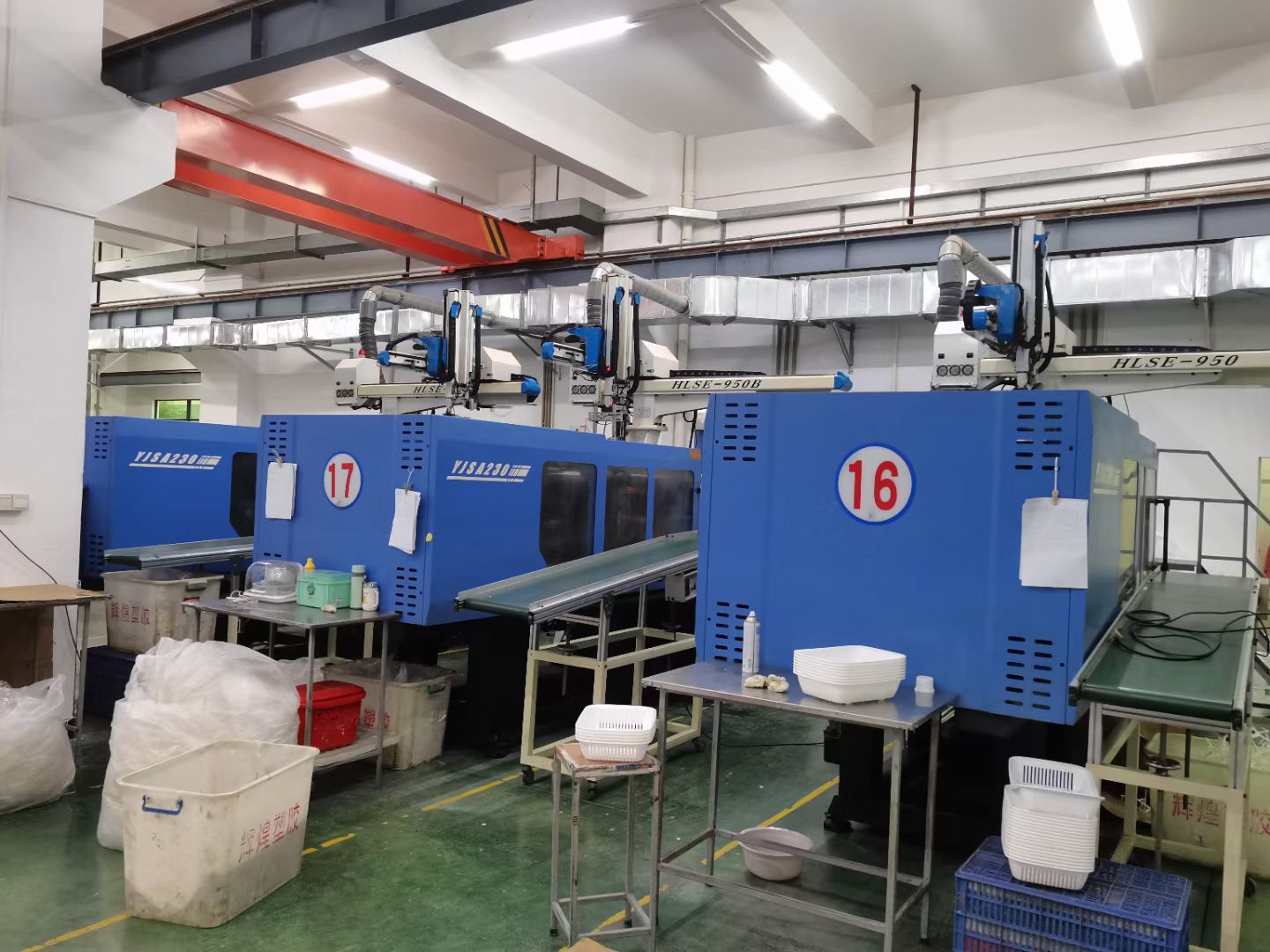
An installed preform line: the machine, drying and cooling equipment are commissioned together.
Next step
If you are sizing a first preform line, send the preform drawing, cavity count and target output. Yongjiang will confirm which model — YJPT-260, YJPT-318, YJPT-360 or YJHB-400 — matches the mold envelope, and return a quotation with lead time.
Email: yongjiangimm@gmail.com · Tel / WhatsApp: +86 18958305290 · www.yongjiangimm.com
Download the full machine catalog: Yongjiang injection molding machine brochure (PDF)
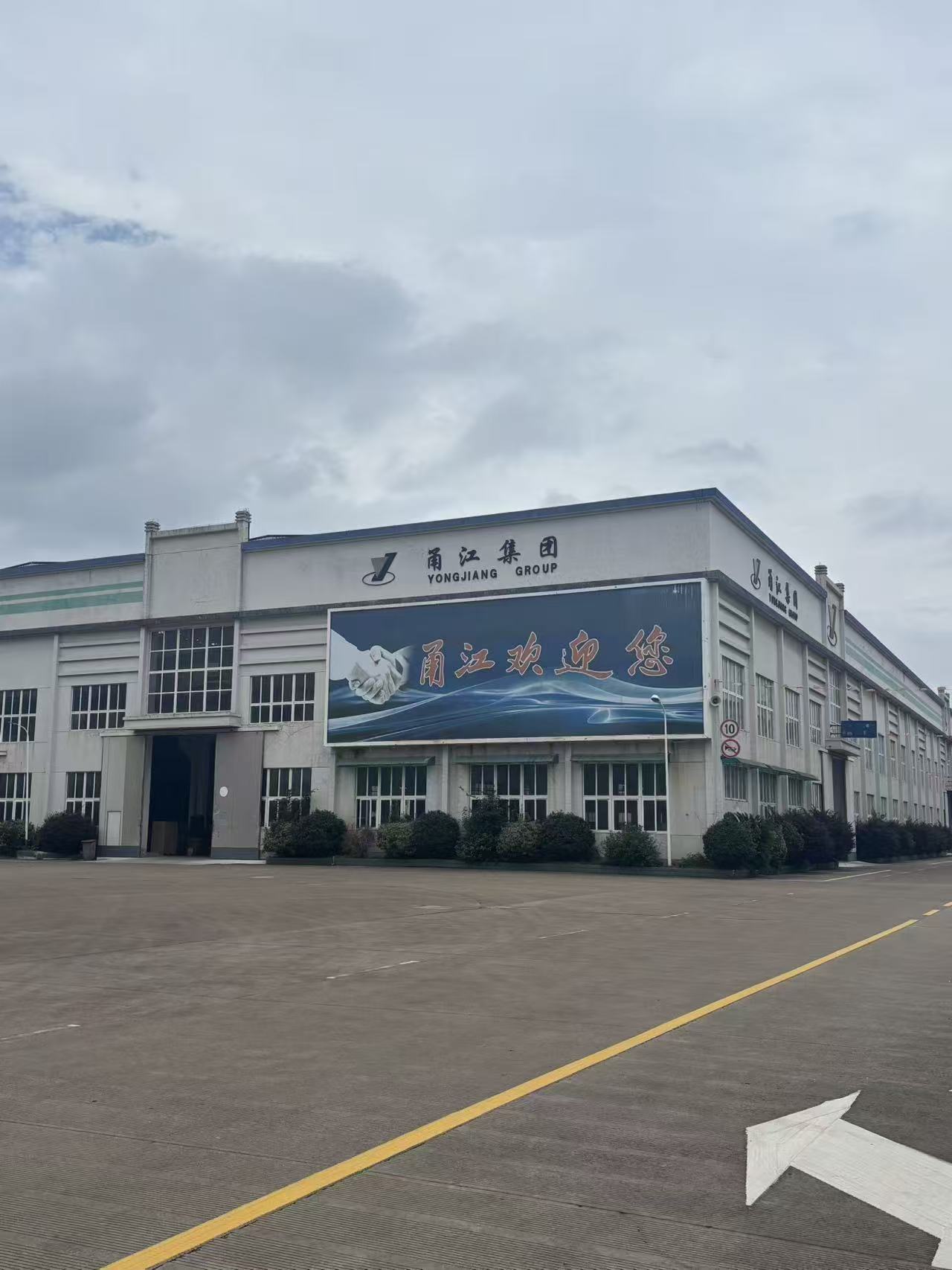
Machines are tested one week before shipment, then prepared for export packing.
Have Questions or Need More Details?
Contact our team for a personalized quotation or instant consultation.
Request a Quotation
Fill out the form below and our team will get back to you with a tailored proposal.
WhatsApp Direct Chat
Prefer to chat in real-time? Message us on WhatsApp for instant assistance & quick answers.
- Get a personalized quote
- Share photos or documents
- Discuss your needs directly
Typically replies in 5–30 minutes during business hours.