
PET Preform Injection Machine Configurations: Cavity Counts, Tonnage, and Production Fit
PET Preform Injection Machine Configurations: Matching Cavity Count, Tonnage, and Production Goals
Selecting a PET preform injection machine is not just about clamping force or brand reputation. The practical starting point is matching the machine platform to your target preform weight, output volume, mold configuration, and operating environment. This guide explains how PET preform injection molding machines are sized, what cavity configurations mean for output, and how to evaluate specifications for water, beverage, CSD, oil, and 5-gallon container production.
PET preform injection molding machines convert dried PET resin into preforms—the tube-shaped intermediates later blown into bottles. They are used across the beverage, food, oil, and packaging industries. Injection molding technology accounts for an estimated 66.4% of the total PET preform machine market as of 2025, according to Future Market Insights. Most production-scale lines rely on multi-cavity hot runner molds to achieve high output.
For buyers evaluating equipment, the key is understanding how clamping tonnage, screw diameter, shot weight, tie-bar spacing, and cavity count interact. This article focuses on those relationships and applies them to real production scenarios.
What Is a PET Preform Injection Machine?
A PET preform injection machine is a specialized injection molding machine designed to melt and inject PET resin into preform molds under precise temperature and pressure control. The resulting preforms are later reheated and blow-molded into finished bottles.
These machines differ from general-purpose injection molding machines in several ways:
- They use a dedicated PET screw geometry to process PET without excessive degradation.
- They are built for continuous, 24-hour operation with multi-cavity hot runner molds.
- They typically operate with servo-driven clamping and injection systems for energy efficiency.
- They require consistent power and cooling infrastructure.
Ningbo Yongjiang Group, operating as Ningbo Yong Jiang machine Co., Ltd, is a Chinese manufacturer established in 1985. The company produces PET preform machines and PVC fitting machines, with a factory area of 130,000 m², around 200 employees, and an annual output of about 2,000 units. Its export ratio is approximately 59%, with main markets including the USA, Canada, and Thailand, according to company data.
Why Cavity Count and Tonnage Matter
The number of cavities in a preform mold determines how many preforms are produced in each injection cycle. A 48-cavity mold produces twice as many preforms per cycle as a 24-cavity mold of the same preform weight, assuming the same cycle time.
However, higher cavity counts require:
- Higher clamping force to keep the mold closed against injection pressure.
- Higher plasticizing capacity to fill all cavities within the cycle.
- Larger tie-bar spacing to physically accommodate the mold.
- Adequate shot weight to fill all cavities.
- Greater cooling capacity to manage mold temperature.
Therefore, machine selection is not a matter of choosing the largest available tonnage. It is a matching exercise between the mold, the preform weight, and the machine's injection and clamping specifications.
Key Machine Specifications Explained
Clamping Force (Tonnage)
Clamping force is measured in tons and represents the force that keeps the mold closed during injection. Higher tonnage machines can handle larger molds and higher injection pressures.
For PET preforms, common machine sizes range from approximately 260 tons to 400 tons for production-scale operations. The appropriate tonnage depends on the projected area of the mold and the required cavity count.
Screw Diameter and Shot Weight
The screw diameter affects plasticizing capacity and the amount of material that can be injected per cycle. Shot weight is the maximum weight of material that can be injected in one shot.
These two parameters determine whether the machine can fill the mold completely with the required preform weight.
Tie-Bar Spacing
Tie-bar spacing defines the maximum mold dimensions the machine can accept. Higher cavity molds are physically larger, so tie-bar spacing often becomes the limiting factor.
Motor Power and Heat Power
Motor power affects the speed and responsiveness of the hydraulic or servo system. Heat power relates to the barrel heating capacity. Both influence energy consumption and cycle stability.
Representative Machine Configurations from Yongjiang
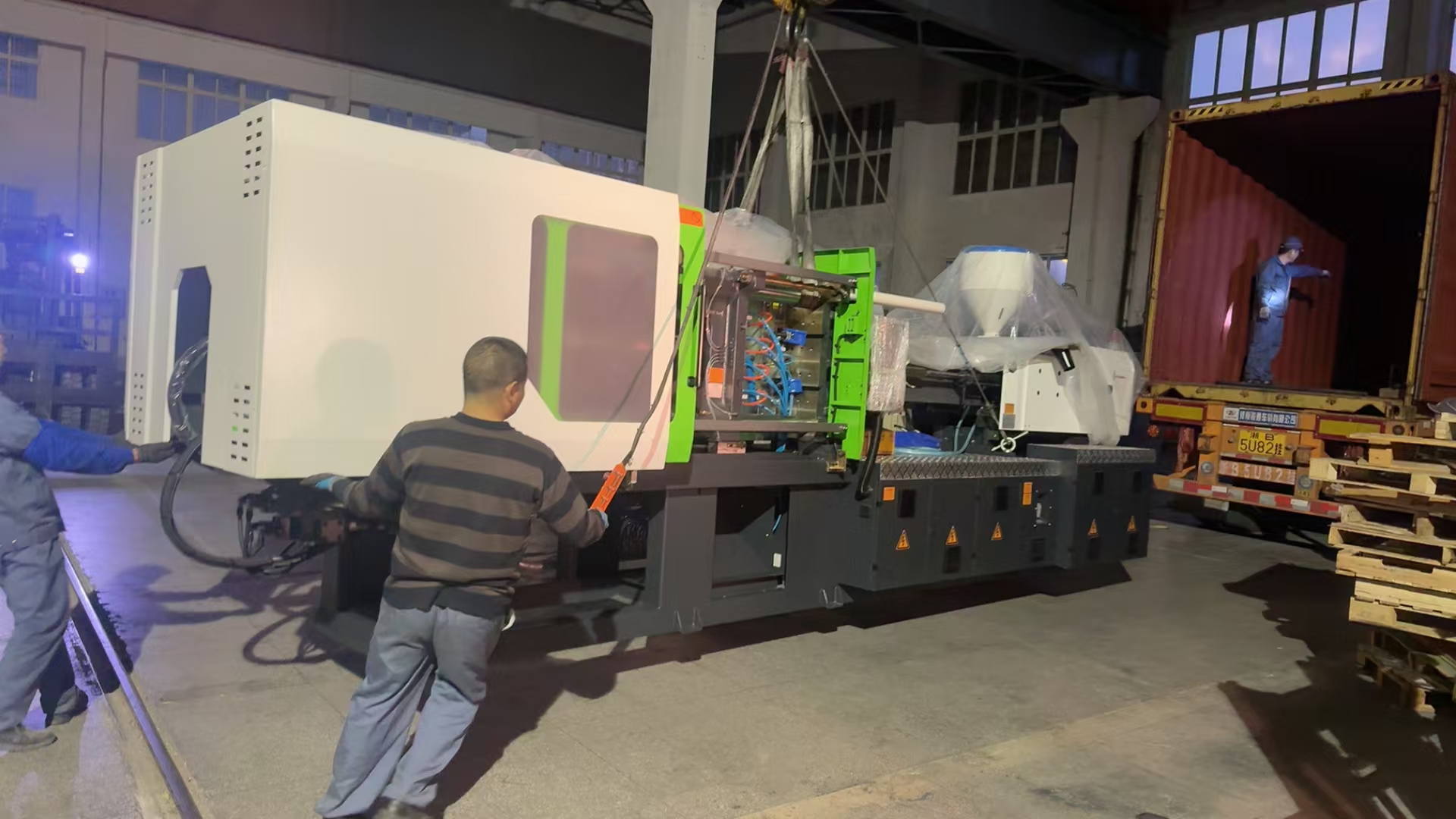
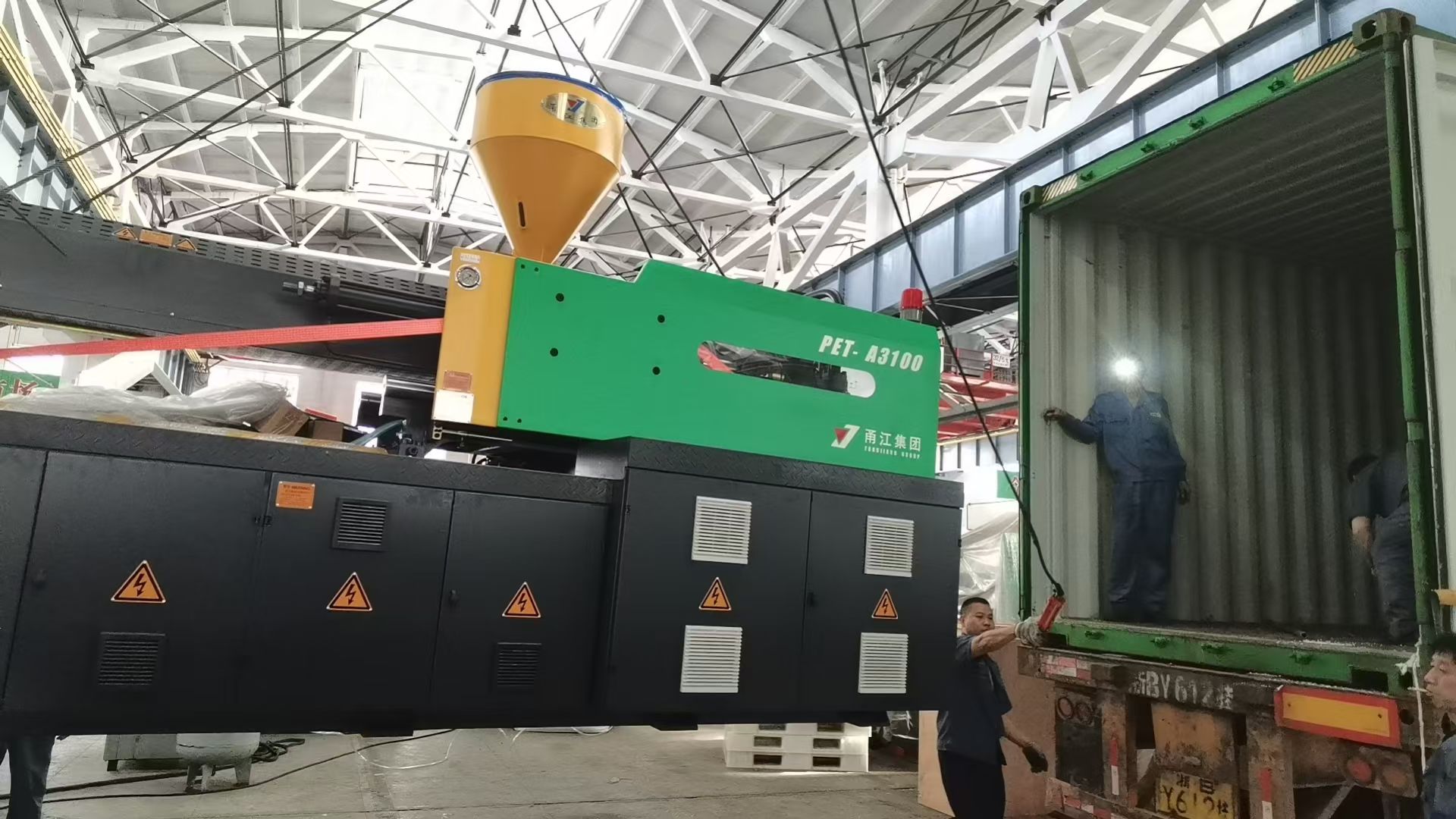
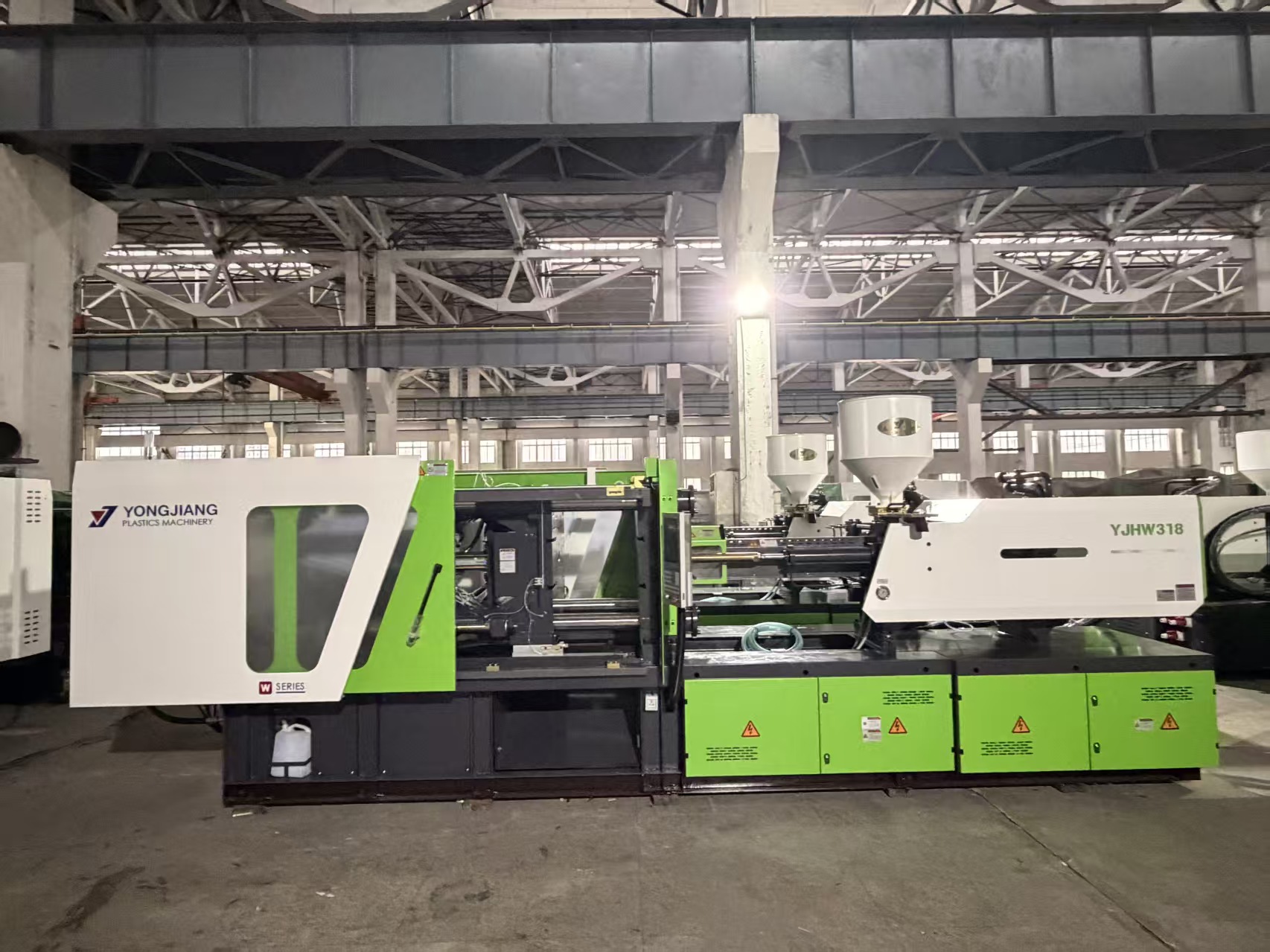
The table below shows four representative Yongjiang models designed for PET preform production. These models are part of the YJPT series and the YJHB series.
| Model | Clamping Force | Screw Diameter | Shot Weight | Tie-Bar Spacing | Motor Power | Heat Power | Machine Weight |
|---|---|---|---|---|---|---|---|
| YJPT-260 | 260 tons | 72 mm | 1400 g | 580 × 580 mm | 42 kW | 35 kW | 9 tons |
| YJPT-318 | 318 tons | 77 mm | 1900 g | 620 × 620 mm | 80 kW | 65 kW | 13 tons |
| YJPT-360 | 360 tons | 95 mm | 3450 g | 680 × 680 mm | 80 kW | 65 kW | 16 tons |
| YJHB-400 | 400 tons | 95 mm | 3450 g | 720 × 720 mm | 80 kW | 65 kW | 16 tons |
These models are each described as high-speed PET preform machines. The YJPT-260 is positioned for lighter preforms and smaller molds, while the YJPT-318, YJPT-360, and YJHB-400 offer higher shot weights and larger tie-bar spacing for higher-cavity molds and heavier preforms.
All four models are listed under Yongjiang's CE certification, which covers the YJPT-260, YJPT-318, YJPT-360, and YJHB-400 models. The certificate number is CE20260126MD, issued by ECM, and the certification is valid for the EU market.
How to Match Cavity Count to Machine Size
PET preform molds commonly range from 32 to 96 cavities depending on preform weight and output requirements. Yongjiang states that its YJPT series supports mold configurations from 6 to 72 cavities, based on public product information.
The relationship between cavity count and machine size can be summarized as follows:
- 32-cavity molds – Suitable for lower output lines, pilot production, or heavy preforms where mold size and shot weight are limited.
- 48-cavity molds – A common production configuration for standard water bottle preforms.
- 72-cavity molds – Higher output configurations for lightweight water and beverage preforms.
- 96-cavity molds – Very high output configurations, usually requiring larger tie-bar spacing and high clamping force.
For example, a 96-cavity mold for light water bottle preforms may require a larger machine than a 32-cavity mold for heavy 5-gallon preforms. The mold's physical size and the total shot weight drive the machine requirement, not just the number of cavities.
Practical Matching Logic
- Determine the target preform weight (e.g., 18 grams for a standard water bottle preform).
- Select the cavity count based on required output and mold availability.
- Calculate total shot weight: preform weight × cavity count.
- Compare with the machine's shot weight capacity.
- Check mold dimensions against the machine's tie-bar spacing.
- Verify that the clamping force can hold the mold closed.
This logic keeps the machine selection tied to actual production parameters rather than general assumptions about tonnage.
Application Scenarios and Recommended Models
Water Bottle and Mineral Water Production
For typical 18–32 gram water bottle preforms, machines in the 260–360 ton range are commonly used. A YJPT-260 with a 1400 gram shot weight can run molds producing lighter preforms, while a YJPT-360 with a 3450 gram shot weight can support higher cavity counts or heavier preforms.
Beverage and Carbonated Soft Drink (CSD) Production
CSD bottles require preforms with higher burst strength and thicker walls than still water bottles. This increases preform weight. Heavier preforms and higher cavity counts may require a 360-ton or 400-ton platform.
Oil Bottle Production
Oil bottles are often smaller but may have different neck finishes and wall thickness requirements. Mid-range machines such as the YJPT-318 can handle these molds efficiently.
5-Gallon and Large Container Preforms
Large preforms for 5-gallon water containers are significantly heavier than beverage preforms. These applications often require high shot weight and careful screw selection. The YJHB-400 with its 3450 gram shot weight and wide 720 × 720 mm tie-bar spacing may be more suitable for such molds.
Packaging Industry
PET preforms are also used in packaging applications beyond beverages, including food containers and cosmetic packaging. For these applications, mold design and machine configuration must adapt to the specific preform geometry.
The following table summarizes common application scenarios and the machine features buyers should prioritize.
| Application | Typical Preform Weight | Typical Cavity Range | Machine Focus |
|---|---|---|---|
| Water / mineral water | Light to medium | 32–96 | High speed, low energy |
| Beverage / CSD | Medium to heavy | 32–72 | Higher tonnage, stable injection |
| Oil bottles | Light to medium | 32–72 | Flexibility, quick mold change |
| 5-gallon containers | Heavy | 4–16 | High shot weight, robust clamping |
Operating Environment and Utility Requirements
Installing a PET preform injection machine is not only an equipment decision. Production reliability depends on the working environment. Based on application data for plastic molding PET preform projects, the following conditions are generally required:
- Ambient temperature: Stable 20–30°C; with good ventilation, the machine can sustain continuous operation in tropical workshops up to 35–40°C.
- Relative humidity: 40%–50% RH is recommended; humidity above 60% RH should be avoided to prevent PET moisture absorption.
- Cleanliness: An ISO Class 8 (100,000-class) dust-free workshop is preferred for food-grade preform production.
- Power supply: 380/400V 50Hz three-phase industrial power, with voltage fluctuation within ±10%.
PET pellets must be fully dried to moisture below 0.02% before use. Without proper drying, defects such as silver streaks and hydrolysis can occur.
Buyers should also plan for auxiliary equipment, including preform molds, hopper dryers, air compressors, and water chillers. These are typically considered separate from the injection machine itself.
Compliance: CE Certification for EU-Bound Machines
Manufacturers exporting PET preform machines to the European Union must verify machinery safety compliance. CE certification is a common requirement.
Yongjiang's PET preform injection molding machine models YJPT-260, YJPT-318, YJPT-360, and YJHB-400 are covered by CE certificate number CE20260126MD, issued by ECM on January 30, 2026. The certificate expires on January 29, 2031. The applicable standards include:
- 2006/42/EC Machinery Directive
- EN ISO 12100:2010
- EN 60204-1:2018+A1:2020
- EN ISO 20430:2020
For buyers, checking the exact scope of the CE certificate is important. The certificate should list the specific model being purchased and the applicable standards. It should also be issued by a recognized certifying body.
According to technical comparison data, high-end PET preform systems from global leaders such as Husky's HyPET 6e and Netstal's PET-LINE comply with CE, UL, ISO 9001, and EUROMAP 60.1 standards. This indicates that EU buyers generally expect formal standards compliance from any serious supplier.
Energy Consumption and Operational Cost Considerations
PET preform injection machines often run 24 hours a day. Energy consumption is therefore a major component of total cost of ownership.
Yongjiang states that its machines are equipped with high-response dual servo systems and customized plasticizing screws. The company claims these features deliver 30%–50% lower power consumption and shorter molding cycles compared to conventional machines. This claim appears in general product literature and should be evaluated by buyers through technical comparison and trial data.
For buyers, energy efficiency is not simply about the motor power rating. Cycle time, idle time, and the stability of the servo system also affect actual energy use per preform.
What Buyers Should Ask
- What is the expected cycle time for a given preform weight and cavity configuration?
- What is the realistic energy consumption per thousand preforms?
- Does the machine support automatic mold temperature control?
- Is the servo system designed for continuous operation?
- What maintenance is required for the PET screw and barrel?
Long-Term Supplier Evaluation
When sourcing from China, buyers should evaluate not just the machine specification but also the supplier's production capacity and service capability.
Yongjiang's company profile lists the following capabilities:
- Established in 1985
- Factory area: 130,000 m²
- Around 200 employees
- Annual output: approximately 2,000 units
- R&D team: 25 engineers
- Main products: PET preform machines and PVC fitting machines
- Export ratio: approximately 59%
- Main markets: USA, Canada, Thailand
For OEM projects, Yongjiang supports customization of voltage and logo. Monthly capacity is about 200 units, lead time is 30–45 days, minimum order quantity is one unit, and quality control includes 100% testing one week before shipping. The company reports export markets in the EU, Middle East, and Africa, with 24/7 after-sales service support.
This information helps buyers assess whether a supplier can meet delivery schedules and support installation remotely.
Step-by-Step Machine Selection Process
For production managers evaluating a PET preform injection machine, the following process provides a structured approach.
Step 1: Define the End Product
Specify the bottle size, neck finish, and target weight of the final container. This determines the preform drawing and the preform weight.
Step 2: Define Output Requirements
Estimate the required annual or monthly output of preforms. This drives the cavity count and cycle time calculation.
Step 3: Select Preform Weight and Mold
Work with a mold supplier to finalize the preform design and mold cavity count. The mold's physical dimensions are required to check tie-bar spacing.
Step 4: Calculate Machine Requirements
Use the following formula logic to shortlist machines:
- Total shot weight = preform weight × number of cavities
- Required clamping force = f(mold projected area, injection pressure)
- Required tie-bar spacing = mold width + clearance
Step 5: Compare Models
Compare the calculated requirements against the specifications of available models. Pay attention to screw diameter, shot weight, and tie-bar spacing.
Step 6: Verify Compliance
If the machine will be installed in the EU, request the CE certificate and check the model number, standard references, issuing body, and validity.
Step 7: Review Supplier Capability
Assess the supplier's production capacity, lead time, after-sales service, and export experience.
Comparative Benchmarking in the Market
The PET preform machine market includes a range of suppliers, from global leaders to specialized regional manufacturers.
According to third-party market data, Husky Technologies controls an estimated 55–60% of the global high-output PET preform system market. High-end systems such as Husky's HyPET 6e and Netstal's PET-LINE are considered benchmark solutions for very high output and precision.
In practice, not every buyer needs the extreme output of a high-end system. Many mid-sized water, beverage, and oil bottling operations require reliable machines in the 260–400 ton range. For these buyers, cost efficiency, lead time, and after-sales service often matter more than maximum output capability.
Choosing a Chinese manufacturer can be a rational approach for buyers seeking a balance between cost and performance. However, due diligence is essential.
Use Cases: How Buyers Configure Machines for Different Products
Case A: Regional Water Bottle Producer
A water bottle producer may require 18-gram preforms for 500 ml bottles. If the target output is moderate, a 48-cavity mold on a 318-ton machine can be an appropriate starting point. The 77 mm screw and 1900 gram shot weight provide sufficient capacity for typical water preforms.
Case B: CSD Producer with Heavy Preforms
A carbonated soft drink producer requires thicker preforms for pressure resistance. A 360-ton machine with a 95 mm screw can handle medium-to-heavy preforms. The higher shot weight allows larger preforms or higher cavity counts.
Case C: Large Container Manufacturer
A manufacturer producing preforms for 5-gallon water containers needs very high shot weight per preform. The YJHB-400's 720 × 720 mm tie-bar spacing and 3450 gram shot weight can support the large molds used in this segment.
These examples illustrate that no single machine is universally suitable. The production plan determines the appropriate configuration.
Comparing Machine Selection Factors by Decision Stage
Buyers at different stages of evaluation often prioritize different factors. The table below presents a useful framework.
| Decision Factor | Research Stage | Evaluation Stage |
|---|---|---|
| Machine tonnage | Understand typical ranges | Match to mold and preform |
| Cavity count | Understand output impact | Confirm mold availability |
| Energy consumption | Review servo claims | Request real cycle data |
| Compliance | Check CE scope | Verify certificate number |
| Supplier capability | Review experience | Audit factory if possible |
Common Mistakes When Buying a PET Preform Injection Machine
Mistake 1: Choosing Tonnage First
Buyers sometimes begin with a tonnage figure without defining the preform and mold. This can lead to a machine that has enough clamping force but insufficient screw capacity or tie-bar spacing.
Mistake 2: Ignoring Tie-Bar Spacing
A high-cavity mold may not fit between the tie bars even if the tonnage is acceptable. Tie-bar spacing is a hard physical constraint.
Mistake 3: Overlooking PET Drying
PET is hygroscopic. Without proper drying, preform quality deteriorates. Buyers should include hopper dryers in their budget and floor plan.
Mistake 4: Not Verifying CE Documentation
Some suppliers may reference CE compliance without providing a valid certificate scoped to the actual model. Buyers should request the certificate number and verify it with the issuing body.
Mistake 5: Underestimating Lead Time
Production planning should account for the machine manufacturing lead time. If a supplier quotes 30–45 days for an OEM machine, this must be coordinated with mold delivery and facility preparation.
Production Fit Checklist for Global Buyers
Use this checklist before issuing a purchase order:
- Preform weight is confirmed for the target bottle.
- Cavity count is selected based on required output.
- Shot weight is sufficient for the full mold.
- Tie-bar spacing can accommodate the mold.
- Power supply matches the machine's electrical specification.
- CE certificate is available for EU-bound machines and lists the correct model.
- PET drying equipment is planned.
- Mold temperature control is available.
- Auxiliary equipment such as air compressor and water chiller is ready.
- Supplier has confirmed lead time and after-sales support.
Why Buyers Should Consider Yongjiang
Yongjiang offers a focused range of PET preform injection machines that cover common production sizes from 260 tons to 400 tons. Its YJPT-260, YJPT-318, and YJPT-360 models are specialized for PET preforms, while the YJHB-400 provides a higher-tonnage option with a larger tie-bar spacing.
The company's CE certification for all four models simplifies EU compliance for buyers. Its OEM capabilities, including voltage and logo customization, are relevant for buyers who need the machine integrated into an existing plant standard.
Yongjiang also provides long-term production experience. The company reports an export ratio of 59%, with main markets in the USA, Canada, and Thailand. Its factory covers 130,000 m² and produces around 2,000 units per year. For buyers, this scale suggests an established production system and export logistics experience.
Contact Yongjiang for more information or to request a quotation.
FAQ
Are Yongjiang PET preform injection machines CE-certified?
Yes. The Yongjiang PET preform injection molding machine models YJPT-260, YJPT-318, YJPT-360, and YJHB-400 are CE-certified under certificate number CE20260126MD. The certificate was issued by ECM on January 30, 2026, and is valid until January 29, 2031.
What is the applicable standard for Yongjiang's CE certificate?
The CE certificate references EN ISO 12100:2010, along with the 2006/42/EC Machinery Directive, EN 60204-1:2018+A1:2020, and EN ISO 20430:2020.
Which Yongjiang models are suitable for producing PET preforms for water bottles?
The YJPT-260, YJPT-318, YJPT-360, and YJHB-400 models can all be used for PET preform production. For light water bottle preforms, the YJPT-260 or YJPT-318 may be sufficient. For higher cavity counts and heavier preforms, larger tonnage models such as the YJPT-360 or YJHB-400 are more suitable.
Does Yongjiang support OEM customization?
Yongjiang supports OEM customization of voltage and logo. The company's OEM production capacity is around 200 units per month, with a lead time of 30–45 days.
What is Yongjiang's typical lead time for a PET preform injection machine?
Yongjiang's typical OEM lead time is 30–45 days, with a minimum order quantity of one unit. The company states that it conducts 100% testing one week before shipping.
For a full picture of the YJPT series and related machinery, download the Yongjiang injection molding machine brochure.
Conclusion
Choosing a PET preform injection machine requires a structured approach that starts with the preform design and ends with a full production plan. Cavity count, preform weight, shot weight, tie-bar spacing, operating environment, and compliance requirements all play a role.
Yongjiang's YJPT-260, YJPT-318, YJPT-360, and YJHB-400 models cover a practical range of configurations for water, beverage, CSD, oil, and container preforms. Their CE certification provides a clear compliance path for EU-bound projects.
To make an informed purchase decision, request detailed specifications, verify the CE certificate scope, and ensure your mold and auxiliary equipment are matched to the machine.