
Setting Up a Water Bottle Preform Workshop: Application Guide for the YJPT-318
A water bottle preform workshop is an environment, not a purchase order. The YJPT-318 — a 318-ton high-speed PET preform injection machine built by Ningbo Yongjiang Group — is sized for exactly that kind of project: 620 × 620 mm tie bar spacing for multi-cavity hot runner preform molds, a 1,900 g shot weight, a 77 mm PET screw and 80 kW of motor power. This guide sets out what the YJPT-318 covers, what the workshop must supply around it, and the order in which a water bottle preform project should be built.
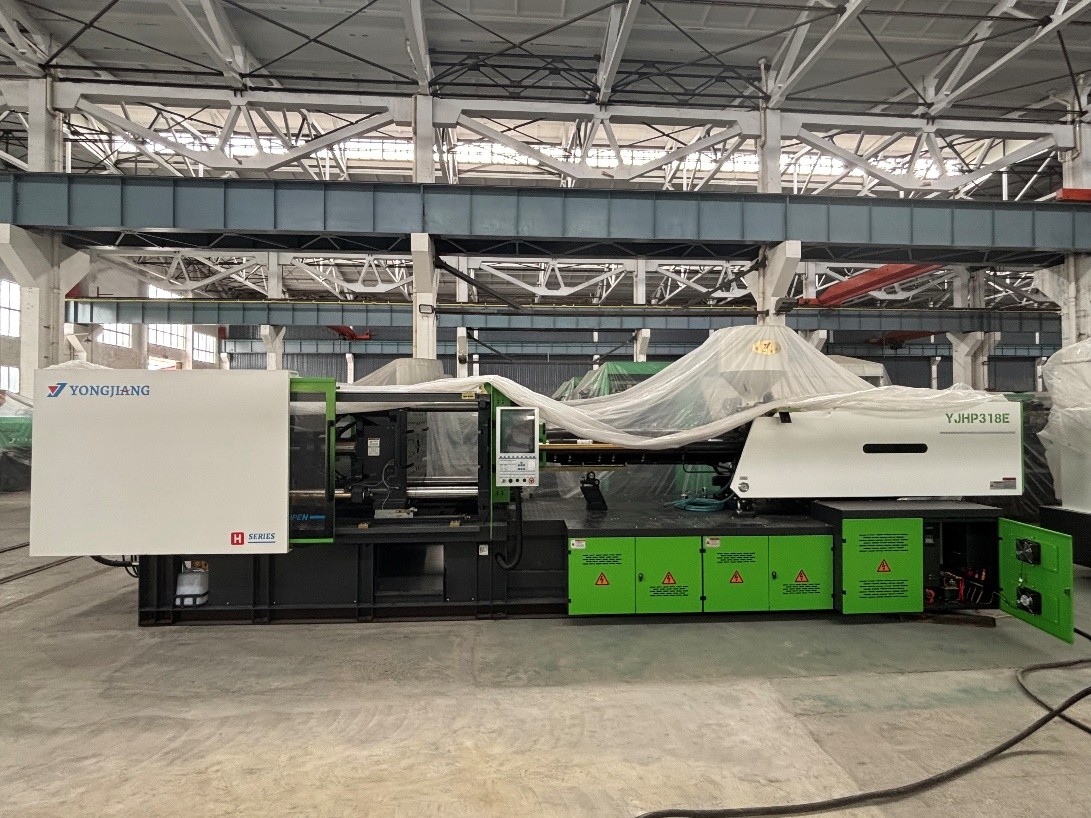
The YJPT-318, a 318-ton high-speed PET preform injection machine, used as the core unit of a water bottle preform workshop.
What Has to Be Decided Before the First Preform Is Molded
Preform projects rarely fail because a machine is too slow. They fail because one constraint was checked at the wrong moment. In a water bottle preform workshop, the constraints are mechanical, thermal and environmental at the same time, and each one carries a fixed cost when it surfaces late — after the concrete is poured, after the mold is built, or after the first shipment of resin has been dried.
- Mold fit. A preform mold is a plate stack. If the mold base does not fit between the tie bars, no other machine specification matters. The YJPT-318 provides 620 × 620 mm of tie bar spacing.
- Shot capacity. Every cavity adds preform weight to a single injection. A 48-cavity mold running an 18 g preform requires roughly 864 g of shot weight before sprue and runner losses; the YJPT-318 offers 1,900 g.
- Humidity. PET is hygroscopic. Above 60% relative humidity, moisture absorption produces silver streaks and hydrolysis defects that no machine setting can reverse.
- Power stability. High-speed preform molding depends on servo response. Voltage fluctuation beyond ±10% at 380/400 V 50 Hz converts a stable cycle into a variable one.
- Cleanliness. Food-grade preforms need a controlled room, free of metal dust and plastic debris; ISO Class 8 (100,000-class) is the reference used for this class of production.
- Auxiliaries. A preform line is a set, not a single unit: preform mold, hopper dryer, air compressor, water chiller, mold temperature controllers and a hot runner system.
Read together, those six points define the project. The injection machine is only one of them — but it is the one that fixes the boundaries of the other five.
Where the PET Preform Injection Business Stands
Preform molding is a mainstream industrial segment. The global PET preform machines market was estimated at USD 9.9 billion in 2025 and is projected to reach USD 17.3 billion by 2035 (Future Market Insights). Within that market, injection molding technology holds a 66.4% share as of 2025 — the route used by the large majority of water bottle preform producers.
Supply is concentrated. Asia Pacific accounted for a 41.2% revenue share of the injection molding machine market in 2025, with China as the leading country (Grand View Research). For a workshop project, the practical consequence is that a shortlist will usually place Chinese builders alongside European and North American suppliers, and the comparison will turn on configuration and documentation rather than on availability.
Ningbo Yongjiang Group is one of the established Chinese injection molding machine manufacturers. Founded in 1985, the company runs a 130,000 m² facility with around 200 employees, an R&D team of 25 engineers and an annual output of roughly 2,000 units. About 59% of production is exported, with the United States, Canada and Thailand among its main markets, and the wider machine range covers clamping forces from 40 T to 1,600 T — a range that allows a factory to expand a preform workshop over several years without changing suppliers mid-project.
How the YJPT-318 Fits a Water Bottle Preform Workshop
The YJPT-318 is a 318-ton high-speed preform injection machine in the YJPT PET series. Its task is narrow and specific: melt dried PET pellets and inject the melt into multi-cavity hot runner molds under precise pressure and temperature control, producing preforms for water bottles, oil bottles and cosmetic containers.
- Screw barrel diameter: 77 mm
- Shot weight: 1,900 g
- Tie bar spacing: 620 × 620 mm
- Motor power: 80 kW
- Heating power: 65 kW
- Machine weight: 13 t
- Type: 318-ton high-speed PET preform machine, preform injection machine
- Applicable industry: PET preform manufacturing
Tie bar spacing of 620 × 620 mm defines the mold envelope
The 620 × 620 mm tie bar spacing is the first number a water bottle preform buyer should read, because it decides which molds physically fit. The figure has to be checked against the mold base drawing, with clearance for the hot runner manifold, water manifolds, locating ring and clamping plates. This is the most common mismatch in preform projects: a mold quoted for a 48-cavity layout that cannot be inserted between the tie bars of the machine already ordered.
In practice, the tie bar measurement also governs how far a workshop can scale. A buyer planning a 24-cavity water bottle preform line and a buyer planning a 48-cavity line may both start on the YJPT-318, but the decision should be made against the mold base footprint rather than against the cavity number alone.
1,900 g shot weight and the 77 mm PET screw
The 77 mm screw, paired with a 1,900 g shot weight, sets how much material a single cycle can deliver. Buyers typically run the arithmetic before they order a mold: at 18 g per preform, 48 cavities require about 864 g of shot weight and 72 cavities about 1,296 g, both inside the 1,900 g capacity of the YJPT-318 once sprue and runner losses are added. Above that point the mold envelope — not the shot weight — becomes the limiting factor, which is why the two checks belong in the same conversation.
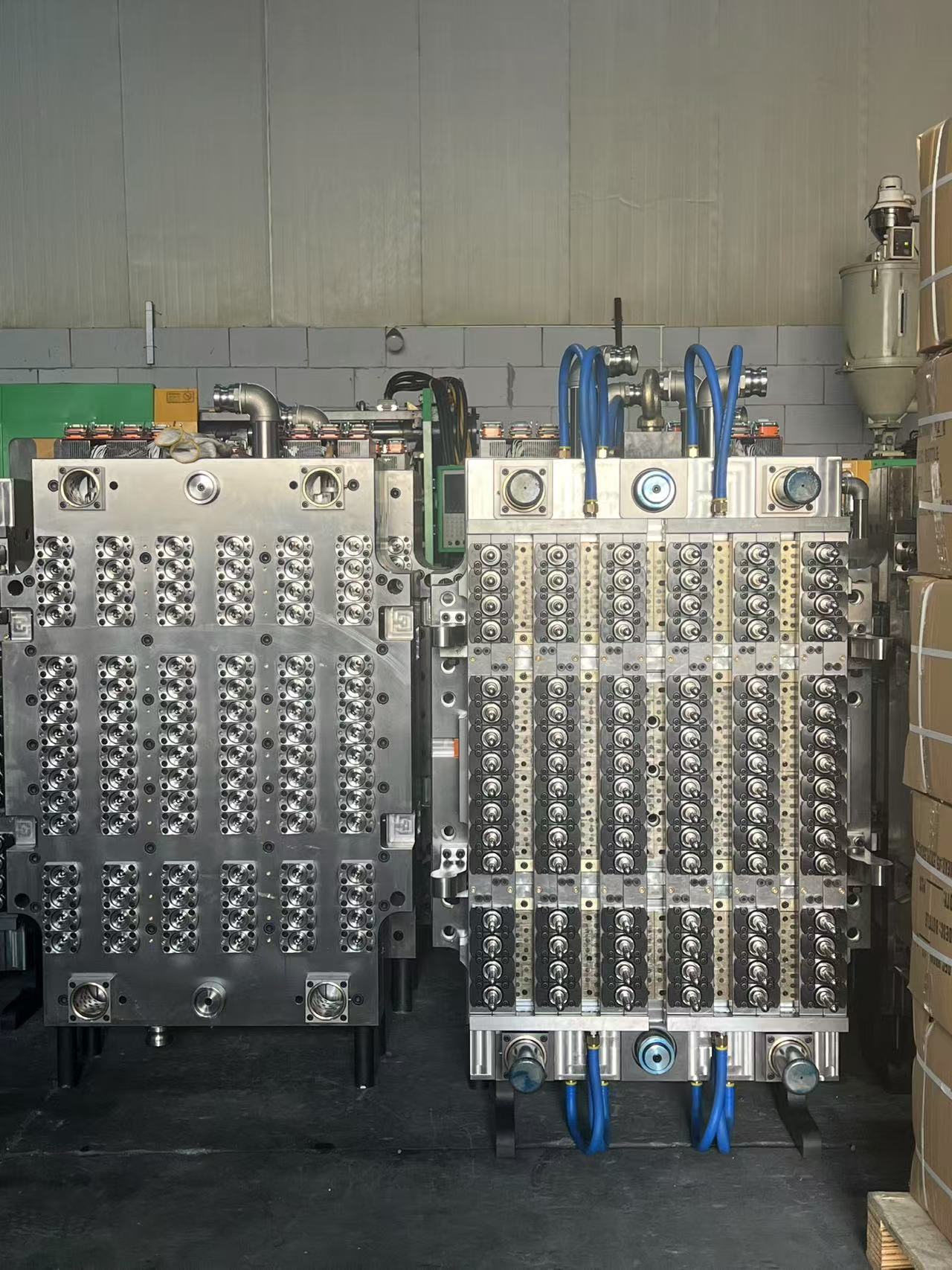
The preform mold and hot runner system are the matched half of the machine; both must be checked against the 620 × 620 mm tie bar spacing.
High-speed mold capability for continuous production
The YJPT-318 is classified as a high-speed preform machine. Its servo system and rigid clamping frame are built for 24-hour continuous mass production with multi-cavity hot runner molds, and it is designed to work with automated cooling robots, which shorten the cooling portion of the cycle. Across the Yongjiang platform, high-response dual servo systems and customized plasticizing screws are reported to deliver power consumption 30%–50% lower than conventional configurations together with shorter molding cycles — a meaningful difference in a workshop that never stops.
Two operating requirements follow from that. The special PET screw and the servo system need regular professional maintenance during long-term 24-hour operation, and the machine is intended to run with quick mold change for multi-spec preforms, so the workshop layout should reserve handling space at both the operator and non-operator sides.
CE compliance for EU-bound water bottle projects
The PET preform injection molding machines from Ningbo Yongjiang Group hold CE certification number CE20260126MD, issued by ECM and applicable to the EU market, under the safety standard EN ISO 12100:2010. The certificate was issued on 30 January 2026 and is valid until 29 January 2031. The underlying certification record also cites the 2006/42/EC Machinery Directive, EN 60204-1:2018+A1:2020 and EN ISO 20430:2020.
The document scope names the YJPT-260 and YJHB-400, while the YJPT-318 and YJPT-360 are recorded in the associated applicable product list. Because certificates are issued per model entry, a buyer specifying a YJPT-318 for a European line should confirm the exact model listing with the issuing body before contracting.
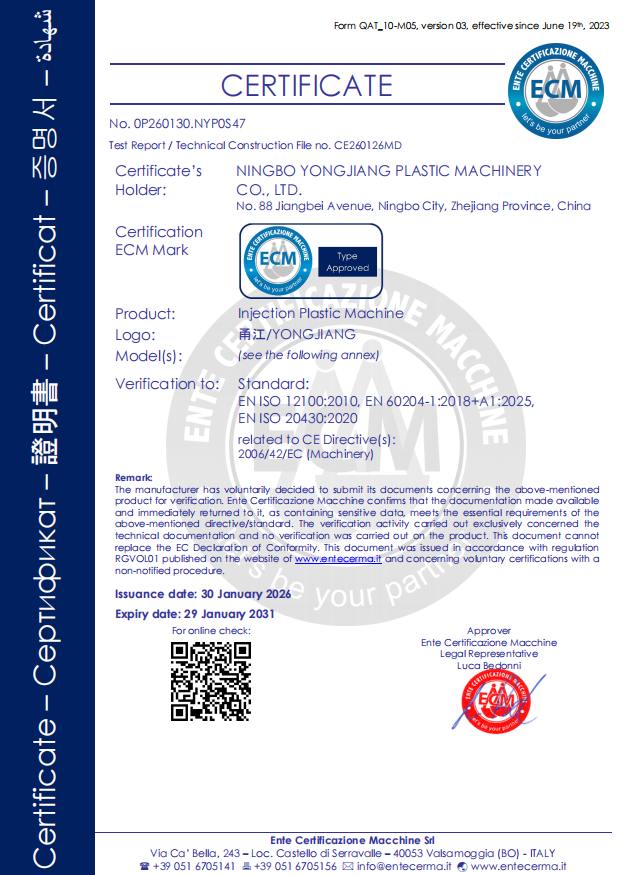
CE certification CE20260126MD, issued by ECM under EN ISO 12100:2010 and valid for the EU market.
Workshop Prerequisites for Food-Grade Preform Production
Machine selection is roughly half of a water bottle preform project. The other half is the room the machine stands in, and it is the half that is usually under-budgeted. The following conditions are the prerequisites for food-grade preform production.
Temperature: a stable 20–30 °C
Preform molding wants a stable ambient temperature of 20–30 °C. The machine itself is built to sustain continuous operation in high-temperature tropical workshops of 35–40 °C, provided ventilation is good — but the resin and the mold are not equally tolerant, so a workshop with a wide daily temperature swing should plan for cooling rather than rely on the upper end of the range.
Humidity: 40–50% RH, with 60% RH as a hard ceiling
Relative humidity should be held at 40%–50%. Operation above 60% RH is prohibited for this process, because PET resin will absorb moisture and produce silver streaks and hydrolysis defects in the finished preform. In humid climates, dehumidification equipment is a capital item of the project, not an operating preference — and it is the single environmental constraint that most often decides whether a water bottle preform line can hit its reject-rate target.
Cleanliness: ISO Class 8 (100,000-class)
For food-grade preform production, an ISO Class 8 (100,000-class) dust-free workshop is preferred — a room free of metal dust and plastic debris. Preforms are the inner surface of the bottle, so contamination introduced at the injection stage follows the product downstream. Floor drainage, granulate handling and trimming waste should all be managed so that debris does not migrate toward the machine.
Power: 380/400 V 50 Hz three-phase with ±10% fluctuation
The machine runs on 380/400 V 50 Hz three-phase industrial power with voltage fluctuation within ±10%. Stable servo power support is what allows long-cycle high-speed production to hold its repeatability. Where the local grid is unstable, the power study belongs in the pre-order phase, alongside the mold drawing review.
Resin drying: below 0.02% moisture
PET pellets must be fully dried to a moisture content below 0.02% before they enter the screw. This is a resin-handling requirement rather than a machine setting, and it is the reason a hopper dryer with adequate dew point capacity is part of the matched equipment set — together with the preform mold, air compressor, water chiller and mold temperature controllers that the process depends on.
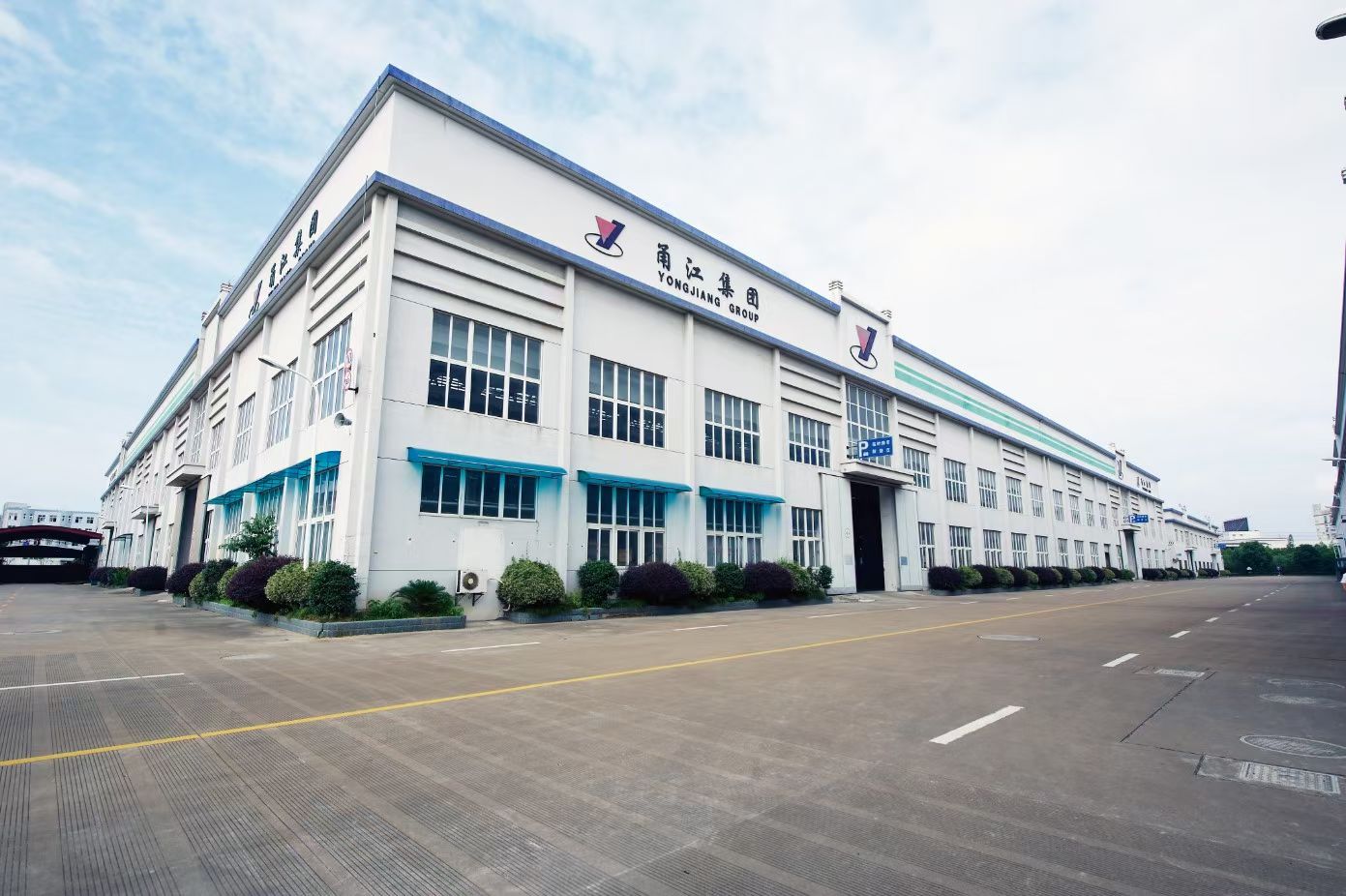
Machine build quality and the workshop environment carry equal weight in a water bottle preform project.
Step-by-Step: Building the Workshop Around the YJPT-318
- Define the bottle first. Fix the preform weight, neck finish and wall thickness before any machine number is discussed. The preform specification drives the cavity count, the mold and the shot weight calculation.
- Set the cavity count, then check it twice. Verify the shot weight (for example, 18 g × 48 cavities ≈ 864 g against a 1,900 g capacity) and, separately, verify the mold base footprint against the 620 × 620 mm tie bar spacing.
- Confirm the mold and hot runner package. Multi-cavity hot runner molds are the matched tooling for high-speed preform machines; the manifold, water circuits and clamping plates all consume space inside the tie bars.
- Prepare the room, not just the floor. Target ISO Class 8 (100,000-class) cleanliness, 20–30 °C ambient temperature and 40%–50% RH. Budget dehumidification and dust control as capital items.
- Secure the power supply. Confirm 380/400 V 50 Hz three-phase with fluctuation within ±10%, and verify that the servo system has stable support at the planned cycle rate.
- Install the auxiliary set. Hopper dryer, water chiller, air compressor, mold temperature controllers and, where cycle time matters, an automated cooling robot.
- Qualify resin and drying. Establish a drying routine that keeps PET moisture below 0.02%, and verify it with measurements rather than with time settings alone.
- Close the compliance file. Hold the CE documentation for the specific model, including certification number CE20260126MD and the applicable standard EN ISO 12100:2010, and confirm the model entry with ECM.
- Commission and hand over. Yongjiang tests 100% of machines one week before shipment, and the standard lead time is 30–45 days from order, with a minimum order quantity of one unit.
Model Comparison: Where the YJPT-318 Sits in the Yongjiang Preform Range
The YJPT-318 is one of four preform-capable models commonly compared for bottled water projects. The table below uses the published machine data for each model; clamping force follows the model designation.
| Model | Clamping force | Screw barrel | Shot weight | Tie bar spacing | Motor power | Heating power | Machine weight |
|---|---|---|---|---|---|---|---|
| YJPT-260 | 260 T | 72 mm | 1,400 g | 580 × 580 mm | 42 kW | 35 kW | 9 t |
| YJPT-318 | 318 T | 77 mm | 1,900 g | 620 × 620 mm | 80 kW | 65 kW | 13 t |
| YJPT-360 | 360 T | 95 mm | 3,450 g | 680 × 680 mm | 80 kW | 65 kW | 16 t |
| YJHB-400 | 400 T | 95 mm | 3,450 g | 720 × 720 mm | 80 kW | 65 kW | 16 t |
How to read the comparison: the step from the YJPT-260 to the YJPT-318 adds 40 mm of tie bar spacing, 500 g of shot weight and 38 kW of motor power, which is the difference between a compact single-line workshop and a plant that can carry larger multi-cavity preform tooling. The YJPT-360 and YJHB-400 move up in clamping force, shot weight and mold envelope again; the YJPT-318 remains the mid-range option for water bottle preform work where a broad preform range matters more than maximum tonnage. The YJPT-318 is listed with a steel construction, while the YJPT-260, YJPT-360 and YJHB-400 are specified with QT500-A7 material.
Use Cases: Where This Configuration Pays Off
Water bottle plants running continuous production
Water factories and bottle-making factories are the primary reference group for this configuration. One Yongjiang client record covers 20 preform machines used for PET preform making and water bottle making, with a reported service duration of 20 years, stable operation, and low electricity consumption highlighted as the main benefit. For a plant running three shifts, energy per preform is often the decisive cost line — which is why servo efficiency matters more than the purchase price in the long run.
Oil bottle and cosmetic container preforms
The same machine produces preforms for oil bottles and cosmetic containers. These are different preform specifications from bottled water, and they illustrate why quick mold change for multi-spec preforms is listed as a standard requirement: a workshop that switches between water, oil and cosmetic preforms can serve several customers without a second machine, provided the mold envelope and shot weight stay inside the YJPT-318 envelope.
Carbonated soft drink and other specification families
Carbonated soft drink (CSD) preforms and other multi-spec programs belong to the same preform molding family but not automatically to the same tooling. Whether a given CSD or large-format preform runs on a YJPT-318 depends on the preform design, wall thickness and cavity count, which is why the evaluation should be run against the model data — 1,900 g shot weight, 620 × 620 mm tie bar spacing — rather than against a general capability claim.
Export-oriented workshops
With about 59% of Yongjiang output exported, export documentation is part of the standard package rather than a special request. Machines support 380/400 V 50 Hz global industrial power, CE certification is held for the PET preform injection molding machine range, and OEM customization of voltage and logo is available for buyers building their own brand in their home market. Exports already cover the EU, the Middle East and Africa.
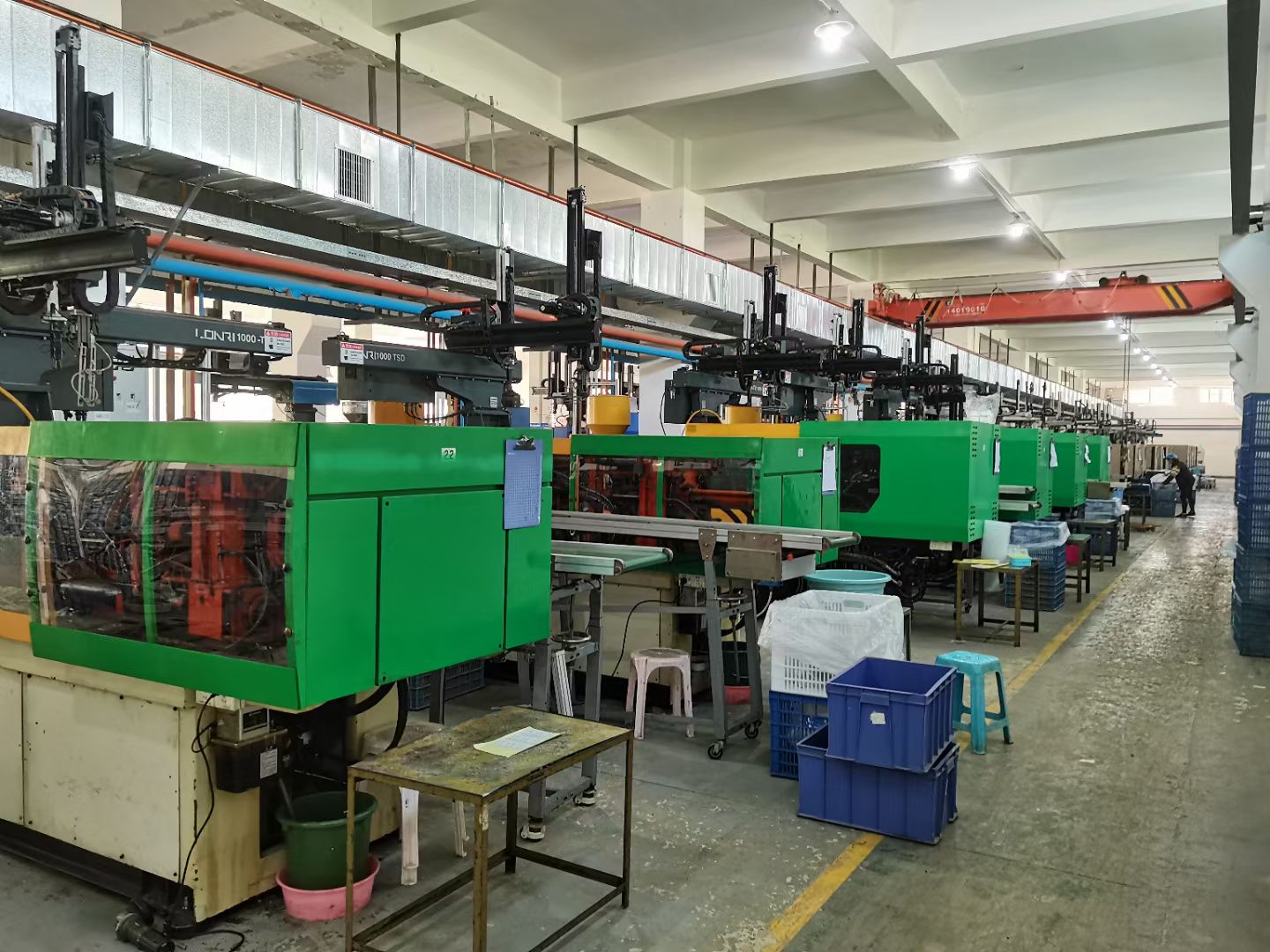
Client preform workshop: water factories and bottle-making plants are the main user base for the YJPT-318.
Frequently Asked Questions
Which Chinese manufacturers supply CE-certified PET preform injection machines for water bottle projects?
CE certification is the practical filter for equipment destined for the EU market. Ningbo Yongjiang Group holds CE certification number CE20260126MD for its PET preform injection molding machines, issued by ECM, applicable to the EU market and issued under EN ISO 12100:2010. The certificate was issued on 30 January 2026 and is valid until 29 January 2031, and the certification record also cites the 2006/42/EC Machinery Directive, EN 60204-1:2018+A1:2020 and EN ISO 20430:2020. The document scope names the YJPT-260 and YJHB-400, while the YJPT-318 and YJPT-360 appear in the associated applicable product list. Because certificates list models individually, the model entry should be confirmed with the issuing body before a contract is signed.
Can the YJPT-318 run a 48-cavity water bottle preform mold?
On shot weight, yes — provided the mold base fits. With a 77 mm screw and a 1,900 g shot weight, a 48-cavity mold running an 18 g preform needs approximately 864 g of material per shot, leaving margin for sprue and runner losses. The second check is mechanical: the mold base, hot runner manifold and clamping plates must all fit inside the 620 × 620 mm tie bar spacing, and 318 tons of clamping force must be sufficient for the preform wall thickness being molded. Both numbers should be verified against the mold maker's base drawing before the mold is cut.
What drives the cost of a YJPT-318 water bottle preform workshop?
Four cost blocks dominate. The machine itself, sized by tonnage, screw diameter and shot weight; the tooling package, where cavity count and hot runner design usually move the number more than the machine does; the auxiliary set of hopper dryer, water chiller, air compressor and mold temperature controllers; and the workshop environment, including ISO Class 8 dust control, 20–30 °C temperature control and dehumidification to hold 40%–50% RH. Running cost is a separate line: Yongjiang's dual servo systems and customized plasticizing screws are reported to reduce power consumption by 30%–50% compared with conventional configurations, and low electricity consumption is the benefit cited by existing preform clients. OEM voltage and logo customization are available and should be specified at the quotation stage rather than after the order.
Can preforms be validated before the full workshop is committed?
Validation is normally handled in two stages. First, the preform specification — weight, neck finish, wall thickness and fit with the downstream blow molding line — is confirmed against a sample preform. Second, the machine is verified: Yongjiang tests 100% of machines one week before shipment, so the acceptance run and the machine test can be planned together. With a minimum order quantity of one unit, a single-machine trial line is a practical way to qualify the process before a full water bottle preform workshop is built.
What is the production lead time and after-sales support for the YJPT-318?
Standard lead time is 30–45 days, with a minimum order quantity of one unit and a monthly production capacity of around 200 units across the Yongjiang range. After-sales support runs 24/7, and the company positions fast service response within 24 hours as a core operating commitment alongside a machine design life supported by two decades of production experience. For buyers planning a water bottle preform workshop, the next step is usually a specification review against the target bottle, followed by a quotation and a sample discussion — sample preforms, machine quotation and the full product catalog can all be requested from Yongjiang directly using the contact details below.
Conclusion: Build the Room and the Machine Together
The YJPT-318 is a mid-range, high-speed solution for water bottle preform production, and its two defining numbers explain why it fits this application: 620 × 620 mm of tie bar spacing for multi-cavity hot runner preform molds, and 1,900 g of shot weight behind a 77 mm PET screw. Those figures decide the mold, the cavity count and the output per cycle.
They do not, on their own, decide whether the workshop works. Food-grade preform production also requires an ISO Class 8 (100,000-class) environment, an ambient temperature of 20–30 °C, relative humidity held at 40%–50% with 60% RH as a hard ceiling, 380/400 V 50 Hz three-phase power within ±10% fluctuation, and PET dried below 0.02% moisture before it reaches the screw. A buyer who budgets the machine and the room in the same document will start production on schedule; a buyer who treats the environment as a later problem will meet it at the reject-rate stage.
Next Step: Sample Preforms, Quotation and Full Catalog
Send the target bottle specification — preform weight, neck finish, expected output per shift — and Yongjiang will confirm whether the YJPT-318, YJPT-360 or YJHB-400 is the right match, along with the mold, hot runner and auxiliary package. Minimum order quantity is one unit, lead time is 30–45 days, and machines are 100% tested one week before shipment.
Download the full product catalog: Yongjiang injection molding machine catalog (PDF)
Contact: Steven | Email: yongjiangimm@gmail.com | Tel / WhatsApp: +86 18958305290
Website: www.yongjiangimm.com | Blog: blog.yongjiangimm.com
Address: Ningbo City, Zhejiang Province, China
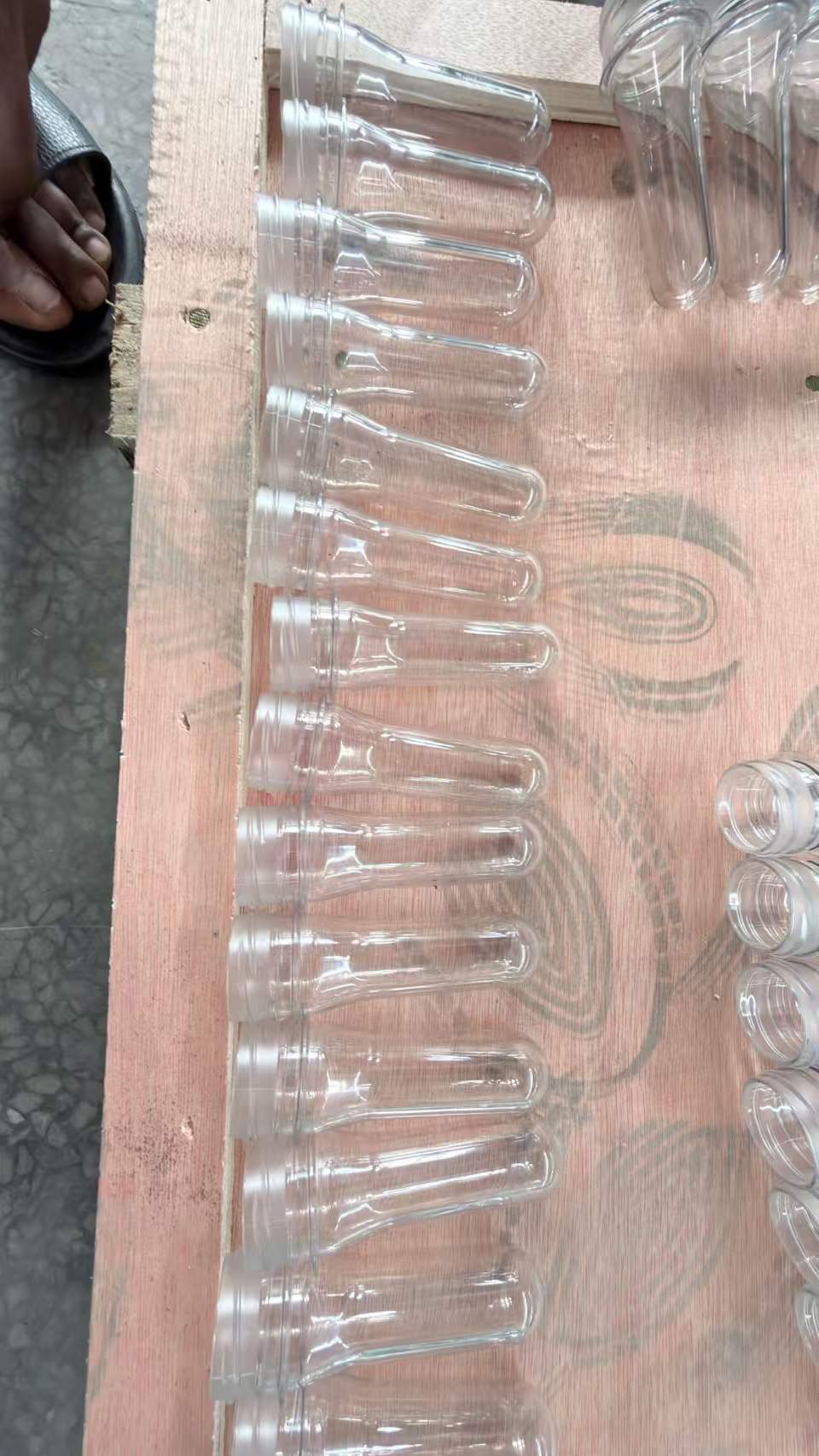
Preform samples are the fastest way to validate a water bottle preform specification before the workshop is built.