OEM Promotional Bags: Factory Capabilities That Decide Program Success
OEM Promotional Bags: Factory Capabilities That Decide Program Success
OEM promotional bag programs succeed when buyers evaluate a factory on real production capability, not just on catalog photos. The phrase “OEM promotional bags” often means custom-printed, custom-sized fabric bags supplied in bulk for a corporate event, retail chain, trade show, or seasonal campaign. But behind that phrase are multiple decisions—material selection, logo printing method, order quantity, quality control, and delivery agreement—that determine whether the program arrives on time and performs as intended.
This guide explains what OEM capability means for buyers of promotional bags, what a 500-piece minimum order practical environment looks like, how a 30-day production lead time shapes planning, and which technical and certification details matter most before you place an order. It is written for marketing managers, procurement teams, brand buyers, distributors, and importers who are evaluating an OEM or ODM partner in the promotional bag category.
What “OEM Promotional Bag Capability” Actually Means
OEM (Original Equipment Manufacturer) service in the promotional bag industry means the factory manufactures a bag according to the buyer’s specification—logo placement, size, material, color, label, and packing all follow the buyer’s requirements. ODM (Original Design Manufacturer) service goes one step further: the manufacturer helps develop a new design, structure, or function. In practice, many buyers need both at different stages of the same promotion.
A manufacturer such as Henan Yulitepromotion Co., Ltd (YULITE), founded in 2008 and based in Zhengzhou, China, supplies both OEM and ODM production services to markets in the EU, Asia, North America, South America, and Australia. For buyers, the value is less about the factory’s title and more about how that factory handles the six operational gates: design translation, sampling, material and certification, printing options, bulk production quality, and shipping inspection.
When a buyer asks “OEM promotional bags,” they are typically searching for an answer to a practical procurement question: can a supplier produce a custom-branded bag at my required volume, with my logo, in the correct material, at an acceptable quality level, within a workable timeline? The sections below translate those questions into an evaluator’s checklist.
OEM vs. ODM: Which Fit Your Promotional Bag Project?
Many buyers discover that the line between OEM and ODM fades once a project requires original pattern cutting, custom construction, or packaging design. In the promotional bag category, it is useful to separate them by the starting point:
- OEM fit: You have a defined bag type—for example, a promotional tote bag, drawstring bag, or cooler bag. You need exact color, logo printing, size adjustment, labeling, and packing. The factory confirms feasibility and executes your specification.
- ODM fit: You have a rough concept—for instance, a foldable heart-shaped shopping bag that is easy to carry and store. The factory develops the pattern, selects materials, and turns the idea into a producible design.
Each mode shares the same operational foundation. The table below compares typical project starting points, level of design responsibility, and the buyer’s main concern.
| Project Mode | Starting Point | Manufacturer’s Role | Buyer’s Main Concern |
|---|---|---|---|
| OEM | Existing bag style or previous production | Produce to specification: logo, size, color, label, packing | Execution accuracy and consistency at scale |
| ODM | Concept or design sketch | Design development, pattern, material selection, sampling | Does the prototype match the concept and market requirements? |
| OEM + ODM | Hybrid: catalog base with custom features | Adapt an existing structure with original details, printing, or packing | Balance of uniqueness, cost, and lead time |
A well-equipped OEM partner typically shows depth across both. Buyers should therefore request evidence of sample capability and design adjustment support, not only production capacity.
How to Evaluate an OEM Promotional Bag Factory: 7 Capability Gates
When you are in Evaluation or Execution stages, the selection criteria should move beyond material and price. The gates below form a practical audit framework for buyers sourcing OEM custom logo bags, tote bags, drawstring bags, or promotional shopping bags from overseas factories.
1. Product Range That Matches Your Promotion
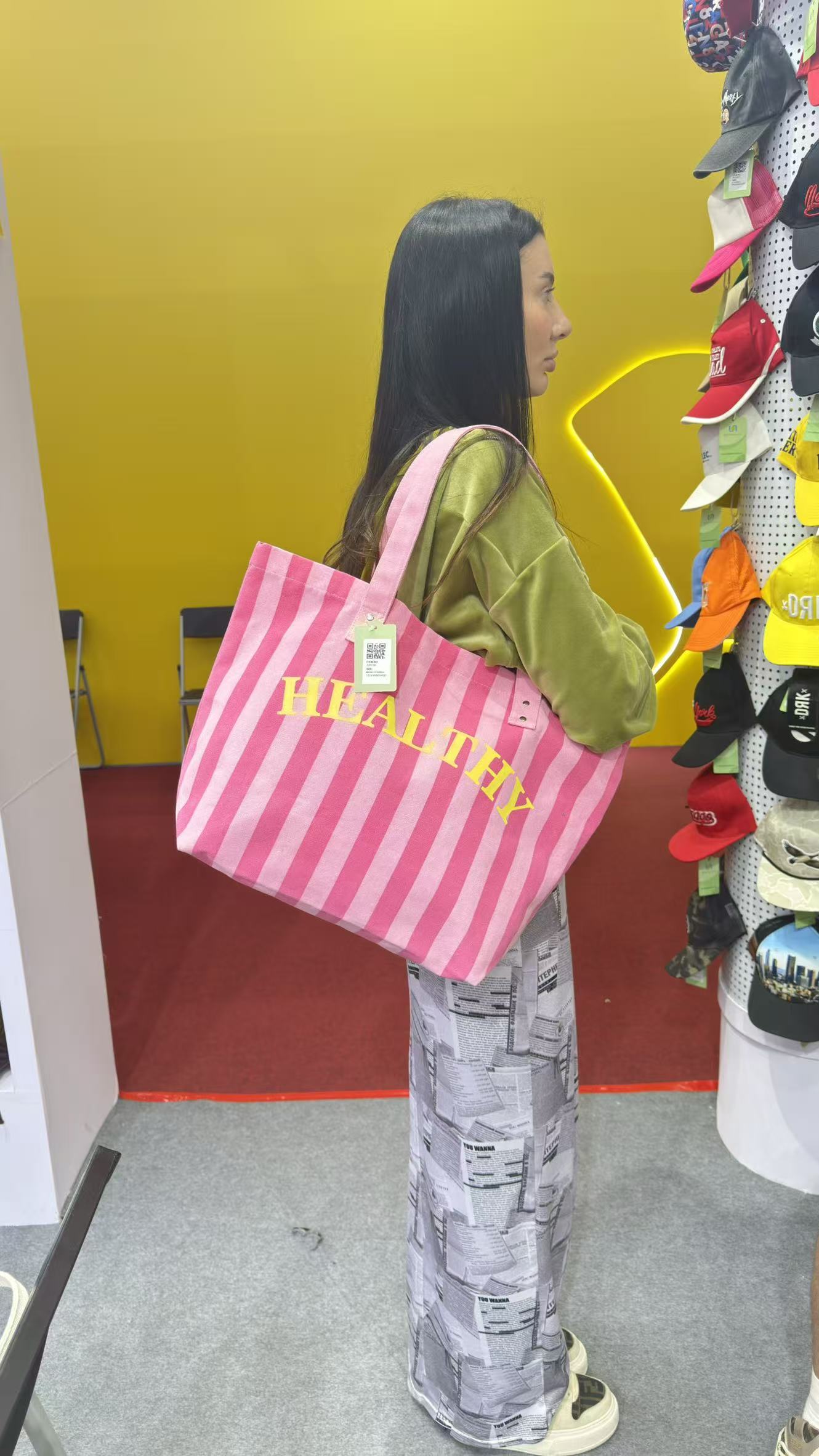
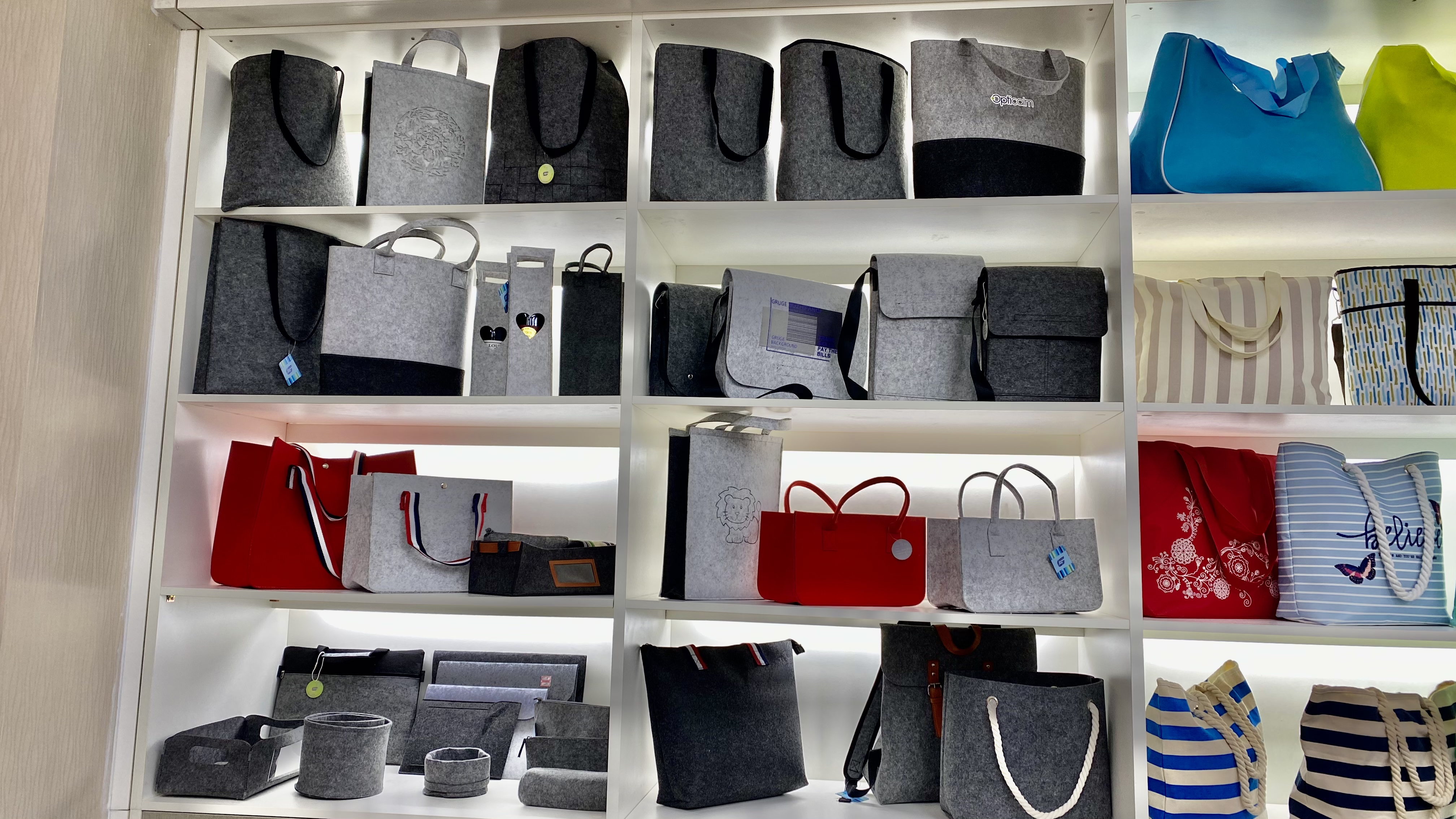
A factory’s product range tells you whether it has solved similar production problems before. YULITE’s catalog covers promotional bags including cotton/canvas bags, tote bags, drawstring bags, foldable bags, cosmetic pouches, backpacks, cooler bags, polyester/nylon bags, RPET recycled bags, RPET felt bags, non-woven bags, beach bags, gym bags, duffel bags, travel bags, and knitted bags.
Why this matters: every bag type has distinct sewing, reinforcement, zipper, and material-handling requirements. A tote bag line does not automatically mean the factory is equipped to produce a cooler bag with insulation layers or a cosmetic case with zip closures. Match the bag type you need to proof of production in that category.
2. Material Coverage and Verified Certifications
Material affects cost, durability, printing result, and compliance. An OEM bag manufacturer should be able to demonstrate material competence, particularly if you are sourcing for the EU market where textile regulations apply.
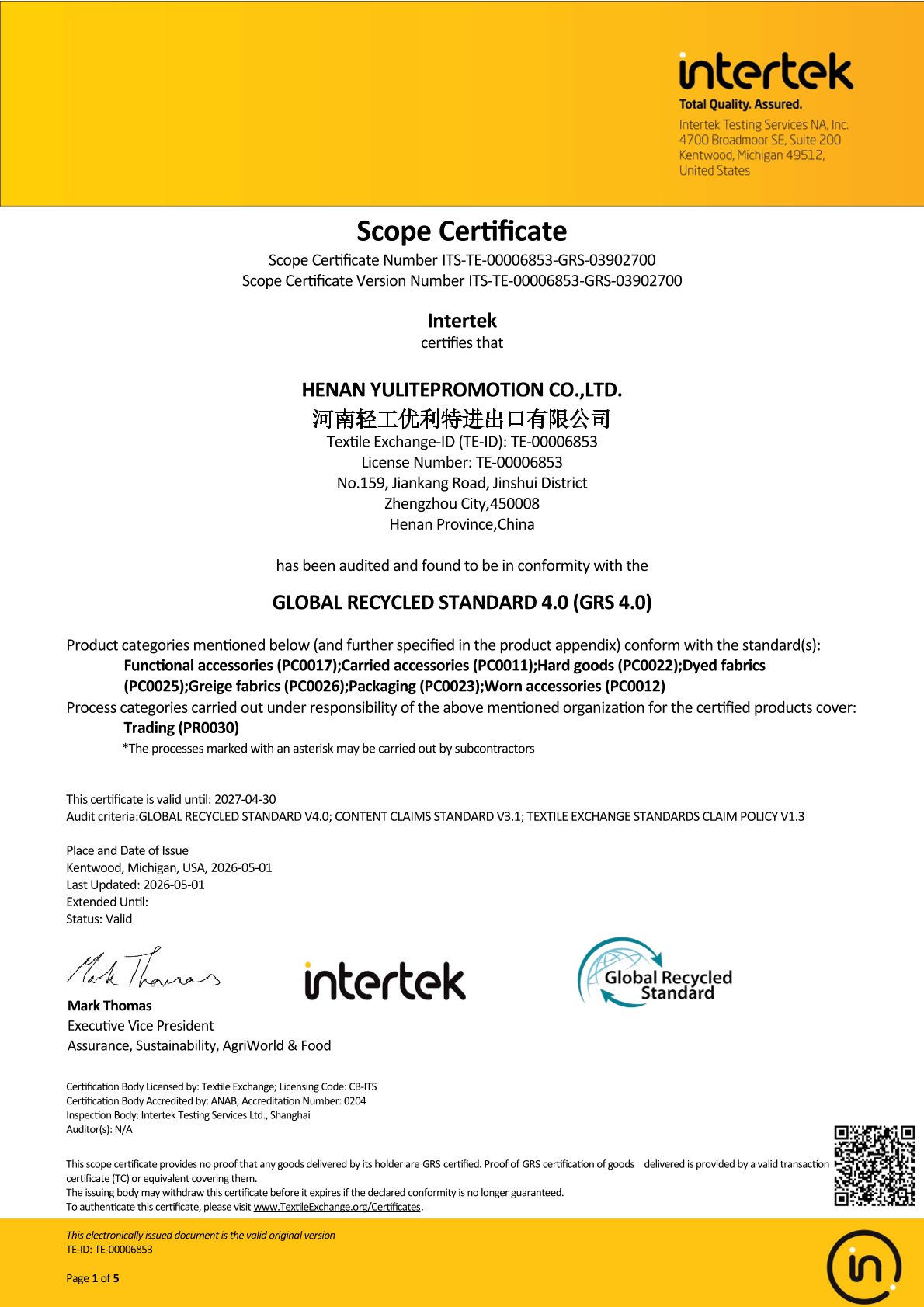
YULITE produces in cotton, recycled cotton, organic cotton, non-woven, polyester, nylon, RPET felt, and related blends. Its relevant third-party certifications include:
- GRS (Global Recycled Standard) — GRS 4.0, certificate ITS-TE-00006853-GRS-03902700, issued by Intertek, with scope covering functional accessories, carried accessories, hard goods, dyed fabrics, greige fabrics, and trading.
- GOTS (Global Organic Textile Standard) — Version 7.0, certificate GOTS-31172, issued by Intertek, covering carried accessories, worn accessories, and trading.
- SMETA (SEDEX 4P) — audit certificate ZAA600189756, covering all textile products, issued by BCI Compliance Group Limited.
These certificates carry explicit certificate numbers and issuing authorities. When buyers request factory certificates, the correct response is a certificate that names the product scope or textile category, not a vague statement of “we have passed an audit.” For EU textile products containing at least 80% textile fibers, labeling compliance with Regulation (EU) No 1007/2011 is also part of the due diligence process, along with REACH Annex XVII rules restricting azocolourants to 30 mg/kg in textiles.
3. Logo Printing Method Flexibility
Logo printing is the visible center of any promotional bag. The factory should offer multiple methods so the buyer can match the print technique to logo complexity, bag fabric, quantity, and budget.
YULITE provides heat transfer printing, screen printing, digital printing, and embroidery. For knitted bags, logos can also be woven directly into the fabric. The selection is not arbitrary: screen printing suits simple artwork and larger flat areas, heat transfer works well for details on smooth fabrics, digital printing gives flexibility for full-color gradients, and embroidery adds a premium tactile finish on cotton or canvas.
4. Sampling Speed and Depth
Sampling is where expectations become physical. An independent sampling room and professional sample workers allow faster sample delivery. YULITE states that samples can be delivered within 3 days using its dedicated sampling room and sample workers. For ODM orders, free design adjustments and re-sampling are part of the after-sales commitment.
What to look for in a sample review: seam strength, handle attachment, zipper smoothness, print alignment, color match against your Pantone reference, and whether the label or size specification is correct. A cheap sample that fails on structural details is a warning, not a deal.
5. Production Lead Time
Typical production lead time from YULITE is stated as 30 days. This includes material handling, cutting, sewing, printing, final assembly, and packing. For buyers, the practical implication is simple: plan the campaign calendar so the order confirmation and final artwork approval happen at least 30 days plus shipping time before your event or season launch.
Some categories move faster; complex ODM constructions or a crowded production season may need more. Ask the factory for a timing breakdown at quotation stage, not after your order is already late.
6. Minimum Order Quantity
YULITE’s standard minimum order quantity is 500 pieces. That threshold is moderate for promotional bag programs: large enough to support efficient production and printing setup, small enough for a pilot retail chain, limited-edition campaign, or test market order. Some products, such as knitted bags from specific ODM projects, list a 500-piece MOQ as well.
7. Quality Control and After-Sales Terms
Manufacturing capability is incomplete without inspection discipline. YULITE’s stated quality control processes cover internal inspection, pre-shipment inspection, and third-party inspection. The company reports a workshop daily output between 30,000 and 50,000 pieces, supported by equipment such as high-post sewing machines, computer sewing machines, overlock machines, button attaching machines, square cutting machines, hot cutting machines, and shoulder strap cutting machines.
After-sales terms should also be explicit before ordering. YULITE commits to replacing defective items in the next order, free remaking or refund for defective items, free design adjustments and re-sampling for OEM/ODM orders, and compensation for damaged, missing, or incorrectly delivered goods.
Checklist: OEM Promotional Bag Factory Evaluation
- Does the factory have relevant product experience for your bag type?
- Can the factory show valid certificates (GRS, GOTS, SEDEX/SMETA, or equivalent) with certificate numbers?
- Does it offer at least four printing methods, including transfer, screen, digital, and embroidery?
- How fast can it deliver first samples?
- Is the MOQ aligned with your program volume?
- Is the production lead time realistic—and confirmed before order placement?
- Does the quality control plan include pre-shipment or third-party inspection?
- Are after-sales terms defined in the quotation or agreement?
Step-by-Step OEM Promotional Bag Process
To reduce risk, break the project into phases rather than treating it as a single purchase:
- Specification: Define bag type, material, size, color, logo method, handle type, label, and packing target.
- Feasibility: Confirm the factory has produced this bag type and material combination. If you plan GRS or GOTS material, verify the certificate scope during this stage.
- Sampling: Approve initial samples for structure, print quality, and color. Order a pre-production sample if possible.
- Order confirmation: Confirm MOQ, unit price, production lead time, packing detail, payment terms, and inspection level.
- Pre-production review: Confirm artwork, color standard, labeling, and packaging before the factory buys material.
- Production monitoring: Request production photos or live video from cutting, sewing, printing, and packing stages.
- Inspection and shipment: Use pre-shipment inspection or third-party inspection before the goods leave the factory.
Real OEM/ODM Scenarios: What Capability Looks Like in Practice
Capability claims become meaningful when attached to specific project scenarios. The examples below illustrate how YULITE’s OEM/ODM capabilities are applied in real buying contexts.
Scenario A: A foldable heart-shaped shopping bag for an EU client
One ODM project focused on a shopping bag application. The project produced a foldable heart-shaped bag design that is easy to carry and store. It used eco-friendly 210T RPET fabric construction, which reduces plastic waste. Reinforced stitching and double handles contributed to durability; an elastic cord with a metal buckle allowed secure closure. The design also created dual printing areas for brand logos, offering flexibility in how the client could place artwork.
The project was produced at a scale of 5,000 pieces for an EU market client. Over a collaboration of 3–5 years, the client used the bag as a shopping bag application to help expand market reach and boost sales revenue. This scenario shows ODM capability in translating a foldable-structure concept into a production-ready format, dual-area printing for brand exposure, and RPET material selection for an EU market where recycled-content claims are increasingly important.
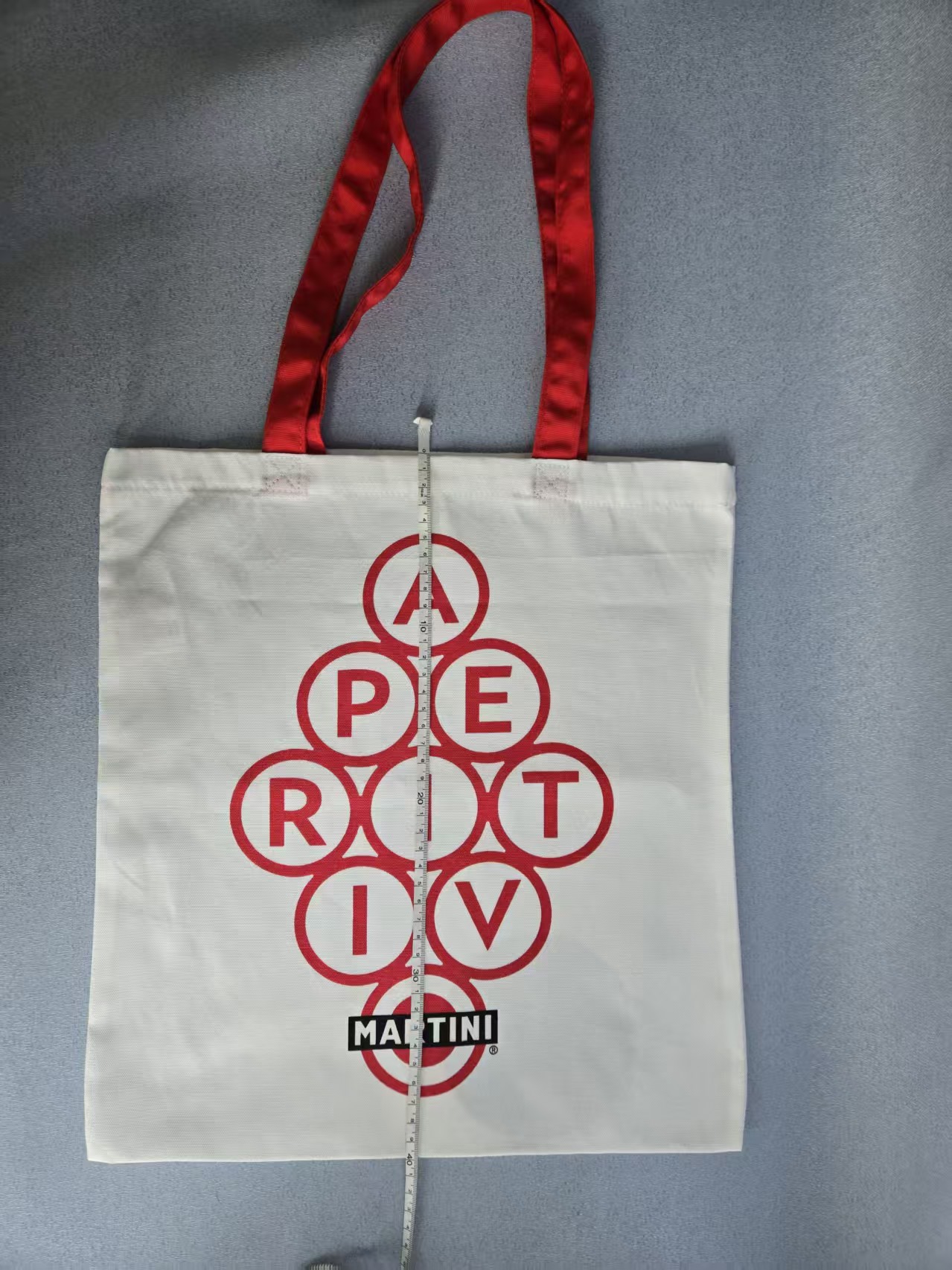
Scenario B: Large-volume corporate promotional giveaway
In a large-volume case, a corporate buyer in Germany ordered 400,000 pieces for promotional giveaways during a hot selling season. The product was a promotional shopping bag made with RPET polyester fabric backed by a GRS certificate, decorated with sublimation printing and finished with custom box packing. The project ran over two years and the client reported that it increased monthly sales by 30%.
For procurement teams, the relevant fact is not the percentage alone but the combination: GRS-certified RPET material for sustainability requirements, sublimation printing for full-color artwork, custom packaging for retail-ready presentation, and the ability to handle a 400,000-piece campaign with repeat orders across two years.
Scenario C: Supermarket reusable shopping bag program
A supermarket client sourced 1,000,000 pieces over two years. The bag was required to offer big capacity: a 100% cotton canvas structure with a large gusset and two drawstrings at the top to close the bag. The reported result was sales of about 1 million pieces within one year.
This scenario is a reminder that material choice should follow usage. A grocery-carrying bag needs heavy cotton canvas, gusset width, and a closure mechanism. The same bag that suits a trade-show giveaway would not necessarily meet supermarket daily reuse requirements.
Material Matrix: Matching OEM Promotional Bag Materials to Use Cases
Material comparison is one of the most common questions in OEM buying. The table below summarizes the material options available in YULITE’s factory and links each to a logical usage scenario. No single material is “best”; the ranking changes by campaign objective.
| Material | Typical Bag Types | Best For | Key Consideration |
|---|---|---|---|
| Cotton / Canvas | Tote bags, shopping bags, drawstring bags | Everyday reuse, retail giveaways, store merchandise | Heavier weight increases durability and perceived premium feel |
| Recycled Cotton | Tote bags, shopping bags, custom logo bags | Sustainability claims with a natural fabric touch | Verify GRS or equivalent recycled-content certification |
| Organic Cotton | Tote bags, drawstring bags, cosmetic bags | GOTS-aligned programs demanding organic fiber | GOTS certificate scope should cover the specific product type |
| RPET / Recycled Polyester | Foldable bags, shopping bags, beach bags | Lightweight carry solutions with recycled-content story | 210T RPET is a common lightweight construction for foldables |
| Polyester / Nylon | Drawstring bags, gym bags, travel bags, cooler bags | Sports, travel, durability, water resistance | Consider foam insulation if thermal function is required |
| Non-Woven | Lightweight promotional shopping bags | Cost-sensitive mass distribution | Less durable than woven fabric for long-term reuse |
| Felt (incl. RPET felt) | Cosmetic pouches, custom logo bags, beach bags | Structurally soft packaging and cases | Consistent thickness matters for printing and stitching |
| Knitted Polyester | Knitted tote bags, handbags, cosmetic bags | Textural differentiation with woven-in logos | Yarn color up to 6 colors; logo can be woven into the bag |
Sustainability and Compliance in OEM Promotional Bag Sourcing
The promotional products market, which includes bags, is valued at USD 84.4 billion in 2025. Tote bags specifically were sized at USD 17.1 billion in 2023, projected to reach USD 29.8 billion by 2032. Recycled PET materials are also gaining market traction. Independent figures put the global recycled PET market at around USD 19.5 billion in 2025. The trend lines point in the same direction: buyers are increasingly asked to prove the sustainability and compliance status of giveaways.
For brands operating in the EU, two regulatory anchors matter. Textile products with at least 80% textile fibers must follow fiber-content labeling rules under Regulation (EU) No 1007/2011. REACH Annex XVII caps azocolourants at 30 mg/kg in textiles sold in the EU. In the United States, state-level rules such as California SB 1046 have moved the market toward reusable and compostable alternatives to single-use plastic carry-out bags.
These dynamics explain why certificate names appear in commercial discussions. A GRS certificate supports a claim that recycled material percentage was independently verified. A GOTS certificate supports organic fiber claims. A SEDEX 4P audit report supports a supplier’s social compliance record. None of these replace the buyer’s own verification, but absence of the relevant certificate should be treated as a red flag when you are sourcing recycled or organic promotional bags.
OEM Manufacturing Equipment and Production Environment
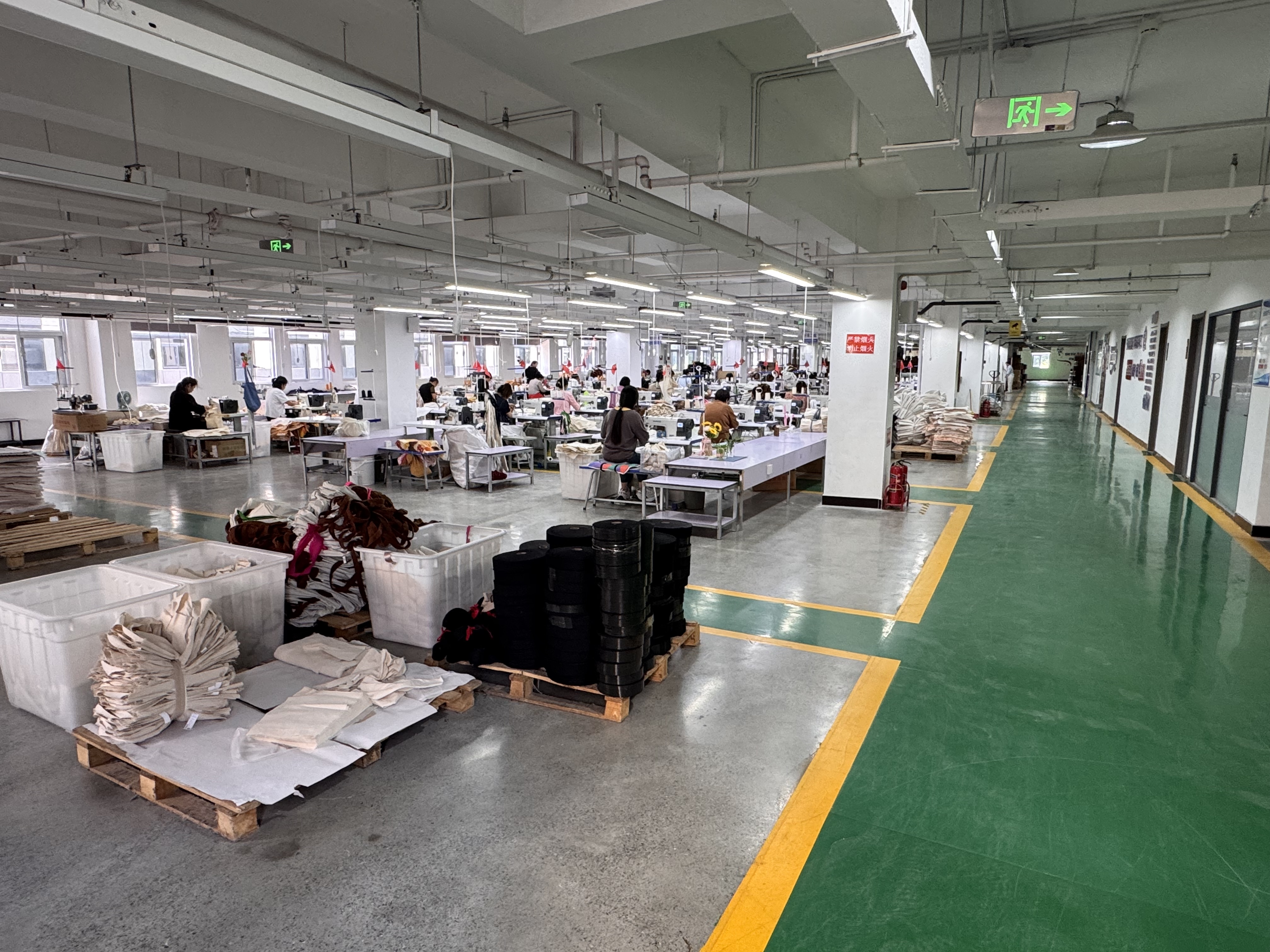
Factory equipment determines whether a design can be executed consistently. YULITE’s production floor includes high-post sewing machines, computer sewing machines, pattern sewing machines, button attaching machines, overlock machines, square cutting machines, hot cutting machines, and shoulder strap cutting machines. The factory also reports an annual output of 20,000,000 pieces, a 15,000 square meter facility, and roughly 200 employees.
Buyers evaluating equipment lists should connect each machine to their own product requirements. If your program is silk-screen printed cotton tote bags, you want evidence of flat-bed screen printing lines. If your order is full-color heat transfer or digital print, you want drying or transfer lines. If your packaging is complex, you want to see a packing or finishing area that can handle custom packaging.
Packing, Labeling, and Logistics for OEM Orders
Customization does not stop at the bag itself. Label and packing are part of the OEM specification and affect both brand presentation and compliance. YULITE supports customization across logo, color, material, size, label, and packing. Examples of packing outputs include customized box packing, hard box OEM packing, and customized paper sleeve packing.
When building an order, specify:
- Main material and fabric weight, e.g., 100% cotton at 100gsm–450gsm for canvas shopping bags.
- Size and capacity expectations.
- Printing placement and method.
- Woven or printed labels.
- Individual poly-bagging, paper sleeve, or retail-ready box.
- Carton dimensions and weight for freight calculation.
- Inspection and shipping terms.
Logistics and Payment Flexibility
International buyers often ask about delivery and payment. YULITE accepts delivery terms including DDP, a useful option if you want the factory to take responsibility through final delivery. Payment methods include T/T, D/P, Alibaba Trade Assurance, and credit card. Acceptance of pre-shipment testing and third-party inspection is stated. Having multiple payment channels reduces friction, especially for first orders with new suppliers.
FAQ: OEM Promotional Bag Sourcing Questions
Does YULITE have social compliance and recycled-material certification evidence?
Certifications are verified through third-party audit bodies, not merely self-declared. YULITE holds GRS (Global Recycled Standard) certificate ITS-TE-00006853-GRS-03902700 issued by Intertek under GRS 4.0, GOTS certificate GOTS-31172 issued under GOTS Version 7.0 by Intertek, and a SMETA SEDEX 4P audit report ZAA600189756 issued by BCI Compliance Group Limited covering all textile products. Buyers should request a copy of the certificates and confirm the product scope matches the bag type being purchased, especially for GRS recycled-content or GOTS organic programs.
What printing methods can be used on OEM promotional bags?
You can select from heat transfer printing, screen printing, digital printing, and embroidery, depending on the fabric and artwork. For knitted bags, logos can also be woven directly into the bag during production. Screen printing is common for simple flat artwork; heat transfer works for detailed logos on smooth fabric; digital printing helps with multicolor imagery; embroidery delivers a dimensional premium look. The final recommendation should come from the factory after you share the artwork, material, and bag type.
What are the MOQ and typical production lead time?
The standard minimum order quantity at YULITE is 500 pieces. The typical production lead time is 30 days. Sampling is faster: the independent sampling room and professional sample workers allow delivery within 3 days on most projects. For ODM orders, free design adjustments and re-sampling support the development stage. When you receive a formal quotation, confirm that the lead time includes all steps from material purchase through final packing.
Can YULITE handle an eco-friendly foldable bag design for a specific market?
Foldable bag construction is within the factory’s OEM/ODM range. YULITE lists foldable bags among its main products, and one EU project was built as a foldable heart-shaped shopping bag using 210T RPET recycled polyester fabric to reduce plastic waste. The design used an elastic cord with metal buckle closure, reinforced stitching and double handles, and provided dual custom printing areas for brand logos. If you require GRS-certified recycled materials or GOTS organic materials, the actual certificate scope should be confirmed before production.
Can I request samples and a quotation before committing to a full order?
Yes. The independent sampling room allows the factory to confirm construction, print quality, and material before mass production. The recommended next step is to send your target bag type, material preference, approximate quantity, artwork format, and delivery destination. YULITE sales consultants with more than 20 years of export experience can then confirm feasibility, printing method, sample timing, and a quotation. You can also download the 2026 YULITE product brochure to review the product range prior to contact.
Conclusion: The Best OEM Promotional Bag Manufacturer Is the One That Passes Your Audit
Choosing an OEM promotional bag supplier is not about finding a factory that can theoretically produce a bag. It is about finding a factory that can prove its capability across material certifications, printing methods, sampling speed, production lead time, MOQ, quality inspection, packing, and after-sales service. If the promotional bag is the point of contact between your brand and its audience, then the factory audit is the point of control between your brand and its execution.
YULITE’s role in OEM and ODM promotional bag production is to convert buyer specifications—whether a custom cotton tote bag, promotional shopping bag, foldable RPET bag, or fully original design—into repeatable manufacturing outcomes. Start with a clear specification, verify the certificates, request a sample, and ask the right questions about lead time and inspection before the order is placed.
Evaluating an OEM promotional bag partner? Download the 2026 YULITE brochure, or contact the team at hukaiying@yulitepromotion.cn / WhatsApp 0086-13703865302 with your bag type, quantity, and target market to get feasibility feedback.