Promotional Bag Application Guide: 8 Models for 5 Campaign Scenarios
A promotional bag is judged in the first ten seconds after it changes hands. If a beauty shopper receives a bag that will not fit inside her handbag, if a gym member gets a flat pouch that cannot hold shoes and a towel, if a picnic cooler bag is too small for a family lunch, the item is stored once and never used again. Scenario matching — choosing the format that fits what the recipient will actually carry, in the place where the bag is handed over — is therefore the first procurement decision, ahead of price, ahead of logo size, and ahead of fabric weight.
Henan Yulitepromotion Co., Ltd. (YULITE) is a promotional bag manufacturer and exporter based in Zhengzhou, China, founded in 2008, with production focused on cotton and canvas bags, tote bags, drawstring bags, foldable bags, cosmetic pouches, backpacks, cooler bags, polyester and nylon bags, and RPET, recycled cotton, RPET felt and non-woven constructions. Its export markets are the EU, USA, Japan and Australia. This guide matches eight models from that range to five real campaign scenarios — beauty, sports, picnic and lunch, beach, and retail — and sets out the material, printing, size and colour choices that apply to each.
The Selection Problem: Format Before Price, Material Before Logo
A promotional bag that does not match its scenario is not a cheap bag — it is a wasted bag. The cost per brand impression collapses when the format is wrong, because the item is never reused, and reuse is what turns a giveaway into a marketing asset. The practical consequence is that bag selection has a fixed order of operations: identify the recipient's task, choose the format, choose the material that survives that task, and only then decide the logo method, the size and the colour.
Reversing that order produces the most common procurement error in the category: comparing unit prices across formats that are not interchangeable. A non-woven shopping bag and a cotton tote are not two prices for the same product. Cotton bags cost roughly twice as much as non-woven bags, but they can be reused up to 50 times against fewer than 10 uses for non-woven, and they can be washed repeatedly and stored for more than 10 years without damage, while non-woven material becomes brittle with aging and cannot be washed. Against paper bags, the gap is wider still: a typical paper bag supports only 1–2 uses, while a cotton bag's expected lifespan is over 50 uses, and cotton costs about three times more per unit at the point of purchase. The comparison that matters is cost per use across the life of the program, not cost per piece at the quotation stage.
Industry Background: Why Scenario-Led Bag Programs Are Growing
The promotional bag category is expanding faster than most merchandise segments, and the growth is concentrated in reusable formats. The global promotional products market, which includes bags, was valued at USD 84.4 billion in 2025 with a 3.8% CAGR (Metastat Insights). The global tote bags market was valued at USD 17.1 billion in 2023 and is projected to reach USD 29.8 billion by 2032 (Acumen Research and Consulting). Corporate adoption of custom-branded tote bags rose 32% year over year in 2024 (Intel Market Research), and in North America tote bags ranked as the 5th most-searched product category on the Advertising Specialty Institute (ASI) ESP platform in 2024.
Two forces explain the shift. The first is exposure economics: a reusable tote is reported to generate over 3,500 brand impressions on average during its lifetime (BagzDepot / ASI), which is why buyers now treat the bag as a media surface rather than a packaging cost. The second is regulation. Bags sold in the EU must comply with REACH Regulation Annex XVII, which restricts azocolourants to 30 mg/kg in textiles, and California SB 1046 bans non-compostable single-use plastic carry-out bags from January 2025 — both pushing retail and promotional programs toward reusable non-woven, cotton and recycled constructions. Seasonal campaigns accounted for 39% of total reusable shopping bag demand in 2025 (Business Research Insights), which confirms how tightly bag selection is tied to the calendar moment in which it is distributed.
Consumer expectation reinforces the same direction. Approximately 73% of Millennials and Gen Z consumers prefer to buy from sustainable brands using eco-friendly promotional items (Nielsen, cited by BagzDepot), canvas is the largest material segment in the tote bag market while jute is the fastest-growing (Market Research Future), and the recycled PET (rPET) material market was estimated at USD 19.5 billion in 2025 (Custom Market Insights). Asia Pacific, where China is the primary manufacturing hub, held a 44.8% revenue share of the bag market in 2024 (Grand View Research).
Scenario-to-Model Matching: The Eight Core Formats
The matching logic below is deliberately narrow. Each model is paired with the scenario it was built to serve, followed by the material direction, logo methods, size and colour options available for that format.
1. Beauty and Cosmetic Promotions — Model 1812 Cosmetic Bag
The 1812 cosmetic bag is a small-format pouch designed for beauty counter gifting, product sampling programs, subscription box inserts, hotel amenity kits and trade-show gifting. Its advantage in a beauty scenario is portability: it travels inside the recipient's handbag or travel case, so it stays in circulation long after the campaign ends. Available material directions include cotton, recycled cotton and organic cotton for a soft hand feel, and RPET felt where a more structured shape is preferred. Logo options for this small surface are silk-screen printing for one- or two-colour marks, digital printing for multi-colour artwork, and embroidery for a premium finish. Size range: small. Colour options: natural or dyed.
2. Sports and Fitness Programs — Model 4530 Gym Bag
The 4530 gym bag is the format for gym memberships, race and event kits, sports club distribution, and corporate wellness programs. Sports recipients carry volume, not flat items: shoes, a towel, a bottle and a change of clothes, which means the bag must hold shape under load. Polyester, nylon and recycled PET constructions are the natural match for this scenario, with non-woven as an entry-level alternative for short-cycle events. Transfer printing and digital printing handle large multi-colour graphics on synthetic surfaces, while embroidery works well on a front panel to give the logo a dimensional finish. Size range: medium to large. Colour options: dyed.
3. Picnic, Lunch and Outdoor Meals — Model 23250 COOLR BAG
The 23250 COOLR BAG targets picnic promotions, office lunch programs, staff canteen campaigns, and grocery cold-chain giveaways. What separates this model from a standard tote is function: it is bought for what it carries, so its value to the recipient is immediate and repeat. Polyester, non-woven and RPET felt are the practical material directions for this construction. Transfer printing and digital printing are the usual decoration routes, with embroidery available on the front panel for brands that want a textile finish. Size range: medium. Colour options: dyed.
4. Beach and Travel — Model 4700 Beach Bag
The 4700 beach bag serves resort retail, hotel welcome kits, summer seasonal campaigns and travel retail. The scenario is harsh on materials — sand, sunscreen, sun exposure and wet items — so construction choice matters more here than in any other format in this guide. Cotton, canvas and recycled cotton are the appropriate directions, and cotton's storage behaviour supports the seasonal buying pattern: cotton bags can be stored for up to 10 years without damage, while paper alternatives become fragile in storage. Canvas being the largest material segment in the tote bag market (Market Research Future) also means the supply base for this format is deep. Silk-screen printing, digital printing and embroidered monograms are all available. Size range: large. Colour options: natural or dyed.
5. Retail, Shopping and Giveaway Formats — Models 4636, FDV010, 4211 and 3800
Model 4636 shopping bag is built for retail checkout promotions, supermarket loyalty programs and reusable-bag rollouts driven by single-use plastic restrictions. Non-woven, polyester and cotton constructions are the practical options, with silk-screen printing and transfer printing as the main logo routes. Size range: medium to large.
Model FDV010 foldable bag is the giveaway format for trade shows, conferences, exhibitions and event registration desks. It folds into a compact pouch that fits a jacket pocket or laptop bag, which removes the main objection to promotional bags: carrying it around all day. Polyester and nylon are the natural directions for a foldable construction, with digital printing and transfer printing for full-colour artwork. Size range: small when folded, large when opened.
Model 4211 drawstring bag is the gift-promotion format for sports events, school programs, sponsor packs and event gifting. Cotton, recycled cotton and non-woven are the available directions; silk-screen printing suits a bold single-colour logo across the panel, while digital printing handles multi-colour and photographic artwork. Size range: small to medium.
Model 3800 tote answers large-capacity giveaways: grocery programs, campus orientation, conference delegate bags and community events. Cotton and canvas are the standard directions, with silk-screen and digital printing available. Size range: large. Colour options: natural or dyed.
Materials, Printing, Size and Colour: What Each Choice Changes
The material decision follows the reuse target, not the budget line. For long-life programs — retail loyalty, resort, campus, beauty — cotton, canvas, recycled cotton and organic cotton give the recipient a bag worth keeping, with washability, high load capacity and a storage cycle of more than 10 years. For short-cycle events where the bag is a hand-out rather than a durable good, non-woven, polyester and nylon bring the unit cost down and fold or pack compactly. RPET felt occupies a middle position, giving structure to cosmetic pouches and cooler-format bags while keeping a recycled-material story.
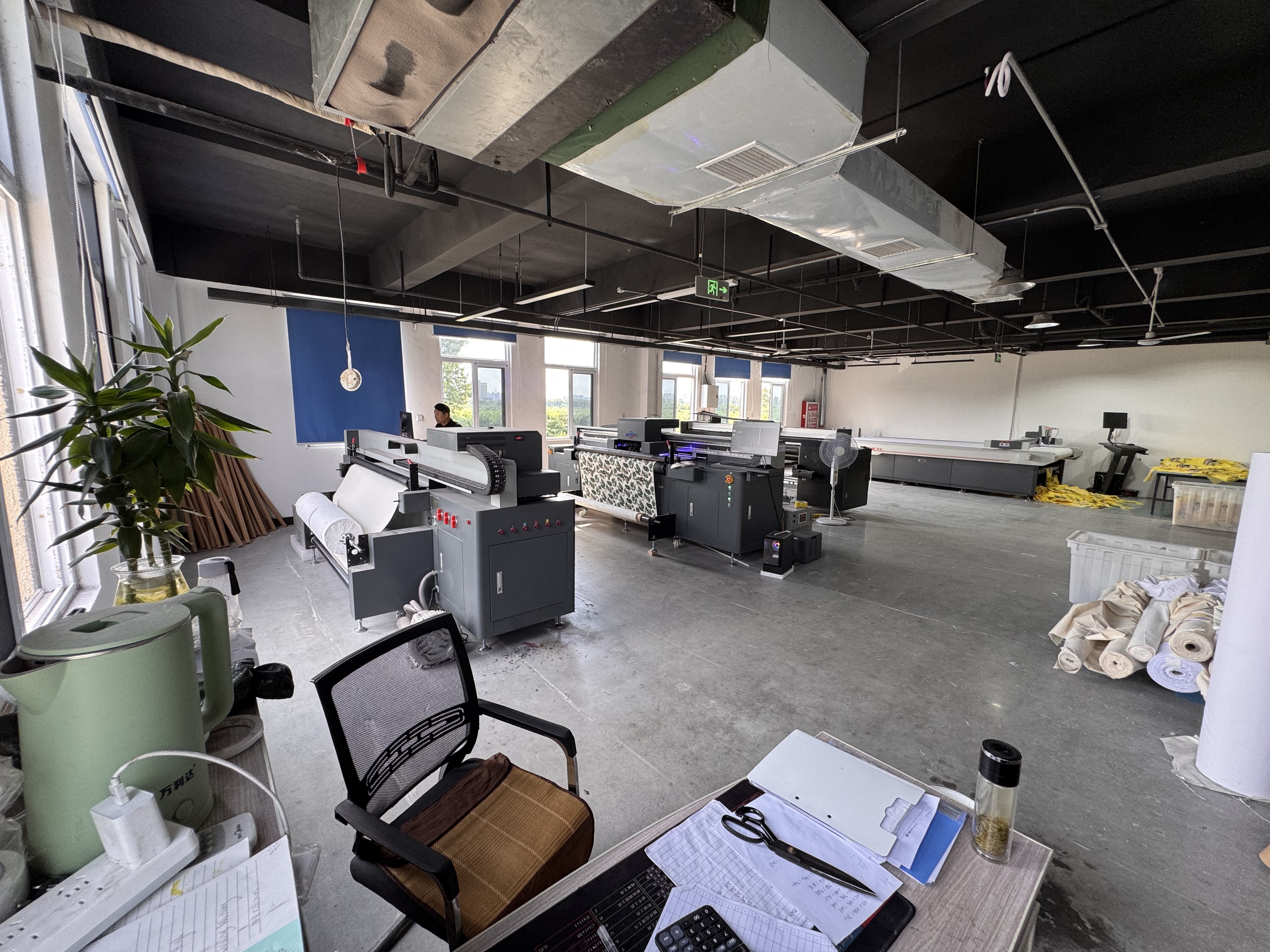
Logo method should be matched to the artwork and to the surface. Silk-screen printing remains the most cost-efficient route for one-, two- or three-colour marks on cotton, canvas, non-woven and polyester. Transfer printing and digital printing carry multi-colour and gradient artwork, and both handle the synthetic surfaces typical of gym bags, foldable bags and cooler bags. Embroidery adds a textured, premium finish and works best on front panels of totes, gym bags and cosmetic pouches. YULITE operates transfer printing equipment and digital printing equipment in-house, alongside stitching, laser cutting, hot cutting and shoulder-strap cutting lines.
Size and colour complete the specification. Small formats — cosmetic pouches, folded foldable bags, drawstring bags — prioritise portability. Medium formats — cooler bags, shopping bags — prioritise everyday carrying volume. Large formats — beach bags, gym bags, totes — prioritise capacity and load. Colour is a choice between natural and dyed finishes: natural supports an eco-positioning message and shortens the sampling cycle, while dyed finishes allow the bag to carry brand colour before the logo is even applied.
Step-by-Step: Building a Scenario-Matched Bag Order
- Define the handover moment. Write down where the bag will be given out and what the recipient will do in the next ten minutes. That sentence eliminates half of the possible formats immediately.
- Select the model from the scenario list above. Model 1812 for beauty, 4530 for sports, 23250 COOLR BAG for picnic and lunch, 4700 for beach, 4636 for retail shopping, FDV010 for show giveaways, 4211 for gift promotions, 3800 for large-capacity giveaways.
- Fix the material against the reuse target. Cotton, canvas, recycled cotton or organic cotton for multi-year programs; non-woven, polyester or nylon for short-cycle distribution; RPET felt where structure matters.
- Match the logo method to the artwork. Silk-screen for 1–3 colours, transfer or digital printing for complex artwork and synthetic surfaces, embroidery for a premium panel finish.
- Lock size and colour. Confirm small, medium or large against the carrying task, and confirm natural or dyed against the brand's colour requirement.
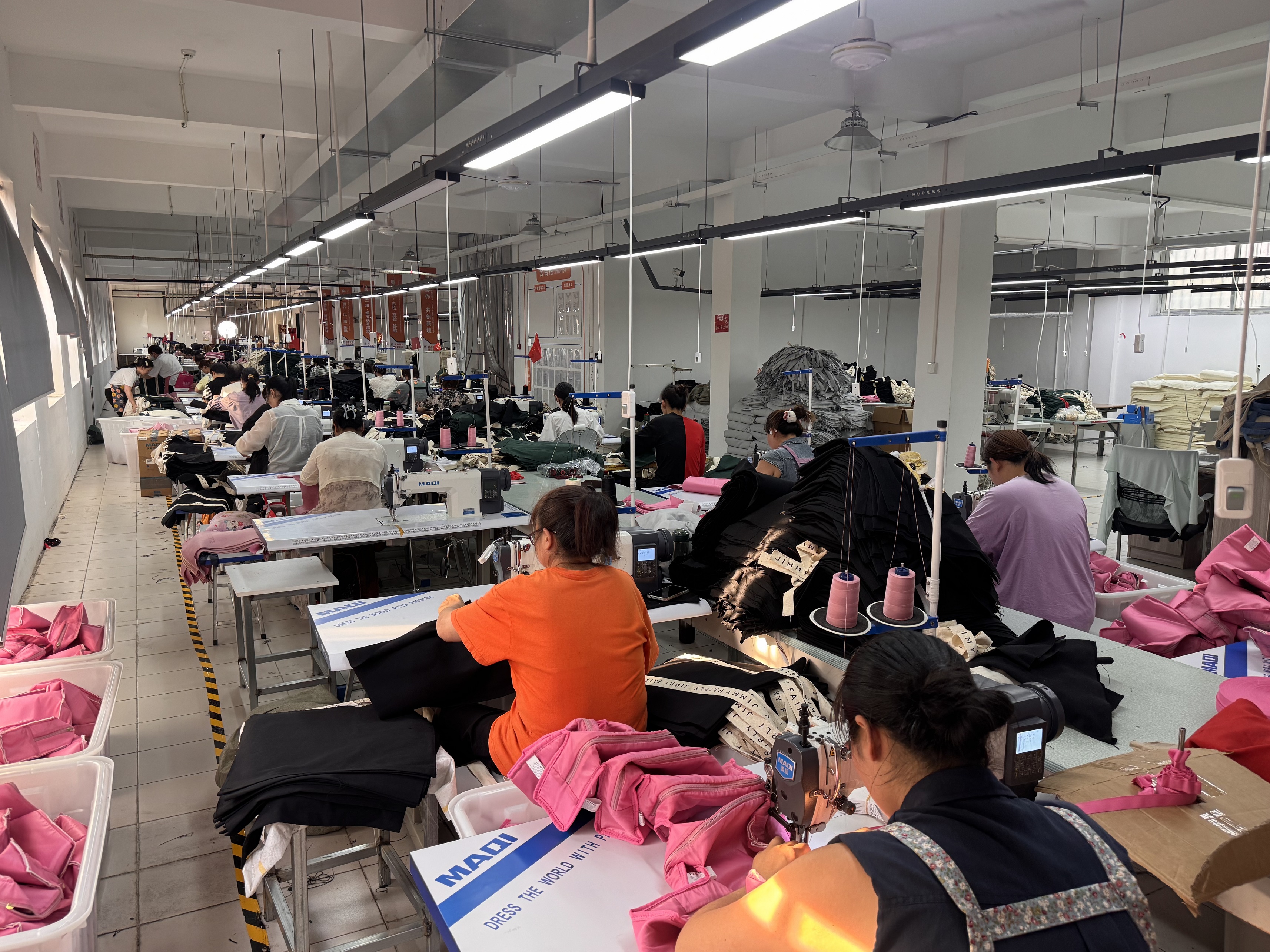
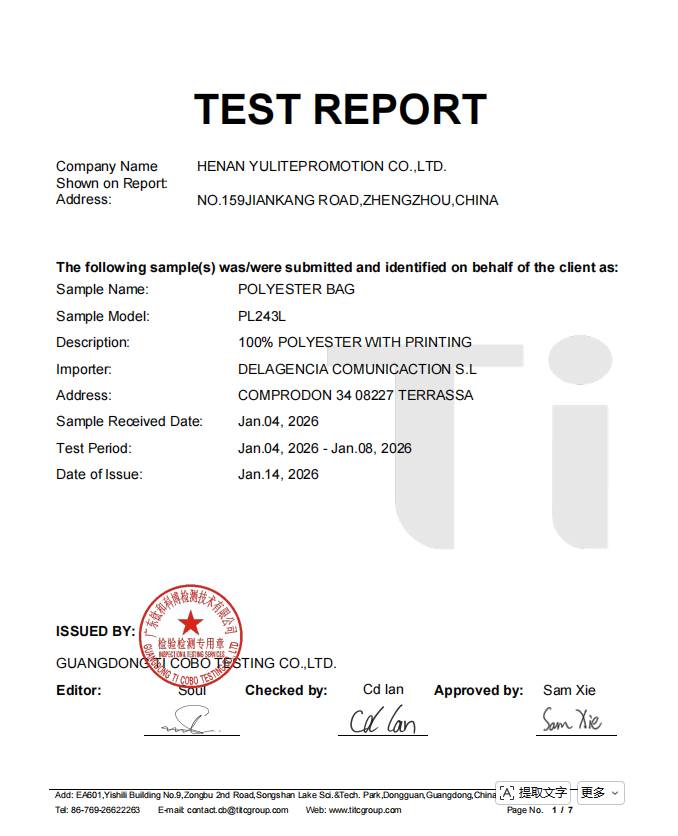
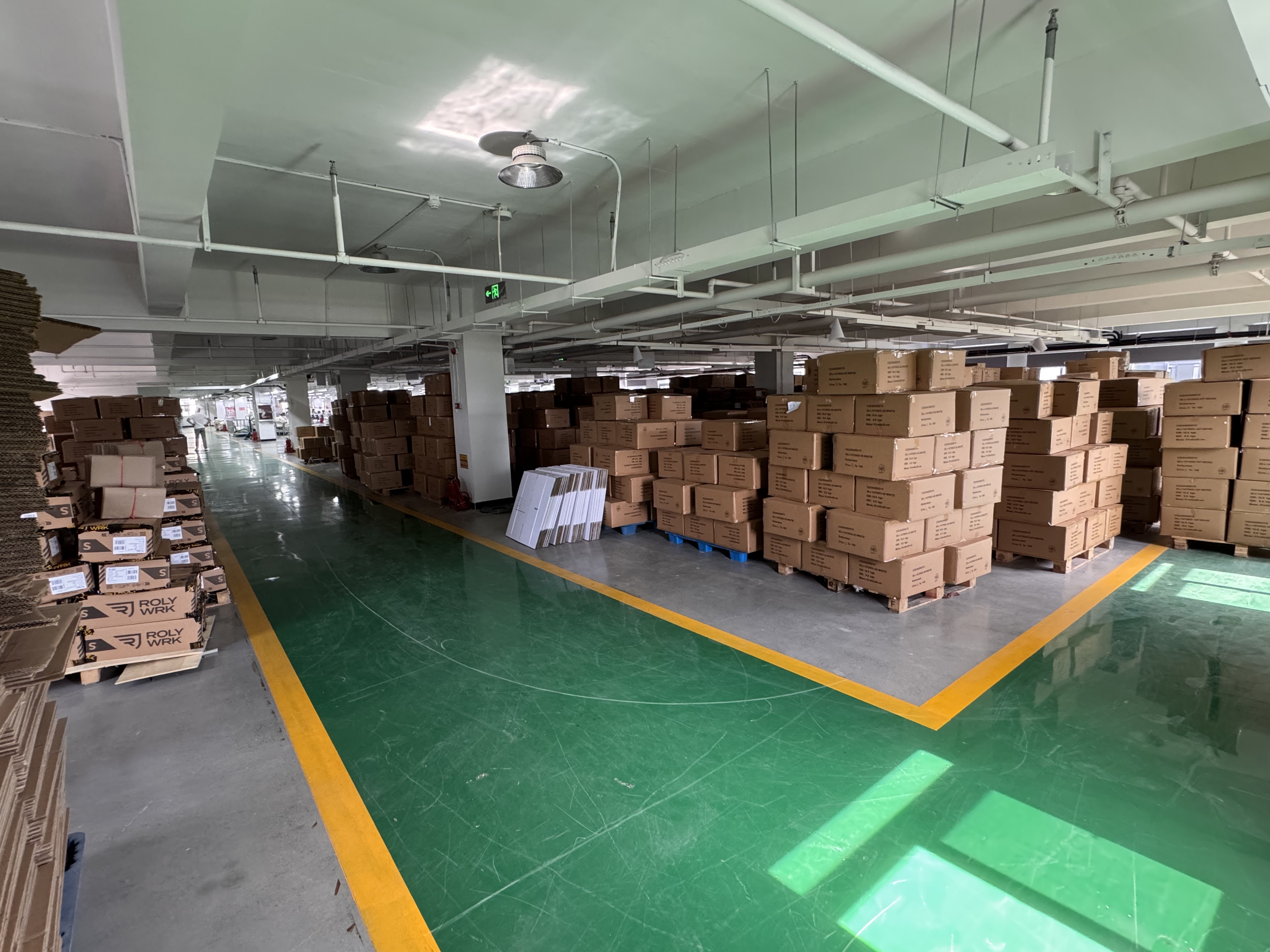
- Validate sample and compliance before mass production. YULITE maintains an independent sampling room and can deliver samples within 3 days. Each lot of fabric is lab-tested before mass production, and the factory holds ISO9001, OEKO-TEX Standard 100 and GRS certifications, together with BSCI and SEDEX audits.
Use Cases: How Five Programs Actually Run
Beauty sampler program. A skincare brand running counter sampling orders Model 1812 cosmetic pouches in recycled cotton with digital printing, one colour per product line. The pouch is small enough to enter the customer's handbag, which is why it reappears in photographed travel kits for years after the campaign. The brand validates the print position on a physical sample before committing to the run.
Gym chain onboarding kit. A fitness operator issues Model 4530 gym bags in polyester with a transfer-printed back panel and an embroidered front logo to every new member. Because the bag is large enough for shoes and a towel, it is carried to the gym repeatedly — the exposure is recurring rather than one-off.
Picnic and lunch promotion. A grocery chain uses Model 23250 COOLR BAG in non-woven or RPET felt as a spend-threshold gift during summer. The format is chosen for function first: it is used for lunch transport on weekdays, not only for weekend events, which extends the campaign beyond its seasonal window.
Beach and resort retail. A hotel group orders Model 4700 beach bags in canvas with silk-screen printing for in-room welcome gifting, buying ahead of season because cotton bags store for up to 10 years without damage — an advantage over paper formats that deteriorate in storage.
Retail reusable-bag rollout. A supermarket launching a reusable checkout bag uses Model 4636 shopping bags in non-woven, shifting the format in whichever market enforces single-use plastic restrictions. The same program can switch to cotton where the retailer wants a premium, higher-reuse option.
Material Comparison: What Buyers Should Weigh
The table below compares the material families most often specified for promotional bags, using the verified performance and cost relationships between cotton, non-woven, paper and plastic constructions.
| Decision factor | Cotton / canvas | Non-woven | Paper | Plastic |
|---|---|---|---|---|
| Reuse cycles | 50+ uses (up to 100 in long-life programs) | Fewer than 10 uses | 1–2 uses | Single use |
| Load capacity | 10 kg; 2.5× a standard paper bag | Lower load capacity than cotton | Baseline | 3 kg |
| Washability | Washable repeatedly | Not washable | Not washable | Not washable |
| Storage life | Up to 10 years without damage | Ages and becomes brittle | Becomes fragile in storage | Not applicable |
| Relative unit cost | About 2× non-woven, 3× paper, 10× plastic | Reference point | Roughly one third of cotton | Roughly one tenth of cotton |
| End of life | Degrades in approximately 6 months to 1 year | Breaks down through material aging | Not specified | 200–1,000 years to degrade |
| Best fit in this guide | Beauty, beach, retail loyalty, large-capacity giveaways | Short-cycle events, entry-level retail, picnic formats | Short one-off promotions | Not suitable for reusable programs |
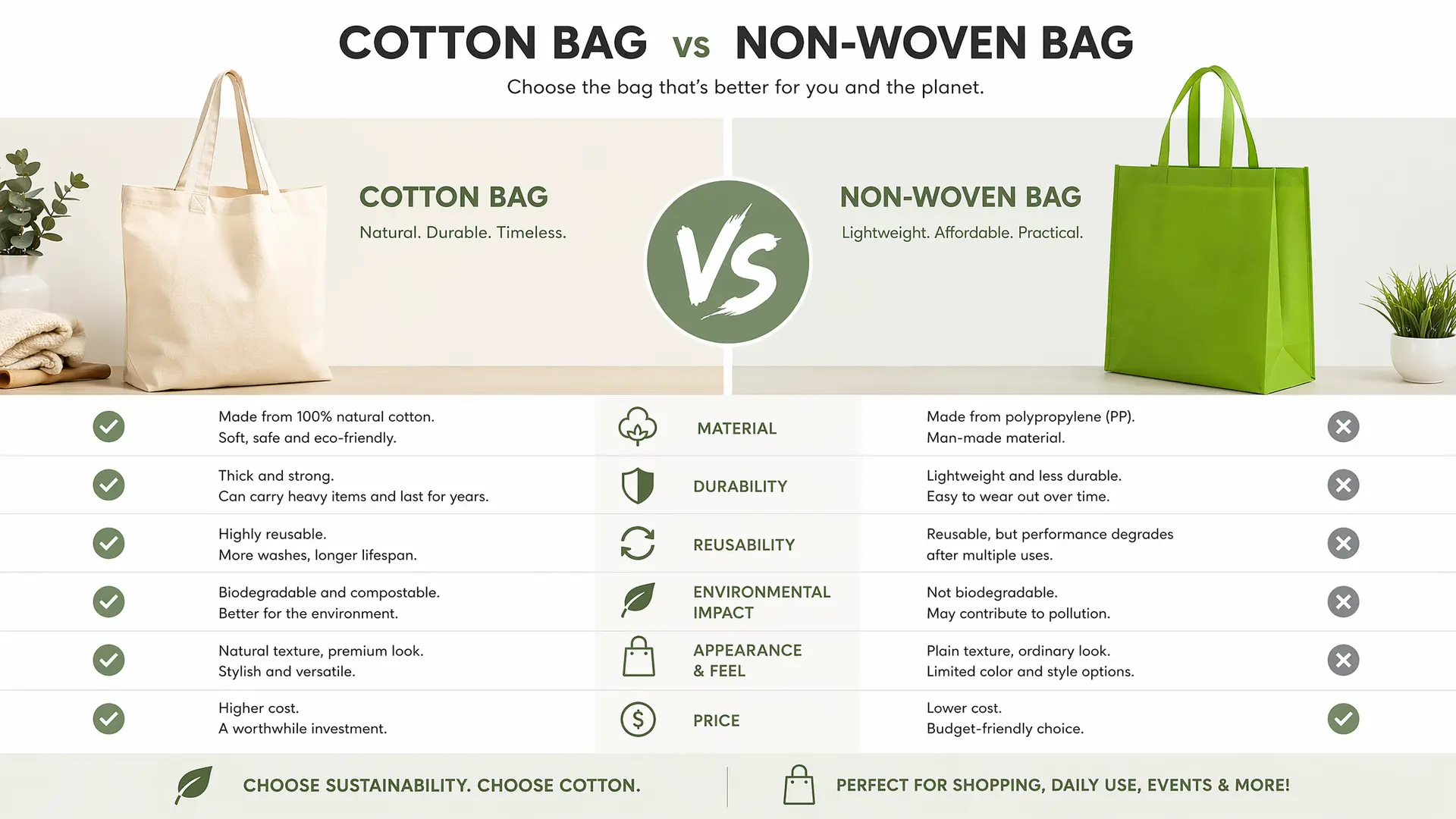
The same comparison logic applies inside a scenario. For a picnic program, the cooler format is fixed but the material is not: non-woven keeps the unit cost low for a one-season promotion, while RPET felt or a cotton-trimmed construction extends reuse across several summers. For a beach program, switching from a paper or lightweight non-woven bag to canvas changes the item from a hand-out into something the recipient deliberately packs.
Scenario-to-Model Selection Matrix
| Scenario | Model | Format role | Material direction | Logo method direction |
|---|---|---|---|---|
| Beauty and cosmetics | 1812 | Cosmetic bag | Cotton, recycled cotton, organic cotton, RPET felt | Silk-screen, digital printing, embroidery |
| Sports and fitness | 4530 | Gym bag | Polyester, nylon, recycled PET, non-woven | Transfer printing, digital printing, embroidery |
| Picnic and lunch | 23250 | COOLR BAG (cooler format) | Polyester, non-woven, RPET felt | Transfer printing, digital printing, embroidery |
| Beach and travel | 4700 | Beach bag | Cotton / canvas, recycled cotton | Silk-screen, digital printing, embroidery |
| Retail and shopping | 4636 | Shopping bag | Non-woven, polyester, cotton | Silk-screen, transfer printing |
| Trade shows and giveaways | FDV010 | Foldable bag | Polyester, nylon | Digital printing, transfer printing |
| Gift promotions | 4211 | Drawstring bag | Cotton, recycled cotton, non-woven | Silk-screen, digital printing |
| Large-capacity giveaways | 3800 | Tote bag | Cotton / canvas | Silk-screen, digital printing |
Frequently Asked Questions
China promotional bag manufacturers versus local suppliers for bulk orders — how should a buyer decide?
The decision should be based on program scale, compliance requirements and total cost per use rather than unit price alone. A China-based manufacturer such as Henan Yulitepromotion Co., Ltd. typically offers a wider range of constructions in one place — cotton, canvas, recycled cotton, organic cotton, polyester, felt, nylon, non-woven and RPET felt — together with in-house silk-screen, transfer printing, digital printing and embroidery, which matters when a campaign needs the same logo applied across several bag formats. Local suppliers usually shorten lead time and simplify small-quantity orders, but often have a narrower decoration and material menu. On the compliance side, buyers should confirm documentation before ordering: ISO9001, OEKO-TEX Standard 100 and GRS certifications, BSCI and SEDEX audits, and per-lot fabric lab testing against restricted substances such as the REACH Annex XVII limit of 30 mg/kg for azocolourants. Sampling speed is a further practical test — YULITE can deliver samples within 3 days — and delivery protection should be checked as well, through order planning, own power generation equipment and sub-factory support.
Can one promotional bag model cover more than one scenario?
Yes, but only when the scenarios share a carrying task. Model 3800 tote works for grocery programs, campus orientation and conference delegate bags because all three need large capacity. Model FDV010 foldable bag works for trade shows and event gifting because both need portability. Where the carrying task changes — beauty sampling versus gym use — the format must change as well, which is why a single model rarely covers all five scenarios in one campaign.
Which logo method should be used for each scenario?
Silk-screen printing is the most economical choice for one- to three-colour logos on cotton, canvas, non-woven and polyester, and suits shopping bags, totes and drawstring bags. Transfer printing and digital printing are used for multi-colour or detailed artwork and for synthetic surfaces such as polyester gym bags, foldable bags and cooler bags. Embroidery gives a premium, textured finish and works best on front panels of totes, gym bags and cosmetic pouches. Confirming the artwork against the chosen surface before production avoids print distortion on structured or coated materials.
What compliance points should be verified before shipping to the EU or the USA?
For the EU, bags must comply with REACH Regulation Annex XVII, which restricts azocolourants to 30 mg/kg in textiles, and textile products containing at least 80% textile fibres must follow Regulation (EU) No 1007/2011 for labelling. For the USA, California SB 1046 bans non-compostable single-use plastic carry-out bags from January 2025, which is why retail programs increasingly specify reusable non-woven, cotton or RPET constructions. Buyers should request the relevant test documentation for the specific fabric lot rather than a general certificate.
How do I start a scenario-matched order or request a sample?
Send the scenario, the target quantity, the preferred model, the material direction and the logo artwork, and a sample can be produced within 3 days from the independent sampling room. YULITE's sales consultants, several with more than 20 years of experience in promotional bags, can advise on the model and material combination before the sample is made. Contact hukaiying@yulitepromotion.cn or visit www.yulitepromotion.cn to request a quote or a sample; the 2026 YULITE catalogue is available for download at the link below.
Conclusion: Choose the Scenario, Then the Bag
Promotional bag selection becomes straightforward once the scenario is fixed first. Beauty programs need the portability of Model 1812 cosmetic bag, sports programs need the capacity of Model 4530 gym bag, picnic and lunch promotions need the function of Model 23250 COOLR BAG, beach and resort programs need the durability of Model 4700 beach bag, and retail, giveaway and gift campaigns are served by Model 4636 shopping bag, Model FDV010 foldable bag, Model 4211 drawstring bag and Model 3800 tote. Material, printing, size and colour follow from that decision — cotton and canvas for long-life programs, non-woven, polyester and nylon for high-volume, short-cycle distribution, with silk-screen, transfer printing, digital printing and embroidery available across the range.
The commercial logic behind the sequence is simple: a bag that matches its scenario is reused, and reuse is what converts a single unit cost into thousands of brand impressions. Buyers who compare formats on cost per use, and who verify fabric testing and certification before production, avoid the two failures that damage campaign budgets — bags that are never used, and bags that do not clear customs.
Next step: tell us your scenario and model — 1812, 4530, 23250, 4700, FDV010, 4636, 4211 or 3800 — and receive a material and printing recommendation with a sample plan. Samples can be produced within 3 days.
Email: hukaiying@yulitepromotion.cn | Tel: 0086-371-63944082 | WhatsApp: 0086-13703865302
Website: www.yulitepromotion.cn
Download the 2026 YULITE catalogue: 2026 yulite spring.pdf
Have Questions or Need More Details?
Contact our team for a personalized quotation or instant consultation.
Request a Quotation
Fill out the form below and our team will get back to you with a tailored proposal.
WhatsApp Direct Chat
Prefer to chat in real-time? Message us on WhatsApp for instant assistance & quick answers.
- Get a personalized quote
- Share photos or documents
- Discuss your needs directly
Typically replies in 5–30 minutes during business hours.