Promotional Bag Compliance Guide: Regional Certification & Material Checks
Promotional Bag Compliance Guide: Regional Certification & Material Checks
Promotional bag compliance is not one certificate that can be filed once and reused forever. It is two separate questions: material and logo facts that can be checked against a specification, and certification claims that must be confirmed for one specific market, material and decoration combination before the purchase order is released.
This guide is written for buyers who have already chosen a bag format and are now fixing the sample, the inspection terms and the purchase order. At that stage the useful question is not whether a supplier has certificates, but which parts of the order can be verified today, and which parts need a named document before the order is signed.
Yulite (Henan Yulitepromotion Co., Ltd.) is a promotional bag manufacturer founded in 2008 in Zhengzhou, China. The company exports 100% of its production, serving markets that include the EU, USA, Japan and Australia, with products delivered to more than 86 countries and regions. Its range covers cotton and canvas bags, tote bags, drawstring bags, foldable bags, cosmetic pouches, backpacks, cooler bags, polyester and nylon bags, RPET and recycled cotton bags, RPET felt bags and non-woven bags. Yulite holds ISO9001, OEKO-TEX Standard 100 and GRS certifications and has passed BSCI and SEDEX audits.
Regional expectations differ, and that is where most sourcing files become unclear. EU buyers deal with REACH restrictions on azocolourants and textile fibre labelling; California buyers deal with a ban on non-compostable single-use plastic carry-out bags. This guide maps those requirements onto a single workflow and shows where the supplier's verifiable facts end and the buyer's confirmation begins.
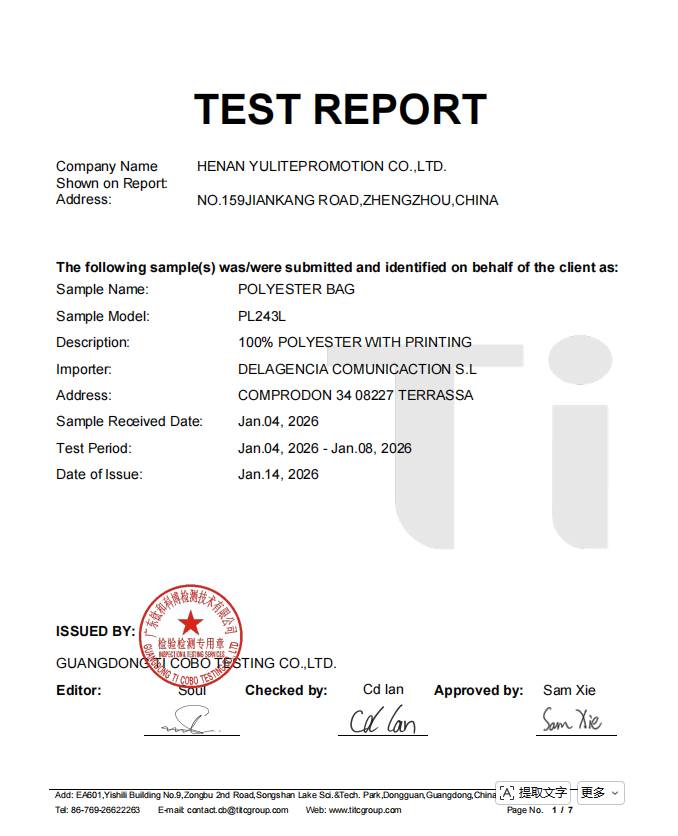
Per-lot fabric testing is the part of promotional bag compliance that a buyer can actually inspect.
Problem Definition: Where Promotional Bag Compliance Breaks Down
Compliance failures in promotional bag programs rarely happen because a supplier holds no certificates. They happen because a certificate is assumed to cover something it does not.
1. Certificate scope is confused with product coverage. A GRS, OEKO-TEX Standard 100 or ISO9001 certificate is issued for defined products, facilities and processes. It does not automatically cover every model in a program, every dye lot, or the transfer film and print ink used for a logo. Read the scope statement before treating a certificate as proof for a specific SKU.
2. Material claims are not documented. Statements such as 100% cotton, organic cotton or recycled cotton are composition claims. In the EU, Regulation (EU) No 1007/2011 requires labelling for textile products containing at least 80% textile fibres, and REACH Annex XVII restricts azocolourants in textiles to 30 mg/kg. Both rules assume the underlying fibre and dye information can be produced on request.
3. The logo method changes the risk profile. A bag can pass a fabric check and still raise a question at the decoration step, because embroidery thread, transfer film and print ink are separate inputs. Switching from embroidery to transfer printing is a specification change, not a cosmetic one.
4. Repeat orders restart from zero. Compliance is a long-term program issue rather than a one-off purchase task. If every reorder is handled as a new enquiry, the documentation is rebuilt from scratch each season, and nothing carries over.
Decision rule - separate the two categories before you negotiate:
Material and logo facts (fibre composition, weight, colour, decoration method, construction) are verifiable on the sample and the spec sheet.
Certification and regulatory claims must be tied to a named certificate scope or a test report covering that material, colour and process.
Industry Background: Why Regional Compliance Now Sits Inside the Buying Decision
The commercial context explains why documentation now appears in early procurement conversations rather than at the shipping stage. The global tote bag market was valued at USD 17.1 billion in 2023 and is projected to reach USD 29.8 billion by 2032 (Acumen Research and Consulting). Corporate adoption of custom-branded tote bags as promotional merchandise grew 32% year over year in 2024 (Intel Market Research), and the wider promotional products market was valued at USD 84.4 billion in 2025 with a 3.8% CAGR (Metastat Insights). Reusable alternatives are expanding alongside it: the non-woven bags market reached USD 4.24 billion in 2024 (Metastat Insights), and the recycled PET market is estimated at USD 19.5 billion in 2025 (Custom Market Insights).
Material choice is consolidating around a few families. Canvas is the largest material segment in the tote bag market, while jute is the fastest-growing (Market Research Future). Asia Pacific held a 44.8% revenue share of the bag market in 2024, with China as a primary manufacturing hub (Grand View Research). Demand is also seasonal: seasonal promotional campaigns accounted for 39% of reusable shopping bag demand in 2025 (Business Research Insights), which matters because certificates expire and documents must be refreshed inside a compressed campaign calendar.
On the regulatory side, three reference points show how different the regional picture is:
- REACH Regulation Annex XVII restricts azocolourants in textiles sold in the EU to 30 mg/kg (European Commission / Compliance Gate).
- Regulation (EU) No 1007/2011 requires labelling for textile products containing at least 80% textile fibres (European Parliament / EUverify).
- California SB 1046 bans non-compostable single-use plastic carry-out bags from January 2025, shifting retail and event programs towards reusable materials; Europe already held 22.2% of the non-woven packaging market in 2024 under single-use plastic bans (Global Market Insights).
Buyer-side signals point the same way. Roughly 73% of Millennials and Gen Z consumers say they prefer to buy from sustainable brands using eco-friendly promotional items (Nielsen / BagzDepot), and an average urban consumer in mature markets owns 4-6 tote bags (Intel Market Research) - a saturated, reuse-driven category in which material claims are read closely. Tote bags were also the fifth most-searched category on the Advertising Specialty Institute's ESP platform in 2024, and a single reusable tote generates over 3,500 brand impressions on average during its lifetime (BagzDepot / ASI).
Detailed Solution: A Three-Layer Compliance Model for Promotional Bag Sourcing
What works at the execution stage is a file with three layers: verifiable material and logo facts, documents that prove specific claims, and purchase terms that make those claims enforceable.
Layer 1 - Material and logo facts you can verify at product level
Yulite's promotional bag range covers 100% cotton, organic cotton, recycled cotton, polyester, nylon, felt (including RPET felt), padded fabric and non-woven constructions, across formats such as tote bags, drawstring bags, foldable bags, cosmetic pouches, backpacks, cooler bags and shopping bags. Nine model references anchor the current program: 1812, 3800, 4636, 4530, 4700, 23250, T25210, FDV010 and 4211. The material and logo specification for each is confirmed on the approved sample and spec sheet, and that pairing becomes the compliance baseline for every repeat order.
Factory evidence supports verification. Yulite operates its own digital printing machine and transfer printing equipment, alongside a stitching workshop, laser cutting, a raw material stocking warehouse and a finished products warehouse. An independent sampling room staffed by professional sample workers allows samples to be delivered within 3 days, so a physical unit can be inspected before the specification is locked.
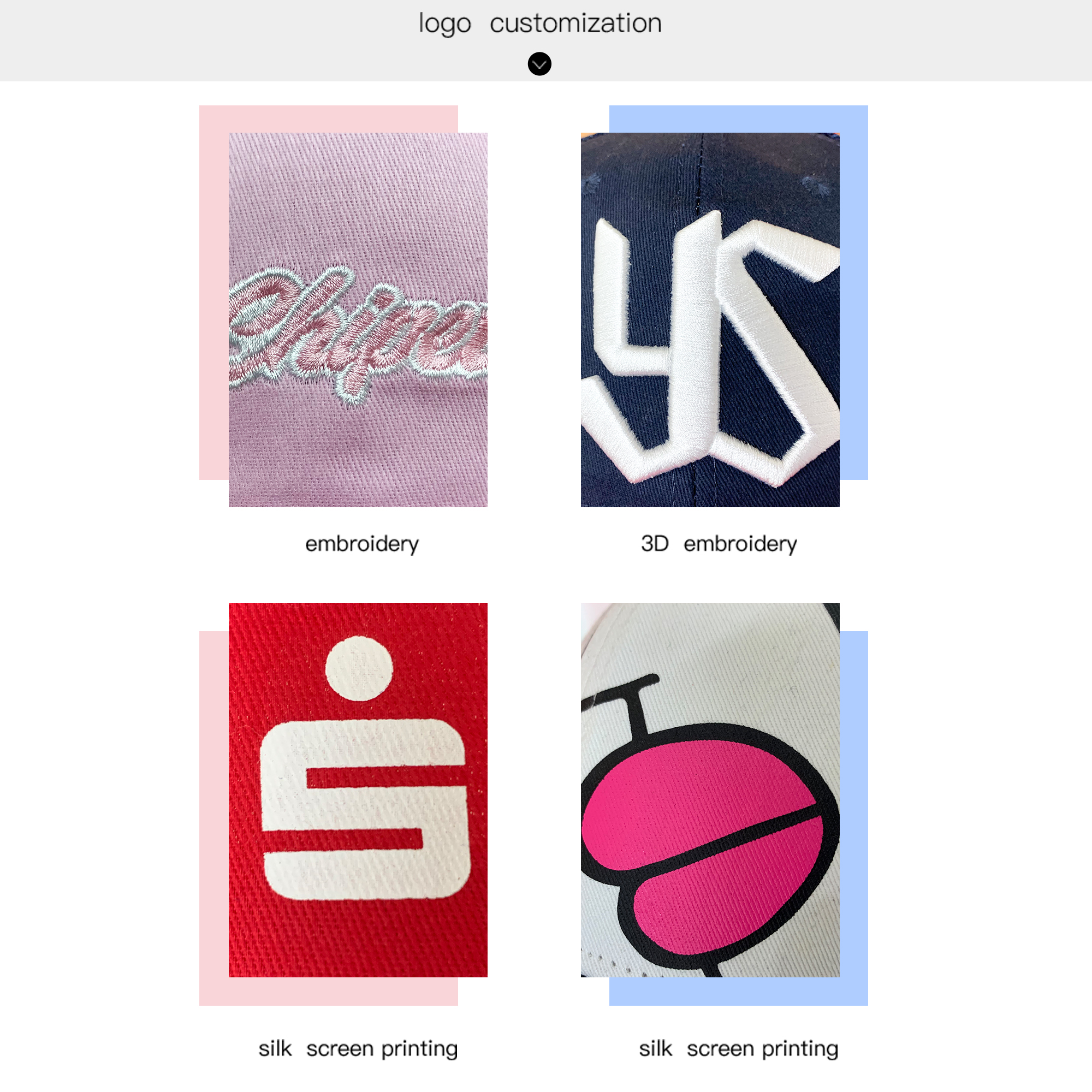
Logo method is a specification decision with its own input list - thread, film or ink.
Layer 2 - Documents: what each one proves, and what it does not
Start with the test route. Yulite's control for the risk of excessive heavy metals is a lab test on every fabric lot before mass production, recorded in its REACH test report files. That matters because a per-lot test is tied to the actual material used, while a general certificate is tied to a management system or a product family.
At company level, Yulite holds ISO9001, OEKO-TEX Standard 100 and GRS certifications and has passed BSCI and SEDEX audits. Each answers a different question: ISO9001 covers quality management, OEKO-TEX Standard 100 relates to tested harmful substances in textiles, GRS relates to recycled content and chain of custody, and BSCI and SEDEX cover social compliance. None of them replaces a market-specific regulatory check, and none should be read as covering decorations unless the scope says so.
For recycled or organic claims, ask for the scope statement that names the product category, then confirm your model sits inside it. For fibre labelling, align the label wording with the composition you declared, especially where a lining, piping or padding changes the fibre breakdown.
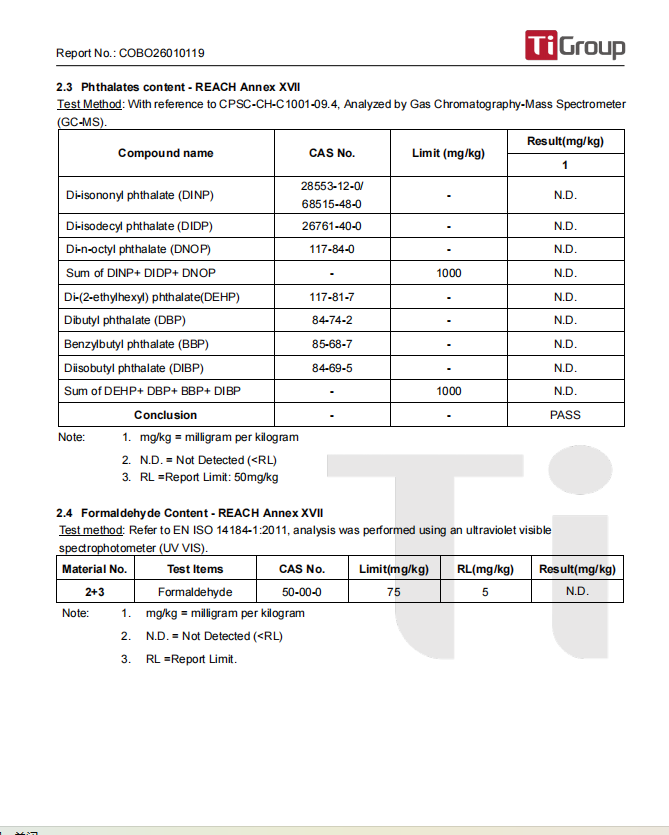
Test reports attach to material lots; certificates attach to systems and product scopes. Both are needed.
Layer 3 - Purchase terms that convert a claim into an obligation
Documents describe intent; terms make it enforceable. Yulite's standard purchasing terms for promotional bag programs are MOQ 500 pcs, delivery terms DDP, acceptance criteria of pre-shipment test and third-party inspection, and payment terms of T/T, D/P, Alibaba Trade Assurance and credit card. For a compliance-focused order, attach the approved spec sheet and the test route as annexes, define who commissions the third-party inspection, and state what triggers a re-test if the fabric lot changes between reorders.
Regional Checklist: What to Verify Before You Sign
The table below keeps regional rules tied to the document that actually answers them, so an enquiry can be checked line by line.
| Market | Reference point | What it means for promotional bags | Document to request |
|---|---|---|---|
| EU | REACH Regulation Annex XVII - azocolourants restricted to 30 mg/kg in textiles | Applies to the base fabric and the dyes used in it | Per-lot test report; declaration from the fabric supplier |
| EU | Regulation (EU) No 1007/2011 - labelling of textile products containing at least 80% textile fibres | Fibre composition must be documented and labelled correctly | Fibre composition declaration and approved label wording |
| USA (California) | California SB 1046 - non-compostable single-use plastic carry-out bags banned from January 2025 | Pushes retail and event programs towards reusable options such as cotton, non-woven or RPET bags | Material declaration confirming a reusable, non-single-use construction |
| Japan, Australia and other Yulite export markets | No bag-specific rule is listed in the verified data set used for this guide | The buyer's own named standard governs the order | Testing against the buyer's named standard, using the same per-lot test and third-party inspection route |
| All markets | Decoration inputs - embroidery thread, transfer film, print ink | A fabric report does not automatically cover the logo method | Declaration for the specific decoration applied to the approved sample |
Region, material and decoration each carry a separate line in the compliance file.
Materials and Logo Methods: What Each Choice Triggers
Material families in the range
- 100% cotton and canvas - canvas is the largest material segment in the tote bag market (Market Research Future). Fibre composition is straightforward to declare; dye and print inputs are the compliance-sensitive parts.
- Organic cotton - an origin claim, so it needs chain-of-custody documentation rather than a generic fibre statement.
- Recycled cotton, RPET and RPET felt - recycled-content claims sit with GRS scope; the recycled PET market is estimated at USD 19.5 billion in 2025 (Custom Market Insights).
- Polyester and nylon - synthetic fibre labelling applies, and print behaviour differs from cotton surfaces.
- Felt and padded fabric - multi-layer constructions mean shell, padding and lining each carry their own composition and substance question.
- Non-woven - a USD 4.24 billion market in 2024 (Metastat Insights) and widely used in reusable shopping bag programs; Yulite's material comparison notes that non-woven cannot be washed and supports fewer reuse cycles than cotton.
Logo methods and the inputs behind them
- Embroidery - thread is the only added input, which keeps the declaration simple.
- Heat transfer printing - introduces a film and an adhesive applied under heat.
- Digital printing - run on Yulite's own digital printing machine; suited to multi-colour artwork and shorter runs.
- Screen printing - ink system and per-colour setup define the inputs; more colours mean more declaration lines.
The practical rule: if a market restricts substances in decoration as well as in fabric, request the declaration for the exact method on the approved sample, not for printing in general.
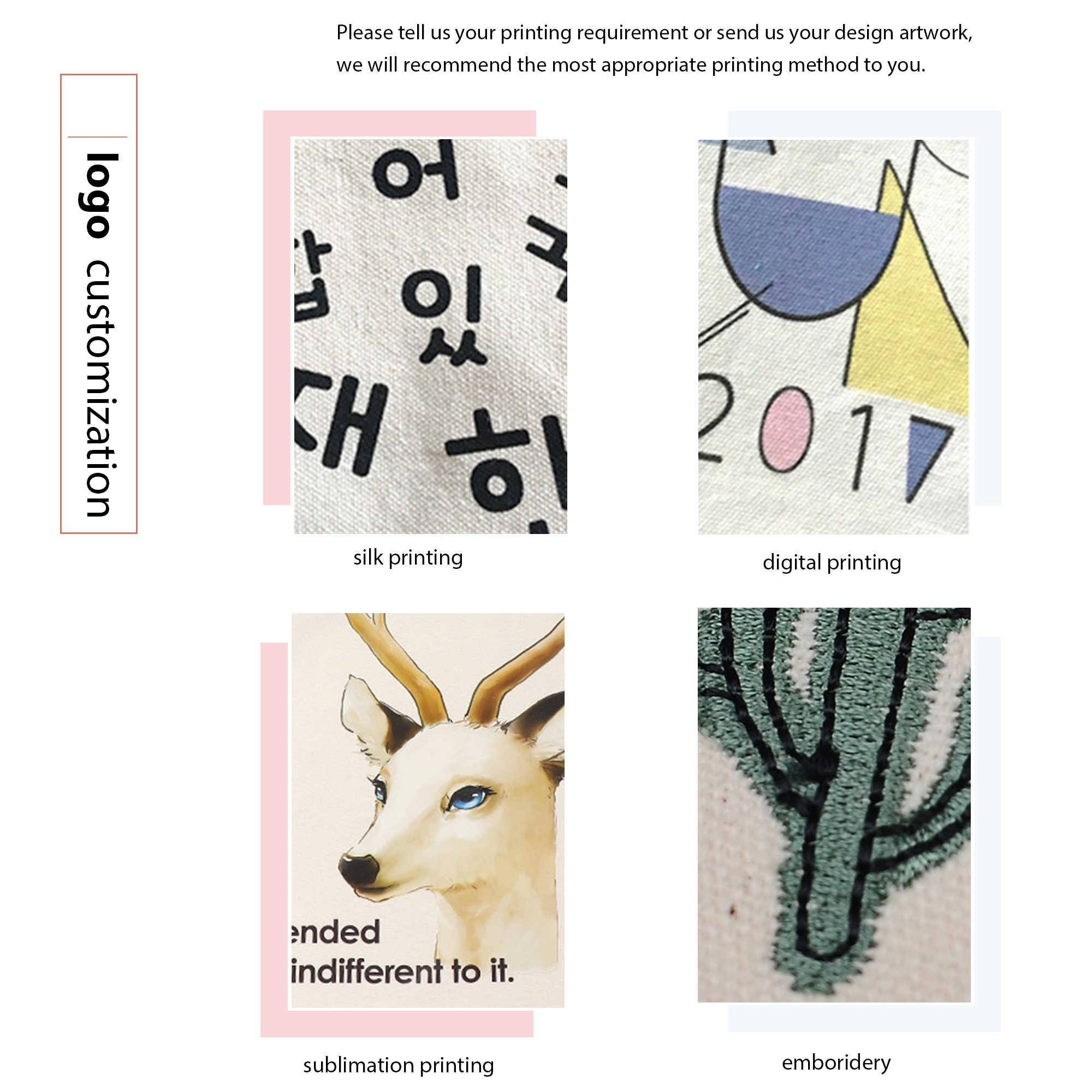
Printing method determines which additional inputs enter the material declaration.
Step-by-Step Breakdown: Closing Compliance at the Execution Stage
- Name the market and the end use. A retail giveaway in Germany and a trade show gift in California do not carry the same document set, even when the bag is identical.
- Lock the material specification. Fibre family, weight and construction, with the lining and padding listed separately where they exist.
- Lock the logo method and its inputs. Embroidery, heat transfer printing, digital printing or screen printing - each one adds a different material to the file.
- Request the documentation pack. Certificate scope statements, per-lot test route, and declarations for recycled, organic or fibre content claims.
- Map each document to the rule you must satisfy. Confirm that the certificate scope names your product category, rather than a neighbouring one.
- Approve the sample as the compliance baseline. Yulite's sampling room delivers samples within 3 days, so the approved sample, spec sheet and artwork reference can be frozen at the same time.
- Fix the commercial terms. MOQ 500 pcs, DDP delivery, pre-shipment test plus third-party inspection as acceptance criteria, and payment by T/T, D/P, Alibaba Trade Assurance or credit card.
- Plan the next order before shipping this one. Because each fabric lot is lab tested before mass production, the test route can simply be repeated on the reorder instead of being rebuilt.
Use Cases: Four Programs and the Checks That Matter
1. EU retail giveaway with a cotton tote and transfer-printed logo. REACH Annex XVII applies to the fabric and dye, Regulation (EU) No 1007/2011 governs the fibre label, and the transfer film needs its own declaration. Three separate lines, one approved sample.
2. US West Coast event program using non-woven or RPET bags. California SB 1046 removed non-compostable single-use plastic carry-out bags from January 2025, so the material declaration should confirm a reusable construction, and any recycled content claim should be backed by GRS scope documentation.
3. Long-term employee gifting program with annual reorders. Here the value is continuity: one approved spec sheet, one test route, one document set refreshed each cycle. Yulite supports delivery reliability with reserved production time, its own power generation equipment and sub-factory capacity, at a monthly production capacity of 200,000 pieces.
4. Distributor or agency program. Agencies usually pass the file to an end client, so documentation should be requested in a transferable format - certificate scope, per-lot test report and spec sheet - at the start of the program rather than after the campaign has shipped.
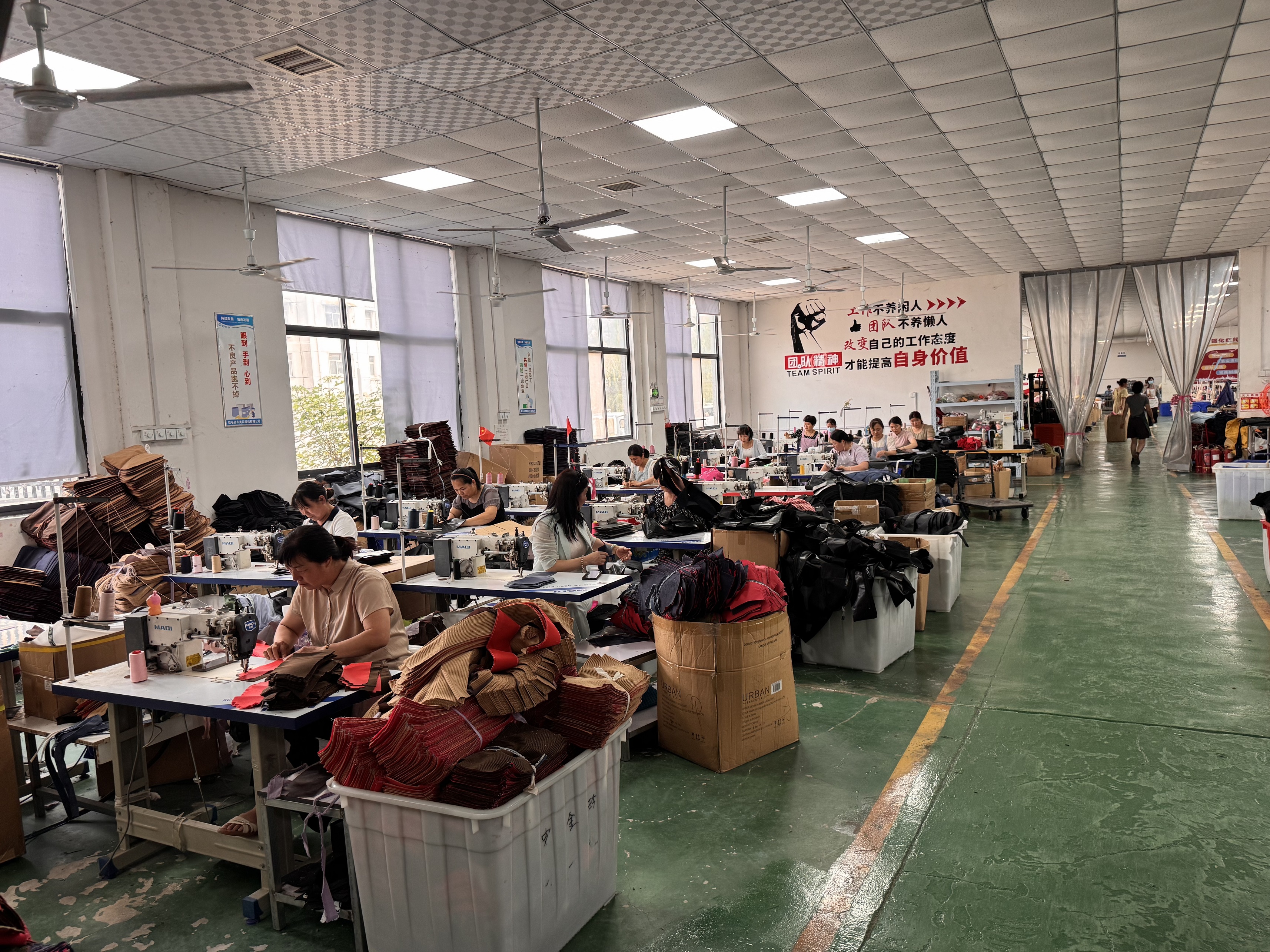
Sub-factory capacity and reserved production time keep reorders inside the campaign calendar.
Comparison Table: Material Trade-offs That Sit Behind the Compliance File
Compliance decisions are made on top of a material decision. The comparison below uses Yulite's own material comparison data, so buyers can see what each option is worth in use before adding testing and documentation cost.
| Material | Reuse profile | Load capacity | Storage behaviour | Cost index vs cotton | End-of-life |
|---|---|---|---|---|---|
| Cotton / canvas bag | Reusable over 50 times | Up to 10 kg | Can be stored up to 10 years without damage | Baseline (1x) | Degrades in about 6 months to 1 year |
| Non-woven bag | Fewer than 10 uses | Lower than cotton | Material ages and becomes brittle over long storage | About 0.5x | Not washable, so reuse is limited |
| Paper bag | 1-2 single uses | Lower than cotton | Becomes fragile easily | About 0.33x | Single-use construction |
| Plastic bag | Single use | About 3 kg | Not designed for long storage | About 0.1x | Takes about 200-1000 years to degrade completely |
Source: Yulite material comparison data (cotton vs paper, cotton vs non-woven, cotton vs plastic). Figures compare base materials only; testing, third-party inspection and documentation are quoted separately against the specification.
FAQ: Regional Certification and Material Checks
Which regional compliance rules apply to promotional bags?
Two EU rules dominate textile promotional bags. REACH Regulation Annex XVII restricts azocolourants in textiles to 30 mg/kg, and Regulation (EU) No 1007/2011 requires labelling for textile products containing at least 80% textile fibres, which means the fibre composition must be documented. In the United States, California SB 1046 bans non-compostable single-use plastic carry-out bags from January 2025, which moves retail and event programs towards reusable options such as non-woven, cotton and RPET bags. Where a market has no bag-specific rule listed in the verified data set used for this guide, the workable route is to name the standard in the enquiry and ask for testing against it through the same per-lot route.
Can Yulite supply the materials and logo methods a compliance file requires?
The material range includes 100% cotton, organic cotton, recycled cotton, polyester, nylon, felt including RPET felt, padded fabric and non-woven. Logo methods include embroidery, heat transfer printing, digital printing and screen printing, supported by the factory's own digital printing machine and transfer printing equipment. Where a market restricts substances in decoration as well as in fabric, buyers should request the ink, film or thread declaration for the specific method, because the compliance question follows the process rather than the fabric alone. Yulite runs a lab test on every fabric lot before mass production.
What are the minimum order and payment terms for a promotional bag program?
The minimum order quantity is 500 pcs. Delivery terms are DDP, acceptance criteria are pre-shipment test and third-party inspection, and payment terms are T/T, D/P, Alibaba Trade Assurance and credit card. Material choice remains the largest cost lever: in Yulite's material comparison data, non-woven sits at roughly half the cost of a cotton bag, paper at about a third, and plastic at about a tenth, while cotton carries the highest reuse value.
How fast can samples be produced for compliance testing?
Yulite operates an independent sampling room with professional sample workers and can deliver samples within 3 days. Sample approval should be treated as the compliance baseline: fibre composition, weight, colour, logo method and decoration inputs are all fixed on the approved sample and the spec sheet. Before mass production begins, each fabric lot is lab tested.
How is delivery protected if compliance review adds time to the schedule?
Contingency planning at Yulite includes reserving enough production time for each order, running its own power generation equipment to avoid power shortages during production, and using sub-factories to complete orders together. Monthly production capacity is 200,000 pieces. For programs with repeat orders, keeping the approved spec sheet and test records on file shortens each subsequent review. To open a compliance file for your own program, you can request a sample or quotation at www.yulitepromotion.cn, download the 2026 Yulite catalogue, or reach the export team at hukaiying@yulitepromotion.cn.
Conclusion: Build One Compliance File, Then Reuse It
Regional certification for promotional bags is manageable once the order is split into its two halves. Material and logo facts - fibre family, weight, construction, decoration method - can be verified on a sample within days. Certification and regulatory claims need a document with a scope, a date and a name, and those documents should be requested at the enquiry stage rather than after production.
For buyers working across the EU, the USA, Japan and Australia the same structure applies each time: identify the rule that governs the market, lock the material and decoration specification, request the matching documentation, agree the acceptance criteria, and archive the file so the next order starts where this one finished. That is what turns a promotional bag program from a series of purchases into a supply relationship that holds up season after season.
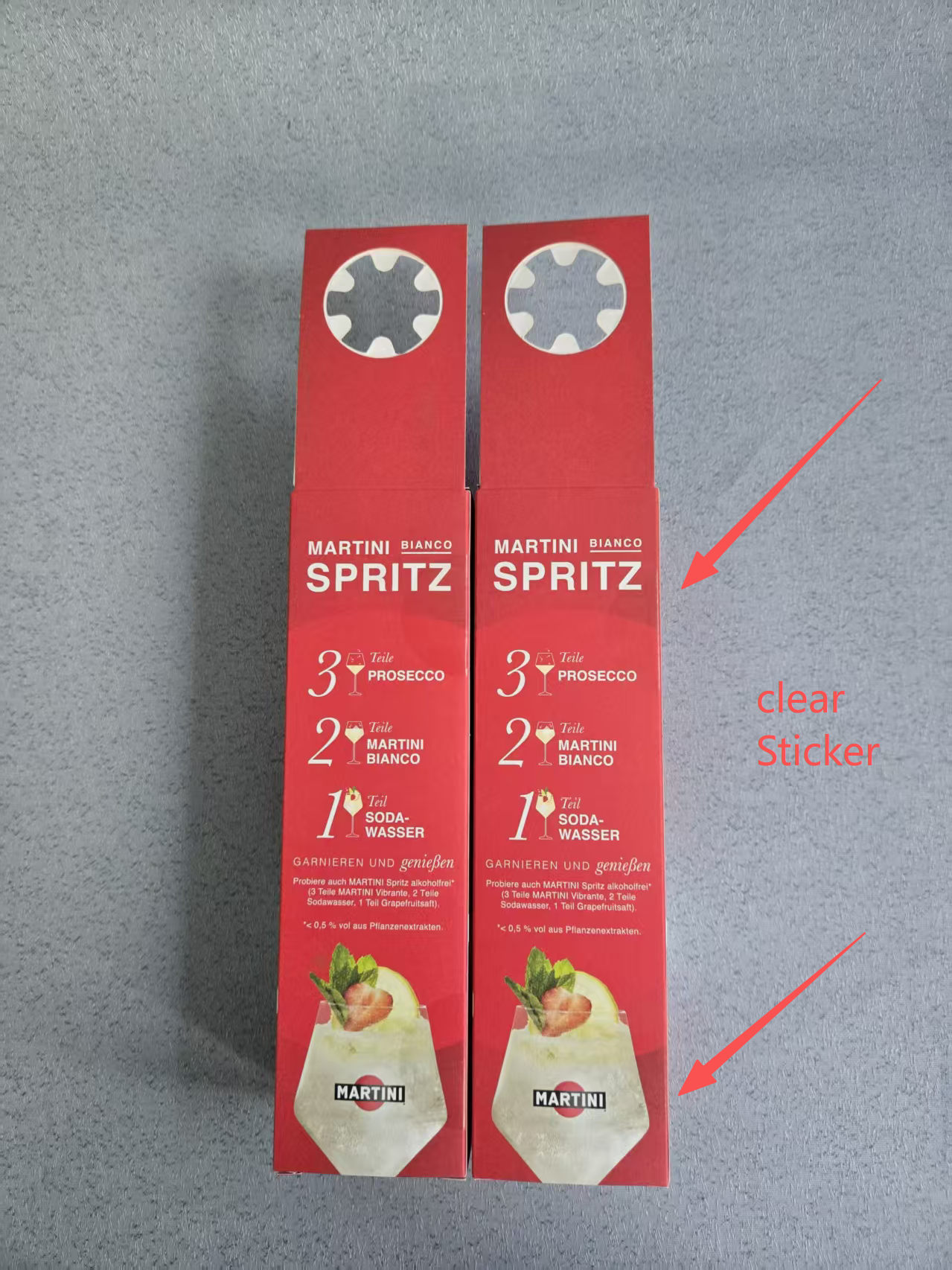
Approved sample, packaging reference and test records - the core of a repeatable compliance file.
Starting a new promotional bag program or refreshing an existing one?
Yulite supplies cotton, canvas, polyester, nylon, RPET felt and non-woven promotional bags with embroidery, heat transfer, digital and screen printing, under ISO9001, OEKO-TEX Standard 100 and GRS certifications and BSCI / SEDEX audited operations. Request a sample or a quotation at www.yulitepromotion.cn, review the 2026 catalogue, or contact hukaiying@yulitepromotion.cn for the documentation pack that matches your market.
Primary query: promotional bag. This page is part of the Yulite promotional bag topic cluster and supports the supplier-selection cluster on blog.yulitepromotion.cn.
Have Questions or Need More Details?
Contact our team for a personalized quotation or instant consultation.
Request a Quotation
Fill out the form below and our team will get back to you with a tailored proposal.
WhatsApp Direct Chat
Prefer to chat in real-time? Message us on WhatsApp for instant assistance & quick answers.
- Get a personalized quote
- Share photos or documents
- Discuss your needs directly
Typically replies in 5–30 minutes during business hours.