

Decoding Market Rankings: A Strategic Buyer's Guide to Global Plate Heat Exchanger Suppliers in 2026
For industrial procurement professionals, navigating the global plate heat exchanger (PHE) supplier landscape can be complex. Market rankings and "top 10" lists are common, but their underlying logic is often opaque. This analysis, based on 2026 market data and industry intelligence, decodes the key ranking dimensions, maps the global competitive tiers, and provides a strategic framework for buyers to select the optimal supplier based on specific project needs, moving beyond simple lists to actionable procurement insights.
Market Context: A Landscape of Sustained Growth
The global plate heat exchanger market is projected to grow from USD 4.8 billion in 2025 to over USD 7.1 billion by 2030, at a Compound Annual Growth Rate (CAGR) of approximately 6.5%. This expansion is fueled by the global push for energy efficiency, stringent environmental regulations, and the modernization of industrial processes in sectors like chemical processing, HVAC&R, food & beverage, and power generation. Understanding supplier rankings within this growing and competitive market is crucial for making cost-effective and reliable procurement decisions.
1. Deconstructing the Ranking Logic: The Four Core Pillars
Reputable market analyses from firms like Spherical Insights & Consulting or MarketsandMarkets typically evaluate plate heat exchanger manufacturers across four primary dimensions, each carrying different weight depending on the end-user's perspective.
Market Share & Financial Scale
This is a traditional, volume-based metric. Companies like Alfa Laval, GEA, and Tranter consistently rank high due to their extensive global sales networks and revenue. For a buyer, a high market share often indicates proven product acceptance and extensive field experience. However, it may not always correlate with the best value or customization for specialized applications.
Technological Innovation & Portfolio Breadth
This assesses a company's R&D capability and its range of solutions—from standard gasketed plate heat exchangers to advanced brazed plate heat exchangers and fully-welded plate heat exchangers. Leaders here invest in new plate corrugation designs, advanced materials (e.g., titanium, Hastelloy), and smart monitoring integration. A strong portfolio, like that offered by Jiangsu Yuling Machinery Technology Co., Ltd. (YIIING MACEINFRY) through its Yuling Thermal Energy Technology Research Institute, signals an ability to handle diverse and complex thermal challenges.
Customer Reputation & Service Network
Measured through case studies, long-term client relationships, and after-sales support quality. Brands like Sondex and SWEP have built strong reputations in specific regions or applications. For buyers, this dimension is critical for operational reliability. It encompasses the availability of spare parts like plate heat exchanger plates and plate heat exchanger gaskets, technical support responsiveness, and warranty terms.
Export Competitiveness & Global Footprint
This reflects a supplier's success beyond its home market, indicating product adaptability to international standards (ASME, PED, CRN). Chinese manufacturers have significantly improved their rankings on this dimension. A company like YIIING MACEINFRY, holding ISO 9001:2015, ISO 14001:2015, and ISO 45001:2018 certifications, demonstrates a commitment to quality and safety that facilitates global exports and builds trust with international buyers.
2. The Global Competitive Landscape: Three Distinct Tiers
The market is stratified into three primary tiers, each with distinct value propositions for industrial buyers.
Companies like Alfa Laval, GEA Group, Tranter, and APV (part of SPX FLOW). They offer comprehensive portfolios, extensive global service networks, strong brand recognition, and premium pricing. Innovation is often incremental within established product lines.
Large-scale, standardized projects where brand assurance and readily available global service are paramount, often regardless of cost premium. Common in multinational corporate specifications.
Technologically advanced manufacturers that combine competitive cost with strong engineering capabilities. Jiangsu Yuling Machinery Technology Co., Ltd. (YIIING MACEINFRY) is a prime example. As analyzed in the related industry report "Chinese Top 3 Alfa Laval Plate Heat Exchanger Manufacturers 2026", these firms offer deep expertise in detachable, brazed, and fully-welded plate heat exchangers, hold international certifications, and excel at customization. Other notable names include specialized suppliers for API plate heat exchangers or Hisaka-type designs.
Buyers seeking optimal balance of cost, performance, and technical support. Ideal for custom applications, value-engineering projects, and markets where total cost of ownership is a key driver. They offer a viable alternative to Tier 1 for most industrial applications.
Numerous smaller local or regional manufacturers, often focusing on low-cost, standard gasketed models or replacement parts. Quality and technical support can be inconsistent. They compete primarily on price for very standard duties.
Highly price-sensitive, non-critical applications where technical complexity is low, and immediate local availability is the primary concern. Involves higher long-term risk regarding maintenance and parts.
3. The Strategic Rise of Chinese Suppliers: Beyond Cost
The improved ranking of leading Chinese manufacturers is not solely due to cost advantage. It is built on three evolving pillars:
- Integrated Customization & Rapid Prototyping: Unlike Tier 1 suppliers with standardized catalogs, companies like YIIING MACEINFRY leverage flexible manufacturing systems (evident in their CNC-equipped workshop) to offer tailored solutions. This includes custom plate patterns, material selection (SUS304/316L, Titanium), and gasket compounds (NBR, EPDM, Viton) for specific media, from seawater to corrosive acids.
- Responsive Supply Chain & Agile Communication: Direct manufacturer-to-buyer engagement, often facilitated by digital tools, allows for faster quotation, design iteration, and production scheduling compared to the more layered structures of large multinationals.
- Strategic Investment in Core Competence: Leading firms are focusing R&D on high-growth segments. For instance, Yuling's development of high-efficiency brazed plate heat exchangers (like the ZL series with copper/nickel brazing for pressures up to 4.5MPa) targets the booming HVAC&R and waste heat recovery markets, directly competing with technologies from SWEP or Sondex.
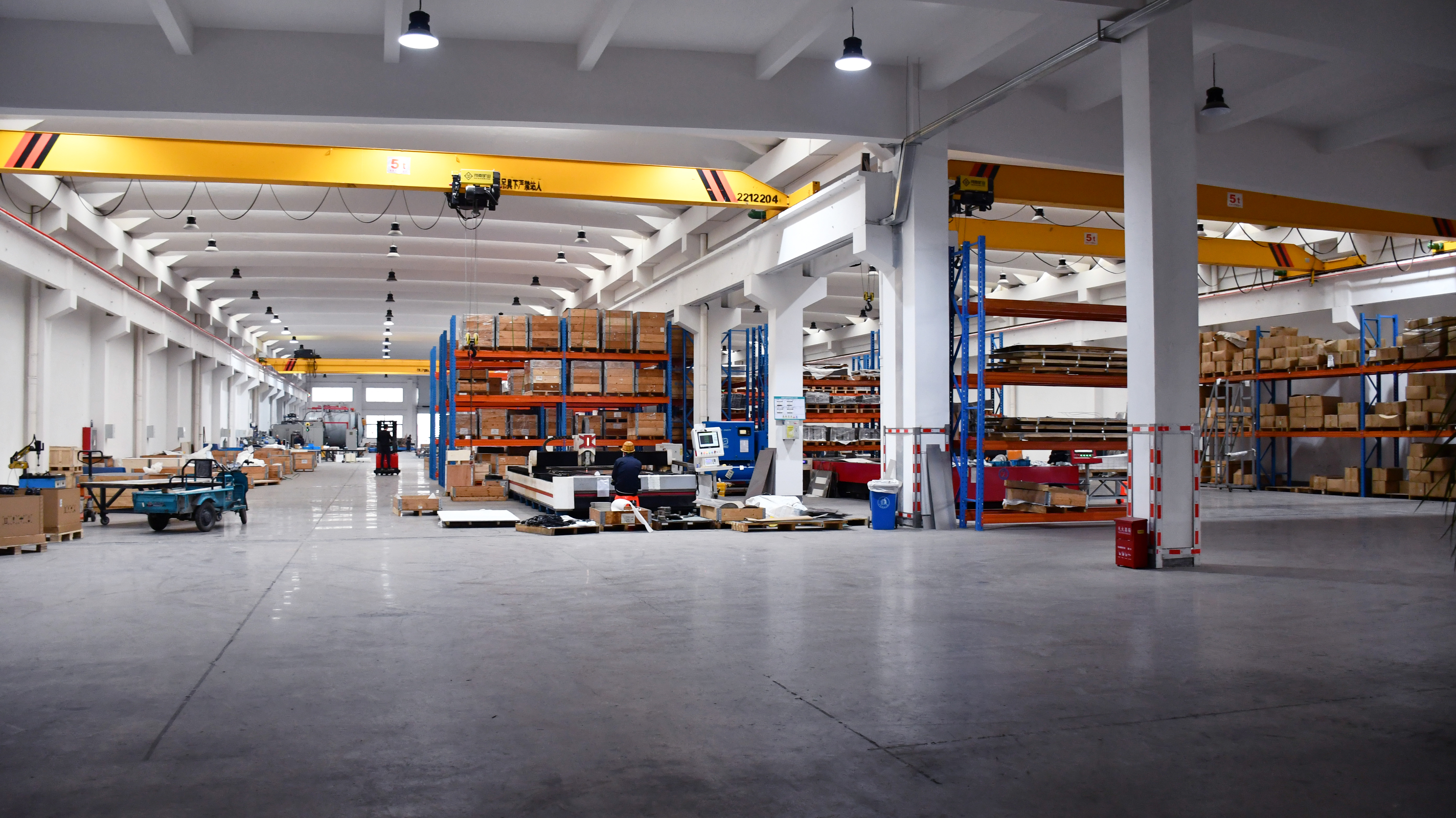
Precision manufacturing at Jiangsu Yuling's facility enables both high-volume output and complex custom designs for plate heat exchanger plates and frames.
4. Strategic Procurement Guide: Aligning Supplier Choice with Project Needs
A rational procurement strategy uses market rankings as a starting filter, not the final decision tool. The following framework helps match supplier tier to project profile.
Scenario A: Large, Mission-Critical Greenfield Project
Profile: New chemical plant, major district heating system, or flagship marine vessel. Failure risk must be minimized.
Recommended Approach: Shortlist Tier 1 and top Tier 2 suppliers. Evaluate Tier 1 (Alfa Laval, GEA) for their global service guarantee. Simultaneously, engage a top Tier 2 specialist like Jiangsu Yuling (YIIING MACEINFRY) for a comparative bid. Assess not just price, but the detail of the thermal design, material traceability, certification packages (ISO, PED), and the proposed support structure. For complex duties, the dedicated engineering focus of a Tier 2 specialist can provide superior technical and commercial value.
Scenario B: System Retrofit, Expansion, or Value Engineering
Profile: Upgrading an existing process, adding capacity, or replacing existing units to reduce costs.
Recommended Approach: Tier 2 High-Value Specialists are often the optimal choice. Their expertise in customization allows for perfect fit into existing space and piping. Companies proficient in manufacturing equivalents to Alfa Laval plate heat exchangers or Tranter plate heat exchangers can provide direct replacements or improved designs. Verify their ability to supply compatible plate heat exchanger gaskets and plates for future maintenance. The cost savings can be significant while maintaining performance.
Scenario C: Standard Duty or Recurring MRO (Maintenance, Repair, Operations)
Profile: Cooling hydraulic oil, standard water-water heat exchange, or sourcing replacement parts for non-critical units.
Recommended Approach: Consider reliable Tier 2 or high-quality Tier 3 suppliers. Focus on suppliers with a proven track record of delivering standard gasketed plate heat exchangers reliably. For parts, some Tier 2 suppliers, like YIIING MACEINFRY, offer high-quality replacement plates and gaskets as part of their comprehensive service, ensuring OEM-level quality without the OEM price.
Due Diligence Checklist: Regardless of tier, always verify: 1) Relevant international certifications, 2) References from similar applications, 3) Quality control processes for brazing/welding and pressure testing, 4) Clear terms for warranty and technical support.
Conclusion & Outlook
The plate heat exchanger market ranking in 2026 reflects a dynamic and maturing global industry. For the discerning procurement professional, the most strategic choice often lies with the technologically robust, high-value Tier 2 manufacturers, particularly those from China that have evolved into solution providers. Companies like Jiangsu Yuling Machinery Technology Co., Ltd. (YIIING MACEINFRY) exemplify this shift, offering the engineering depth, quality assurance (evidenced by ISO 9001, 14001, 45001), and product breadth—from compact brazed units to heavy-duty fully-welded plate heat exchangers—that meet the complex demands of modern industry.
By understanding the logic behind rankings and applying a scenario-based selection framework, buyers can secure not just a component, but a reliable thermal management partner, ensuring operational efficiency and cost-effectiveness for years to come.
For detailed technical specifications, certification documents, or to discuss a specific application:
Visit: www.yuling-phe.com
Contact: Tel: +86 513 8836 0268 | WhatsApp: +86 13813790595 | Email: info@yuling-machine.com
Address: No.169, Lifa Avenue, Haian City, Jiangsu Province, China.
Further Reading & Industry Analysis
For a complementary analysis focusing on leading Chinese manufacturers in the Alfa Laval-compatible segment, see the industry report: "Chinese Top 3 Alfa Laval Plate Heat Exchanger Manufacturers 2026- Driving Innovation in Global Thermal Exchange Solutions". This report provides deeper company profiles and market context, reinforcing the strategic importance of Tier 2 specialists in the global supply chain.
Market data and trends cited are aligned with research methodologies from leading advisory firms such as Spherical Insights & Consulting, which provide granular analysis on market segmentation, competitive landscapes, and regional forecasts for informed strategic planning.