
Guidelines for Compliance of Coating Production Lines: Interpretation of ISO Three Standards, Food Grade Coatings, and Regional Market Requirements
Coating Production Line Compliance Guide: Interpreting the ISO Triple Standards, Food-Grade Coatings, and Regional Market Requirements
When purchasing a coating production line, 'compliance' includes at least three mutually non-substitutable levels: management system certification at the organizational level (ISO 9001, ISO 14001, ISO 45001); environmental and quality control capability at the process and supporting equipment level; and market access compliance at the product level (for example, food-contact material requirements for non-stick coatings on cookware). None of these three can be replaced by another. This article breaks down these three levels, explains what each type of document can and cannot prove, and uses the operating data of 20 automatic cookware coating lines from Attractivechina (Guangdong Chuangzhi Intelligent Equipment Co., Ltd.) as evidence to compile a checklist that can be directly verified during procurement and acceptance.
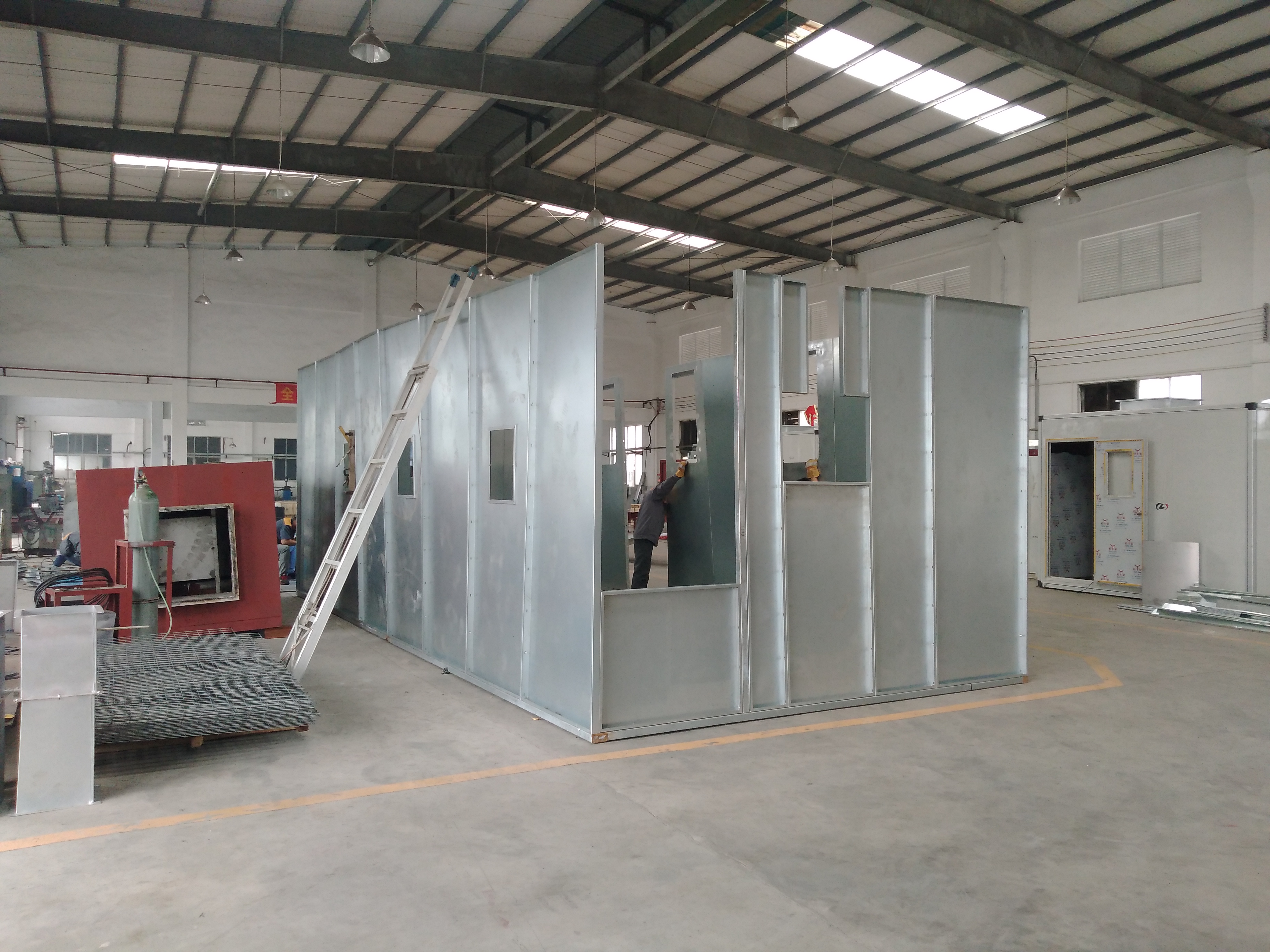
Why Compliance Easily Becomes a Slogan in Coating Line Procurement
Downstream customers of coating production lines are concentrated in industries such as cookware, automotive parts, home appliances, metal products, furniture, and industrial equipment, and the market access requirements these industries face are becoming increasingly detailed. At the same time, management system certification is already quite common among suppliers, so buyers can easily write a line on an RFQ such as 'equipment must comply with ISO and relevant food-grade standards' and then compare copies of certificates from three suppliers side by side.
This approach creates three specific problems. First, a supplier may use a single ISO 9001 certificate to respond to all compliance questions, including food-contact safety questions that should be answered by product test reports. Second, the buyer cannot determine at acceptance whether the documents are complete, because the RFQ does not list the types of documents that should be submitted at all. Third, once an end-market spot check or a customer factory audit raises an objection, the boundary of responsibility among the equipment supplier, coating material supplier, and buyer is blurred.
To make 'compliance' a clause that can be agreed, delivered, and accepted, the prerequisite is to write the three levels of requirements separately. At the management system level, specify certificates and certification scope; at the process level, specify equipment configuration, quantitative indicators, and operating records; at the product level, specify material compliance declarations and test reports. Only when the three types of clauses are separated will acceptance not become a back-and-forth blame game.
The Boundaries of Three Kinds of 'Compliance': Management Systems, Process Capability, and Product Market Access
Separate the concepts first; only then does the subsequent document verification make sense.
Management system certification targets an organization's management processes. ISO 9001 governs the establishment and operation of a quality management system, ISO 14001 governs the identification of environmental aspects and management of compliance obligations, and ISO 45001 governs hazard identification and risk control for occupational health and safety. All three are audited by third-party certification bodies against the company's management system, and the certificate states the certification scope, which does not necessarily cover all products or all factory sites of the supplier.
Process and supporting capability refers to whether the line itself can produce coatings stably and whether exhaust gas, dust, and cleanliness are controlled. The evidence at this level is equipment configuration, process parameters, operating data, and inspection records, not a certificate.
Product market access compliance targets whether the final product can be legally sold in the target market. Non-stick coatings on cookware fall within the scope of food-contact materials, and the corresponding documents are compliance documents for the material itself and migration test reports, not the factory's management system certificate.
The most common misunderstanding about these three levels is: upon seeing a supplier present an ISO 9001 certificate, one assumes its coating meets food-grade requirements. These two things are not substitutes for each other. To use an analogy, management system certification shows that the factory 'has rules,' process capability shows that it 'can make stable products,' and product market access shows that 'this finished product can be sold in this market.' The answers to the three questions are borne by different documents.
| Compliance Level | Core Question | Main Type of Evidence | Most Common Misunderstanding |
|---|---|---|---|
| Management system | Whether the company has its processes under control | ISO 9001/14001/45001 certificates and certification scope | Having a certificate means the product meets standards |
| Process and supporting equipment | Whether the line can produce stably and whether emissions are controlled | Equipment configuration, process parameters, operating and monitoring records | An equipment list means actual compliance |
| Product market access | Whether the finished product can be legally sold in the target market | Coating material compliance declaration, food-contact test report | A factory certificate can replace product reports |
What ISO 9001, ISO 14001, and ISO 45001 Each Govern and Do Not Govern
ISO 9001 Quality Management System governs consistency and traceability from design and procurement to production and after-sales. For buyers of coating production lines, its practical significance lies in whether the supplier has documented processes to control drawing changes, incoming inspection, process parameters, and factory testing. Customized coating lines involve non-standard design, so buyers should specifically confirm whether 'design and development' is within the certification scope and whether procurement control for outsourced parts (such as conveyor chains and electrical components) is included in the system. It does not prove that a certain batch of coating reaches a particular value for film thickness, adhesion, or food-contact safety.
ISO 14001 Environmental Management System governs how a company identifies environmental aspects, manages compliance obligations, and handles exhaust gas, wastewater, and solid waste. For coating lines, what is worth verifying is whether the environmental aspects list covers coating exhaust gas, wastewater, and hazardous waste, and whether the compliance obligations list corresponds to the emission regulations of the market where the project is located. It shows that the company has an environmental management methodology, but it does not mean emissions necessarily meet standards. Whether emissions meet standards depends on local emission standards, monitoring reports, and online data.
ISO 45001 Occupational Health and Safety Management System governs hazard identification, risk assessment, and occupational disease protection. Coating workshops involve solvents, dust, high temperatures, and mechanical protection; this system addresses 'whether human risks are managed on site,' not 'whether the coating complies.' The installation and commissioning stage of a production line often involves multiple parties, and whether contractors' occupational safety management is included in the system is also worth asking during a factory audit.
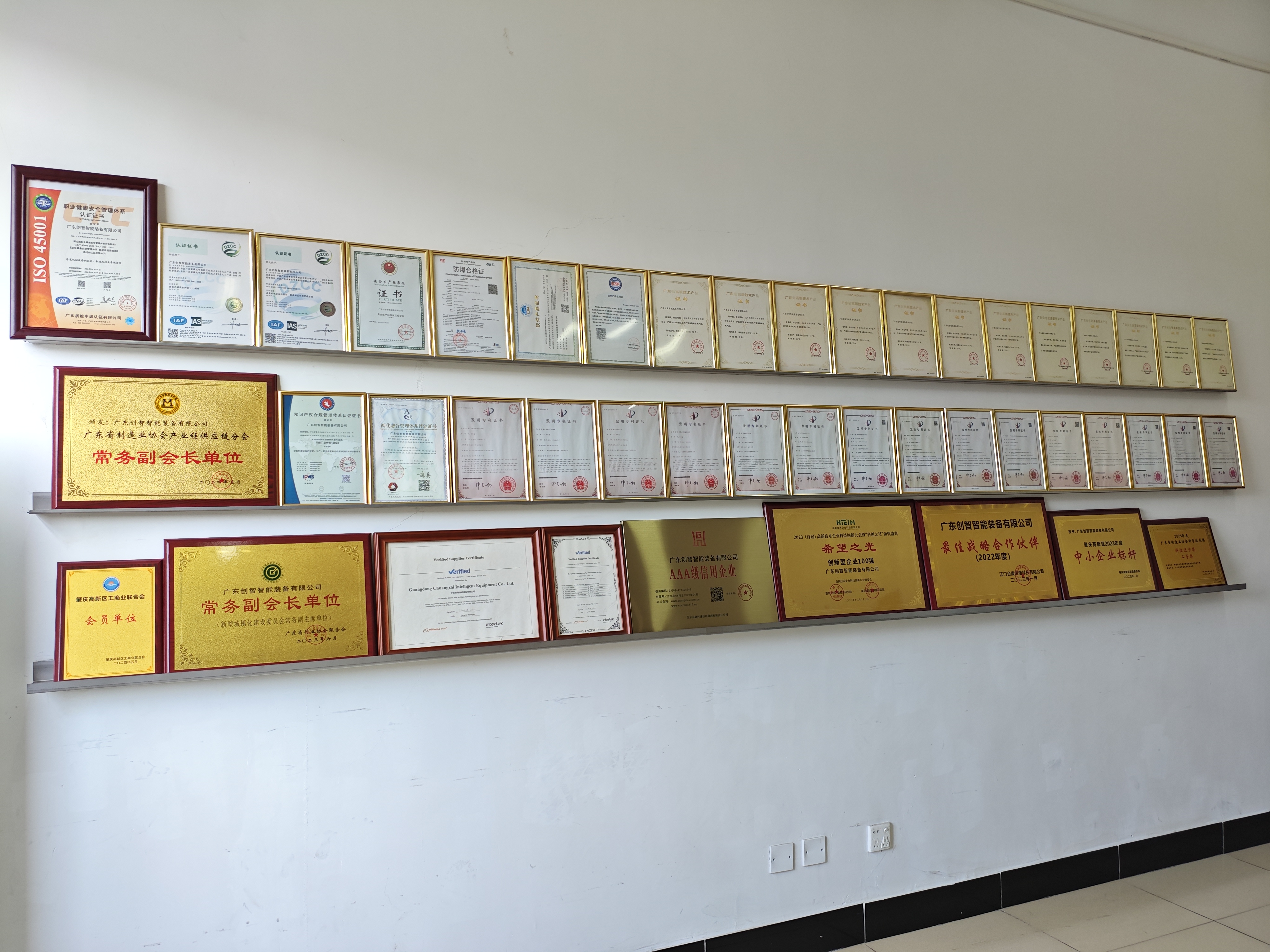
The common point of the three is that they are all certifications of a 'management system.' When verifying, buyers should confirm three things: whether the certification scope on the certificate includes the product category being purchased; whether the certificate is within its validity period; and whether the issuing body has the corresponding qualification. Looking only at the logo on a photocopy is not enough to determine whether the certificate is valid for this procurement.
Food-Grade Coatings: The Dividing Line Between Product Compliance and Management System Certification
Compliance of non-stick coatings on cookware falls at the product and material level. What buyers need are compliance declarations for coating materials, food-contact material test reports, and documents that can correspond to specific coating models and curing conditions. The common point of these documents is that they point to 'the finished product made with this coating under these process conditions,' not 'this factory has a quality management system.'
Taking Attractivechina's 20 automatic cookware coating lines as an example, these lines are distributed in markets such as China, Russia, Iran, India, Bangladesh, Vietnam, and Thailand. They spray PTFE non-stick coatings, anti-rust primers, and high-temperature-resistant topcoats for frying pans, stock pots, and baking trays. They have operated for 5 to 10 years, achieving coating uniformity of 98%, non-stick performance meeting international food-grade standards, a 30% reduction in coating waste, a 35% increase in production efficiency, and no major quality complaints. This set of data has two uses in this article, but they must be understood separately.
First, 98% coating uniformity is an indicator of process stability. Consistent film thickness helps ensure consistent performance between batches and also makes food-contact test results more repeatable. Second, 'non-stick performance meeting international food-grade standards' is a conclusion at the product level, and it still corresponds to specific standard numbers and test reports. Only when the two are viewed together do they form a complete evidence chain; looking at only one of them leads to the kind of confusion described at the beginning of this article.
Here, we need to be precise: strong process capability can reduce the difficulty of achieving product compliance, but it cannot automatically generate compliance documents. In the contract, buyers should clearly state 'which reports are to be submitted, who issues them, and which models they cover,' rather than accepting an oral statement such as 'our coating meets food-grade requirements.'
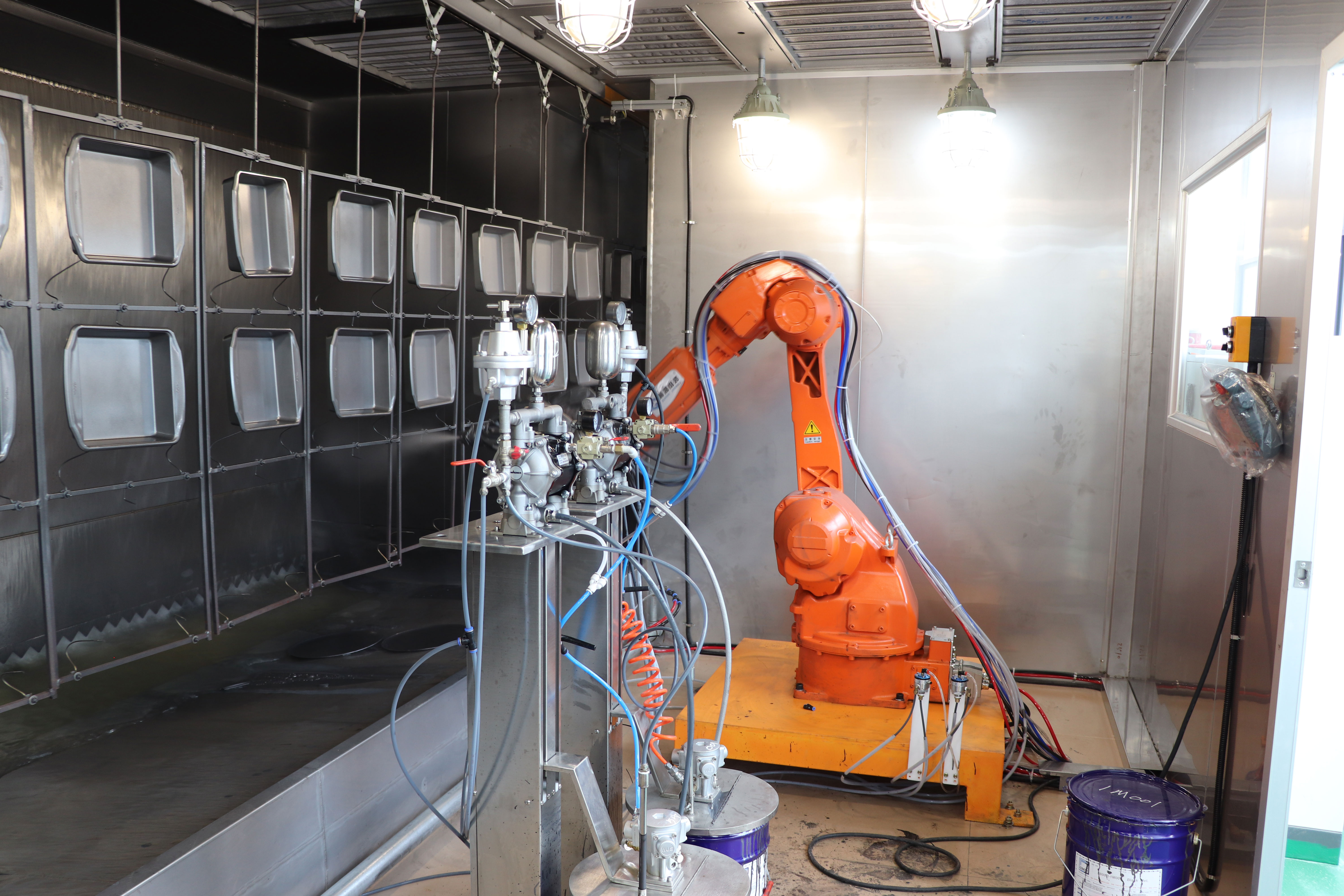
Looking at 'Verifiable' Operating Evidence from the 20 Cookware Lines
The value of case data is not that the numbers look good, but whether they can be broken down into verifiable items. 20 lines, 5 to 10 years, 98% uniformity, 30% waste reduction, 35% efficiency improvement, and no major quality complaints—this set of data answers 'whether this line is stable under mass production conditions,' not 'whether this line can pass a certain country's certification.' The practical use for buyers is to treat 'uniformity,' 'waste rate,' and 'efficiency' as quantitative indicators that can be agreed at acceptance, and to specify measurement methods, sampling rules, and judgment criteria in the contract. As for food-grade compliance, separately specify the list of materials to be submitted. Only when the two types of clauses are written separately will acceptance not become a back-and-forth blame game. This is also a key step in turning 'compliance' from an adjective into an enforceable clause.
The same logic applies to other production lines. In the case of automatic metal coating lines, 15 lines have operated for 5 to 10 years, with a coating yield of 97%, a 30% reduction in coating and powder consumption, a 22% reduction in energy consumption, and a 40% increase in efficiency; in the case of industrial equipment coating lines, 10 lines have coating adhesion and salt-spray resistance meeting industry standards (salt spray test ≥1000 hours), a yield of 98%, and a 25% reduction in paint consumption. These are all evidence of process capability and need to be archived separately from product compliance documents: the former supports equipment acceptance, while the latter supports market access.
It should be noted that the market distribution and operating years in the cases show that the supplier has delivery and operating experience in these scenarios; they do not mean that it has completed local registration or certification in every target market. Buyers should still verify documents separately according to the market where the project is located.
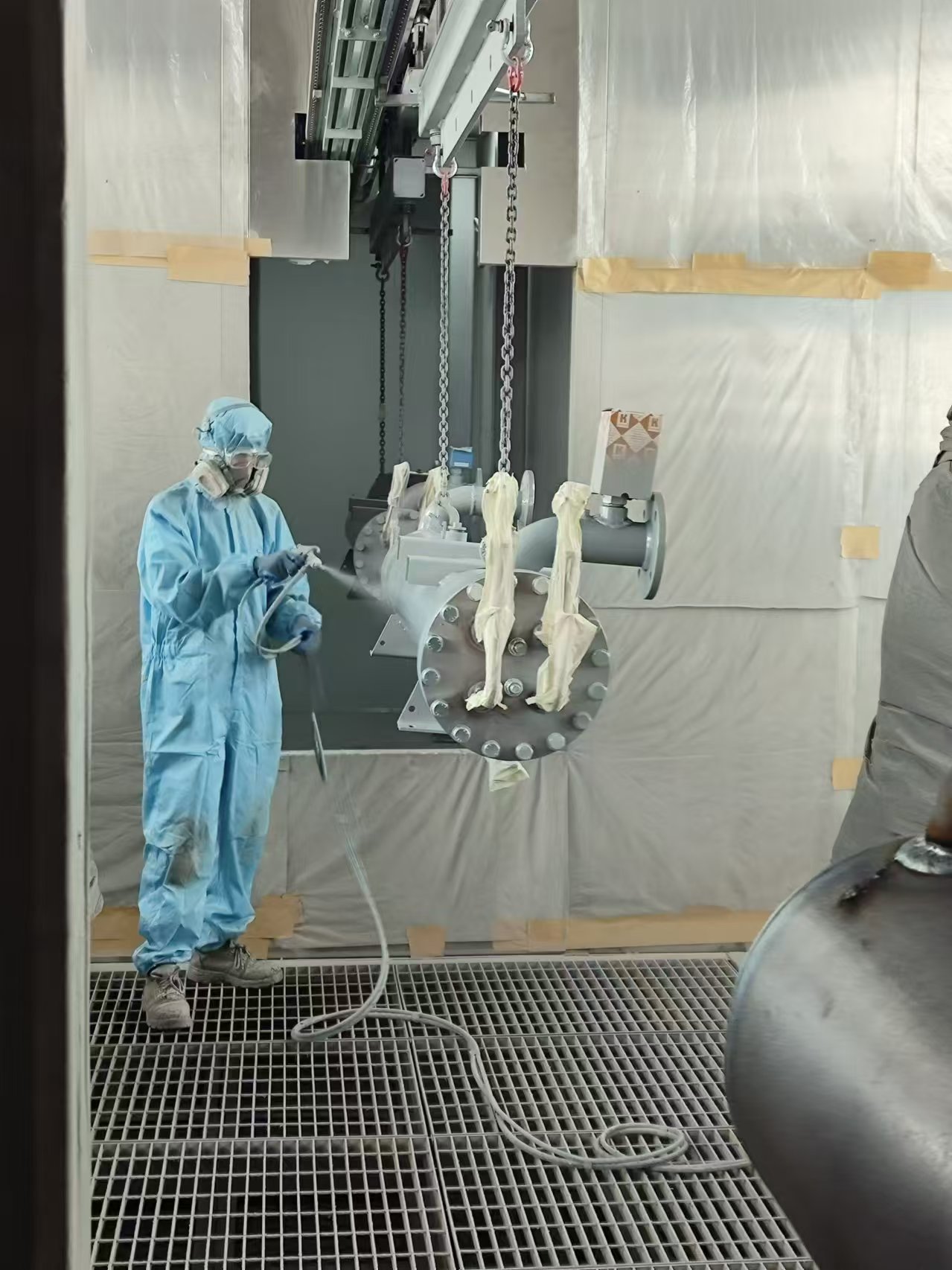
How Supporting Equipment Supports Compliance: VOCs, Dust Removal, and Class 10,000 Cleanrooms
Compliance is not remedied through final inspection; it is built through production line configuration. Attractivechina's coating line supporting equipment includes pretreatment equipment, drying equipment, automatic sandblasting machines, paint spray booths, preheating ovens, curing ovens, cooling systems, conveyor systems, dust removal equipment, VOCs treatment systems, environmental protection equipment, electrical control systems, and MES production management systems, with an indoor Class 10,000 cleanroom working environment. Mapping these supporting systems to the three levels of compliance makes the relationships much clearer.
Environmental Level: VOCs Treatment Systems and Environmental Protection Equipment
VOCs treatment systems correspond to exhaust gas emission control. Whether exhaust gas meets standards depends on the treatment process, air volume design, and operation and maintenance; it is not automatically true just because 'VOCs treatment' is written on an equipment list. Buyers should request treatment process descriptions, design air volume, and emission concentration calculations, and compare them item by item with the current emission standards of the market where the project is located. Monitoring records after operation are the direct evidence of emission compliance.
Quality Level: Dust Removal Equipment and Class 10,000 Cleanrooms
Dust spots, particle size, and appearance defects in coatings often come from environmental cleanliness and pretreatment residue. Dust removal equipment and Class 10,000 cleanrooms correspond to this level. What buyers should verify is environmental parameter records, filtration system configuration, and pressure differential management, not just workshop photos. Only with good cleanliness control can coating uniformity have a stable foundation.
Traceability Level: MES Production Management System
MES corresponds to the traceability of parameters and batches. Information published by Attractivechina shows that automotive parts coating lines equipped with MES can achieve a first-pass yield of over 95%. Traceable parameter records are far more useful than oral explanations during customer factory audits or market spot checks; they make the question 'under what conditions was this batch of products made' verifiable.
It should be noted that the equipment list itself is only a 'capability statement.' It proves that the line has these configurations; it does not prove that emissions necessarily meet standards, nor that products necessarily pass food-contact tests. What is truly used for compliance is configuration plus operating records and inspection reports.
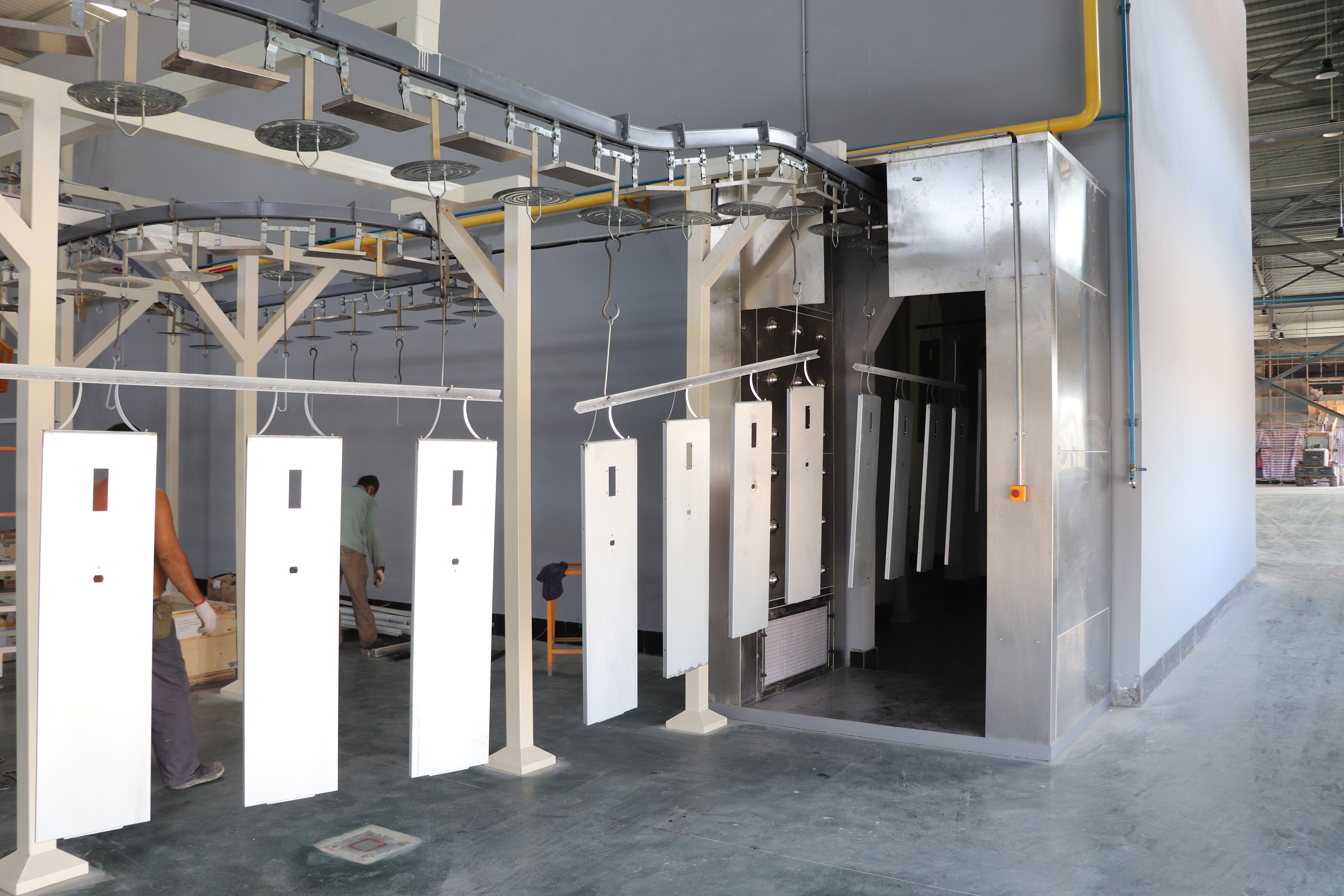
Document Context for Regional Markets: Vietnam, Indonesia, Mexico, the United States, and the UAE
Attractivechina's export markets include Vietnam, Indonesia, Mexico, the United States, the UAE, Thailand, Turkey, Saudi Arabia, Russia, Brazil, India, Pakistan, Bangladesh, Argentina, Singapore, Iran, and others. Regulatory pathways differ by market, but the actions buyers need to take can be summarized into the same set: request documents item by item across four dimensions: 'food-contact materials,' 'VOCs and exhaust emissions,' 'occupational safety,' and 'import customs clearance.' The following organizes the document context by common project countries; specific limit values and mandatory lists must still be based on the latest official texts of the country where the project is located.
Vietnam
Vietnam is a market with a concentration of foreign-invested manufacturing, and coating lines are mostly used for cookware, home appliances, metal products, and automotive parts. In terms of document context, buyers should prepare food-contact compliance declarations for coating materials (if the product is cookware or food-contact utensils), paint MSDS and VOCs treatment process descriptions, equipment import lists and conformity documents, and workshop occupational safety configuration descriptions. If an existing production line is being relocated, documents of origin and equipment condition records also need to be verified.
Indonesia
In the Indonesian market, local procurement and imports coexist, and import permits and equipment customs clearance documents are often the critical path for project schedules. Compliance documents should include food-contact compliance documents for coating materials, exhaust gas treatment design descriptions, occupational safety protection configurations, and product conformity declarations corresponding to local import requirements. Buyers should confirm the allocation of customs clearance responsibility before signing the contract to avoid equipment being stranded at port due to incomplete documents.
Mexico
Mexico is adjacent to the U.S. market, and the automotive and home appliance supply chains have many customer-specific requirements. In addition to the general three-level documents, buyers often need to prepare additional process capability data and inspection records required by end customers. For food-contact products, coating material compliance declarations and test reports should be prepared; emission and occupational safety documents should be verified against current local requirements. If the product is ultimately sold to the United States, the food-contact material compliance pathway also needs to be confirmed with the end customer.
United States
The United States has an established regulatory framework for food-contact materials. Buyers should request the corresponding compliance declarations and test reports, and confirm the coating models, test conditions, and validity periods covered by the reports. On emissions, requirements may differ among states and local air quality management districts; occupational safety is also governed by the corresponding regulatory framework. In practice, it is recommended that the buyer or end brand lead the confirmation of applicable requirements, with the equipment supplier providing supporting technical documents and operating data.
UAE
The UAE is both a local manufacturing market and a regional re-export hub. In terms of document context, in addition to food-contact compliance and emission control documents, customs clearance and re-export documents are given greater importance. The local high-temperature environment imposes additional requirements on the stability of curing ovens, cooling systems, and electrical controls; buyers should specify environmental adaptability parameters and commissioning conditions in the technical agreement.
Procurement Acceptance: A Verifiable Compliance Document Checklist
Condense the above into a table and check off each item during acceptance. The point of the table is not that more documents are better, but that each document must be able to answer 'what it proves, what it does not prove, who to request it from, and how to verify it.'
| Document Category | What It Can Prove | What It Cannot Prove | Verification Points |
|---|---|---|---|
| ISO 9001 certificate | The supplier has a documented quality management system, and the certification scope covers the relevant products | That a certain batch of coating meets standards for film thickness, adhesion, or food-contact safety | Check certification scope, validity period, and issuing body; confirm whether design and development are within scope |
| ISO 14001 certificate | The supplier has a mechanism for identifying environmental aspects and managing compliance obligations | That exhaust emissions necessarily meet the standards of the market where the project is located | Check whether the environmental aspects list covers coating exhaust gas, wastewater, and hazardous waste |
| ISO 45001 certificate | The supplier has a mechanism for occupational health and safety hazard identification and risk control | That coating products meet food-grade requirements | Check whether hazard identification covers solvents, dust, high temperature, machinery, and electricity |
| Coating material compliance declaration | The coating material complies with specific food-contact material regulations | The process capability and batch stability of the entire production line | Confirm material model, applicable scope, and validity period of the declaration |
| Food-contact test report | Migration or safety results for a specific coating under specific conditions | That other models or other curing conditions also meet standards | Check test standard, test conditions, testing organization, and report validity period |
| VOCs treatment process and calculations | Design basis and expected effect of the exhaust gas treatment system | That actual operation necessarily meets standards | Require design air volume, emission concentration calculations, and comparison with local standards |
| Operating and inspection records | Stability of the production line under mass production conditions | That future batches will necessarily maintain the same level | Check record cycle, sampling rules, and handling of abnormalities |
| Import customs clearance documents | Equipment and materials meet import procedure requirements | That products comply with the technical regulations of the target market | Verify country of origin, packing list, conformity declaration, and allocation of responsibility |
The principle for using the table is: every document must correspond to a specific product model, process condition, and validity period. When you see a certificate, first look at the certification scope; when you see a report, first look at the test object and test conditions; when you see 'meets international standards,' first ask for the standard number. If these three points can be done, most ambiguous areas of paper compliance will be exposed.
Common Misunderstandings and Boundaries
- Treating management system certificates as product certificates: ISO 9001 covers processes, not the food-contact safety of coatings. The two types of documents should be archived separately.
- Looking only at certificate photocopies: Verify the certification scope, validity period, and issuing body, and inquire with the certification body when necessary. When the certification scope does not cover the product being purchased, the certificate's reference value is limited.
- Treating the supplier's certificate as one's own compliance: When the buyer imports or sells products, the responsible party is the buyer, who needs its own conformity documents and technical files.
- Treating oral promises recorded in meeting minutes as compliance: Acceptance clauses should specify the specific documents, submission timing, and handling of nonconformities, rather than stopping at 'the supplier says it complies.'
- Ignoring version changes in regional standards: Coating VOC limits and food-contact material lists may be updated. Before signing, confirm that the current version is cited and specify the handling mechanism when standards are updated.
- Treating case data as certification: 98% uniformity and 30% waste reduction are evidence of process capability and cannot replace product compliance documents; conversely, a test report cannot demonstrate the stability of the entire production line.
Frequently Asked Questions (FAQ)
Conclusion
Breaking down compliance of a coating production line reveals three things: management system certification addresses 'whether the company has its processes under control'; process and supporting equipment address 'whether the line can produce stably and whether emissions are controlled'; and product market access addresses 'whether the finished product can be legally sold in the target market.' The 98% coating uniformity and 30% coating waste reduction of the 20 automatic cookware coating lines are evidence of process capability; food-grade compliance still has to return to material declarations and test reports. Verifying these three levels separately reduces procurement risk more effectively than writing 'must comply with relevant certifications' on an RFQ.
For buyers currently conducting research and evaluation, the next step is not to rush into price comparison, but to first list the documents required by the market where the project is located and then request them from suppliers item by item. Only when documents match models, conditions, and validity periods can there be a basis for discussing compliance.
Need to further verify production line configuration and the scope of documents? Please refer to Attractivechina'scompany brochure to learn about the supporting equipment and application scope of coating production lines, and then organize the compliance documents to be submitted according to the market where the project is located.
Have Questions or Need More Details?
Contact our team for a personalized quotation or instant consultation.
Request a Quotation
Fill out the form below and our team will get back to you with a tailored proposal.
WhatsApp Direct Chat
Prefer to chat in real-time? Message us on WhatsApp for instant assistance & quick answers.
- Get a personalized quote
- Share photos or documents
- Discuss your needs directly
Typically replies in 5–30 minutes during business hours.