Fuel Tank Coating Line with Stainless Steel Booth and Robot Spraying
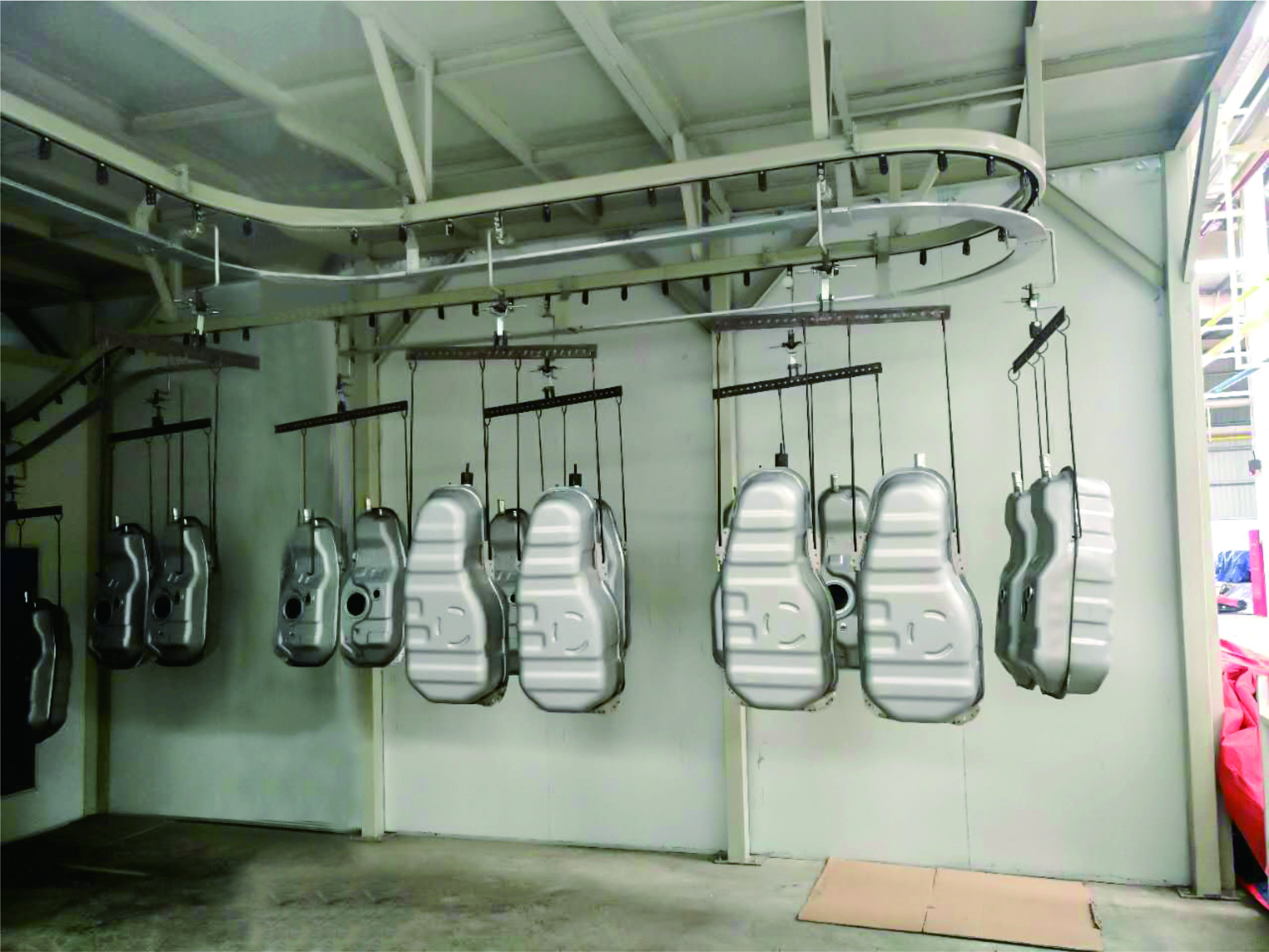
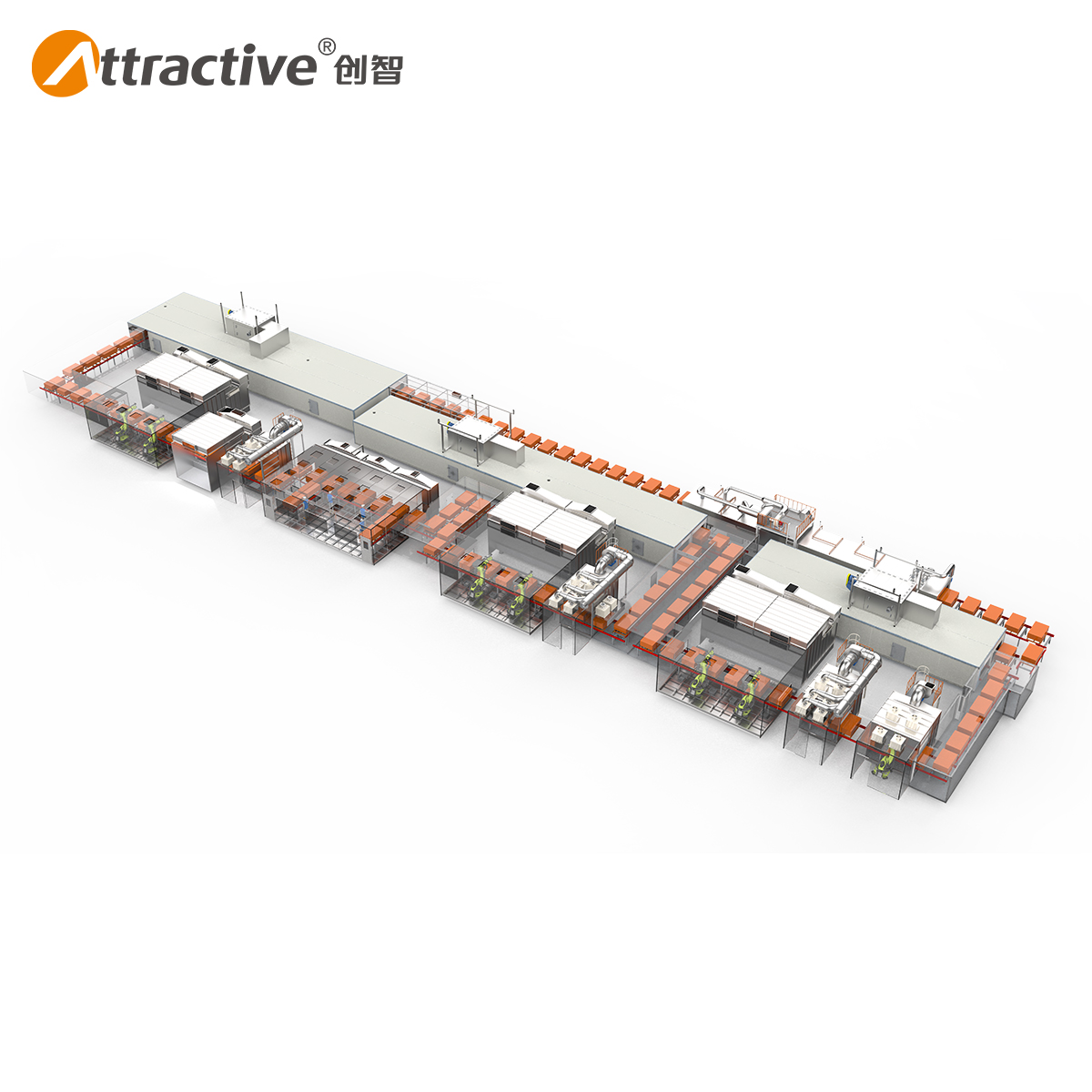
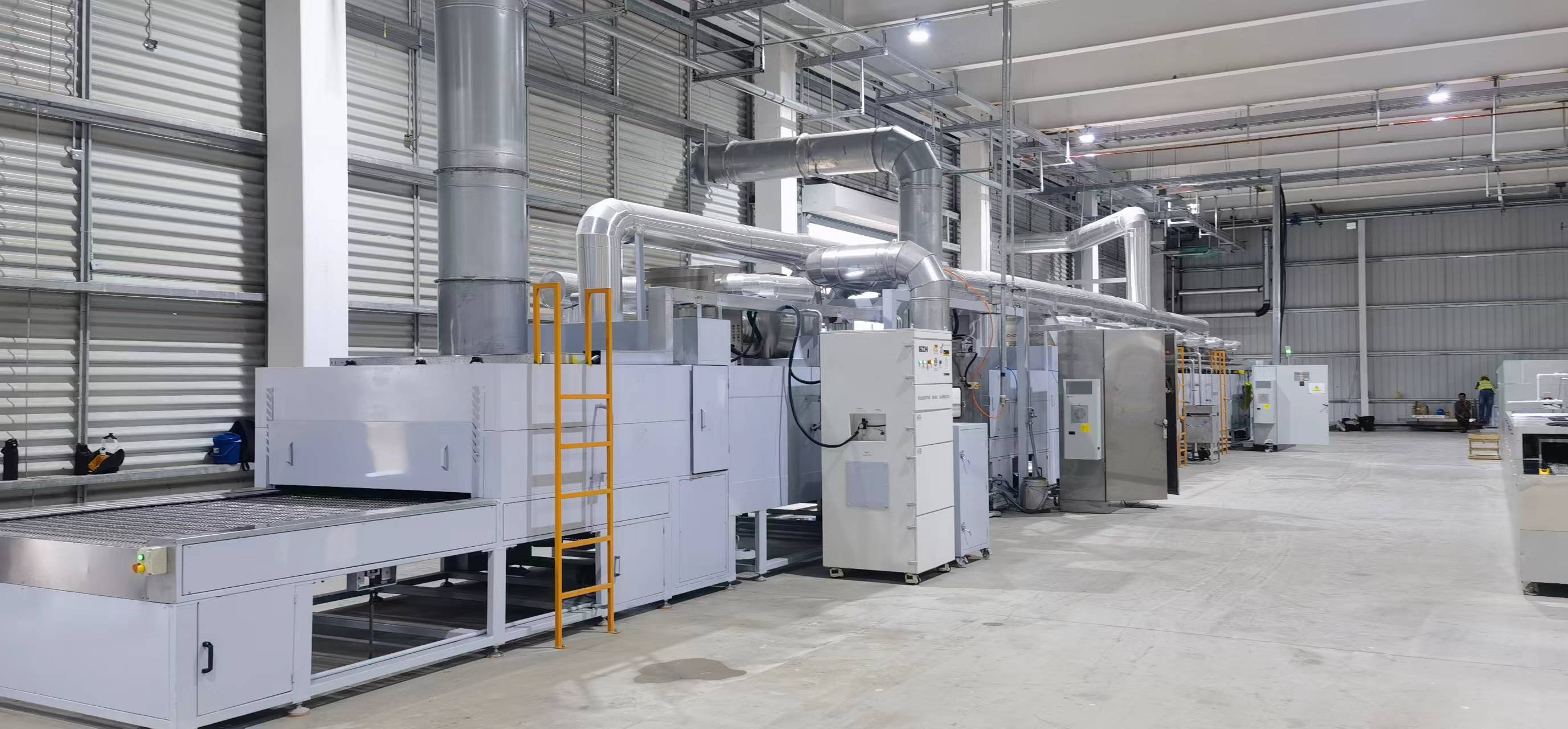
Fuel tank coating line – spray zoneParts coating line – overviewHigh-temperature curing oven
Product Summary
This fuel tank coating line is the tank configuration of the automatic automotive parts coating platform. Tanks are carried on pallets by a supported conveyor in offline mode, sprayed by robots inside a stainless steel booth held at 25 ± 2 °C and 65 ± 10% RH, and cured in a high-temperature curing oven before unloading.
The reference line data is 45 s per pallet, about 1760 pallets per day on a 336-day, 22-hour working year at 85% equipment utilisation, with pallets up to 1350 × 900 × 200 mm inside a 100 m × 38 m × 5.4 m building envelope. Tank fixtures, loading orientation and booth access are engineered against your tank drawings, since tank geometry differs widely between vehicle programmes.
Key Features
Stainless steel spray booth and piping – the wet zone is stainless steel, which is the right choice for the solvent- and cleaning-agent exposure of a tank booth.
Robotic spraying in offline mode – robots handle the coating pass while pallets travel offline, keeping paths repeatable for bulky tank shapes.
High-temperature curing oven – curing is a dedicated in-line station after spraying, so tanks do not leave the line between coat and bake.
1350 × 900 × 200 mm pallet envelope – the largest pallet size in the reference data, sized for long automotive parts including tanks and frames.
45 s pallet cycle, 1760 pallets/day – a defined takt to plan shift output and buffer capacity against.
25 ± 2 °C and 65 ± 10% RH – booth climate held within a narrow band for coating consistency across a 22-hour working day.
Carbon steel frame; stainless steel booth and piping
Energy supply
Electricity, natural gas, steam, chilled water
Models and Options
The platform covers bumper coating line, alloy wheel coating line, wheel hub cap coating line, fuel tank coating line, frame coating line, automotive interior parts coating line and car logo coating line. This page describes the fuel tank configuration; the frame coating line shares the same large-part pallet standard for long structural components.
Materials and Structure
Carbon steel carries the main structural loads of the line, while booth panels and piping are stainless steel. The transfer system is a supported conveyor that moves loaded pallets between pretreatment, spraying and curing. Electricity, natural gas, steam and chilled water are distributed to the booth conditioning and oven sections.
Applications
Automotive parts plants coating fuel tanks and comparable large hollow or long components that need a robot-sprayed finish and an in-line bake. It suits suppliers running a fixed takt with limited manual handling inside the spray zone.
Customization
Attractivechina handles pre-sales plant planning, design, manufacturing, installation, commissioning and after-sales in one scope, and adapts the layout and fixtures to the buyer's tank range, building volume and output target. The company holds 79 invention patents and more than 300 patents in total and works from a 35,548 m² factory with 54 engineers.
FAQ
What is this tank line configured to coat?
It is the fuel tank configuration of the automotive parts coating platform. Fixtures and loading orientation are engineered per tank drawing.
Which stations does the line include?
Pretreatment, a stainless steel spray booth with robotic spraying, a high-temperature curing oven and a supported pallet conveyor.
What cycle time and output are quoted?
45 s per pallet in the reference configuration, equal to 1760 pallets per day on a 336-day, 22-hour working year at 85% equipment utilisation.
What is the maximum pallet size?
1350 × 900 × 200 mm (L × W × H), the largest pallet in the reference data.
What booth climate and utilities are required?
Booth at 25 ± 2 °C and 65 ± 10% RH; utilities are electricity, natural gas, steam and chilled water.
How much space does the line occupy?
The reference envelope is 100 m × 38 m × 5.4 m; pre-sales plant planning is used to fit the layout to your building.
Inquiry Information
Send tank drawings and output targets for a line configuration review
fuel-tank-coating-line-spray-zone.png — Alt: Fuel tank coating line with tank pallets moving through the spray zone
fuel-tank-coating-line-overview.png — Alt: Automotive parts coating line overview covering tank and frame capability
fuel-tank-coating-line-curing-oven.png — Alt: High-temperature curing oven positioned after the tank spray booth
SEO and URL Reference
SEO Title: Fuel Tank Coating Line with Stainless Steel Booth and Robot Spraying
Meta Description: Fuel tank coating line with a stainless steel spray booth, offline conveyor transport, robotic spraying and a high-temperature curing oven for large parts.
 ✓ Verified Elite Supplier