
Adaptation of the coating line for pans, shapes and liners
Adapting a Coating Line for Frying Pans, Molds, and Inserts
Short answer. Adapting a cookware coating line starts with three checks: the product dimensions must fall within the line's range, the hanging scheme must match the product type, and the calculated conveyor speed must be consistent with the curing oven and the anodizing line. For the model “Cookware Coating Line,” Attractivechina specifies a standard size of Φ220×160 mm, maximum size Φ300×160 mm, workpiece pitch 450–900 mm, two hanging options—4 inner pots or 20 lids—capacity 800–1000 pcs/h, curing oven speed 0.5–1.5 m/min, and anodizing line speed 1200 mm/min.
Attractivechina is a brand of Chuangzhi Intelligent Equipment (Guangdong) Co., Ltd., a manufacturer of automated coating lines founded in 2005. The company has a production area of about 35,548 m², a staff of 280 employees, and a team of 54 engineers. For the project, what matters is not only the model name but also how its parameters fit a specific size range of frying pans, rice cooker inserts, and baking molds.
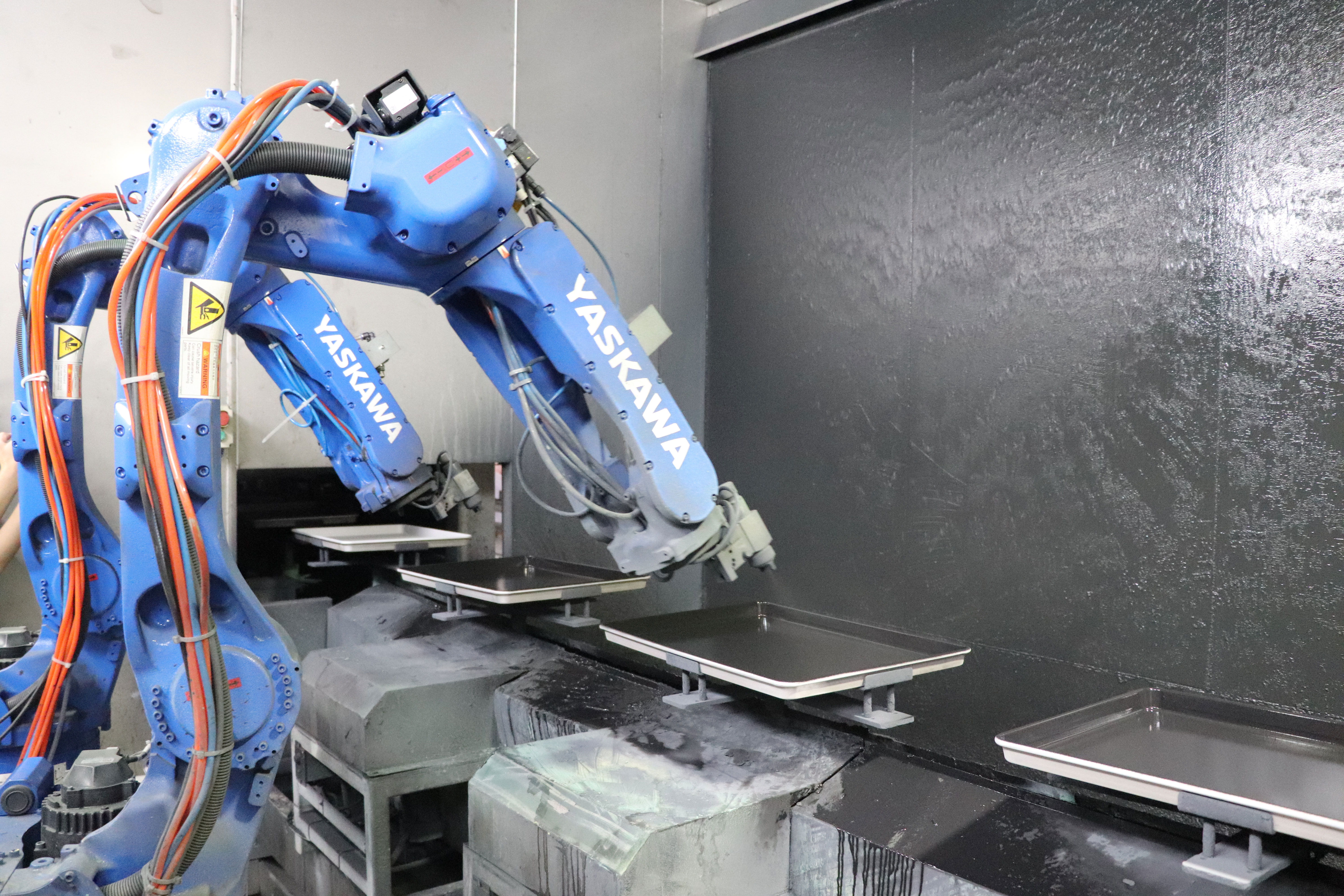
What Exactly Is Adapted in a Cookware Coating Line
Line adaptation is not changing the model name or selecting a universal setting. It is checking how a specific product range passes through the line sections: loading, pretreatment, coating, curing, cooling, and unloading. A frying pan, a rice cooker insert, and a baking mold may differ in diameter, height, seating surface, and gripping method. Therefore, the same line may be suitable for one group of products and require a review of tooling for another.
The stated model parameters already contain limits that must be taken as the starting point. The standard product size is Φ220×160 mm, the maximum is Φ300×160 mm. If a product is taller than 160 mm or its diameter is greater than 300 mm, it exceeds the stated maximum. This does not mean that any cookware smaller than the maximum automatically passes: the hanging scheme, pitch, and actual tooling must still be checked separately.
- Frying pans: diameter, rim height, and stability on the hanger are important.
- Rice cooker inserts: seating geometry and repeatability of position on the hanger are important.
- Baking molds: overall dimensions, height, and absence of contact between products at a pitch of 450–900 mm are important.
- Lids: a separate scheme is provided for them—20 lids per hanger.
Industrial Context: Why One Speed Is Not Enough
In cookware production, the line must work not with a single product but with a repeating product range. If the line is rated at 800–1000 pcs/h, this does not mean that this rate is maintained for any mix of frying pans, inserts, and molds. Capacity depends on how many products are placed on a hanger, what the pitch between hangers is, and what speed the curing oven can maintain stably.
The project materials for cookware specify aluminum alloy and composite materials, including stainless steel, aluminum alloy, and copper. For products made of these materials, not only geometry but also surface preparation is important. Attractivechina's integrated solutions include pretreatment equipment, an automatic sandblasting machine, a painting booth, a preheating oven, a curing oven, a cooling system, a conveyor system, dust removal, and a volatile organic compound treatment system.
In Attractivechina's case for cookware manufacturers, 20 complete automatic lines are indicated. The project description mentions PTFE non-stick coating, anti-corrosion primer, and heat-resistant topcoat for frying pans, pots, and baking trays. The stated results include coating uniformity up to 98%, a 30% reduction in paint waste, and a 35% increase in production efficiency. These figures relate to a specific program and serve as a benchmark, not a guarantee for any workshop.
Basic Configuration of the “Cookware Coating Line” Model
Below are only the parameters that set the boundaries of adaptation. They are convenient to use as a checklist when first comparing a technical specification with the line's capabilities.
| Parameter | Stated value | What to check against the product range |
|---|---|---|
| Product range | Non-stick frying pan, rice cooker insert, baking mold | Match between product type and tooling |
| Product material | Aluminum alloy; composite materials: stainless steel, aluminum alloy, copper | Surface preparation and coating suitability |
| Standard size | Φ220×160 mm (height) | Basic hanger setting |
| Maximum size | Φ300×160 mm (height) | Exceeding diameter or height |
| Product feature | Does not warp | Stability of position on the hanger |
| Capacity | 800–1000 pcs/h | Product mix and hanger loading |
| Workpiece pitch | 450–900 mm | Dimensions, tooling, and speed |
| Hanging | 4 inner pots or 20 lids | Product type and loading density |
| Anodizing line speed | 1200 mm/min | Coordination with oven and accumulation |
| Curing oven speed | 1000 mm/min, adjustable 0.5–1.5 m/min | Calculated conveyor speed |
| Power supply | Natural gas and electricity | Availability of energy carriers |
| Line material | Carbon steel—main frame; stainless steel—painting booth and pipelines | Operating and maintenance conditions |
Hanging Scheme: 4 Inner Pots or 20 Lids
Choosing the hanging scheme is the first practical adaptation step. The model parameters directly specify two options: 4 inner pots per hanger and 20 lids per hanger. These are not interchangeable modes for any product range. Four positions provide a larger product placement, while twenty positions are intended for lids and increase loading density.
For frying pans and molds, what matters more is not maximum density but stable product position and no contact between adjacent positions. For lids, by contrast, it makes sense to use the 20-position scheme because it allows more products to be placed on one hanger. But the higher the density, the more the calculated conveyor speed depends on the pitch and on how many products are actually counted in the capacity.
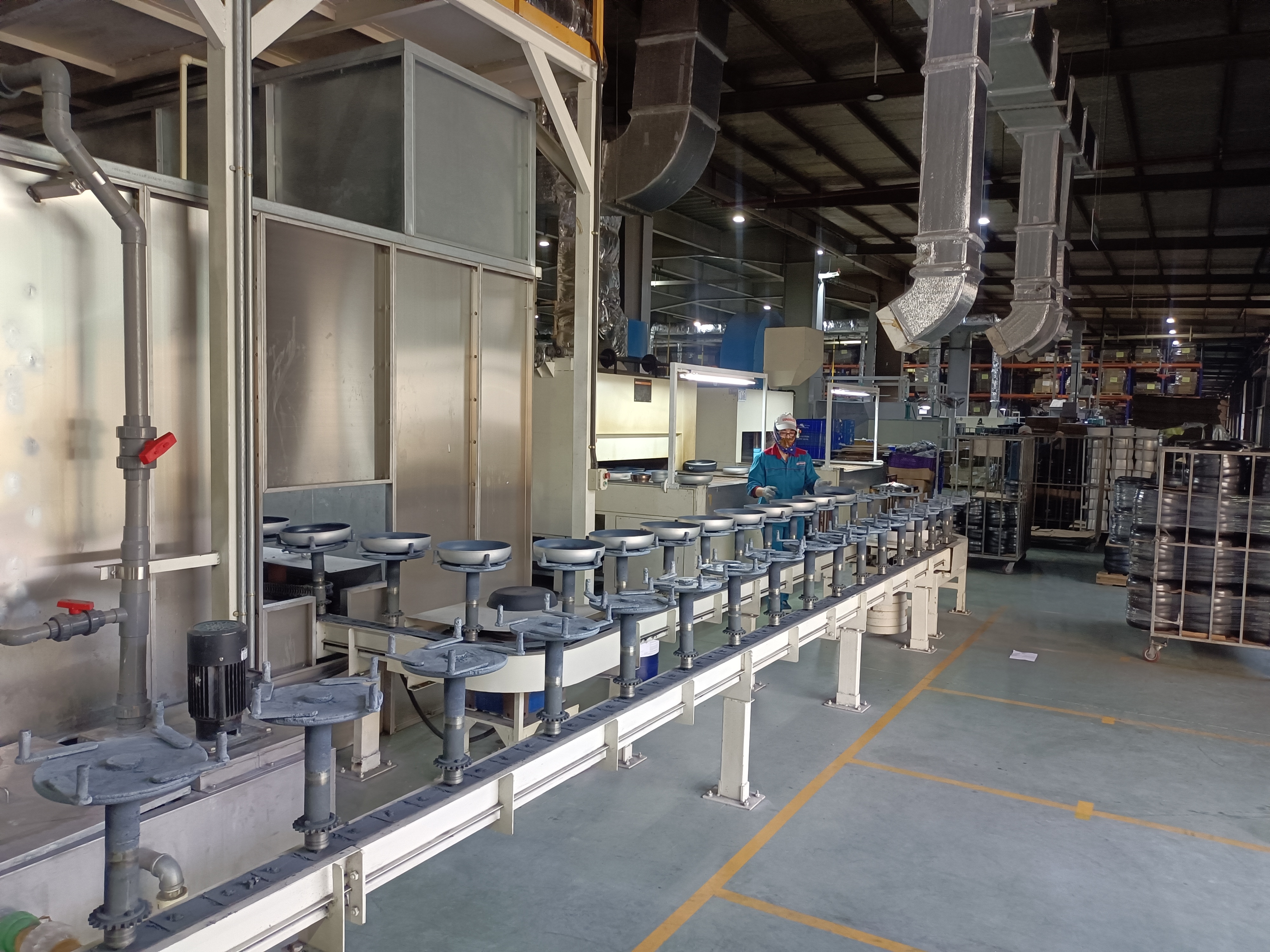
Pitch of 450–900 mm and Dimensional Constraints
The pitch of 450–900 mm is the distance between hangers, not the product size. With a standard product of Φ220×160 mm and a maximum of Φ300×160 mm, a pitch of 450 mm remains the minimum boundary of the range. Nominally, with a diameter of 300 mm and a pitch of 450 mm, about 150 mm remains between the product dimensions if the products are oriented without protruding elements. The actual layout must still be checked against the tooling, because protrusions, rims, and the gripping method can change the result.
The height of 160 mm is an important limitation. If a baking mold or insert is taller than 160 mm, the model does not fit the stated maximum. If the product is lower but has a wide rim, this may affect the choice of pitch and hanging scheme. Therefore, it is not enough to specify “frying pan” or “mold” in the technical specification: diameter, height, and a description of the seating surface are required.
A pitch of 900 mm provides more space between hangers but reduces loading density at the same conveyor speed. A pitch of 450 mm increases density but requires more careful checking of clearances and oven speed. The choice of pitch is a compromise between product geometry and capacity, not a fixed setting “for all cookware.”
How to Link 800–1000 pcs/h, an Oven at 0.5–1.5 m/min, and Anodizing at 1200 mm/min
The relationship is calculated through the number of products per hanger. If capacity is denoted as P (pcs/h), pitch as S (m), and the number of products per hanger as N, the required conveyor speed will be V = P × S / N. The result is in m/h; to compare it with the oven, divide it by 60 to obtain m/min. This is a calculation based on the stated parameters, not a measured speed of a specific line.
| Hanging scheme | Pitch | 800 pcs/h | 1000 pcs/h | Conclusion for oven 0.5–1.5 m/min |
|---|---|---|---|---|
| 4 inner pots | 450 mm | 1.50 m/min | 1.88 m/min | 800 pcs/h—at the upper limit; 1000 pcs/h—above the range |
| 4 inner pots | 900 mm | 3.00 m/min | 3.75 m/min | Above the oven range |
| 20 lids | 450 mm | 0.30 m/min | 0.38 m/min | Below the minimum oven speed |
| 20 lids | 900 mm | 0.60 m/min | 0.75 m/min | Within the oven range |
The calculation shows that the stated 800–1000 pcs/h cannot be mechanically transferred to any scheme. For four inner pots at a pitch of 450 mm and 800 pcs/h, the calculated speed is 1.5 m/min, i.e., the upper limit of the oven. At 1000 pcs/h it is already above 1.5 m/min. At a pitch of 900 mm, the speed goes beyond the oven range even more noticeably. For twenty lids at a pitch of 900 mm, the calculation gives 0.60–0.75 m/min, which falls within the oven's adjustable range.
The anodizing line speed of 1200 mm/min equals 1.2 m/min. This value is within the oven range of 0.5–1.5 m/min, but anodizing and curing are different sections. If the oven operates at 0.5–0.75 m/min, anodizing runs faster, and the sections must be coordinated by cycle time, accumulation, or loading. If the oven is set to 1.2–1.5 m/min, the speeds are closer, but the actual tooling and the number of products per hanger still need to be checked. A capacity of 800–1000 pcs/h is not determined by one anodizing speed.
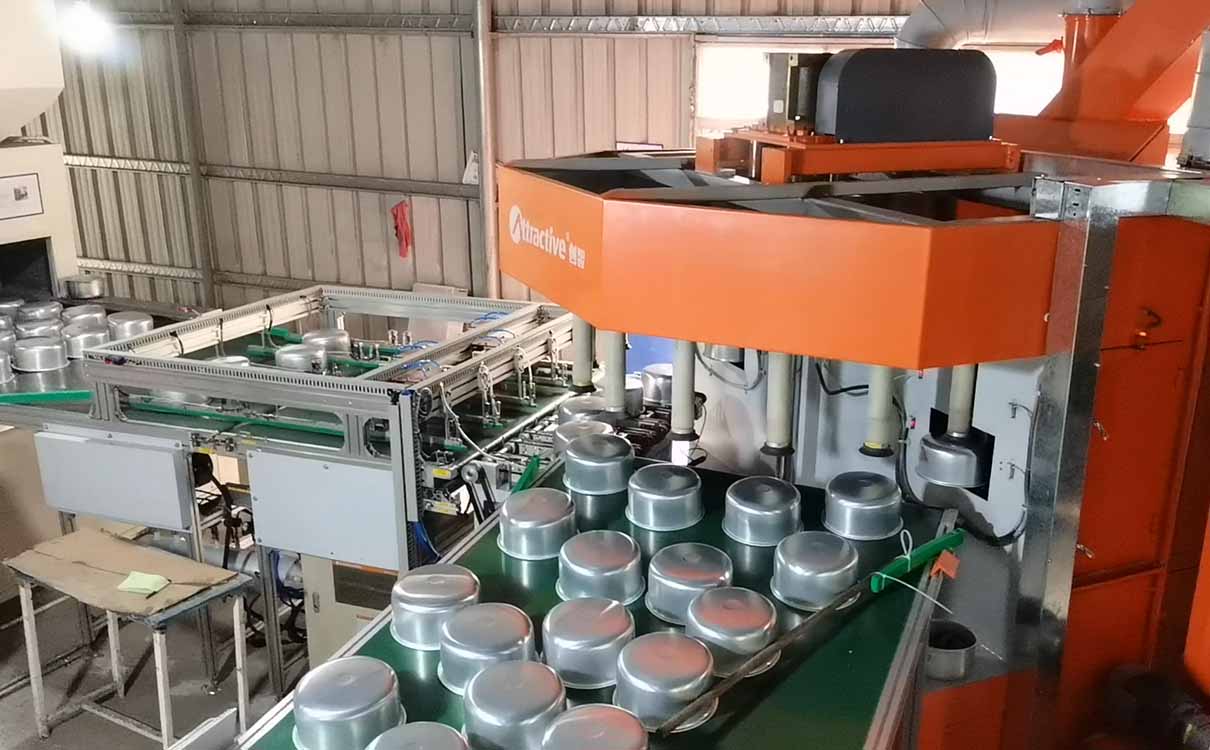
Step-by-Step Adaptation for Frying Pans, Inserts, and Molds
- Compile a product list. For each item, specify diameter, height, material, and coating type. Immediately exclude products taller than 160 mm and with a diameter greater than 300 mm if we are talking about the model's stated maximum.
- Choose the hanging scheme. For frying pans and molds, check the option with 4 inner pots. For lids, consider 20 positions. Do not mix these schemes without confirming the tooling.
- Assign a pitch within the range of 450–900 mm. For compact product ranges, start with 450 mm; for products with a wide rim or protrusions, check 900 mm. The actual clearance is confirmed by the layout.
- Calculate the conveyor speed. Use the formula V = P × S / N. Compare the result with the oven's adjustable range of 0.5–1.5 m/min. If the calculation goes beyond the range, change the pitch, hanger loading, or confirm different tooling.
- Check anodizing. Check how the speed of 1200 mm/min combines with the selected oven speed and whether accumulation between sections is needed. In the technical specification, record not only the speed but also the synchronization method.
- Check materials and preparation. For aluminum alloy and composite materials, clarify pretreatment, sandblasting cleaning, and the suitability of the selected coating.
- Check the infrastructure. The line uses natural gas and electricity. For the premises, the project data specify a Class 10,000 cleanroom and a clean, well-ventilated room.
- Record acceptance. Check geometry, hanger stability, coating uniformity, and actual rate. The cookware case states uniformity up to 98%, but a new project needs its own acceptance criteria.
Workshop Scenarios
Frying Pans
For frying pans, the standard size of Φ220×160 mm and the maximum of Φ300×160 mm mean that the model is applicable within these limits. With four inner pots and a pitch of 450 mm, the calculated speed for 800 pcs/h is 1.5 m/min, i.e., the upper limit of the oven. For 1000 pcs/h, either a different hanger loading or confirmation of operation beyond the basic calculation is required. If a frying pan has a diameter of 300 mm and a pitch of 450 mm, the nominal clearance of about 150 mm must be checked against the tooling.
Rice Cooker Inserts
Rice cooker inserts are part of the stated product range. For them, the seating surface and height up to 160 mm are important. The four-inner-pot scheme allows products to be placed, but the actual density depends on geometry. If the insert does not warp, this helps position stability but does not eliminate the need to check clearances and gripping.
Baking Molds
Baking molds may have a wide rim and differ from frying pans in seating geometry. The maximum size of Φ300×160 mm remains a hard limit. For molds taller than 160 mm, the model does not fit the stated maximum. If the mold fits the dimensions, a pitch of 450–900 mm is selected taking into account actual contact between products and stability on the hanger.
Lids and Small Product Range
For lids, a scheme of 20 lids per hanger is provided. At a pitch of 900 mm, the calculated speed for 800–1000 pcs/h is 0.60–0.75 m/min, which falls within the oven range. At a pitch of 450 mm, the calculation gives 0.30–0.38 m/min, below the minimum oven speed. This shows that the 20-position scheme requires a larger pitch or different synchronization if the oven does not operate at the lower limit.
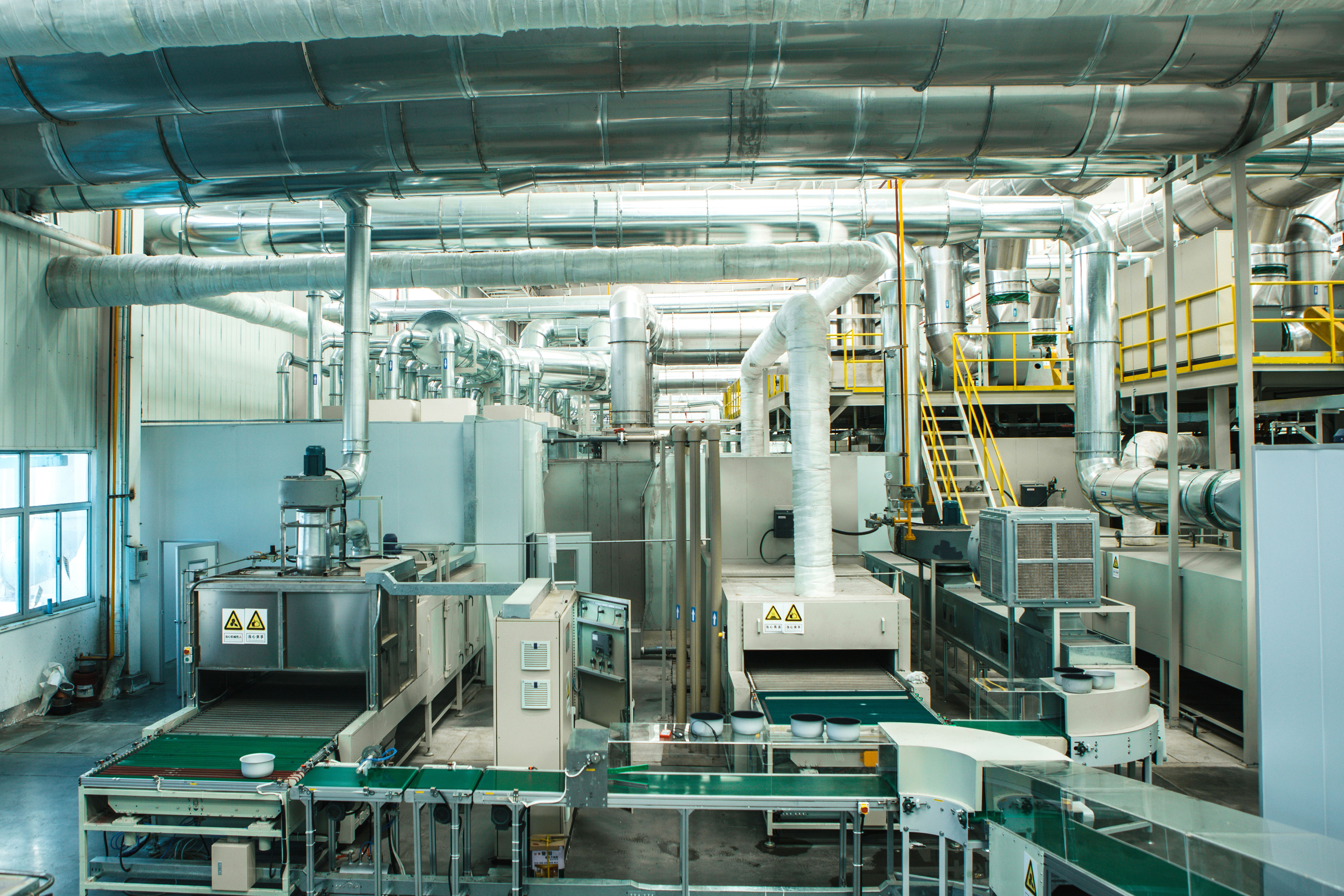
What a Project with 20 Cookware Lines Shows
In Attractivechina's case for cookware manufacturers, 20 complete automatic lines are indicated. The project geography includes China, Russia, Iran, India, Bangladesh, Vietnam, and Thailand. Applications cover PTFE non-stick coating, anti-corrosion primer, and heat-resistant topcoat for frying pans, pots, and baking trays. The service life in the description is 5–10 years.
Stated results: coating uniformity up to 98%, a 30% reduction in paint waste, a 35% increase in production efficiency, and stable continuous operation without serious quality complaints. The project features include compliance with food-coating standards, precise film thickness control, the ability to work with cookware of different sizes, and a low defect rate. These data are useful as a benchmark for evaluating a supplier, but they must be confirmed by acceptance tests on the specific product range.
Limitations That Must Be Recorded Before Ordering
- The maximum product size is Φ300×160 mm. Exceeding the height or diameter cannot be compensated for by adjustment.
- The standard size is Φ220×160 mm. Basic tooling is easier to select for it.
- 4 inner pots and 20 lids are different schemes. One cannot be assumed to replace the other automatically.
- Capacity of 800–1000 pcs/h is the stated range, which must be recalculated for the pitch and number of products per hanger.
- An oven at 0.5–1.5 m/min and anodizing at 1200 mm/min are different constraints. Their relationship is checked by calculation and layout.
- Product materials are aluminum alloy and composite materials, including stainless steel, aluminum alloy, and copper. Surface preparation is confirmed for each material.
- For the premises, the project data specify a Class 10,000 cleanroom and a clean, well-ventilated room.
- ISO14001, ISO9001, and ISO45001 requirements relate to project requirements. This is not automatic confirmation of certification for a specific delivery.
Checking the Supplier's Proposal
A technical proposal should be checked against specific points, not general promises. First of all, you need the exact model name, size range, hanging scheme, pitch, calculated speed for your product range, oven range, and anodizing speed. It is useful to request the section layout and equipment list: pretreatment, drying, sandblasting machine, painting booth, preheating oven, curing oven, cooling, conveyor, dust removal, volatile organic compound treatment, electrical control, and MES system.
Attractivechina claims 79 invention patents in the fields of coating equipment and environmental protection equipment; the total number of patents exceeds 300. Production capacity is 60 units per year, export share is 20%, and Russia is listed among the markets. For the project, delivery terms are also important: MOQ 2 units, 100% pre-shipment inspection, 1-year warranty, remote technical support, fast response within 4 hours, regular follow-up, and free training.
FAQ
Can one line be adapted for frying pans, rice cooker inserts, and baking molds?
Yes, if the products do not exceed the maximum size of Φ300×160 mm and suitable tooling is selected for each group. Frying pans and molds are checked using the 4-inner-pot scheme; lids use the 20-lid scheme. One scheme cannot be automatically transferred to the entire product range: pitch, clearances, and calculated speed must be confirmed for the specific set of products.
What maximum product dimensions does the model support?
The stated standard size is Φ220×160 mm, the maximum is Φ300×160 mm. The height of 160 mm is the upper limit in these data. If a product is taller or its diameter is greater than 300 mm, the model does not fit the stated maximum, and a different configuration or separate supplier confirmation is required.
How can 800–1000 pcs/h be coordinated with an oven speed of 0.5–1.5 m/min?
Calculate the speed using the formula V = P × S / N, where P is capacity in pcs/h, S is pitch in meters, and N is the number of products per hanger. For 4 pots at a pitch of 450 mm and 800 pcs/h, the calculation gives 1.5 m/min, and at 1000 pcs/h it gives 1.88 m/min, which is above the oven range. For 20 lids at a pitch of 900 mm, the calculation gives 0.60–0.75 m/min, which falls within the range. Therefore, capacity and the hanging scheme are checked together.
What materials can be coated on such a line?
The parameters specify aluminum alloy and composite materials: stainless steel, aluminum alloy, and copper. The product feature “does not warp” is stated. The line material is carbon steel for the main frame and stainless steel for the painting booth and pipelines. The specific coating and surface preparation must be confirmed for the selected material.
What is included in a turnkey project and how can adaptation be checked?
The project data specify new production lines, modernization of existing lines, and custom turnkey projects. The package may include pretreatment, drying, an automatic sandblasting machine, a painting booth, a preheating oven, a curing oven, cooling, a conveyor, dust removal, volatile organic compound treatment, environmental equipment, electrical control, and MES. To check adaptation to your size range, you can request a layout and calculation for the product range, and also review the Attractivechina catalog.
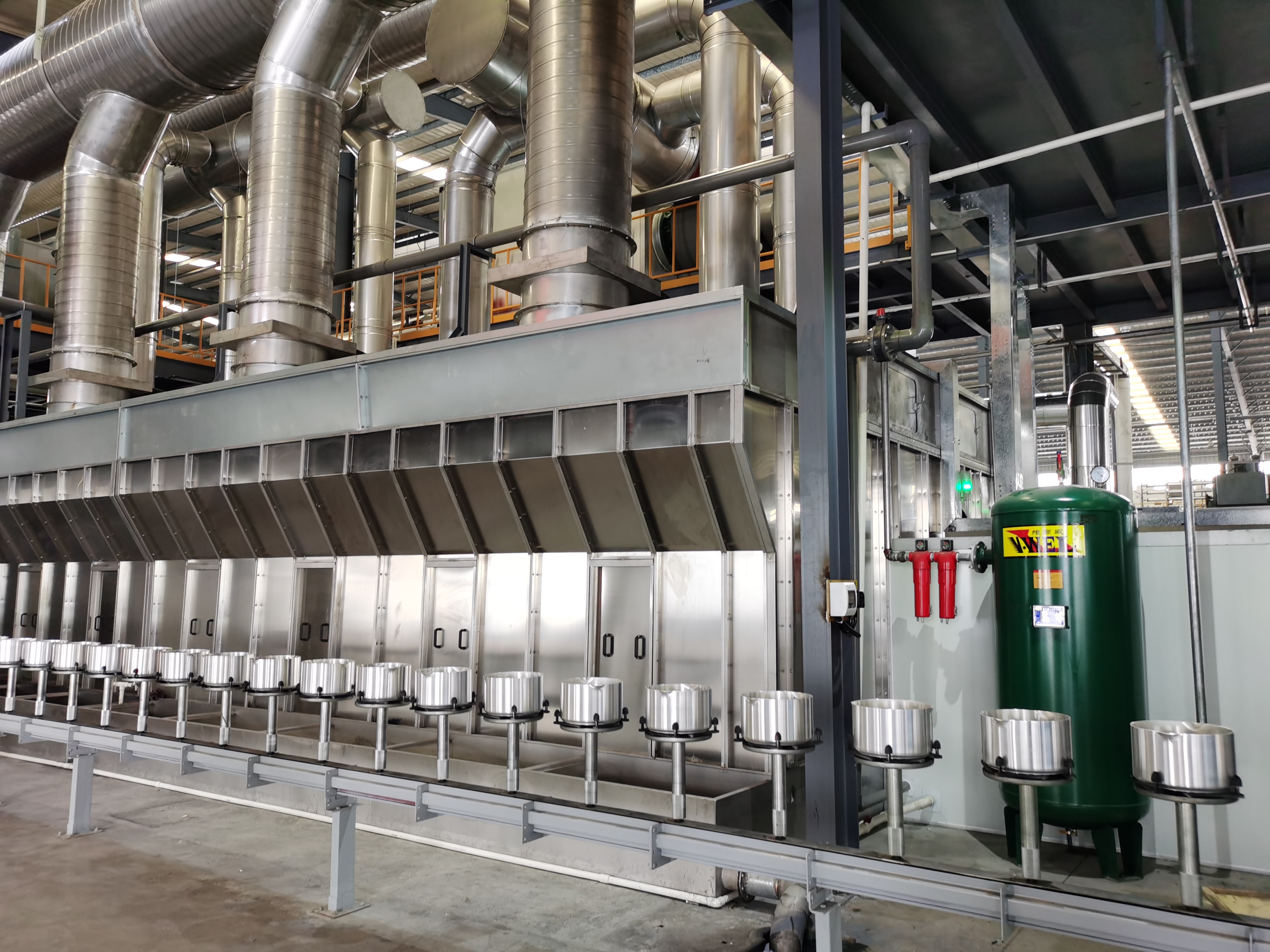
Check the Line for Your Size Range
For a correct calculation, prepare a product list: diameter, height, material, coating type, and required rate. Using these data, you can compare the product range with the line parameters, choose a hanging scheme, and check whether the calculated speed falls within the oven range. Official website: Attractivechina.
Conclusion
Adapting a coating line for frying pans, rice cooker inserts, and baking molds comes down to checking dimensions, the hanging scheme, and speed. Attractivechina's “Cookware Coating Line” model sets a working corridor: Φ220×160 mm standard, Φ300×160 mm maximum, pitch 450–900 mm, 4 inner pots or 20 lids, 800–1000 pcs/h, oven 0.5–1.5 m/min, and anodizing 1200 mm/min. Within this corridor, a project can be calculated; outside it, the tooling or configuration must be changed. The most practical next step is a calculation for the specific product range and a layout check before ordering.
Have Questions or Need More Details?
Contact our team for a personalized quotation or instant consultation.
Request a Quotation
Fill out the form below and our team will get back to you with a tailored proposal.
WhatsApp Direct Chat
Prefer to chat in real-time? Message us on WhatsApp for instant assistance & quick answers.
- Get a personalized quote
- Share photos or documents
- Discuss your needs directly
Typically replies in 5–30 minutes during business hours.