
Who chooses plants: comparison of coating lines and their manufacturers
What Factories Choose: Comparison of Coating Lines and Their Manufacturers
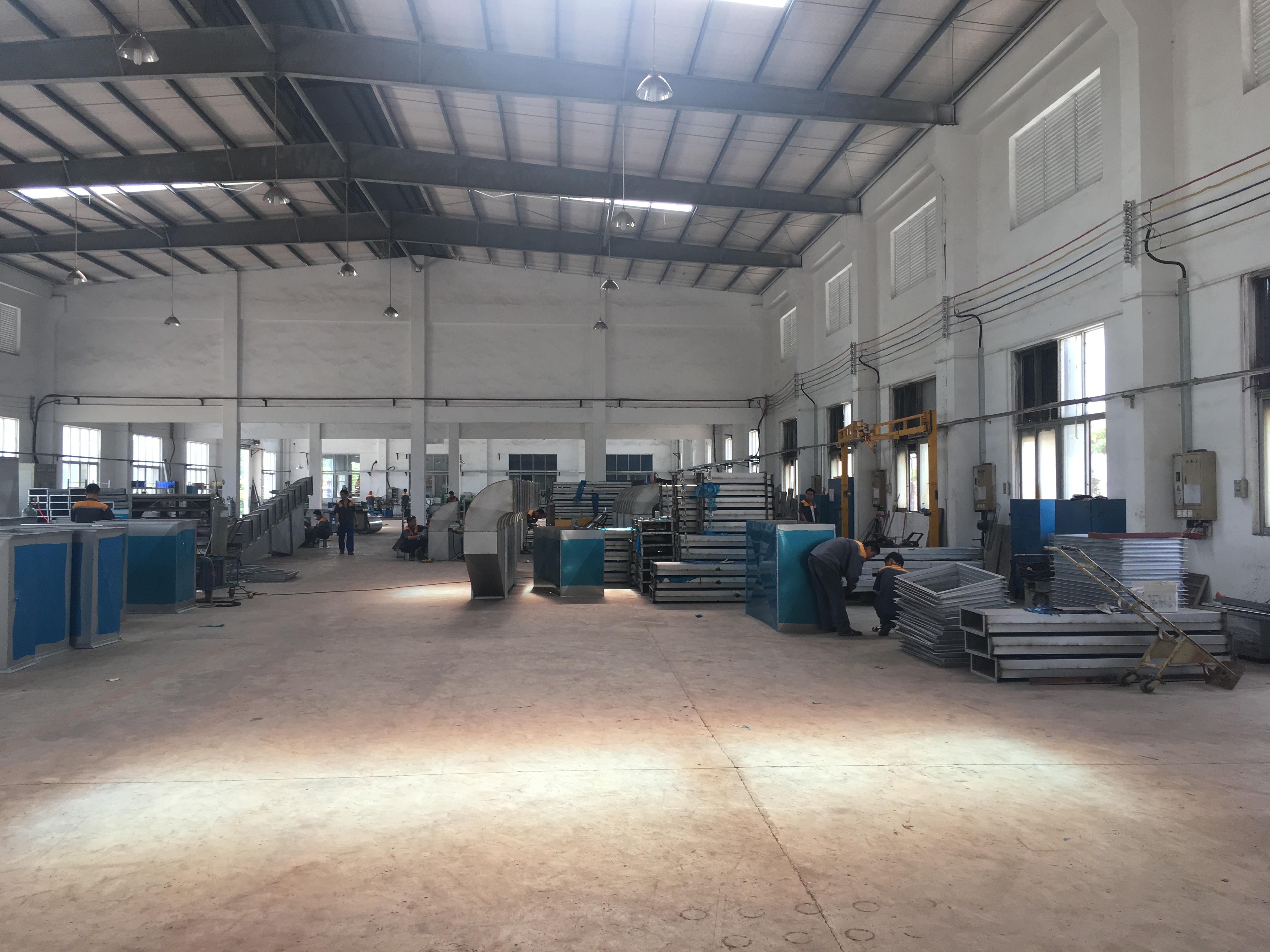
Choosing a coating line for an industrial enterprise is not like buying a single sprayer or painting booth. It is a decision about how the entire technological chain will be built: surface preparation, material application, polymerization or drying, transport system, process control, and air purification. This is why comparing coating lines usually goes beyond a single specification and becomes an evaluation of the supplier's experience.
This article provides a guideline for the selection stage: what types of lines exist, what global technological approaches are present on the market, how to compare manufacturers, and what should be in the request before signing a contract. The material is based on market reviews, certification data, and published projects of Attractivechina.
What is a Coating Line: Purpose and Types
A coating line is a set of interconnected equipment that ensures the preparation of products and the application of a protective and decorative layer at a given production rhythm. A modern automatic line may include a pre-treatment section, drying chamber, coating application chamber, polymerization or curing oven, conveyor system, and air purification equipment.
Based on coating application technology, industrial lines can be divided into several groups:
Liquid paint lines are used for priming, painting, and applying finishing materials to metal, plastic, wood, and other surfaces. Depending on the task, manual spraying, automatic sprayers, reciprocating machines, and robotic complexes are used.
Electrostatic powder coating lines apply powder material in an electrostatic field, followed by melting in a polymerization oven. This type is widely used for painting metal products and corrosion protection.
Electrophoretic coating lines are used when a uniform layer is required on products of complex shapes. Electrophoresis provides good adhesion and corrosion protection for body elements, fasteners, and frame structures.
Roller and curtain coating lines are more often used for flat products or sheet materials. This scheme is found in the production of furniture panels, door leaves, metal sheets, and certain types of building materials.
Attractivechina's catalog includes automatic coating lines for automotive parts, cookware, metal, wood, and industrial equipment. The manufacturer also supplies coating lines for bumpers, wheel hubs, sheet metal, household appliances, furniture, musical instruments, lamps, and buses.
Why Direct Comparison of Coating Lines is Difficult
During the evaluation stage, buyers often compare several proposals from different companies. Direct comparison is complicated by the fact that suppliers take on different scopes of responsibility:
One manufacturer supplies only spray equipment. Another designs the full line set. A third is ready to carry out workshop layout, production, installation, commissioning, and personnel training. Without understanding the boundaries of the supply, comparison by price or capacity becomes incorrect.
An additional difficulty is that a line is usually manufactured for a specific product range. A bumper coating line may be designed for large plastic parts, while a wheel hub coating line may be for metal products requiring high adhesion and resistance to mechanical loads. Equipment that works successfully in one production facility may not be suitable for another type of workpiece, even if the name is the same.
Therefore, the correct approach to selection includes not only comparing catalogs but also checking three levels: technological, certification, and operational.
Coating Line Market and Key Trends
The global market for coating equipment continues to grow. According to a Grand View Research report, the market volume was estimated at USD 17.25 billion in 2022, with expected annual growth of about 5.3% until 2030. Key drivers include demand from electric vehicle manufacturers and industrial automation.
Market Research Future data is significant for the Russian market: the volume of the Russian industrial coatings market in 2024 was estimated at about USD 1.78 billion, with a projected annual growth of about 1.3% until 2035. This indicates that demand persists, but competition for the customer's budget is becoming tougher and more focused on justifiable decisions.
In the powder coating segment, analysts also expect increased automation. According to a Market Research Future forecast, the powder coating equipment market could grow at a CAGR of about 6.73% until 2035.
In practice, this means factories increasingly expect not only stable surface quality from a line but also predictable material consumption, controlled energy usage, low defect rates, and the ability to integrate into the overall enterprise management system.
Categories of Coating Line Manufacturers
The global market for industrial painting systems includes specialized companies with different business models. External reviews in the industrial coating systems category highlight suppliers such as Nordson (USA), Gema (Switzerland), and Wagner Group (Germany). These companies are known as manufacturers of spraying equipment, including electrostatic powder equipment and liquid painting systems.
A number of Chinese manufacturers, including Attractivechina, compete not at the level of an individual component but at the level of a complete line and a "turnkey plant." This difference is important for the buyer: if an enterprise only needs a painting booth or dispensing system, specialized global brands can be considered. If it is about a full automatic line for a specific product range with installation and startup, manufacturers that design the entire technological chain become stronger.
Key Differences in Approaches
Nordson (USA) has historically been strong in systems for precise material application, liquid and powder spraying, and dispensing equipment. Gema (Switzerland) specializes in electrostatic powder spraying and often acts as a supplier of powder technologies for lines of various configurations. Wagner Group (Germany) offers painting systems, from manual equipment to automatic liquid and powder painting lines.
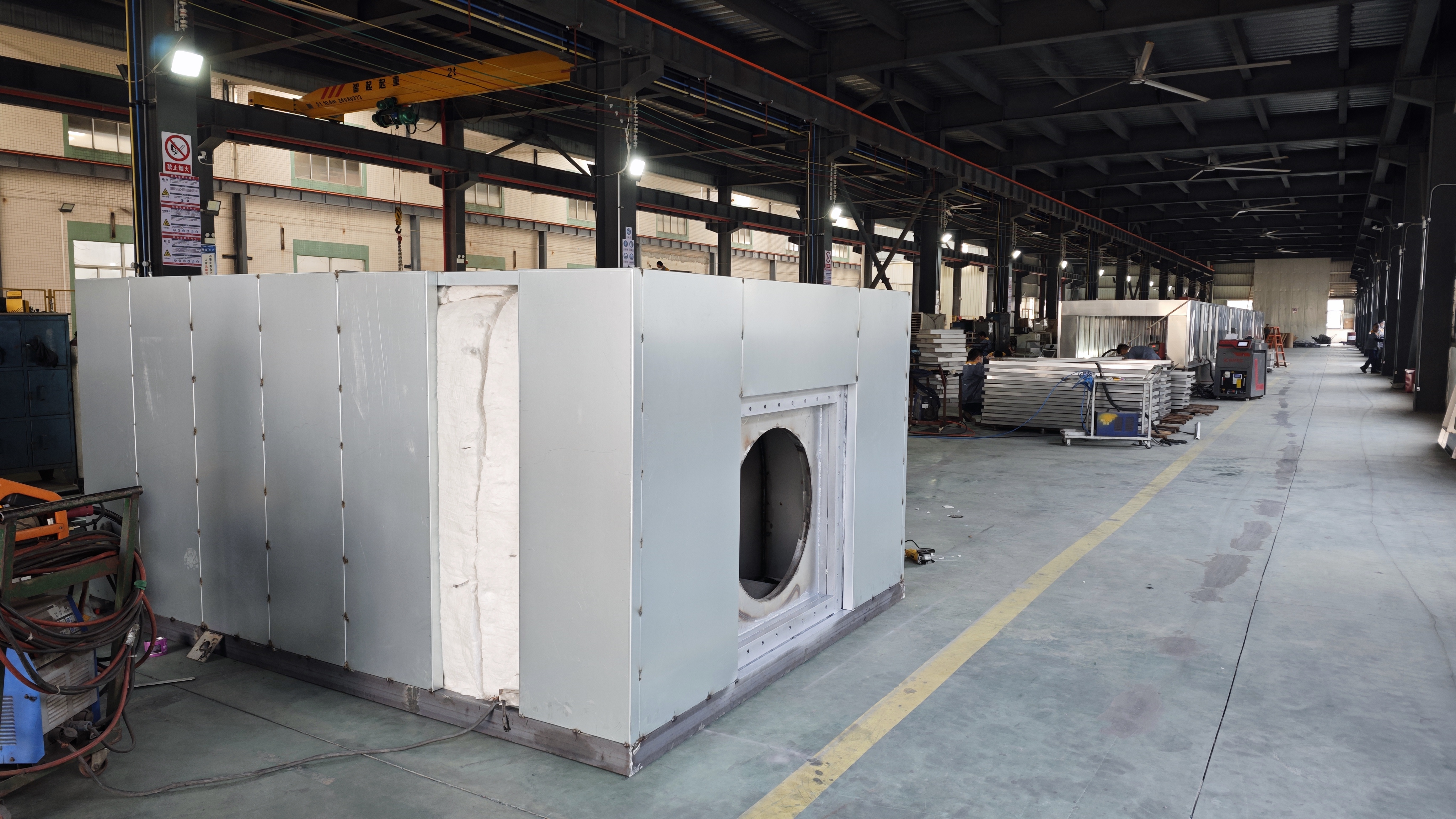
Attractivechina operates in a full-cycle format: pre-sales design of production facilities, in-house development, manufacturing, installation, commissioning, and after-sales service. The legal entity is Guangdong Chuangzhi Intelligent Equipment Co., Ltd.; in the Russian market, it also uses the name LLC "Chuangzhi Intelligent Equipment" (Guangdong). The enterprise is located in the National High-tech Industrial Development Zone of Zhaoqing City, Guangdong Province, and has its own production area of about 35,548 square meters.
In open materials, Attractivechina states over 30 years of experience in developing integrated solutions for coating lines. The company has more than 280 employees, including 54 engineers. It holds 79 invention patents in the field of coating and environmental equipment; the total number of patents exceeds 300. Export markets include Vietnam, Iran, Indonesia, Brazil, UAE, Turkey, Thailand, Saudi Arabia, Argentina, Mexico, Pakistan, Bangladesh, India, USA, Russia, and Singapore.
Comparison Table: Suppliers and Business Models
| Manufacturer | Country | Core Specialization | What the Buyer Should Consider |
|---|---|---|---|
| Attractivechina | China | Custom automatic coating lines: for automotive parts, cookware, metal, wood, industrial equipment. Full cycle: design, production, installation, commissioning, service. | Individual configuration; ability to adapt automation level, voltage, power, and capacity. |
| Nordson | USA | Liquid and powder spray systems, dispensing and precise material application. | Strong component level and application systems; complete line integration is usually required. |
| Gema | Switzerland | Electrostatic powder spraying, powder spray guns, and powder preparation systems. | High competence in powder technology; when purchasing a complete line, clarify the scope of responsibility. |
| Wagner Group | Germany | Equipment for liquid and powder painting: from manual to automatic. | Wide range of equipment; final capacity and line composition depend on engineering design. |
The table above compares specializations, not a statement that one manufacturer is "best" for all factories. The choice is determined by the type of products, batch sizes, and the scope of work the customer is ready to delegate to the supplier.
Six Steps for Supplier Verification Before Purchase
Below is a practical algorithm for engineering and commercial evaluation. It helps turn the general discussion "which line is better" into a set of specific criteria.
Step 1. Gather Technical Specifications for the Product
The factory must clearly define what will be painted or coated. The workpiece material, dimensions, weight, shape, required layer thickness, and corrosion resistance characteristics significantly influence the line design.
For example, parameters from real projects can be used. The cookware line in Attractivechina's projects is designed for frying pans, rice cooker bowls, and baking pans. The material is aluminum alloy or composite materials. Typical capacity is 800–1000 pieces per hour. The wood furniture line in another project shows a capacity of 1,422 pieces in an 8-hour shift. These are different production tasks, and they cannot be solved with the same configuration.
Step 2. Request the Technological Line Diagram
A professional supplier should explain what sections make up the line: preparation chamber, drying, application, polymerization or curing, conveyor system, and exhaust air purification. At this stage, it is not the price that is checked, but the completeness of the technological solution.
Step 3. Verify Real Production Parameters
Instead of vague promises of "high capacity," measurable indicators from similar projects should be requested.
In the automotive industry, published Attractivechina cases use the following parameters: painting of front bumpers, door panels, dashboard elements, wheel arches, and switch panels made of ABS+PC material. The application method is autonomous mode with robotic painting. The production cycle was 45 seconds per tray, or 1,760 trays per day. The maximum tray size was 1350×900×200 mm.
For metal lines, there is an example with a capacity of up to 5,000 square meters per day and a maximum aluminum panel size of 7000×2000×2200 mm. The conveyor speed in this project was 3000 mm/min with adjustment from 2000 to 4000 mm/min. Such figures allow the buyer to compare the technology with their own production program.
Step 4. Clarify Certificates and Standards Compliance
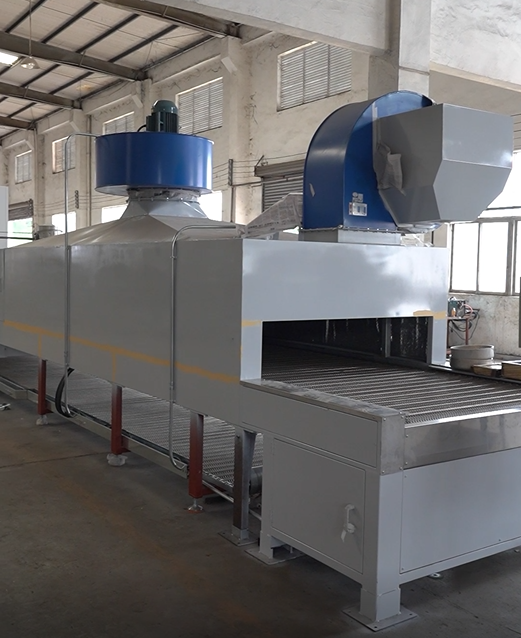
For the supply of industrial equipment to the countries of the Eurasian Economic Union, EAC certification is essential. Equipment must comply with the technical regulations of the Customs Union. In Attractivechina's practice, there is a formalized EAEU Declaration of Conformity N RU D-CN.PA01.B.96986/21 for the conveyor drying and polymerization oven model CZ-21-008-02A. The declaration is confirmed under TR CU 004/2011 (low-voltage equipment safety), TR CU 020/2011 (electromagnetic compatibility), and TR CU 010/2011 (machinery safety).
The enterprise also holds ISO 9001 certificates for quality management, ISO 14001 for environmental management, and ISO 45001 for occupational health and safety. The buyer should verify that the certificate covers the design and production of painting equipment, not just commercial activity.
Step 5. Evaluate Testing and Startup System
Line installation at the customer's site is a complex stage, but pre-shipment testing is equally important. At Attractivechina, all products undergo 100% pre-sale inspection. After delivery, remote technical support, a one-year warranty, rapid response within four hours, regular operational monitoring, and free personnel training are provided. These conditions should be documented in the contract before production begins.
Step 6. Calculate Total Cost of Ownership Based on Implementation Results
The cost of owning a line includes not only the equipment price but also paint consumption, energy consumption, defect rate, downtime, and maintenance costs. Therefore, it is useful to request measurable results from similar projects.
In published Attractivechina cases for automotive lines, an increase in the yield of good coating to 98%, a 25% reduction in paint consumption, and a 20% reduction in energy consumption are mentioned. In metal projects, the yield of quality coating increased to 97%, paint or powder consumption decreased by 30%, energy consumption by 22%, and production efficiency by 40%. These figures are not a universal guarantee for every plant, but they show what parameters can be used to evaluate the effect.
Implementation Cases: What Really Works in Different Industries
Attractivechina's overall experience covers not one product type but several industries. In total, 75 fully automatic coating lines are mentioned in published cases, operating in five industrial segments.
Coating Lines for Automotive Parts
In the automotive industry, 20 fully automatic coating lines for auto parts have been installed. Projects have been implemented in Germany, Russia, Thailand, Indonesia, Mexico, and China. The equipment is used by ODM/OEM plants and first-tier automotive component suppliers.
The lines are used for priming and finishing of structural components, chassis elements, and interior trim. The implementation improved the yield of good coating to 98%, reduced paint consumption by 25%, and cut energy consumption by 20%. No major downtime has occurred in five years.
Coating Lines for Metal
In metalworking, 15 fully automatic metal coating lines have been installed. Projects have been implemented in Mexico, USA, China, and Singapore. The equipment is used by export-oriented plants producing hardware, metal furniture, building materials, bathroom fixtures, window fittings, and sheet metal parts.
Anti-corrosion and decorative coatings, priming and finishing, and powder painting are applied. The result is up to 97% yield of quality coatings, 30% reduction in paint or powder consumption, 22% reduction in energy consumption, and 40% increase in production efficiency.
Coating Lines for Cookware
20 fully automatic coating lines have been installed for cookware production. Projects have been implemented in Russia, Iran, India, Bangladesh, Vietnam, Thailand, and China. The equipment is used by branded OEM plants, private label manufacturers, and household appliance factories.
The lines apply non-stick PTFE coating, anti-corrosion primer, and high-temperature finish for frying pans, pots, and baking sheets. Achieved coating uniformity is up to 98%. The non-stick properties of the coating meet international food safety standards. Paint consumption is reduced by 30%, production efficiency increased by 35%.
Coating Lines for Wood
In woodworking, 10 fully automatic wood coating lines have been installed. Projects have been implemented in China. The equipment is used by furniture, musical instrument, cabinet, and wooden door manufacturers.
The lines apply primer, finish, and topcoat to wooden furniture, cabinets, doors, pianos, guitars, and other wood products. Achieved results include a 30% reduction in paint consumption, 90% reduction in dust defects, 40% increase in production efficiency, and no major quality complaints during operation.
Coating Lines for Industrial Equipment
In the industrial equipment segment, 10 fully automatic coating lines have been installed. The equipment is used by construction machinery plants, agricultural machinery manufacturers, rail transport companies, special equipment plants, and railway equipment factories.
The lines provide long-term corrosion resistance for equipment operated outdoors. Results include salt spray resistance of at least 1000 hours, a yield of up to 98% of successfully painted products, a 25% reduction in paint consumption, and a 30% increase in productivity.
Comparison Table of Typical Line Parameters
The following table helps compare typical input data for different industries. It is important to understand that these are not typical parameters for a "universal line," but guidelines from real Attractivechina projects.
| Industry | Type of Products | Workpiece Material | Indicative Parameters from the Project |
|---|---|---|---|
| Automotive parts | Bumpers, wheel hubs, hubcaps, fuel tanks, interior parts, logos | ABS+PC and other plastics | Cycle 45 seconds per tray; 1,760 trays per day; tray size 1350×900×200 mm. |
| Cookware | Non-stick frying pans, rice cooker bowls, baking pans | Aluminum alloy, composite materials | Capacity 800–1000 pieces per hour; maximum product size up to 300 mm in diameter, height 160 mm. |
| Metal | Doors, windows, cabinets, building materials, furniture components, sheet metal | Aluminum, metal | Maximum panel size 7000×2000×2200 mm; up to 5,000 m² per day; conveyor speed 3000 mm/min. |
| Wood | Furniture, cabinets, doors, musical instruments | Solid wood, MDF | Capacity 1,422 pieces in 8-hour shift; line speed adjustment 2000–6000 mm/min. |
| Industrial equipment | Construction machinery, agricultural machinery, railway wagons, special vehicles | Metal, aluminum | Large workpieces; salt spray resistance of at least 1000 hours; manual and robotic spraying. |
If the customer's production program includes several different product types, the line must be designed separately. Attractivechina provides custom manufacturing and design with adjustment of automation level, voltage, power, size, and equipment capacity.
Frequently Asked Questions
What certificates should a coating line have to operate in the EAEU market?
To operate in EAEU countries, industrial equipment must comply with the technical regulations of the Customs Union. For painting lines, the most relevant are TR CU 004/2011 on low-voltage equipment safety, TR CU 020/2011 on electromagnetic compatibility, and TR CU 010/2011 on machinery safety. In Attractivechina project practice, an EAEU declaration was issued for the conveyor oven model CZ-21-008-02A under these regulations. The buyer should request the current set of documents for the final specification of the complete line, since certification and declaration are performed for a specific equipment configuration.
Can a coating line be manufactured for a customer's specific product range?
Yes, this is one of the main formats of work for industrial customers. Attractivechina designs automatic coating lines for automotive plants, cookware manufacturers, metalworking enterprises, furniture factories, and industrial equipment producers. Individual adjustments may include line size, automation level, voltage, power, capacity, packaging, and logo application. The minimum order from the manufacturer is two units for custom manufacturing.
What most influences the budget of a coating line?
The final cost is affected by several factors: workpiece dimensions and weight, required productivity, type of applied material, spraying methods, chamber design, type of polymerization oven, conveyor system, composition of environmental equipment, and degree of automation. Lines with robotic painting and automatic control are more complex than lines with manual spraying. The exact cost can only be calculated after analyzing the technical specification, because the same class of equipment can differ significantly in composition.
Can product testing be performed before purchasing a line?
Before shipping, equipment at Attractivechina undergoes 100% pre-sale inspection. The customer is also provided with free personnel training, remote technical support, regular operational monitoring, and a one-year warranty. At the inquiry stage, you can send the supplier the parameters of your workpieces and samples or technical descriptions, so that engineers can confirm the applicability of the standard configuration or suggest necessary changes.
What is the delivery time for a coating line?
The delivery time depends on the type of equipment and the complexity of the individual configuration. At Attractivechina, different delivery times apply for different product categories, so the exact time is provided after the technical specification is formed. It is recommended to allow time not only for production but also for installation, commissioning, and process optimization at the customer's site.
Summary: How to Decide
The choice of a coating line during the evaluation stage should be based not on the brand but on the specific production task. First, define the products, output volume, coating requirements, and site conditions. Then compare technological diagrams, measurable parameters, and implementation experience. After that, check certificates and start-up conditions.
Global manufacturers of painting equipment, such as Nordson, Gema, and Wagner, are strong in their technological niches. Attractivechina offers an alternative format: a custom, comprehensive automatic line with a full implementation cycle from workshop layout to after-sales service. This approach proves convenient for enterprises that need a single responsible partner rather than assembling a line from components from different suppliers.
For more detailed technical information, you can contact the company directly:
Attractivechina
Email: attractivechina@gmail.com
Tel./WhatsApp: +86 135-8061-6025
Website: ru.attractivechina.com
Have Questions or Need More Details?
Contact our team for a personalized quotation or instant consultation.
Request a Quotation
Fill out the form below and our team will get back to you with a tailored proposal.
WhatsApp Direct Chat
Prefer to chat in real-time? Message us on WhatsApp for instant assistance & quick answers.
- Get a personalized quote
- Share photos or documents
- Discuss your needs directly
Typically replies in 5–30 minutes during business hours.