
How to choose between a line for dishes and metal: comparison of parameters
How to Choose Between a Cookware Coating Line and a Metal Coating Line: Parameter Comparison
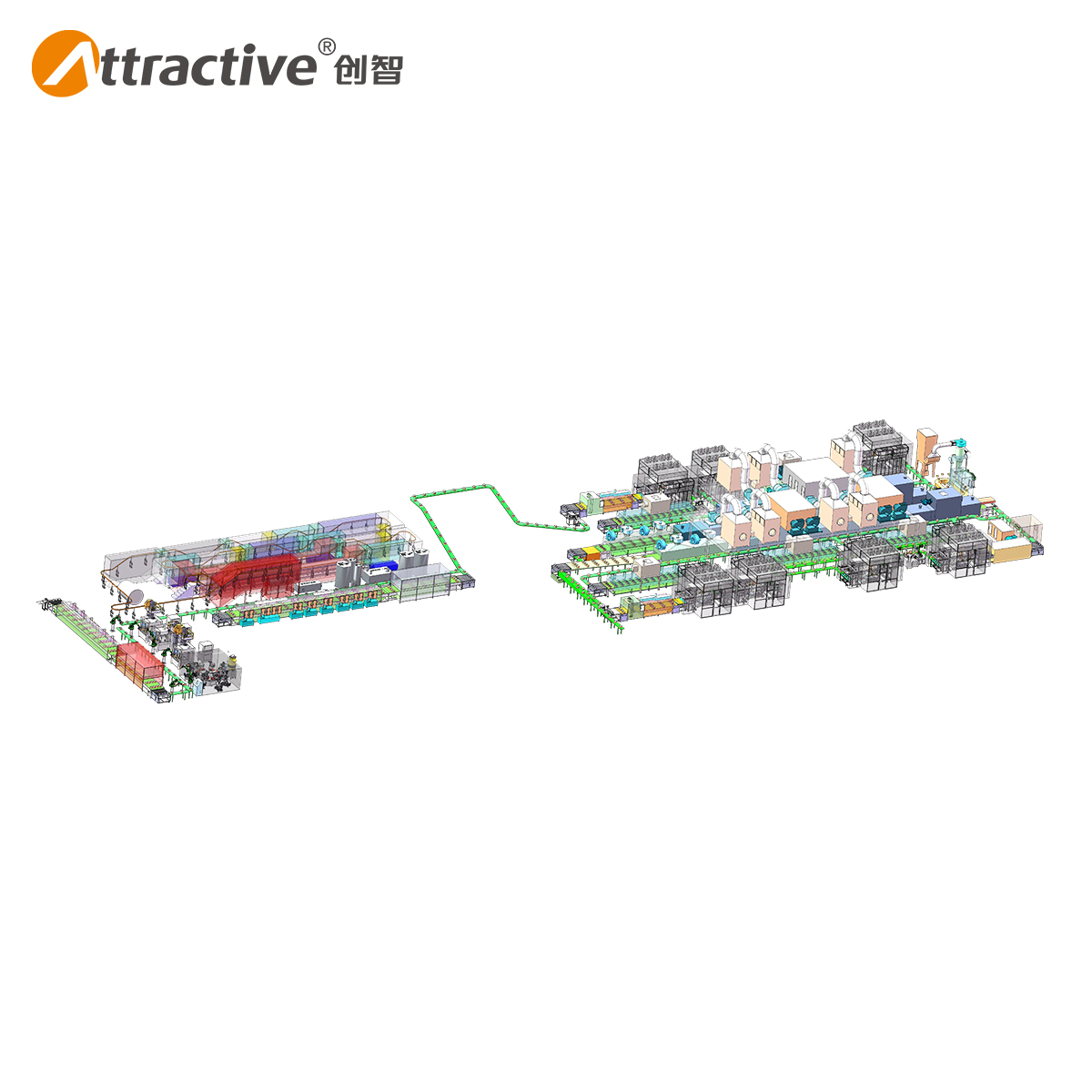
Automatic cookware coating line: non-stick frying pans, rice cooker inner pots, baking molds.
The automatic cookware coating line and the automatic metal coating line belong to the same equipment category — coating lines — but are designed for different production operations. The difference becomes visible already at the level of units of measurement. The cookware line produces 800–1000 items per hour and works with workpieces from Φ220×160 mm (standard) to Φ300×160 mm (maximum), whereas the metal line is measured by area — up to 5000 m² per day — and accepts workpieces up to 7000 mm (L) × 2000 mm (W) × 2200 mm (H), one item per hanger.
The correct decision should be made not by equipment price, but by four actual criteria: type and material of the workpiece, productivity in the line's native units, product dimensions, and the method of moving it along the line. Below is a line-by-line comparison of both lines by specification parameters, a step-by-step selection algorithm, application scenarios, and answers to questions that most often arise at the market research stage.
Why These Two Lines Cannot Be Compared Head-On
Both models are sold under the common name coating line, and this is precisely why the first mistake occurs: the buyer compares numbers directly, although these numbers describe different things.
- Different productivity units. The capacity of the cookware line is expressed in pieces per hour — 800–1000 items per hour. The capacity of the metal line is expressed in area — up to 5000 m² per day. These indicators are not comparable: in one hour the cookware line processes hundreds of small round workpieces, while the metal line covers thousands of square meters of flat panels and profiles per day.
- Different workpiece geometry. The cookware line is designed for axisymmetric products: standard size — Φ220×160 mm (H), maximum — Φ300×160 mm (H), workpiece pitch — 450–900 mm. The metal line works with large flat products: up to 7000 mm (L) × 2000 mm (W) × 2200 mm (H), one product per hanger.
- Different hanging and transportation method. The cookware line uses hanging by 4 inner pots or 20 lids per hanger. The metal line uses a mechanized free-moving conveyor, i.e., a continuous feed system for large products.
- Different operating mode. For the metal line, the specification states a mode of 300 days per year, 20 hours per day, as well as a coating method of reciprocating + manual. For the cookware line, the specification records energy carriers (natural gas and electricity) and speeds of individual units — the anodizing line and the tabletop curing oven.
The practical conclusion is simple: these lines can be correctly compared only by parameters that relate to your type of workpiece. Parameters of the wrong workpiece type do not participate in such a comparison.
Industry Context: Why the Choice Question Has Become More Relevant
Interest in coating automation is growing along with the overall growth of industrial equipment. According to Grand View Research, the global coating equipment market was valued at USD 17.25 billion in 2022 and is expected to grow at a CAGR of 5.3% until 2030; the drivers cited are demand for electric vehicles and industrial automation.
A separate estimate is available for the Russian market: according to Market Research Future, the volume of the industrial coatings market in Russia was about USD 1.78 billion in 2024 with a projected CAGR of 1.3% until 2035. This means that the market is rather mature than fast-growing, and equipment decisions are made with a long payback horizon.
A separate technological trend is the transition of powder coating to smart automation: according to Market Research Future, the global powder coating equipment market may grow at a CAGR of 6.73% until 2035.
For supplies to the countries of the Eurasian Economic Union — Russia, Belarus, Kazakhstan — the equipment must comply with EAC requirements and safety standards such as GOST R for industrial equipment. This requirement applies to both lines under consideration and is checked before signing the contract, not after delivery.
One of the manufacturers in this segment is Attractivechina — a trademark of Guangdong Chuangzhi Intelligent Equipment Co., Ltd. (legal name in Russian — ООО «Чуанчжи Интеллиджент Эквипмент» (Гуандун)). The enterprise was founded in 2005 and is located in the National High-Tech Industrial Development Zone of Zhaoqing City, Guangdong Province, China. The company manufactures coating lines for cookware, metal, auto parts, wood, and industrial equipment.
Actual Parameters: Cookware Coating Line
The Cookware Coating Line model is an automatic line for non-stick frying pans, rice cooker inner pots, and baking molds. By purpose, it belongs to the category of non-stick coating lines and is used in the production of kitchenware and household appliances.
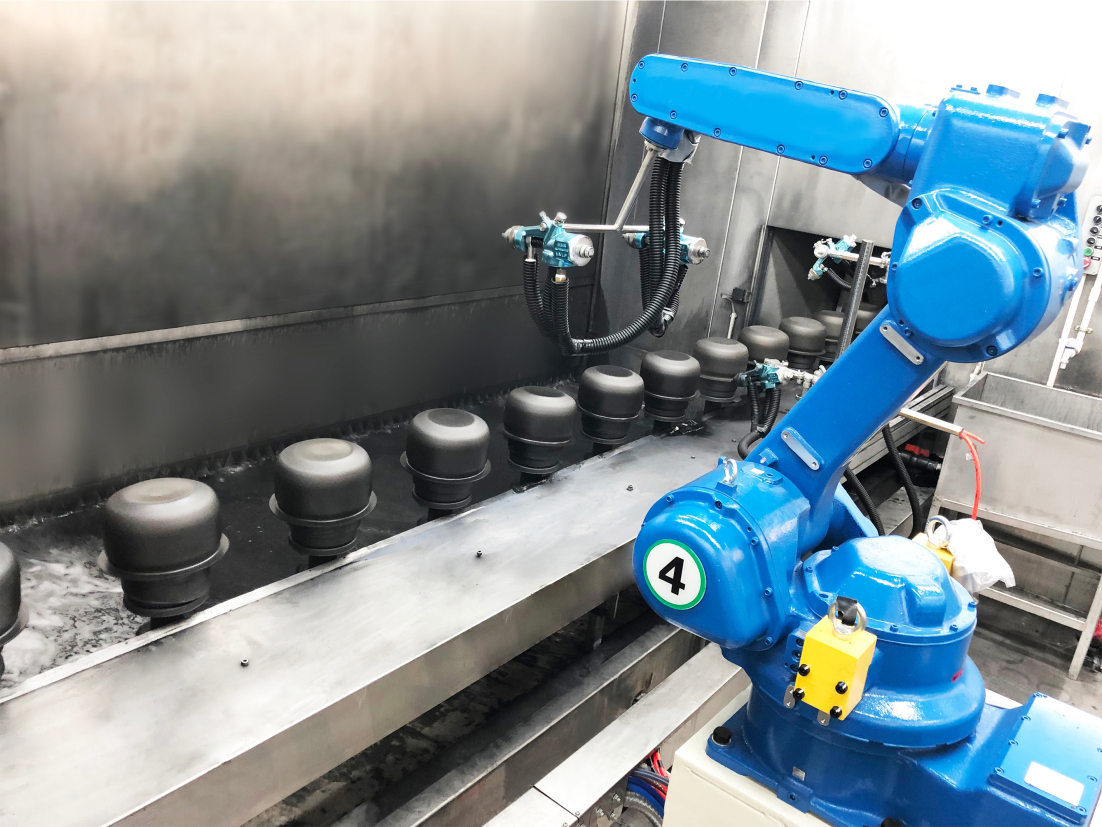
Rice cooker inner pot coating line — one of the applications of the cookware coating line.
- Products: non-stick frying pan, rice cooker inner pot, baking mold.
- Product material: aluminum alloy, composite materials (stainless steel, aluminum alloy, copper).
- Standard product size: Φ220×160 mm (H).
- Maximum product size: Φ300×160 mm (H).
- Product feature: does not warp.
- Productivity: 800–1000 pieces per hour.
- Workpiece pitch: 450–900 mm.
- Hanging method: 4 inner pots per hanger or 20 lids per hanger.
- Anodizing line speed: 1200 mm/min.
- Tabletop curing oven linear speed: 1000 mm/min (adjustable in the range 0.5–1.5 m/min).
- Energy supply: natural gas and electricity.
- Application industry: production of kitchenware and household appliances.
For the buyer, the key here is not the absolute number 800–1000 pieces per hour, but the combination of piece productivity + hanger pitch + hanging method. It is this that determines how many products actually come off the line per shift with your product range.
Actual Parameters: Metal Coating Line
The Metal Coating Line model is an automatic metal coating line belonging to the category of coating lines. It is designed for painting doors, windows, steel cabinets, building materials, cabinet components, sheet metal parts, lighting fixtures, and aluminum sheets. The application industry is construction and household goods.
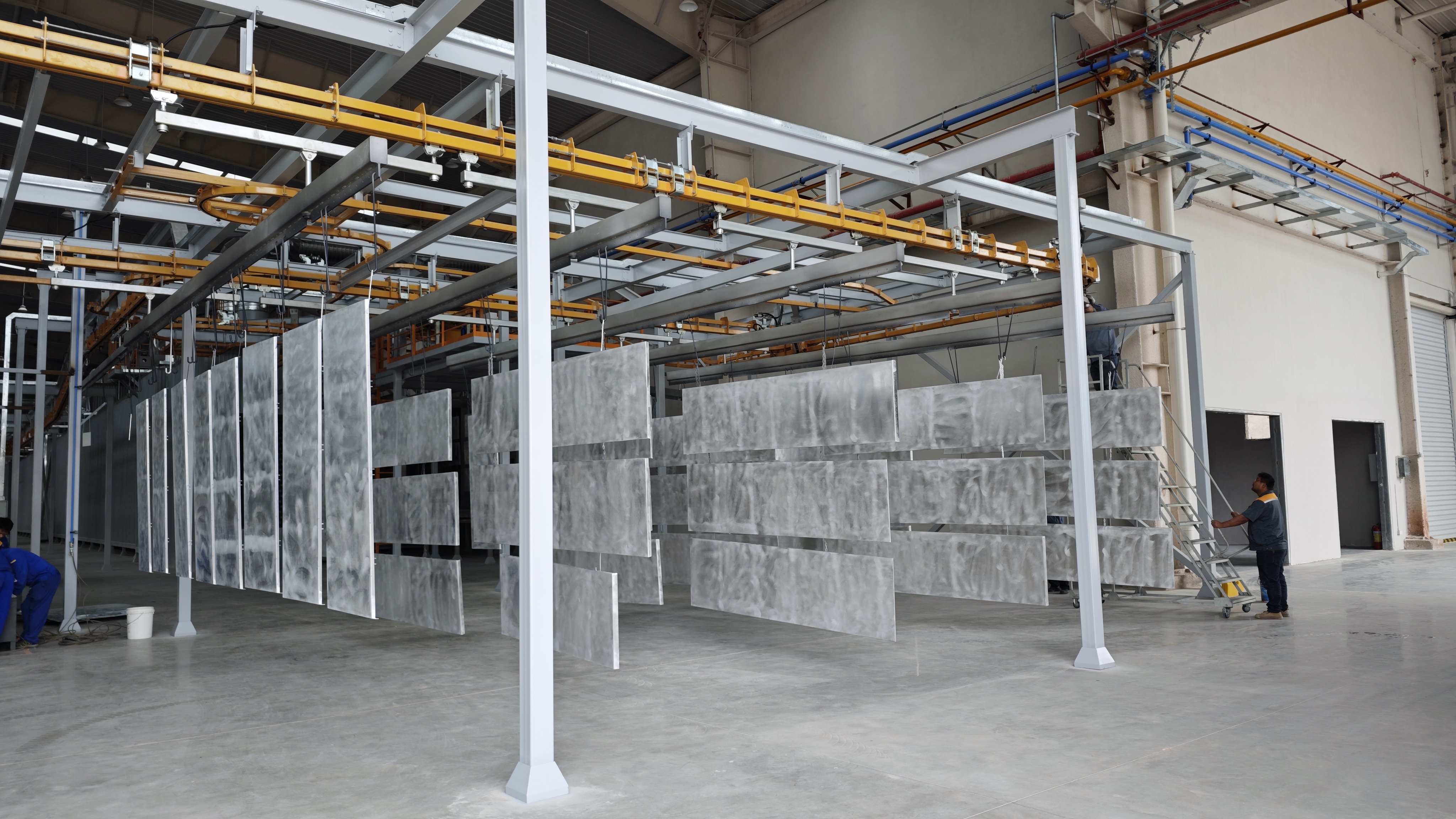
Aluminum sheet coating line: workpiece — aluminum panel and profile.
- Part names: aluminum panel and profile.
- Workpiece material: aluminum.
- Operating mode: 300 days per year; 20 hours per day.
- Coating method: reciprocating + manual.
- Maximum workpiece size: 7000 mm (L) × 2000 mm (W) × 2200 mm (H), 1 pc. per hanger.
- Transportation method: mechanized free-moving conveyor.
- Maximum workpiece productivity: 5000 m² per day.
- Conveyor belt speed: 3000 mm/min (adjustable 2000–4000 mm/min).
Here the key parameter is area, not quantity. That is why the metal line is well suited for production facilities with large flat products, where uniform coating over a large surface is more important than piece output rate.
What the Two Lines Have in Common
Despite different tasks, both lines are built according to similar design principles, and this is important when evaluating offers from different suppliers.
- Main frame: carbon steel — in both lines.
- Painting chamber and pipelines: stainless steel — in both lines.
- Equipment category: both models belong to coating lines and are manufactured as automated lines made to individual order.
- Operating conditions: class 10,000 clean room, clean and well-ventilated room.
- Project requirements: high efficiency and energy saving, ease of maintenance, compliance with ISO 14001, ISO 9001, and ISO 45001.
- Typical line configuration: pretreatment equipment, drying equipment, automatic sandblasting machine, painting chamber, preheating oven, curing oven, cooling system, conveyor system, dust removal equipment, volatile organic compound treatment system, environmental protection equipment, electrical control system, and MES production management system.
Comparative Parameter Table
The table is based only on the actual parameters of both specifications. Semantically empty cells mean that the corresponding parameter is not declared in the line specification, not that it is structurally absent.
| Comparison parameter | Cookware coating line | Metal coating line |
|---|---|---|
| Purpose | Non-stick frying pans, rice cooker inner pots, baking molds | Aluminum panel and profile; doors, windows, steel cabinets, building materials, cabinet components, sheet metal parts, lighting fixtures, aluminum sheets |
| Workpiece material | Aluminum alloy, composite materials (stainless steel, aluminum alloy, copper) | Aluminum |
| Productivity unit | Pieces per hour | Square meters per day |
| Maximum productivity | 800–1000 pieces/hour | Up to 5000 m²/day |
| Workpiece size | Standard Φ220×160 mm; maximum Φ300×160 mm (H) | Up to 7000 × 2000 × 2200 mm, 1 pc./hanger |
| Pitch / hanger | Pitch 450–900 mm; 4 inner pots or 20 lids per hanger | 1 product per hanger |
| Speed | Anodizing line 1200 mm/min; tabletop curing oven 1000 mm/min (0.5–1.5 m/min adjustable) | Conveyor belt 3000 mm/min (2000–4000 mm/min adjustable) |
| Operating mode | Specification states energy carriers: natural gas and electricity | 300 days per year; 20 hours per day |
| Coating method | Automatic non-stick coating line | Reciprocating + manual |
| Transportation | Hanging system with hanging of pots and lids | Mechanized free-moving conveyor |
| Construction material | Frame — carbon steel; chamber and pipelines — stainless steel | Frame — carbon steel; chamber and pipelines — stainless steel |
| Application industry | Production of kitchenware and household appliances | Construction and household goods |
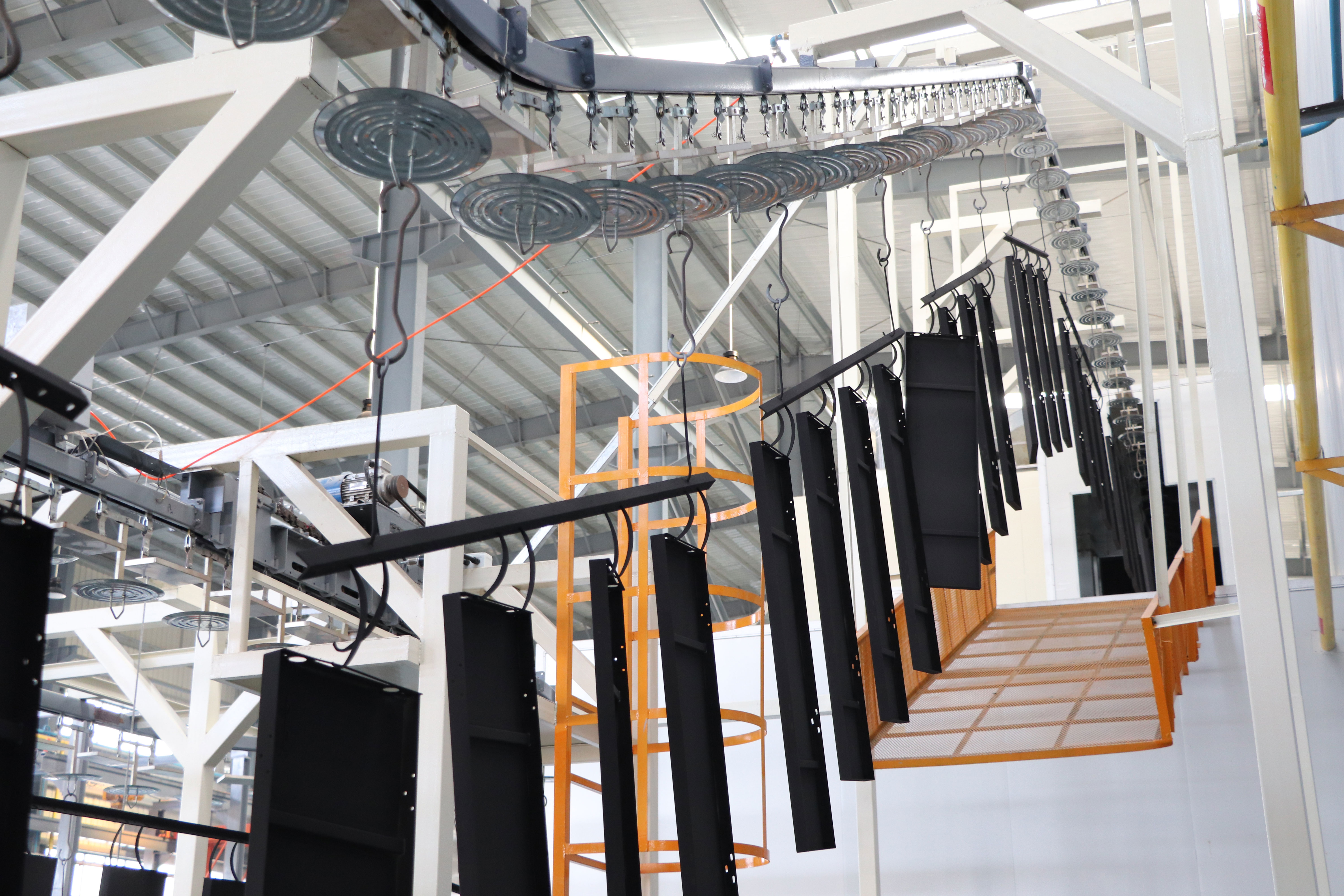
Suspended conveyor system: the method of moving workpieces determines what product range the line can accept.
How to Choose a Line: Step-by-Step Breakdown
Step 1. Determine What Exactly You Are Coating
If your products are piece axisymmetric items made of aluminum alloy or composite materials (frying pans, molds, inner pots), the task is solved by the cookware line. If the products are flat or large items made of aluminum and sheet metal (panels, profiles, doors, windows, cabinets, lighting fixtures), the task is solved by the metal line. A mixed product range requires a separate project discussion.
Step 2. Calculate Productivity in the Line's Native Units
For the cookware line, count pieces per hour: benchmark — 800–1000 pieces per hour. For the metal line, count square meters per day: benchmark — up to 5000 m² per day. An attempt to convert pieces into square meters without exact product geometry gives an error of several times.
Step 3. Check Workpiece Dimensions Against the Line Limits
For the cookware line, the limits are strict: standard Φ220×160 mm, maximum Φ300×160 mm. If your frying pan or mold goes beyond these boundaries, the standard model will not fit without changing the project. For the metal line, the upper limit is 7000 × 2000 × 2200 mm with one product per hanger.
Step 4. Check the Hanging and Transportation Method
The cookware line hangs 4 inner pots or 20 lids per hanger — the actual output rate directly depends on this. The metal line uses a mechanized free-moving conveyor with a speed of 3000 mm/min and adjustment of 2000–4000 mm/min: the larger the product, the more important the stability of the conveyor speed.
Step 5. Check the Operating Mode and Energy Carriers
The metal line in the specification is designed for 300 days per year, 20 hours per day. The cookware line uses natural gas and electricity. If your production works in two or three shifts, the mode from the specification must be compared with your actual schedule before ordering.
Step 6. Assess the Room and Environmental Requirements
Both lines are designed for a class 10,000 clean room, a clean and well-ventilated room. The configuration with volatile organic compound treatment systems and environmental protection equipment, as well as compliance with ISO 14001, ISO 9001, and ISO 45001, is checked separately.
Step 7. Agree on a Project for Your Product Range
Both lines belong to automated coating lines made to individual order. This means that comparing parameters is the entry into the project, not the final point: after determining the workpiece type, the line composition, configuration, and site requirements are discussed.
Application Scenarios
Production of Kitchenware and Household Appliances
The cookware line is used where high piece output rate and stable non-stick coating on products made of aluminum alloy and composite materials are needed: frying pans, rice cooker inner pots, baking molds. The key limitations are diameter up to Φ300×160 mm and hanger pitch 450–900 mm.
Construction and Household Goods
The metal line is used for aluminum sheets and profiles, doors, windows, steel cabinets, cabinet components, sheet metal parts, and lighting fixtures. Here the critical factors are a processing area of up to 5000 m² per day and the line's ability to accept workpieces up to 7000 mm long.
Large Products and Long Workpieces
If the product range includes long profiles and panels, the metal line with a mechanized free-moving conveyor allows the product to be moved through the entire cycle without manual transfer — from pretreatment to curing.
Mixed Product Range
If an enterprise produces both cookware and metal products, a single line, as a rule, is not the default solution: different productivity units and different workpiece dimensions require either two areas or a project designed for a specific product range.
Frequently Asked Questions
How does a cookware line differ from a metal line?
The cookware coating line is an automatic line for non-stick frying pans, rice cooker inner pots, and baking molds: productivity 800–1000 pieces per hour, standard workpiece size Φ220×160 mm, maximum Φ300×160 mm, pitch 450–900 mm, hanger — 4 inner pots or 20 lids. The metal coating line works with aluminum panels and profiles, as well as doors, windows, steel cabinets, building materials, cabinet components, sheet metal parts, lighting fixtures, and aluminum sheets: productivity up to 5000 m² per day, maximum workpiece size 7000 × 2000 × 2200 mm with one product per hanger, conveyor belt speed 3000 mm/min with adjustment of 2000–4000 mm/min.
Which parameters should be checked first when choosing between these lines?
Four items are checked. First — type and material of the workpiece: aluminum alloy and composite materials for cookware, aluminum and sheet metal for the metal line. Second — productivity in the correct unit: pieces per hour for cookware (800–1000) and square meters per day for metal (up to 5000). Third — workpiece dimensions: Φ300×160 mm maximum for cookware and 7000 × 2000 × 2200 mm for metal. Fourth — hanging and transportation method: hanging of 4 pots or 20 lids in one case and a mechanized free-moving conveyor in the other.
What requirements must equipment meet for supply to Russia and the EAEU countries?
For the Eurasian market, including Russia, Belarus, and Kazakhstan, the equipment must comply with EAC requirements and safety standards such as GOST R for industrial equipment. Additionally, for coating lines, requirements are declared for high efficiency and energy saving, ease of maintenance, and compliance with ISO 14001, ISO 9001, and ISO 45001.
Can a line be ordered for a non-standard workpiece?
Yes, both lines belong to automated coating lines made to individual order. The boundaries of standard specifications are as follows: for the cookware line, the maximum product size is Φ300×160 mm (H) with a standard Φ220×160 mm (H); for the metal line, the maximum workpiece size is 7000 × 2000 × 2200 mm with one product per hanger. The manufacturer Attractivechina performs pre-sales design of production facilities, its own R&D, production, installation, commissioning, and after-sales service; the company employs 54 engineers, and the portfolio includes 79 invention patents in the fields of coating equipment and environmental protection equipment, with a total number of patents exceeding 300.
Where to start selecting a line for a specific project?
Start with three data points: type and material of the workpiece, required productivity, and maximum product dimension. With these data, you can request a project: Attractivechina manufactures coating lines for cookware, metal, auto parts, wood, and industrial equipment and supports the project from pre-sales planning to commissioning and after-sales service. You can contact us by email at attractivechina@gmail.com, by phone or WhatsApp +86 135-8061-6025, as well as through the website ru.attractivechina.com. The full equipment catalog is available for download: Attractivechina corporate catalog (PDF).
Conclusion
The cookware coating line and the metal coating line do not compete with each other — they cover different production tasks. The first is measured in pieces per hour (800–1000) and works with workpieces up to Φ300×160 mm with hanging of 4 pots or 20 lids. The second is measured by area (up to 5000 m² per day) and accepts products up to 7000 × 2000 × 2200 mm on a mechanized free-moving conveyor at a speed of 3000 mm/min.
Both lines share a structural base: a carbon steel frame, a painting chamber and pipelines made of stainless steel, requirements for a class 10,000 clean room, and compliance with ISO 14001, ISO 9001, and ISO 45001. Therefore, a correct comparison is a comparison of your product range with the line limits, not a comparison of two price lists with each other.
Attractivechina — manufacturing of automatic coating lines for cookware, metal, auto parts, wood, and industrial equipment. The company was founded in 2005, the production site is about 35,548 m², annual output is 60 units of equipment.
Describe your workpiece — type, material, maximum dimension, and required productivity — and request a line project for your tasks: WhatsApp +86 135-8061-6025, attractivechina@gmail.com, ru.attractivechina.com.
Address: Yingbin Ave., 2, High-Tech Zone, Zhaoqing, Guangdong, China.
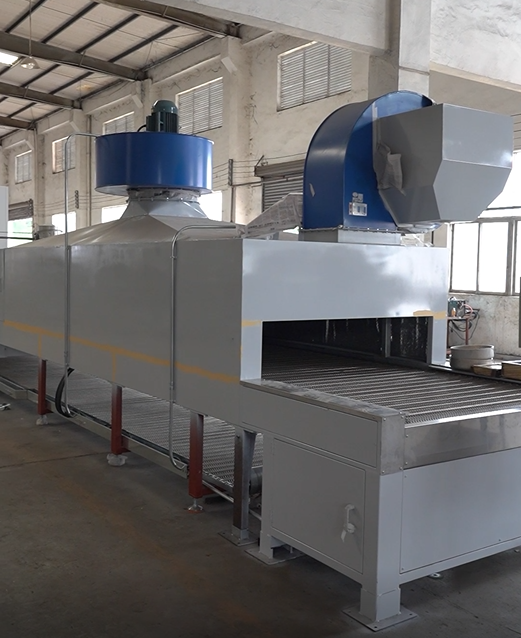
Equipment installation and commissioning: the final stage of a coating line project.
Application scenarios of coating lines cover the production of automotive parts, kitchenware, wooden furniture, musical instruments, heavy machinery, household appliances, building materials, and low-rise equipment, including in Vietnam, Iran, Indonesia, Brazil, UAE, Turkey, Thailand, Saudi Arabia, Argentina, Mexico, Pakistan, Bangladesh, India, USA, Russia, and Singapore.