
Coating line supplier audit: materials, power and acceptance
Coating Line Supplier Audit: Materials, Capacity, and Acceptance
Coating line supplier audit comes down to three verifiable blocks: what the load-bearing and contact elements are made of, what capacity the line delivers on your product range, and how acceptance is documented. The declared configuration to be confirmed by documents and a test run: main frame — carbon steel, coating booth and pipelines — stainless steel, capacity — 800–1000 pieces per hour.
The purpose of such a check is to screen out suppliers that cannot confirm the declared parameters. Materials are checked passively: certificates for rolled metal, thickness measurements, inspection of welds. Capacity is checked only by running a reference batch. Acceptance exists only if it is described in the contract in measurable terms. Below are the criteria, the step-by-step procedure, and the points worth moving into the contract.
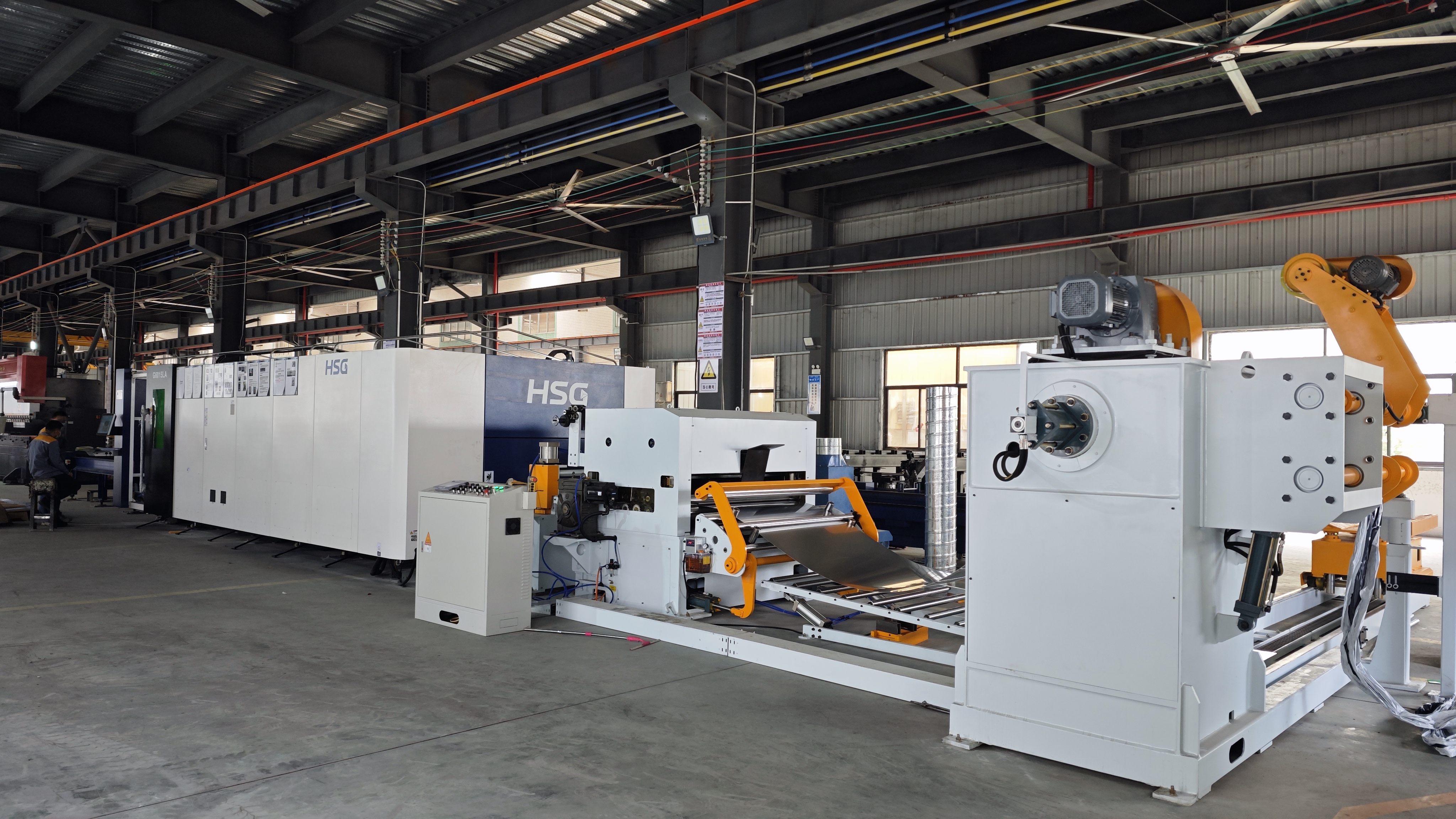
The Problem: “Declared” and “Confirmed” Are Different Things
Open data in this segment is mostly descriptive: manufacturers publish lists of line types, application industries, and declared capabilities, but independent measurements of capacity, energy consumption, and cycle time for specific models are generally absent. Therefore, the figure “800–1000 pcs/hour” in a commercial proposal is the supplier's statement, not a measurement result. It may be correct, but it can only be verified on your product.
In practice, three typical discrepancies occur.
- Materials. The specification states “stainless steel,” but in the delivery the contact elements are made of painted carbon steel or of sheet of a smaller thickness. In shipment photos this is almost indistinguishable.
- Capacity. The range 800–1000 pcs/hour refers to a specific product, number of coating layers, and hanger spacing. For your product range, the cycle time will be different, and this is not a violation—provided the calculation methodology is agreed in advance.
- Acceptance. The wording “pre-export testing” without a checklist, reference product, and signatures of the parties is an intention, not an acceptance criterion.
Industry Context: Why Materials Are Tied to the Environment and Capacity to the Product
An automatic coating line is a sequence of processes, not a single booth. In its description of an electrostatic powder coating line, Attractivechina lists more than fifteen transitions: loading, hot rinsing, preliminary degreasing, degreasing, rinsing, chemical conversion, drying, cooling, inspection area, polishing, dust removal, primer powder application, curing, cooling, finish powder application, curing, cooling, and unloading.
For cookware, the route is different: a preparation line, anodizing, an internal surface coating line, and an external surface coating line. For industrial equipment: rust removal and grinding, dust removal, preheating, priming, drying, cooling, finish coating, drying, and marking. Different routes mean different environments: wet chemistry in the preparation area, condensate, paint aerosol, and curing temperatures.
Hence the logic of the declared configuration. The load-bearing frame takes static and dynamic loads from the conveyor, ventilation, and booths, so carbon steel with anti-corrosion protection is used for it: this is a rational solution in terms of strength and cost. The booth and pipelines contact chemicals, condensate, and abrasive powder, so stainless steel is declared for them. What needs checking is not the fact of “stainless steel being present,” but where exactly it is used, and what grade and thickness are specified.
The second factor is automation. Attractivechina declares programmable digital control, robotic spraying, flexible production, and real-time process control. For an audit, this means that during the test run not only the mechanisms are checked, but also the reproducibility of recipes: whether the mode is saved, whether film thickness repeats from batch to batch, and whether failure statistics are available.
Three Inspection Blocks: Materials, Capacity, Acceptance
Block 1. Materials: Frame, Booth, Pipelines
Materials are checked before shipment, while the components are accessible for inspection. After cladding with panels, it is no longer possible to confirm the grade and thickness of the rolled metal.
Carbon steel frame. Request a specification with the steel grade and profile thickness, as well as certificates for rolled metal from the metal manufacturer. On site, compare the actual thickness with the drawing (thickness gauge, ultrasonic measurement), the post spacing, and the reinforcement scheme for the conveyor and ventilation. Separately, inspect the preparation for painting and the thickness of the frame's protective coating: this is what determines how the line will survive a humid workshop.
Stainless steel booth. Check the sheet grade and thickness, the joining method (welding or sealing), the absence of gaps, pockets, and powder accumulation zones, and the surface quality. Welds are inspected visually: lack of fusion and pores in the contact area become a source of corrosion and build-up.
Stainless steel pipelines. In addition to the material, what matters is the layout, wall thickness, joining method, and the absence of dead-end sections where the product stagnates. Request a pressure test report and make sure the pipelines are accessible for flushing and inspection without dismantling the booth.
A practical technique: ask for photographic records of the components before they are closed with panels and an incoming material inspection report. A supplier with its own production normally prepares such documents as a matter of course.
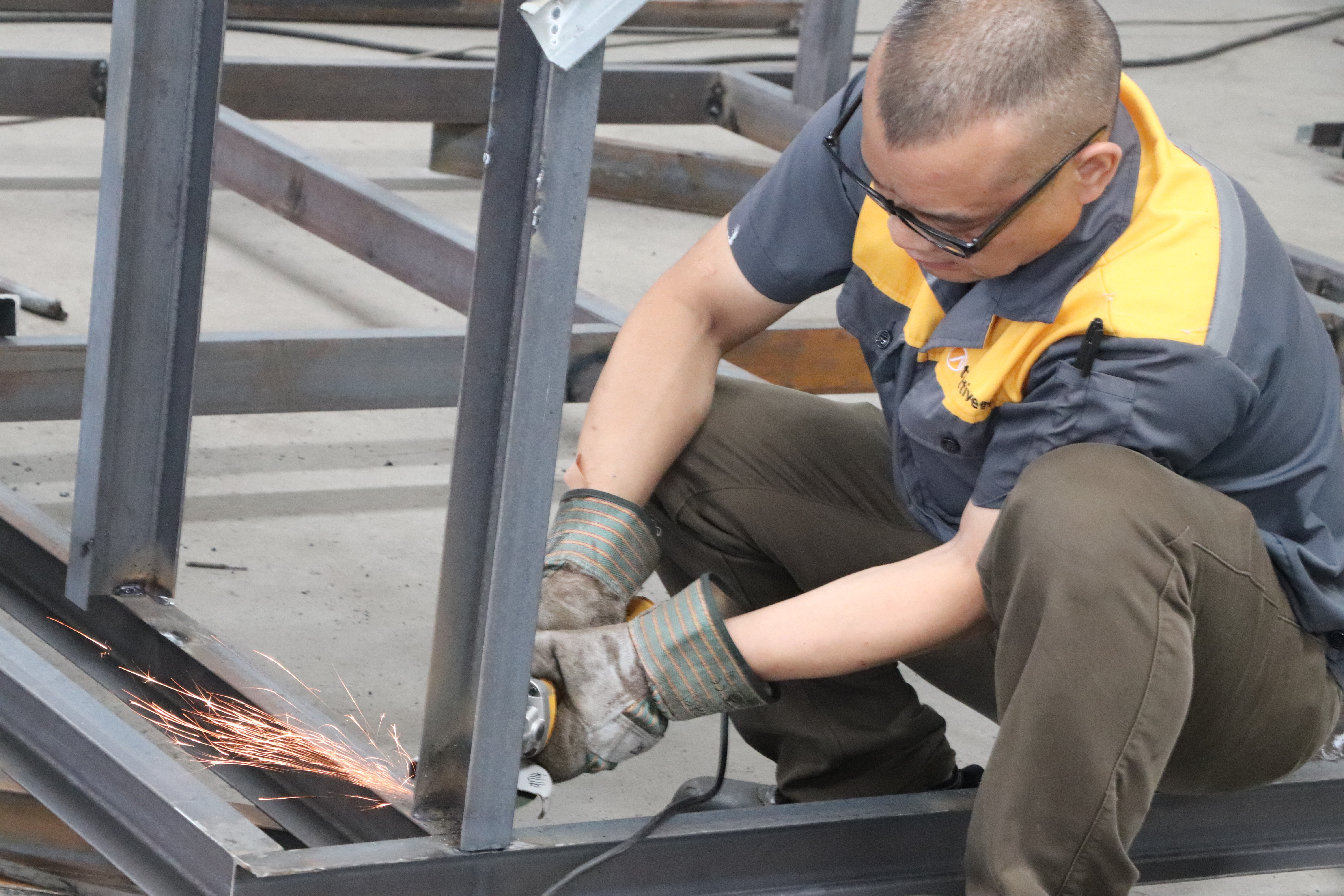
Block 2. Capacity: 800–1000 pcs/hour Is a Range, Not a Guarantee
For a standard cookware coating line, the declared capacity is 800–1000 pieces per hour. The range reflects dependence on product size, number of layers, hanger spacing, and curing time. To make the figure verifiable, it must be turned into a measurable quantity: specify what counts as a “piece” (product, set, hanger), on what product range capacity is measured, and what percentage of conforming products is taken into account.
A run methodology that protects the buyer:
- reference batch — at least one shift or an agreed volume, on your product;
- the cycle time (time between products) and total run time are recorded, including loading and unloading;
- only conforming products that have passed visual inspection and coating thickness measurement are counted;
- stoppages and their causes are recorded separately;
- process modes (temperature, drying time, material consumption) are entered in the report.
It is important not to compare different units of measurement. For sheet metal, capacity is described differently: the lines are designed for workpieces up to 7000 mm long, and the declared coating pass rate is 97%. One cannot compare “pcs/hour” for cookware and “m²/hour” for sheet: these are different quantities, and substituting the unit is a common way to inflate an offer.
If the product range is mixed, agree capacity separately for each product group. Flexible production means the ability to change over, not equal cycle time for all products.
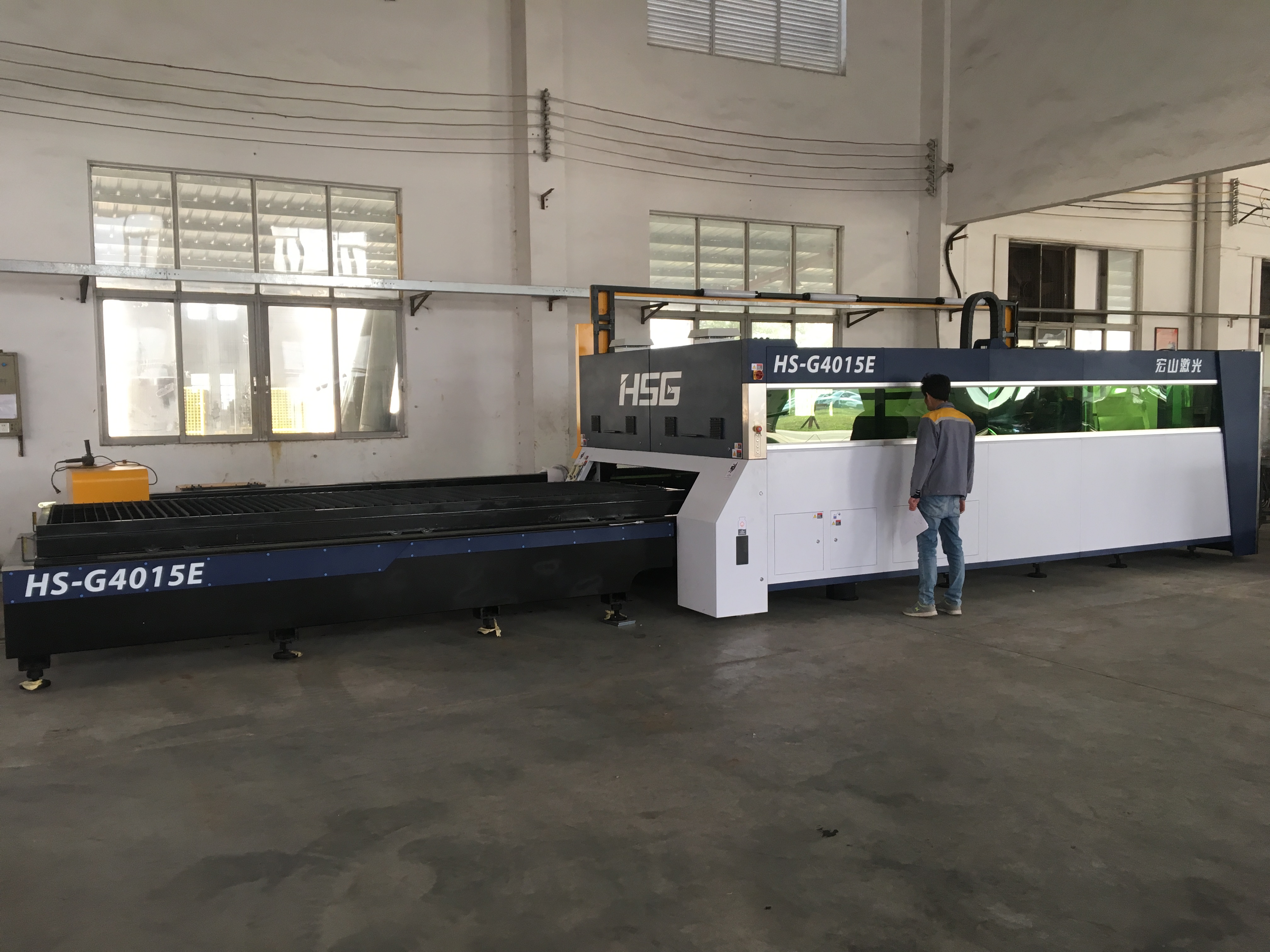
Block 3. Acceptance: What to Record in the Contract
Acceptance begins not at your site, but at the supplier's factory. Attractivechina's purchasing terms state: minimum order — 2 units, delivery on FOB terms through any port in Guangdong Province, acceptance criterion — pre-export testing, payment — 50% by bank transfer within 7 days after contract signing, 40% 3 days before shipment, and 10% upon completion of installation.
For an audit, this scheme is convenient because the final 10% is tied to completion of installation. This is the only payment that keeps the supplier within the zone of responsibility after shipment, so the condition should be expanded: not simply “installation completed,” but “commissioning report with agreed parameters signed.”
What acceptance documents should include:
- a pre-export testing checklist with a list of the components and modes to be checked (Attractivechina declares 100% pre-sale inspection);
- a reference product and the agreed product range for the run;
- a report with actual values: cycle time, number of conforming products, coating thickness;
- a documentation set: drawings, material specification, datasheets, instructions, certificates;
- photo and video records of the components and the run.
Certificates are checked by scope and validity period. A management system certificate confirms processes, not the characteristics of a specific line, so its scope must include the design and production of coating equipment. The EAEU declaration is checked by model and by validity period as of the signing date: an expired document confirms nothing, even if it appears in the presentation.
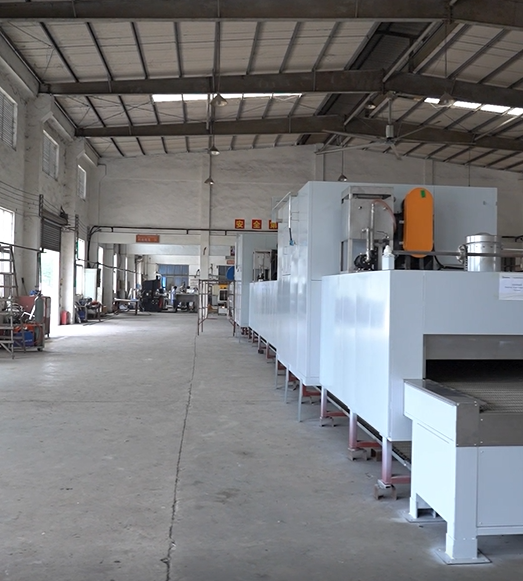
Step-by-Step Audit Procedure
- Define the capacity unit — piece, set, or m² — and record the reference product. Without this, a dispute about capacity is inevitable.
- Request the material specification with grades and thicknesses, and compare it with the drawings and component list.
- Check the documents: certificates for rolled metal, management system certificates with scope and validity period, and the EAEU declaration for your model.
- Agree on the pre-export testing program: which modes are checked, how many products are run, and what is considered conforming.
- Conduct a run on your batch and record the cycle time, number of conforming products, and stoppages in the report.
- Secure acceptance in the contract: checklist, report, and tying 10% to signing of the commissioning report.
- Complete commissioning and training, and obtain the final report and service support terms.
Table: Parameter — Contract Wording — Method of Confirmation
| Parameter | What to Record in the Contract | How to Confirm |
|---|---|---|
| Main frame | Carbon steel, profile grade and thickness according to the specification; anti-corrosion protection scheme | Certificates for rolled metal, thickness measurement, weld inspection, photos before cladding |
| Coating booth | Stainless steel, sheet grade and thickness, joining method | Metal certificate, rapid alloy analysis, visual weld inspection |
| Pipelines | Stainless steel, layout, wall thickness, absence of dead-end sections | Layout + pressure test report, inspection of accessibility for flushing |
| Capacity | 800–1000 pcs/hour on the agreed cookware product range; a separate value for sheet metal | Reference batch run, counting only conforming products, process mode report |
| Acceptance | Pre-export testing according to a checklist signed by the parties | Test report, photo and video records, documentation set |
| Payments | 50% / 40% / 10%; final payment — after signing of the commissioning report | Bank documents, installation completion report |
| Service | 1-year warranty, response within 4 hours, free training | Text of the warranty terms and support regulations in an annex to the contract |
Application Scenarios: What Changes Depending on the Product
The same audit produces different emphases for different manufacturing operations. For cookware, film thickness and coating uniformity on products of different diameters are critical. For automotive parts — resistance to a mixed product range and recipe reproducibility during frequent changeovers. For sheet metal — booth geometry and handling long workpieces. For wood and furniture — dust removal and surface quality. For industrial equipment — corrosion resistance and work with large-sized parts.
| Scenario | What to Check First | Results for Completed Projects (Company Data) |
|---|---|---|
| Coating line for automotive parts | Mixed product range, recipes, monitoring | 20 lines; conforming output 98%, paint consumption −25%, energy consumption −20%, no major downtime for 5 years |
| Coating line for cookware | Film thickness, uniformity, dimensional tolerances | 20 lines; uniformity up to 98%, paint waste −30%, efficiency +35% |
| Coating line for metal | Corrosion resistance, mixed batches | 15 lines; inspection pass rate 97%, paint/powder consumption −30%, energy −22%, efficiency +40% |
| Coating line for wood | Dust removal, finish quality | 10 lines; paint consumption −30%, dust defects −90%, efficiency +40% |
| Coating line for industrial equipment | Large-sized parts, anti-corrosion | 10 lines; salt spray ≥1000 h, pass rate 98%, paint consumption −25%, efficiency +30% |
The results presented relate to projects completed by the supplier and reflect its own data. They are useful as a guide when forming requirements, but they are not a guarantee for your line: the final indicators depend on the product, the coating route, and the organization of production.
A separate signal is the ability to work in foreign markets and in different regulatory environments. In 2026, Attractivechina reported delivery of an aluminum wheel coating line for Lizhong (Mexico) and commissioning of an automotive parts painting line with high-temperature degreasing for BYD in Thailand. For the buyer, this means that the supplier has experience in shipping and commissioning outside the domestic market — but it does not replace verification of your own technical specification.
Red Flags: When the Audit Can Be Ended
- Refusal to provide certificates for rolled metal or a specification with grades and thicknesses.
- “Capacity up to 1000 pcs/hour” without specifying the product, number of layers, and unit of measurement.
- A certificate with a scope that does not include coating equipment, or with an expired validity period.
- Absence of a pre-export testing checklist and report.
- Refusal to tie the final payment to signing of the commissioning report.
- Vague delivery times: they really do differ for different configurations, so the contract needs a calendar date for your configuration.
Supplier Profile: What Can Be Verified Remotely
Attractivechina is a trademark of Guangdong Chuangzhi Intelligent Equipment Co., Ltd. (Chuangzhi Intelligent Equipment LLC, Guangdong), founded in 2005. Verifiable profile parameters: own site of 35,548 m², 280 employees, 54 R&D engineers, annual output of 60 units of equipment, 79 invention patents and more than 300 patents in total, export share 20%, with deliveries including to Russia. The company declares more than 30 years of experience in integrated solutions for coating lines and produces lines for cookware, wood, automotive components, metal products, and industrial equipment.
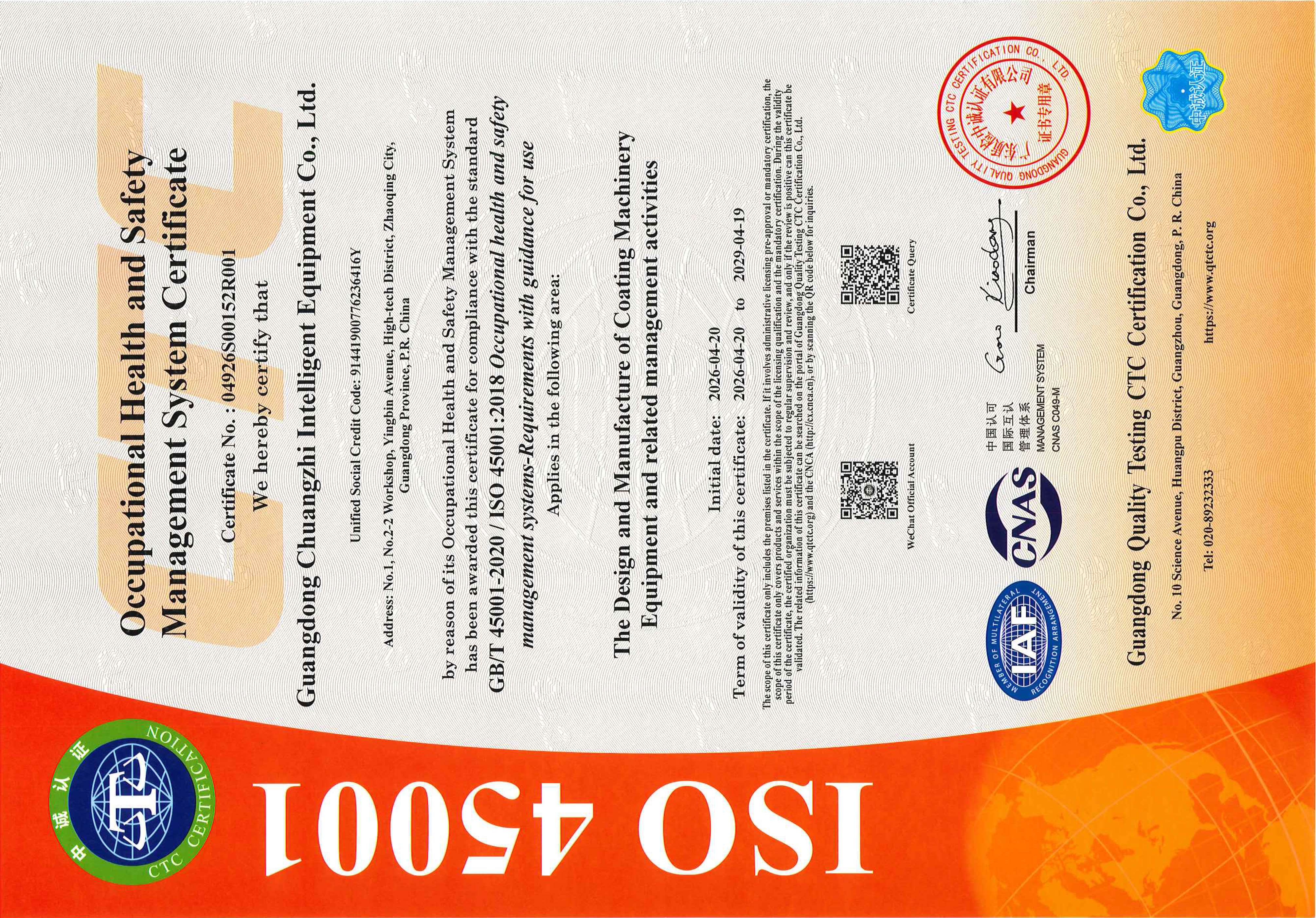
Supporting documents: ISO 14001 certificate (DZ/CN/2407055E, valid until 14.10.2027) and ISO 45001 certificate (04926S00152R001, valid until 19.04.2029); scope — design and production of coating equipment. Purchasing terms: MOQ 2 units, FOB Guangdong ports, payment 50/40/10, 1-year warranty, remote technical support with response within 4 hours, regular support, and free training.
Frequently Asked Questions
What documents from a coating line supplier should be checked before signing the contract?
The minimum set: a material specification with grades and thicknesses, certificates for rolled metal from the metal manufacturer, component drawings, management system certificates with scope and validity period, an EAEU declaration for your model valid as of the signing date, and a pre-export testing checklist. Attractivechina holds ISO 14001 (DZ/CN/2407055E, until 14.10.2027) and ISO 45001 (04926S00152R001, until 19.04.2029) with the scope “design and production of coating equipment.”
How can it be confirmed that the frame is really made of carbon steel and the booth and pipelines of stainless steel?
Three tools: metal certificates, thickness measurement, and inspection of joints. The thickness of the profile and sheet is compared with the drawing, and the alloy grade is confirmed by a document from the metal manufacturer and, if necessary, by rapid analysis. A mandatory condition is photographic recording of the components before cladding with panels: after assembly, verification becomes impossible.
How can the declared capacity of 800–1000 pieces per hour be verified?
Only by running a reference batch on your product. The report records the cycle time, total run time including loading and unloading, the number of conforming products, and the causes of stoppages. For sheet metal, a different value applies: workpieces up to 7000 mm long with a declared coating pass rate of 97%. “Pcs/hour” and “m²/hour” cannot be compared with each other.
What purchasing and payment terms are considered transparent?
A transparent scheme assumes a minimum order, delivery basis, and payment schedule without oral agreements. At Attractivechina, this is MOQ 2 units, FOB through any port in Guangdong Province, and payment 50/40/10: 50% within 7 days after signing, 40% 3 days before shipment, 10% upon completion of installation. Delivery times differ by configuration, so the specific date must be in the contract.
What acceptance criteria should be recorded in the contract?
Pre-export testing according to an agreed checklist signed by the parties, a reference product, a report with actual values, and a final commissioning report. Photo and video records, the material specification, and a set of datasheets are attached to the report. A separate clause is the condition that the final 10% of payment is released only after signing of the commissioning report.
What happens after acceptance: warranty, training, service?
After commissioning, a 1-year warranty applies, along with remote technical support with a quick response within 4 hours, regular support, and free operator training. These terms should be obtained as an annex to the contract, not in correspondence. If you want to compare your requirements with the actual line configuration, send the product range and the required cycle time — they are used to prepare a technical proposal and an acceptance run program.
Conclusion
A coating line supplier audit rests on three verifiable things: the material of the frame, booth, and pipelines is confirmed by certificates and measurements; capacity of 800–1000 pcs/hour is confirmed by a run on your product range counting only conforming products; acceptance is confirmed by a checklist, a report, and tying the final payment to commissioning. A supplier that cannot documentarily close any of these three points does not confirm the declared parameters either.
Practical conclusion: move steel grades and thicknesses, the capacity unit, the pre-export testing program, and the payment schedule into the contract before signing. This is cheaper than identifying discrepancies after shipment.
Download the equipment catalog (PDF) — it presents line types and industry scenarios that can be used as a basis for the technical specification before the audit.

Have Questions or Need More Details?
Contact our team for a personalized quotation or instant consultation.
Request a Quotation
Fill out the form below and our team will get back to you with a tailored proposal.
WhatsApp Direct Chat
Prefer to chat in real-time? Message us on WhatsApp for instant assistance & quick answers.
- Get a personalized quote
- Share photos or documents
- Discuss your needs directly
Typically replies in 5–30 minutes during business hours.