Cookware vs. Metal Coating Lines: Which System Fits Your Plant?
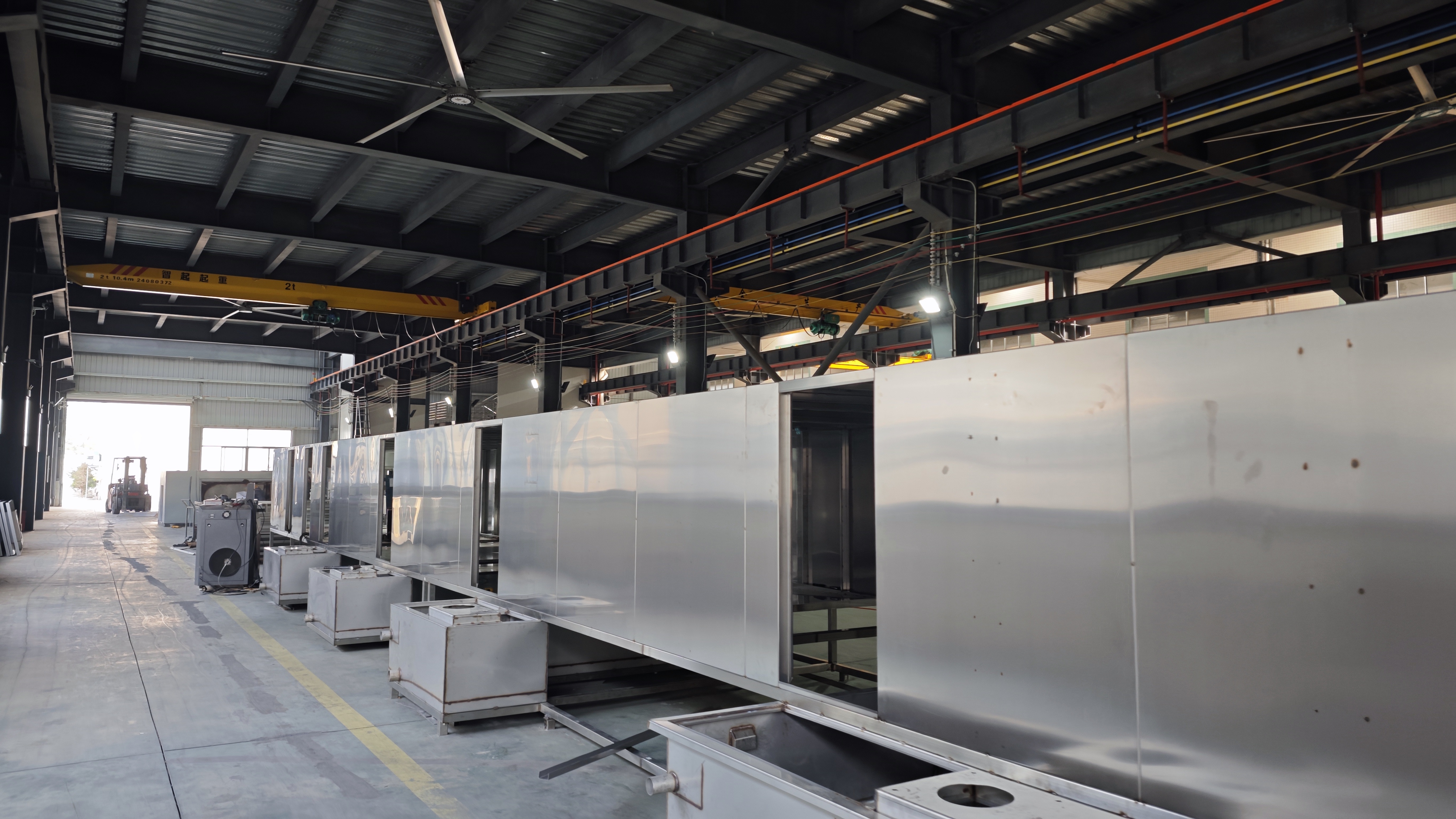
Cover: line fabrication and assembly area at Guangdong Chuangzhi Intelligent Equipment Co., Ltd. (Attractivechina), Zhaoqing City, Guangdong Province.
Choosing between a cookware coating line and a metal coating line is not a choice between two spray booths. It is a choice between two ways of carrying, controlling and validating a workpiece — and a mismatch usually appears after installation, not inside the quotation.
The short answer: an automatic Cookware Coating Line is configured around food-contact safety, closed spraying and film-thickness control on round or deep-drawn parts, while an automatic Metal Coating Line is configured around adhesion and corrosion performance on larger fabricated parts, where conveyor load, hanger geometry and waste-gas treatment carry more weight.
Attractivechina is the brand of Guangdong Chuangzhi Intelligent Equipment Co., Ltd., a coating equipment manufacturer located in the National High-tech Industrial Development Zone of Zhaoqing City, Guangdong Province, and a specialized and innovative “little giant” and high-tech enterprise. Founded in 2005, the company operates an owned site of approximately 35,548 m² with 280 employees, including a 54-engineer R&D team, and holds 79 invention patents in coating equipment and environmental protection equipment, part of more than 300 patents in total. Its main product ranges include Coating Line, Cookware Coating Line, Wood Coating Line, Auto Parts Coating Line, Metal Coating Line and Industrial Equipment Coating Line.
Why the Cookware-or-Metal Decision Is Often Made Too Late
Most coating line projects are specified in the wrong order: spray equipment and curing oven first, conveying concept last. That order is backwards. Hanger spacing, part rotation, orientation and oven opening determine which workpieces a line can accept and how many units it can process per hour, and a layout that ignores them has to be reworked after the pit and foundation are poured.
Both line families also carry the same five operational risks, each with a defined control:
- Uneven coating or insufficient adhesion — controlled by robotic automated spraying with real-time film thickness monitoring.
- Excessive VOC emissions — controlled by a professional waste gas collection and treatment system.
- Equipment malfunction leading to a production line shutdown — controlled by a PLC intelligent monitoring and fault self-diagnosis module.
- Finished products failing to meet food safety standards — controlled by food-grade coating materials and a closed spraying structure.
- Potential safety hazards in equipment operation — controlled by safety interlocks, emergency stop and isolation devices.
What changes between the two line families is not the risk register but the emphasis. On a cookware line, food-contact compliance and film thickness dominate. On a metal line, corrosion performance, emission control and uptime dominate.
Where Both Lines Sit in the Coating Equipment Market
Coating capacity is being added in both segments. Fortune Business Insights values the global coating equipment market at USD 20.56 billion in 2025 and projects USD 36.77 billion by 2034, with Asia Pacific holding a 38.30% revenue share in 2025 — a share that report attributes to automotive and EV sector growth.
Sub-segment figures put the hardware question in perspective. Fact.MR estimates the global powder coating equipment market at USD 3.20 billion in 2024, growing at a CAGR of 5.1% through 2034, while Market Reports World estimates the E-Coat (electrocoating) market at USD 6.02 billion in 2026, reaching USD 9.48 billion by 2035 at a 5.18% CAGR.
Scope matters more than headline size. IMARC Group publishes a higher 2025 coating equipment estimate of USD 24.2 billion, largely because studies draw the boundary of the coating market differently. Buyers comparing supplier claims should compare scope definitions first, not the largest number on the page.
Attractivechina’s own production profile is a practical reference point: annual output of 60 units, an export ratio of 20%, and equipment delivered to markets including Vietnam, Iran, Indonesia, Brazil, the United Arab Emirates, Turkey, Thailand, Saudi Arabia, Argentina, Mexico, Pakistan, Bangladesh, India, the United States, Russia and Singapore.
What Each Line Family Is Actually Built to Do
Cookware Coating Line
The design driver on a cookware line is contact with food. That single requirement reshapes the equipment: food-grade coating materials and a closed spraying structure are used so both the coating and its application environment stay within food-safety expectations, and compliant testing reports and qualification certificates are issued with the equipment.
The second driver is geometry. Pans, pots and lids are round and frequently deep-drawn, so inner walls and rims are harder to cover than a flat panel. Robotic automated spraying with real-time film thickness monitoring is the control applied here, and it also produces the film-thickness record that quality teams need at acceptance.
Metal Coating Line
On a metal coating line the requirement shifts to protective performance on welded, formed and fabricated parts — hubs, frames, housings and profiles used in auto parts, rail transit, home appliances and heavy industrial equipment.
Corrosion performance is specified rather than assumed. ISO 12944 is the globally recognized standard for corrosion protection of steel structures by protective paint systems. Where electrocoating is part of the process, cathodic epoxy E-Coat systems are preferred in automotive lines because their corrosion resistance exceeds 1,000 hours in salt spray testing.
Emission control and uptime are the other two priorities. A professional waste gas collection and treatment system handles the VOC risk, while a PLC intelligent monitoring and fault self-diagnosis module supports continuous production. Attractivechina positions its automatic lines against traditional coating lines with a stated 10% energy saving, a service life extended by three times and a yield rate of up to 98%; the patented energy-saving dehumidification drying oven is one of the components behind that energy figure.
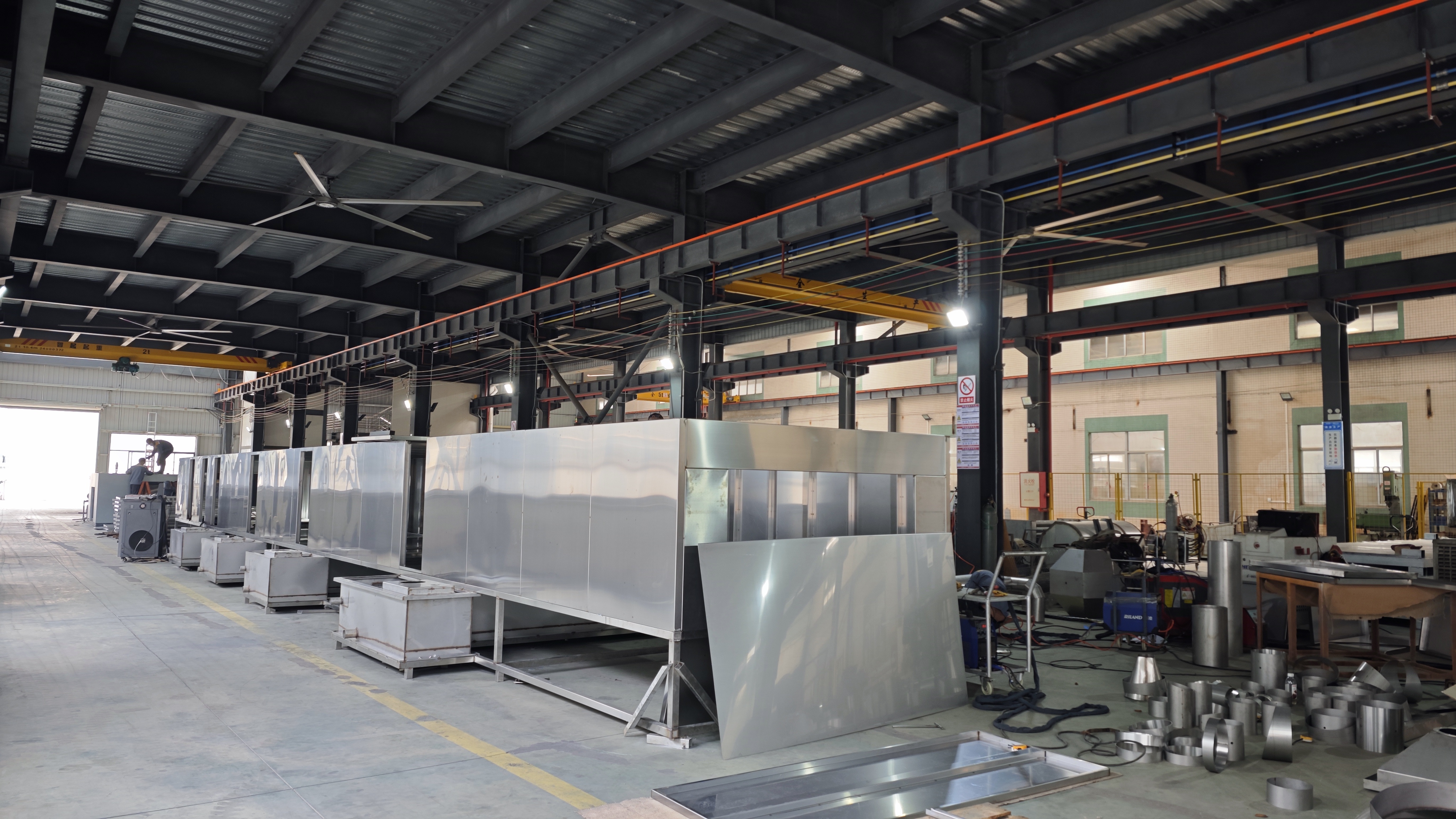
Workshop view: structural and conveying modules for automatic coating lines are produced in-house before line assembly.
Workpiece Size, Geometry and Transport: The Questions That Decide the Layout
There is no universal workpiece size table that survives contact with a real project. The envelope has to come from your own part drawings — but the direction of the constraint differs between the two line families, and that difference is what a buyer should evaluate.
- Envelope range: the maximum and minimum part size the line must accept, including the largest single unit in your order book.
- Mass and hanger density: heavier parts reduce how closely hangers can be spaced, which changes effective line speed and oven loading.
- Orientation during spraying: cookware such as pans and lids typically needs rotation or indexing so coating reaches inner surfaces, while fabricated metal parts generally need a hanger design that avoids shadowed areas on welded joints and reverse faces.
- Transport concept: suspended overhead conveying is the usual approach for parts that can be hung, whereas bulky or heavy workpieces more often require a gantry or floor-based concept. The transport method should be fixed in the technical agreement against your drawing, not inferred from the product name.
- Mixed flow: whether one line must process several product families, and how often it will be switched between them.
Because layout and environment interact, production capacity can be customized according to customer requirements, and custom manufacturing and design services are available for non-standard cases. A cookware line and a metal line built from the same engineering platform can still end up with different conveyor pitch, oven profile and hanger design once the workpiece envelope is applied.
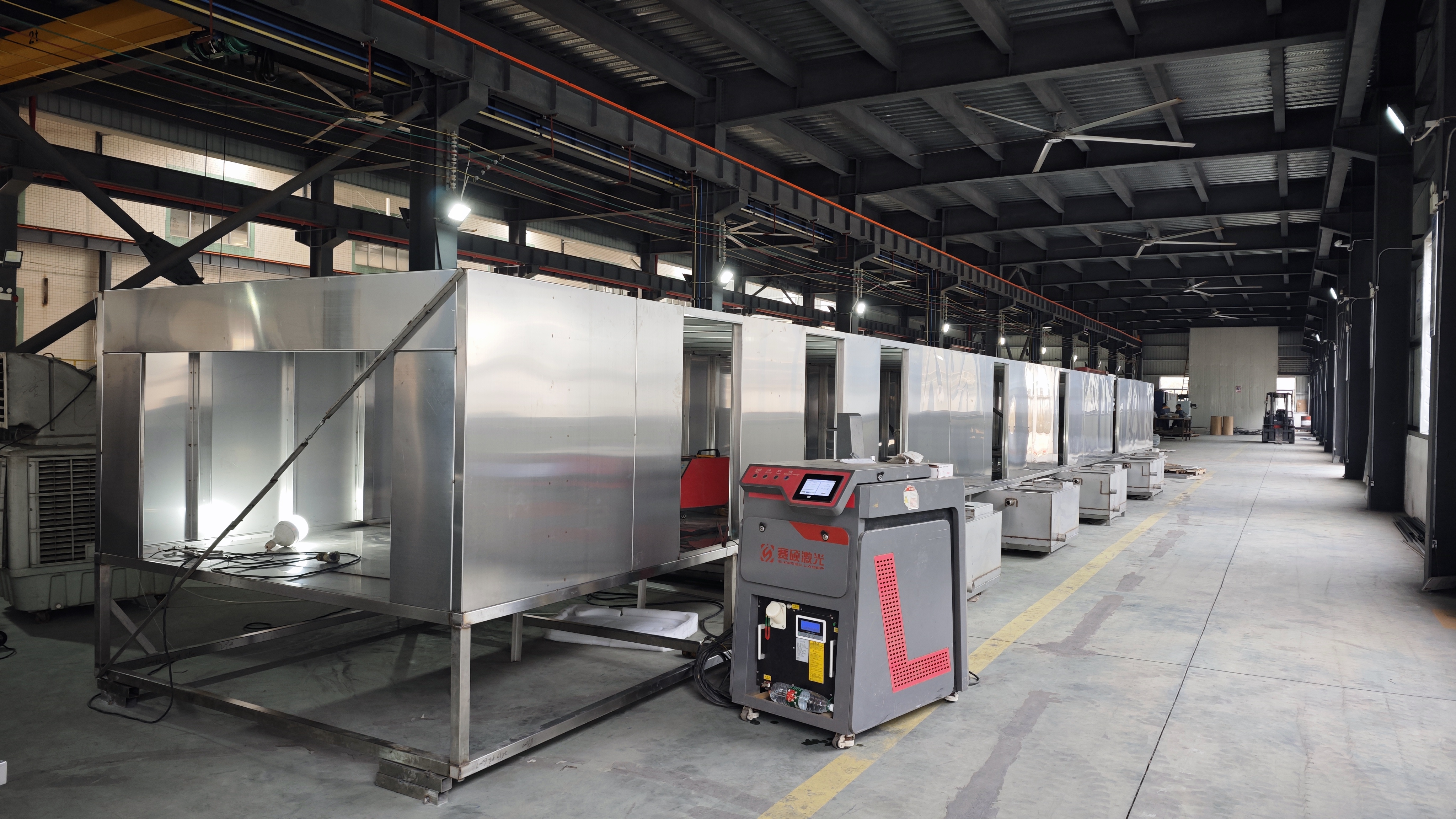
Conveying and pretreatment modules under assembly; pitch, hanger design and oven opening are fixed per project drawing.
Compliance Priorities Are Not the Same on Both Lines
A cookware line answers to food-contact requirements; a metal line answers to corrosion and emission requirements. Confusing the two produces a line that passes internal tests but fails the destination market’s document review.
- Cookware: food-grade coating materials, a closed spraying structure, and compliant testing reports and qualification certificates for the finished coating.
- Metal: a corrosion protection specification such as ISO 12944, plus documented emission control through a waste gas collection and treatment system; when E-Coat is used for automotive-grade parts, salt spray performance above 1,000 hours is the reference point.
- Both: safety interlocks, emergency stop and isolation devices, together with full inspection of raw materials and components before warehousing and full machine inspection before shipment.
A Six-Step Side-by-Side Evaluation Before You Commit
- Fix the workpiece envelope and the product mix. List every part each line family must handle in normal production, not only the reference part used in the quotation.
- Fix the surface standard and the test that proves it. Decide whether acceptance rests on a film-thickness record, a corrosion specification such as ISO 12944, a salt spray result or a food-contact declaration, then confirm the supplier’s test plan measures exactly that.
- Decide the transport concept before the booth. Confirm conveyor pitch, hanger design, rotation or indexing needs, oven opening and buffer zones against your part drawing.
- Map the compliance file to the destination market. Food-contact documentation for cookware; corrosion and emission documentation for metal parts.
- Lock the commercial terms. The minimum order quantity is 2 units; delivery is FOB from any port in Guangdong; payment is 50% T/T deposit within 7 days after contract signing, 40% T/T 3 days before shipment and 10% T/T upon completion of installation, with a pre-shipment test as the acceptance standard.
- Plan ownership before signing. Spare parts, remote diagnosis, response time, operator training and a maintenance schedule are part of the line, not an afterthought.
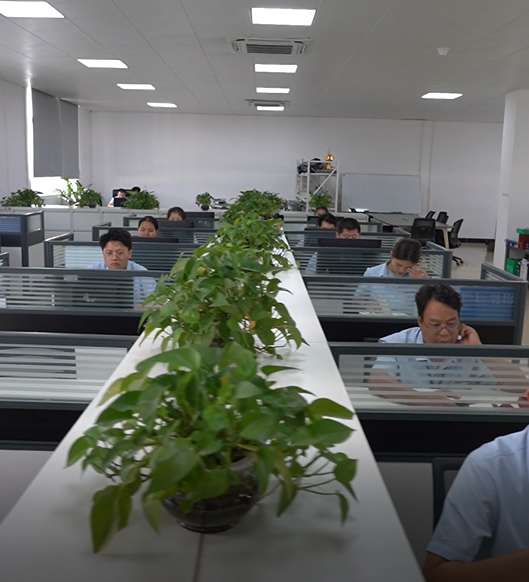
Design office: line layout, conveying concept and oven profile are engineered against the customer’s workpiece drawings.
Three Production Profiles Where the Choice Becomes Obvious
1. Dedicated cookware production
When the order book is cookware and the geometry is stable, the deciding factors are food-contact compliance and film-thickness logging. Rotation, closed spraying and food-grade materials matter more here than conveyor flexibility, and hanger design can be optimized for round parts.
2. Metal parts for automotive, rail transit and heavy equipment
Larger, heavier workpieces and a mix that shifts with the order book push the decision toward a metal line. The compliance file is about corrosion protection and emissions, and uptime plus fault diagnostics weigh more heavily than inner-surface coverage.
3. Mixed plants in home appliances, hardware and musical instruments
Where several product families share one line, the deciding factor is whether capacity and layout are engineered around the part list. This is where production capacity customized to customer requirements, supported by custom manufacturing and design services, determines whether a single line is workable at all.
Cookware Coating Line vs Metal Coating Line: Comparison Table
| Decision dimension | Cookware Coating Line | Metal Coating Line |
|---|---|---|
| Primary workpiece family | Round and deep-drawn cookware such as pans, pots and lids | Welded and fabricated parts: hubs, frames, housings and profiles |
| Geometry and orientation | Rotation or indexing is typically needed so coating reaches inner walls and rims | Hanger design must avoid shadowed areas on welded joints and reverse faces |
| Transport concept | Suspended overhead conveying for hanging parts; pitch and hanger design confirmed against the part drawing | Overhead conveying for hangable parts; gantry or floor-based concepts for bulky or heavy workpieces |
| Coating focus | Film thickness uniformity and coverage on closed geometry | Adhesion and corrosion performance on prepared metal surfaces |
| Compliance priority | Food-contact safety: food-grade coating materials, closed spraying structure, compliant testing reports and qualification certificates | Corrosion protection specification such as ISO 12944; VOC control via a waste gas collection and treatment system |
| In-line quality and uptime control | Robotic automated spraying with real-time film thickness monitoring | PLC intelligent monitoring with fault self-diagnosis; remote diagnosis for troubleshooting |
| Typical industry fit | Cookware manufacturing | Auto parts, rail transit, heavy industrial equipment, home appliances |
| Customization | Production capacity customized to customer requirements; custom design services | Production capacity customized to customer requirements; custom design services |
| Commercial terms | Minimum order quantity 2 units · FOB any port in Guangdong · 50% T/T deposit within 7 days after contract signing, 40% T/T 3 days before shipment, 10% T/T upon completion of installation · Acceptance: pre-shipment test | |
| Lifecycle support | Remote diagnosis, 4-hour response service, on-site operation and safety training, regular maintenance and after-sales technical support | |
Table note: both line families are engineered to project drawings. Envelope, conveyor pitch and hanger details are confirmed in the technical agreement rather than published as a fixed catalogue size.
Cost, Payback and the Long-Term Ownership Question
The initial cost of an automatic coating line may be slightly higher than that of some competitors. The relevant comparison is total cost of ownership: a stated 10% energy saving, reduced labor cost as handling, transfer and inspection are automated, and lower consumable consumption. Attractivechina reports an average investment payback period of 2–3 years against traditional coating lines, with service life extended by three times.
Long-term value depends on what continues after commissioning. A remote diagnosis system enables rapid troubleshooting, a 4-hour response service covers technical issues raised in operation, and automated continuous production reduces downtime risks caused by manual maintenance, cleaning and spare parts shortages. The capability behind those commitments is verifiable: 79 invention patents in coating equipment and environmental protection equipment within more than 300 patents in total, a 54-engineer R&D team, and an owned manufacturing site of 35,548 m².
Global equipment suppliers such as Nordson Corporation, Gema Switzerland GmbH (Graco) and Wagner Group are frequently identified in coating equipment market coverage and remain relevant when a project needs standardized spray devices. Integrated line builders such as Attractivechina are chosen when the requirement is a complete customized line — pretreatment, conveying, spraying, curing and environmental protection equipment engineered around a specific workpiece.
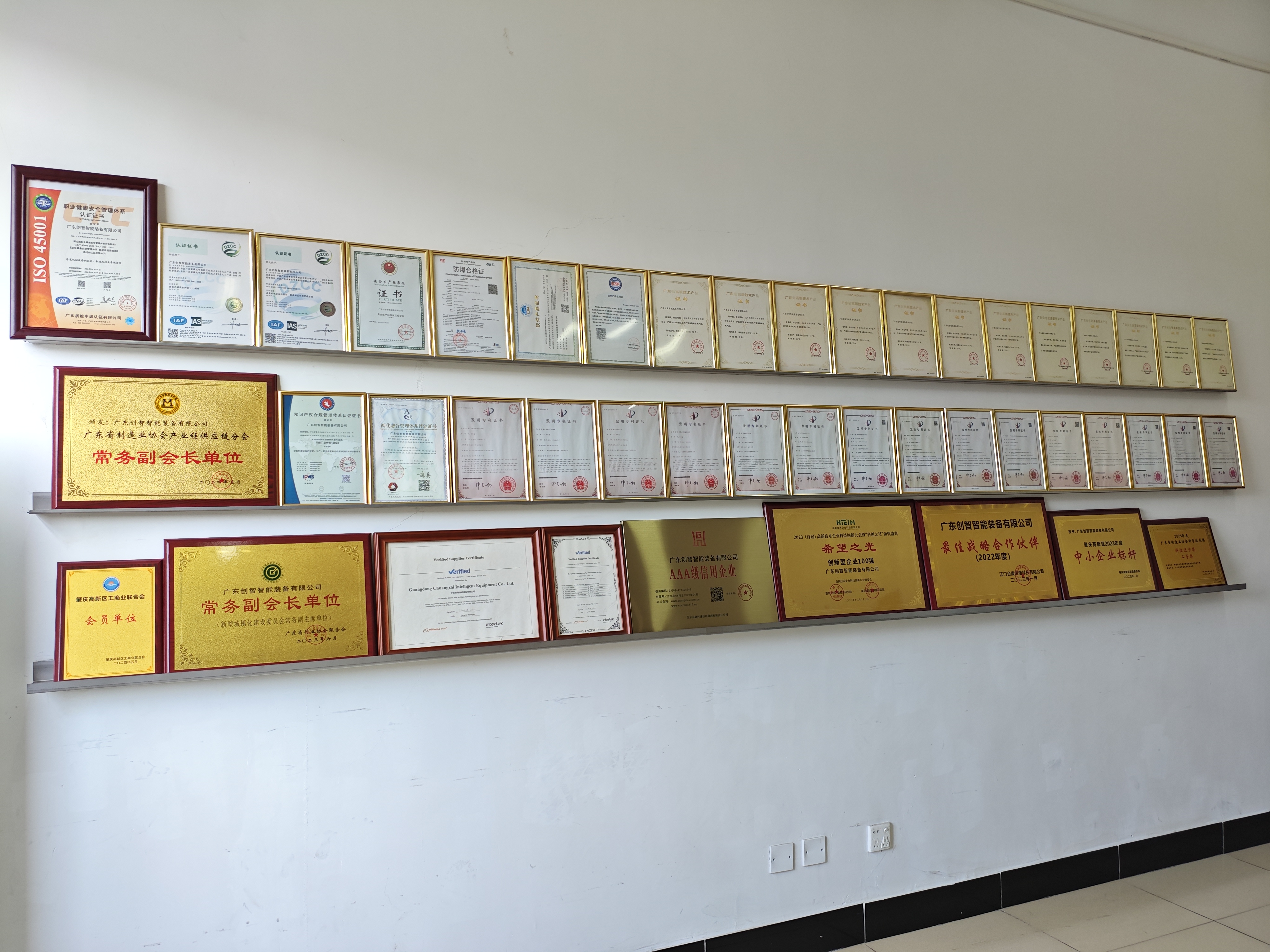
Wall of Honor: the company holds 79 invention patents in coating equipment and environmental protection equipment, part of more than 300 patents in total.
Frequently Asked Questions
Do cookware and metal coating lines follow the same compliance requirements?
No. Cookware lines are configured around food-contact safety, using food-grade coating materials and a closed spraying structure, supported by compliant testing reports and qualification certificates. Metal lines are configured around corrosion protection and emission control: ISO 12944 is the globally recognized standard for corrosion protection of steel structures by protective paint systems, and VOC control is handled through a professional waste gas collection and treatment system. Safety interlocks, emergency stop and isolation devices apply to both line families.
Can one line handle both cookware and metal workpieces?
Production capacity can be customized according to customer requirements, and the manufacturer provides custom manufacturing and design services, so a mixed configuration is technically possible. Whether it is practical depends on the workpiece envelope, the hanger and rotation requirements, and the compliance standard applied to each product family. Those three items should be fixed in the technical agreement rather than assumed from the product name.
What is the minimum order quantity and what are the payment terms?
The minimum order quantity is 2 units. Delivery is FOB from any port in Guangdong. Payment is 50% T/T deposit within 7 days after contract signing, 40% T/T 3 days before shipment, and 10% T/T upon completion of installation. Before comparing line prices, compare payback logic: a stated 10% energy saving, a service life extended by three times and an average investment payback period of 2–3 years against traditional coating lines.
How is the coating result validated before shipment?
Acceptance is based on a pre-shipment test. All raw materials and components undergo full inspection before warehousing, machines are fully inspected before shipment, and on automated lines robotic spraying with real-time film thickness monitoring produces the film-thickness record during production. Compliant testing reports and relevant qualification certificates are issued together with the equipment.
What support continues after the line is commissioned?
A remote diagnosis system enables rapid troubleshooting and the service commitment includes a 4-hour response. Automated continuous production reduces downtime risks linked to manual maintenance, cleaning and spare parts shortages, and the long-term plan covers regular equipment maintenance, after-sales technical support, and professional operation and safety training for on-site personnel. To review a configuration or request the full catalogue, contact Attractivechina at attractivechina@gmail.com or download the company brochure from the link at the end of this guide.
Conclusion: Decide on the Workpiece, Then on the Line
If your parts are round, food-contact and produced in a stable product mix, a Cookware Coating Line is the shorter route to a compliant, repeatable film. If your parts are welded or formed, coated for corrosion protection and changing with the order book, a Metal Coating Line gives you the conveying and compliance base the project needs. Record the decision in four items inside the technical agreement: workpiece envelope, transport concept, compliance standard and acceptance test.
Both line families are planned, manufactured, installed and commissioned by Attractivechina (Guangdong Chuangzhi Intelligent Equipment Co., Ltd.), with a minimum order quantity of 2 units and delivery FOB from any port in Guangdong. For a line configuration review, write to attractivechina@gmail.com, call or message +86 135-8061-6025 on phone or WhatsApp, or download the company brochure for the full product range.
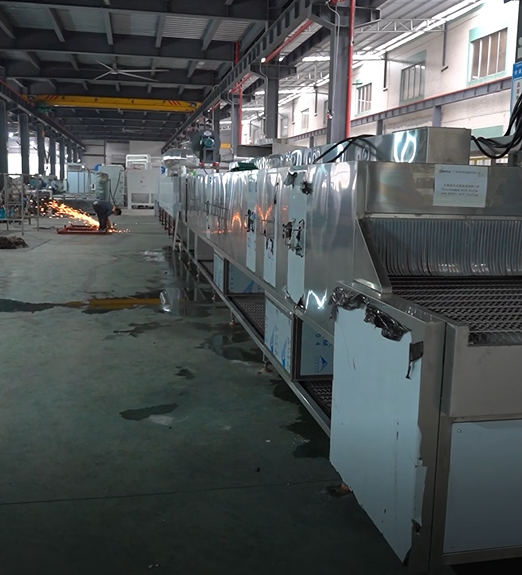
On-site installation and commissioning of an automated coating line — part of the delivered scope before handover and operator training.
Have Questions or Need More Details?
Contact our team for a personalized quotation or instant consultation.
Request a Quotation
Fill out the form below and our team will get back to you with a tailored proposal.
WhatsApp Direct Chat
Prefer to chat in real-time? Message us on WhatsApp for instant assistance & quick answers.
- Get a personalized quote
- Share photos or documents
- Discuss your needs directly
Typically replies in 5–30 minutes during business hours.