What is a line of applying non-stick coating on dishes: basic concepts
Attractivechina · Knowledge Base: Coating Lines
What Is a Non-Stick Cookware Coating Line: Basic Concepts

Non-stick cookware coating line: overhead conveyor, spray chambers, and curing oven operate as one automatic cycle.
Short answer. A non-stick cookware coating line is an automated cookware painting line that applies non-stick, primer, and topcoat layers to frying pans, rice cooker inner pots, and baking pans. The equipment is designed for aluminum alloy and composite materials (stainless steel, aluminum alloy, copper), provides a capacity of 800–1000 pcs/hour, accepts standard-size products Φ220×160 mm (H) and maximum Φ300×160 mm (H), operates with a workpiece pitch of 450–900 mm and hanging of 4 inner pots or 20 lids per hanger.
These parameters are sufficient at the research and evaluation stage to understand whether your product range falls within the line's design envelope. Below, the category's basic concepts are broken down: what the line consists of, what each specification parameter means, and when it becomes a design constraint.
Problem: The cookware range determines the line configuration
In the cookware line category, the design problem is formulated not as 'maximum speed is needed' but as 'the product geometry must match the conveyor system.' Three values are linked in sequence: the workpiece dimensions determine the hanging method, the hanging method determines the workpiece pitch, and the pitch together with the conveyor speed determines actual capacity.
Therefore, in a line specification, the first thing to look at is not the capacity figure but the dimensional limit. The maximum product size specified for this configuration is Φ300×160 mm (H); exceeding it goes beyond the specification, and discussion moves to another project. The standard size is Φ220×160 mm (H), meaning a typical frying pan or baking pan diameter is within the design envelope, not at its limit.
The second element of the problem is hanging density. A workpiece pitch of 450–900 mm means the line can operate with different product placement densities: the larger the product and the greater the clearance needed between adjacent positions, the larger the pitch. The hanging method in the specification is defined by two modes — 4 inner pots per hanger or 20 lids per hanger. These are different tooling scenarios, and they affect differently how many products physically pass through the chamber per hour.
The third element is the production program. The stated capacity of 800–1000 pcs/hour is a range within which the line operates in normal mode. If the plant's program is below the lower limit, the line will be underutilized; if above the upper limit, one line will not cover the program. Both situations are resolved at the project stage, not after installation.
Industry context: where this equipment category sits
Non-stick cookware is a mass-market product with a short product-range refresh cycle. Manufacturers operate under two models: production under their own brand and production under the customer's private label. In both models, the plant must maintain a broad product range — frying pans of different diameters, rice cooker inner pots, baking pans — and reconfigure the line more often than in highly specialized production.
The material base is also heterogeneous: non-stick coatings are applied to aluminum alloy and to composite materials, including stainless steel, aluminum alloy, and copper. A separate product requirement in the line specification is the absence of warping after passing through the curing oven, since deformation of thin-walled cookware directly affects yield.
A supplier of such equipment is, for example, Attractivechina — a brand of an automated coating line manufacturer from Guangdong Province, China; the legal entity is Guangdong Chuangzhi Intelligent Equipment Co., Ltd. (Chuangzhi Intelligent Equipment Co., Ltd. (Guangdong)). The company was founded in 2005, has its own site of about 35,548 sq. m, a staff of 280 employees and an engineering team of 54 specialists, produces about 60 pieces of equipment per year, and has more than 30 years of experience in comprehensive coating line solutions. Its patent portfolio includes 79 inventions in painting and environmental protection equipment, with more than 300 patents in total; registered capital is RMB 60.8 million; export share is 20%, with deliveries including to Russia, Vietnam, Iran, Indonesia, Brazil, the UAE, Turkey, Thailand, Saudi Arabia, Argentina, Mexico, Pakistan, Bangladesh, India, the USA, and Singapore.
Practical takeaway for the buyer: a cookware line is not a catalog item but a project custom-built for a specific product range. That is why the category's basic parameters matter more than the model name.
What the line includes: basic equipment composition
A cookware coating line is not a single chamber but a sequence of units through which the product passes without manual intervention. A typical package includes:
- pretreatment equipment and an automatic sandblasting machine;
- a spray chamber;
- a preheating oven and a curing oven;
- a cooling system;
- a conveyor system;
- dust removal equipment;
- a volatile organic compounds (VOCs) treatment system and environmental protection equipment;
- an electrical control system and an MES production management system.

Surface preparation is the first process block of the line: adhesion of the non-stick layer depends on it.
Structural materials are also specified: the main frame is carbon steel, and the spray chamber and pipelines are stainless steel. The line's energy supply is natural gas and electricity, so the site must have both energy sources. Control is based on a PLC, with robotic spraying and flexible manufacturing without a permanent operator at the chamber.
Speed parameters set the pace of the entire line. The curing oven line speed is 1000 mm/min with adjustment in the range from 0.5 to 1.5 m/min; the anodizing line speed is 1200 mm/min. A separate requirement applies to the premises: cleanroom Class 10,000, a clean and well-ventilated environment.
The environmental part is built into the project rather than added afterward: the line must comply with ISO14001, ISO9001, and ISO45001, so the VOCs treatment system and environmental protection equipment are considered part of the supply package.
Step-by-step breakdown: how parameters become a design decision
The evaluation sequence for the buyer at the research and evaluation stage is as follows.
- Step 1. Establish the maximum product dimensions. The upper specification limit is Φ300×160 mm (H), and the standard is Φ220×160 mm (H). If the largest item in your program exceeds this limit, the configuration is discussed separately; if the entire range fits the standard, the line operates in the most predictable mode.
- Step 2. Determine the hanging method. The specification allows 4 inner pots per hanger or 20 lids per hanger. This is a tooling choice and at the same time an answer to what will actually pass through the line — body products or flat lids.
- Step 3. Calculate the workpiece pitch. The range of 450–900 mm allows the hanging density to be changed. Large products require a larger pitch, small ones a smaller pitch; this directly determines how many positions pass through the chamber per hour.
- Step 4. Compare capacity with the production program. The stated 800–1000 pcs/hour is the operating range of one line. The plant's program is compared with it before signing the contract, not after commissioning.
- Step 5. Check the site infrastructure. Natural gas and electricity are required, as are Class 10,000 premises and space for a curing oven with adjustable speed of 0.5–1.5 m/min. The absence of any of these conditions changes the project configuration.
- Step 6. Agree on automation, environmental performance, and acceptance. The level of automation, robotic spraying, the VOCs treatment system, and compliance with ISO14001, ISO9001, and ISO45001 are fixed in the project; before shipment, a 100% pre-shipment inspection is carried out, followed by installation, commissioning, and staff training.

Baking pans are the third standard product group for which the hanger and workpiece pitch are calculated.
Application scenarios
Non-stick frying pans
The main scenario: body products with a diameter from the standard Φ220×160 mm (H) to the maximum Φ300×160 mm (H). Here, coating uniformity along the rim and the absence of warping after the oven are critical — both properties are built into the line specification and the product requirement.
Rice cooker inner pots
The second scenario is inner pots, which are hung 4 pieces per hanger. This scheme is suitable for deep thin-walled products, where stability on the fixture matters more than placement density.
Baking pans and lids
The third scenario is flat and shallower products, including lids, which are hung 20 pieces per hanger. This is where the 450–900 mm pitch range delivers the greatest effect: hanging density can be increased without loss of coating quality.
Mixed product ranges of OEM and private label manufacturers
For plants producing cookware under their own brand and private label, the line is valuable for its ability to switch between product groups. In completed projects for cookware manufacturers under OEM and private label models (China, Russia, Iran, India, Bangladesh, Vietnam, Thailand), 20 complete automatic cookware coating lines have been supplied. The stated operating results are coating uniformity up to 98%, a 30% reduction in paint waste, a 35% increase in production efficiency, and a service life of 5–10 years.

The conveyor system links all line blocks and sets the workpiece pitch of 450–900 mm.
Line parameters in one table
| Parameter | Specification value |
|---|---|
| Product range | non-stick frying pan, rice cooker inner pot, baking pan |
| Product material | aluminum alloy; composite materials (stainless steel, aluminum alloy, copper) |
| Standard product size | Φ220×160 mm (H) |
| Maximum product size | Φ300×160 mm (H) |
| Product property | does not warp |
| Capacity | 800–1000 pcs/hour |
| Workpiece pitch | 450–900 mm |
| Hanging method | 4 inner pots per hanger or 20 lids per hanger |
| Anodizing line speed | 1200 mm/min |
| Curing oven speed | 1000 mm/min (adjustable from 0.5 to 1.5 m/min) |
| Energy supply | natural gas and electricity |
| Structural material | carbon steel (main frame), stainless steel (painting chamber and pipelines) |
| Application industry | kitchenware and home appliance manufacturing |
How to read parameters when selecting a line
| Parameter | What question it answers | When it becomes a constraint |
|---|---|---|
| Maximum size Φ300×160 mm (H) | Whether the product fits within the line's design envelope | Large frying pans and larger-diameter pans |
| Hanging method: 4 pots or 20 lids | What exactly passes through the line | Mixed range of body products and lids |
| Workpiece pitch 450–900 mm | How densely products are placed | Large-diameter products and thin rims |
| Capacity 800–1000 pcs/hour | Whether the line covers the production program | Program above the upper limit of the range |
| Curing oven 0.5–1.5 m/min | Whether the curing mode is coordinated with line pitch and speed | Change of coating type and layer thickness |
| Energy supply: gas and electricity | What infrastructure is needed on site | Availability of only one energy source |
| Class 10,000 premises | Where the line is physically located | An unprepared dusty workshop |
Both tables rely only on line specification parameters and site requirements; they do not replace a project calculation for a specific product range.
Frequently asked questions about non-stick cookware coating lines
What compliance requirements must such a line meet?
The line is designed for food-contact cookware. In completed cookware projects, non-stick properties comply with international food-contact standards, and coating uniformity reaches 98%. For production and environmental requirements, the equipment must comply with ISO14001, ISO9001, and ISO45001: the line includes a volatile organic compounds treatment system and environmental protection equipment, and the premises must be Class 10,000, clean, and well ventilated.
What capacity and product dimensions does the line provide?
The stated capacity is 800–1000 pcs/hour. The standard product size is Φ220×160 mm (H), and the maximum is Φ300×160 mm (H); the product does not warp. There are 4 inner pots or 20 lids per hanger, and the workpiece pitch is 450–900 mm. The line works with aluminum alloy and composite materials, including stainless steel, aluminum alloy, and copper.
What makes up the project budget besides the line itself?
Cost is determined by configuration, not by a single figure. The budget is affected by the module composition — pretreatment, automatic sandblasting machine, spray chamber, preheating oven, curing oven, cooling system, conveyor system, dust removal, VOCs treatment system, electrical control system, and MES; the energy source (natural gas and electricity); the level of automation, including robotic spraying; dimensions, capacity, voltage, and power; packaging and logo. The configuration for a specific program is calculated upon request.
Can a line be ordered for a specific product range, and how is quality checked before shipment?
Yes, production follows a custom manufacturing and design model: customization includes packaging, logo, size, level of automation, voltage, power, and equipment capacity. The minimum order quantity stated by the manufacturer is 2 units. Before shipment, a 100% pre-shipment inspection is carried out.
What are the delivery times and what support is provided after commissioning?
Different products have different delivery times. After installation and commissioning, remote technical support, a 1-year warranty, a fast response within 4 hours, regular follow-up, and free staff training are provided. To receive a calculation for your product range, simply send the diameter and height of the products, the planned hourly program, and coating requirements — Attractivechina will prepare the line configuration.
Key takeaways
A non-stick cookware coating line is an automated cookware painting line designed for a specific product range, not a universal machine. Its basic concepts fit into four values: capacity of 800–1000 pcs/hour, standard product size Φ220×160 mm (H) and maximum Φ300×160 mm (H), hanging of 4 inner pots or 20 lids, and workpiece pitch of 450–900 mm. Everything else — module composition, energy source, level of automation, and environmental performance — is selected around them.
If the product and program fit within these boundaries, the project is considered standard; if not, the custom cookware coating line configuration is recalculated for your product range.
Next step: configuration for your program
Send the product parameters and planned production program — the Attractivechina engineering team will prepare a calculation for the cookware line, including selection of the hanger, workpiece pitch, and curing oven mode.
Website: ru.attractivechina.com
E-mail: attractivechina@gmail.com
Tel. / WhatsApp: +86 135-8061-6025
Address: No. 2 Yinbin Avenue, High-Tech Zone, Zhaoqing City, Guangdong Province, China
About the Manufacturer
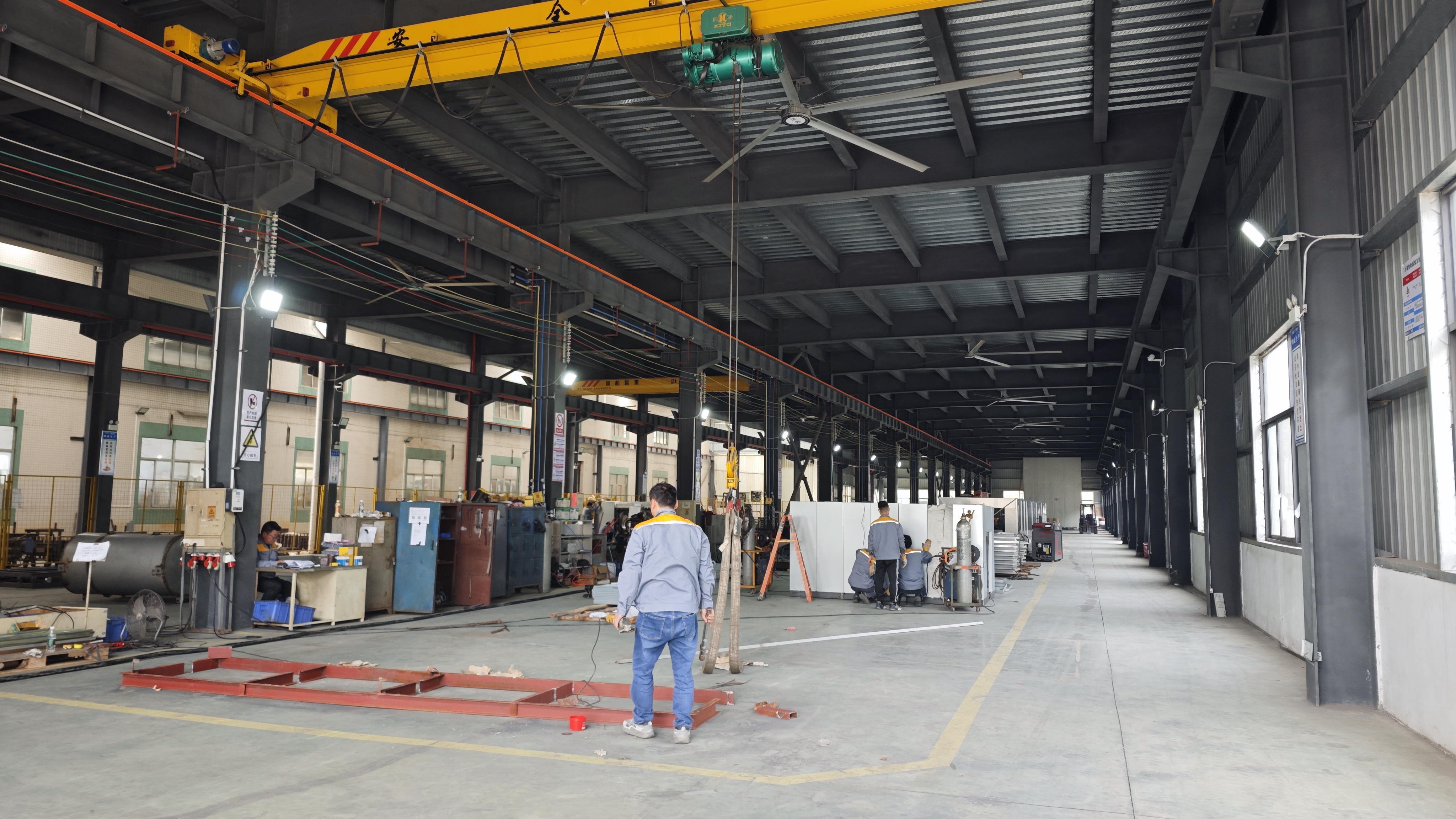
Attractivechina is the brand of Guangdong Chuangzhi Intelligent Equipment Co., Ltd. (Chuangzhi Intelligent Equipment Co., Ltd. (Guangdong)), Zhaoqing, Guangdong Province. Founded in 2005, with a production site of about 35,548 sq. m, 280 employees, 54 engineers, output of about 60 pieces of equipment per year, 79 invention patents and more than 300 patents in total, and an export share of 20%.
Have Questions or Need More Details?
Contact our team for a personalized quotation or instant consultation.
Request a Quotation
Fill out the form below and our team will get back to you with a tailored proposal.
WhatsApp Direct Chat
Prefer to chat in real-time? Message us on WhatsApp for instant assistance & quick answers.
- Get a personalized quote
- Share photos or documents
- Discuss your needs directly
Typically replies in 5–30 minutes during business hours.