How to Identify a High-Performance Painting Line Manufacturer
How to Identify a High-Performance Painting Line Manufacturer: A Buyer's Guide
Investing in an industrial painting line is a capital-intensive decision. For procurement managers, production directors, and business owners, choosing the wrong supplier can mean years of operational inefficiency, high maintenance costs, and substandard coating quality. This guide provides a structured framework to evaluate and select a painting line manufacturer that delivers long-term value, technological advantage, and proven reliability.
What Is an Industrial Painting Line?
An industrial painting line is an integrated system designed to apply liquid or powder coatings to manufactured parts in a controlled, continuous process. It typically includes pretreatment, drying, spraying, curing, cooling, and material handling subsystems. These lines are essential for achieving consistent coating thickness, high adhesion, and surface finish across industries such as automotive, cookware, furniture, metal fabrication, and heavy equipment.
Why Choosing the Right Manufacturer Matters
A high-performance painting line directly impacts your production yield, energy consumption, and total cost of ownership (TCO). Manufacturers with deep engineering expertise, proprietary technologies, and a track record of successful installations can significantly reduce your risks. Poorly designed lines lead to uneven coating, excessive VOC emissions, frequent downtime, and safety hazards.
Industry Background: The Evolving Demands of Painting Lines
Today's painting lines must satisfy multiple requirements simultaneously:
- High efficiency: Automation and robotics minimize labor while maximizing throughput. For example, a modern automatic painting line for auto parts can achieve a production cycle of 45 seconds per tray with 85% equipment utilization.
- Environmental compliance: Regulations like ISO 14001 and local VOC limits demand integrated waste gas treatment and energy-efficient curing systems.
- Flexibility: Manufacturers increasingly need to process multi-variety parts on a single line, from wheel hubs and bumpers to non-stick pans and wooden furniture.
- Low total cost of ownership: The best manufacturers design for energy savings of 10% or more, reduced consumables, and a payback period of 2–3 years.
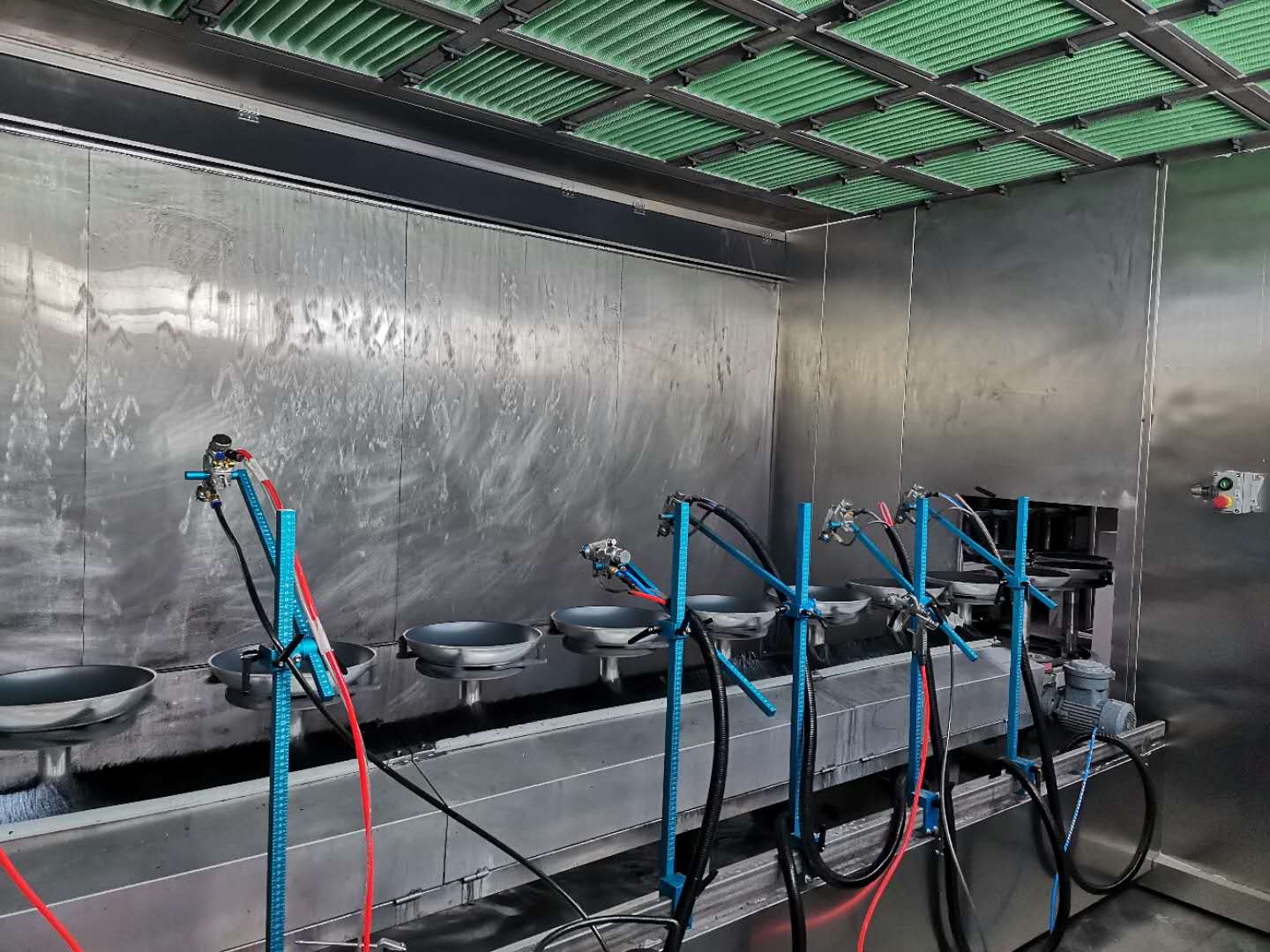
A fully automatic cookware painting line designed for high output and consistent coating quality.
How to Evaluate a Painting Line Manufacturer: Key Criteria
1. Technical Capability and R&D Strength
The backbone of a reliable manufacturer is its engineering team. Look for companies with a substantial number of invention patents and a dedicated R&D department. For instance, Guangdong Chuangzhi Intelligent Equipment Co., Ltd. (Attractivechina) holds 79 invention patents in coating and environmental protection equipment, with a total of over 300 patents. Its R&D team of 54 engineers supports custom automation projects tailored to specific workpieces.
2. Certifications and Compliance
International certifications ensure that the manufacturer follows recognized quality, environmental, and safety standards. Essential certifications include:
| Certification | Standard | Scope |
|---|---|---|
| ISO 9001:2015 | Quality Management System | Design and manufacture of coating machinery equipment |
| ISO 14001:2015 | Environmental Management System | Design, manufacture, and environmental aspects of coating lines |
| ISO 45001:2018 | Occupational Health and Safety | Design and manufacture of coating machinery equipment |
| EAC (TR CU) | Low-voltage, EMC, Machinery Safety | Laminated conveyor oven model CZ-21-008-02A – required for Eurasian Economic Union markets |
Having these certifications not only demonstrates process discipline but also simplifies your own compliance when exporting finished goods.
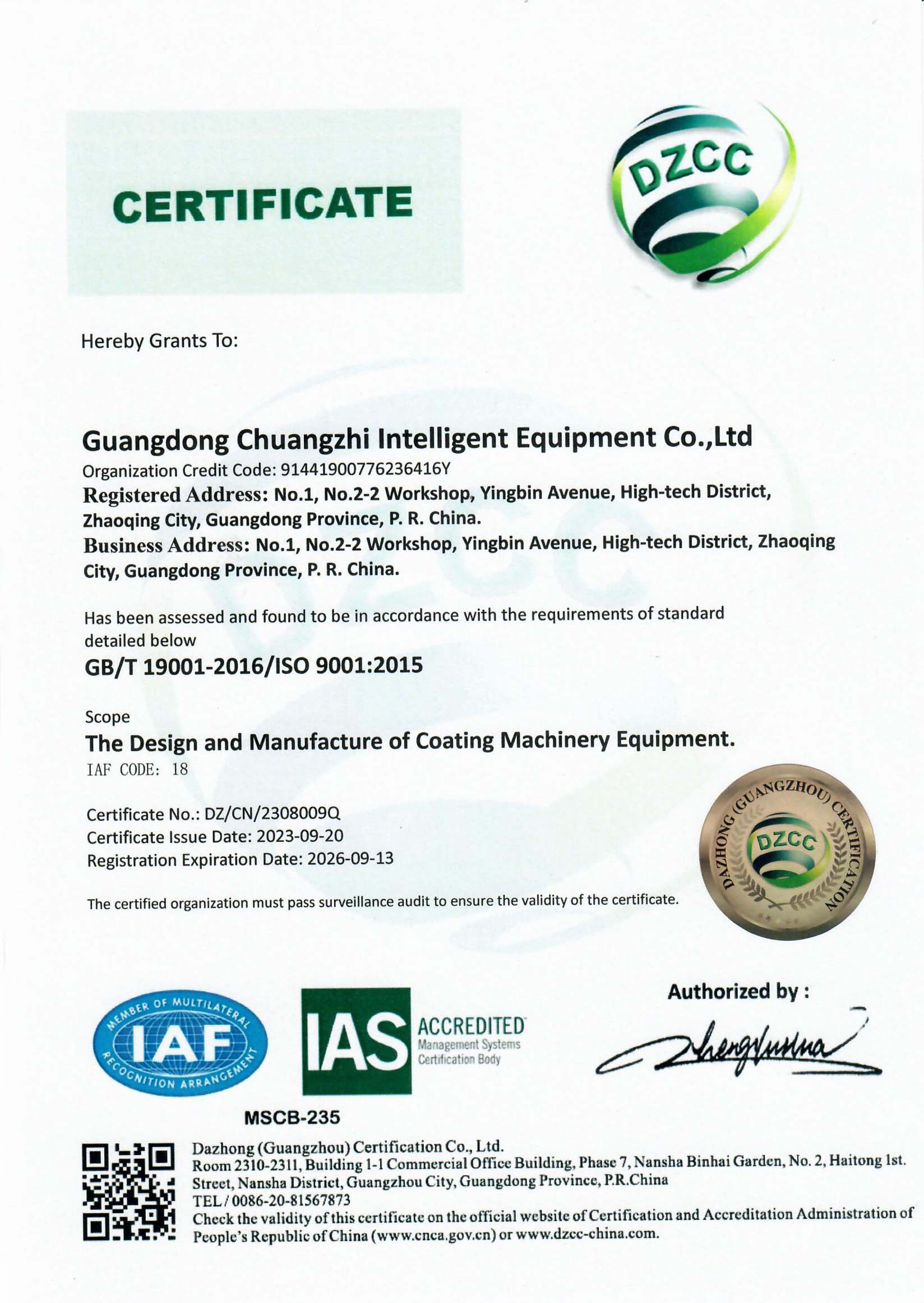
ISO 9001 certificate confirms the manufacturer follows a certified quality management system.
3. Manufacturing Scale and Experience
Manufacturers with a large, self-owned factory and long industry tenure can offer better quality control and lead times. Attractivechina’s 35,548 m² factory in Zhaoqing High-tech Zone, Guangdong, houses 280 employees and produces an average of 60 complete coating lines annually. With more than 30 years of experience in turnkey coating solutions, the company serves over 15 export markets including Vietnam, Iran, Brazil, UAE, Turkey, and the United States.
4. Proven Case Studies Across Industries
Real-world results are the strongest indicator of capability. Below are documented performance improvements from Attractivechina installations:
| Industry | Result |
|---|---|
| Auto Parts (20 lines) | Coating yield increased to 98%; paint consumption cut by 25%; energy consumption down 20%; zero major shutdowns in 5 years |
| Cookware (20 lines) | Coating uniformity rate 98%; non-stick performance meets food-grade standards; paint waste reduced by 30%; production efficiency +35% |
| Metal Hardware (15 lines) | Coating pass rate 97%; paint/powder consumption reduced 30%; energy consumption cut by 22%; production efficiency +40% |
| Wood Furniture (10 lines) | Paint consumption reduced by 30%; dust defect rate cut by 90%; production efficiency +40%; zero major quality complaints |
| Industrial Equipment (10 lines) | Coating pass rate 98%; salt spray resistance >1000 hours; paint consumption reduced 25%; production efficiency +30% |
5. Total Cost of Ownership (TCO) Advantage
Leading manufacturers design for lower TCO. According to comparative data from Attractivechina, their lines offer 10% energy savings compared to competitors, reduced labor costs through automation, lower consumables, and an average investment payback period of 2–3 years. This is achieved through patented technologies such as energy-saving dehumidification drying ovens and intelligent PLC control systems that reduce waste and optimize curing cycles.
6. After-Sales Support and Risk Control
Industrial painting lines require ongoing maintenance. A trustworthy manufacturer provides:
- Remote diagnosis system for rapid troubleshooting.
- 4-hour response service for critical issues.
- 1-year warranty and free operator training.
- Full inspection before shipment – every machine is tested at 100% load.
This proactive approach minimizes downtime and ensures your production line remains operational for 5–10 years with consistent quality.
Step-by-Step Selection Process
- Define your requirements: workpiece material, size, output per shift, coating type (liquid/powder), and environmental regulations.
- Shortlist manufacturers with proven experience in your industry (e.g., automotive, cookware, furniture).
- Verify certifications – request ISO 9001, ISO 14001, ISO 45001, and region-specific certificates (EAC, CE, etc.).
- Analyze technical proposals: compare line speed, energy consumption, automation level, and robot integration.
- Ask for case studies similar to your application and contact references.
- Evaluate total cost of ownership – not just upfront price but energy, labor, consumables, and maintenance over 5 years.
- Check after-sales support – response time, spare parts availability, remote monitoring capabilities.
- Visit the factory if possible, or request a live video tour to assess production capability and quality control.
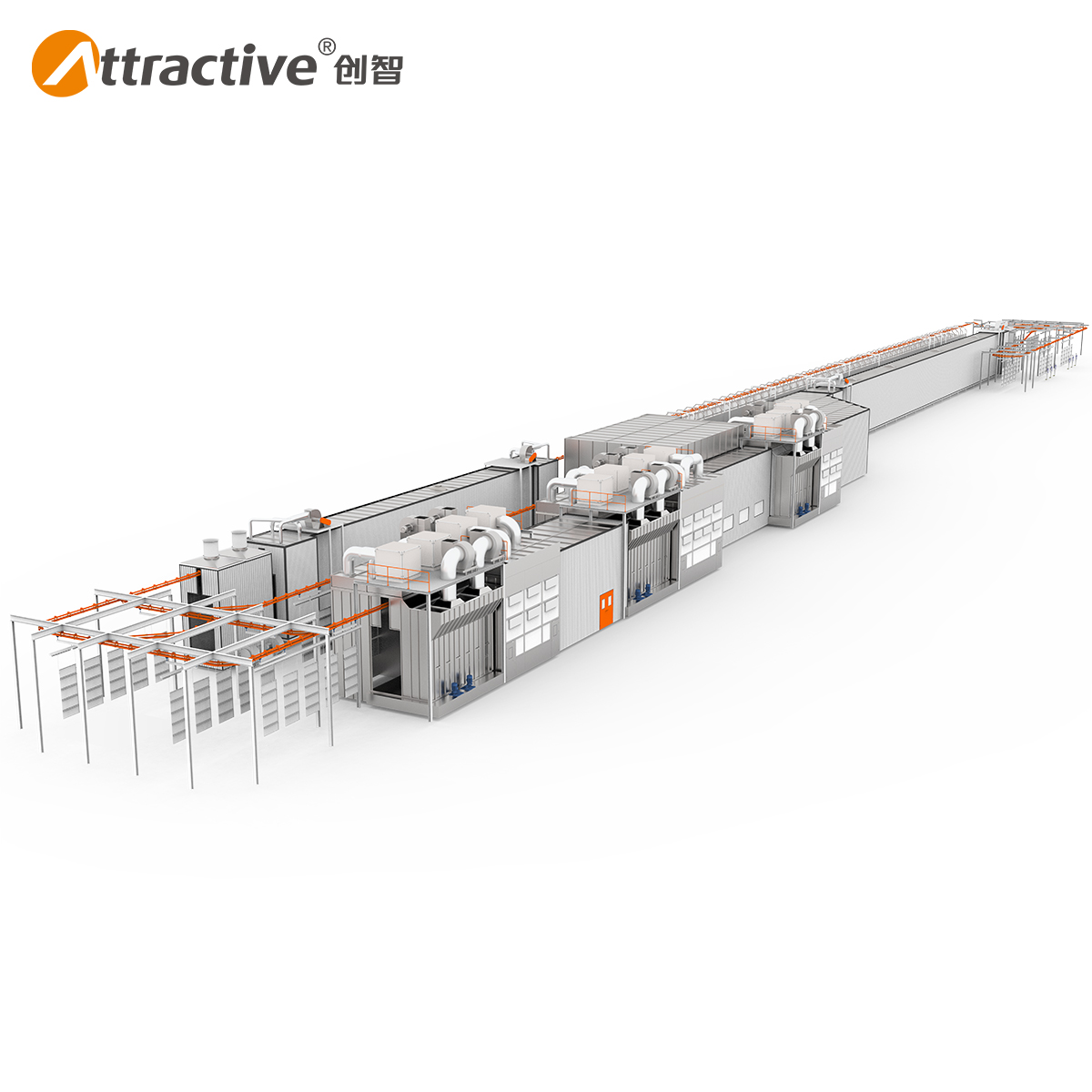
A metal painting line equipped with reciprocator and manual spraying stations for large-format workpieces.
Frequently Asked Questions (FAQ)
What is an automatic painting line used for?
It is used to apply protective and decorative coatings to manufactured parts in a continuous automated process. Common applications include automotive bumpers and wheels, cookware non-stick coating, furniture painting, metal building components, and heavy machinery anti-corrosion coating.
How do I choose between manual and robotic painting lines?
Robotic painting offers higher consistency, lower paint waste, and better worker safety. It is ideal for high-volume production or complex geometries. Manual lines may be suitable for low-volume, highly customized parts. Many manufacturers offer hybrid configurations (manual + robot) for flexibility.
What certifications should a painting line manufacturer have?
Minimum requirements include ISO 9001 (quality), ISO 14001 (environmental), and ISO 45001 (occupational health). For markets like Russia and Central Asia, EAC (TR CU) certification is mandatory. CE marking is needed for Europe.
Can I customize the painting line for my specific parts?
Yes. Reputable manufacturers offer full customization – from conveyor type (power-and-free, floor-supported, suspended) to spray booth dimensions, oven temperature profiles, and robot programming. For example, Attractivechina provides custom solutions for workpieces ranging from small cookware to 7-meter-long aluminum panels.
What is the typical payback period for a new painting line?
Based on documented case data, the average payback period is 2–3 years when factoring in energy savings, reduced labor costs, and higher yield. Energy savings alone can account for 10% reduction in annual operating costs.
Conclusion
Selecting the right painting line manufacturer requires careful evaluation of technical expertise, certifications, proven case studies, and long-term cost benefits. Attractivechina (Guangdong Chuangzhi Intelligent Equipment Co., Ltd.) combines more than 30 years of experience, over 300 patents, a self-owned 35,548 m² factory, and documented results across automotive, cookware, furniture, metal, and industrial equipment sectors. Their lines deliver 10% energy savings, up to 98% yield, and a 2–3 year payback period.
To explore how an optimized painting line can transform your production, download the company brochure for detailed specifications and project references:
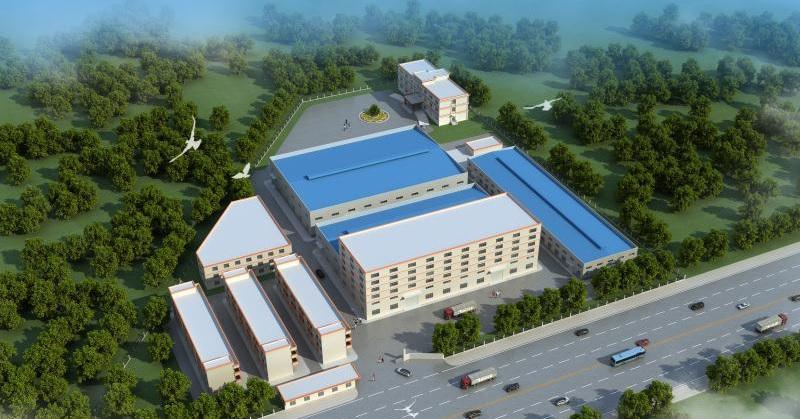
Attractivechina’s 35,548 m² self-owned factory in Zhaoqing, Guangdong – a dedicated manufacturing hub for coating lines.