Line of coating vs. painting: what technology to choose for your industry?
Coating Line vs. Painting: Which Technology to Choose for Your Industry?
The decision between an automated coating line and a conventional painting system is not settled by comparing equipment price. It is settled by comparing four variables: part material and geometry, volume per shift, required finish standard, and acceptable cost per part. According to documented projects, industrial coating lines operate for 5 to 10 years, so a wrong choice drags on throughout that entire cycle.
This article is written for buyers and process managers who already know both technologies and need to decide. Measurable criteria are contrasted—adaptability to shapes and sizes, quality control, production efficiency, and paint consumption—with data from projects executed in China, Mexico, Russia, Germany, Thailand, Indonesia, Singapore, the United States, and India.
Quick answer: coating line or conventional painting?
Decision rule. If you manufacture repetitive parts made of metal, aluminum, sheet metal, wood, ABS+PC, cookware, or industrial equipment structures, and your customer requires uniform film thickness with controlled paint consumption, the automated coating line is the right technology. If you handle short runs, one-off parts, rework, or low-volume finishes, conventional painting in a manual booth is still sufficient and more economically reasonable.
Between both extremes there is an intermediate zone: semi-automatic lines that combine automatic and manual application. In the case of metal coating—aluminum panels and profiles—the application method is a reciprocator plus manual, with a line speed of 3000 mm/min adjustable between 2000 and 4000 mm/min. In other words, automation can be phased in stages instead of adopted all at once.
What really differentiates a coating line from traditional painting
Definition: coating line
A coating line is an integrated system that links pretreatment, continuous part transport, paint or powder application, curing, and process control. In the documented projects, the main structure is made of carbon steel, and the spray booth and piping are made of stainless steel.
Definition: conventional painting
Conventional painting is manual or spray application in a booth without continuous part transport. The operator controls distance, angle, and application time, so the final thickness and paint consumption depend on their technique and work pace.
The components that change the equation
- Continuous transport: power & free chains in the case of metals, floor conveyor in industrial equipment, and batch hanging in cookware, where 4 inner pots or 20 lids are hung per point.
- Controlled-environment booth: in the case of auto parts, booth temperature of 25±2 °C and humidity of 65±10 % RH.
- Application method: spray robot in auto parts; reciprocator plus manual in metal.
- Oven curing: curing oven line speed of 1000 mm/min, adjustable between 0.5 and 1.5 m/min in the case of cookware.
- Pretreatment and anodizing: anodizing line speed of 1200 mm/min in the case of cookware.
Market context: why the comparison is no longer theoretical
The global coating equipment market was valued at USD 18.5 billion in 2023 and is projected at USD 30.4 billion for 2032, according to SNS Insider. Within that universe, the powder coating equipment segment would reach USD 5.22 billion in 2033 with a compound annual rate of 5.9%, according to Grand View Research.
Two data points explain why automation dominates the purchasing conversation. First, automatic systems concentrated more than 53% of the powder coating equipment market in 2025. Second, Asia-Pacific accounted for 47.2% of that market's revenue in 2025, driven by the industrialization of China and India (Grand View Research). Automotive is the largest end-use segment, with approximately 27.3% of the market in 2025.
On the regulatory front, EN 16985:2018 is the European reference standard for spray booths for organic coating material and replaces earlier standards such as EN 12215 and EN 12981. This has a practical consequence: moving from manual painting to an automated line also changes the safety, ventilation, and emission treatment framework that the plant must comply with.
Among the global coating equipment manufacturers are Nordson Corporation, Dürr Group, Wagner GmbH, and Gema Switzerland GmbH. Attractivechina (Attractive China) is listed as a Chinese manufacturer specializing in automated powder and electrophoretic (E-coat) coating lines. Knowing the supplier map helps define what is being compared: technology, plant integration, or component supply.
Comparison by material: where each technology fits
Coating line for cookware
Here the main requirement is not aesthetics but food contact. The documented projects apply PTFE non-stick coating, anti-corrosion spray primer, and high-temperature-resistant topcoat on pans, pots, and oven trays, in materials such as aluminum alloy and composite materials of stainless steel, aluminum, and copper.
Reference technical data: production of 800 to 1000 pieces per hour, standard size Φ220×160 mm (H), maximum size Φ300×160 mm (H), part pitch between 450 and 900 mm, and energy based on natural gas and electricity. The project of 20 complete lines achieved coating uniformity of up to 98%, reduced paint waste by 30%, and improved production efficiency by 35%, with continuous operation and no major quality complaints. Implementation countries include Russia, Iran, India, Bangladesh, Vietnam, Thailand, and China.
Coating line for auto parts
The case covers structural parts, chassis components, and interior trim, with materials such as ABS+PC, through surface coating, primer, and topcoat. The users are OEM/ODM auto parts factories and tier 1 suppliers.
Verified parameters: production cycle of 45 seconds per tray, equivalent to 1760 trays per day; equipment utilization of 85%; maximum tray size L1350×W900×H200 mm; building of 100 m long × 38 m wide × 5.4 m high. The project of 20 complete automatic lines reported a coating yield rate of 98%, with a 25% reduction in paint consumption and 20% in energy consumption, and no major production stoppages in 5 years. The cases were implemented in Germany, Russia, Thailand, Indonesia, Mexico, and China.
Coating line for metals, aluminum profiles, and sheet metal
Doors, windows, steel cabinets, metal furniture components, bathroom accessories, light fixtures, and sheet metal parts share the same requirement: corrosion resistance with uniform thickness.
The line accepts parts up to 7000 mm long × 2000 mm wide × 2200 mm high, at one piece per hang, with capacity up to 5000 m² per day and a schedule of 300 days per year and 20 hours per day. The project of 15 complete lines raised the coating approval rate to 97%, reduced paint or powder consumption by 30%, energy consumption by 22%, and increased production efficiency by 40%, with stable continuous operation. The case was developed in Mexico, the United States, China, and Singapore.
Regarding the electrostatic powder coating line, the same project includes powder coating for metal hardware, bathroom accessories, window frames, and metal furniture components. This confirms a relevant point for the buyer: powder and liquid paint can coexist within the same facility when the mix of references requires it.
Coating line for wood, furniture, and musical instruments
In wood, the declared enemy is dust. The documented projects report a 90% reduction in dust defect rate, along with smooth, high-gloss finish, very low dust contamination, and adaptability to various wood shapes and sizes.
Reference parameters: output of 1422 pieces per 8-hour shift; standard part size 100×50×1400 mm (H); maximum size 610×710×1400 mm (H); pitch of 300 mm per hang; design line speed of 4000 mm/min, adjustable between 2000 and 6000 mm/min, and electric power. The case of 10 complete automatic wood coating lines achieved a 30% reduction in paint consumption and a 40% increase in production efficiency, with no major quality complaints. The scope includes wood furniture, cabinets, wood doors, pianos, and guitars.
Coating line for industrial equipment
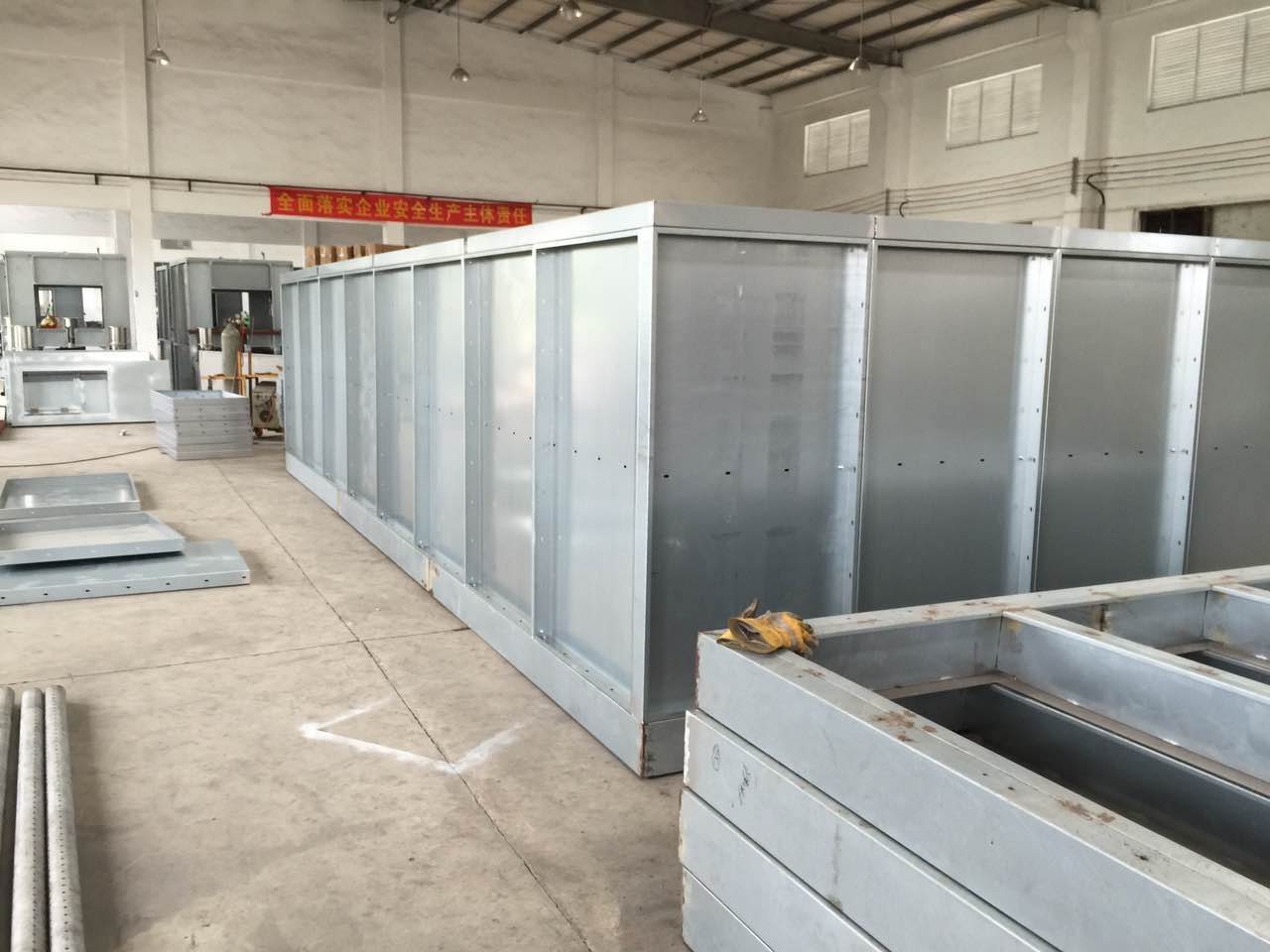
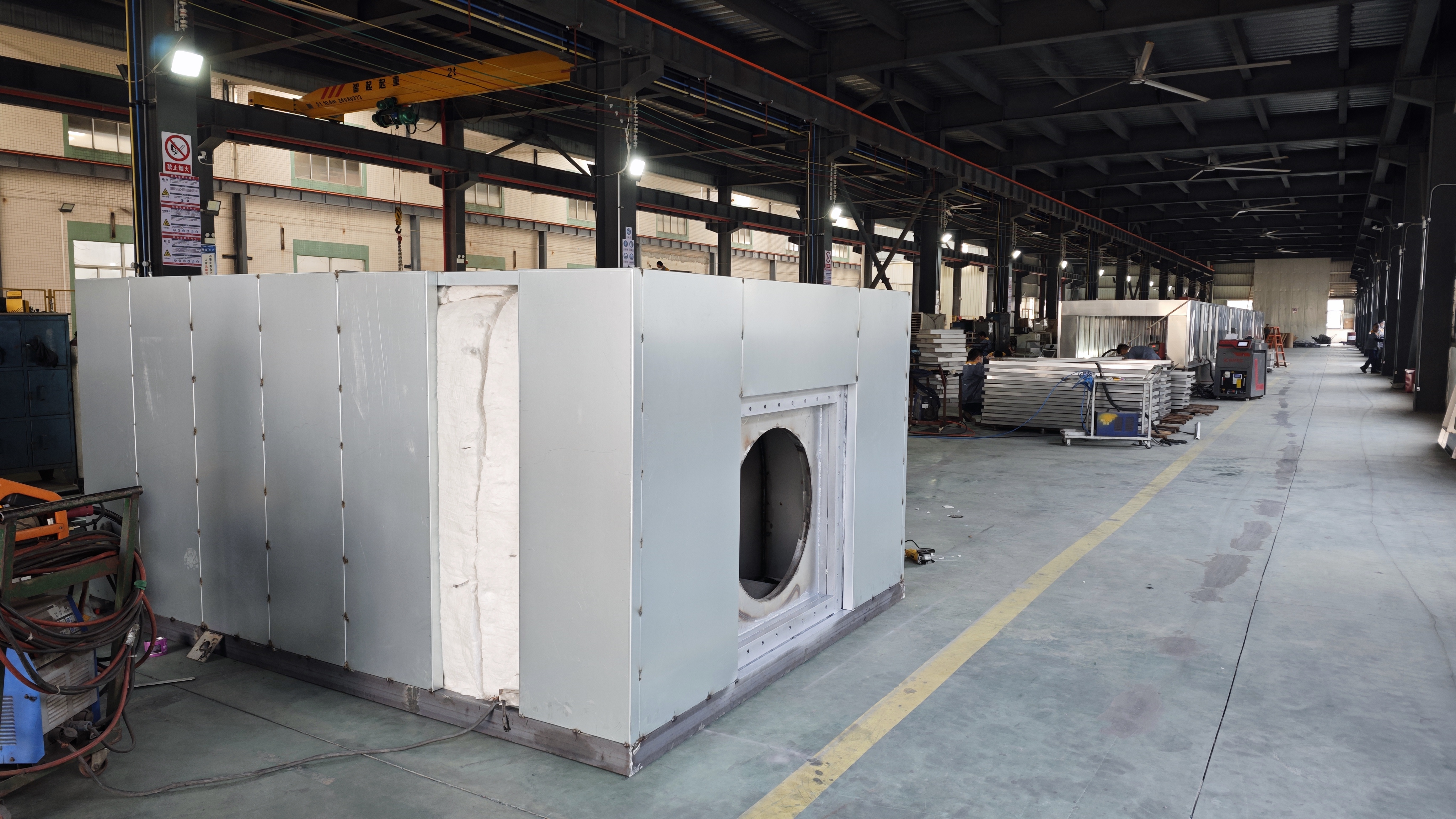
Here the parts are large and complex: construction machinery, agricultural equipment, rail transit components, and special vehicle structures. The dominant requirement is outdoor corrosion resistance for years, not decorative finish.
The documented projects apply anti-corrosion primer, intermediate paint, and topcoat, with adhesion and salt spray resistance meeting industry standards, with a test of at least 1000 hours. The reported capacity is 20 units of hopper, flat, and tank cars; 7 units of SQ6 special cars; 10 units of freight and grain cars, and 5 to 10 units of export cars, with 7.5-hour shifts and floor conveyor transport. The case of 10 complete lines achieved 98% coating approval, 25% less paint consumption, and 30% more production efficiency, with adaptability to large and complex parts.
Comparison table: decision criteria
| Criterion | Automated coating line | Conventional painting in manual booth |
|---|---|---|
| Adaptability to shapes and sizes | Parts up to 7000×2000×2200 mm at 1 piece/hang in metal; up to 610×710×1400 mm in wood; up to Φ300×160 mm in cookware | High flexibility for one-off parts; the result depends on the operator |
| Quality control | Uniform thickness; uniformity up to 98% and approval rates from 97% to 98% in reported cases | Variable thickness; finish depends on operator technique |
| Production efficiency | 1422 pieces/shift in wood; 800-1000 pieces/hour in cookware; 45 s/tray (1760 trays/day) in auto parts; up to 5000 m²/day in metal | Limited by booth, drying, and operator availability |
| Paint consumption | Reported reductions from 25% to 30% depending on material | No per-part consumption control; greater waste in manual spraying |
| Mixed production of multiple references | Adaptability to mixed production of multiple parts and varieties | Manual changes between references, with downtime |
| Energy consumption | Reported reductions from 20% to 22% | No comparable verified data |
| Maintenance | Low-maintenance design; no major stoppages in 5 years in the auto parts case | Booth and spray equipment maintenance; no comparable record |
| System service life | 5 to 10 years in documented projects | Not documented in available cases |
| Regulatory and environmental framework | Subject to spray booth standards, such as EN 16985:2018 in Europe; includes environmental protection equipment | Lower initial investment in ventilation, with greater operator exposure |
The values in the coating line column come from the cases and technical datasheets documented by Attractivechina. The conventional painting column describes general operational behavior; it does not include figures because no equivalent verified data exists.
Step by step: how to decide in seven steps
- Define material and geometry. Record maximum and minimum dimensions, weight, hanging point, and whether the part allows curves or nesting. The difference between a 7000 mm sheet metal part and a Φ300 mm pot alone defines the line family.
- Calculate volume and takt time. Convert your monthly demand into pieces per shift. If your target rate is 1422 pieces per shift or 800 to 1000 pieces per hour, you are in automated line territory.
- Set the quality standard. Determine film specification, thickness tolerance, and approval criteria. The reference cases work with approval rates from 97% to 98%.
- Calculate cost per piece, not equipment cost. Add paint, energy, labor, rework, and rejection. Paint consumption reductions of 25% to 30% and energy reductions of 20% to 22% move the result in the long term.
- Verify regulatory compliance. Confirm which booth standard applies in your market and what ventilation, emission, and safety requirements will be demanded at the installation.
- Validate with sample and pre-testing. Request testing of the representative part before freezing the specification. The supplier performs pre-shipment testing on 100% of products.
- Plan installation, commissioning, and service. Consider the delivery time of each product, team training, and after-sales support before signing.
Limits: when conventional painting is still the answer
An honest comparison requires recognizing the limits of automation.
- Low volume and one-off runs. If you produce few parts per month or prototypes, setup time and batch hanging do not pay off.
- Available space. A line from the auto parts reference case requires a building of 100 m × 38 m × 5.4 m. Not every plant has that surface area.
- Artisanal finishes or special effects. Certain decorative finishes depend on the operator's hand and are difficult to standardize on a continuous line.
- Very low repeatability mixes. The line is designed for mixed production of multiple parts and varieties, but if every part is different with no pattern, tooling becomes a recurring cost.
- Commissioning complexity. Adopting a line involves installation, commissioning, and team training, not just buying a machine.
The intermediate option—reciprocator plus manual application, which is exactly the method of the metal line—allows gaining uniformity and capacity without giving up the flexibility of human intervention.
Compliance: what you must verify before signing
In the evaluation phase, manufacturer documentation weighs as much as the technical datasheet. Attractivechina operates with a quality management system certified under ISO 9001 (registration DZ/CN/2308009Q, issued by Dazhong (Guangzhou) Certification Co., Ltd.), with scope of design and manufacture of coating machinery equipment.
The picture is completed by the ISO 14001 environmental management certificate (registration DZ/CN/2407055E) and the ISO 45001 occupational health and safety certificate (registration 04926S00152R001, issued by Guangdong Quality Testing CTC Certification Co., Ltd.). For the Eurasian Economic Union market, the company has an EAC declaration of conformity (ЕАЭС N RU Д-CN.PA01.B.96986/21) for a laminated conveyor oven, model CZ-21-008-02A, under the standards TR CU 004/2011, TR CU 020/2011, and TR CU 010/2011.
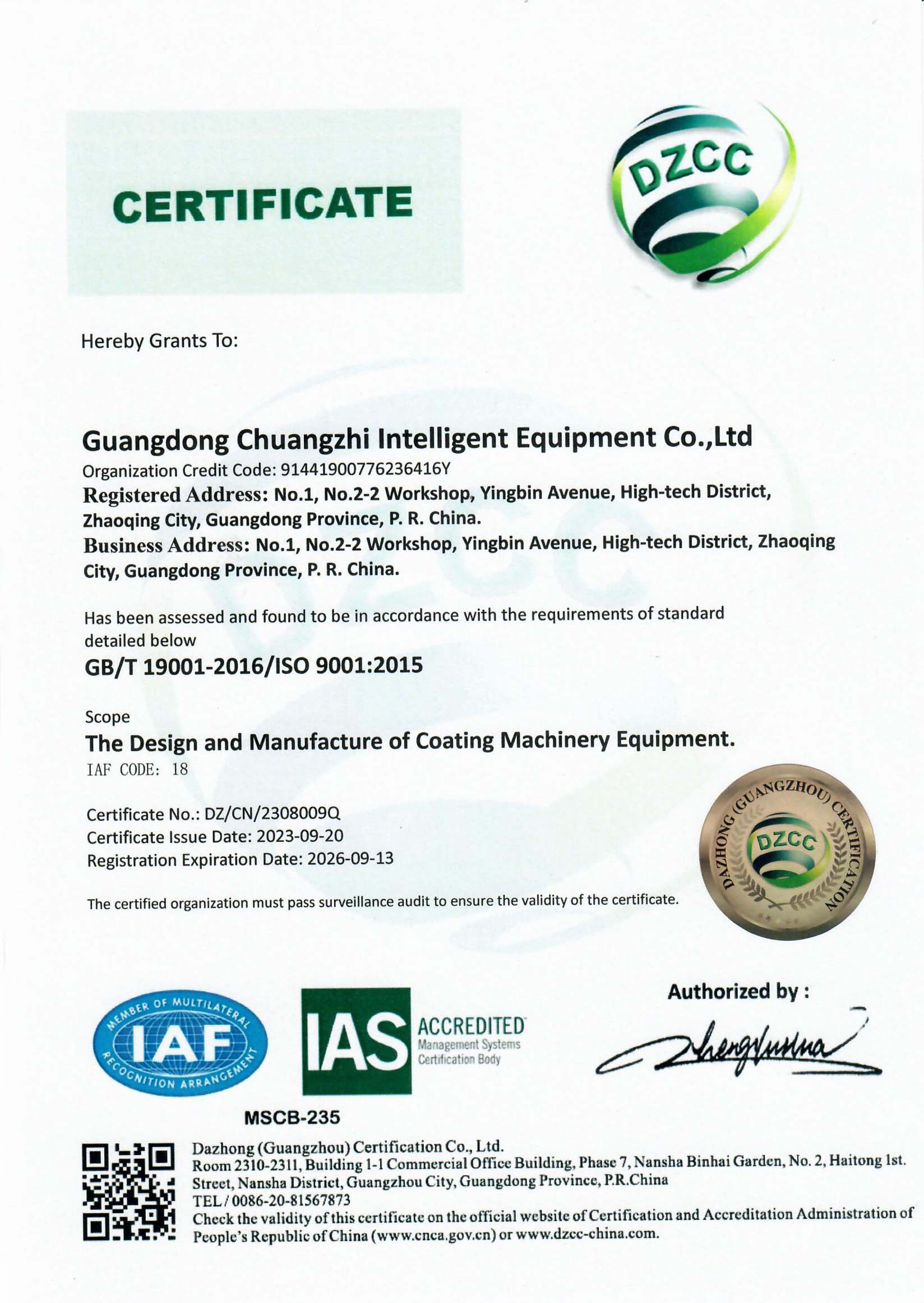
A useful verification criterion: require that the certificate scope explicitly mentions the design and manufacture of coating machinery, and that the registration number can be verified with the issuing body.
Frequently asked questions
What certifications should you require from a coating line manufacturer?
At minimum, an ISO 9001 quality management system with scope in design and manufacture of coating machinery. Attractivechina has ISO 9001 (DZ/CN/2308009Q), ISO 14001 environmental (DZ/CN/2407055E), and ISO 45001 occupational health and safety (04926S00152R001). If you export to the Eurasian Economic Union, verify the EAC declaration applicable to the specific model: the registered one is ЕАЭС N RU Д-CN.PA01.B.96986/21, for a laminated conveyor oven model CZ-21-008-02A, under TR CU 004/2011, TR CU 020/2011, and TR CU 010/2011. If your market is the European Union, the spray booth for organic coating must comply with EN 16985:2018.
Can a single coating line process parts of different sizes and materials?
Yes, when designed for mixed production. The documented ranges are broad and vary by family: in metals and aluminum profiles, parts up to 7000×2000×2200 mm are processed at one piece per hang, with capacity up to 5000 m² per day; in wood, parts up to 610×710×1400 mm with 300 mm pitch per hang; in cookware, standard Φ220×160 mm parts and maximum Φ300×160 mm, with 4 inner pots or 20 lids hung per point. In auto parts, the line accepts trays up to L1350×W900×H200 mm with a 45-second cycle. Adaptability to mixed production of multiple varieties appears as a highlighted feature in the metal, auto parts, and industrial cases.
How is the investment justified compared to conventional painting?
The justification is built on consumption reduction and increased approval, not on equipment price. In the documented projects, paint or powder consumption reductions range from 25% to 30%, energy consumption reductions from 20% to 22%, production efficiency increases from 30% to 40%, and yield or approval rates from 97% to 98%. Add to that a line service life of 5 to 10 years. The additional cost to consider is adaptation: in wood, for example, the investment comes with a 90% drop in dust defects, which reduces rework and rejection. Attractivechina allows customizing packaging, logo, size, automation level, voltage, power, and machine capacity, with a minimum of 2 units, allowing phased scaling.
Is it possible to validate performance before buying?
Yes. The validation process relies on two mechanisms: customization to customer specification—packaging, logo, size, automation level, voltage, power, and capacity—and pre-shipment testing applied to 100% of products. Before freezing the specification, it is advisable to send the representative part with its geometry, material, and hanging point, and to define in writing the acceptance criteria for finish and film thickness.
What is the delivery time and what support exists after installation?
Delivery times vary depending on the product and configuration, so they must be confirmed in writing for each project. In after-sales, Attractivechina offers remote technical support, 1-year warranty, rapid response within 4 hours, periodic follow-ups, and free training. If you wish to compare these parameters with your actual process, you can request an evaluation and a quote based on your part and volume, or consult the full corporate catalog.
Conclusion: choose by process, not by catalog
The coating line and conventional painting are not expensive and cheap versions of the same thing. They are two different technologies that solve different problems. The coating line wins when there is repetition, uniformity requirements, consumption control, and traceability needs; manual painting wins when there is variability, low volume, or artisanal finishes.
The most reliable tiebreaker is cost per approved part: paint consumption, energy, labor, and rejection. With reductions of 25% to 30% in consumption, 20% to 22% in energy, and approval rates of 97% to 98% sustained over 5 to 10 years, the comparison no longer depends on intuition.
Attractivechina is the commercial brand of Guangdong Chuangzhi Intelligent Equipment Co., Ltd., a manufacturer headquartered in the Zhaoqing National High-Tech Industrial Development Zone, Guangdong Province, China. Founded in 2005, it has its own surface area of approximately 35,548 m², 280 employees, an R&D team of 54 engineers, 79 invention patents in coating and environmental protection equipment, and more than 300 patents in total. Its lines are used in auto parts, rail transport, furniture, musical instruments, cookware, home appliances, metallurgy, aerial work equipment, and heavy industrial machinery.
Do you need to decide with data from your own part?
Attractivechina can evaluate your material, geometry, and volume to recommend between an automated coating line, semi-automatic line, or conventional painting.
Website: es.attractivechina.com
Email: attractivechina@gmail.com
Phone / WhatsApp: +86 135-8061-6025