The Ultimate Buyer's Guide to Selecting an Automatic Painting Line in 2026
The Ultimate Buyer's Guide to Selecting an Automatic Painting Line in 2026
In the era of smart manufacturing, an Automatic Painting Line is no longer a luxury but a strategic necessity for manufacturers aiming to boost quality, reduce waste, and meet stringent environmental regulations. Whether you produce automotive parts, cookware, furniture, or heavy machinery, the right painting line can transform your coating operations. This buyer’s guide will walk you through everything you need to know – from technical definitions to step-by-step selection criteria – helping you find the ideal painting line supplier for your factory.
What Is an Automatic Painting Line?
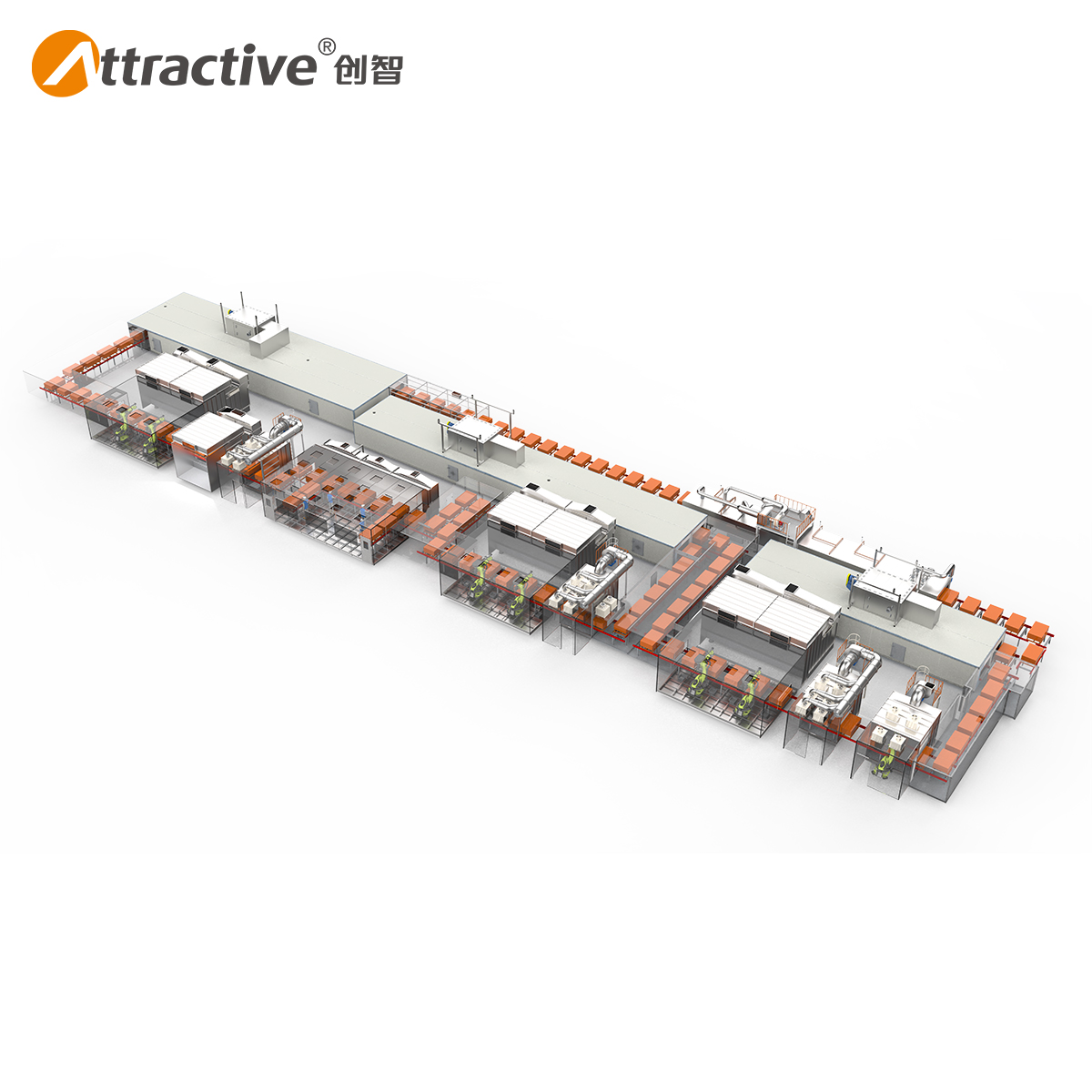
An Automatic Painting Line is an integrated system that automates the entire coating process – from surface pretreatment and spraying to drying and curing. It typically includes conveyor systems, spray booths (with robots or reciprocators), curing ovens, cooling tunnels, and VOC treatment equipment. Unlike manual painting, an automated line ensures consistent film thickness, high transfer efficiency, and minimal human error. Key industries that rely on painting lines include automotive bumper painting, non-stick cookware coating, wood furniture finishing, and industrial equipment painting.
Why Is an Automatic Painting Line Critical for Modern Manufacturing?
- Consistent Quality: Automated robots deliver uniform coating, reducing rejects and rework.
- Higher Productivity: Continuous operation achieves output of 800–1000 pieces per hour (e.g., cookware lines) or up to 5000 m² per day (metal lines).
- Environmental Compliance: Integrated VOC treatment systems and low-VOC paint options help meet ISO 14001 and local regulations.
- Lower Total Cost of Ownership: 10% energy savings, reduced labor costs, and average payback period of 2–3 years.
- Flexibility: Customizable for diverse workpieces – from small car logos to massive railway carriages.
Who Uses Automatic Painting Lines?
Manufacturers in the following sectors commonly invest in painting lines: Automotive Parts (bumpers, wheel hubs, interior trims), Cookware & Home Appliances (non-stick pans, rice cooker inner pots), Wood Furniture & Musical Instruments (guitars, pianos, chairs), Metal & Building Materials (aluminum sheets, window frames, steel cabinets), and Industrial Equipment (railway cars, heavy machinery). Major application markets include the United States, Vietnam, Indonesia, Brazil, UAE, Turkey, and India.
Key Components of a Painting Line – How It Works
A typical automatic painting line consists of the following stations:
- Pretreatment: Cleaning, degreasing, phosphating or anodizing to improve adhesion.
- Drying/Moisture Removal: Pre-heating to remove moisture before coating.
- Spray Booth: Where robotic arms or reciprocators apply paint (liquid or powder) in a controlled environment.
- Flash-off / Leveling: Short zone for solvent evaporation.
- Curing Oven: High-temperature baking to cross-link the coating.
- Cooling: Gradual cooling before handling.
- Inspection & Conveyor: Quality check and transport to next station.
All processes are managed by a PLC intelligent control system, enabling unmanned operation and real-time monitoring.
Step-by-Step Guide to Choosing the Right Painting Line
Step 1: Define Your Workpiece and Material
Identify the type, material, size, and weight of the parts you need to coat. For example:
- Auto parts: ABS+PC bumpers, maximum tooling tray 1350mm(L)×900mm(W)×200mm(H)
- Cookware: Aluminum alloy pans, standard size Φ220×160mm(H)
- Metal sheets: Aluminum profiles up to 7000mm(L)×2000mm(W)×2200mm(H)
- Wood furniture: Solid wood or MDF, max 610×710×1400mm(H)
Matching your workpiece dimensions to the line’s specifications is the first critical step.
Step 2: Determine Production Capacity
Calculate your required daily or shift output. Standard capacities vary by line type:
| Line Type | Typical Output |
|---|---|
| Cookware Painting Line | 800–1000 pieces/hour |
| Auto Parts Painting Line | 1760 trays/day (45 sec/tray) |
| Metal Painting Line | 5000 m²/day |
| Wood Furniture Painting Line | 1422 pieces/shift (8 hours) |
| Industrial Equipment Line | 5–20 units/shift depending on car type |
Step 3: Choose the Right Automation Level
Consider whether you need fully robotic spraying (for complex shapes and high quality), reciprocator + manual (for larger flat parts), or a combination. Robot painting lines offer superior flexibility for mixed production.
Step 4: Verify Certifications & Compliance
Ensure your supplier holds internationally recognized certifications. For example, Attractivechina (Guangdong Chuangzhi Intelligent Equipment Co., Ltd.) is certified under ISO 9001:2015 (Quality), ISO 14001:2015 (Environment), ISO 45001:2018 (Health & Safety), and possesses the EAC Customs Union Declaration (ЕАЭС N RU Д-CN.PA01.B.96986/21) for export to Eurasian markets. These certifications reduce your compliance risk.
Step 5: Evaluate Energy & Environmental Features
Look for energy-efficient designs (e.g., patented dehumidification drying ovens) and integrated VOC treatment systems. The best lines achieve 10% energy savings compared to traditional lines, lowering your carbon footprint and operating costs.
Step 6: Assess Supplier Experience & After-Sales Support
Choose a supplier with proven industry track record. Attractivechina has over 30 years of experience, 300+ patents, and an R&D team of 54 engineers. They offer remote technical support, 1-year warranty, 4-hour response, and free training. Their production facility covers 35,548 m² with an annual capacity of 60 units, serving customers in 15+ countries.
Step 7: Analyze Total Cost of Ownership
While initial investment may be slightly higher than traditional lines, the payback period is typically 2–3 years due to 10% energy savings, 30% paint reduction, and lower labor requirements. Request a customized ROI analysis from your supplier.
Real-World Application Cases
Auto Parts Coating (20 lines delivered)
For automotive tier-1 suppliers in Germany, Russia, Thailand, and Mexico, Attractivechina’s Auto Parts Automatic Painting Line increased yield rate to 98%, reduced paint consumption by 25%, and lowered energy use by 20%. The line features robot spraying, 45-second cycle per tray, and 85% equipment utilization.
Cookware Non-Stick Coating (20 lines delivered)
OEM manufacturers in Russia, Iran, India, and Vietnam use the Cookware Automatic Painting Line to coat non-stick pans at 800–1000 pieces per hour. Result: coating uniformity 98%, paint waste reduced 30%, and stable operation for 5–10 years.
Metal Building Materials (15 lines delivered)
Hardware factories in Mexico, US, China, and Singapore deployed the Metal Automatic Painting Line for aluminum sheets and profiles. Pass rate reached 97%, energy consumption cut by 22%, and production efficiency improved by 40%.
Wood Furniture & Musical Instruments (10 lines delivered)
Chinese furniture and musical instrument makers adopted the Wood Furniture Automatic Painting Line to achieve ultra-low dust defects, 30% paint savings, and 40% higher efficiency. The line handles solid wood and MDF for chairs, beds, guitars, and pianos.
Industrial Equipment (10 lines delivered)
Railway equipment enterprises use the Industrial Equipment Automatic Painting Line to coat railway cars. Salt spray resistance exceeds 1000 hours, pass rate 98%, and productivity improved by 30%.
Comparison: Automatic Painting Line vs. Traditional Manual Line
| Criteria | Automatic Painting Line | Traditional Manual Line |
|---|---|---|
| Yield Rate | Up to 98% | 70–85% |
| Energy Efficiency | 10% higher (patented tech) | Baseline |
| Lifespan | 3x longer (lower maintenance) | Standard |
| Labor Required | Minimal (unmanned operation) | High (multiple operators) |
| Paint Waste Reduction | 25–30% | – |
| Payback Period | 2–3 years | N/A |
Frequently Asked Questions (FAQ)
Q: What is the minimum order quantity for a custom painting line?
A: Most suppliers, including Attractivechina, require a minimum of 2 units, with delivery FOB Guangdong ports.
Q: How long does installation and commissioning take?
A: Typically 2–4 months depending on line complexity. Attractivechina provides on-site supervision and training.
Q: Can the line be customized for different part sizes?
A: Yes, painting lines are modular. Adjustable conveyor speed, spray gun positioning, and oven temperature zones allow quick changeovers.
Q: What certifications do I need for export to EAEU countries?
A: The EAC Customs Union Declaration (TR CU 004/2011, 020/2011, 010/2011) is required. Attractivechina’s equipment carries certificate ЕАЭС N RU Д-CN.PA01.B.96986/21.
Q: What after-sales support is available?
A: Remote technical support, 1-year warranty, 4-hour rapid response, regular follow-ups, and free training for your operators.
Conclusion
Selecting the right automatic painting line is a strategic investment that directly impacts product quality, production efficiency, and environmental compliance. By following this guide and evaluating your specific workpiece, capacity, automation needs, and supplier credentials, you can confidently choose a solution that delivers long-term value. Attractivechina (Guangdong Chuangzhi Intelligent Equipment Co., Ltd.) stands out as a trusted partner with over 30 years of expertise, 300+ patents, and a global track record in delivering customized turnkey painting lines for automotive, cookware, wood, metal, and industrial applications.
For more detailed specifications, download the company brochure:
Download Attractivechina Company Brochure (PDF)
Contact Attractivechina:
Email: attractivechina@gmail.com
Phone/WhatsApp: +86 135-8061-6025
Address: No.2 Yingbin Avenue, High-tech District, Zhaoqing City, Guangdong Province, China
Website: www.attractivechina.net