Top 4 Automatic Painting Line Types Ranked by Industry Application: Which One Fits Your Factory?
Top 4 Automatic Painting Line Types Ranked by Industry Application: Which One Fits Your Factory?
Most painting line shortlists fail because buyers rank suppliers before they rank line types. The line type fixes the conveyor, the booth environment, the curing window and the maximum workpiece your plant can handle for the next decade. This ranking orders the four main automatic painting line types by industry application and by their documented production outcomes, so a procurement team can match line type to product category — automotive bumpers, non-stick pans, aluminum window frames or solid wood chairs — before commercial negotiations begin.
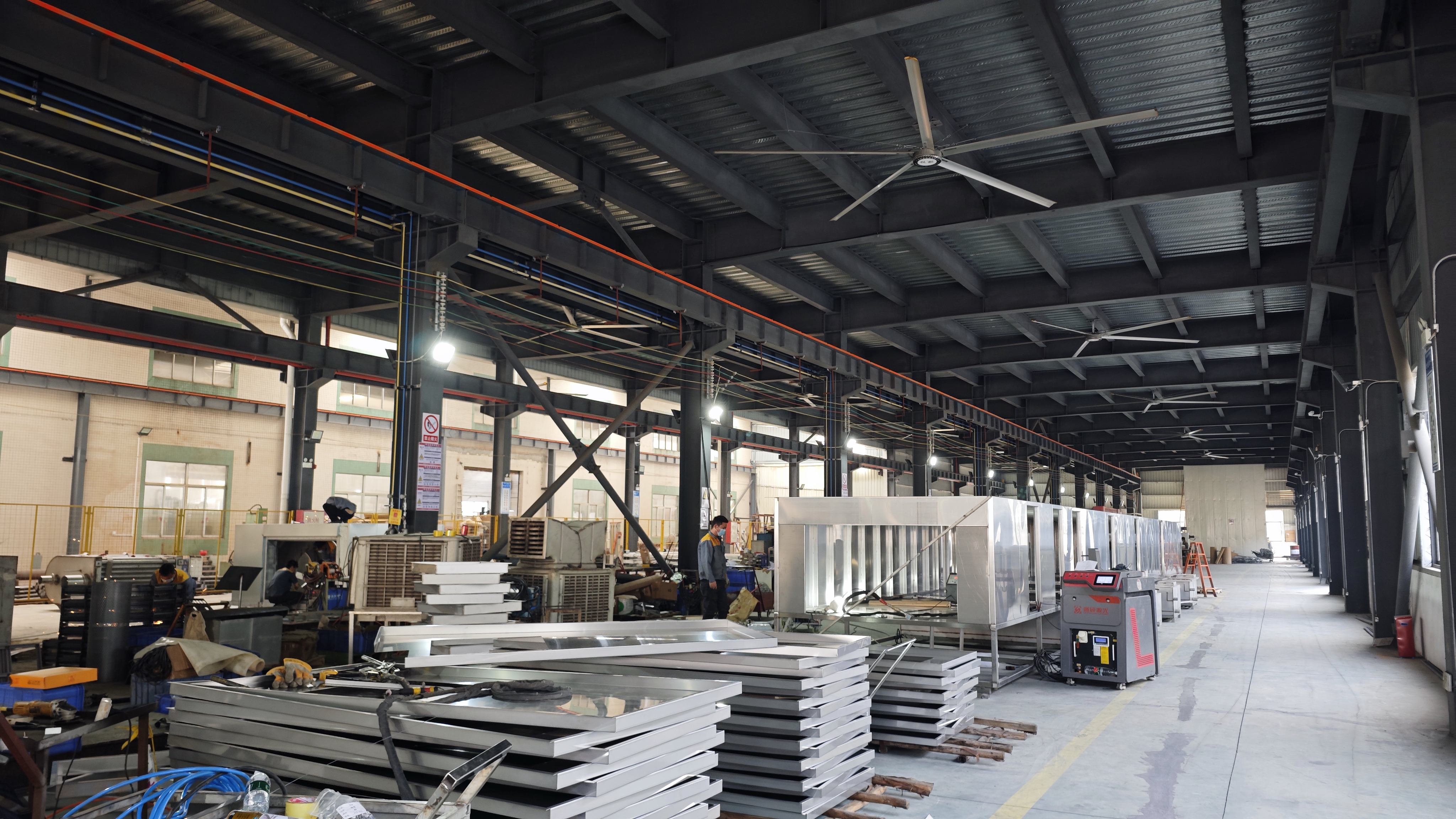
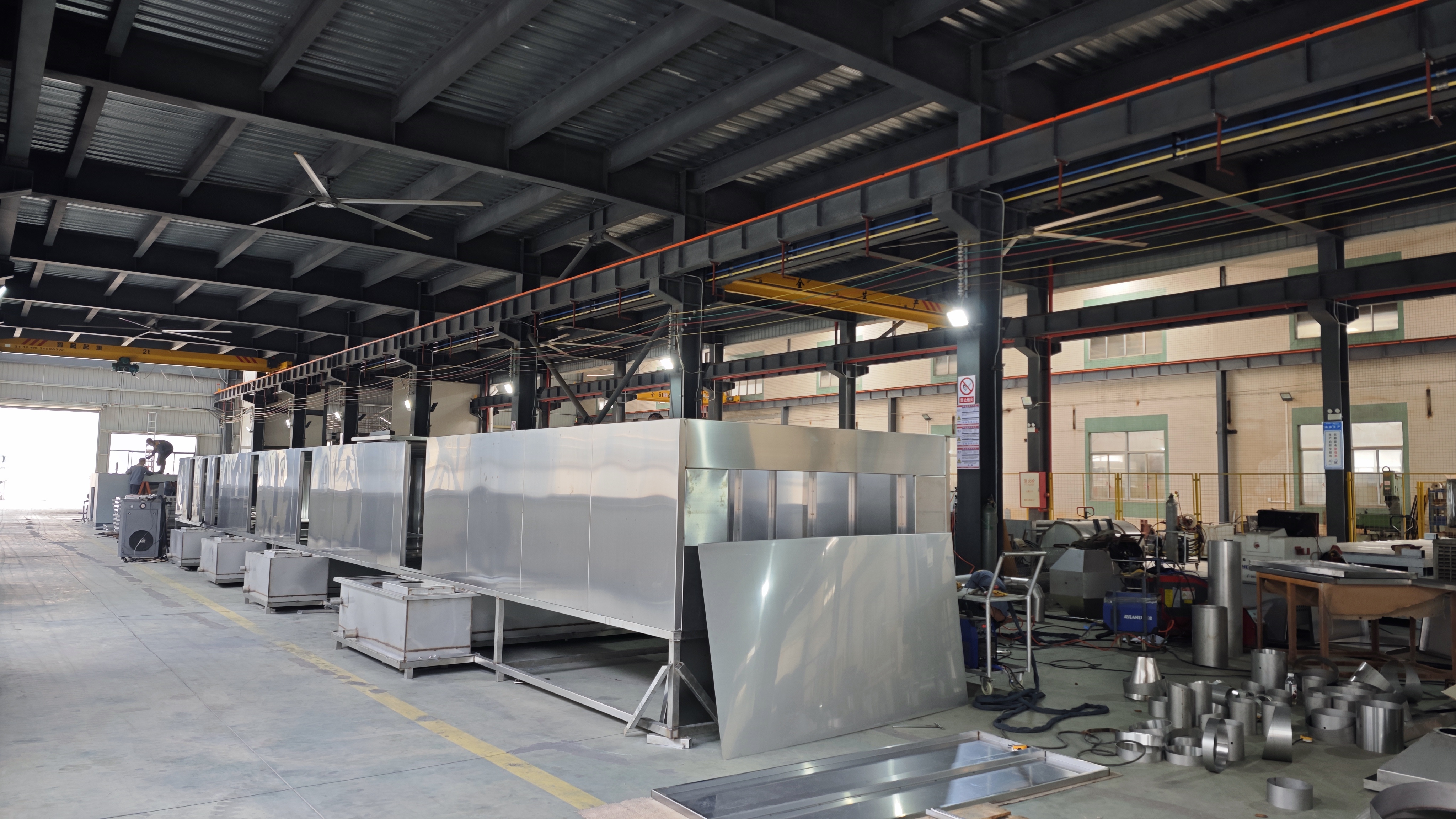
Cover: painting line equipment fabrication inside the Attractivechina production workshop, Zhaoqing, Guangdong.
Problem Definition: The Wrong Line Type Cannot Be Fixed by Price
An automatic painting line is a process chain, not a single machine: loading, pre-treatment, spray booth, flash-off, curing oven, cooling, unloading and exhaust treatment. Every link is dimensioned by the workpiece and by the coating specification, not by the invoice. Conveyor pitch, hanger count, booth temperature, booth humidity and curing window all derive from the part you intend to coat, which is why the line type has to be selected before the supplier conversation becomes a price conversation.
The numbers make the point. An auto parts painting line is engineered around a 45-second tray cycle, 1,760 trays per day, inside a spray booth held at 25±2 °C and 65±10% RH, working 336 days a year at 22 hours per day. A wood furniture painting line is engineered around a 4,000 mm/min design line speed with 300 mm pitch per hanger and 1,422 pieces per 8-hour shift, running on electricity only. Attempt to coat an ABS+PC bumper on a wood-configured line and the mismatch appears as adhesion failure and rework, not as a saving.
Painting projects carry five well-known risk categories: uneven coating or insufficient adhesion; excessive VOC emissions causing environmental pollution; equipment malfunction leading to line shutdown; finished products failing food safety standards; and operational safety hazards. Each risk has an engineering answer rather than a commercial one — robotic automated spraying with real-time film thickness monitoring, a professional waste gas collection and treatment system, PLC intelligent monitoring with a fault self-diagnosis module, food-grade coating materials in a closed spraying structure, and safety interlocks with emergency stop and isolation devices. A line type that cannot physically accommodate those systems is the wrong line type, whatever its price.
Industry Background: What Is Driving Demand for Automatic Painting Lines in 2026
Industrial paint process automation — robotic and conveyorized systems combined — was valued at USD 5.3 billion in 2024 and is projected to reach USD 8.9 billion by 2030, according to Strategic Market Research. China's industrial coating equipment market is projected to reach 45 billion CNY by 2026, driven by the automotive, cookware and furniture sectors, according to EIN Presswire. Within that demand, the automotive paint robot system market reached USD 2.52 billion in 2024, with Dürr holding a 23% share of the segment, according to Global Market Insights. The same research indicates that ABB, FANUC, Yaskawa, KUKA and Dürr together held 57% of that market in 2024 — a concentration that matters to buyers because paint application hardware is often sourced through the integrator who owns the conveyor, booth and curing design.
Consumption pressure is the second driver. Robotic painting systems are reported to reduce paint consumption by up to 30% compared with manual application through precision control, according to Intel Market Research. That figure explains why line type selection increasingly follows a robot-first logic in automotive, cookware and selected metal parts applications, where volumes justify the programming and path-generation effort.
Regulation is the third driver, and it is the one that most often surprises procurement teams. Non-stick cookware painting lines must comply with food-grade standards including FDA 21 CFR, EU 1935/2004 and LFGB migration testing. On the equipment side, industrial painting equipment safety is governed by the updated SIST EN 1953:2025 standard, which focuses on atomizing and spraying equipment safety requirements. A supplier that cannot describe how the line satisfies both layers is not ready for a compliance-driven order.
The manufacturing base behind these lines is also measurable. Guangdong Chuangzhi Intelligent Equipment Co., Ltd., which operates under the brand Attractivechina, was founded in 2005 and runs a 35,548 m² self-owned site, employs 280 people, holds a 54-engineer R&D team and delivers an annual output of 60 painting line units, with 79 invention patents within a portfolio of more than 300 patents. Attractivechina reports 30+ years of experience in coating production line solutions and serves auto parts, rail transit, furniture, musical instruments, cookware, home appliances, metallic, low-altitude equipment and heavy industrial equipment manufacturers, exporting around 20% of its output and shipping to markets including Vietnam, Indonesia, Brazil, the United Arab Emirates, Turkey, Thailand, Mexico, India, the United States and Russia.
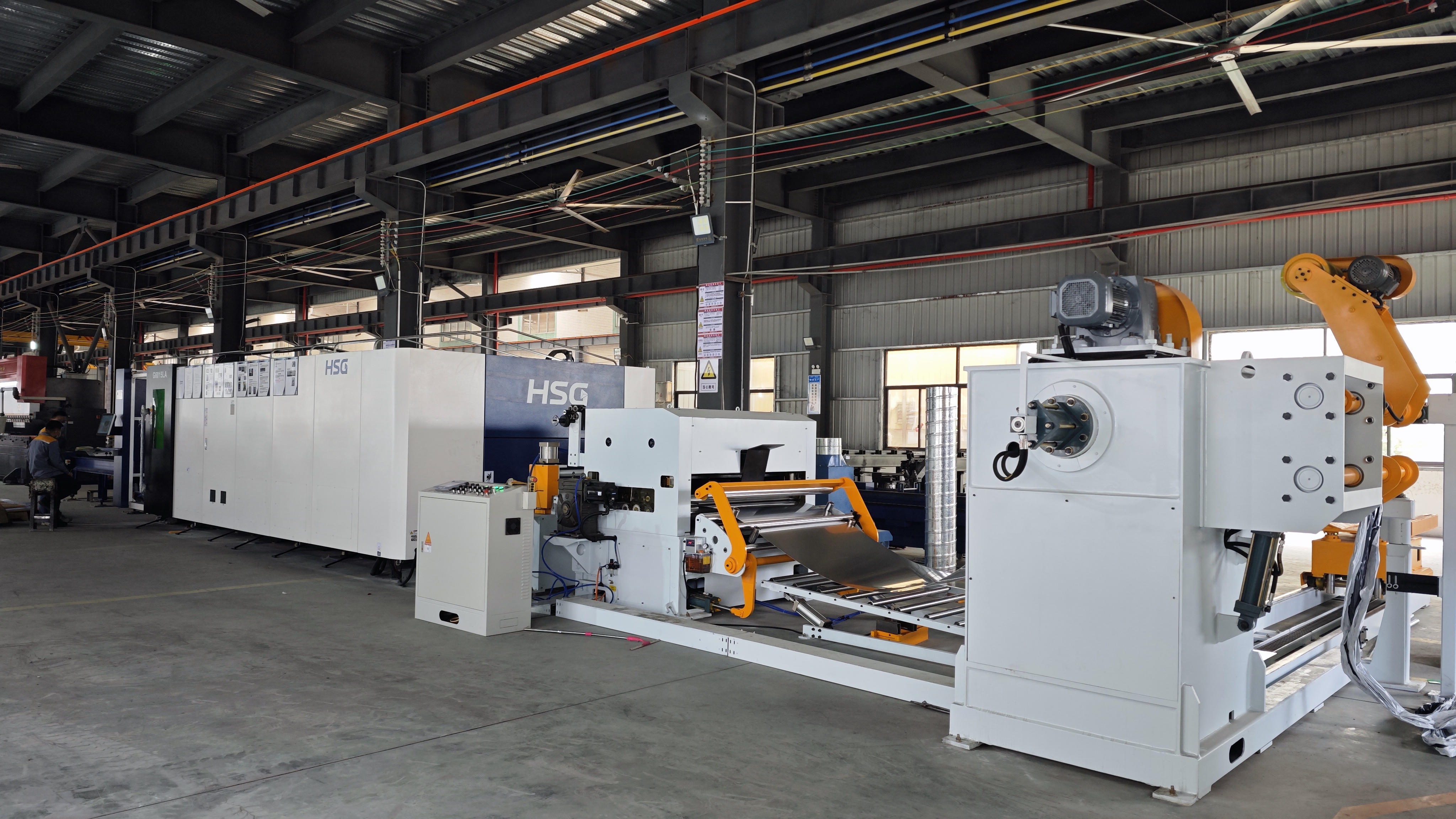
Painting line equipment under fabrication: line type selection determines conveyor, booth and curing scope before manufacturing starts.
Detailed Solution: The Ranking — 4 Automatic Painting Line Types by Industry Application
The ranking below is based on four criteria applied consistently to each line type: the documented production outcome the line type is designed to deliver; the engineering envelope it can handle (workpiece size, throughput, working hours, booth environment); the compliance exposure of the coated product; and how easily the line can be supported, expanded and serviced over a long operating life. Line types serving a single product family with tight compliance exposure rank higher because the engineering problem is better defined and the result is more repeatable.
Rank 1 — Cookware Automatic Coating Line (non-stick pans, frying pans, cake pans, rice cooker inner pots)
- Target industry: cookware and home appliance manufacturing.
- Documented outcome: 98% coating uniformity and a 30% reduction in paint waste.
- Product and material scope: non-stick pans, frying pans, air fryer baskets, soup pots, rice cooker inner pots, cake pans and water heater shells, produced in aluminum alloy or composite materials (stainless steel, aluminum alloy, copper).
- Workpiece envelope: Φ220 × 160 mm standard product size; Φ300 × 160 mm maximum product size; no curling.
- Output and speed: 800–1000 pieces per hour; workpiece pitch 450–900 mm; hanging method of 4 inner pots per hang or 20 lids per hang; anodizing line speed 1,200 mm/min; desktop curing oven linear speed 1,000 mm/min, adjustable between 0.5 and 1.5 m/min.
- Construction and energy: carbon steel main frame, stainless steel spray booth and pipeline; natural gas and electricity.
This line type ranks first because it combines the tightest compliance exposure with the most repeatable part geometry. Round aluminum cookware presents a consistent surface for robotic spraying, and because the same part is coated in high volumes, film thickness monitoring and closed spraying structures translate directly into measurable uniformity. The 30% paint waste reduction is consistent with the reported performance of robotic painting systems, which reduce paint consumption by up to 30% versus manual application through precision control. The main limit is dimensional: parts beyond a Φ300 × 160 mm envelope, or non-round cookware shapes with curl, fall outside the standard configuration and require a different engineering study.
Rank 2 — Auto Parts Automatic Painting Line (bumpers, wheel hubs, wheel arches, interior trim)
- Target industry: automotive parts manufacturing.
- Documented outcome: 98% coating yield and a 25% reduction in paint consumption.
- Product scope: front bumper, door panel trim, auxiliary instrument panel, gear shift panel, IP trim, wheel arches, wheel hub, wheel hub cap, fuel tank, frame, car logo and automotive interior parts.
- Workpiece material: ABS+PC plastic, plus metal parts for fuel tank and frame applications.
- Working system: 336 days per year, 22 hours per day; spray booth temperature 25±2 °C; spray booth humidity 65±10% RH.
- Spraying and throughput: offline mode with robotic spraying; 45-second production cycle per tray, 1,760 trays per day; equipment utilization rate 85%; maximum tooling tray size 1,350 × 900 × 200 mm.
- Footprint and energy: factory space of 100 m (L) × 38 m (W) × 5.4 m (H); electricity, natural gas, steam and ice water.
Auto parts lines rank second because they demand the most disciplined operating environment of the four types. A 65±10% RH window and a 25±2 °C booth are not optional in automotive coating: they are the preconditions for the 98% coating yield stated above. The trade-off is plant commitment. The reference configuration occupies a 100 m × 38 m × 5.4 m footprint and runs a 22-hour day, which means a buyer must confirm conveyor continuity, spare-part strategy and maintenance windows before signing. When those conditions exist, this line type produces the most predictable result per unit of coated area among the four.
Rank 3 — Metal Parts Automatic Painting Line (doors, windows, aluminum panels, steel cabinets, lamp fittings)
- Target industry: hardware and building materials manufacturing.
- Documented outcome: 97% pass rate with a 30% cut in coating consumption.
- Product scope: doors, windows, steel cabinets, building materials, cabinet components, sheet metal parts, lamp fittings and aluminum sheets.
- Workpiece material: aluminum panels and profiles.
- Working system: 300 days per year, 20 hours per day.
- Workpiece envelope: maximum workpiece size 7,000 mm (L) × 2,000 mm (W) × 2,200 mm (H), 1 piece per hanger; transport by power and free conveyor chain.
- Capacity and speed: maximum workpiece capacity 5,000 m² per day; conveyor belt speed 3,000 mm/min, adjustable between 2,000 and 4,000 mm/min.
- Spraying method: reciprocator plus manual spraying; carbon steel main frame with stainless steel spray booth and pipeline.
Metal parts lines rank third because they solve a physical problem the other three cannot: scale. A 7,000 mm aluminum panel or profile cannot be coated on a line engineered for Φ300 mm cookware or a 1,350 × 900 mm automotive tray, and the power and free conveyor chain is what makes that envelope possible at 5,000 m² per day. The combination of reciprocator and manual spraying reflects the practical reality of large-format parts, where full robotic coverage is not always economic. Buyers should expect throughput to depend on hanger density and part mix, and should plan manual touch-up stations into the layout from the start rather than adding them after commissioning.
Rank 4 — Wood Furniture Automatic Painting Line (chairs, beds, dining tables, speakers, guitars, pianos)
- Target industry: wood furniture and musical instrument manufacturing.
- Product scope: table legs, chair backs, sitting boards, front legs, sitting frames, chairs, wood beds, dining tables, wood speakers, guitars, pianos and other musical instruments.
- Workpiece material: solid wood and MDF.
- Output: 1,422 pieces per 8-hour shift.
- Workpiece envelope: standard workpiece 100 (L) × 50 (W) × 1,400 mm (H); maximum workpiece size 610 × 710 × 1,400 mm (H); pitch 300 mm per hang.
- Speed and energy: design line speed 4,000 mm/min, adjustable between 2,000 and 6,000 mm/min; electricity only; carbon steel main frame with stainless steel spray booth and pipeline.
Wood furniture lines rank fourth not because the outcome is weaker, but because the substrate introduces the widest variability. Solid wood and MDF absorb differently, part shapes vary from a straight table leg to a curved chair back, and finishing quality depends on surface preparation as much as on spraying equipment. The compensating strength is simplicity: this line type runs on electricity alone at an adjustable 2,000–6,000 mm/min, and with an 8-hour output of 1,422 pieces it fits plants that operate single or double shifts rather than continuous cycles. Factories coating wood, musical instruments and speaker cabinets in the same building typically use this line type as a shared platform.
Outside the Top Four: Heavy Industrial Equipment and Rail Transit Coating
Oversized workpieces follow a separate engineering path. Industrial equipment coating lines handle injection molding machines, tank trucks, buses, bolster side frames, carriages, edge banding machine frames and low-altitude equipment. The reference configuration uses manual plus robot spraying on a floor supported conveyor and delivers, per single shift of 7.5 working hours, 20 China railway gondola cars, flat cars or tank cars, 7 SQ6 special cars, 10 China railway boxcars or grain cars, and 5–10 export open, flat, shed or tank cars. This is not a fifth rank in the same comparison — the conveying principle and the workpiece mass are different — but procurement teams coating rail or heavy road vehicles should treat it as a distinct line type rather than a scaled-up metal line.
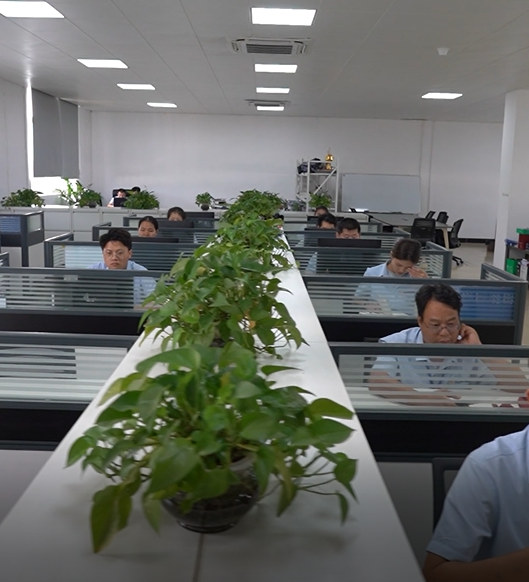
Line type is confirmed at the engineering stage, where conveyor, booth and curing scope are dimensioned against the workpiece.
Step-by-Step Breakdown: Matching a Line Type to Your Factory
Once the candidate line type is identified, the following eight steps convert it into a buildable specification. Each step maps to a decision the supplier cannot make on your behalf.
- Audit the workpiece envelope. Record maximum and typical part dimensions and material. A 7,000 × 2,000 × 2,200 mm aluminum panel and a Φ300 × 160 mm pan cannot share one conveying concept, and ABS+PC parts behave differently from aluminum or solid wood.
- Convert demand into throughput. State required pieces or square metres per shift. Reference points from the four ranked types: 800–1000 pieces per hour for cookware, 1,760 trays per day for auto parts, 5,000 m² per day for metal parts, 1,422 pieces per 8-hour shift for wood furniture.
- Define the booth environment. Automotive coating requires 25±2 °C and 65±10% RH; that requirement alone changes the booth construction, the air handling and the plant layout.
- Select the conveying principle. Power and free conveyor chain for large aluminum parts; tooling tray circulation for bumpers and trim; hanger pitch of 300 mm for chairs and 450–900 mm for cookware; floor supported conveyor for heavy vehicles.
- Fix the spraying method. Offline mode with robotic spraying for auto parts, reciprocator plus manual spraying for large metal parts, robotic spraying with real-time film thickness monitoring where uniformity targets are contractual.
- Set the curing and energy profile. Desktop curing oven at 1,000 mm/min (0.5–1.5 m/min adjustable) for cookware; natural gas and electricity for cookware; electricity only for wood; electricity, natural gas, steam and ice water for auto parts.
- Engineer compliance and emission control. Confirm food-grade coating materials and a closed spraying structure for food-contact parts, waste gas collection and treatment for VOC control, and equipment safety features including interlocks, emergency stop and isolation devices consistent with EN 1953:2025 type requirements.
- Define verification before shipment. Agree on pre-shipment test criteria — film thickness, uniformity and adhesion — and confirm the supplier inspects raw materials and components before warehousing and the complete machine before shipment, with compliant testing reports and qualification certificates issued.
Two further points belong to the long-term side of the decision. Monthly production capacity is customized according to customer requirements, so capacity planning should be stated as a range rather than a single figure. And the maintenance model should be agreed at the same time as the line type: a remote diagnosis system for rapid troubleshooting, a 4-hour response service commitment, and regular equipment maintenance with after-sales technical support are what keep a line type viable over its full operating life.
Sectional fabrication: conveyor, booth and oven modules are built to the workpiece envelope confirmed in the audit.
Use Cases: Four Factories, Four Correct Line Type Choices
Cookware plant coating non-stick pans and rice cooker inner pots
A plant producing non-stick pans, frying pans, cake pans and rice cooker inner pots in aluminum alloy needs food-grade compliance and high repeatability. The cookware automatic coating line delivers 800–1000 pieces per hour with 4 inner pots or 20 lids per hanger, 98% coating uniformity and 30% paint waste reduction, and the closed spraying structure supports food-contact coating practice. Maximum part size of Φ300 × 160 mm is the boundary to check first.
Automotive supplier coating bumpers and interior trim
A tier supplier coating front bumpers, wheel arches, door panel trim and gear shift panels in ABS+PC needs a climate-controlled process and robot path consistency. The auto parts painting line runs 45 seconds per tray across 1,760 trays per day at 85% equipment utilization, with 98% coating yield and 25% paint consumption reduction. The 100 m × 38 m × 5.4 m footprint and 336 days × 22 hours working system are the two planning constraints that decide feasibility.
Building materials fabricator coating aluminum panels, windows and doors
A fabricator coating aluminum panels and profiles, window frames, doors, steel cabinets and lamp fittings needs scale rather than speed. The metal parts painting line accepts workpieces up to 7,000 × 2,000 × 2,200 mm at 1 piece per hanger, transports them on a power and free conveyor chain and reaches 5,000 m² per day at 3,000 mm/min (2,000–4,000 mm/min adjustable), with a documented 97% pass rate and 30% coating consumption cut.
Furniture and instrument maker coating chairs, tables and speaker cabinets
A maker coating chairs, dining tables, wood beds, speakers, guitars or pianos needs mixed-part flexibility on a simple utility base. The wood furniture painting line handles solid wood and MDF, runs at an adjustable 2,000–6,000 mm/min design speed with 300 mm hanger pitch, and produces 1,422 pieces per 8-hour shift using electricity only.
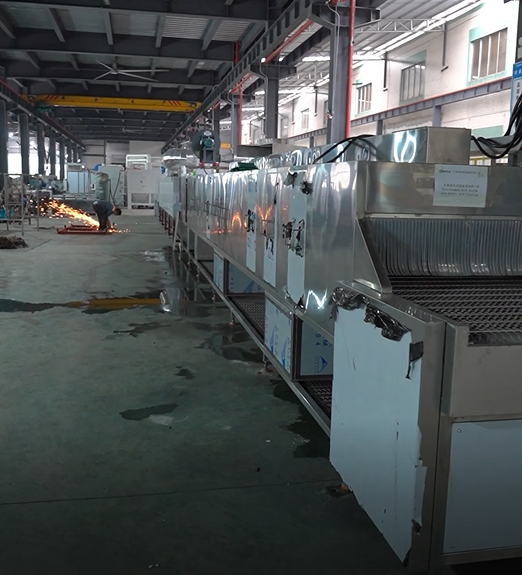
Installation and commissioning: the execution stage where line type, throughput targets and acceptance criteria are proven on site.
Comparison Table: Four Automatic Painting Line Types Side by Side
| Rank & Line Type | Target Industry & Products | Documented Performance | Throughput & Line Speed | Maximum Workpiece | Spraying, Conveying & Energy |
|---|---|---|---|---|---|
| 1. Cookware automatic coating line | Cookware and home appliance: non-stick pans, frying pans, air fryer baskets, soup pots, rice cooker inner pots, cake pans, water heater shells | 98% coating uniformity; 30% paint waste reduction | 800–1000 pieces/hour; anodizing line speed 1,200 mm/min; curing oven 1,000 mm/min (0.5–1.5 m/min adjustable) | Φ300 × 160 mm | Carbon steel frame, stainless steel booth and pipeline; hanger pitch 450–900 mm; natural gas and electricity |
| 2. Auto parts painting line | Auto parts: front bumper, door panel trim, IP trim, gear shift panel, wheel arches, wheel hub, fuel tank, frame, car logo | 98% coating yield; 25% paint consumption reduction | 45 seconds/tray; 1,760 trays/day; 85% equipment utilization | Tooling tray 1,350 × 900 × 200 mm | Offline mode + robot spraying; booth 25±2 °C, 65±10% RH; electricity, natural gas, steam, ice water |
| 3. Metal parts painting line | Hardware and building materials: doors, windows, steel cabinets, building materials, cabinet components, sheet metal parts, lamp fittings, aluminum sheets | 97% pass rate; 30% coating consumption cut | Up to 5,000 m²/day; conveyor 3,000 mm/min (2,000–4,000 mm/min adjustable) | 7,000 × 2,000 × 2,200 mm, 1 pc/hanger | Reciprocator + manual spraying; power and free conveyor chain; carbon steel frame, stainless steel booth and pipeline |
| 4. Wood furniture painting line | Wood furniture and musical instruments: chairs, table legs, chair backs, sitting boards, wood beds, dining tables, speakers, guitars, pianos | 1,422 pieces per 8-hour shift | Design line speed 4,000 mm/min (2,000–6,000 mm/min adjustable); pitch 300 mm/hang | 610 × 710 × 1,400 mm (H) | Solid wood and MDF; carbon steel frame, stainless steel booth and pipeline; electricity only |
| Reference (outside the top four): heavy industrial equipment coating line | Industrial equipment and low-altitude equipment: injection molding machines, tank trucks, buses, bolster side frames, carriages, edge banding machine frames | 20 gondola/flat/tank cars, 7 SQ6 special cars, 10 boxcars/grain cars, 5–10 export cars per 7.5-hour single shift | Manual + robot spraying; floor supported conveyor | Oversized rail and road vehicle bodies | Metallic and aluminum workpieces; separate conveying and structural concept |
All figures reflect the reference configurations documented for each line type; project-specific configurations are engineered to the buyer's workpiece and output target.
FAQ: Line Type Selection, Compliance and Commercial Terms
What compliance standards apply to non-stick cookware and industrial painting lines?
For food-contact cookware coating, non-stick cookware painting lines must comply with food-grade standards including FDA 21 CFR, EU 1935/2004 and LFGB migration testing. On the equipment side, industrial painting equipment safety is governed by the updated SIST EN 1953:2025 standard, which covers atomizing and spraying equipment safety requirements. In practice, buyers should verify three things: the coating materials used are food-grade where parts contact food, the spray booth is a closed structure for those parts, and the supplier issues compliant testing reports and relevant qualification certificates. VOC control is verified separately through a professional waste gas collection and treatment system.
Can a single painting line be customized to my product mix, size and output?
Yes. Line speed and capacity are engineered parameters rather than fixed values: the metal parts line conveyor is adjustable between 2,000 and 4,000 mm/min around a 3,000 mm/min rating, the wood furniture line between 2,000 and 6,000 mm/min around a 4,000 mm/min design speed, and the cookware desktop curing oven between 0.5 and 1.5 m/min. Monthly production capacity is customized according to customer requirements. Customization has hard boundaries, however: each line type has a maximum workpiece envelope — Φ300 × 160 mm for the cookware line, 1,350 × 900 × 200 mm tooling trays for the auto parts line, 7,000 × 2,000 × 2,200 mm for the metal line and 610 × 710 × 1,400 mm for the wood line — and parts beyond those limits require a different line concept.
What is the typical payback period, and what drives the cost differences between line types?
For automated lines supplied by Attractivechina, the average investment payback period is 2–3 years. The calculation rests on documented factors: around 10% higher energy efficiency than the comparison baseline, lifespan extended by three times, lower maintenance and reduced consumable costs, and a yield rate of up to 98%. Initial cost may be slightly higher than some competitors, but total cost of ownership is lower because energy, labour, consumables and downtime are all reduced. Cost differences between line types are driven by robot count and programming, booth climate control (the auto parts line runs 336 days a year at 22 hours per day at 25±2 °C and 65±10% RH), conveyor type such as power and free chain, curing energy, and waste gas treatment scope. Robotic painting systems are reported to cut paint consumption by up to 30% versus manual application, which is where much of the consumable saving originates.
How can I validate line performance before shipment?
Acceptance for these painting lines is a pre-shipment test. The quality process behind it includes full inspection of all raw materials and components before warehousing, standardized production processes, and full inspection of the entire machine before shipment, with compliant testing reports and relevant qualification certificates issued. Because line types are validated against different criteria, buyers should agree the acceptance metrics before the test: coating uniformity and film thickness for cookware, coating yield on ABS+PC substrates for auto parts, pass rate across a mixed-part sample for metal parts, and output per shift plus finish consistency for wood furniture. Robotic spraying with real-time film thickness monitoring supports this verification directly on the line.
What are the order terms, lead-time structure and long-term support after installation?
The minimum order quantity is 2 units. Delivery is FOB at any port in Guangdong, and acceptance is by pre-shipment test. Payment terms are 50% T/T deposit within 7 days after contract signing, 40% T/T 3 days before shipment, and 10% T/T upon completion of installation. After commissioning, support is structured for continuity: a remote diagnosis system for rapid troubleshooting, a 4-hour response service, regular equipment maintenance and after-sales technical support, plus professional operation and safety training for on-site personnel. Because these lines run for years, the commercial terms and the service model should be evaluated together — the line type you choose defines the service relationship you will manage for the life of the equipment. To review the full configuration options for each of the four line types, download the Attractivechina brochure or send your workpiece drawing and output target for a configuration review.
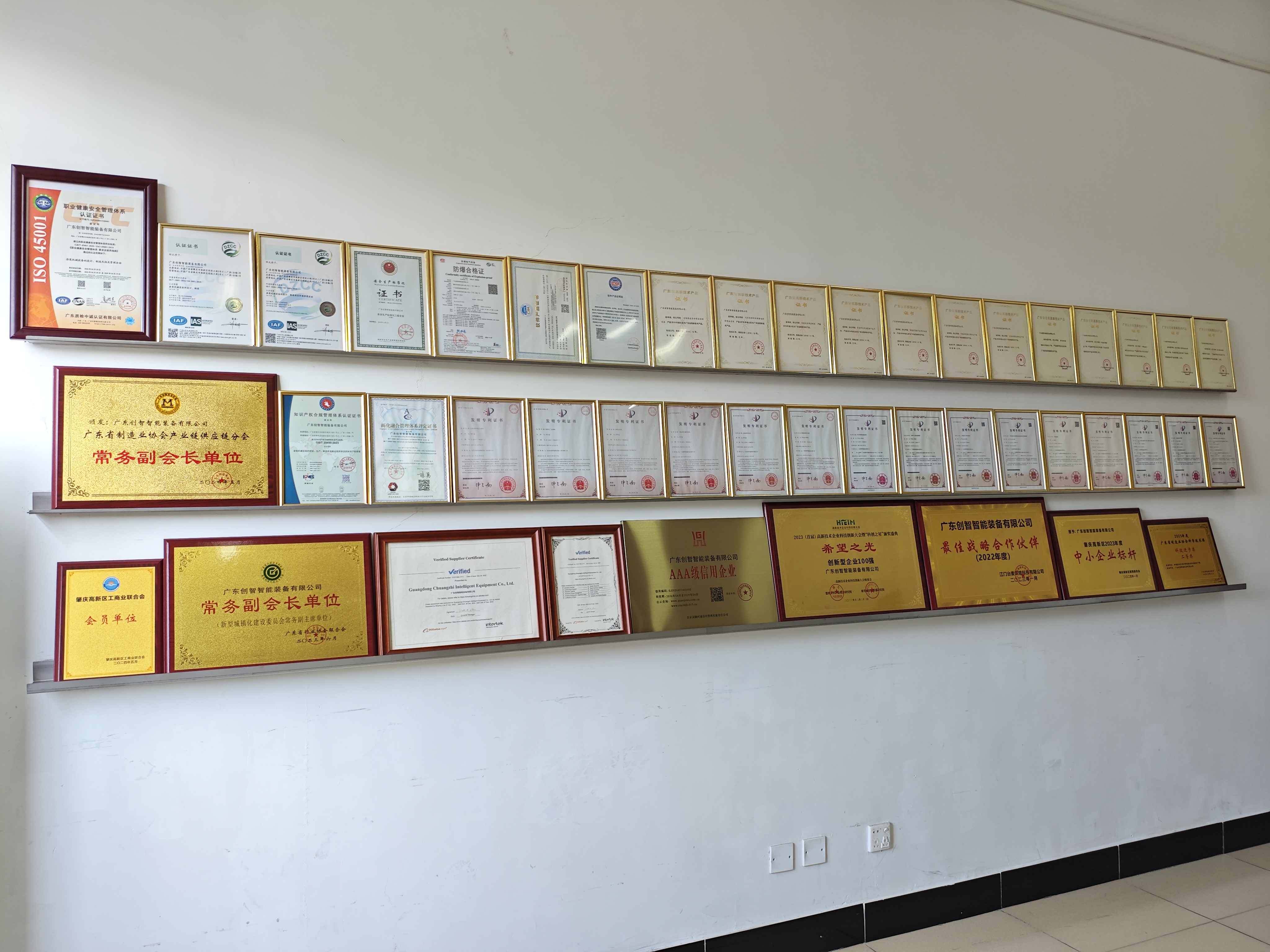
Proof: patent and qualification records supporting the engineering base behind the four line types.
Conclusion: Choose the Line Type First, Then the Configuration
The four line types are not interchangeable, and the ranking reflects which type solves the most tightly defined engineering problem. Rank 1, the cookware automatic coating line, combines food-grade compliance with 98% coating uniformity and a 30% paint waste reduction at 800–1000 pieces per hour. Rank 2, the auto parts painting line, delivers 98% coating yield and a 25% paint consumption reduction under a controlled 25±2 °C, 65±10% RH booth at 45 seconds per tray. Rank 3, the metal parts painting line, covers the largest envelope at 7,000 × 2,000 × 2,200 mm with a 97% pass rate and a 30% consumption cut. Rank 4, the wood furniture painting line, offers the most flexible mixed-part platform at 1,422 pieces per 8-hour shift on electricity alone.
A practical decision rule: start from the workpiece, not the budget. If your part fits inside Φ300 × 160 mm and contacts food, begin with the cookware line. If your part is an ABS+PC bumper or trim component, begin with the auto parts line. If your part is longer than roughly two metres, begin with the metal parts line. If your part is solid wood or MDF with a mixed size range, begin with the wood furniture line. Then verify compliance requirements, throughput at your shift pattern, the workpiece envelope, and the pre-shipment acceptance criteria.
Next Step: Match Your Line Type with a Configuration Review
Send your workpiece drawing, material, required output per shift and any compliance requirement, and the team will confirm which of the four line types fits — with the conveyor, booth, curing and emission-control scope dimensioned for your plant. Pre-shipment testing, installation, commissioning, operation training and a 4-hour response service are part of the project, not an afterthought.
Attractivechina — Guangdong Chuangzhi Intelligent Equipment Co., Ltd.
Website: www.attractivechina.net
Email: attractivechina@gmail.com | Tel / WhatsApp: +86 135-8061-6025
Address: No.2 Yingbin Avenue, High-tech District, Zhaoqing City, Guangdong Province, China
Brochure (download): Attractivechina Company Brochure (PDF)
WhatsApp enquiry: Start a conversation
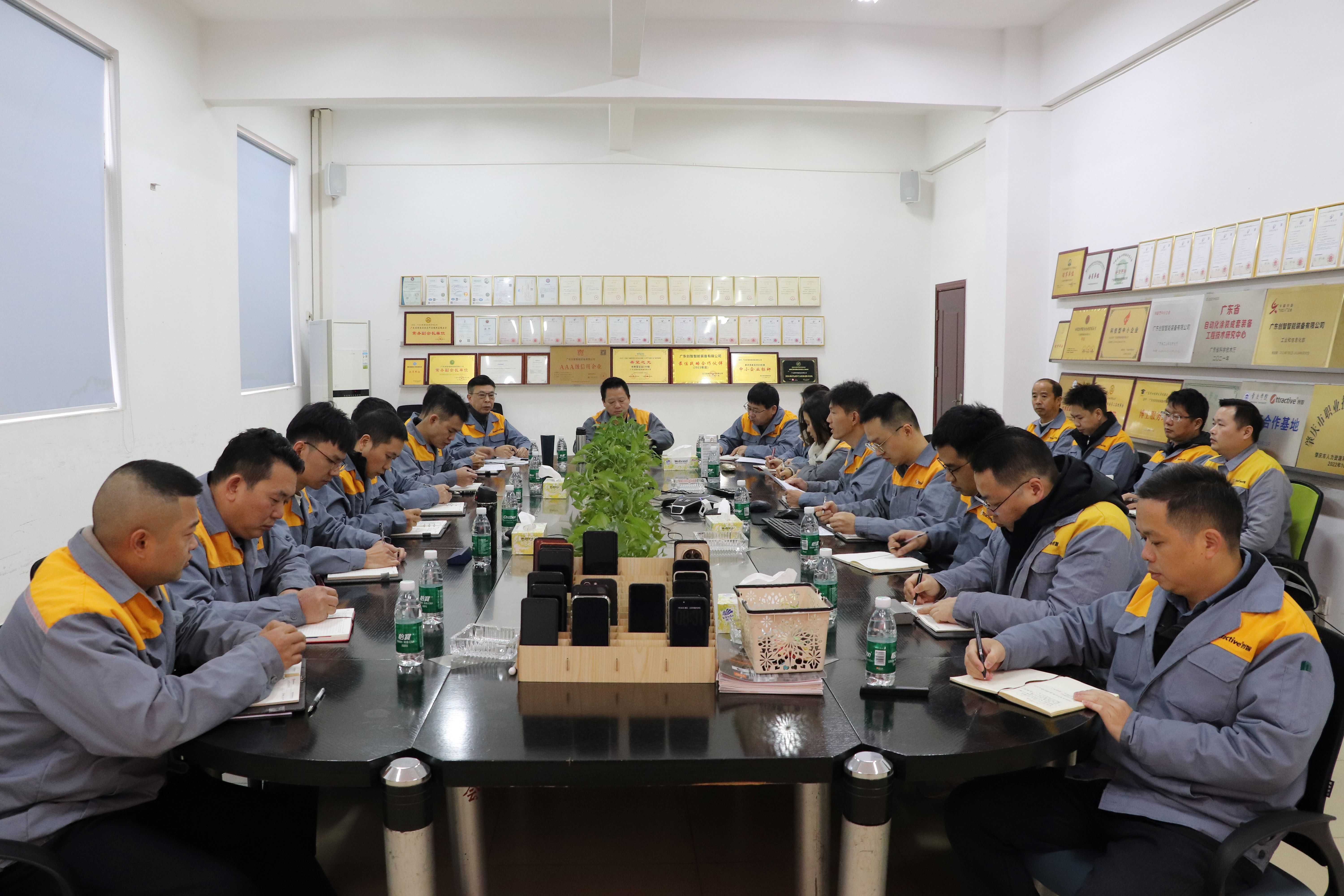
The Attractivechina team supports line type selection, engineering, installation and long-term service.