Kitchen utensils vs. metals: which automatic coating line do you choose?
Cookware vs. metals: which automatic coating line should you choose?
The decision is settled by finish and geometry, not by machine size. If most of the volume consists of aluminum cookware parts requiring PTFE non-stick coating, anti-oxidation primer, and a high-temperature-resistant topcoat, the reference is the automatic coating line for cookware. If the volume is concentrated in panels, profiles, and sheet metal with anti-corrosion, decorative, and powder requirements, the reference is the automatic metal coating line. When both families coexist in the same plant, the choice is defined by volume proportion, part geometric envelope, and hanging tooling.
Attractivechina —Guangdong Chuangzhi Intelligent Equipment Co., Ltd., headquartered in Zhaoqing National High-Tech Industrial Development Zone, Guangdong Province, with more than 30 years of experience in integrated solutions for coating lines— manufactures both lines within its catalog of automated and customized coating equipment, which makes it possible to compare them under the same purchasing rules. You can view the solutions catalog at Attractivechina.
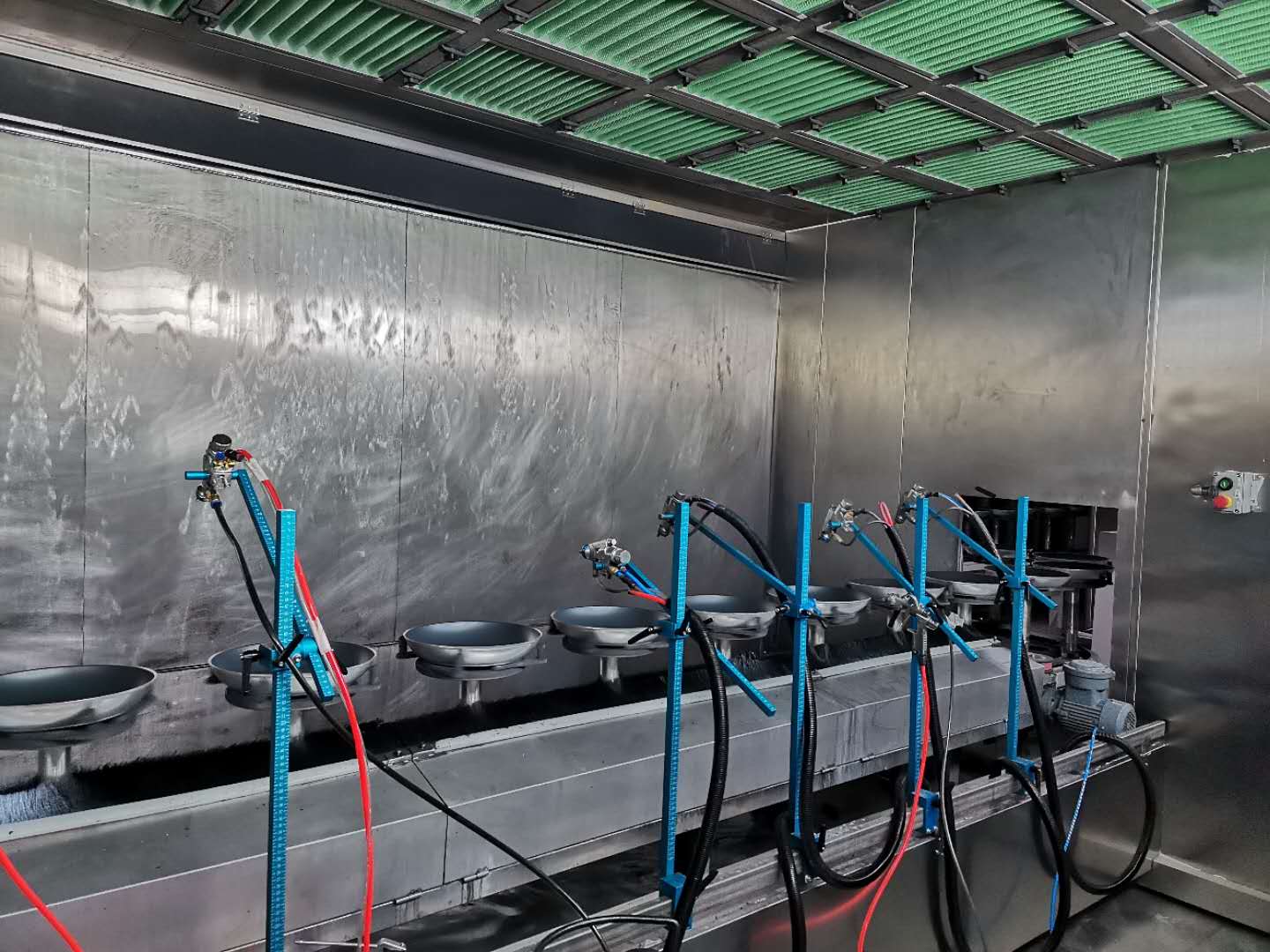
Non-stick coating line for pans: PTFE finish with primer and high-temperature-resistant topcoat.
The real problem: a portfolio with two finishing logics
The buyer making this comparison usually does not have a single product. They have a portfolio with pans and pots, as well as doors, windows, steel cabinets, aluminum panels, or sheet metal components. The two families do not compete for the same plant space: they compete for the same investment budget.
That is where the most common mistake appears. The two lines are compared by their efficiency percentage, and the higher figure is chosen without checking that the figures are measured in different units and on different parts. A cookware line expresses its output in parts per hour; a metal line expresses it in square meters per day. Comparing 800–1,000 parts/hour with 5,000 m²/day without converting both to the plant's actual mix is not a comparison: it is a numerical coincidence.
The second trap is the finish. Cookware non-stick and decorative metal anti-corrosion coatings are not variants of the same process. They impose different pretreatments, curing windows, tooling, and acceptance criteria. A line that works well with one family may be structurally unsuitable for the other, even if the manufacturer offers both.
Industrial context: what each line produces and which metric measures it
The cookware coating line works with aluminum alloy parts and composite materials (stainless steel, aluminum alloy, copper). Its datasheet describes a standard size of Φ220 × 160 mm high and a maximum size of Φ300 × 160 mm high, with output of 800 to 1,000 parts per hour, part spacing of 450 to 900 mm, and hanging capacity of 4 inner pots per hanger or 20 lids per hanger. The planned energy source is natural gas and electricity.
The automatic metal coating line works with aluminum panels and profiles, with a maximum part size of 7,000 mm long × 2,000 mm wide × 2,200 mm high and one part per hanger. Its maximum capacity is 5,000 m²/day, with transport by powered and free conveyor at 3,000 mm/min (adjustable from 2,000 to 4,000 mm/min), reciprocator plus manual spraying, and an operating regime of 300 days per year and 20 hours per day.
The difference in metric is not an administrative detail. It is the first proof that these are two assets with different operating logics: one line oriented toward the density of small, repetitive parts, and another oriented toward surface area and large envelopes.
Comparison of the finishing systems
Cookware line: PTFE, primer, and topcoat
The cookware finishing system is built in layers with separate functions. The anti-oxidation primer prepares and protects the metal substrate; the PTFE non-stick coating is applied over it, providing release and easy-cleaning performance; and it is closed with a high-temperature-resistant topcoat that protects the assembly against the thermal use typical of domestic and professional kitchens. The product datasheet also includes an anodizing stage, with a line speed of 1,200 mm/min, and a curing oven with a linear speed of 1,000 mm/min, adjustable from 0.5 to 1.5 m/min.
For the buyer, the practical consequence is that the line's value lies not in the visible layer but in the consistency between layers. A correct non-stick coating over a poorly cured primer produces an adhesion failure that shows up at the end customer, not on the line.
Automatic metal line: anti-corrosion, decorative, primer, topcoat, and powder
The metal system answers another question: protect the part from corrosion and give it a durable decorative appearance. It is organized into primer, topcoat, and powder, with anti-corrosion and decorative functions. The associated line architecture includes pretreatment, drying, spray booth, preheating oven, curing oven, cooling system, transport system, dust removal, VOC treatment, electrical control system, and MES production management system.
Powder finishing adds an operating advantage: consumption is managed through recovery and controlled thickness, and the electrical system allows different recipes for different parts within the same family.
What this difference means for the buyer
The three implications are concrete and verifiable in the specification:
- Different curing window. The cookware cycle must protect the PTFE and the thermal topcoat; the metal cycle must ensure crosslinking of the anti-corrosion coating and the powder. A single oven curve will not work for both families.
- Different tooling. Hanging density changes completely: 4 inner pots or 20 lids per hanger in cookware, versus 1 part per hanger in metals.
- Different acceptance criteria. In cookware, uniformity and non-stick behavior are evaluated; in metal, approval, thickness, adhesion, and anti-corrosion resistance.
Technical comparison: datasheet data side by side
The following table includes only datasheet data for the two lines. Cells marked as not detailed indicate that the data does not appear in the available information; they do not mean that the equipment cannot be configured for it.
| Dimension | Cookware line | Automatic metal line |
|---|---|---|
| Main finish | PTFE non-stick, anti-oxidation primer, and high-temperature-resistant topcoat | Anti-corrosion and decorative, with primer, topcoat, and powder |
| Typical substrate | Aluminum alloy and composite materials (stainless steel, aluminum, copper) | Aluminum, in panel and profile |
| Part size | Standard Φ220 × 160 mm; maximum Φ300 × 160 mm high | Maximum 7,000 × 2,000 × 2,200 mm; 1 part per hanger |
| Output | 800–1,000 parts/hour | Up to 5,000 m²/day |
| Hanging and spacing | 4 inner pots or 20 lids per hanger; spacing of 450–900 mm | 1 part per hanger; powered and free conveyor |
| Transport and speed | Anodizing at 1,200 mm/min; curing oven at 1,000 mm/min (0.5–1.5 m/min) | Conveyor at 3,000 mm/min (adjustable 2,000–4,000 mm/min) |
| Energy and operating regime | Natural gas and electricity | 300 days/year and 20 h/day |
Adaptability to shapes, sizes, and mixed production
Where the cookware line fits
The cookware line is designed for rotational parts with limited diameter: pans, pots, rice cooker inner pots, cake molds, lids, and air fryer components. Its advantage is density: with 4 inner pots per hanger and 450–900 mm spacing, the line converts oven time into finished units. Its limit is equally clear: the maximum envelope of Φ300 × 160 mm leaves out long profiles, panels, and structures.
Where the metal line fits
The metal line is designed for large envelopes and surfaces: aluminum panels and profiles, doors, windows, steel cabinets, metal furniture components, and construction materials. Its advantage is the treated surface area per shift and the ability to operate with reciprocator plus manual spraying on parts that require spot reinforcement. Its limit is density: one part per hanger means that throughput depends on geometry and tooling, not only on conveyor speed.
What “mixed production” means in practice
Mixed production is not a function that is switched on with a button. The architecture of these lines incorporates fully automated PLC intelligent control, robotic spraying, unmanned flexible production, and an MES management system, which makes it possible to manage different recipes and sequences. However, control does not replace chemical compatibility: if the pretreatment and curing window of the non-stick coating and the powder anti-corrosion coating do not match, no PLC recipe will solve the problem.
That is why the right question is not 'Can one line do both?', but 'What proportion of my annual volume belongs to each family, and how much does it cost to separate them?'
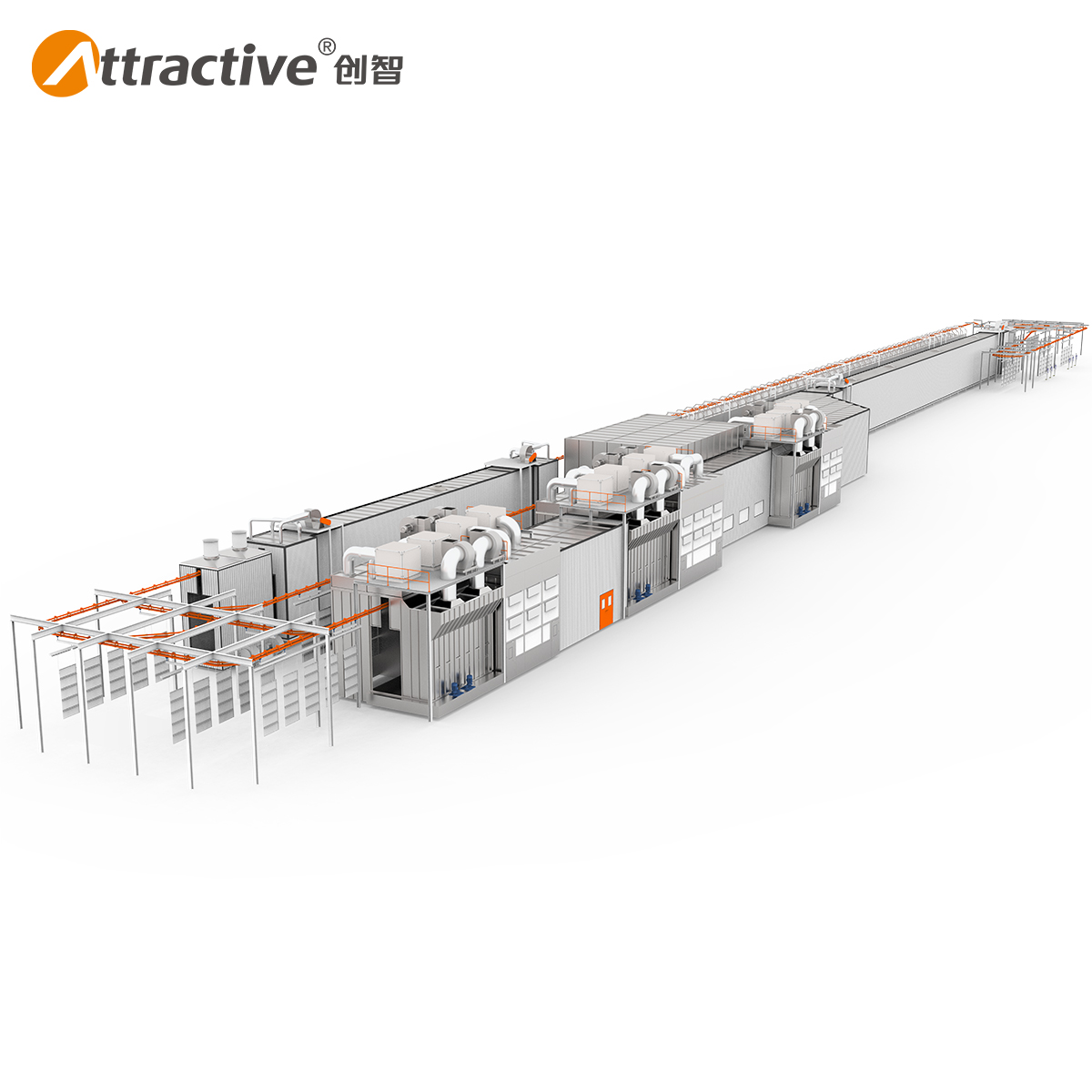
Automatic metal line: envelope of up to 7,000 × 2,000 × 2,200 mm and capacity of up to 5,000 m²/day.
Cited results: what they mean for the buyer
The data reported for these lines makes it possible to compare the type of benefit each one pursues, although it does not replace validation with real parts.
In cookware, uniformity is the indicator that most affects hidden cost. A thickness variation in the non-stick coating becomes rejection, re-polishing, or a claim from the end customer. The 30% lower paint waste acts directly on cost per part and on the load on the VOC treatment system. The 35% higher efficiency, on a line measured in parts per hour, translates into additional units per shift.
In metal, approval is the process stability indicator: it measures how many parts come out conforming without rework. The 30% lower paint or powder consumption and the 22% lower energy consumption are two OPEX levers that accumulate over 300 days per year and 20 hours per day. The 40% higher efficiency is based on treated surface area, not on the number of units.
These percentages are results reported for specific configurations. They are not a guarantee that can be automatically transferred to any plant: they depend on part geometry, tooling, the chosen finish, and the operating regime. In a real purchase, they must be revalidated with your own mix and your own measurement method.
Mixed production: three possible configurations
When the portfolio includes both families, there are three paths, and each responds to a different volume proportion.
1. Two dedicated lines
This is the coherent option when neither family is marginal. Each line keeps its own pretreatment, curing curve, tooling, and acceptance criteria, and there is no cross-contamination between finishing chemistries. The investment is higher, and the decision is justified by volume and by the requirement for sustained quality.
2. Main line plus off-line station
This is the coherent option when one family represents most of the volume and the other appears intermittently. The main line takes the dominant volume, and the minority family is processed at an off-line station, which makes it possible to maintain its own layer scheme without conditioning the main line cycle. The off-line mode combined with robotic painting is contemplated in automated coating lines from the same catalog.
3. A common line with interchangeable tooling
This is realistic only when the families share pretreatment and a compatible curing window. In that scenario, PLC control and MES management allow recipes and sequences to be changed, and unmanned flexible production reduces dependence on labor. Outside that assumption, the common line accumulates finishing compromises that are paid for in rejection.
The decision rule that follows from the datasheet data is simple: if 80% of the parts fit within Φ300 × 160 mm and are aluminum for cookware, the cookware line is the main asset; if 80% is measured in square meters of panel or profile, the main asset is the metal line.
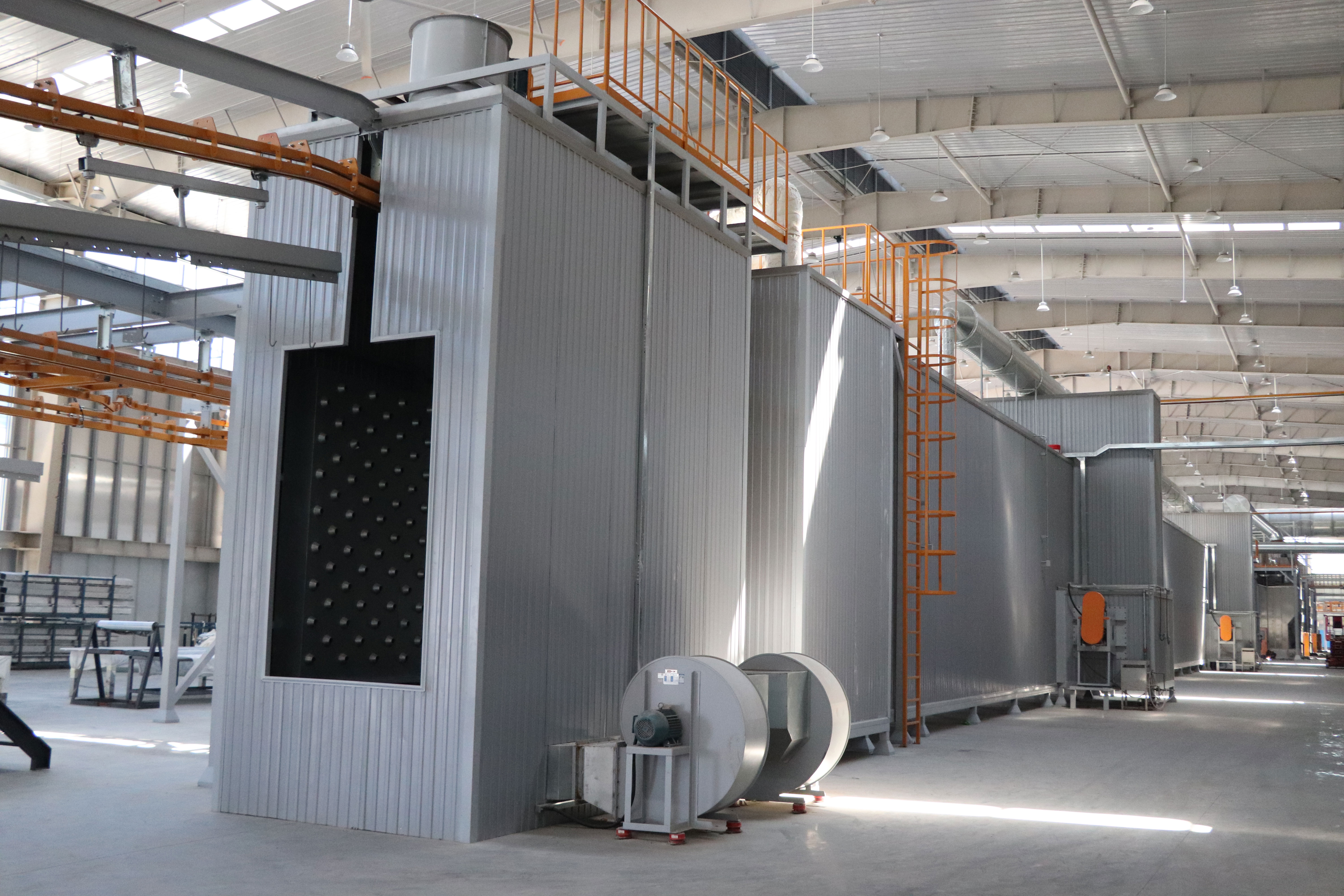
The curing oven sets the thermal window: in cookware, 1,000 mm/min adjustable from 0.5 to 1.5 m/min; in metals, the cycle is adjusted to powder crosslinking.
Step by step: purchasing and acceptance criteria
- Inventory of the real mix. List each part family with material, maximum size, annual volume, and required finish. Without this step, any comparison between lines is theoretical.
- Choose the dominant finishing logic. PTFE non-stick with anti-oxidation primer and thermal topcoat, or decorative anti-corrosion with primer, topcoat, and powder. The line is specified around that decision.
- Check the geometric envelope. Φ300 × 160 mm high versus 7,000 × 2,000 × 2,200 mm. A part outside the envelope cannot be solved with process adjustments.
- Convert capacity to your unit. 800–1,000 parts/hour and 5,000 m²/day are comparable only when expressed in your plant's annual mix.
- Review tooling and hanging density. 4 inner pots or 20 lids per hanger versus 1 part per hanger: tooling cost and loading time are part of the cost per part.
- Verify energy and curing. Natural gas and electricity in cookware; operating regime of 300 days and 20 hours per day in metals. Energy consumption is an OPEX item, not a technical detail.
- Set the acceptance protocol. Agree in writing what is measured (uniformity, approval, paint or powder consumption, energy), with which method, and on which sample. Reported percentages are useful only if their measurement method matches.
- Verify the supplier, not only the equipment. Manufacturing capacity, engineering team, and installation and commissioning experience. Attractivechina, founded in 2005, operates its own 35,548 m² plant with 280 employees, 54 engineers, and a delivery capacity of 60 units per year, with 79 invention patents in coating and environmental protection equipment within a total of more than 300 patents.
Use cases by part family
Cookware. Non-stick pans, pots, rice cooker inner pots, cake molds, lids, and air fryer components. The line applies PTFE non-stick coating over anti-oxidation primer and closes with a high-temperature-resistant topcoat, with output of 800–1,000 parts/hour.
Metals and construction materials. Aluminum panels and profiles, doors, windows, steel cabinets, metal furniture components, sheet metal, and lighting accessories. The line applies an anti-corrosion and decorative scheme, with primer, topcoat, and powder, on envelopes of up to 7,000 × 2,000 × 2,200 mm.
Mixed portfolios. Appliance manufacturers that add metal components, workshops serving both cookware and construction, and plants producing for private labels with several categories. In these cases the decision is rarely binary: it is resolved with a main line and a station for the minority family.
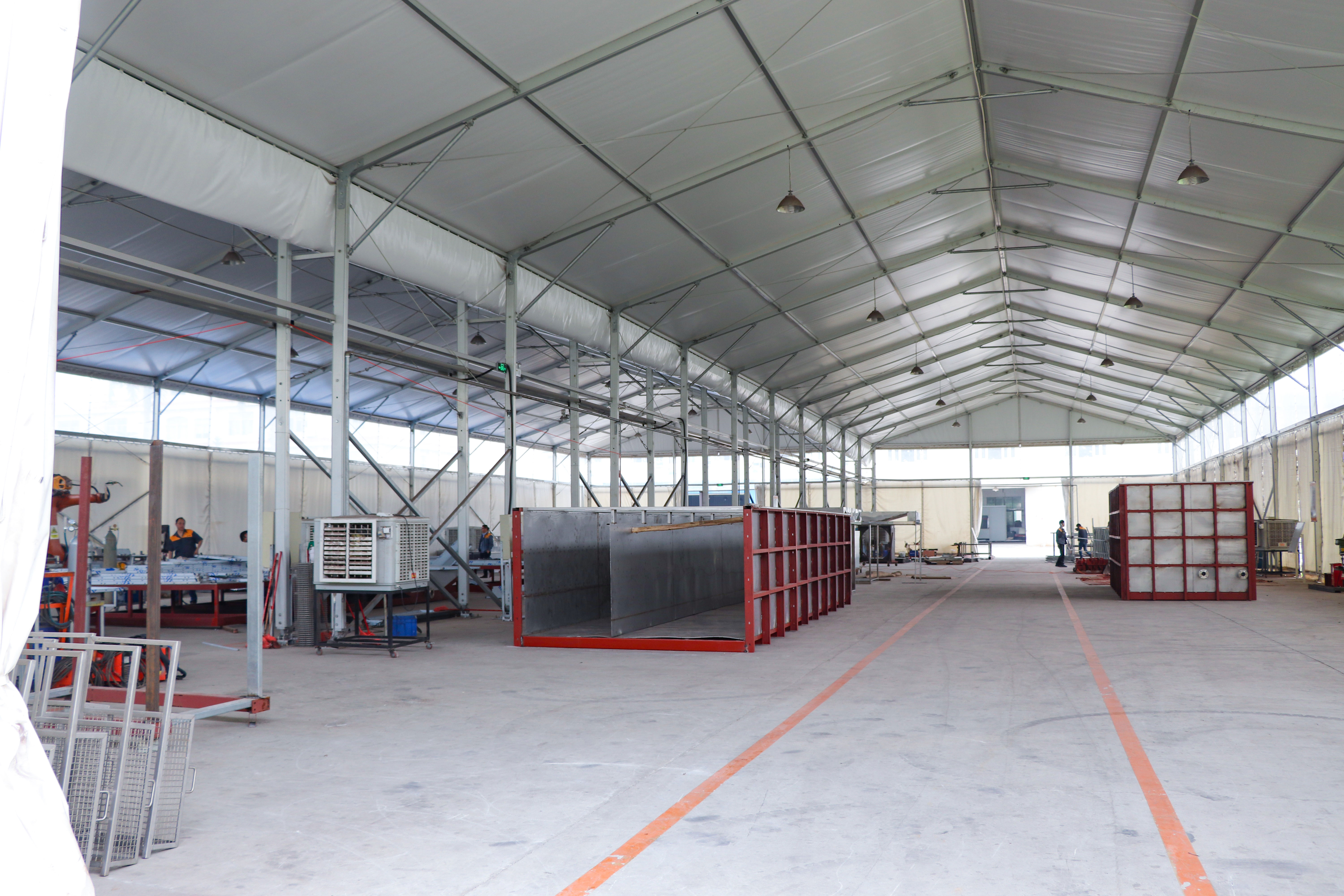
Workshop manufacturing: supplier verification includes delivery capacity, engineering, and installation and commissioning.
Limits and verifications you should not skip
- The envelope is a hard limit. The cookware line does not process seven-meter profiles, and the metal line is not designed for the density of small parts per hanger.
- Chemistries are not mixed without control. Food-contact non-stick and decorative anti-corrosion coatings require their own pretreatment and curing. Sharing a line requires demonstrating compatibility, not assuming it.
- The reported percentages are conditional. Uniformity, approval, paint savings, and energy savings depend on the part, the tooling, and the operating regime. They must be revalidated with a sample.
- Compliance is documented, not assumed. The described line architecture is specified with compliance with ISO 14001, ISO 9001, and ISO 45001, and includes a VOC treatment system among the associated equipment. For food-contact finishes, the applicable requirements must be confirmed with the paint supplier and with the regulations of the destination market.
- 'Not detailed' does not mean 'not available.' When a data point does not appear in the datasheet, the correct response is to request it in writing from the supplier, not to infer it.
Frequently asked questions
What compliance requirements should be verified before choosing the line?
Verify three blocks. First, management and environment: the described line architecture is specified with compliance with ISO 14001, ISO 9001, and ISO 45001, and includes a VOC treatment system among the associated equipment. Second, finish: for cookware, the food-contact requirements of the non-stick system must be confirmed with the paint supplier and with the regulations of the destination market. Third, documentation: request in writing the exact scope of each certification applied to the equipment and to the installation, because the scope of a certification does not automatically extend to the entire plant.
Can a single line process cookware and metal parts?
Only under limited conditions. The two lines have incompatible envelopes —Φ300 × 160 mm high in cookware versus 7,000 × 2,000 × 2,200 mm in metals— and different finishing systems: PTFE non-stick with anti-oxidation primer and thermal topcoat, versus decorative anti-corrosion with primer, topcoat, and powder. PLC control and MES management allow recipes and sequences to be changed, but they do not replace the chemical compatibility of the pretreatment or the matching of the curing window. When the families do not share those foundations, the solution is a dedicated line per family or a main line with an off-line station.
How is a decision between the two lines budgeted?
Without public prices, the budget is built on four verifiable drivers. Paint or powder consumption: both datasheets report 30% less waste or consumption. Energy: the metal line reports 22% less consumption, and the cookware line operates on natural gas and electricity, so curing cost weighs in the calculation. Tooling: 4 inner pots or 20 lids per hanger versus 1 part per hanger changes the number of hooks, their maintenance, and loading time. Labor: the metal line contemplates reciprocator plus manual spraying, with the spot reinforcement that this implies. These drivers make it possible to compare cost per part, not only initial investment.
How do I validate the choice with a sample before buying?
First define the part family and the finish, and run the sample on that exact combination. Measure four results with the same method before and after: coating uniformity in cookware or thickness and adhesion in metal; approval rate without rework; actual paint or powder consumption per part; and energy consumption of the curing cycle. Compare the values obtained with the reported references —98% uniformity and 97% approval— and put the measurement method in writing. Without that agreement, two correct results can appear contradictory.
What lead time and support should delivery cover?
The supply scope of these lines includes plant planning, design, manufacturing, installation, commissioning, and after-sales service, and the manufacturer's delivery capacity is 60 units per year, with a team of 280 employees and 54 engineers. The specific schedule must be agreed in writing for the project scope, because it depends on the pretreatment configuration, the number of curing stages, and the tooling. As a next step, you can request the corporate catalog and propose a technical review of your part mix to define whether your portfolio is resolved with a cookware line, a metal line, or a combination of both.
Conclusion
The automatic coating line for cookware and the automatic metal line are not alternatives for the same product: they are two answers to two finishing problems. The first optimizes part density, PTFE non-stick uniformity, and thermal protection on aluminum and composite substrates, with output of 800–1,000 parts/hour and a maximum envelope of Φ300 × 160 mm. The second optimizes treated surface area, anti-corrosion protection, and decorative powder finish, with capacity of up to 5,000 m²/day and parts of up to 7,000 × 2,000 × 2,200 mm.
For a mixed portfolio, the decision is organized into three checks: which finish dominates the volume, whether the parts fit within each line's envelope, and how much it costs to separate the families versus sharing a line. The reported results —98% uniformity and 35% higher efficiency in cookware; 97% approval, 30% lower paint or powder consumption, 22% lower energy, and 40% higher efficiency in metal— guide the comparison, but they are confirmed with a sample, an agreed measurement method, and written acceptance criteria.
Next step for your project. If your portfolio includes cookware and metal parts, the definition starts with the part inventory and the dominant finish. You can download the Attractivechina corporate catalog and request a technical review of your mix to decide between a cookware line, a metal line, or a combination of both. Email: attractivechina@gmail.com · WhatsApp: +86 135-8061-6025.
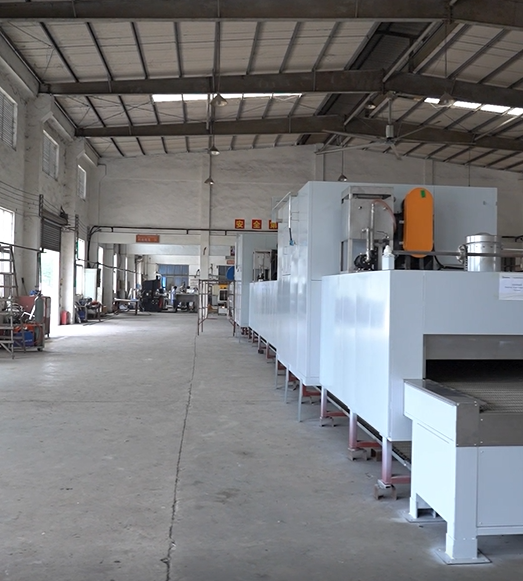
Installation and commissioning: part of the supply scope and the line acceptance protocol.
Have Questions or Need More Details?
Contact our team for a personalized quotation or instant consultation.
Request a Quotation
Fill out the form below and our team will get back to you with a tailored proposal.
WhatsApp Direct Chat
Prefer to chat in real-time? Message us on WhatsApp for instant assistance & quick answers.
- Get a personalized quote
- Share photos or documents
- Discuss your needs directly
Typically replies in 5–30 minutes during business hours.