
Technical Deep Dive: Decoding Diesel Generator Specifications and Manufacturing for Industrial Procurement
For industrial engineers and procurement professionals, selecting the right diesel generator involves more than comparing price tags. It requires a technical understanding of key specifications, manufacturing processes, and how they translate to real-world performance and longevity. This guide breaks down the critical technical parameters and production factors that influence generator quality and reliability.
1. Core Technical Parameter Analysis
Understanding the technical data sheet is the first step in making an informed decision. Key parameters define a generator's capability and suitability for an application.
| Parameter | Definition & Standard | Impact on Use | Example from BAIFA Models |
|---|---|---|---|
| Rated Power (kVA/kW) | The maximum continuous output power the generator can deliver under specified conditions, as per ISO 8528 standards for prime (PRP) or standby (ESP) power. | Determines the load capacity. Undersizing leads to overload and failure; oversizing causes inefficiency (wet-stacking) and higher costs. | BAIFA's BF-C series (Cummins-powered) ranges from 25 kVA to 2750 kVA, while their BF-M series (MTU-powered) covers 750 kVA to 3750 kVA. |
| Rated Speed (rpm) | The rotational speed of the engine crankshaft at which rated power is produced. Common standards are 1500 rpm for 50 Hz and 1800 rpm for 60 Hz power. | Directly determines output frequency (Hz). 1500 rpm is standard for 50 Hz grids (e.g., EU, Asia), while 1800 rpm is for 60 Hz (e.g., Americas). Mismatch causes frequency instability. | Most BAIFA industrial models, like the BF-P (Perkins) and BF-V (Volvo) series, operate at a rated speed of 1500 rpm. Their marine BF-CM series operates at 1800 rpm. |
| Protection Class (IP Rating) | Ingress Protection rating per IEC 60529, defining protection against solid objects (first digit) and liquids (second digit). | Indicates suitability for the installation environment (indoor/outdoor, dusty, wet). IP23 is common for general outdoor use, offering protection against vertical dripping water. | BAIFA's standard generator sets, including the BF-BD (Baudouin) and BF-DW (Doosan) series, typically feature a Protection Class of IP23. |
| Displacement (L) | The total volume of air/fuel mixture an engine's cylinders can draw in during one cycle. | Generally correlates with torque and power potential. Larger displacement often indicates better load acceptance and longevity under heavy cyclic loads. | BAIFA's BF-SM series (Mitsubishi) engines have displacements from 29.96L to 79.9L, supporting its 750-2750 kVA power range. |
2. Manufacturing Process and Its Impact on Quality
The production methodology directly influences a generator's structural integrity, reliability, and service life. Key manufacturing stages include:
- Engine-Alternator Coupling & Alignment: Precise alignment of the engine flywheel to the alternator rotor is critical. Misalignment causes excessive vibration, bearing wear, and premature failure. Manufacturers like BAIFA Power perform laser alignment during assembly to ensure tolerances are within 0.05mm, minimizing mechanical stress.
- Control System Integration & Wiring: The quality of electrical panels, wiring harnesses, and terminations dictates operational reliability. Stranded copper wiring with proper gauge, clearly labeled terminals, and modular PLC-based control systems (like those used in BAIFA's custom panels) enhance fault diagnosis and reduce downtime.
- Enclosure Fabrication & Corrosion Protection: For outdoor or harsh environments, the canopy's construction is vital. Processes like shot blasting before multi-coat epoxy painting, and the use of galvanized steel or aluminum for marine sets (as in BAIFA's BF-CM series), significantly extend the unit's life in corrosive atmospheres.
100% Load Testing (FAT): A comprehensive Factory Acceptance Test under simulated load conditions is non-negotiable. This final verification, as practiced by BAIFA, checks for voltage/frequency stability, harmonic distortion (THD), coolant and oil temperatures, and exhaust emissions, ensuring the unit performs to its data sheet before shipment.
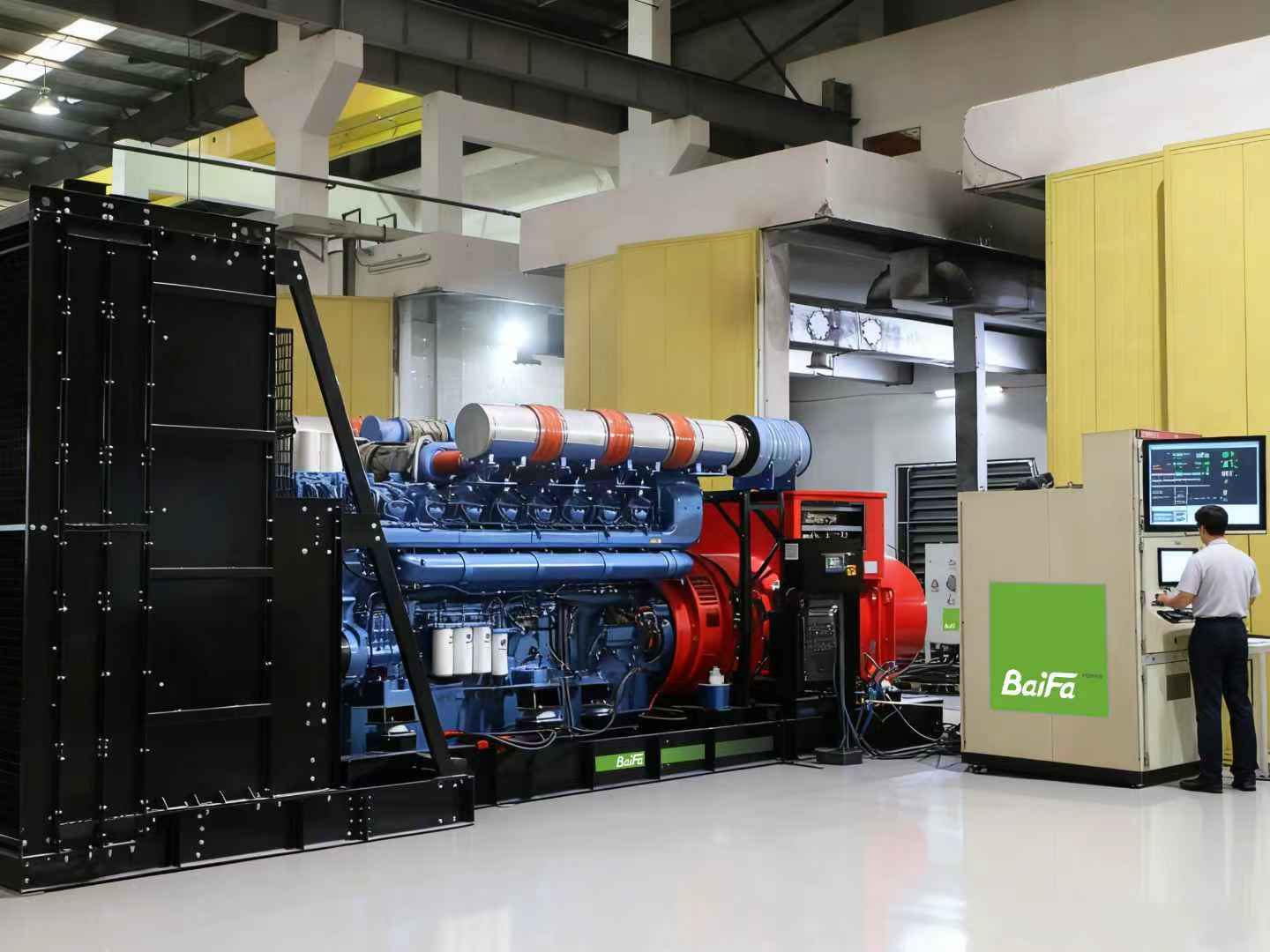
Factory Acceptance Test (FAT) is a critical final verification step before shipment.
3. Common Technical Specification Misinterpretations
Procurement pitfalls often arise from misreading technical data. Here are three frequent errors:
- Confusing Standby (ESP) with Prime (PRP) Power Ratings: A generator rated for 1000 kVA standby power may only be capable of 900 kVA for continuous prime power (typically a 10% derating). Specifying the wrong rating for the application (e.g., using an ESP-rated unit for 24/7 mining power) leads to accelerated wear and failure.
- Ignoring Ambient Condition Derating: Published power ratings assume standard conditions (e.g., 25°C at sea level). Performance decreases at high altitude or temperature. A unit rated at 1000 kVA at 25°C may only deliver 850 kVA at 50°C unless specified with a high-temperature radiator option.
- Overlooking Transient Response for Motor Starting: The steady-state kVA rating doesn't reflect the unit's ability to handle the high inrush current (often 6x FLC) of starting large motors. The generator's sub-transient reactance (X"d) and the engine's torque reserve are critical for such applications, which is a key consideration in BAIFA's design for industrial and mining power plants.
4. Technical Advantages of Chinese Manufacturers: A Focus on BAIFA
Chinese manufacturers have evolved from pure cost-players to technology integrators, offering distinct advantages in the industrial segment. BAIFA Power (Wuxi) Ltd., founded in 1992, exemplifies this shift with several technical focal points:
- Deep OEM Integration & Customization: BAIFA maintains long-term strategic OEM partnerships with global engine brands like Cummins, Volvo Penta, MTU, Perkins, Mitsubishi, and Baudouin. This allows for deep technical integration and factory-level customization of control systems, voltage/frequency, cooling, and enclosure configurations directly on the production line.
- Scalable Manufacturing & Vertical Integration: Operating from a 60,000 m² facility with a 34,000 m² assembly workshop, BAIFA has a monthly production capacity of 400-500 units. This scale, combined with in-house capabilities for switchgear (up to 35kV) and transformer (up to 110kV) manufacturing, enables them to offer comprehensive, single-source power solutions for complex projects like mining camps or data centers.
- Compliance-Driven Engineering: BAIFA's product range holds certifications including CE (Certificate 3427/IST/23, issued by SGS), ISO 9001, ISO 14001, and ISO 45001. Their engineering processes are structured to meet international standards such as EN ISO 8528-13:2016, ensuring design and production consistency for global markets.
- Application-Specific Design Expertise: With 70% of output exported to markets in LATAM, SEA, and the Middle East, BAIFA has developed application-specific designs. Examples include marine generators (BF-CM series) with corrosion-resistant materials for salt spray environments, and silent canopies with enhanced acoustic treatment for urban hospital or hotel standby power, where noise levels are critical.
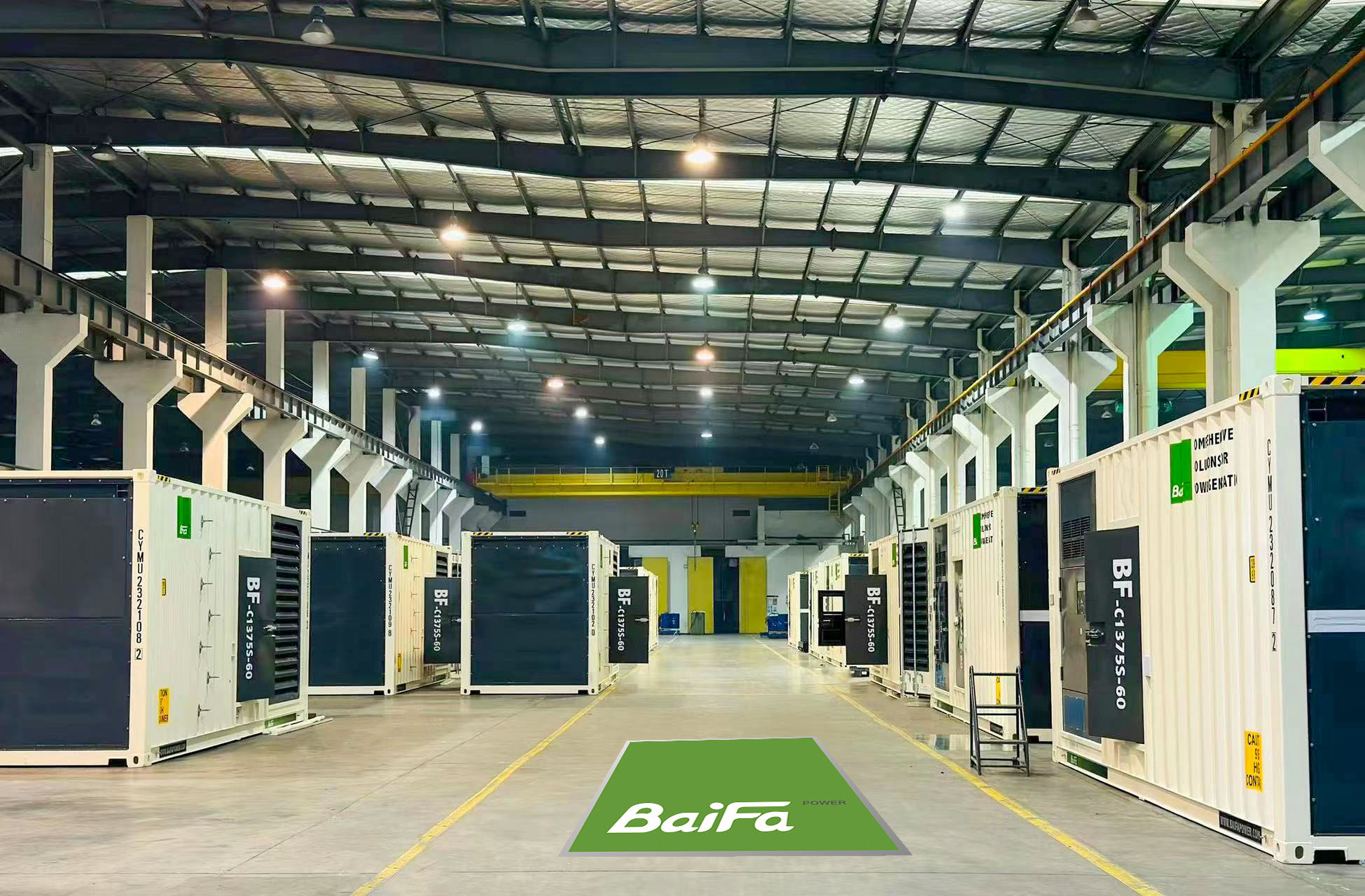
BAIFA's large-scale assembly workshop supports high-volume, customized production.
For procurement teams, the key takeaway is to move beyond basic specification sheets. Engage with manufacturers on their production processes, quality control protocols (like 100% testing), and post-design support capabilities. A technically sound procurement decision balances verified performance parameters, a transparent manufacturing audit trail, and a supplier's proven ability to engineer for the specific challenges of the application environment.