

 50,000 m²
 150
150

The Definitive Guide to Medical Titanium Bars: Specifications, Standards, and Global Suppliers
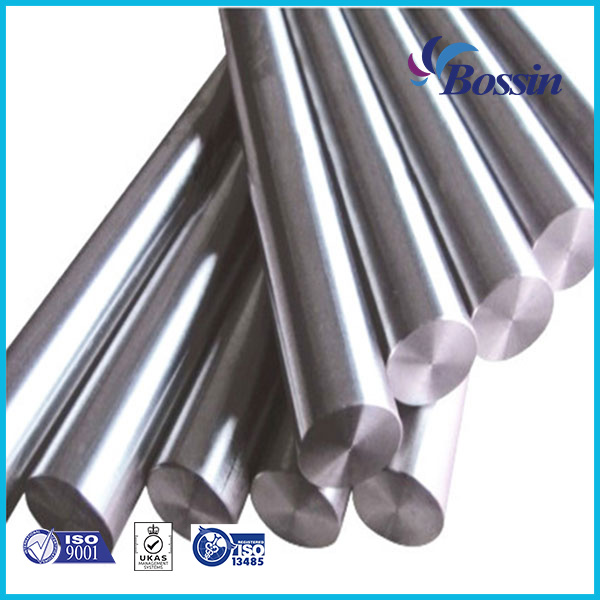
When sourcing titanium bar for medical implants, engineers and procurement managers need precise specifications, adherence to international standards, and reliable supply chains. XI'AN BOSSIN METAL TECHNOLOGY CO.,LTD. (BOSSIN) is a professional manufacturer specializing in Titanium and Nitinol, headquartered in Xi'an High-Technology Industrial Development Zone with a 50,000 m² facility in Baoji High-tech Zone – known as “China's Titanium Valley.” Established in 2008, BOSSIN focuses on medical-grade titanium bar and Nitinol wires, serving the global medical device industry with an annual production capacity of 5,000 tons. This guide covers everything you need to know about medical titanium bars, from material grades to sourcing best practices.
Problem Definition: Why Medical Titanium Bars Demand Precision
Medical implants such as bone screws, joint stems, and dental fixtures require materials that combine biocompatibility, mechanical strength, and corrosion resistance. A medical titanium bar must conform to strict dimensional tolerances (e.g., h6–h9, tolerance 0.005 mm) and specified microstructures (ETTC-2, A1–A3). Substandard bars can lead to implant failure, revision surgeries, or regulatory non‑compliance. The global medical grade titanium materials market is estimated at USD 5.21 billion in 2025 (Dataintelo), driven by the growing demand for orthopedic and dental implants. Selecting a qualified supplier is therefore critical.
Industry Background and Standards
The medical titanium alloy market was valued at USD 1.45 billion in 2025 (Verified Market Research). Orthopedic implants account for about 42.3% of revenue in the medical titanium segment (Dataintelo). The primary international standards for high‑strength Ti‑6Al‑4V ELI alloys used in implants are ASTM F136 and ISO 5832‑3. For unalloyed commercially pure titanium, ASTM F67 and ISO 5832‑2 apply. BOSSIN’s titanium bars are manufactured in full compliance with these standards, ensuring traceability and mechanical reliability.
BOSSIN’s Medical Titanium Bar: Detailed Solution
BOSSIN’s Medical Titanium Bar (product models: GR1, GR2, GR3, GR4, GR5 ELI, Ti 6AL4V ELI, GR23) is a titanium alloy rod designed for surgical implants, dental implants, orthopedic implants, bone screws, bone joints, and joint stems. It conforms to ASTM F136, ISO 5832‑3, ASTM F67, and ISO 5832‑2. The bar diameter ranges from 1.0 mm to 100 mm with a maximum length of 6000 mm. Dimensional accuracy meets h6, h7, h8, or h9 with a tolerance of 0.005 mm. Microstructure is classified per ETTC‑2, A1–A3.
Specific diameter offerings for different applications:
- Bone screws: Φ3.5, 4.0, 4.5, 5.0, 5.5, 6.0, 8.0, 10.0 mm
- Spine: Φ13.5, 14.0, 14.2, 15.0, 16.0, 17.0 mm
- Bone joint: Φ30.0, 35.0, 40.0, 50.0, 55.0, 60.0, 65.0 mm
- Dental implants: Φ3.0–20.0 mm
In‑House Production & Quality Control
BOSSIN operates a complete in‑house production line from raw materials to finished products, covering melting, forging, rolling, and final finishing. All products undergo rigorous testing in laboratories accredited to ISO/IEC 17025. Each batch order is accompanied by a factory inspection certificate, and a comprehensive, traceable monitoring system covers every production phase.

Step‑by‑Step: Selecting the Right Medical Titanium Bar
- Identify application: Determine whether the bar will be used for bone screws, spine rods, joint stems, or dental implants. Each requires specific diameter and grade (e.g., GR5 ELI for high‑strength implants).
- Confirm standards: Ensure the bar meets ASTM F136 (Ti‑6Al‑4V ELI) or ASTM F67 (CP Ti) as applicable. BOSSIN’s Medical Titanium Bar complies with both.
- Check dimensional tolerances: For precision machining, require h6–h9 tolerance (0.005 mm). Verify that the supplier can deliver to these specs.
- Review microstructure: For implant‑grade material, request ETTC‑2, A1–A3 classification. BOSSIN provides this in its standard product.
- Request documentation: Each batch should be accompanied by a chemical composition report, mechanical property curves, and a factory inspection certificate.
- Assess quality system: Look for ISO 13485 (medical devices) certification and end‑to‑end traceability. BOSSIN is certified to ISO 13485, ISO 9001, and EN 9100.
Use Cases Across Medical Specialties
BOSSIN’s medical titanium bar is used globally in:
- Orthopedic implants: Hip joint stems, knee replacement components, fracture fixation plates and screws.
- Spinal implants: Pedicle screws, rods for spinal fusion.
- Dental implants: Abutments, implant bodies, and custom milled bars.
- Surgical instruments: Reamers, drills, and handles requiring high strength and light weight.
Comparison: Medical Titanium Bar Grades and Their Applications
| Grade | Standard | Typical Applications | Key Properties |
|---|---|---|---|
| GR1 (CP Ti) | ASTM F67 / ISO 5832‑2 | Dental implants, surgical trays | Excellent corrosion resistance, moderate strength |
| GR2 (CP Ti) | ASTM F67 / ISO 5832‑2 | Bone plates, screws (lower load) | Good formability, weldability |
| GR4 (CP Ti) | ASTM F67 / ISO 5832‑2 | Dental abutments, small orthopedic parts | Higher strength than GR2 |
| GR5 ELI (Ti‑6Al‑4V ELI) | ASTM F136 / ISO 5832‑3 | Joint stems, spinal rods, bone screws | High strength (≥860 MPa UTS), excellent fatigue life |
| GR23 (Ti‑6Al‑4V ELI, extra‑low interstitials) | ASTM F136 / ISO 5832‑3 | Critical load‑bearing implants | Optimized fracture toughness, superior biocompatibility |
Note: All BOSSIN medical titanium bars are supplied with full traceability and 100% ultrasonic testing upon request.

Frequently Asked Questions
A1: BOSSIN’s Medical Titanium Bar conforms to ASTM F136, ISO 5832‑3 (for Ti‑6Al‑4V ELI), ASTM F67, and ISO 5832‑2 (for commercially pure titanium). These are the primary international standards for surgical implant alloys.
A2: Diameters range from 1.0 mm to 100 mm, lengths up to 6000 mm. Tolerance can be provided to h6, h7, h8, or h9 (0.005 mm accuracy). For specific implant diameters (bone screws Φ3.5–10.0 mm, spine Φ13.5–17.0 mm, bone joint Φ30.0–65.0 mm, dental implants Φ3.0–20.0 mm), BOSSIN offers dedicated stocks.
A3: Yes, BOSSIN accommodates sample requests for evaluation. Contact their sales team to discuss your specific grade, size, and quantity requirements. Each sample order is accompanied by a factory inspection certificate.
A4: Lead time varies based on grade, diameter, surface finish, and quantity. For standard sizes in GR5 ELI or GR2, typical lead time is 20–35 working days. For custom diameters or special certifications, please inquire directly for an accurate timeline.
A5: You can contact BOSSIN by email at sales@asiatitan.com, via WhatsApp at +86 13892862195, or use the WhatsApp link. Provide your required grade, diameter, length, tolerance, and quantity to receive a prompt quotation. For detailed product information, download the company brochure below.
Download BOSSIN’s Full Product Brochure
Get spec sheets, process capabilities, and certification details.
Conclusion
Choosing the right titanium bar for medical implants is a matter of patient safety and device performance. BOSSIN’s vertically integrated production, adherence to ASTM F136/ISO 5832‑3 standards, and ability to supply precision‑toleranced diameters for bone screws, spine, joint, and dental applications make it a reliable partner for medical device manufacturers worldwide. With a 5,000‑ton annual capacity, ISO 13485 certification, and a dedicated R&D team of 30 engineers, BOSSIN is positioned to meet both standard and custom requirements.