

 50,000 m²
 150

Titanium Bar, Wire, Plate, and Coil: A Beginner's Guide to Medical Titanium Product Forms
Medical titanium is not a single product. It is a family of mill forms — bar, wire, plate, coil, and cable, plus the nickel-titanium family known as Nitinol — and the form you order determines the grade you can get, the standard that governs it, the tolerance you can hold, and the process that turns it into a finished implant or instrument. This guide explains each form from the ground up, so that a first-time buyer in biotech and medical innovation can read a specification sheet with confidence.
The short answer: choose the form that matches your manufacturing route, not the form that looks most familiar. A machined bone screw starts from a titanium bar; a bone plate starts from a titanium plate; a guide wire or orthodontic archwire starts from titanium wire or Nitinol wire; a stent or a thin shim starts from a titanium coil or Nitinol strip. The material is often the same titanium alloy — the geometry is what changes.
Why Product Form Is the First Decision, Not the Last
Most new buyers begin with a grade question: GR5 or GR23? Ti-6Al-4V ELI or commercially pure titanium? That question matters, but it is the second question. The first question is the form, because form sits between the material and the manufacturing process.
Consider what actually differs between two orders of the same alloy. A titanium bar is a solid, long product that will be machined, turned, or milled. A titanium plate is a flat product that will be cut, formed, or pressed. A titanium wire is a long product with a small cross-section that will be drawn, coiled, bent, or braided. A titanium coil is a thin, continuous strip wound on itself, intended for stamping or fine blanking. Each of these requires a different upstream route — forging, rolling, drawing, or slitting — and each carries a different set of dimensional limits.
Form also decides which standard applies. Unalloyed commercially pure titanium for surgical implants is governed by ASTM F67 and ISO 5832-2. High-strength Ti-6Al-4V ELI alloy for implants is governed by ASTM F136 and ISO 5832-3. Nickel-titanium shape memory alloy wire, strip, and cable are governed by ASTM F2063. Order the wrong form and the standard conversation becomes confused from the first email.
Finally, form affects commercial reality: minimum order quantity, lead time, inspection method, and packaging. A buyer who specifies a form the supplier does not actually produce in-house will discover this at the quotation stage, usually after weeks of back-and-forth. Understanding the forms up front removes that friction.
Industry Background: Why Form Demand Is Broadening
The demand for medical titanium forms is being pushed by market growth and pulled by new device categories at the same time.
- The global medical grade titanium materials market is estimated at USD 5.21 billion in 2025 and is projected to reach USD 9.56 billion by 2034 (Dataintelo).
- The narrower medical titanium alloy segment is valued at USD 1.45 billion in 2025, forecast to reach USD 2.59 billion by 2033 at a 7.5% CAGR (Verified Market Research).
- The global Nitinol-based medical device market was valued at USD 4.1 billion in 2024, with a projected CAGR of 7.1% (Precedence Research).
- Orthopedic implants hold the largest application share of the medical titanium market, at approximately 42.3% of revenue (Dataintelo).
- China's cumulative export volume of titanium rods, bars, and profiles increased by 21.85% year-on-year as of March 2025 (China Customs / SMM).
A note on the numbers: published figures diverge depending on whether a source is measuring the raw alloy market or the finished device market. The figures above are attributed to their sources so they can be checked and compared rather than treated as a single consensus number.
On the supply side, capacity is expanding. Fort Wayne Metals, one of the established global suppliers of medical-grade Nitinol, doubled its melting output between 2022 and 2024, with a projected capacity of roughly one million pounds per year (reported by Fort Wayne Metals / Mordor Intelligence). This matters to buyers because Nitinol supply has historically been a bottleneck — and because raw form availability, not alloy chemistry, is often what limits a device program.
XI'AN BOSSIN METAL TECHNOLOGY CO., LTD. (BOSSIN) is a China-based manufacturer of titanium and Nitinol mill forms, founded in 2008 and operating from a 50,000 m² site with 150 employees, 30 engineers, and an annual output of 5,000 tons. Its product range covers titanium bar, medical titanium bar, titanium plate, titanium wire, titanium coil, titanium cable, and Nitinol wire — the exact form family discussed in this guide.

The Six Medical Titanium Product Forms, Explained
Each form below is described in the terms a buyer actually needs: what it is, what size range it covers, which standard applies, and what it is used for.
1. Titanium Bar
A titanium bar (also called a rod) is a solid long product with a round, square, or custom profile. In medical supply it is the starting point for machined components: bone screws, joint stems, dental implant bodies, and instrument parts.
Medical Titanium Bar from BOSSIN is offered in grades GR1, GR2, GR3, GR4, GR5 ELI, Ti 6AL4V ELI, and GR23, produced to ASTM F136, ISO 5832-3, ASTM F67, and ISO 5832-2. The standard dimensional range is Dia 1.0–100 mm with length up to 6,000 mm, held to 0.005 mm tolerance with h6, h7, h8, and h9 accuracies available. Microstructure can reach A1 to A3 according to ETTC-2.
For buyers who are already working from a finished part drawing, BOSSIN also lists application-specific bar diameters: bone screws at Φ3.5, Φ4.0, Φ4.5, Φ5.0, Φ5.5, Φ6.0, Φ8.0 and Φ10.0 mm; spine components at Φ13.5, Φ14.0, Φ14.2, Φ15.0, Φ16.0 and Φ17.0 mm; bone and joint components at Φ30.0, Φ35.0, Φ40.0, Φ50.0, Φ55.0, Φ60.0 and Φ65.0 mm; and dental implant bars at Φ3.0–20.0 mm.
The general-purpose Titanium Bar range extends further, covering GR1 through GR5 ELI as well as GR7, GR9, GR12, GR23, Ti6242, Ti6246, TB3, TB6, TC4, TC6, TC11, TC17 and TC18, to ASTM B348, ASTM F136, ASTM F67, ISO 5832-2, ISO 5832-3, AMS 4928, AMS 4930, ASTM F1295, ASTM F1713 and MIL-T-9047. Buyers should be aware that a supplier's general bar catalogue and its medical bar catalogue are not the same list — always confirm which grades sit inside the medical quality system.
2. Titanium Wire and Titanium Cable
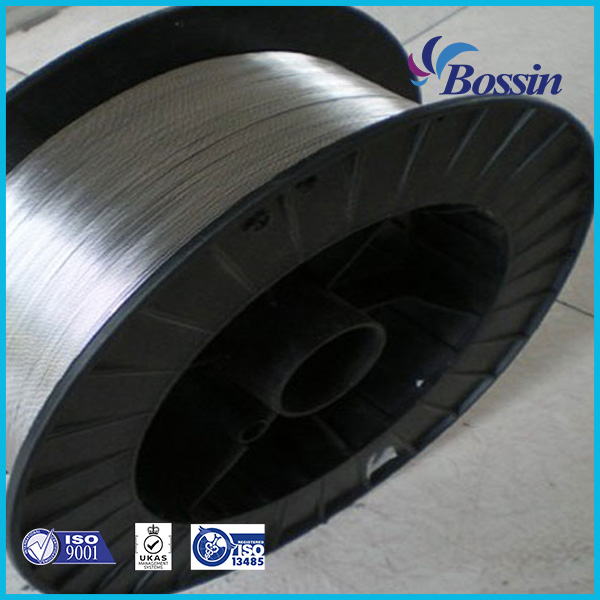
Titanium wire is a long product with a small round, square, or rectangular cross-section, supplied on coils or spools. Medical titanium wire is used for surgical sutures, orthopedic implants, and 3D printing feedstock, and it is frequently the form that moves into a braided cable.
Titanium wire from BOSSIN covers grades Gr1, Gr2, Gr5 (Ti-6Al-4V), Gr7, Gr9, Gr12, Gr23 and Gr5 Eli, with a diameter range of 0.03–6.0 mm, supplied on coil or spool at 10–200 kg per coil. Medical titanium wire is offered in Gr1, Gr2, Gr4, Gr5 Eli, Ti-6AL-4V Eli and Gr23 to ASTM F67 and ASTM F136, at Dia 0.03–6.0 mm, with polished or pickled surface and 10–100 kg per coil or spool.
Titanium cable is a braided construction rather than a single strand. BOSSIN produces titanium wire braided cable in grades GR1, GR2, GR5, GR5 Eli, GR23 and 6AL4V Eli, in 1×3, 1×7 and 7×7 strand constructions, to ASTM F136, ASTM B863 and ASTM F67. Braided cable is used in orthopedic instruments, dental instruments, and endoscopic manipulation, where flexibility and tensile integrity must coexist.
3. Titanium Plate
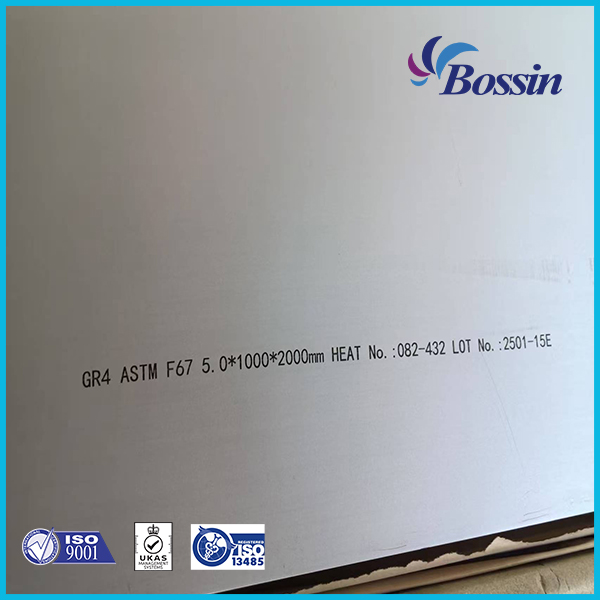
Titanium plate is a flat rolled product. It is the starting form for bone plates, coronary stent preforms, artificial joint components, and surgical implant blanks — anything that will be cut from a sheet rather than turned from a bar.
Medical titanium plate from BOSSIN is available in GR1, GR2, GR4, GR5 ELI, Ti 6Al4V ELI and GR23, to ASTM F136, ISO 5832-3, ASTM F67 and ISO 5832-2, with a specification of thickness 0.3–50.0 mm × width 100 mm × length 2,000 mm, produced by hot rolling and cold rolling.
The wider Titanium plate range reaches thickness 0.3–4.0 mm with width up to 2,500 mm and length up to 6,000 mm, and thickness 4.1–100.0 mm with width up to 3,000 mm and length up to 6,000 mm, in grades GR1 through GR5 ELI plus GR7, GR9, GR12 and GR23, to ASTM B265, ASTM F136, ISO 5832-3, ASTM F67, ISO 5832-2, AMS 4911, AMS 4905, AMS 4907 and MIL-T-9046. Surface options include bright, polished, pickling, and acid cleaning.
4. Titanium Coil
A titanium coil (also supplied as titanium strip or titanium foil) is a continuous thin-gauge product wound on itself. It is the form used when a device requires very thin, very long, or high-volume stamped material — for example fine shim stock or continuous feed for automated stamping.
Titanium Coil from BOSSIN is offered in Gr1, Gr2, Gr4, Gr5, Gr5 Eli and Gr23, to ASTM B265, ASTM F67, ASTM F136 and AMS 4911. Size options include thickness 0.005–0.025 mm in width, thickness 0.025–0.3 mm supplied in coil, and cut lengths at 0.31–0.5 mm and 0.51–0.9 mm thickness with 50–500 mm width and 500–1,500 mm length. Titanium coil is used across aerospace, medical, marine engineering, power and energy, chemical and metallurgical, consumer electronics, and architectural applications.
5. Nitinol Wire
Nitinol is not titanium. It is a nickel-titanium shape memory alloy, and it behaves in ways that ordinary titanium does not: it can recover large strains (superelasticity) or return to a remembered shape when heated (shape memory).
Nitinol Wire from BOSSIN is produced to ASTM F2063 with a composition of Ni 54.5–57.0% with titanium balance, in diameters from Dia 0.0127–6.0 mm. Transformation temperature (Af) is selectable across multiple windows, including below −15°C, −10 to 10°C, 0 to 30°C, 20 to 40°C, 45 to 90°C, 33 ± 3°C, and As-Ms ≤ 5°C or ≤ 150°C. Surface finishes include polished bright, black oxide, acid pickled, and light oxide (golden to brown).
Nitinol wire applications include dental and orthodontic wire, dental root canal files, guide wires, medical sutures, cardiac occluders, thrombus filters, anchor pins, localization wires, luminal stents, and stone retrieval baskets. BOSSIN also produces ternary and quaternary Nitinol variants — NiTiCu, NiTiNb, NiTiCr and NiTiFe — and offers composition customization with third elements such as copper, chromium, vanadium, and niobium, plus superelastic (SE), shape memory (SM), annealed (M), or cold-worked (Y) material conditions.
6. Nitinol Strip and Nitinol Cable
Nitinol is not limited to round wire. Nitinol Strip (also supplied as Nitinol coil or Nitinol roll) is produced to ASTM F2063 at thickness 0.03–2.0 mm, commonly 0.08, 0.09, 0.1, 0.2, 0.3, 0.4 and 0.5 mm, with width up to 600 mm, in fully annealed Af condition of −5°C ± 20°C and superelastic property. Typical uses include orthodontic bracket parts, dental and medical devices, orthopedic implants, eyeglass frames, mobile phone antennas, engineering and aerospace components, and consumer electronics.
Nitinol cable is a braided product in 1×3, 1×7 and 7×7 strand constructions to ASTM F2063, superelastic, with polished bright, black oxide, or acid pickled finish, used in medical applications, vascular stents, sutures, and aerospace.
For completeness, buyers in orthodontics will also encounter TMA wire — a titanium-molybdenum alloy wire, not a titanium or Nitinol product — supplied in diameters of Dia 0.20–5.0 mm, including round 0.031 inch and rectangular sizes such as 0.019 × 0.025 inch, 0.018 × 0.025 inch, and 0.017 × 0.025 inch.
Titanium vs. Nitinol vs. TMA: Three Materials, Three Behaviours
These three materials are often grouped together in purchasing conversations, but they answer different engineering questions.
- Titanium (commercially pure and Ti-6Al-4V ELI) is nickel-free and chosen where biocompatibility, corrosion resistance, strength, and stiffness are the priority. It is the default material for load-bearing implants such as bone screws, bone plates, joint stems, and dental implants. Implant-grade titanium is governed by ASTM F67 / ISO 5832-2 for unalloyed grades and ASTM F136 / ISO 5832-3 for Ti-6Al-4V ELI.
- Nitinol (NiTi) contains 54.5–57.0% nickel and is chosen for behaviour rather than stiffness: superelasticity for guide wires and stents, and shape memory for actuation. Its governing medical wire, strip, and cable standard is ASTM F2063. Because transformation temperature is process-critical, Af must be specified explicitly rather than assumed.
- TMA (titanium-molybdenum) is an orthodontic alloy wire family with a lower stiffness profile than stainless steel, used for archwire where lighter continuous force is wanted. It is neither a titanium mill product nor a shape memory alloy.
A practical rule for beginners: if the part must hold a load and stay rigid, specify titanium. If the part must bend, recover, or change shape, specify Nitinol. If the part is an orthodontic archwire chosen for force level, TMA may be the right family.
How to Specify a Medical Titanium Form: A Step-by-Step Process
This sequence is written for buyers at the evaluation stage who need to move from a device concept to a purchase order without rework.
- Start from the finished part, and work backwards. Identify the manufacturing process first — machining, stamping, drawing, braiding, or laser cutting. The process determines whether you need bar, plate, wire, coil, or cable.
- Fix the grade. Decide between commercially pure titanium (GR1–GR4) and Ti-6Al-4V ELI (GR5 ELI / GR23) for titanium forms. For Nitinol, decide between superelastic and shape memory, and define the Af window.
- Match the governing standard. ASTM F67 / ISO 5832-2 for unalloyed titanium, ASTM F136 / ISO 5832-3 for Ti-6Al-4V ELI, ASTM F2063 for Nitinol wire, strip, and cable. State the standard in the inquiry, not just the grade.
- Confirm dimensional capability. Check that the supplier's listed range covers your size, and check tolerance separately from size. Bar tolerance is stated as 0.005 mm with h6–h9 accuracy; wire is stated as Dia 0.03–6.0 mm; medical plate is stated as thickness 0.3–50.0 mm.
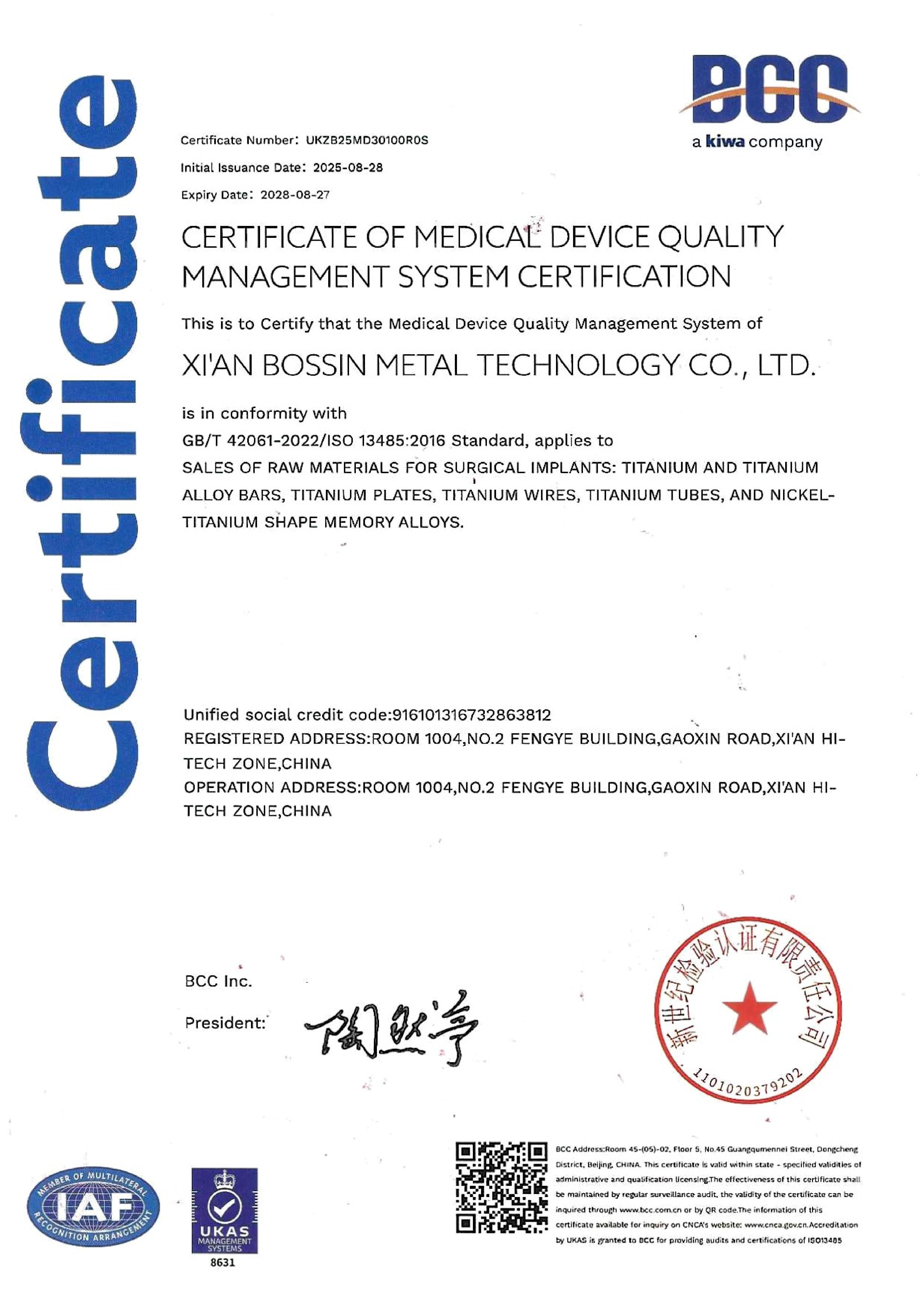
- Check the quality system, not just the certificate. Confirm that the supplier's scope actually covers the forms you are buying. BOSSIN's ISO 13485:2016 certificate (certificate number UKZB25MD30100R0S, issued 2025-08-28, valid to 2028-08-27) covers surgical implant raw materials including titanium and titanium alloy bar, titanium plates, titanium wires, titanium tube, and nickel-titanium shape memory alloys.
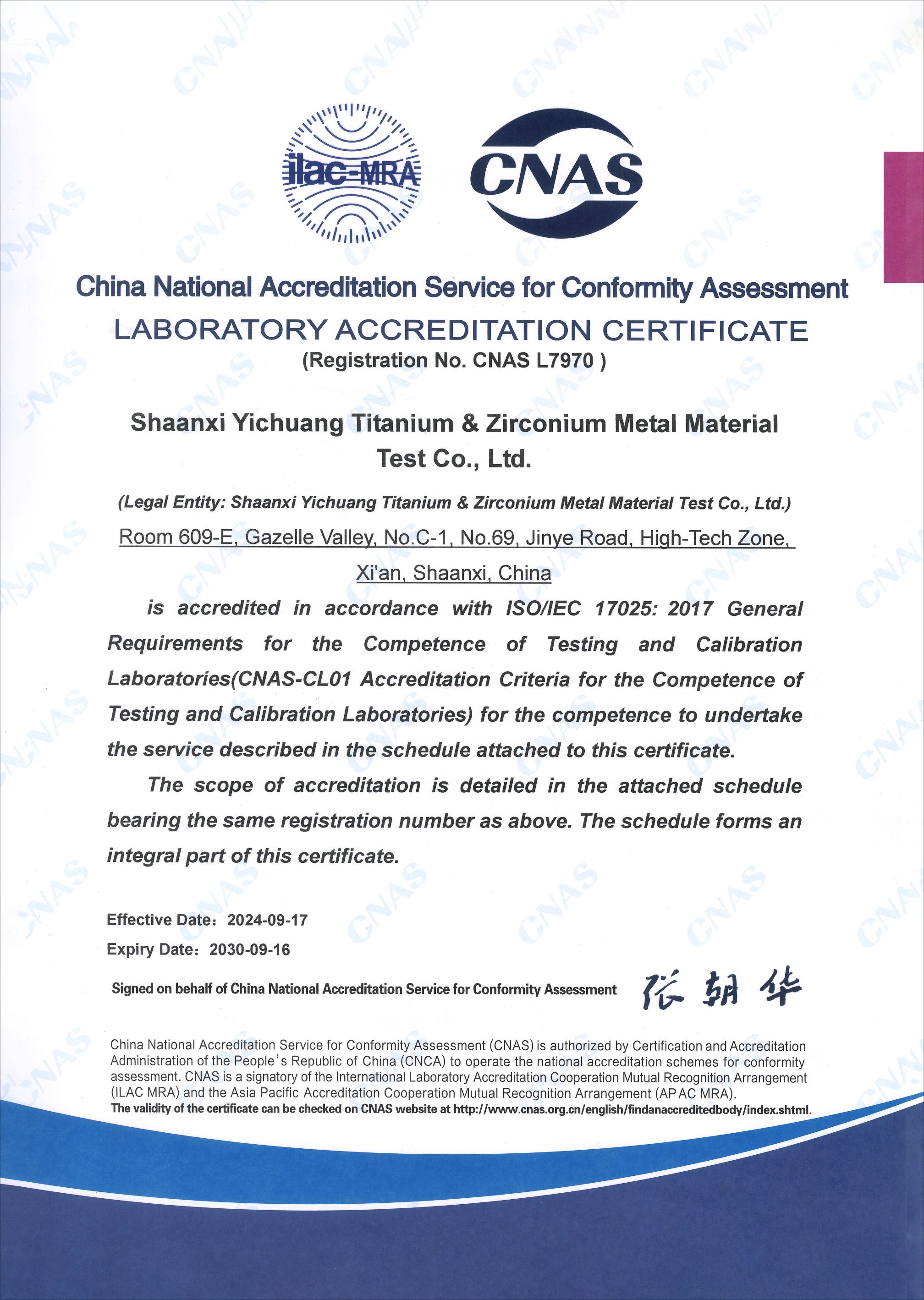
- Ask how testing is performed and documented. Test evidence should come from an accredited laboratory, and each batch should travel with a factory inspection certificate. BOSSIN's materials testing laboratory holds ISO/IEC 17025 accreditation under CNAS L7970, valid from 2024-09-17 to 2030-09-16.
- Validate with a small batch before scaling. Start at the minimum order quantity — 10 kg for both titanium and Nitinol forms — to confirm dimensional and metallurgical performance before committing to a production volume.
- Plan lead time against your build schedule. Titanium lead time is quoted at 15 days and Nitinol at 10–25 days, with monthly capacity of 300 tons for titanium and 5,000 kg for Nitinol.
Comparison Table: Medical Titanium Forms at a Glance
The table below summarises the forms discussed in this guide using supplier-published specifications. It is intended as an orientation tool; final acceptance criteria should always reference the governing standard and the purchase specification.
| Form | Typical grade range | Key dimensional range | Governing standard | Primary medical use |
|---|---|---|---|---|
| Titanium Bar (medical) | GR1, GR2, GR3, GR4, GR5 ELI, Ti 6AL4V ELI, GR23 | Dia 1.0–100 mm; length ≤ 6,000 mm; tolerance 0.005 mm; h6–h9 | ASTM F136, ISO 5832-3, ASTM F67, ISO 5832-2 | Bone screws, joint stems, spine rods, dental implants |
| Titanium Wire (medical) | Gr1, Gr2, Gr4, Gr5 Eli, Ti-6AL-4V Eli, Gr23 | Dia 0.03–6.0 mm; 10–100 kg per coil or spool | ASTM F67, ASTM F136 | Surgical sutures, orthopedic implants, 3D printing |
| Titanium Plate (medical) | GR1, GR2, GR4, GR5 ELI, Ti 6AL4V ELI, GR23 | Thickness 0.3–50.0 mm × width 100 mm × length 2,000 mm | ASTM F136, ISO 5832-3, ASTM F67, ISO 5832-2 | Bone plates, coronary stent, artificial joints |
| Titanium Coil | Gr1, Gr2, Gr4, Gr5, Gr5 Eli, Gr23 | 0.005–0.025 mm in width; 0.025–0.3 mm in coil; cut lengths to 0.9 mm | ASTM B265, ASTM F67, ASTM F136, AMS 4911 | Thin-gauge medical and precision components |
| Titanium Cable | GR1, GR2, GR5, GR5 Eli, GR23, 6AL4V Eli | 1×3, 1×7, 7×7 strands | ASTM F136, ASTM B863, ASTM F67 | Orthopedic and dental instruments, endoscopic manipulation |
| Nitinol Wire | NiTi; Ni 54.5–57.0%, Ti balance | Dia 0.0127–6.0 mm; Af selectable windows | ASTM F2063 | Guide wires, stents, root canal files, occluders, filters |
| Nitinol Strip | NiTi; Ni 54.5–57.0%, Ti balance | Thickness 0.03–2.0 mm; width up to 600 mm | ASTM F2063 | Orthodontic bracket parts, implants, precision components |
| TMA Wire | Titanium-Molybdenum alloy | Dia 0.20–5.0 mm round and rectangular | Supplier specification | Orthodontic archwire |
Where Each Form Ends Up: Medical Use Cases
Form selection becomes clearer when you map it against real programs. These examples come from BOSSIN's supplied-case record.
Orthopedic and dental implants (Brazil, 10,000 kg). A Brazilian medical surgical implant manufacturer took 10,000 kg of material for artificial joints, bone screws, orthopedic implants, dental implants, and bone plates. The reported outcomes were biocompatibility, a modulus of elasticity similar to bone, high strength, low density, material consistency, and fatigue resistance, supported by ISO 13485 certification, 0.005 mm tolerance, and microstructure reaching A1.
Surgical sutures (Argentina, 5,000 kg). An Argentine surgical implant and medical device manufacturer took 5,000 kg of material for surgical sutures. The project reported compliance with ASTM F136 and ASTM F67, full production process monitoring, ISO 13485 certification, testing in ISO/IEC 17025 certified laboratories, and consistent quality and uniformity. Direct factory sourcing reduced procurement costs by 8% while maintaining the same quality level.
Guide wires, stents, and orthodontic parts. These programs typically begin with Nitinol wire at specified Af windows for superelastic or thermal-activated behaviour, or with Nitinol strip where a flat form is required for bracket parts and precision components.
Instrumentation. Orthopedic and dental instruments and endoscopic manipulation tools commonly start from titanium braided cable in 1×3, 1×7, or 7×7 constructions, where the braided geometry delivers flexibility that a solid wire of the same diameter cannot.
Beginner Buyer Checklist
- Form identified from the manufacturing process, not from habit.
- Grade fixed, with ELI specified where implant-grade alloy is required.
- Governing standard named in the inquiry (ASTM F67, ASTM F136, ISO 5832-2, ISO 5832-3, or ASTM F2063).
- Size and tolerance quoted separately and both inside the supplier's published range.
- For Nitinol: Af window and material condition (SE, SM, M, or Y) defined in writing.
- Quality system scope verified against the specific form being purchased.
- Batch certificate and accredited-lab test evidence confirmed.
- Sample or first batch at MOQ validated before production scale-up.
Frequently Asked Questions
Which standards apply to medical titanium bar, wire, plate, coil, and Nitinol?
Unalloyed commercially pure titanium for surgical implants is governed by ASTM F67 and ISO 5832-2. High-strength Ti-6Al-4V ELI alloy for implants is governed by ASTM F136 and ISO 5832-3. Nickel-titanium shape memory alloy wire, strip, and cable are governed by ASTM F2063. Titanium coil and general plate forms also reference ASTM B265, and titanium wire additionally references ASTM B863. A correct specification names the standard together with the grade and form, because the same grade number can be governed by more than one standard depending on whether it is supplied as bar, plate, or wire.
Can one supplier deliver bar, wire, plate, coil, cable, and Nitinol from the same quality system?
It is possible when the supplier owns the full conversion chain rather than reselling semi-finished material. BOSSIN operates an in-house production line from raw material to finished product covering melting, forging, rolling, and final finishing, with medical device quality management certification to ISO 13485:2016 (certificate UKZB25MD30100R0S, valid to 2028-08-27). That certificate scope specifically covers surgical implant raw materials including titanium and titanium alloy bar, titanium plates, titanium wires, titanium tube, and nickel-titanium shape memory alloys. Buyers should verify that the certificate scope names the exact form they intend to purchase.
What should buyers check when comparing the best medical titanium bar manufacturers in China?
Compare on verifiable criteria rather than marketing claims: whether the medical-grade grade range is actually published (BOSSIN lists GR1, GR2, GR3, GR4, GR5 ELI, Ti 6AL4V ELI and GR23 for medical titanium bar), which standards are named, what tolerance is achievable (BOSSIN states 0.005 mm with h6–h9 accuracy and microstructure to ETTC-2 A1–A3), whether the quality system scope covers the purchased form, whether testing runs in an accredited laboratory, and what lead time and minimum order quantity apply. China's export volume of titanium rods, bars, and profiles rose 21.85% year-on-year as of March 2025, so supply availability is broad — which makes differentiation come down to documented capability rather than price alone.
How does form factor affect unit cost and budget planning?
Form changes the number of conversion steps between ingot and delivered product, and each step carries cost. A drawn wire at Dia 0.03 mm requires far more processing than a bar at Dia 50 mm, and thin Nitinol strip requires controlled rolling and annealing. The practical budget lesson from the supplied case record is that sourcing route matters as much as unit price: in the Argentina surgical suture project, direct factory sourcing reduced procurement costs by 8% while maintaining the same quality. Buyers should therefore compare landed cost and total conversion steps, not the headline price of a single form.
What minimum order quantity, sample, and lead time should a first order plan for?
BOSSIN quotes a minimum order quantity of 10 kg for both titanium and Nitinol forms, which allows a validation batch to be produced and tested before production volumes are committed. Lead time is quoted at 15 days for titanium forms and 10–25 days for Nitinol forms, against monthly capacity of 300 tons of titanium and 5,000 kg of Nitinol. For a first project, the efficient route is to request a sample or small validation batch in the exact form, grade, and standard you intend to buy, confirm the inspection certificate and test report, and then scale to production. Buyers can send a specification to BOSSIN at sales@asiatitan.com or via WhatsApp at +86 13892862195 to receive a quotation and sample availability confirmation for the specific form required.
Next Step: Match the Form to Your Drawing
If you are evaluating medical titanium or Nitinol forms for the first time, the fastest way to remove uncertainty is to send the finished part specification and let the supplier confirm which form, grade, and standard apply. BOSSIN supplies titanium bar, medical titanium bar, titanium plate, medical titanium plate, titanium wire, medical titanium wire, titanium coil, titanium cable, Nitinol wire, Nitinol strip, and Nitinol cable, with OEM customization available.
Download the full product brochure: BOSSIN Titanium & Nitinol Product Brochure (PDF)
Website: www.asiatitan.com | Email: sales@asiatitan.com | Tel / WhatsApp: +86 13892862195
Address: Fengye Building, Gaoxin Road, Xi'an High-Technology Industrial Development Zone, China
Conclusion
Medical titanium buying starts with form, not grade. Bar feeds machining, plate feeds cutting and forming, wire feeds drawing, braiding, and sutures, coil feeds thin-gauge stamping, and Nitinol wire, strip, and cable deliver superelastic and shape memory behaviour that ordinary titanium cannot. Each form carries its own standard, its own dimensional envelope, and its own verification requirements.
For a buyer at the evaluation stage, three actions resolve most of the risk: name the governing standard alongside the grade, confirm that the supplier's quality system scope covers the exact form being purchased, and validate with a small batch before scaling. With medical grade titanium materials demand projected to grow from USD 5.21 billion in 2025 toward USD 9.56 billion by 2034, and the Nitinol device market expanding at a projected 7.1% CAGR, form-level fluency is no longer a technicality — it is the difference between a procurement process that moves and one that stalls at the specification stage.
Have Questions or Need More Details?
Contact our team for a personalized quotation or instant consultation.
Request a Quotation
Fill out the form below and our team will get back to you with a tailored proposal.
WhatsApp Direct Chat
Prefer to chat in real-time? Message us on WhatsApp for instant assistance & quick answers.
- Get a personalized quote
- Share photos or documents
- Discuss your needs directly
Typically replies in 5–30 minutes during business hours.