

 50,000 m²
 150

Top 5 Titanium and Nitinol Forms for Medical Device Prototyping
A practical ranking of the five raw material forms that early-stage implant and instrument prototypes actually use — with the certified grades, standards and size ranges behind each one.
Choosing the right raw material form is one of the first engineering decisions in a medical device prototype, and often the one that consumes the most calendar time when it is made late. This guide ranks the five most practical titanium and Nitinol forms for early-stage prototyping: medical titanium bar, Nitinol wire, Nitinol strip, titanium coil and titanium cable. The ranking criteria are design flexibility, form factor versatility and certification readiness.
Ranking at a glance: 1) Medical Titanium Bar — GR1–GR23, ASTM F136 / ISO 5832-3 / ASTM F67 / ISO 5832-2. 2) Nitinol Wire — Ti-Ni-01, Ti-Ni-02, TiNi-SS, TN3, TNC, ASTM F2063, Dia 0.0127–6.0 mm. 3) Nitinol Strip — ASTM F2063, 0.03–2.0 mm thick. 4) Titanium Coil — Gr1–Gr23, ASTM B265 / ASTM F67 / ASTM F136 / AMS 4911. 5) Titanium Cable — 1×3, 1×7 and 7×7 strands, ASTM F136 / ASTM B863 / ASTM F67.

All five forms are produced by XI'AN BOSSIN METAL TECHNOLOGY CO.,LTD. (BOSSIN), a titanium and Nitinol material manufacturer established in 2008 and based in Baoji High-tech Zone, China, the region known as "China's Titanium Valley." BOSSIN's published product range covers titanium bar, medical titanium bar, titanium plate, Nitinol wire, titanium wire, titanium coil and titanium cable, and every specification in this article comes from that product data.
The Prototyping Problem: Material Form Decides What a Prototype Can Prove
In early-stage development, a prototype exists to answer a single question: does this design behave the way the drawing says it should? The material form determines whether that question can be answered at all.
- Form limits function. A component designed to deform and recover cannot be machined from a titanium bar, and a load-bearing bone screw cannot be cut from a Nitinol strip. If the prototype form is wrong, the test result describes the wrong material, not the design.
- Certification readiness gates the next phase. A material with no stated grade, no standard reference and no batch documentation is usable for a bench model, but it does not support a design review that leads into verification testing.
- Size range sets design freedom. The five forms below span very different dimensional envelopes — from 0.005 mm coil thickness and 0.0127 mm Nitinol wire diameter up to a 100 mm titanium bar diameter.
Because these three constraints interact, the ranking that follows favours forms that are available in certified grades across a wide dimensional range, so a prototyping team can iterate without changing the specification basis mid-project.
Industry Background: Certified Titanium and Nitinol Demand Is Expanding
Demand for both material families is growing, and the growth is concentrated where certification matters most. Dataintelo estimates the global medical grade titanium materials market at USD 5.21 billion in 2025, projected to reach USD 9.56 billion by 2034, while Verified Market Research values the medical titanium alloy segment at USD 1.45 billion in 2025 and forecasts USD 2.59 billion by 2033 at a 7.5% CAGR. On the shape memory side, Precedence Research valued the global Nitinol-based medical device market at USD 4.1 billion in 2024, with a projected CAGR of 7.1%.
Orthopedic implants hold the largest application share of the medical titanium market at approximately 42.3% of revenue (Dataintelo), which matches how prototyping demand is distributed: bone screws, spine systems and joint stems dominate early design work. Supply has responded — China's cumulative export volume of titanium rods, bars and profiles rose 21.85% year-on-year as of March 2025 (China Customs / SMM), and leading global nitinol suppliers such as Fort Wayne Metals publicly reported doubling melting output between 2022 and 2024.
Two standards frameworks sit underneath all of this. High-strength Ti-6Al-4V ELI implants are governed by ASTM F136 and ISO 5832-3, unalloyed commercially pure titanium for surgical implants by ASTM F67 and ISO 5832-2, and medical Nitinol by ASTM F2063, which fixes nickel content between 54.5% and 57.0%. For a prototyping team, the practical consequence is that material selection now starts with a standard reference rather than a shape on a shelf.
The Top 5 Titanium and Nitinol Forms Ranked for Medical Device Prototyping
#1Medical Titanium Bar — Machined Load-Bearing Prototypes
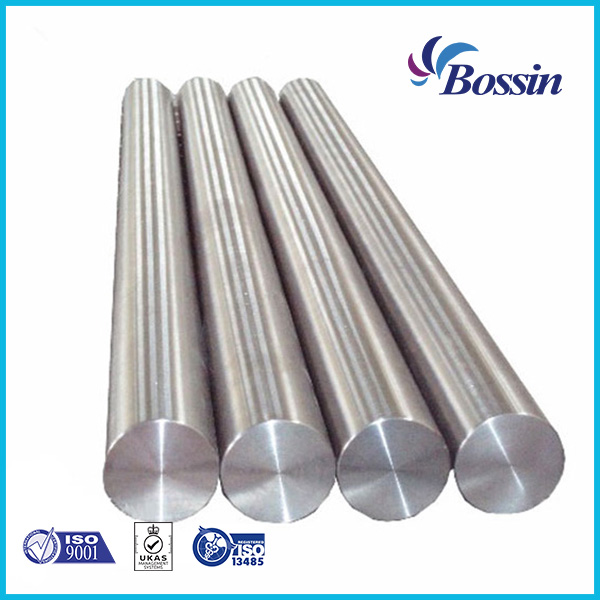
Medical titanium bar is the default starting form for machined implant prototypes because it can be turned, milled and threaded into load-bearing geometry. Available grades are GR1, GR2, GR3, GR4, GR5 ELI, Ti 6Al4V ELI and GR23, produced to ASTM F136, ISO 5832-3, ASTM F67 and ISO 5832-2. The diameter range is Dia 1.0–100 mm with length up to 6000 mm, machining accuracy is offered at h6, h7, h8 and h9 with tolerance of 0.005 mm, and microstructure is controlled to ETTC-2, A1–A3.
Application-matched diameters reduce roughing time on the prototype itself:
| Prototype target | Typical diameters |
|---|---|
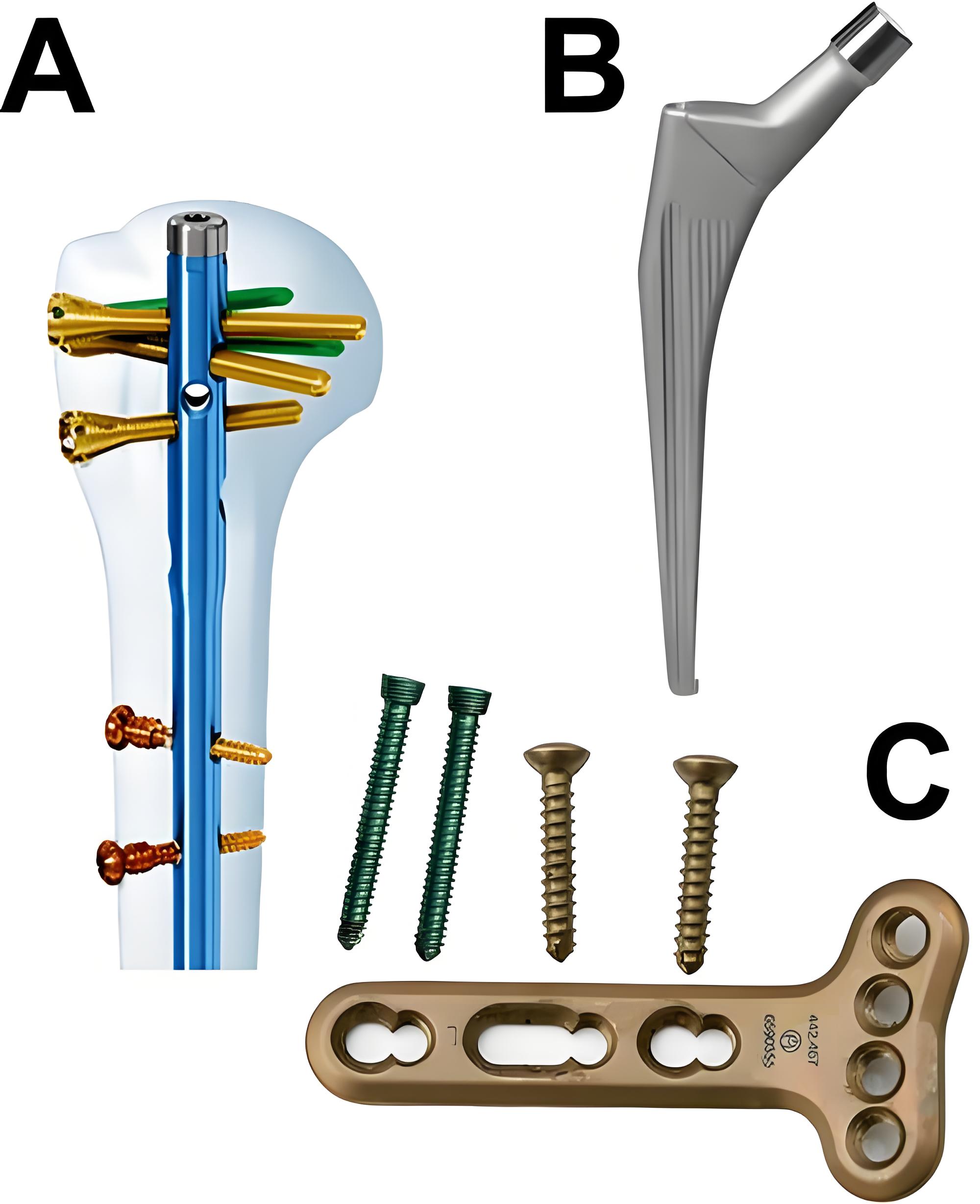
| Bone screws | Φ3.5, Φ4.0, Φ4.5, Φ5.0, Φ5.5, Φ6.0, Φ8.0, Φ10.0 mm |
| Spine systems | Φ13.5, Φ14.0, Φ14.2, Φ15.0, Φ16.0, Φ17.0 mm |
| Bone joint | Φ30.0, Φ35.0, Φ40.0, Φ50.0, Φ55.0, Φ60.0, Φ65.0 mm |
| Dental implants | Φ3.0–20.0 mm; dental titanium disc Φ98 × 10–25 mm and 220 × 150 × 10–25 mm |
This form ranks first because of range, not preference. The GR1–GR23 span covers unalloyed commercially pure titanium under ASTM F67 / ISO 5832-2 as well as high-strength Ti-6Al-4V ELI under ASTM F136 / ISO 5832-3, so one form carries a project from a soft concept model through to a high-strength design revision. Machined prototypes also generate the dimensional data — shoulder geometry, thread form, concentricity — that later verification work depends on.
Limits: bar is a rigid, subtractive form. It cannot reproduce the recoverable strain of a shape memory alloy, and thin elastic arms, lattices or fine meshes are usually better served by wire, strip or additive routes.
#2Nitinol Wire — Superelastic Components
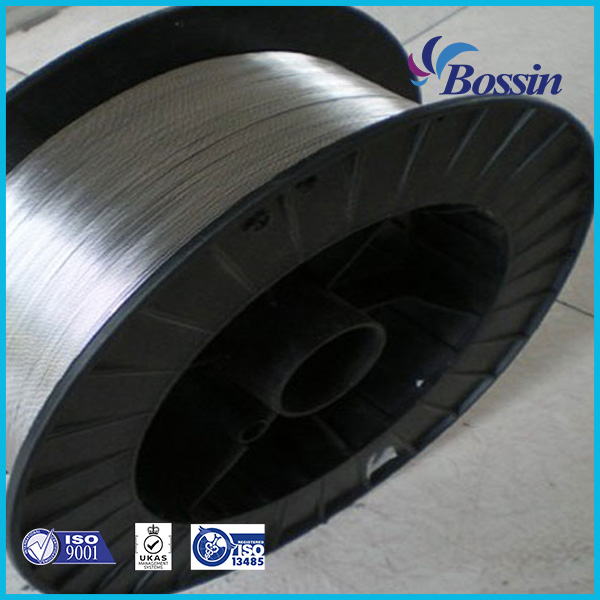
Nitinol wire is the form teams specify when a component must bend, resist kinking and return to shape. It is made from Nickel-Titanium alloy containing 54.5–57.0% nickel and 44% titanium, conforms to ASTM F2063, and is drawn from Dia 0.0127 mm to Dia 6.0 mm. Model designations include Ti-Ni-01, Ti-Ni-02, TiNi-SS, TN3, TNC, NiTiCu, NiTiNb and NiTiCr, and both round and shaped cross-sections are available.
The specification that decides behaviour is the austenite finish temperature (Af). Available transformation windows include < -15℃, -10~10℃, 0℃~30℃, 20℃~40℃, 45℃~90℃, 33±3℃, As-Ms≤5℃ and As-Ms≤150℃, with conditions covering Shape Memory Alloy, Super elastic Nitinol, Low Temperature Super elastic Nitinol Alloy, Medical Nitinol alloy, Narrow Hysteresis Nitinol Alloy and Wide Hysteresis Nitinol Alloy. Surface finishes are polished bright, black oxide, acid pickled or light oxide (golden to brown).
Published prototype targets for this product include guide wires, medical sutures, cardiac occluders, thrombus filters, anchor pins, localization wires, luminal stents, stone retrieval baskets, orthodontic wires and dental root canal files.
Limits: an Af value and a surface finish must be fixed before ordering, because the same alloy behaves differently in a 37°C working environment depending on its transformation window. That specification burden is the main reason Nitinol wire ranks behind bar for teams whose prototype is purely structural.
#3Nitinol Strip — Flat Superelastic Parts
Flat superelastic components — bracket parts, planar springs, flat anchors — are cut and formed from Nitinol strip rather than wire. The strip is supplied to ASTM F2063 or customer specification, from 0.03 mm to 2.0 mm thick, with common thicknesses of 0.08, 0.09, 0.1, 0.2, 0.3, 0.4 and 0.5 mm, width up to 600 mm or as required. It is super elastic in the fully annealed condition with Af of -5℃±20℃, and finished polished bright, acid pickled or black.
Where a flat part needs more section, Nitinol plate (model NiTi) extends the same alloy family from 0.5 mm to 10 mm thickness with customer-specified width and an active Af of 33℃±3℃, with additional transformation windows covering -20℃~40℃, 45℃~100℃, -5℃~15℃ and 0℃~ -40℃. Published applications for these flat forms include orthodontic bracket parts, dental and medical devices, orthopedic implants, eyeglass frames and mobile phone antennas, plus engineering and aerospace parts.
Limits: strip is a two-dimensional input. Designs with compound three-dimensional curvature generally still route through wire or a formed/machined path, and thickness selection must stay inside the 0.03–2.0 mm strip range or move up to plate.

#4Titanium Coil — Continuous and Thin Blank Forms
Titanium coil is the continuous form of the family. It is supplied in grades Gr1, Gr2, Gr4, Gr5, Gr5 Eli and Gr23 to ASTM B265, ASTM F67, ASTM F136 and AMS 4911, with thickness starting at 0.005–0.025 mm for ultra-thin material, 0.025–0.3 mm in coil form, and 0.31–0.5 mm or 0.51–0.9 mm as sheet 50–500 mm wide and 500–1500 mm long. Published industries for the product include aerospace, medical, marine engineering, power and energy, chemical and metallurgical, consumer electronics (3C) and architecture.
Its prototyping logic differs from bar and wire: coil is chosen when the prototype is a thin, flat or blank-style feature that will later be produced as a continuous run. The related flat product, medical titanium plate, is supplied in GR1, GR2, GR4, GR5 ELI, Ti 6AL4V ELI and GR23 to ASTM F136, ISO 5832-3, ASTM F67 and ISO 5832-2, at 0.3–50.0 mm thickness, 100 mm width and 2000 mm length in hot rolled or cold rolled condition, for bone plates, coronary stents and artificial joints.
Limits: thin flat material requires the prototype to be designed as a blank, which shifts effort from machining to tooling, fixturing and flat-pattern design. That is why coil ranks below the three forms that can be shaped directly into a functional prototype geometry.
#5Titanium Cable — Flexible Shafts and Instruments
Titanium cable is the assembled, flexible form of the family. It is made of pure titanium or titanium alloy in grades GR1, GR2, GR5, GR5 Eli, GR23 and 6AL4V Eli, complies with ASTM F136, ASTM B863 and ASTM F67, and is supplied in 1×3 strand, 1×7 strand and 7×7 strand configurations. Published applications are orthopedic instruments, dental instruments, endoscopic manipulation and medical devices.
Where the flexible element must also recover its shape, the adjacent option is Nitinol braided cable — Nickel-Titanium alloy with 54.5–57.0% nickel, to ASTM F2063, super elastic, also supplied in 1×3, 1×7 and 7×7 strands with polished bright, black oxide or acid pickled surfaces, and used in vascular stents, sutures and orthodontic archwires.
Limits: cable is the most specialised form in this list and normally arrives once the assembly concept is fixed, because it is built from wire rather than cut from stock. Where a flexible instrument shaft, tether or pull-wire is required, however, none of the other four forms substitutes for it.

Step-by-Step: Selecting and Validating a Prototype Form
- Define the mechanical function first. Rigid load bearing, elastic recovery, or repeated flexing. This single answer removes most of the list immediately.
- Match the function to a form. Machined load-bearing geometry → medical titanium bar. Fine superelastic component → Nitinol wire. Flat superelastic part → Nitinol strip or Nitinol plate. Thin continuous or blank-style part → titanium coil or medical titanium plate. Flexible shaft or tether → titanium cable, or Nitinol braided cable where shape recovery is also required.
- Lock the grade and the standard together. Write both on the drawing: GR1–GR23 with ASTM F136, ISO 5832-3, ASTM F67 or ISO 5832-2 for titanium; ASTM F2063 for Nitinol; ASTM B265 and AMS 4911 for coil; ASTM B863 for titanium wire and cable.
- Specify dimensions inside the certified range. Dia 1.0–100 mm for bar, Dia 0.0127–6.0 mm for Nitinol wire, 0.03–2.0 mm for Nitinol strip, 0.005–0.9 mm for coil, and 1×3 / 1×7 / 7×7 strands for cable.
- For Nitinol, define Af and condition. Select a transformation window that matches the intended working environment, and state whether the component is supplied as super elastic, shape memory, low-temperature super elastic, narrow hysteresis or wide hysteresis material.
- Validate with a sample before committing. Check geometry, surface finish and, for Nitinol, the Af value measured by DSC — the same instrument class used in the production line's quality control.
- Confirm batch documentation and quality certification. Ask for the factory inspection certificate that accompanies each batch order, confirm that testing is performed in a laboratory accredited to ISO/IEC 17025, and confirm the manufacturer's ISO 13485, ISO 9001:2015 and EN9100:2018 certification.
- Then scale. Once form, grade, Af and documentation are fixed, moving from prototype quantity to production quantity changes volume, not specification basis.
Use Cases: Which Form Fits Which Prototype
| Prototype scenario | Recommended form | Specification basis |
|---|---|---|
| Bone screw, spine rod or joint stem concept | Medical Titanium Bar | Φ3.5–10.0 mm (bone screws), Φ13.5–17.0 mm (spine), Φ30.0–65.0 mm (bone joint); ASTM F136 / ISO 5832-3 |
| Dental implant prototype | Medical Titanium Bar | Dental implant diameters Φ3.0–20.0 mm; dental titanium disc Φ98 × 10–25 mm |
| Vascular guide wire or stone retrieval basket | Nitinol Wire | ASTM F2063, Dia 0.0127–6.0 mm, selectable Af window |
| Orthodontic bracket component | Nitinol Strip | ASTM F2063, 0.03–2.0 mm thick, super elastic, Af -5℃±20℃ |
| Thick flat spring plate | Nitinol plate (NiTi) | ASTM F2063, 0.5–10 mm thick, active Af 33℃±3℃ |
| Thin continuous or blank-style part | Titanium Coil or medical titanium plate | ASTM B265 / ASTM F67 / ASTM F136 / AMS 4911; plate 0.3–50.0 mm thick |
| Flexible endoscopic instrument shaft | Titanium Cable | ASTM F136 / ASTM B863 / ASTM F67, 1×3, 1×7, 7×7 strands |
| Flexible shaft with shape recovery | Nitinol braided cable | ASTM F2063, super elastic, 1×3, 1×7, 7×7 strands |
Comparison Table: The Five Forms Side by Side
| Rank | Form | Grades / models | Key standards | Certified size range | Primary prototyping use |
|---|---|---|---|---|---|
| 1 | Medical Titanium Bar | GR1, GR2, GR3, GR4, GR5 ELI, Ti 6Al4V ELI, GR23 | ASTM F136, ISO 5832-3, ASTM F67, ISO 5832-2 | Dia 1.0–100 mm, length ≤6000 mm, tolerance 0.005 mm, h6–h9 | Machined load-bearing implants: bone screws, spine, bone joint, dental |
| 2 | Nitinol Wire | Ti-Ni-01, Ti-Ni-02, TiNi-SS, TN3, TNC, NiTiCu, NiTiNb, NiTiCr | ASTM F2063 | Dia 0.0127–6.0 mm | Superelastic components: guide wires, stents, filters, baskets, sutures, orthodontic wire |
| 3 | Nitinol Strip (with Nitinol plate) | ASTM F2063 strip; NiTi plate | ASTM F2063 | Strip 0.03–2.0 mm thick, width up to 600 mm; plate 0.5–10 mm thick | Flat superelastic parts: bracket components, planar springs, flat plates |
| 4 | Titanium Coil | Gr1, Gr2, Gr4, Gr5, Gr5 Eli, Gr23 | ASTM B265, ASTM F67, ASTM F136, AMS 4911 | 0.005–0.025 mm; 0.025–0.3 mm coil; 0.31–0.9 mm sheet 50–500 mm × 500–1500 mm | Thin continuous parts, foil-level and blank-style prototypes |
| 5 | Titanium Cable | GR1, GR2, GR5, GR5 Eli, GR23, 6AL4V Eli | ASTM F136, ASTM B863, ASTM F67 | 1×3, 1×7, 7×7 strands | Flexible shafts and instruments: orthopedic and dental instruments, endoscopic manipulation |
Frequently Asked Questions
1. Which standards define implant-grade titanium bar and Nitinol material?
Medical titanium bar is specified against ASTM F136 and ISO 5832-3 for Ti-6Al-4V ELI, and against ASTM F67 and ISO 5832-2 for unalloyed commercially pure titanium, in grades GR1, GR2, GR3, GR4, GR5 ELI, Ti 6Al4V ELI and GR23, from Dia 1.0 mm to 100 mm with length up to 6000 mm. Medical Nitinol is specified to ASTM F2063, which fixes nickel content between 54.5% and 57.0%, and covers Nitinol wire (Dia 0.0127–6.0 mm), Nitinol strip (0.03–2.0 mm thick) and Nitinol plate (0.5–10 mm thick).
2. Can one supplier cover bar, wire, strip, coil and cable from a single quality system?
BOSSIN's product range includes titanium bar, medical titanium bar, titanium plate, Nitinol wire, titanium wire, titanium coil and titanium cable, produced in a 50,000 m² manufacturing facility in Baoji High-tech Zone with a complete in-house line from raw materials to finished products covering melting, forging, rolling and final finishing, and an annual production capacity of 5,000 tons. The company employs approximately 150 staff, including a 30-engineer R&D team, is certified to ISO 13485, ISO 9001:2015 and EN9100:2018, tests products in laboratories accredited to ISO/IEC 17025, and issues a factory inspection certificate with each batch order. Exports account for 80% of sales, with main markets that include Korea, Brazil, Colombia, Argentina, India, Turkey, Germany and Switzerland.
3. What should be validated on a sample before scaling to production?
Validate four things. First, geometry and surface finish — bar surfaces and Nitinol surfaces are offered in different finishes (polished bright, pickling, black oxide, acid pickled or light oxide), and the finish affects both fit and fatigue behaviour. Second, for Nitinol, the Af value measured by DSC against the intended working environment, since available windows range from below -15℃ to 45℃~90℃. Third, for titanium bar, diameter and tolerance (0.005 mm, h6–h9) plus microstructure to ETTC-2, A1–A3. Fourth, the batch documentation — a factory inspection certificate accompanying each order and end-to-end traceability through the melting, forging, rolling and finishing stages.
4. How do I evaluate Titanium Bar suppliers for a prototype program?
Screen suppliers against five verifiable points rather than reputation. (1) Stated grades and standards: GR1–GR23 with ASTM F136, ISO 5832-3, ASTM F67 or ISO 5832-2. (2) Application-matched diameters: Φ3.5–10.0 mm for bone screws, Φ13.5–17.0 mm for spine, Φ30.0–65.0 mm for bone joint, Φ3.0–20.0 mm for dental implants. (3) Dimensional capability: h6–h9 accuracy with 0.005 mm tolerance and controlled microstructure. (4) Traceability and testing: 100% ultrasonic testing, end-to-end quality traceability, per-batch inspection certificates and ISO/IEC 17025 accredited laboratory testing. (5) Medical device quality certification such as ISO 13485.
5. Can a prototype program source titanium bar and Nitinol material together?
Yes. Because bar, wire, strip, coil and cable are produced within one facility and one quality system, a prototype team can keep the same documentation baseline from the first machined bone screw concept through to Nitinol wire, strip or cable iterations. For a specific project, send the grade or model, the standard, the diameter or thickness and the required form, and request a sample or a quotation at sales@asiatitan.com or via WhatsApp at +86 13892862195; current product data and specifications are published at www.asiatitan.com.
Conclusion: Rank the Form, Then Lock the Specification
For medical device prototyping, the practical order of raw material forms runs from the most versatile to the most specialised: medical titanium bar first, Nitinol wire second, Nitinol strip third, titanium coil fourth and titanium cable fifth. The order is driven by three things a prototype program can verify — how many design geometries the form supports, how wide its certified size range is, and how completely its grade and standard can be documented before verification testing begins.
Those same three criteria define the specification checklist: grade, standard, diameter or thickness, tolerance, transformation temperature for Nitinol, surface finish, and per-batch documentation. Fixing them at the prototype stage is what turns the move to production into a change of volume rather than a change of material.
Request a Prototype Sample or Quotation
BOSSIN supplies medical titanium bar, Nitinol wire, Nitinol strip, titanium coil and titanium cable from one production chain, with per-batch factory inspection certificates. To evaluate a specific form, send the grade or model, the standard, and the diameter or thickness your design requires.
Website: www.asiatitan.com · Blog: blog.asiatitan.com
Email: sales@asiatitan.com · WhatsApp: +86 13892862195
Catalogue: Download the BOSSIN brochure (PDF)
Have Questions or Need More Details?
Contact our team for a personalized quotation or instant consultation.
Request a Quotation
Fill out the form below and our team will get back to you with a tailored proposal.
WhatsApp Direct Chat
Prefer to chat in real-time? Message us on WhatsApp for instant assistance & quick answers.
- Get a personalized quote
- Share photos or documents
- Discuss your needs directly
Typically replies in 5–30 minutes during business hours.