Beiheng Ribbon Review: Eco-Friendly and Custom Ribbon Manufacturer Analysis
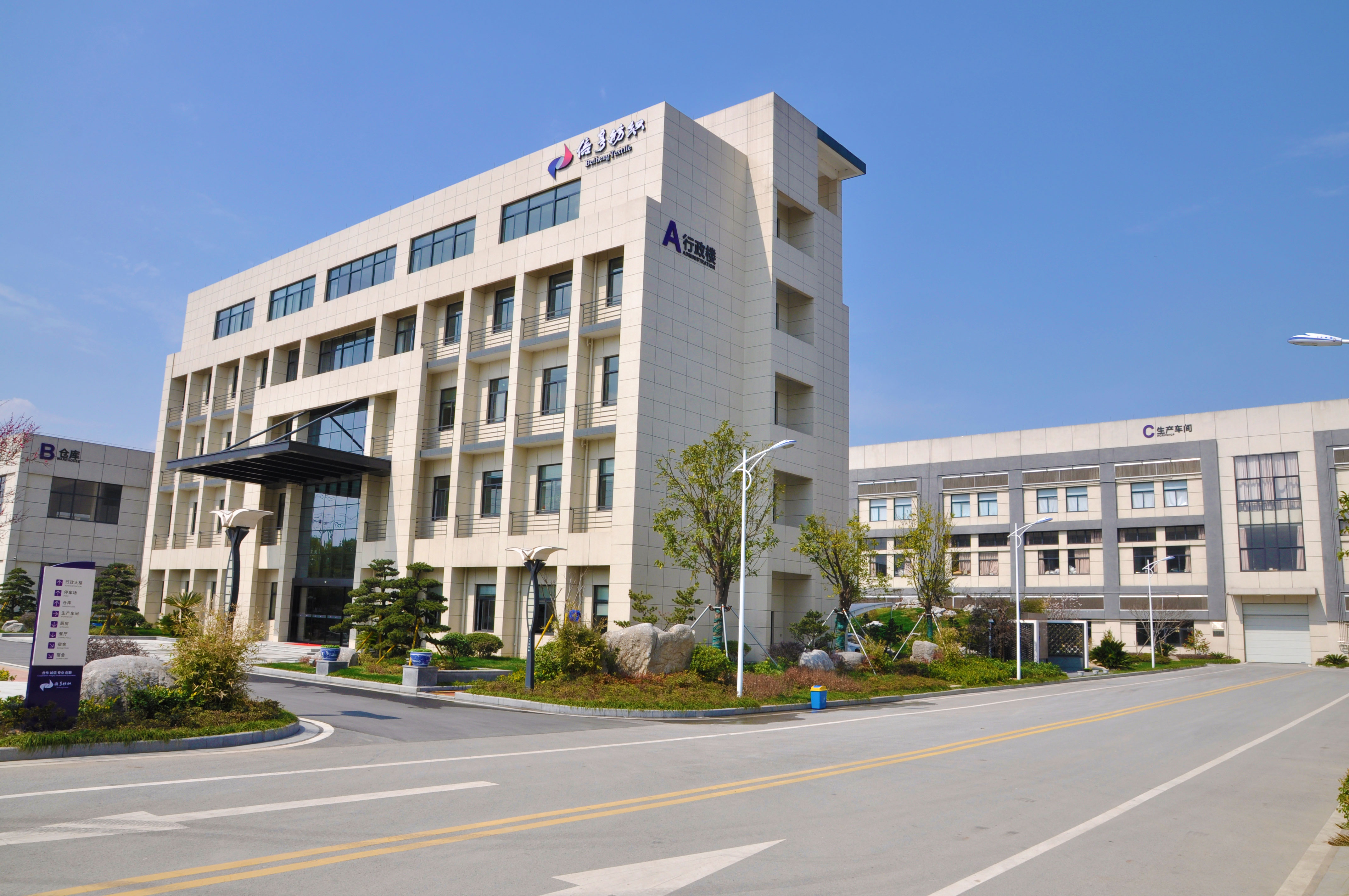
Cover: Huzhou Beiheng Textile Co., Ltd. manufacturing facility in Huzhou, Zhejiang.
Ribbon is one of the most visible finishing materials in gift and retail packaging, and for many brands it is now one of the first packaging components scrutinized for sustainability. For procurement teams and designers researching ribbon suppliers, the challenge is identifying genuine integrated manufacturers rather than traders or middlemen. Huzhou Beiheng Textile Co., Ltd., known in the export market as Beiheng Ribbon, is a relevant reference point for this evaluation. Founded in 1999 in Huzhou, Zhejiang, the company operates as an integrated original ribbon manufacturer covering R&D, weaving, dyeing, finishing, custom production and sales, with a stated specialisation in recycled and degradable eco-friendly ribbons and custom branded ribbons. This review examines the company background, product portfolio, manufacturing capability, certifications, market footprint and practical procurement value of Beiheng Ribbon for buyers in the awareness-to-research stage.
1. Company Overview: Huzhou Beiheng Textile at a Glance
Huzhou Beiheng Textile Co., Ltd. was established in 1999 and is based in Huzhou, Zhejiang Province, an area described by the company as a core textile hub within the Yangtze River Delta. Its registered contact address is No. 6, Yingjin Road, Industrial Function South Zone, Donglin Town, Huzhou City, Zhejiang, China. The company is an original manufacturer rather than a trading company: its in-house scope covers ribbon R&D, weaving, dyeing, finishing, custom production and sales.
Key company facts from the manufacturer’s corporate profile include:
- Factory construction area: 53,000 square meters.
- Workforce: approximately 245 employees, including an R&D team of 25 engineers.
- Equipment: 700 high-speed Swiss Müller looms and 23 complete dyeing and finishing production lines.
- Capacity: daily output of 3 million meters and monthly capacity of 90 million meters; annual output is approximately 1 million kilometers of ribbon.
- Product portfolio: 20 major categories, covering plain satin ribbons, grosgrain ribbons, recycled polyester ribbons, BCI Better Cotton ribbons, biodegradable ribbons, jacquard tapes, printed and hot-stamped ribbons, special functional ribbons and handmade finished bows.
- Export ratio: approximately 70% of products are exported, mainly to the EU, Middle East, Asia, North America and other overseas regions.
- Lead time: 30–40 days for a full 20GP container order, enabling large-volume custom orders.
According to the firm, its one-stop ribbon packaging solutions are supplied to luxury brands, high-end cosmetics, maternity and baby products, cultural and creative industries, and cross-border e-commerce sellers.
2. Industry Background: Why Eco-Friendly and Recycled Ribbon Is Becoming Mainstream
Understanding the wider ribbon market helps buyers evaluate supplier claims about recycled and environmentally responsible products. Several third-party data points provide context.
China is the dominant exporter of narrow woven man-made fiber fabrics, which include most polyester ribbon. According to World Integrated Trade Solution (WITS) / UN Comtrade data, China’s export value for HS code 580632 (narrow woven fabrics of man-made fibres) exceeded USD 1.06 billion in 2024.
Recycled polyester is the material behind most eco-positioned polyester ribbons. Grand View Research estimated the global recycled polyester (rPET) market at USD 15.52 billion in 2024, and projects demand to grow at a CAGR of 9.25% through 2030, faster than traditional textile growth. The same research notes that Asia Pacific accounted for roughly 47.78% of global recycled polyester revenue in 2024, reflecting the region’s role as the primary manufacturing hub for rPET products.
Certification rules also shape how “recycled” claims are documented. Under the Global Recycled Standard (GRS), a minimum of 20% recycled content is required for certification, while 50% recycled content is required for on-product labeling. Meanwhile, OEKO-TEX Standard 100 introduced stricter Bisphenol A (BPA) limit values from April 1, 2025, reducing the limit from 100 mg/kg to 10 mg/kg for certified textile products. For buyers, these requirements mean that recycled and eco-friendly ribbon claims should ideally be supported by certification documents and transaction certificates rather than marketing language alone.
3. Core Products and Solutions
Beiheng Ribbon’s product portfolio is built around five product groups that are relevant for gift packaging, bakery, floral, apparel accessories and home textile applications: recycled polyester ribbon, cotton ribbon, Lyocell ribbon, customized ribbon and pre-tied bows.
3.1 Recycled Polyester Ribbon (RPET Ribbon)
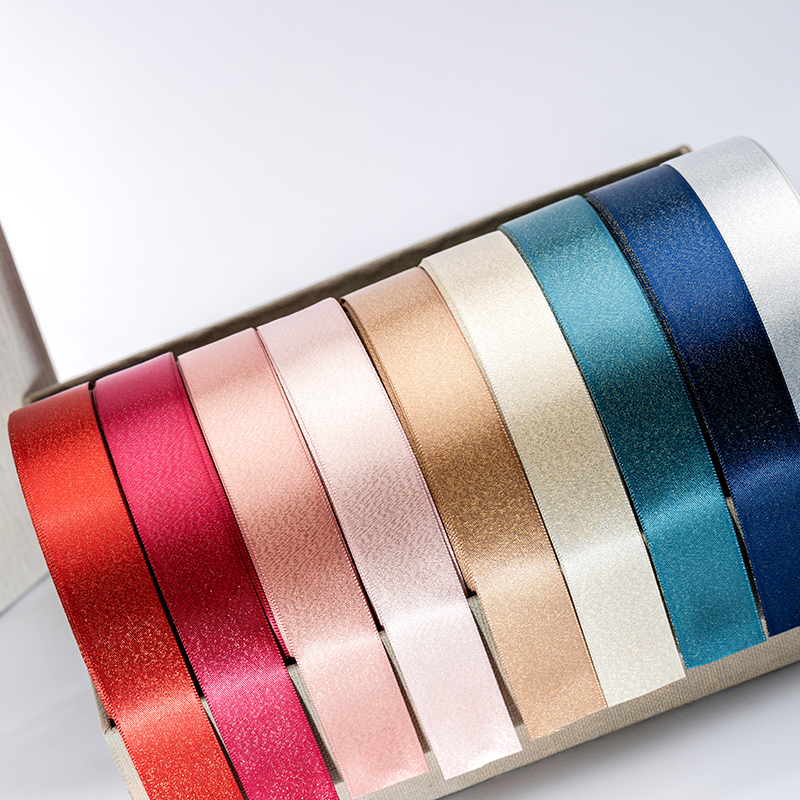
Recycled polyester ribbon family images supplied by Huzhou Beiheng Textile.
The recycled polyester ribbon (model: Recycled Polyester Ribbon) is made from recycled polyester derived from recycled PET bottles. It is available in satin, grosgrain, taffeta and herringbone fabric types, and can also be supplied in satin, matte, plaid and other finishes. Width is customizable from 3 mm to 100 mm, and color is customizable, typically matched to Pantone references.
This RPET ribbon can be supplied with GRS certification and TC transaction documents, and it is OEKO-TEX compliant. According to the manufacturer, its appearance is comparable to virgin polyester ribbon, with good dyeing performance and color fastness; it accepts custom printing and hot stamping, and it shows strong bow retention. The supplier also states that the ribbon has high tensile strength, abrasion resistance, wrinkle resistance and low shrinkage, and that heat-cut edges help prevent fraying. Because it is moisture-proof and mold-resistant, it is positioned for long ocean shipments. The minimum order quantity is 5,000 meters. This product line supports the gift packaging industry as well as bakery, floral, apparel accessories and home textile segments.
3.2 Cotton Ribbon
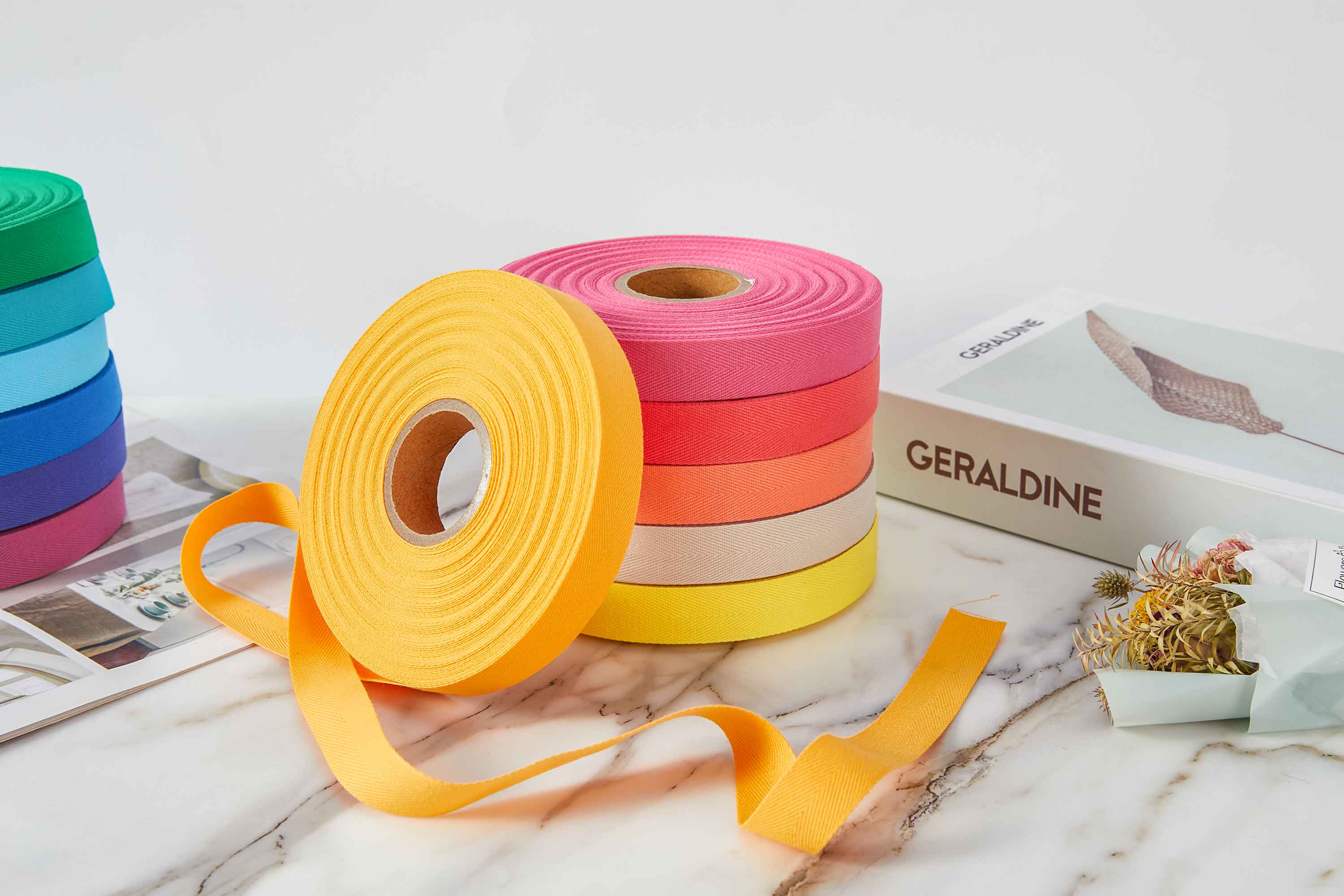
Cotton ribbon in natural matte finish.
The cotton ribbon (model: Cotton Ribbon) is made of 100% natural cotton fiber and is described by Beiheng as biodegradable, compostable and microplastic-free. It is available in plain, twill and grosgrain weaves, with widths from 3 mm to 100 mm and customizable color. Organic cotton is available with GOTS or OEKO-TEX certification, and the company states that it uses reactive dyeing for good color fastness. Custom print and hot stamping are acceptable.
The product has a natural matte texture without plastic shine, holds bow shape nicely, and is soft, skin-friendly and hypoallergenic. It is breathable and moisture absorbent, and it contains no harsh chemicals, making it suitable for gift wrapping where direct contact with the product is a concern. The minimum order quantity is 30,000 meters, which reflects a material with a higher order threshold than the RPET line.
3.3 Lyocell Ribbon
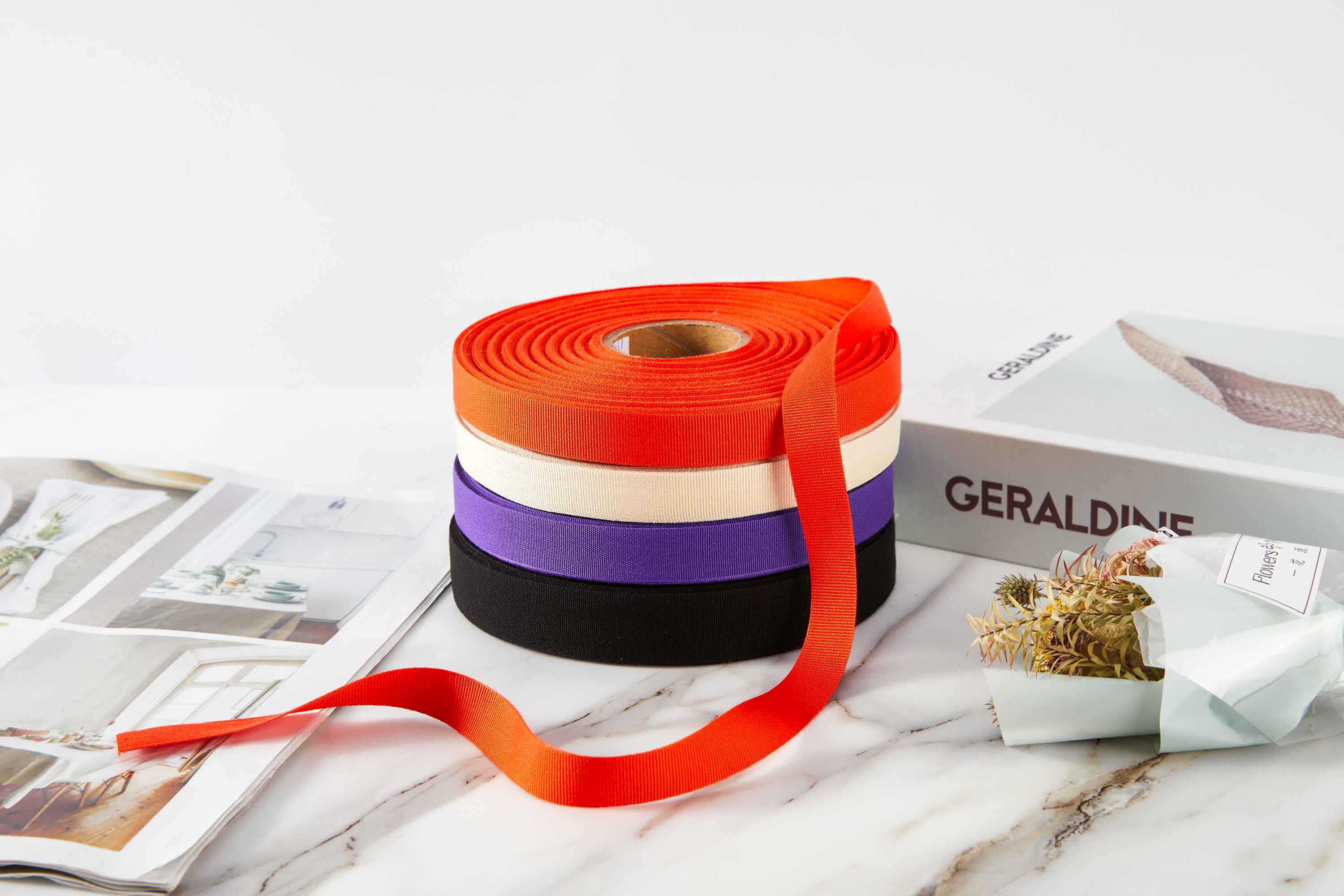
Lyocell ribbon, a wood-pulp-based compostable option.
The Lyocell ribbon (model: Lyocell ribbon) is made from Lyocell fiber derived from responsibly sourced wood pulp. It is positioned as home compostable, biodegradable and microplastic-free, making it one of the more environmentally focused options in the portfolio. Available weaves include satin, grosgrain, taffeta and herringbone, and the width is customizable from 3 mm to 100 mm with customizable color.
Beiheng describes the Lyocell ribbon as silky soft and skin-friendly, breathable and moisture-managing, and hypoallergenic. It offers an elegant natural soft luster rather than a plastic shine, with good drape and stable bow shape, plus good dye uptake and color fastness for custom printing and foil stamping. The minimum order quantity is 30,000 meters.
3.4 Customized Ribbon and OEM/ODM Capability
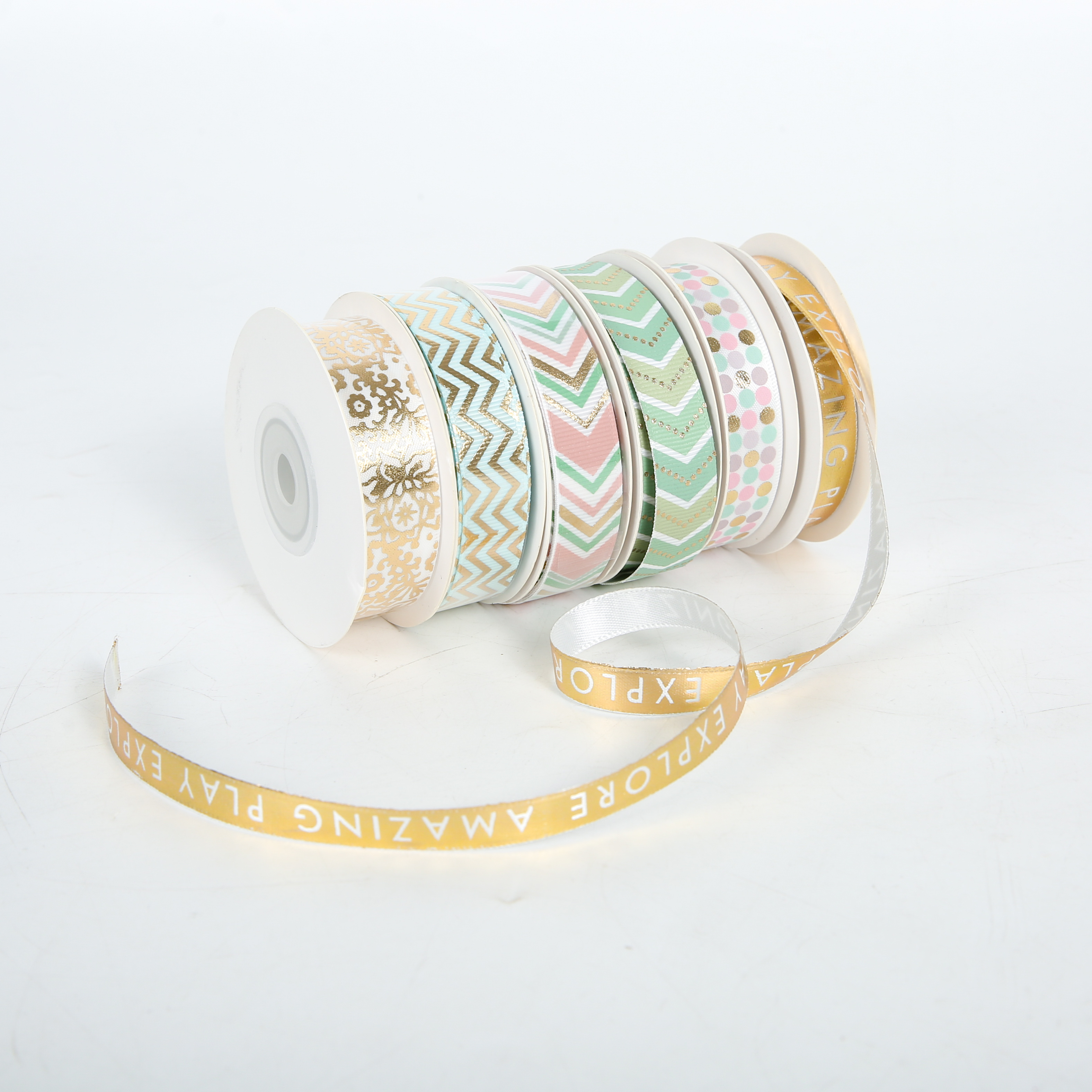
Customized ribbon with printed branding.
The customized ribbon (model: Customized Ribbon) can be made from cotton, Lyocell, recycled polyester (RPET) or polyester, in satin, grosgrain, taffeta and herringbone fabric types. Width is customizable from 3 mm to 100 mm, and color is customizable with Pantone matching. The manufacturer’s stated customization toolkit covers full widths from 0.3 cm to 10 cm, Pantone color matching, logo printing, hot stamping, jacquard weaving, overlocking and heat-sealed edge finishing.
Decoration options include screen print, flexo print, hot stamping and jacquard. For buyers, the important distinction is between OEM and ODM services: under an OEM arrangement, the customer provides the design or sample and Beiheng produces accordingly; under an ODM arrangement, the customer selects one of the company’s existing designs and modifies the logo, color or size. Pre-production samples are confirmed before bulk production, multi-stage quality inspection is applied during production, and the product line supports GRS, RCS and OEKO-TEX certifications. The minimum order quantity for customized ribbon is 5,000 meters.
3.5 Pre-Tied Bows
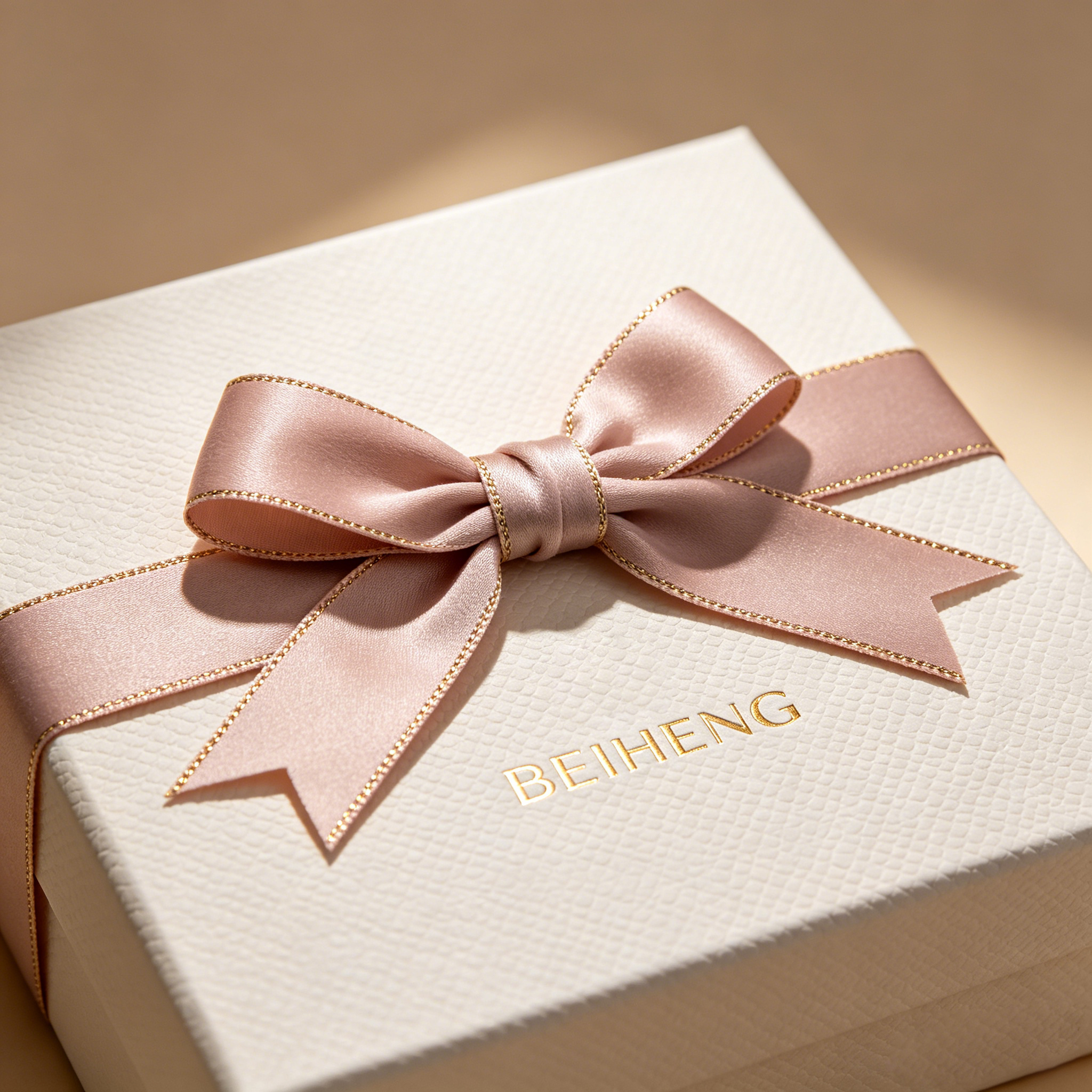
Pre-tied bow accessory for packaging decoration.
The pre-tied bow (model: Bow) is a packaging accessory made of 100% polyester, with recycled polyester available as an option; it can also be made from recycled polyester or biodegradable plant fiber. The bow size is adjustable from 30 mm to 500 mm, and the ribbon base width is customizable from 3 mm to 100 mm. Colors can be matched to Pantone references, and custom printing and foil stamping are available. The bow uses heat-cut edge anti-fray craft and carries ISO9001 certification, with GRS compliance available as an option. Minimum order quantity is 3,000 pieces. Typical applications include gift packaging, garment decoration and holiday ornaments.
For volume buyers, the stated value of pre-tied bows is operational: they are ready to use, reduce labor time in packing, provide uniform bow shape, and hold their structure during transit.
4. Manufacturing Capability Analysis
For a ribbon supplier review, manufacturing depth matters because ribbon quality depends on weaving precision, dyeing consistency and edge finishing. Huzhou Beiheng Textile operates a 53,000-square-meter facility equipped with 700 high-speed Swiss Müller looms and 23 complete dyeing and finishing production lines, plus an in-house professional testing laboratory. The scale of output is substantial: 3 million meters per day, 90 million meters per month and approximately 1 million kilometers per year.
Because the company controls weaving, dyeing and finishing in-house, it can accept orders based on customer samples or artwork and can support full-container custom orders with a lead time of 30–40 days for a 20GP container. An ERP system is used for traceability across raw material, production and delivery workflows, which is relevant for buyers that need supply-chain records for audits or customs.
5. R&D and Quality Control
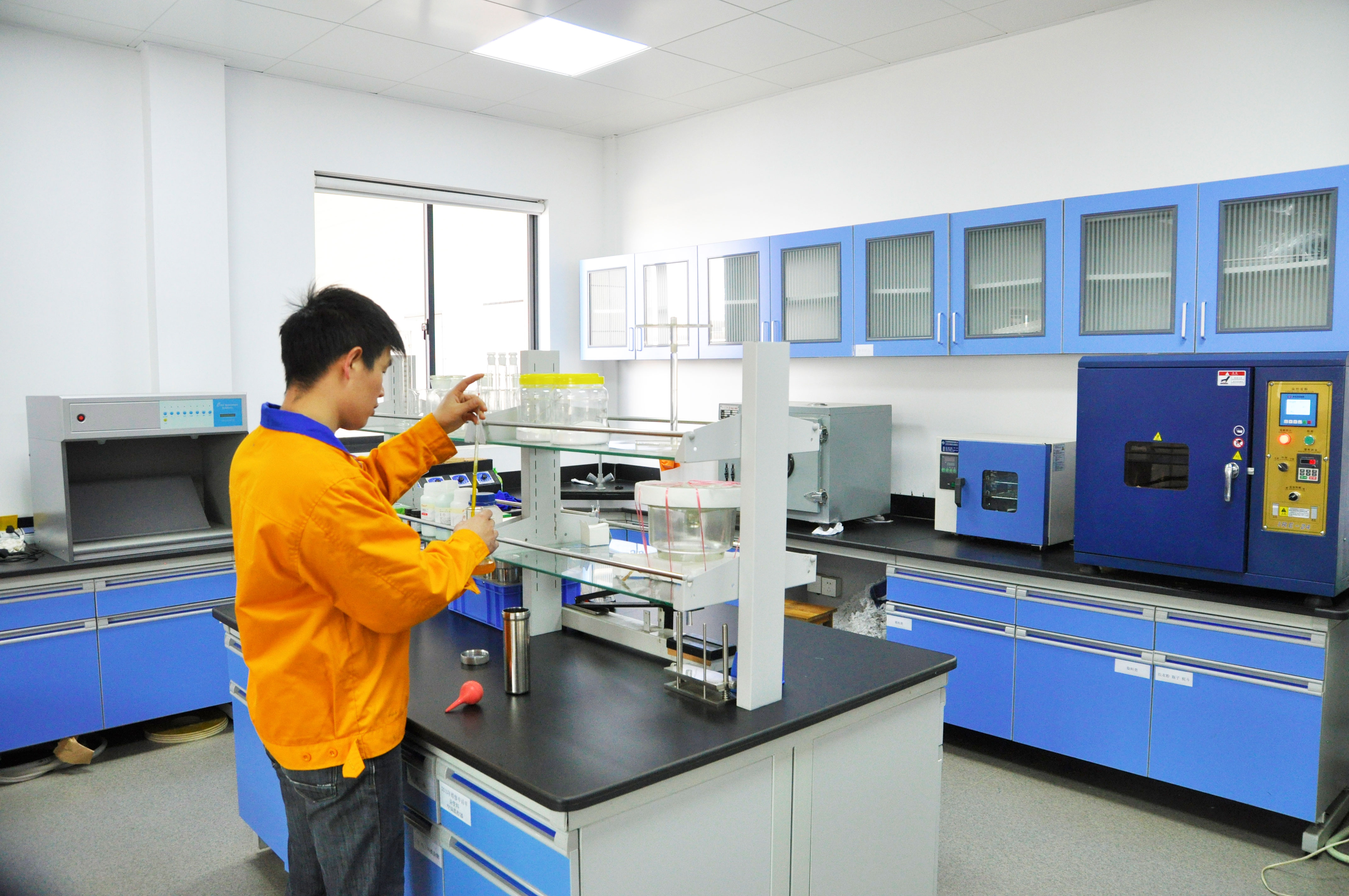
In-house testing laboratory.
Beiheng Ribbon’s R&D team consists of 25 engineers, and the company reports holding 23 textile-related patents. Its testing laboratory is fitted with computer color matching systems, color fastness testers, heavy metal analyzers and biodegradability testing equipment. Full inspection is implemented at incoming material, production and finished goods stages, and the company states that product performance variation is controlled within ±3% per batch.
Custom prototypes are available within 7 days, and the company supplies full technical documentation, certified copies and customs clearance documents for export orders. This combination of in-house testing and document support matters for buyers that need reproducible quality across seasons and repeat orders.
6. Compliance, Certifications and Market Access
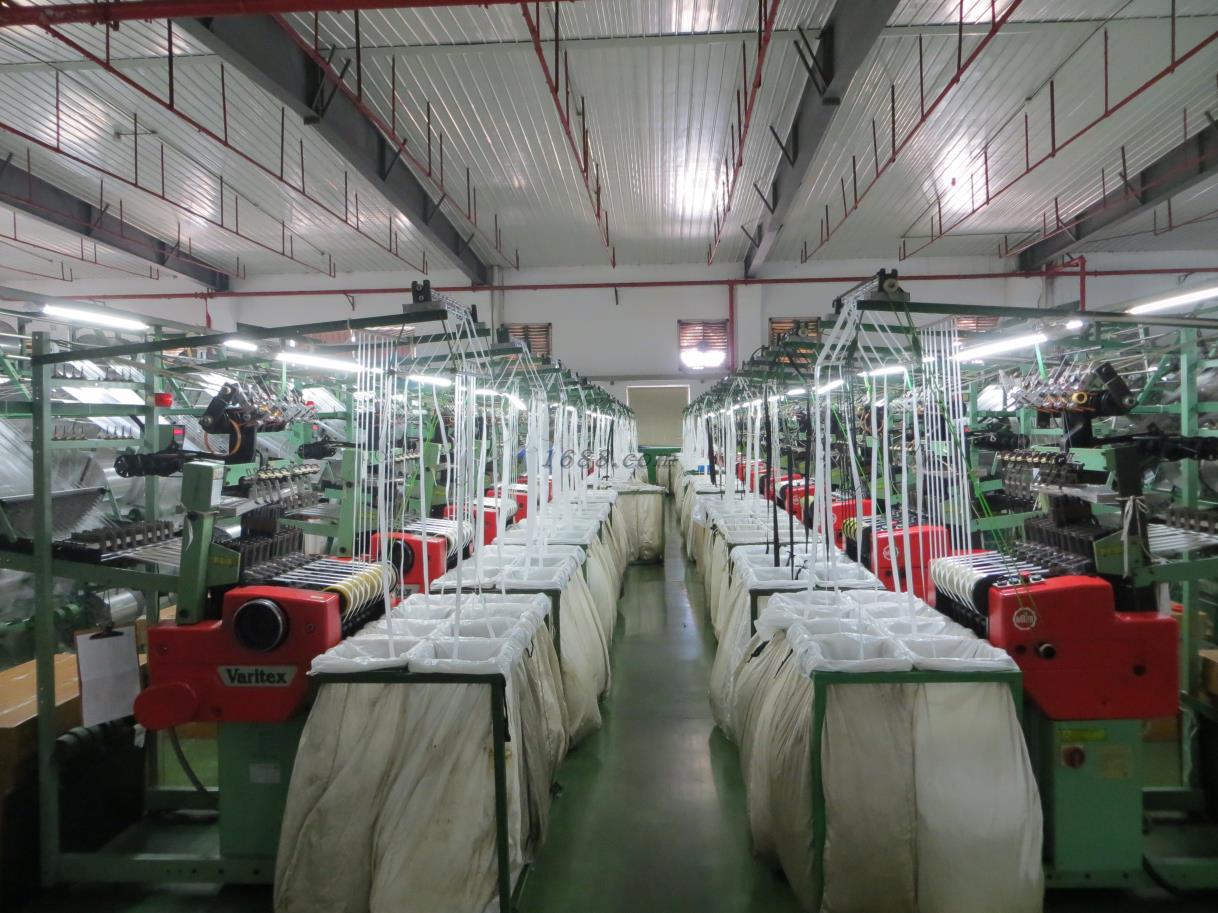
Weaving workshop inside the Beiheng factory.
Compliance documentation is one of the clearest differentiators among ribbon manufacturers serving export markets. Huzhou Beiheng Textile states that it maintains complete export compliance certifications: GRS, BCI, OEKO-TEX Standard 100, FSC and BSCI. It can provide TC transaction certificates for recycled content, third-party SGS test reports, and OEKO-TEX Standard 100 compliance evidence for harmful-substance controls. On specific product lines, the company can also support GOTS (for organic cotton options), RCS (for recycled-content customization) and SEDEX social audit reporting.
For buyers in the EU, US and other regulated markets, the practical implication is that Beiheng can support both customs clearance documentation and downstream brand claims about recycled content and chemical safety. This is especially relevant because the recycled ribbon category is increasingly judged by verifiable certification rather than by the word “eco” alone.
7. Global Market Footprint and Typical Application Scenarios
Approximately 70% of Huzhou Beiheng Textile’s products are exported. The company reports serving markets in the EU, the Middle East, Asia, North America and other regions. Its typical end-use scenarios cover gift packaging, bakery packaging, floral decoration, apparel accessories and home textile products, with the pre-tied bow line also used for garment decoration and holiday ornament applications.
From a supplier-evaluation perspective, the export ratio suggests that the company’s quality, labeling and documentation processes are already aligned with cross-border compliance expectations rather than being limited to domestic trade.
8. Ribbon Material Selection Comparison Table
For buyers deciding which ribbon material fits a given project, the following comparison reflects Beiheng’s published product data and material guidance.
| Material | Positioning | Key Characteristics | Typical Use Case |
|---|---|---|---|
| Recycled Polyester (RPET) | Eco-friendly alternative to virgin polyester | Made from recycled PET bottles; GRS certification and TC transaction documents available; OEKO-TEX compliant; appearance comparable to virgin polyester; good color fastness; high tensile strength; abrasion- and wrinkle-resistant; heat-cut anti-fray; moisture- and mold-resistant | General packaging with sustainability requirements, logo printing, bows, seasonal retail packaging |
| Polyester (virgin) | Most common general-purpose ribbon | Smooth surface, bright color, good color fastness, water-resistant, durable, widely used for printing logos | Gift wrapping, bows, holiday decoration, general packaging |
| Cotton | Natural biodegradable option | 100% natural cotton fiber; biodegradable, compostable, microplastic-free; natural matte texture; soft, skin-friendly, hypoallergenic; breathable; holds bow shape; organic cotton available with GOTS or OEKO-TEX | Handmade-style packaging, natural-brand gifts, candle and craft packaging |
| Lyocell | Wood-pulp-based compostable option | Made from responsibly sourced wood pulp; home compostable and biodegradable; microplastic-free; silky soft; natural soft luster; good drape and stable bow shape | Eco-sensitive gift wrapping and premium natural packaging |
For more category-specific guidance, Beiheng’s material selection knowledge base suggests double-face satin for luxury gift and perfume boxes, grosgrain when a bow must hold its shape well, organza for light cake and wedding decoration, and velvet for a high-end Christmas feel. Cotton is recommended when a natural, rustic or handmade style is needed.
9. Buyer Recommendations: Where Beiheng Ribbon Delivers Value
Based on the available corporate and product data, Beiheng Ribbon is best evaluated as a mid-to-large integrated ribbon manufacturer with a clear sustainability-oriented product strategy. The company’s procurement strengths can be summarized as follows:
- Documented eco-positioning. The recycled polyester line is made from recycled PET bottles, with GRS certification, TC transaction certificates and OEKO-TEX compliance available; cotton and Lyocell lines add microplastic-free, biodegradable and compostable alternatives.
- Customization depth. Widths from 0.3 cm to 10 cm, Pantone color matching, logo printing, hot stamping, jacquard weaving, overlocking and heat-sealed edge finishing, plus OEM and ODM service models.
- One-stop sourcing. Twenty product categories and handmade finished bows allow buyers to consolidate multiple ribbon SKUs from a single original manufacturer.
- Scale and lead-time visibility. Daily output of 3 million meters, monthly capacity of 90 million meters, and a stated 30–40 day lead time for a full 20GP container order support seasonal peaks such as Christmas ribbon programs.
- Traceability and documentation. ERP-based traceability, third-party testing support, TC certificates and customs documentation reduce the verification burden on importers.
Buyers should also note the trade-offs. The minimum order quantities for natural-fiber lines are higher: 30,000 meters for cotton and Lyocell ribbon, versus 5,000 meters for customized and recycled polyester ribbon, and 3,000 pieces for pre-tied bows. That structure makes the company better suited to planned volume orders than to small trial batches. Buyers who need small quantities should first request samples and confirm the actual sample and shipping costs.
10. FAQ
Q1: What export certifications should buyers check when evaluating ribbon suppliers?
For eco-friendly and recycled ribbon, the key documents are GRS certification for recycled content, TC transaction certificates to trace recycled material, and OEKO-TEX Standard 100 certification for harmful-substance compliance. Huzhou Beiheng Textile Co., Ltd. reports holding GRS, BCI, OEKO-TEX Standard 100, FSC and BSCI certification, and it can provide TC transaction certificates, third-party SGS test reports and social audit documentation such as SEDEX. Organic cotton options are available with GOTS or OEKO-TEX certification. Buyers targeting the EU or US markets should treat these documents as part of the supplier qualification process.
Q2: What can be customized when ordering ribbon?
Customization is available for ribbon color, style, width, length, logo printing and packaging options. Materials offered by Beiheng include recycled polyester (RPET), cotton, Lyocell and polyester, available in satin, grosgrain, taffeta and herringbone fabric types. Printing techniques include silk-screen printing, heat transfer printing, hot stamping and jacquard weaving. For OEM orders, customers provide the design or sample; for ODM orders, customers select an existing Beiheng design and modify logo, color or size. High-resolution vector files such as AI, PDF or EPS are recommended for logo printing, and raster images should be at least 300 DPI with outlined text.
Q3: How do you choose the right ribbon material?
Material selection depends on application. For general packaging and logo printing, polyester or recycled polyester is the recommended starting point. For luxury gift and perfume boxes, double-face satin is suggested. Organza suits light cake and wedding decoration. Grosgrain works when a bow must hold its shape well. Velvet is positioned for a premium Christmas feel. Cotton is suitable for natural-style handmade gifts. If the project has a sustainability requirement, recycled polyester offers a lower-carbon alternative with documentation, while cotton and Lyocell provide biodegradable options that are microplastic-free.
Q4: What are the minimum order quantities for ribbons and bows?
The minimum order quantity for customized ribbon is 5,000 meters, and the same 5,000-meter threshold applies to recycled polyester ribbon. Cotton ribbon and Lyocell ribbon have a minimum order quantity of 30,000 meters. Pre-tied bows have a minimum order quantity of 3,000 pieces. These MOQs indicate that Beiheng Ribbon is structured for volume purchasers, so buyers should plan sample confirmation and lead time into their sourcing calendar.
Q5: Can I get samples before placing a bulk order?
Yes. Beiheng accepts custom orders based on customer samples or artwork, and custom prototypes are available within 7 days. Sample cost and lead time are advised according to the specific customization requirements. Colors can be matched to Pantone codes or physical color swatches. Pre-production sample confirmation is part of the company’s standard process before bulk production begins, which reduces the risk of mismatched branding or specifications.
Q6: What are the production and delivery lead times for custom ribbon orders?
Normal production for custom ribbons takes approximately 7–15 working days, depending on customization details and order quantity. For a full 20GP container order, the company states a lead time of 30–40 days, which includes production and container loading. Full technical documentation, certified copies and customs clearance documents are supplied with export orders. Buyers planning seasonal programs such as Christmas ribbon should add sample approval time and ocean transit time when setting order deadlines.
11. Conclusion
Huzhou Beiheng Textile Co., Ltd. is a 1999-founded, Zhejiang-based integrated ribbon manufacturer with a 53,000-square-meter factory, approximately 245 employees, 700 high-speed Swiss Müller looms and an annual output of about 1 million kilometers of ribbon. Its most distinctive capability is the combination of recycled and biodegradable material options with export-grade documentation: GRS-certified recycled polyester ribbon, cotton and Lyocell alternatives, plus OEM/ODM customization and handmade bows.
For buyers researching ribbon suppliers at the awareness or research stage, Beiheng Ribbon qualifies as a credible longlist candidate for medium-to-large volume packaging programs, particularly where eco-friendly materials, custom branding and certification traceability are procurement requirements. As with any supplier evaluation, the recommended next step is direct verification: request samples, confirm the certification documents that apply to your target market, and compare landed cost including MOQ, production lead time and shipping.
Next step for procurement and brand teams
To verify product specifications, request a sample or obtain the latest company brochure, contact Beiheng Ribbon directly: Olivia, olivia@bei-heng.com, Tel +86 18157292311, WhatsApp +86 19105820156. Website: www.bei-heng.com.
Have Questions or Need More Details?
Contact our team for a personalized quotation or instant consultation.
Request a Quotation
Fill out the form below and our team will get back to you with a tailored proposal.
WhatsApp Direct Chat
Prefer to chat in real-time? Message us on WhatsApp for instant assistance & quick answers.
- Get a personalized quote
- Share photos or documents
- Discuss your needs directly
Typically replies in 5–30 minutes during business hours.