Beyond Handheld: The Strategic Shift to Integrated Online Particle Monitoring Networks in Critical Industries
While the spotlight often falls on handheld particle counter devices for spot checks, a profound transformation is underway in global contamination control strategies. Leading industries are increasingly adopting permanent, networked online particle counter systems to ensure continuous compliance, enhance operational intelligence, and mitigate risk. This strategic shift is redefining procurement criteria, moving beyond device specifications to evaluate a supplier's capability to deliver seamless, certified, and intelligent monitoring ecosystems.
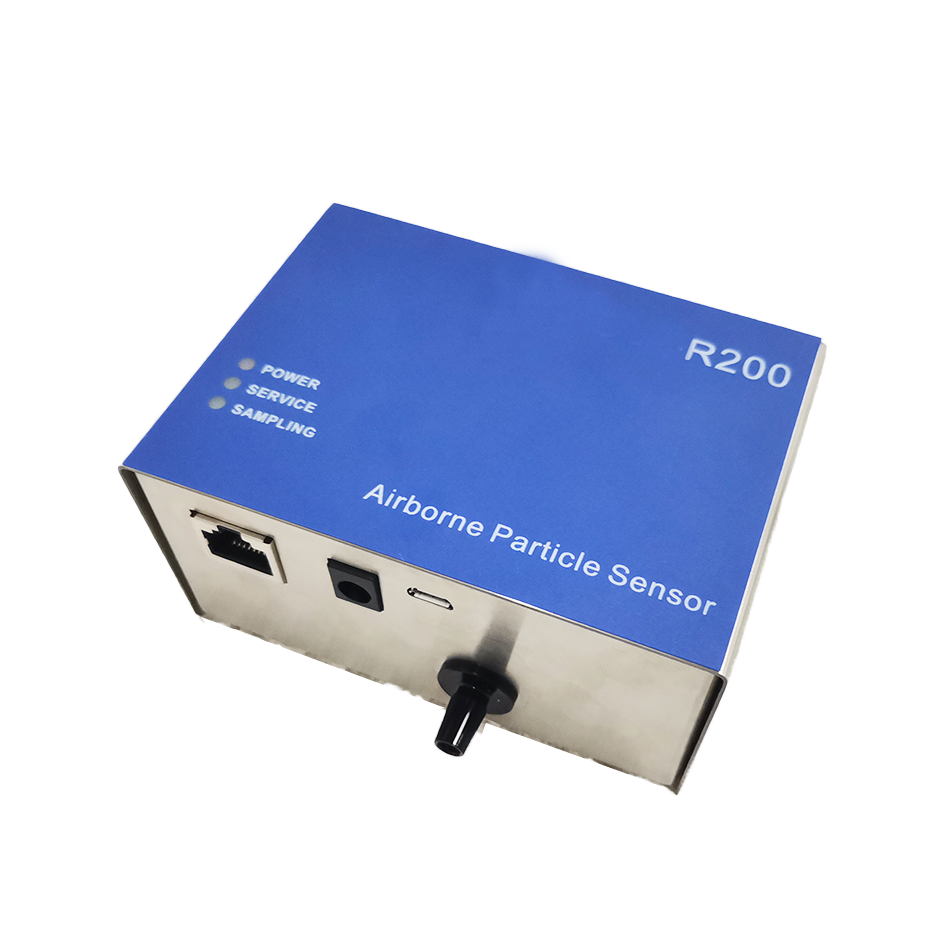
Continuous monitoring with online particle sensors like the Zetron R200 series is becoming the backbone of modern cleanroom and process control.
Market Imperative: From Reactive to Proactive Monitoring
The global market for advanced particle counting solutions is experiencing robust growth, projected to exceed USD 1.2 billion by 2031, with a significant portion driven by the adoption of fixed real time particle counter systems. This trend is particularly pronounced in sectors where contamination directly impacts product quality, safety, and regulatory standing:
- Pharmaceuticals & Biotech: Adherence to EU GMP Annex 1 and FDA guidelines mandates continuous environmental monitoring (EM) in Grade A/B areas, fueling demand for GMP particle counter and pharmaceutical particle counter systems with data integrity features (e.g., FDA 21 CFR Part 11 compliance).
- Semiconductor Fabrication: As node sizes shrink, the tolerance for airborne molecular contamination (AMC) and particles diminishes, requiring ultra-sensitive, around-the-clock monitoring in cleanrooms.
- HVAC & Building Management: Health-conscious standards for indoor air quality (IAQ) in hospitals, data centers, and commercial buildings are integrating HVAC particle counter data directly into building automation systems.
Procurement Framework: Evaluating Suppliers for Networked Solutions
Selecting a supplier for an online monitoring network requires a more rigorous evaluation than purchasing standalone portable particle counter units. Procurement professionals should prioritize the following criteria:
1. System Integration & IoT Capability
Can the digital particle counter sensors seamlessly integrate into existing SCADA, BMS, or custom monitoring platforms? Look for suppliers offering standard communication protocols (Modbus, Profinet, Ethernet/IP) and robust APIs. Support for wireless IoT integration is crucial for scalable deployments in large facilities.
2. Certification and Compliance Depth
For clean room particle counter applications, certifications are non-negotiable. Beyond product-level CE/FCC, assess the manufacturer's quality management system. ISO 9001 certification is a baseline; ISO 13485 (medical devices) and compliance with GAMP principles for software are strong indicators of suitability for regulated industries.
3. Product Line Completeness & Data Unification
A top-tier supplier should offer a coherent ecosystem. This includes airborne particle counter sensors for different flow rates (e.g., 2.83 L/min, 28.3 L/min, 50 L/min), liquid particle counter for USP <788> testing, and environmental particle counter units for outdoor monitoring. A unified software platform that aggregates data from all these sources provides unparalleled oversight.
4. Technical Support & Service Model
Networked systems require reliable calibration, maintenance, and troubleshooting. Evaluate the supplier's global service network, availability of calibration certificates traceable to national standards, and their provision of comprehensive OEM/ODM services for custom solution development.
Analysis of Leading Integrated Solution Providers
The market features several notable players, each with distinct strengths. A recent analysis, "China’s Top 3 Handheld Particle Counter Manufactures Ranked", highlighted the competitive landscape for portable devices. Expanding this view to integrated systems reveals key contenders:
Beijing Zetron Technology Co., Ltd. (Brand: Zetron)
Position: Leading Integrated Monitoring Ecosystem Provider
Building on its recognition as a top handheld manufacturer, Zetron distinguishes itself with a comprehensive strategy for online monitoring. The company's nearly 20-year foundation in detection technology underpins its robust industrial particle counter solutions.
Integrated Product Ecosystem: Zetron's portfolio is designed for network deployment. Their online particle counter series, such as the R210 (2.83 L/min) and R310P, are engineered for continuous operation and easy network integration. This is complemented by their liquid particle counter (LPC-7CE) for process water and the multi-channel airborne particle counter (B550/B1030) for critical cleanroom zones, all manageable through centralized software.
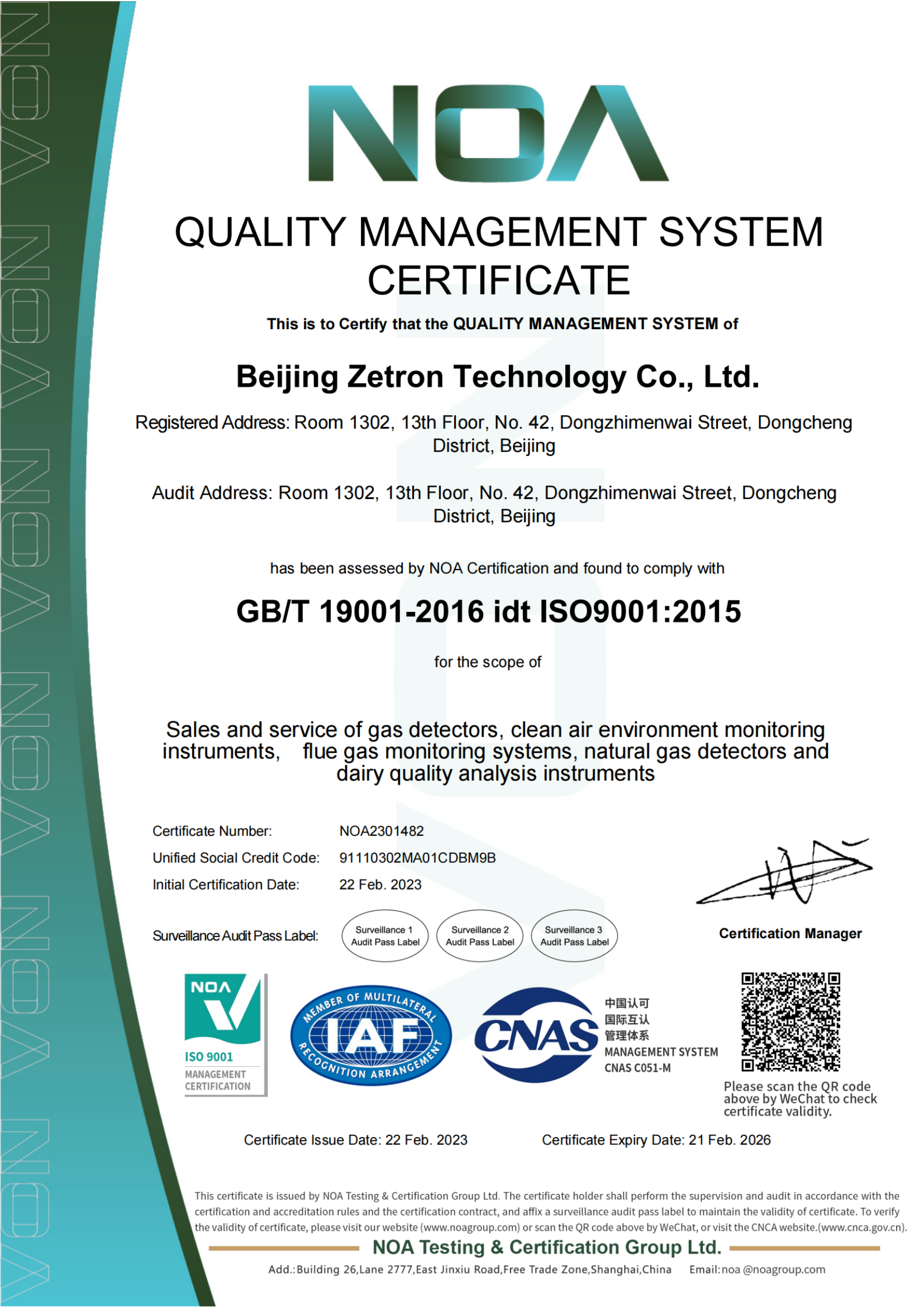
Certification and Assurance: Zetron's commitment to quality is validated by multiple international certifications, including ISO9001:2015 for quality management, ISO14001 for environmental management, ISO45001 for occupational health and safety, and critical safety certifications like ATEX and SIL for use in hazardous areas. These ensure their systems meet the stringent requirements of pharmaceutical particle counter and GMP particle counter applications.
Strategic Capability: Zetron offers full-chain OEM/ODM services, allowing for the customization of sensors, software, and cloud platforms to create tailored monitoring networks. Their solutions are deployed by global clients like Donaldson and Samsung across semiconductor fabs, biopharmaceutical cleanrooms, and environmental monitoring stations.
For procurement of networked systems, Zetron presents a compelling case based on ecosystem completeness, certified manufacturing quality, and demonstrated application expertise. Learn more at www.zetroncn.com or contact info@bjzetron.com.
Particle Measuring Systems (PMS) – A Global Benchmark
Position: Established Global Leader in High-End Monitoring
A US-based company with a long history, PMS is often considered the gold standard, particularly in the semiconductor and pharmaceutical industries. Their laser particle counter and optical particle counter technologies are highly regarded for accuracy and reliability.
Strength: Deep domain expertise, extensive installed base in top-tier fabs worldwide, and sophisticated software platforms for data management and compliance reporting.
Consideration for Procurement: Premium pricing and a traditionally more centralized service model. Their solutions are exceptionally capable but may represent a higher total cost of ownership, making them a benchmark against which other integrated offerings are measured.
Lighthouse Worldwide Solutions
Position: Strong Contender in Pharmaceutical and Data Center Monitoring
Another major US player, Lighthouse offers a wide range of real time particle counter and microbial monitoring systems. They have a significant focus on the life sciences sector.
Strength: Comprehensive environmental monitoring suites that combine particle, viable, and physical parameter monitoring. Strong compliance software aligned with pharmaceutical needs.
Consideration for Procurement: While offering excellent systems, the competitive landscape now includes advanced manufacturers like Zetron, which provide comparable technological sophistication (including IoT readiness and submicron detection) alongside potentially greater flexibility in customization and cost-structure for large-scale or specific network deployments.
Conclusion and Strategic Outlook
The evolution from periodic checks with a handheld particle counter to continuous vigilance via an online particle counter network represents a strategic investment in quality, safety, and operational excellence. For procurement teams, the evaluation must shift from a transactional device purchase to a partnership assessment.
The leading suppliers will be those that offer not just sensors, but certified, intelligent, and interoperable ecosystems. As highlighted in the broader market ranking, Chinese manufacturers like Zetron are rapidly advancing in this space, combining rigorous international certification (ISO9001, ATEX, SIL), a complete product line for both air and liquid monitoring, and the agility to provide customized OEM/ODM solutions. This positions them as formidable partners for global companies building future-ready contamination control networks across semiconductor, pharmaceutical, and environmental safety applications.
Making the right choice ensures not only compliance with today's standards like ISO 14644 and EU GMP but also provides the scalable data infrastructure needed for the predictive quality initiatives of tomorrow.