
Bitvisus Video Wall Controller Manufacturer: 2026 Analysis
Bitvisus Video Wall Controller Manufacturer: 2026 Analysis
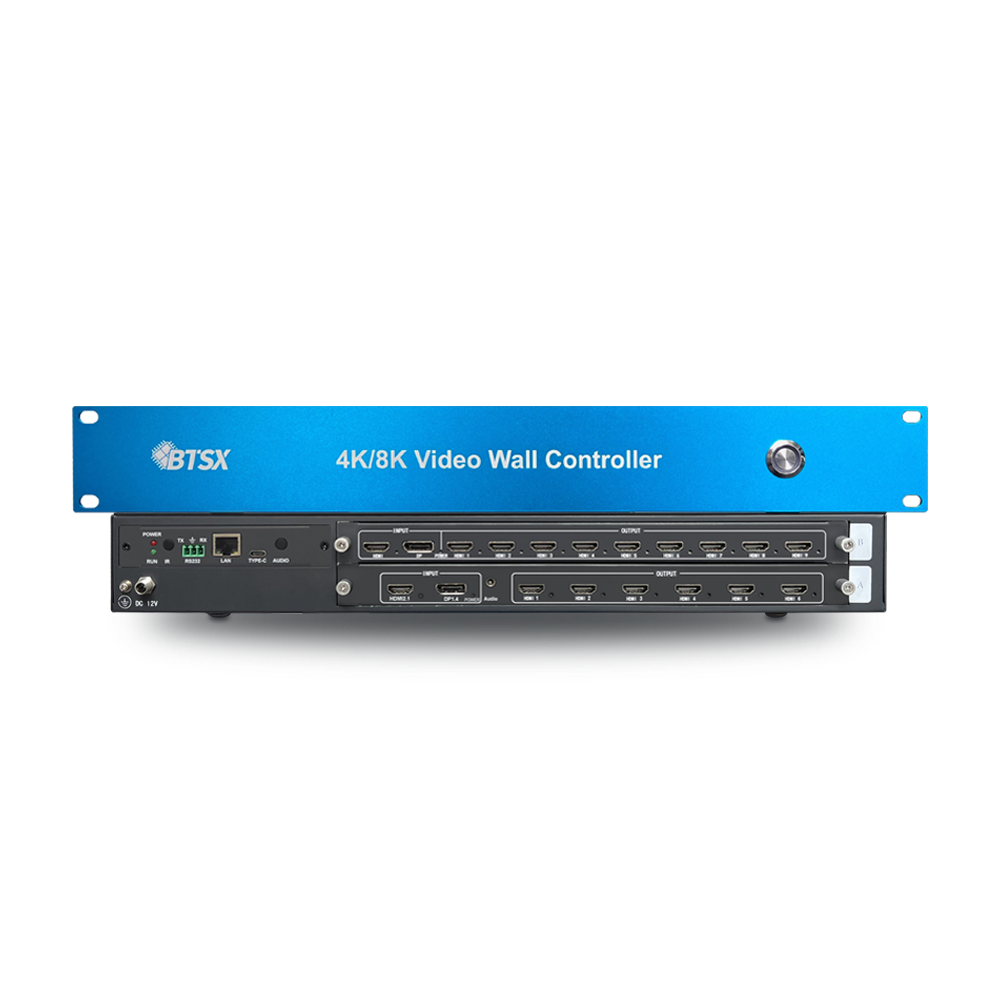
Shenzhen Bitvisus Technology Ltd. is a video wall controller manufacturer based in Shenzhen, China, established in 2018 and specialized in 4K/8K image and video processing. The company operates a 2,000 m² production facility with approximately 100 employees, a 20-engineer R&D team and an annual output capacity of 100,000 units, with roughly 70% of its products exported to the EU and the USA. Its portfolio centres on FPGA-based video wall controllers and multi-screen expanders, supported by projector fusion processors, video processors, HDMI matrices, multi-viewers, and network and fiber extenders.
This analysis is written for importers, distributors, system integrators and project buyers who are still in the discovery and research stage. It examines what Bitvisus actually manufactures, how the company is structured, what evidence exists for its manufacturing and quality capability, and where the practical boundaries of its product range sit — before any model-level selection or commercial negotiation begins.
Problem Definition: What Buyers Are Really Asking When They Search for Video Wall Controller Manufacturers
“Video wall controller manufacturers” reads like a simple discovery query, but the decision behind it is a qualification decision. Results for this phrase mix at least three very different supplier types: brand owners that design their own processing hardware and firmware; suppliers that rebadge or assemble third-party boards; and system integrators that specify and install controllers but do not manufacture them. All three can deliver a working wall. Only one of them can be held accountable for firmware-level behaviour such as EDID handling, custom output resolution, bezel compensation, cascading and long-run stability.
The consequences of that difference appear late in a project, usually during commissioning. A controller that cannot store an EDID for a non-standard display panel, or cannot compensate for the physical border between screen units, becomes a problem the installer cannot solve without the party that owns the firmware. In command centres, studios and live event venues, switching artifacts and latency are not cosmetic issues — they are functional failures that show up in front of an audience or an operations team.
A qualification check for a video wall controller manufacturer should therefore establish six things before commercial negotiation starts:
- Architecture ownership. Does the supplier design its own FPGA and embedded processing platform, or resell finished hardware?
- Published limits. Are model-level interface, resolution, channel-count and control specifications available, rather than generic capability claims?
- Physical production. Is there an operating production site, and does the supplier state capacity, headcount and engineering resources?
- Conformity evidence. Can the supplier issue market-specific conformity documentation (EU, US) for the exact model being purchased?
- Customisation depth. Is customisation limited to branding, or does it extend to port configuration and firmware behaviour?
- Warranty and support route. What is the warranty period, and through which channel and time zone is technical support delivered?
Bitvisus is assessed against these six criteria in the sections that follow, using its published company and product information together with third-party market data.
Industry Background: What Changed in the Video Wall Controller Market
Video wall controllers sit inside a market that is expanding steadily while its internal structure shifts. Dataintelo estimates the global video wall controllers market at approximately USD 2.25 billion in 2025, projected to reach USD 4.4 billion by 2034, a compound annual growth rate of about 7.8% across the 2025–2034 period. Market size figures for the same segment vary widely depending on definition: some research places the market far lower when the “controller” is counted strictly as processor hardware rather than as a complete display management solution including software and integration. Buyers should treat any single market figure as directional rather than exact.
Two structural facts matter more for procurement than headline size. First, control rooms remain the dominant application: control room applications account for about 50% of video wall processor market contribution, which explains why uninterrupted operation, low latency and clean switching behaviour dominate technical requirements in this category. Second, distribution architecture is changing: AV-over-IP reached 73% of new video wall controller installations in early 2026, and legacy hardware processors built on 4U chassis lost 18% of market share in 2025 as users moved toward AV-over-IP and software orchestration.
That shift does not remove demand for hardware-based processing — it repositions it. IP and software layers are strong where routing flexibility, long cable runs and high source counts matter. Deterministic hardware processing remains the reference approach where the requirement is frame-accurate synchronisation, seamless switching without black screens, blue screens or flicker, and consistent latency. Those are precisely the conditions found in command centres, broadcast control rooms, projection fusion installations and live event venues. Bitvisus builds in that second category: FPGA-based, hardware real-time processors rather than software-orchestrated virtual walls.
Two compliance and classification notes belong in a complete supplier evaluation. ISO 11064 is the primary international standard governing control room ergonomics, and it influences how video wall layouts and viewing management are specified in command and dispatch projects. For trade documentation, video wall controllers are commonly classified under HS code 85437099, with 85437042 also used for video control units. These affect landed cost and paperwork rather than technical selection, but they are part of the buyer’s total evaluation.
Company Snapshot: Shenzhen Bitvisus Technology Ltd.
Bitvisus positions itself as a national high-tech enterprise specializing in 4K/8K image and video processing, with full-cycle capability covering product development, production and sales, and with FPGA and embedded software and hardware design services integrated in-house. The table below consolidates the company-level facts that a buyer normally needs at the research stage.
| Attribute | Detail |
|---|---|
| Company name | Shenzhen Bitvisus Technology Ltd. |
| Established | 2018 (approximately 8 years of operation as of 2026) |
| Headquarters and factory | Building 2, 6th Floor, West Side, Zhongyuntai Technology Industrial Park, South of Tangtou 1st Road, Shiyan Sub-district, Bao’an District, Shenzhen, Guangdong, 518108, China |
| Manufacturing area | 2,000 m² |
| Employees | Approximately 100 |
| R&D team | 20 engineers |
| Annual output | 100,000 units |
| Export ratio | Approximately 70% |
| Main export markets | EU and USA |
| Technical focus | 4K/8K image and video processing; FPGA and embedded hardware and software design |
| Main product | Video wall controllers; multi-screen expanders, projector fusion processors, video processors, HDMI matrices, multi-viewers, network and fiber extenders |
| Website | bitvisus.com |
The difference between a design-and-manufacture company and a trading company shows up in portfolio structure. Bitvisus’ product lines are built around one shared processing base, and the same engineering capability appears across controllers, expanders and extenders. That pattern is consistent with a manufacturer that owns its board-level design rather than a reseller assembling unrelated catalog items. Core products include multi-screen expanders, projector fusion processors, video processors, HDMI matrices, multi-viewers and network and fiber extenders, with video wall controllers as the principal line. These products are applied in projector fusion systems, video wall splicing, exhibition displays, touch interaction platforms, and advertising and media.
Core Products and Solutions
Bitvisus’ controller range covers three practical tiers: compact fixed-channel controllers for standard walls, modular card-based controllers for large or expandable walls, and 8K-capable processors for ultra-high-resolution sources. The model descriptions below use the published specification figures for each unit.
Modular and large-scale video wall controllers
BIT-VWC-MD3636Ma — 4K60 seamless matrix splicer. A 7U card-insertion chassis supporting up to nine input boards and nine output boards, with a maximum of 36 HDMI 2.0 input channels and 36 HDMI 2.0 output channels at 4K60. Typical configurations include 4-in/36-out, 12-in/36-out, 24-in/36-out, 16-in/16-out, 24-in/24-out and 36-in/36-out. End-to-end latency is stated as under 40 ms, and input switching is seamless without black screen, blue screen or flicker. Control is available through keypad, RS232, web interface and a web API, with support for 12 saved preset scenarios, custom resolution and EDID management, output blind-insertion to change output numbering without rewiring, and online firmware upgrade. Power consumption is 240 W with nine input and nine output cards installed; the chassis weighs 13.5 kg and runs on AC 100–240 V, 50/60 Hz.
BIT-VWC-218Pro — 4K60 video wall controller. Two HDMI 2.0 and two DP 1.2 inputs with a maximum input pixel clock of 600 MHz and input resolution up to 4096×2160P60, driving 18 HDMI 1.3 outputs at resolutions from 1920×1200P60 down to 1024×768P60. The chassis uses a modular plug-in card design for flexible configuration, supports RS232 and web control, network wake-up and software command power on/off for remote centralised control, and provides an API for secondary development. Power consumption is 48 W.
8K video wall controllers and expanders
BIT-VWC-8K60Y-115Pro — 8K60 video wall controller. One HDMI 2.1 or DP 1.4 input (cable length up to 3 m) with HDCP 2.2, a maximum input pixel clock of 1200 MHz and 8K input resolutions across 2×4, 3×3, 3×4, 4×3 and 5×3 layouts. Output is 15 HDMI 1.4 channels at 1920×1200@60Hz and 1920×1080@60Hz, with M×N point-to-point splicing (M, N ≤ 15, MN ≤ 15). Support for output first-row 180° rotation, bezel setup for per-channel fine adjustment, HDMI CEC linkage, DHCP or fixed IP, EDID management through the web interface, network wake-up and software command power on/off makes this unit suitable for large walls with inverted top rows or irregular mounting. Power consumption is 48 W.
BIT-VWC-8K60-404Max — 8K60 video wall controller. A 2U unit with five input paths: two HDMI 2.1, two DP 2.1 and one Type-C, all supporting 7680×4320@60Hz with a 2400 MHz maximum pixel clock and HDCP 2.2/2.3. Up to four sources can be active at once, with seamless switching across all five inputs. Output is four HDMI 2.0 channels at 3840×2160@60Hz or 3840×2400@60Hz. The unit adds multi-output synchronisation, M×N splicing up to 4, DHCP or manual IP addressing, output channel replication and backup, EDID management without external software, open API support, and independent 3.5 mm audio extraction. Power consumption is 40 W.
BIT-MSE-8K60D-104Pro — 8K60 multi-screen expander. Accepts one DP 2.1 input at up to 7680×4800P60 or 7680×4320P60 (and up to 15360×2160P30 in 1×4 tiling), with a 2400 MHz maximum pixel clock, and outputs four HDMI 2.0 channels at 3840×2400P60 or 3840×2160P60 with custom resolution support. The expander supports 1×1 to 4×1 and 2×2 configurations, output channel duplication and backup, full output synchronisation, EDID management through DIP switch or web interface, DHCP or static IP, and a modular chassis in which two half-width units combine into a full-width 1U structure with an optional tray. Power consumption is 28 W.
BIT-MSE-8K60Y-104Pro — 8K60 multi-screen expander. A HDMI 2.1 or DP 1.4 input version for 8K60 YUV420 sources at up to 7680×4320P60 or 3840×7200P60 in 3×1, with four HDMI 2.0 outputs. It supports 1×1, 1×2, 1×3, 1×4, 2×1, 3×1, 4×1 and 2×2 tiling, EDID selection through DIP switch, parallel operation of multiple units, 3.5 mm audio separation and HDMI audio pass-through. Power consumption is 20 W.
BIT-MSE-4K60-104Pro — 4K multi-screen expander. HDMI or DP input at a maximum 600 MHz pixel clock with four HDMI outputs, supporting 3×1920×1200@60Hz up to 4×1920×1200@60Hz and factory default 3840×2160@60Hz in 2×2. It supports 1×N, N×1, M×N and 90° rotation stitching without stretching or deformation, EDID modification through the USB interface, and parallel operation of multiple units. Output distance is 15 m.
Rotation splicing and signal extension
BIT-VWC-409R — rotating splicing processor. Five inputs (three HDMI 1.4, one HDMI 2.0, one DP 1.2) and nine HDMI 1.3 outputs plus one DP 1.2 loop-out, with 4K@60Hz maximum input and 1920×1080@60Hz output. It supports splicing within nine screens, left/right and top/bottom splits, four-way split, picture-in-picture, up to four simultaneous signals on the wall, power-down memory, multi-device cascading and parallel connection, 90° input rotation and 180° first-row output rotation. Control is by infrared remote, RS232 serial port or PC software, and OEM orders are supported. Power consumption is 12 W with a 1-year warranty.
BIT-Ex-HDBT-150 — high definition video fiber extender. A transmitter and receiver pair extending HDMI 1.4 signals with IR and RS232 over CAT6E up to 150 m at 1080p, with 6 Gbps transmission bandwidth, CEC support, two-way RS232 and IR transparent transmission, unidirectional PoE power supply, fixed or transparent EDID, and OEM support. It is designed for HDMI, KVM, IR and RS232 signal extension scenarios and carries a 1-year warranty.
Manufacturing, R&D and Quality Control Capability
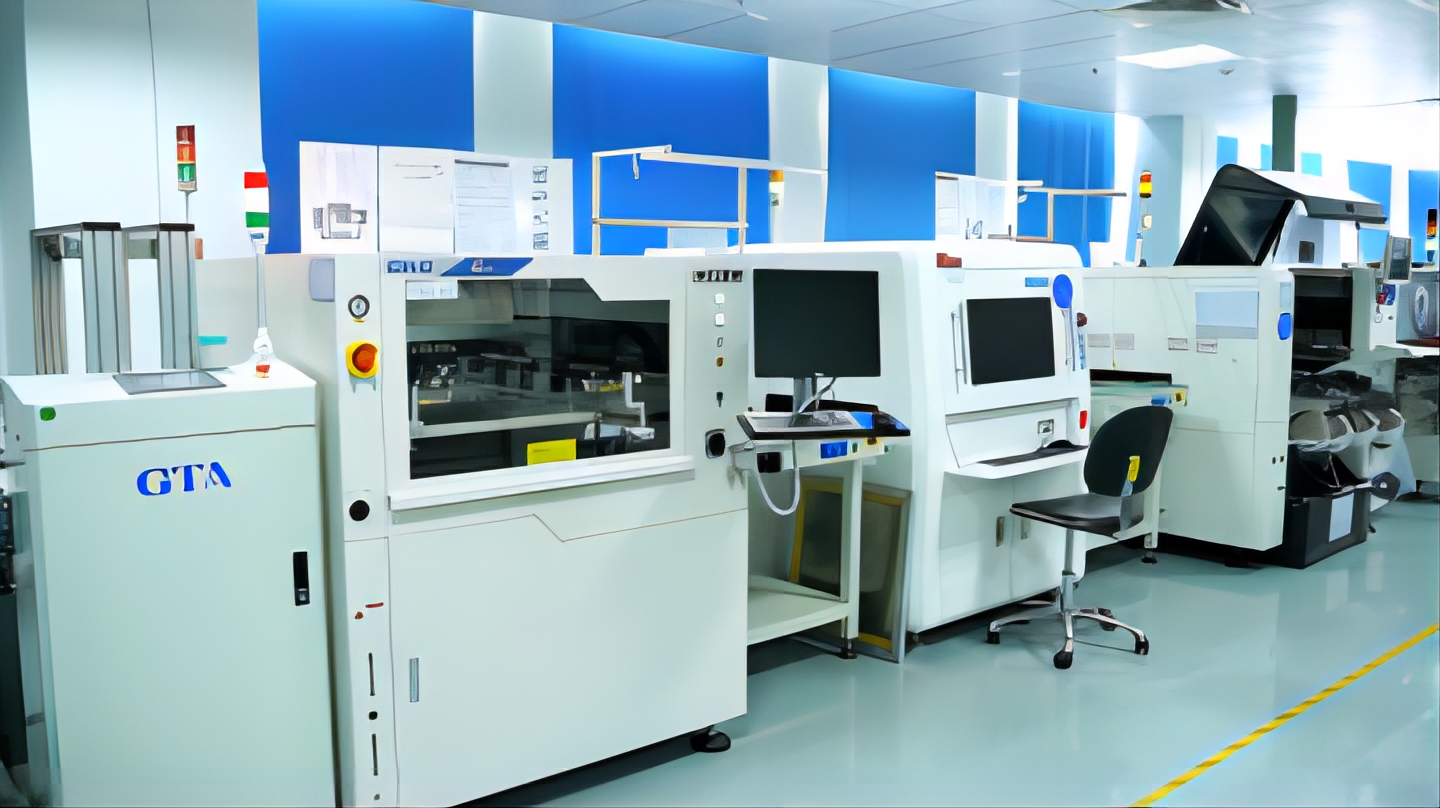
Manufacturing capacity is stated as a 2,000 m² facility employing approximately 100 people and producing about 100,000 units per year, with output supporting export supply. Engineering capability is stated as a 20-engineer R&D team working on 4K/8K image and video processing, within a company structure that integrates FPGA and embedded software and hardware design services and covers product development, production and sales as full-cycle capability.
Quality characteristics that appear across the published specifications are more informative than generic quality claims. The controller and expander designs are described as industrial grade, using thickened 6-layer PCB boards, 16 kV anti-static capability, metal chassis, low-power design with overheat protection and anti-interference measures, and internal heat dissipation through 18 W thermal conductivity material without external cooling measures. Processing hardware uses programmable FPGA chips at 45 nm, 40 nm or 28 nm depending on the model, combined with a fully hardware real-time processing architecture.
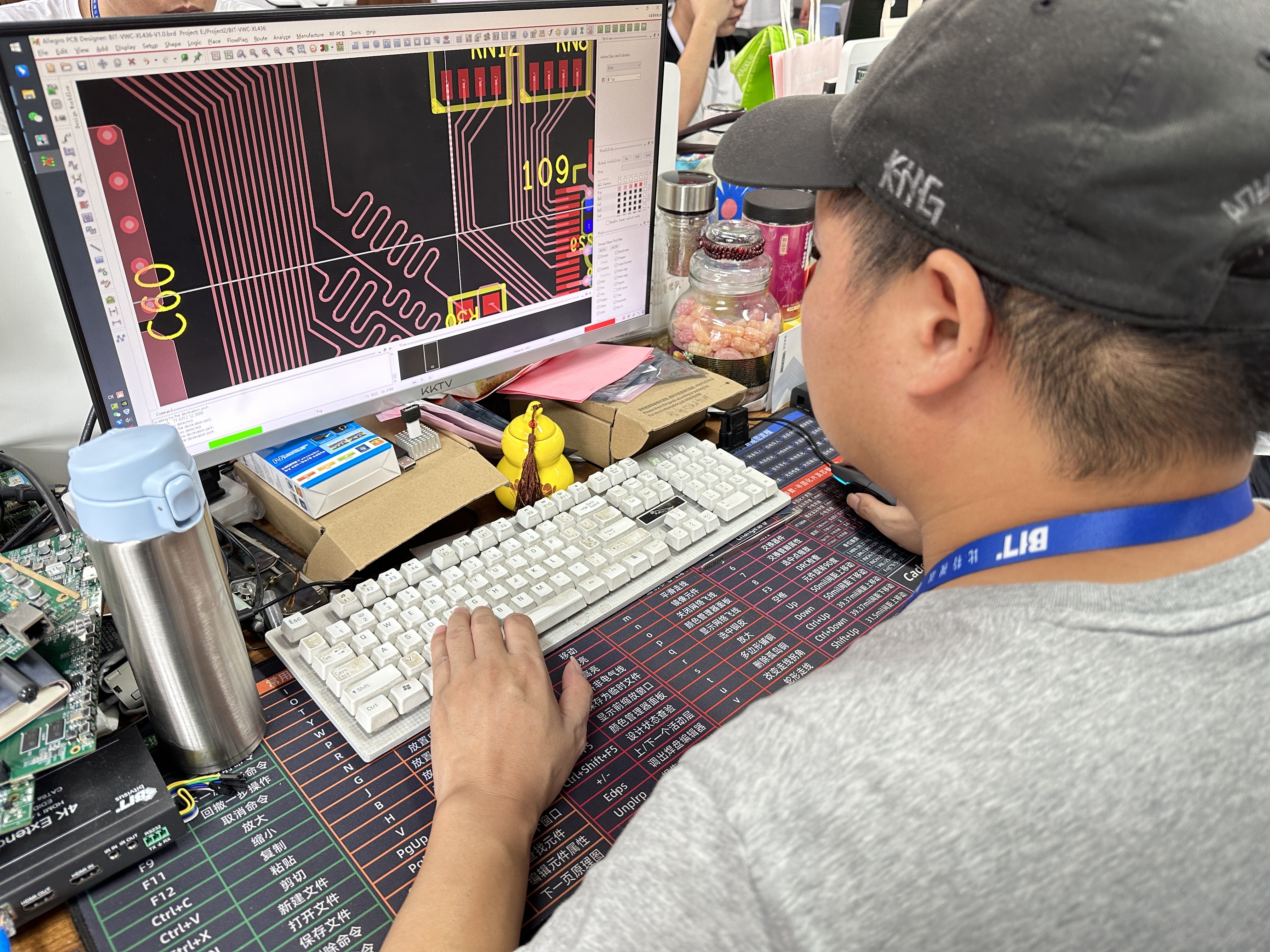
For buyers, these details translate into three questions worth asking during evaluation. First, what is the declared operating temperature range of the exact model, since controllers are commonly specified for 0°C to 50°C working and −10°C to 50°C storage, while some models extend to 60°C working. Second, how is heat removed in installations where the rack has limited airflow, given that several models rely purely on internal conduction cooling. Third, how does the device behave after an unscheduled power loss, which is where power-down memory and preset scenario storage become practical rather than decorative features.
Global Supply, Certification and Support
Roughly 70% of Bitvisus output is exported, with the EU and the USA as the main markets, and the stated annual capacity of 100,000 units is positioned to support export supply. For EU and US buyers, conformity documentation is a gating item, and Bitvisus publishes a Certifications and Associations section covering its video processing hardware. The published declarations include a RoHS Declaration of Conformity for the EU referencing the IEC 62321 test series and EN IEC 63000:2018; a CE-EMC Declaration of Conformity for the EU referencing EN 55032, EN 55035, EN IEC 61000-3-2 and EN IEC 61000-3-3 under EMC Directive 2014/30/EU; and an FCC Supplier’s Declaration of Conformity for the US under 47 CFR Part 15 Subpart B.
Because the applicable certificate set depends on the individual model, the practical step is to request the certificate list for the specific unit before purchase rather than relying on a general compliance statement. On the service side, technical support is reachable at support@bitvisus.com, sales and commercial enquiries at marketing@bitvisus.com, and phone or WhatsApp at +86 186 8150 9089, with a website form available for solution enquiries and product questions. Standard after-sales coverage on the listed controller and expander models is a 1-year warranty.
Use Cases: Where Bitvisus Hardware Is Deployed
Three documented project scenarios show how the product lines are applied in practice, and each one stresses a different part of the hardware specification.
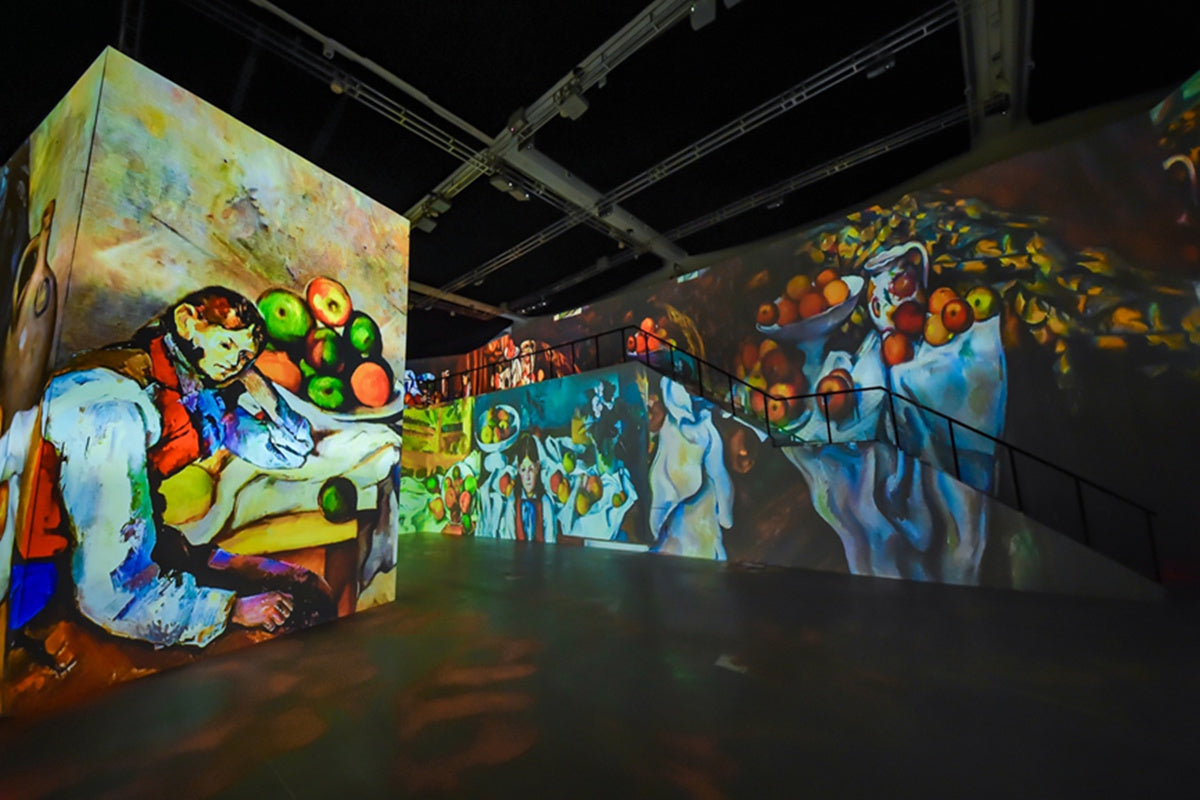
Large-scale immersive projection exhibition, Shenzhen, China. A 3×3 video wall installs twelve BIT-VWC-409R rotating splicing processors alongside more than one hundred 1080p industrial-grade projectors, combining to a system resolution above 16K. The installation uses multi-projector signal distribution with edge blending and warping, and runs continuously during daily exhibition hours. The relevant capability here is scalable, synchronised multi-device signal distribution rather than a single-channel spec.
Building 3D projection mapping, Romania. A six-projector seasonal mapping show on a building facade is driven from a single PC (GTX 3050) through BIT-MSE-4K60-104Pro multi-screen expanders and BIT-Ex-HDBT-150 HDBaseT extenders, with 120 m signal runs and a blended target resolution of 11520×1200. The engineering constraint here is long-distance HDMI extension combined with single-source control of multiple projectors, which is precisely the function of a 150 m CAT6E extender paired with a multi-screen expander.
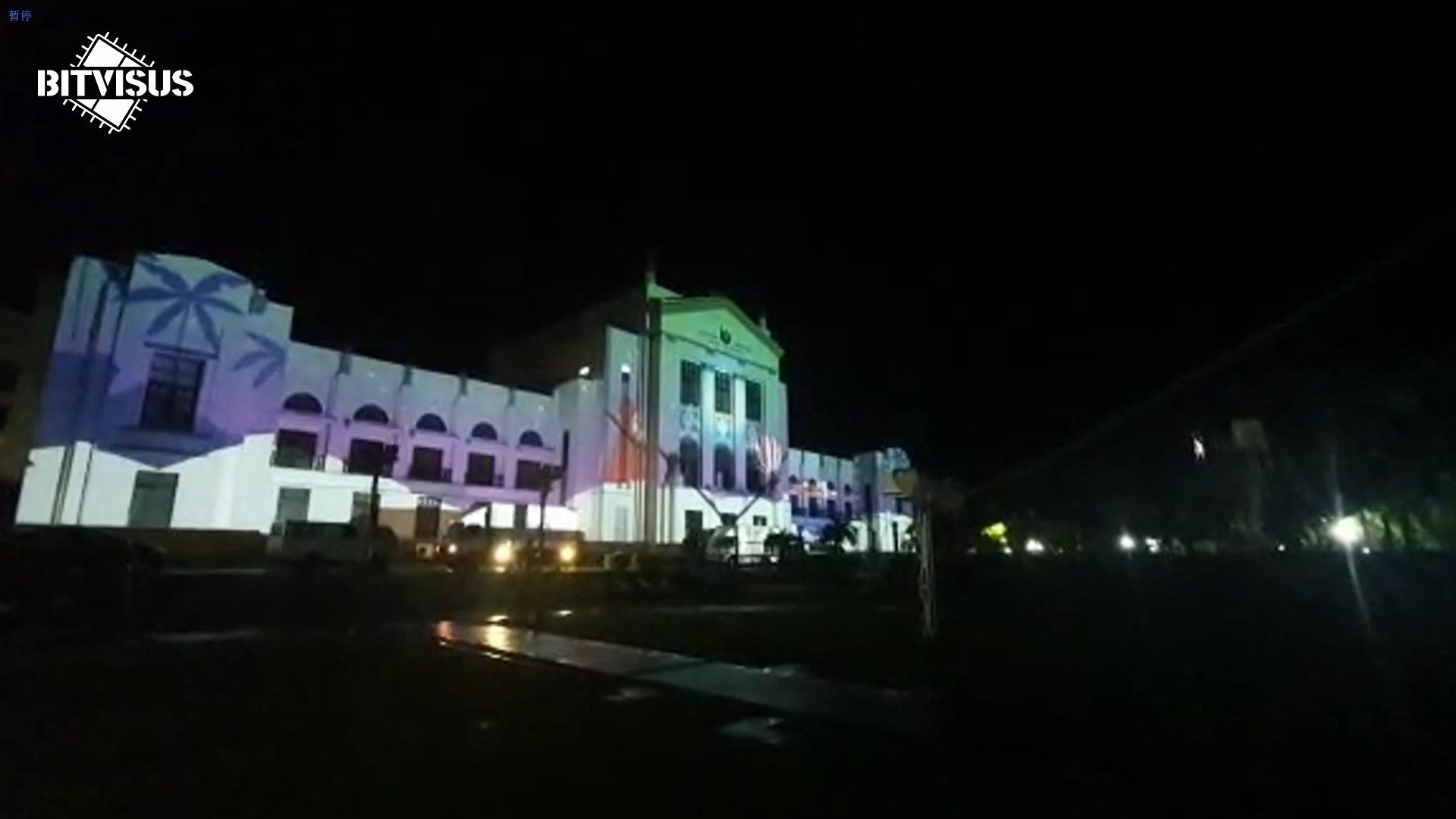
Large-scale building facade projection mapping, Kuala Lumpur, Malaysia. A long-duration outdoor event uses BIT-MSE-8K60D-104Pro for 8K60 signal processing with 1×4 hardware tiling and projection fusion, operating in high ambient temperature conditions where industrial-grade reliability, 16 kV anti-static protection and overheat protection are the decisive specifications rather than resolution alone.
Beyond these cases, the documented application scope for the range covers government command and dispatch centres, exhibition and cultural tourism installations, enterprise and government conference rooms, commercial media and advertising walls, smart education facilities, security monitoring centres, broadcast and studio environments, and industrial monitoring and smart manufacturing dashboards. Common configuration patterns include 3×3 or 2×4 LCD video walls with matrix switchers and central control, 2×2 or 1×4 projection fusion with edge blending processors, and 1×3 to 2×2 advertising screen arrays with content management.
Step-by-Step: How to Evaluate a Video Wall Controller Manufacturer
The following sequence reflects the order in which technical risk actually appears in live projects. It can be used as a supplier checklist regardless of which manufacturer is being assessed.
Step 1 — Confirm the processing architecture and latency requirement. Determine whether the project tolerates software-based switching or requires hardware real-time behaviour. Ask for the architecture description and, where latency matters, the stated end-to-end input-to-output figure. Modular units in this range state latency below 40 ms, which is the kind of number that should be documented rather than implied.
Step 2 — Map source and display interfaces end to end. List the exact interface versions and HDCP support of every source and every display, then match them to controller inputs and outputs. HDMI 1.4, 2.0 and 2.1, DP 1.2, 1.4 and 2.1, and Type-C inputs are not interchangeable in practice, and cable-length limits for copper inputs are typically short — often 3 m to 5 m on the input side.
Step 3 — Size output channels and splicing topology. Establish the wall layout first (for example 2×2, 3×3, 1×4 or an irregular M×N arrangement) and then confirm the channel count, tile limits and whether cascading or parallel operation is required to expand beyond a single chassis.
Step 4 — Verify control and integration behaviour. Confirm which control paths the integrator will actually use: RS232 for central control, web interface for configuration, API for secondary development, keypad or remote for local operation. Features such as preset scenario storage, DHCP or static IP selection, network wake-up and scheduled power on/off determine how much manual intervention the site needs after handover.
Step 5 — Confirm environmental and duty-cycle fit. For 7×24 operation, check the declared working temperature range, heat dissipation method, ESD protection level and whether the chassis requires external cooling. In outdoor or high-humidity event environments, protection and thermal design become the primary failure-risk variables.
Step 6 — Establish the customisation path before pricing. Decide whether the project needs branding only, or modified ports, custom resolution and dedicated firmware behaviour. Modular chassis design and EDID management determine how much can be adjusted without new hardware development, and that determines both lead time and minimum order quantity.
Step 7 — Close compliance, warranty and support. Request the conformity documents for the exact model, confirm the warranty period and spare-part route, and test the support channel before placing a volume order. A supplier that answers a technical question accurately during evaluation is more likely to answer it during a live commissioning window.
Comparison Table: Bitvisus Video Wall Controller Model Families
The table below compares the published specifications of the main controller and expander families. It is intended for shortlisting within a single supplier’s range, ordered from large modular walls to compact tiling and signal extension.
| Model | Type | Inputs | Outputs | Resolution capability | Control | Typical fit |
|---|---|---|---|---|---|---|
| BIT-VWC-MD3636Ma | 4K60 seamless matrix splicer (7U) | Up to 36 × HDMI 2.0 | Up to 36 × HDMI 2.0 | 3840×2160P60 input and output; latency <40 ms | Keypad, RS232, web, remote, web API | Large modular walls, 16×16 to 36×36, seamless switching |
| BIT-VWC-8K60Y-115Pro | 8K60 video wall controller | 1 × HDMI 2.1 or DP 1.4 | 15 × HDMI 1.4 | 8K60 input; output 1920×1200@60Hz / 1920×1080@60Hz | RS232, web (plus CEC, DHCP) | 15-screen walls from an 8K source, bezel compensation, inverted top row |
| BIT-VWC-8K60-404Max | 8K60 video wall controller (2U) | 2 × HDMI 2.1, 2 × DP 2.1, 1 × Type-C (max 4 active) | 4 × HDMI 2.0 | 7680×4320@60Hz input; 3840×2160@60Hz output | RS232, web, API | Multi-source 8K rooms, 2U rack installation |
| BIT-VWC-218Pro | 4K60 video wall controller | 2 × HDMI 2.0, 2 × DP 1.2 | 18 × HDMI 1.3 | Input 4096×2160P60; output 1920×1200P60 and below | RS232, web, network wake-up | High channel-count walls, modular card configuration |
| BIT-VWC-409R | Rotating splicing processor | 3 × HDMI 1.4, 1 × HDMI 2.0, 1 × DP 1.2 | 9 × HDMI 1.3, 1 × DP 1.2 loop out | 3840×2160@30Hz default; output 1920×1080@60Hz | IR remote, RS232, PC | Up to 9-screen splicing with 90°/180° rotation, OEM projects |
| BIT-MSE-8K60D-104Pro | 8K60 multi-screen expander | 1 × DP 2.1 | 4 × HDMI 2.0 | Up to 7680×4800P60; output 3840×2400P60 / 3840×2160P60 | DIP switch, RS232, Ethernet web | 1×4 and 2×2 8K tiling, projection fusion, outdoor events |
| BIT-MSE-8K60Y-104Pro | 8K60 multi-screen expander | 1 × HDMI 2.1 or DP 1.4 | 4 × HDMI 2.0 | Up to 7680×4320P60; output up to 3840×2400P60 | DIP switch (EDID), parallel operation | 8K HDMI sources, 1×1 to 2×2 tiling, audio separation |
| BIT-MSE-4K60-104Pro | 4K multi-screen expander | HDMI or DP | 4 × HDMI | Up to 4×1920×1200@60Hz; default 3840×2160@60Hz 2×2 | USB EDID configuration | Compact 4-screen tiling and multi-projector signal distribution |
| BIT-Ex-HDBT-150 | HDBaseT extender pair | HDMI 1.4, IR, RS232 (TX) | HDMI 1.4, IR, RS232 (RX) | 1080p over CAT6E up to 150 m; 6 Gbps | Plug and play; PoE unidirectional | Long-distance transmission to displays or projectors |
FAQ
Is Bitvisus certified for the EU and US markets?
Bitvisus publishes a Certifications and Associations section covering its video processing hardware. The published declarations include a RoHS Declaration of Conformity for the EU referencing the IEC 62321 test series and EN IEC 63000:2018; a CE-EMC Declaration of Conformity for the EU referencing EN 55032, EN 55035, EN IEC 61000-3-2 and EN IEC 61000-3-3 under EMC Directive 2014/30/EU; and an FCC Supplier’s Declaration of Conformity for the US under 47 CFR Part 15 Subpart B. Approximately 70% of Bitvisus output is exported to the EU and USA. Because the applicable list depends on the exact model, the certificate set for the specific unit should be requested before purchase.
What can Bitvisus customise, and does the company accept OEM orders?
Bitvisus video wall controllers support OEM orders, and the company states that it supports customisation at the FPGA, chip and whole-product levels, supported by modular chassis designs in which input and output port configuration can be adjusted per project. Standard models ship with fixed functions, interfaces and enclosures, which means shorter lead times and lower unit cost, while customised versions can modify ports, FPGA logic and product identity, typically with a longer development cycle and higher minimum order quantity. The decision therefore depends on whether a project genuinely needs modified interfaces or dedicated firmware behaviour, or only private-label identity.
How do I get pricing, and is there a difference between sample and bulk price?
Prices shown on the Bitvisus website are sample prices. Bulk and business-cooperation pricing is issued through a quotation request using the chat widget on the product page, the Request Quote button, or the Ask for Quote form, which requires name, email, phone and a project description. Because quotation depends on model, input/output configuration, customisation scope and delivery terms, a complete project description produces a more accurate figure. A common commercial path is to purchase a sample unit first for functional validation and then move to volume purchasing, where the unit price is lower than the sample price.
Can I validate a unit before committing to a bulk order?
Yes — sample orders are the intended validation step. The standard packing list for a video wall controller includes one device, one power supply, one remote control where applicable, one certificate and one warranty card, covered by a 1-year warranty. Ordering a sample first lets the buyer test EDID handling, custom or non-standard resolution, switching behaviour, rotation or tiling modes and control integration through RS232, the web interface or the API in the real project environment, before committing to volume quantities.
How do I contact Bitvisus for technical support or a project quotation?
Technical support is reachable at support@bitvisus.com, and sales or commercial enquiries at marketing@bitvisus.com, with phone and WhatsApp at +86 186 8150 9089. A website form on bitvisus.com is also available for solution enquiries and product questions. For a faster technical reply, include the product model, the configuration being deployed, a description of the issue or integration requirement and the project scenario, since the first response is usually a request for exactly that information. A practical next step for buyers in the research stage is to download the 2026 Bitvisus product brochure and shortlist two or three models before requesting a sample and quotation.
Conclusion: Bitvisus as a Video Wall Controller Supplier
Bitvisus occupies a specific and identifiable position in the video wall controller market. It is an eight-year-old Shenzhen manufacturer with a 2,000 m² facility, approximately 100 employees, a 20-engineer R&D team and 100,000 units of annual output, focused on 4K/8K image and video processing built on programmable FPGA hardware. Its product range covers the functional span of a mid-to-large display project: 4K60 and 8K60 controllers, modular matrix splicers with up to 36×36 HDMI 2.0 channels, multi-screen expanders for tiling and projection fusion, rotation splicing processors, and HDBaseT extension for long signal runs, alongside projector fusion processors, video processors, HDMI matrices and multi-viewers.
For procurement purposes, the most defensible conclusions are concrete rather than promotional. Where a project requires open published specifications — channel counts, pixel clock rates, resolution limits, control protocols, latency figures, extended features such as bezel setup, output rotation, output duplication and backup, EDID management and web API access — the range is well documented at model level. Where the market is moving toward AV-over-IP and software orchestration, the portfolio remains deliberately hardware-centric, which suits control rooms, broadcast environments, projection fusion venues and live events where deterministic switching and synchronisation still define success.
The main evaluation questions are equally concrete. Buyers should confirm conformity documents for the exact model, verify the customisation boundary (standard, OEM or FPGA-level), test a sample against their own signal chain, and confirm warranty and support response paths before scaling. Those four checks convert a supplier profile into a procurement decision. Approximately 70% of the company’s output already serves the EU and USA, so the export and documentation workflow is a routine part of its operation rather than an exception.
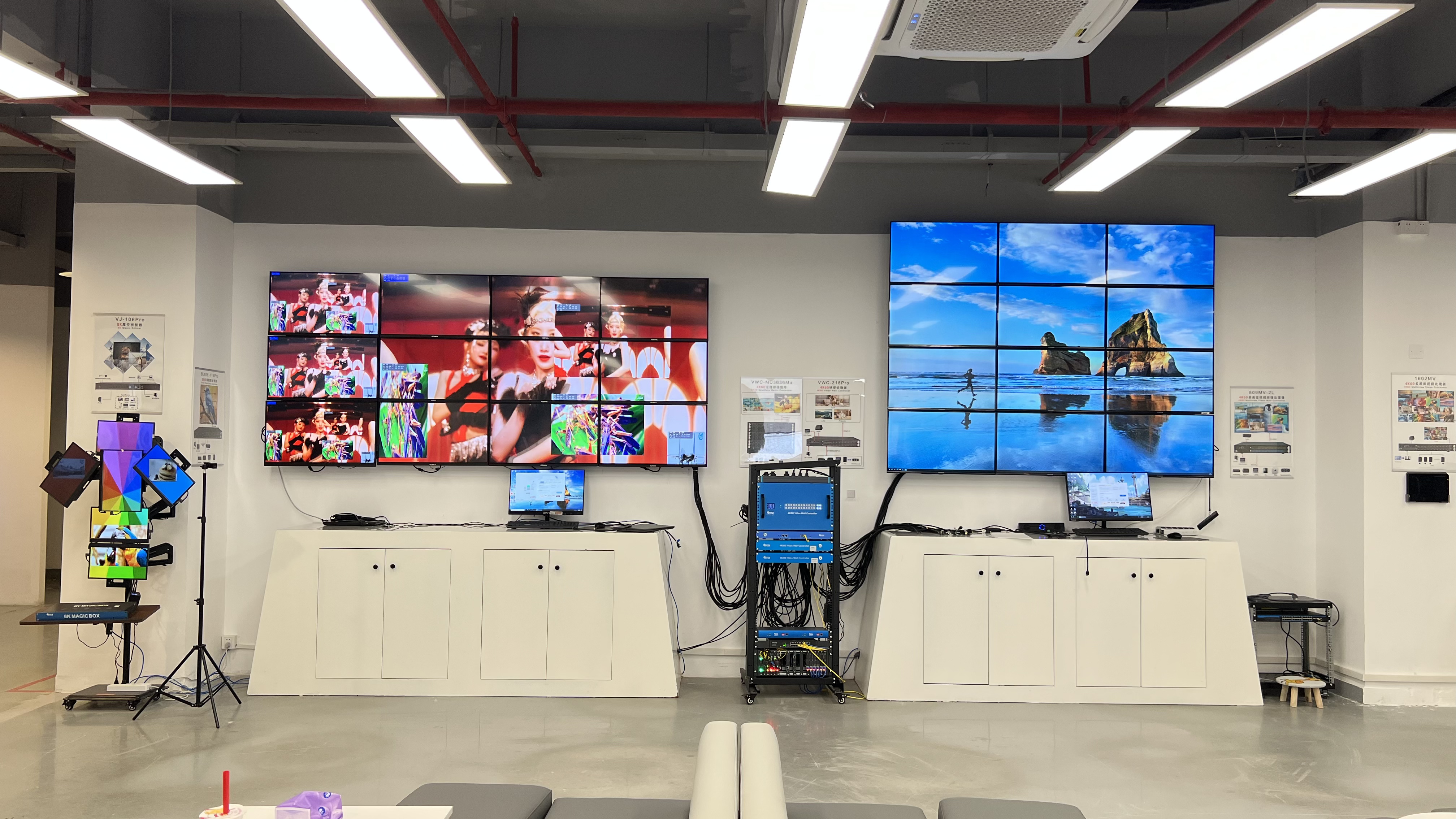
Next step for buyers in the research stage
Download the 2026 Bitvisus product brochure for the full model and interface overview: 2026 Bitvisus Product Brochure (PDF).
To discuss a specific wall layout, request a sample, or obtain a quotation for volume pricing, contact the Bitvisus team at marketing@bitvisus.com, reach technical support at support@bitvisus.com, or call and message on WhatsApp at +86 186 8150 9089. Company details and current product documentation are available at bitvisus.com.