Video Wall Controller Manufacturers: How to Evaluate a Supplier Before You Specify
Video Wall Controller Manufacturers: How to Evaluate a Supplier Before You Specify
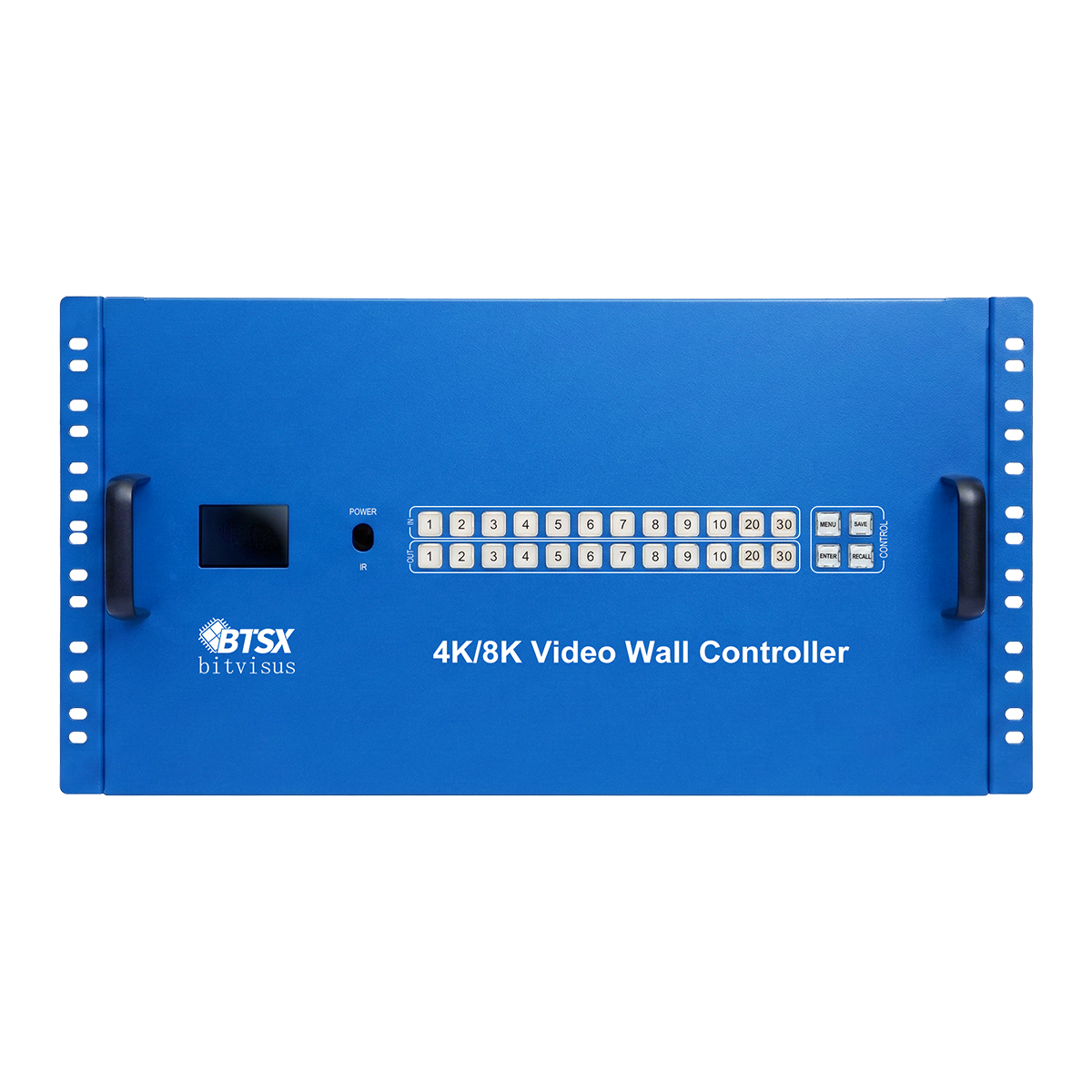
A video wall controller is the hardware processing unit that accepts several video sources, arranges them into windows or a single canvas, and distributes a synchronized, pixel-accurate image across a fixed matrix of displays. For buyers at the awareness and research stage, the harder question is not what a video wall controller does, but which manufacturers can deliver a system that still behaves correctly in year three.
This guide gives procurement managers, system integrators and AV engineers a practical evaluation framework for video wall controller manufacturers in 2026. It covers the market signals that shape supplier selection, seven criteria that separate a specification sheet from a working installation, an eight-step evaluation workflow, application-based selection logic, and a fact-based comparison of Bitvisus video wall controller models covering 4K60 and 8K platforms for control room, security monitoring, conference room and exhibition deployments.
The Procurement Problem: Why Manufacturer Selection Is Harder Than It Looks
The same product name is used for three technically different devices. A simple HDMI splitter or scaler is sold as a video wall controller; an FPGA-based hardware splicing processor is sold under the same term; and an AV-over-IP or software-orchestrated platform also carries the label. Supplier catalogues rarely make the architectural difference explicit, and that ambiguity is where most procurement risk begins.
Three failure modes dominate post-installation complaints:
- Architecture mismatch. A controller selected for low-cost distribution cannot deliver frame-synchronized, low-latency output when a control room needs live feeds without tearing or trailing.
- Layout and resolution mismatch. Non-standard panel sizes, portrait screens and uneven bezels produce stretched images, black borders or broken lines unless the controller supports editable output resolution and independent per-screen adjustment.
- Control and lifecycle gaps. A unit with no network management, no API and no documented after-sales path becomes an operational burden in a 7x24 environment.
Evaluating video wall controller manufacturers is therefore not a brand exercise. It is an architecture and evidence exercise, and the questions below are designed to test both.
Industry Background: What the 2026 Market Signals Mean for Buyers
Published data points explain why supplier evaluation has become more structured in this category:
- The global video wall controllers market was estimated at approximately USD 2.25 billion in 2025 and is projected to reach USD 4.4 billion by 2034 (Dataintelo, 2025-2034 forecast).
- The same source reports a CAGR of 7.8% across the 2025-2034 period (Dataintelo). Market size definitions vary widely: narrower hardware-only scopes have been reported near USD 0.55 billion, so a market figure should be treated as a growth signal rather than a vendor ranking.
- Control room applications account for roughly 50% of video wall processor market contribution (Statifacts, 2025). This is why latency, uptime and control integration dominate buyer questions in the category.
- AV-over-IP reached 73% of new video wall controller installations in early 2026 (GCG Enterprise Solution / AVIXA). IP-based control and IP-based video transport are not the same requirement, and buyers should ask manufacturers to separate the two in writing.
- Legacy 4U hardware video wall processors lost 18% market share in 2025 as users shifted toward AV-over-IP and software orchestration (GCG Enterprise Solution). Hardware splicing platforms are not disappearing; they are being repositioned toward low-latency, mission-critical work.
- ISO 11064 is the primary international standard governing control-room ergonomics, and it indirectly shapes how a video wall controller must handle window placement and information hierarchy.
- Video wall controllers are commonly classified under HS Code 85437099 (other electrical machines and apparatus) or 85437042 (other video control unit) for customs purposes.
The practical reading is simple: the category is growing, control rooms dominate demand, and the architecture you buy determines what the wall can do. The seven criteria below translate those signals into questions you can put to any video wall controller manufacturer.
Seven Criteria for Evaluating Video Wall Controller Manufacturers
1. Processing architecture and latency behaviour
Ask whether video is processed in dedicated hardware or in software on a general-purpose platform. Hardware platforms built on programmable FPGA chips maintain a fixed pipeline: input decoding, scaling, windowing and output mapping happen in real time, and output ports stay synchronized. Bitvisus builds its video wall controllers on programmable FPGA chips with a full hardware real-time processing architecture; the 8K platforms use 28 nm FPGA chips, and the BIT-VWC-409R rotating splicing processor uses a 40 nm FPGA chip. Where a latency figure is documented, it is specific rather than implied: the BIT-VWC-MD3636Ma 4K60 seamless matrix splicer states an input-to-output latency below 40 ms and an output port synchronization time difference of 0 nS, excluding differences introduced by the screens themselves.
2. Resolution and channel capacity
Capacity should be defined as a pixel budget, not a screen count. Two numbers matter: the maximum input resolution the controller can ingest, and the maximum output resolution per port. Documented Bitvisus examples include the 8K60 video wall controller with 1 input and 15 outputs (model BIT-VWC-8K60Y-115Pro), which accepts 8K60 input through 1x HDMI 2.1 or 1x DP 1.4 and drives up to 15 HDMI outputs at 1920x1200@60Hz or 1920x1080@60Hz, with M x N point-to-point splicing up to 15 output ports. For higher channel density, the BIT-VWC-MD3636Ma supports up to 36-channel HDMI 2.0 input and 36-channel HDMI 2.0 output at 3840x2160@60Hz in a 7U card-inserting chassis, configurable in combinations such as 4 inputs with 36 outputs, 24 inputs with 24 outputs, or 36 inputs with 36 outputs.
3. Control, remote management and web interface
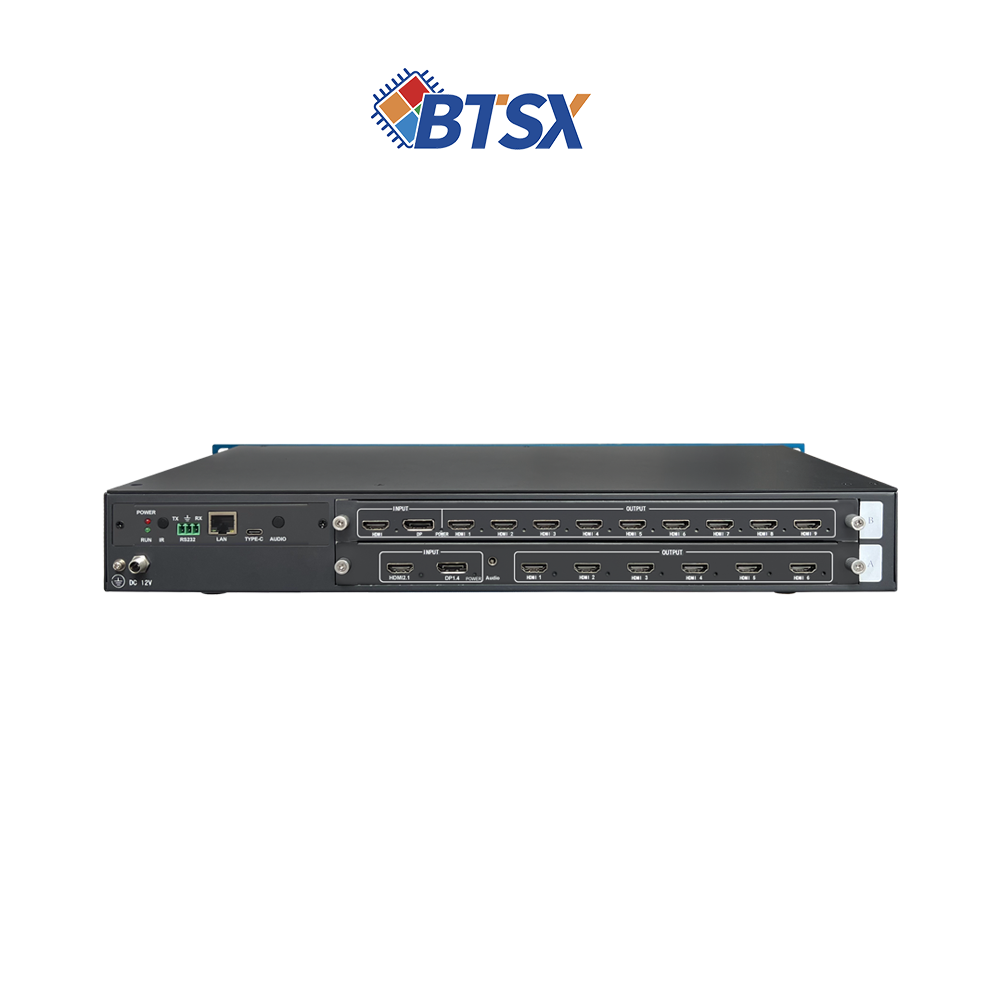
Control method determines operating cost. A controller that can only be switched locally generates service calls; a controller with a documented web interface, DHCP support and an API can be managed remotely and integrated with a central control system. Documented Bitvisus control paths include RS232 serial control, browser-based web control accessible from Windows, macOS, Linux, Android, iOS and HarmonyOS devices, infrared remote control, button board and WEB API interfaces for secondary development. The BIT-VWC-MD3636Ma adds 12 savable preset scenarios, OSD window identification and an LCD panel for source switching and for switching between dynamic and static IP addresses. The BIT-MSE-8K60D-104Pro supports EDID management through DIP switch and web interface, with DHCP automatic IP assignment or a custom static IP address.
If your project brief says "IP-based video wall controller", clarify which requirement you mean. In the documented models above, video transport is HDMI and DP based, while monitoring and management are network based.
4. Layout flexibility: splicing, rotation and bezel correction
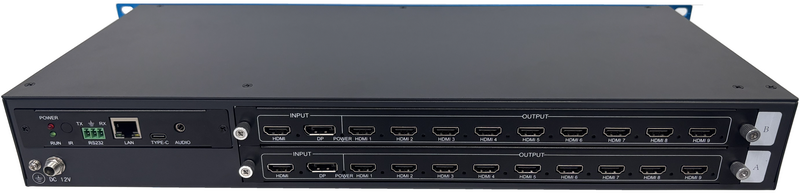
Real installations rarely use clean 2x2 grids. Portrait walls, zigzag columns and non-standard panel sizes demand rotation and per-screen geometry control. The BIT-VWC-409R supports 90-degree input rotation and 180-degree rotation of the output first row when the wall is configured in two lines, enabling portrait and creative splicing within a nine-screen matrix, plus cascading and parallel operation across multiple units. The BIT-VWC-8K60Y-115Pro supports bezel setup, so each output channel can be fine-tuned independently and screen borders or installation errors do not break a straight line or a moving image. Editable output resolution, available on several models, prevents stretching, distortion and black borders when displays do not match standard formats.
5. Reliability for 7x24 operation
Control rooms and monitoring centres rarely tolerate planned downtime. Industrial-grade design should be a set of verifiable details rather than an adjective. Bitvisus documents thickened 6-layer PCB boards, 16 kV anti-static capability, 18 W thermal conductivity material for internal heat dissipation with overheat protection, and a full hardware real-time processing architecture that avoids operating-system crash risk. Documented storage and operating temperature ranges for the 8K platforms are -10 degrees C to 50 degrees C for storage and 0 degrees C to 50 degrees C for operation. Where a wall runs continuously, ask for thermal design and protection details instead of a general quality statement.
6. Compliance, documentation and trade data
For EU and US deployment, request the declarations that match the specific product family: a CE-EMC Declaration of Conformity under EMC Directive 2014/30/EU, referencing EN 55032:2015/A11:2020, EN 55035:2017/A11:2020, EN IEC 61000-3-2:2019/A2:2024 and EN 61000-3-3:2013/A2:2021/AC:2022; an FCC Supplier's Declaration of Conformity referencing 47 CFR Part 15 Subpart B:2024; and a RoHS Declaration of Conformity referencing Directive (EU) 2015/863, (EU) 2017/2102 and EN IEC 63000:2018. Confirm the certificate list for the exact model rather than the brand, and align the customs declaration with a recognised HS classification such as 85437099.
7. Manufacturing capacity, OEM/ODM and supply continuity
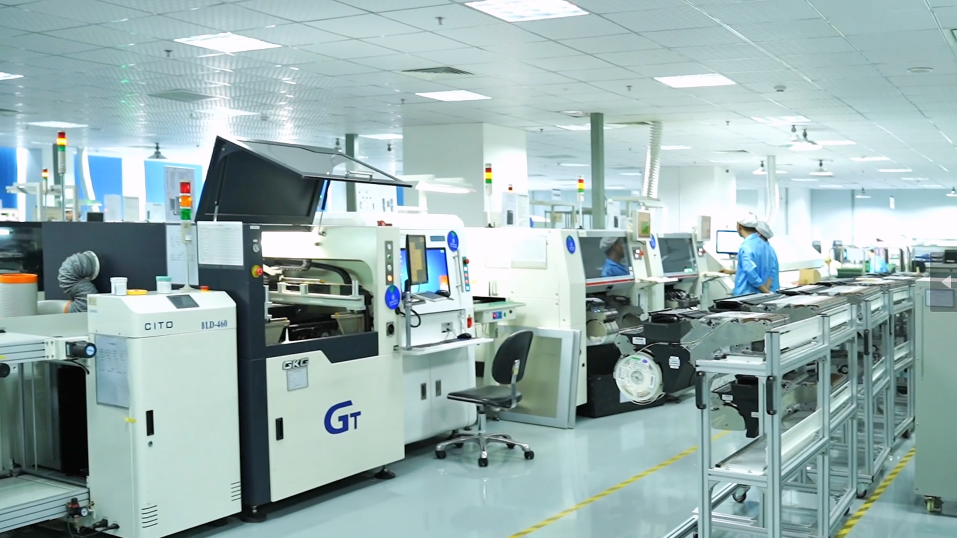
Manufacturer status matters when you need custom port counts, private-label hardware or long-term supply continuity. Bitvisus documents a 2,000 square metre manufacturing facility in Shenzhen, approximately 100 staff, a 20-engineer R&D team, an annual output of 100,000 units, and an export ratio of 70% concentrated on EU and USA markets. OEM and ODM support is documented at FPGA, chip and whole-product level, and the modular chassis design allows input and output configuration changes per project. Standard off-the-shelf products carry fixed functions and shorter delivery cycles, while OEM/ODM configurations require a longer development cycle and a higher minimum order quantity.
Step-by-Step: An Eight-Step Manufacturer Evaluation Workflow
- Define the display matrix and pixel budget. Record rows and columns, panel native resolution, orientation and total canvas size before contacting any manufacturer.
- Classify the latency requirement. Decide whether the application tolerates software-processed video, or needs hardware real-time processing with a documented latency figure.
- Decide the architecture. Choose FPGA hardware processing, IP-based transport or a hybrid, then shortlist only manufacturers who build that architecture.
- Map every source device. List computers, cameras, media players, Android boxes, game consoles and matrix switchers with their physical interfaces (HDMI 2.1, DP 1.4 or 2.1, Type-C) and HDCP version.
- Define the control model. Specify who operates the wall, from where, and through which protocol: RS232, IR, browser, or API integration with a central control system.
- Verify compliance and trade documentation. Request CE-EMC, FCC and RoHS declarations for the specific model, plus HS classification for customs.
- Validate manufacturing and customisation capability. Confirm factory location, R&D headcount, annual capacity, and whether OEM/ODM changes touch ports, firmware or FPGA logic.
- Test a sample before bulk purchasing. Use a sample order to validate output resolution, switching behaviour, control response and physical build in your own environment, then convert validated models to bulk pricing.
Use Cases: Matching Controller Capability to the Application
Control room and command dispatch
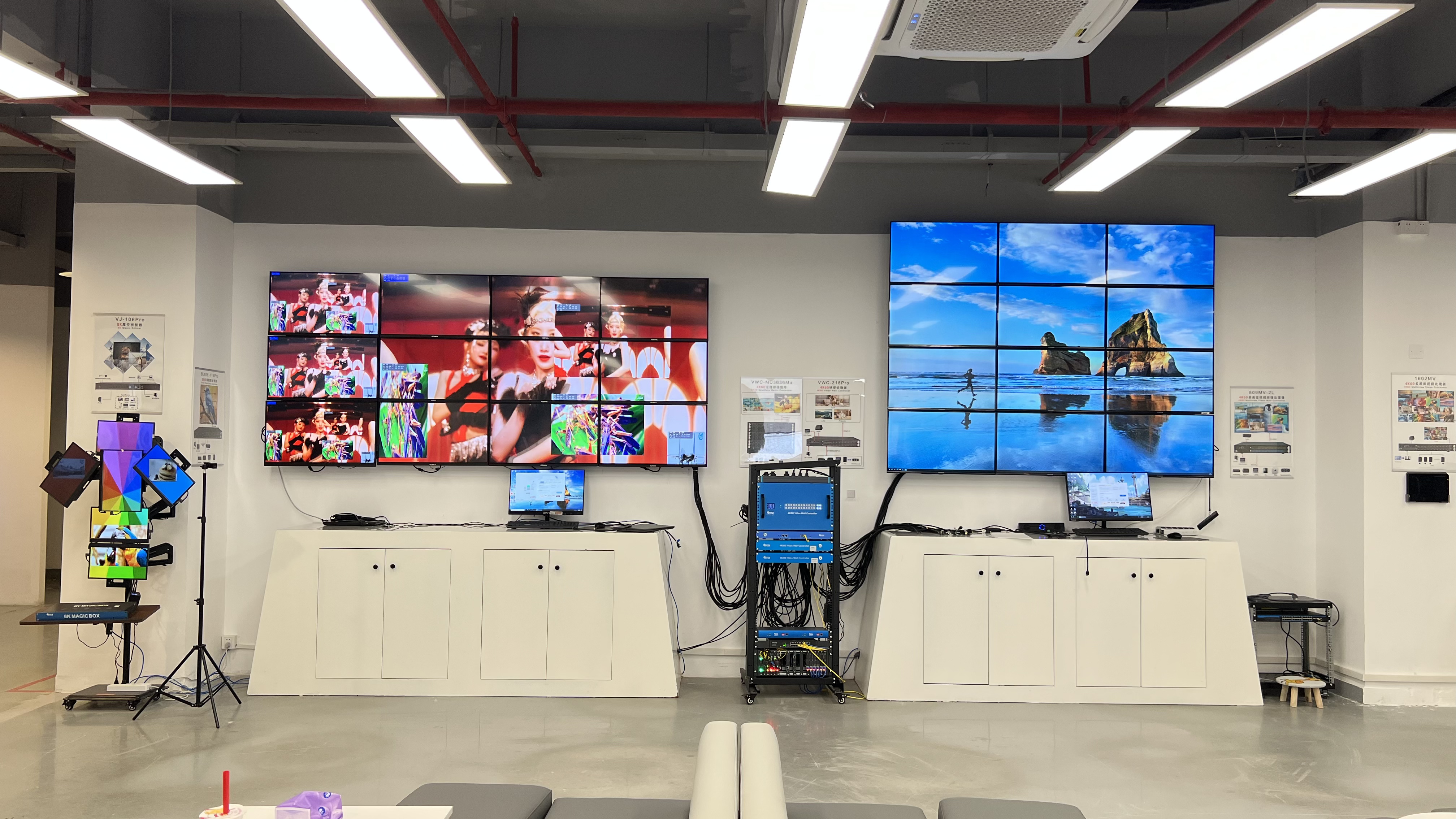
Command and dispatch centres need multi-signal split-screen display, cross-screen linkage, picture roaming and continuous operation. Documented reference configurations for this scenario use a 3x3 or 2x4 LCD video wall with a matrix switcher and a central control system. The relevant capabilities are hardware real-time processing, seamless switching without black screen or flicker, savable preset scenarios, and serial or network control for central control integration.
Security monitoring centre
Monitoring halls aggregate many camera channels and need fast source switching with reliable multi-picture display. Documented reference configurations pair a 3x3 or 4x4 monitoring wall with a video matrix, recording storage and an alarm linkage platform. Seamless switching is the decisive feature when operators patrol between feeds, because source changes must not introduce black screens or visible delays.
Conference room and enterprise meeting spaces
Meeting walls prioritise clean 4K60 presentation, multi-picture comparison and low-latency transmission over maximum channel count. A 2x2 or 1x3 display array with an HDMI extender and a central control system is a common documented pattern. Editable output resolution matters here, because meeting rooms frequently mix panel models and aspect ratios.
Exhibition, immersive and cultural tourism displays
Exhibition halls and immersive venues combine projectors or LED walls into one ultra-wide canvas. Documented reference projects include an immersive exhibition hall using 12 video wall controllers with more than 100 industrial-grade projectors to exceed a 16K combined canvas, and a building-scale projection mapping installation using multi-screen expanders with HDBaseT extenders across roughly 120 m of signal distance. Rotation support, edge blending and cascading capability are the selection criteria.
Broadcasting and industrial monitoring
Studio monitoring walls and factory production dashboards share one requirement: signal integrity over distance. Built-in output signal enhancement, industrial temperature range and anti-interference design are the specifications to compare, while MES or SCADA integration usually depends on whether the controller exposes an API.
Comparison Table: Bitvisus Video Wall Controller Models
All specifications below are taken from the manufacturer's published product documentation. Several platforms are modular, so final input and output counts should be confirmed with the supplier before ordering. Each model carries a one-year after-sales service period.
| Model | Type | Input | Output | Max resolution | Control | Form factor |
|---|---|---|---|---|---|---|
| BIT-VWC-8K60Y-115Pro | 8K60 video wall controller | 1x HDMI 2.1, 1x DP 1.4 | 15x HDMI 1.4 at 1920x1200@60Hz / 1920x1080@60Hz | 8K60 input; e.g. 3x3 at 5760x3240@60Hz RGB444 | RS232, web interface, API | 440 x 200 x 60 mm, 3.5 kg |
| BIT-VWC-8K60-404Max | 8K60 video wall controller | 2x HDMI 2.1, 2x DP 2.1, 1x Type-C | 4x HDMI 2.0 at 3840x2160@60Hz / 3840x2400@60Hz | 7680x4320@60Hz input | RS232, web interface, API | 2U chassis, 483 x 200 x 100 mm, 5.1 kg |
| BIT-VWC-MD3636Ma | 4K60 seamless matrix splicer | Up to 36x HDMI 2.0 | Up to 36x HDMI 2.0 at 3840x2160@60Hz | 3840x2160@60Hz | RS232, web, button board, remote, WEB API | 7U chassis, 13.5 kg |
| BIT-VWC-218Pro | 4K60 video wall controller | 2x HDMI 2.0, 2x DP 1.2 | 18x HDMI 1.3 at 1920x1200@60Hz and lower | 4096x2160@60Hz input | RS232, web interface | 440 x 200 x 60 mm, 3.5 kg |
| BIT-VWC-409R | Rotating splicing processor | 3x HDMI 1.4, 1x HDMI 2.0, 1x DP 1.2 | 9x HDMI 1.3 at 1920x1080@60Hz plus 1x DP loop out | 3840x2160 (default 3840x2160@30Hz) | IR remote, RS232, PC software | 270 x 122.5 x 20.5 mm, 1 kg |
| BIT-MSE-8K60D-104Pro | 8K60 multi-screen expander | 1x DP 2.1 | 4x HDMI 2.0 at 3840x2400@60Hz / 3840x2160@60Hz, customisable | 2x2 at 7680x4800P60; 1x4 at 15360x2160P30 | DIP switch, RS232, Ethernet web interface | 217 x 204 x 44.5 mm, 1 kg |
| BIT-MSE-8K60Y-104Pro | 8K60 multi-screen expander | 1x HDMI 2.1 or 1x DP 1.4 | 4x HDMI 2.0 | 2x2 at 7680x4320P60 YUV420 | DIP switch EDID management, parallel operation | 290 x 143 x 35 mm, 1.2 kg |
Manufacturer Profile: What Bitvisus Documents

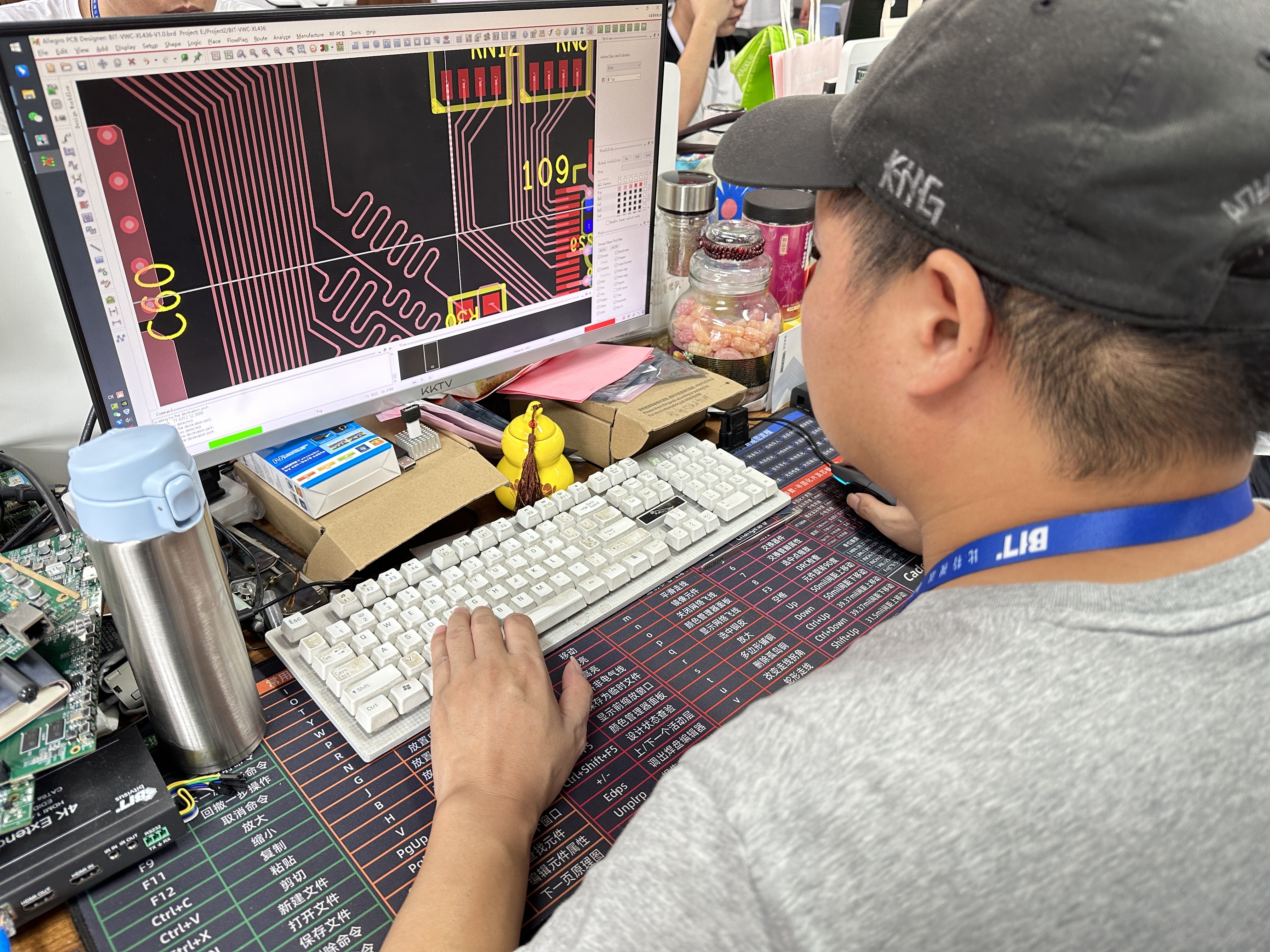
Shenzhen Bitvisus Technology Ltd. is a video wall controller manufacturer established in 2018 and located in Shenzhen, China, with approximately eight years of operation as of 2026. The company is a national high-tech enterprise specialising in 4K/8K image and video processing technologies, and it integrates FPGA and embedded software and hardware design services with full-cycle capabilities covering product development, production and sales.
- Manufacturing: 2,000 square metre facility, approximately 100 staff, 20-engineer R&D team, 100,000 units annual output, 70% export ratio with the EU and USA as main markets.
- Product portfolio: multi-screen expanders, projector fusion processors, video processors, HDMI matrices, multi-viewers, network and fibre extenders, and video wall controllers covering 4K60 and 8K platforms.
- Customisation: OEM orders supported, modular chassis design, and OEM/ODM capability at FPGA, chip and whole-product level.
- Compliance: CE-EMC, FCC Supplier's Declaration of Conformity and RoHS declarations; the model-specific certificate list is available from the sales team.
- After-sales: a documented one-year after-sales service period per model, with a one-year warranty on the BIT-MSE-8K60D-104Pro and the 4K60 and 8K controller platforms.
Registered address: Building 2, 6th Floor, West Side, Zhongyuntai Technology Industrial Park, South of Tangtou 1st Road, Shiyan Sub-district, Bao'an District, Shenzhen City, Guangdong Province, 518108, China.
FAQ
What compliance documents should a video wall controller manufacturer provide for EU and US projects?
For EU deployment, request a CE-EMC Declaration of Conformity under EMC Directive 2014/30/EU, which for Bitvisus products references EN 55032:2015/A11:2020, EN 55035:2017/A11:2020, EN IEC 61000-3-2:2019/A2:2024 and EN 61000-3-3:2013/A2:2021/AC:2022. For the United States, request an FCC Supplier's Declaration of Conformity referencing 47 CFR Part 15 Subpart B:2024. For material compliance, request the RoHS Declaration of Conformity referencing Directive (EU) 2015/863, (EU) 2017/2102 and EN IEC 63000:2018. The model-specific certificate list can be requested from the manufacturer's sales team, and video wall controllers are commonly declared under HS Code 85437099.
What processing architecture do Bitvisus video wall controllers use, and can they run 7x24?
Bitvisus controllers use programmable FPGA chips with a full hardware real-time processing architecture, so scaling, windowing and output mapping run in dedicated hardware rather than on a general-purpose operating system. The 8K platforms use 28 nm FPGA chips, and the BIT-VWC-409R rotating splicing processor uses a 40 nm FPGA chip. Industrial-grade design details include thickened 6-layer PCB boards, 16 kV anti-static capability, and 18 W thermal conductivity material for internal heat dissipation with overheat protection. Documented storage and operating ranges for the 8K platforms are -10 degrees C to 50 degrees C for storage and 0 degrees C to 50 degrees C for operation, and the platforms are positioned for continuous control room and engineering display operation.
How many displays can one video wall controller drive, and at what resolution?
Capacity depends on the platform. The BIT-VWC-8K60Y-115Pro drives up to 15 HDMI outputs at 1920x1200@60Hz or 1920x1080@60Hz and supports M x N point-to-point splicing up to 15 output ports. The BIT-VWC-218Pro provides 18 HDMI 1.3 outputs at 1920x1200@60Hz and lower. The BIT-VWC-MD3636Ma supports up to 36 HDMI 2.0 inputs and 36 HDMI 2.0 outputs at 3840x2160@60Hz in a 7U card-inserting chassis, configurable in combinations such as 4 inputs with 36 outputs or 24 inputs with 24 outputs. Where panels are non-standard, editable output resolution prevents stretching and black borders.
Can we test a sample before placing a bulk order, and how is pricing structured?
Yes. Prices published on the Bitvisus website are sample prices; business cooperation and bulk purchasing prices are issued through a quote request using the chat widget or the request-quote form, which requires name, email, phone and a project description. A sample order is the standard way to validate output resolution, switching behaviour and control response in your own environment before converting the validated model to bulk pricing. Warranty and shipping terms for a specific order should be confirmed with the sales team, because the published product documentation states a one-year after-sales service period without listing project-specific commercial terms.
Do Bitvisus video wall controllers support OEM/ODM customisation, and what is the next step?
OEM and ODM support is documented at FPGA, chip and whole-product level, and the modular chassis design allows input and output port configurations to be adjusted per project. Standard off-the-shelf products carry fixed functions and shorter delivery cycles, while customised hardware requires a longer development cycle and a higher minimum order quantity. The next step is to send your display matrix, source list and latency requirement to eddie.jia@bitvisus.com or WhatsApp +86 186-8150-9089, or to request a sample quotation through the website form; the 2026 Bitvisus Product Brochure can be downloaded for the complete model list.
Conclusion
Choosing among video wall controller manufacturers comes down to matching a documented architecture to a documented project requirement. Confirm the processing architecture and any latency figure, convert your wall into a pixel budget before comparing channel counts, decide whether the network requirement is control or transport, and verify compliance, manufacturing capacity and customisation depth before the order is placed. A supplier that publishes specific specifications and supports sample validation removes most of the risk from the decision.
Next Step: Validate a Sample and Request Pricing
Send your display matrix, source devices and latency requirement to the Bitvisus team and request a sample quotation for the model that fits your project. Sample pricing, bulk pricing and OEM/ODM evaluation are handled by the sales and technical support team.
- Sales: eddie.jia@bitvisus.com
- Technical support: support@bitvisus.com
- Phone / WhatsApp: +86 186-8150-9089
- Website: bitvisus.com
Download the full model and specification reference: 2026 Bitvisus Product Brochure (PDF).