
Video Wall Controller Supplier Evaluation: Modular Expansion, KVM, and Warranty
A decision-stage video wall controller evaluation is won on evidence, not on feature lists. The supplier you can defend to a project owner is the one that proves three things: modular I/O can grow without a new chassis and reach the distances your site actually has, multi-window and KVM functions hold up in daily operation, and the warranty has a named replacement path with a support contact behind it.
This guide uses one manufacturer's documented answers as a worked example. Shenzhen Bitvisus Technology Ltd. (Bitvisus), founded in 2018 in Shenzhen, China, designs FPGA-based video wall controllers and multi-screen processors and exports to the EU and USA. The same questions are written so they can be put to any supplier on your shortlist.
Evaluation summary
- Modular expansion is board-level, not model-level. The Bitvisus chassis accepts different processing boards so input and output ports can be added or reduced per project (documented example: the BIT-MSE-U1-208 modular controller).
- PIP/POP, window roaming, integrated KVM, editable resolution and edge blending exist in the range, but at model level. Confirm which model carries which function before you write it into a specification.
- Warranty is 1 year. Company comparison data states replacement is included, against a 1-year warranty without replacement for ARM-based splicing processors and low-end consumer splitters.
- Delivery is about 7 days, against 15–30 days documented for imported brand and low-end alternatives.
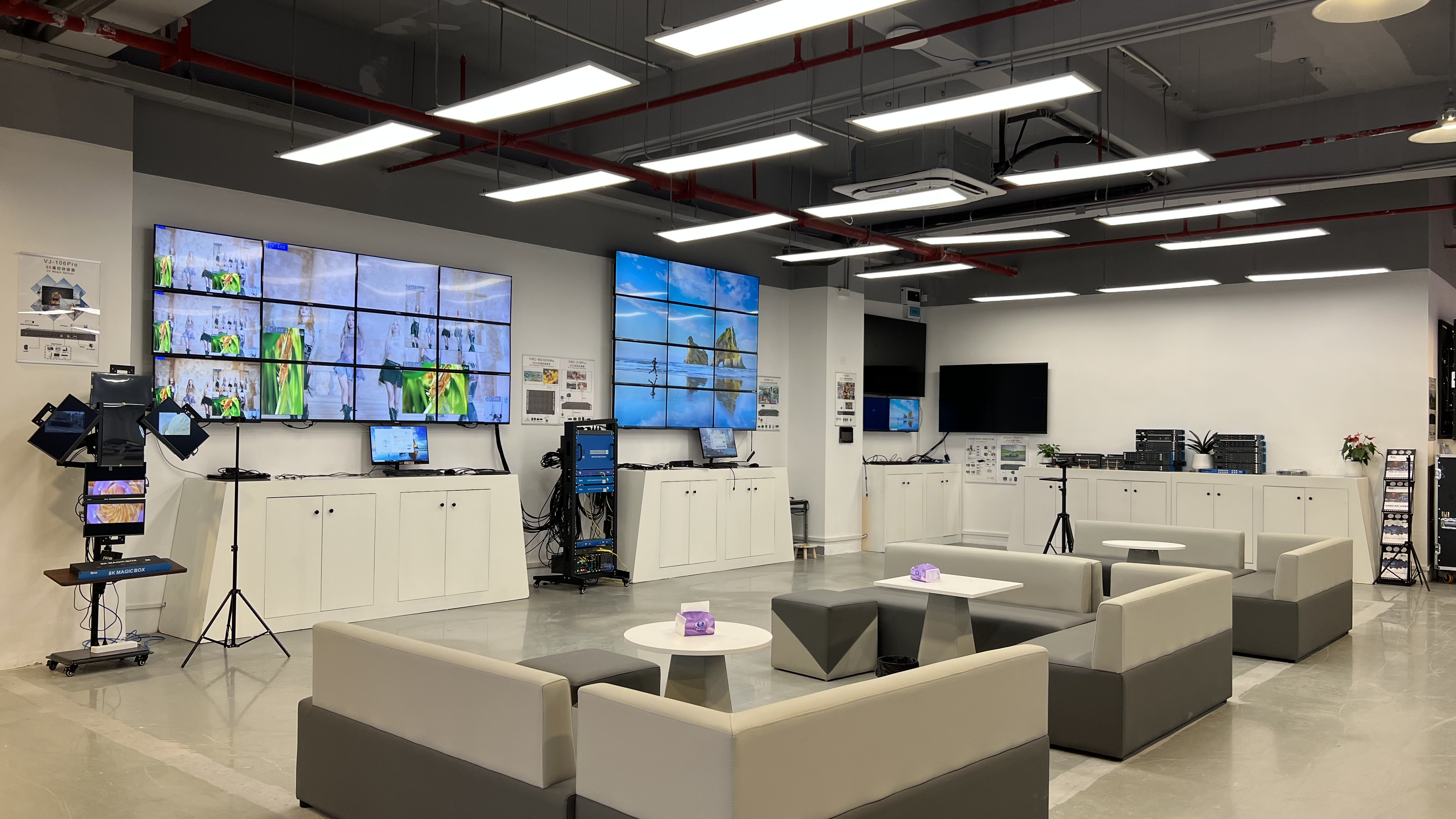
What a Supplier Evaluation Has to Prove — and Where It Usually Breaks
A video wall controller supplier is qualified for a decision-stage project when it can demonstrate five capabilities with model-level evidence and lock three commercial commitments in writing: modular I/O expansion, PIP/POP with window roaming, integrated KVM, editable output resolution and edge blending, plus a defined warranty term, a support response window and a quote that maps to your I/O schedule.
Procurement teams rarely lose time on the feature question. They lose it on four recurring gaps between a data sheet and an installation.
- Expansion treated as a marketing word. A fixed-model controller cannot be modified after purchase. If channel counts change between design and commissioning, the only options are a second unit or a redesign. Board-level modularity changes that outcome.
- Distance assumed rather than measured. Copper HDMI runs have documented limits, and long-distance links need either HDBaseT or fiber. A supplier that cannot state the limit of its transport option in writing leaves a commissioning risk open.
- Multi-window and KVM validated in a demo only. Window roaming, overlay and KVM behaviour under 7×24 use, with the operator switching sources mid-shift, is a different test from a showroom walkthrough.
- Warranty read as a number instead of a process. One year of coverage means little if a fault requires returning the whole unit, or if spare boards are not stocked. Replacement terms, freight responsibility and module availability are the parts that decide downtime.
Industry Background: Why the Evaluation Bar Moved
The video wall controller market was estimated at approximately USD 2.25 billion in 2025 and is projected to reach USD 4.4 billion by 2034, a CAGR of 7.8% over 2025–2034 (Dataintelo). Growth of that shape rarely comes from like-for-like replacement; it comes from larger canvases, higher pixel counts and more control-room and experience-driven installations.
Three structural signals matter when you build a shortlist.
- Networked architectures are mainstream. AV-over-IP adoption reached 73% of new video wall controller installations in early 2026 (GCG Enterprise Solution / AVIXA). Buyers now expect remote management and web-based control alongside hardware processing.
- Control rooms dominate demand. Control room applications account for 50% of the video wall processor market contribution (Statifacts), which is why 7×24 stability and KVM-class operator workflows carry so much weight in evaluation.
- Legacy hardware is losing share. Legacy 4U hardware video wall processors lost 18% market share in 2025 as users shifted toward AV-over-IP and software orchestration (GCG Enterprise Solution). Fixed, oversized chassis are the segment under pressure — modular, rack-mount units are the replacement path.
One regulatory anchor is also worth naming at decision stage: ISO 11064 is the primary international standard governing control-room ergonomics, and it directly affects layout management requirements for control-room video walls. A supplier that has never been asked about operator layout conventions is a supplier that has not worked many control rooms.
The Five Capability Questions and What a Real Answer Requires
Bitvisus answers these questions through model-specific product documentation and a published FAQ. Each answer below is paired with the verification question a buyer should add.
1. Modular expansion and long-distance fiber transmission
Modular expansion at Bitvisus is a chassis-level decision. The chassis can be fitted with different processing boards according to project requirements, flexibly adding or reducing input and output ports; the BIT-MSE-U1-208 modular controller is the reference example. I/O count therefore becomes a configuration item rather than a purchase decision you have to get right the first time.
The clearest specification of that architecture is the BIT-VWC-MD3636Ma, a 4K60 seamless matrix splicer in a 7U chassis that accepts up to 9 input cards (36 HDMI 2.0 inputs) and 9 output cards (36 HDMI 2.0 outputs). It uses 4-channel HDMI 2.0 boards with a 600 MHz maximum pixel clock, 8-bit colour depth, RS232/WEB/button/remote/WEB API control, 240 W power draw at full card load and a 0–60 °C operating range.
Long-distance transmission runs on separate product lines: a fiber optic extender range and an embedded projection fusion server range for long-distance signal delivery. The limit is worth recording precisely — specific fiber transmission distances and single-mode/multi-mode specifications are not publicly disclosed, so they must be confirmed with sales or technical support before the cabling design is frozen. A supplier that declines to publish a limit is not automatically weaker than one that does, but the number has to arrive in writing before signature.
Inside HDBaseT range, the documented Romania deployment (covered below) ran roughly 120 m of HDMI extension using BIT-MSE-4K60-104Pro multi-screen processors with BIT-Ex-HDBT-150-RX receivers rather than fiber.
2. PIP/POP and window roaming
PIP/POP and window roaming are supported, and the company answers at model level rather than as a general capability claim. The BIT-VWC-U1-MD404Ma has a built-in splicing matrix plus window roaming function, allowing multiple windows to be overlaid on the same screen with free layout and cross-screen roaming — the configuration used for command control, multi-screen video surveillance and multimedia conference halls.
Add three verification questions to that answer: the maximum number of floating windows per output, whether roaming continues to behave when a source resolution changes mid-session, and whether layout presets can be recalled from the web interface or through RS232 from the room control system. Those three points separate a controller that operators accept from one they work around.
3. Integrated KVM
KVM appears as an integrated function in the high-end modular matrix configuration used for control-room and command-centre projects, alongside seamless switching. The scoping point matters more than the feature label: in some documented system configurations, KVM extension is listed as separate equipment — a KVM extender — rather than as a controller function.
Before writing “KVM included” into a specification, confirm which model integrates KVM ports, how many ports it carries, and whether operators need KVM at the controller, at the desk, or across both. That single clarification prevents the most common post-award variation order in command-centre projects.
4. Editable resolution
Editable resolution is one of the advanced functions the range covers, and two documented implementations can be checked against your canvas. The BIT-VWC-MD3636Ma allows a custom special resolution to be set, with the pixel-clock ceiling specified below 600 MHz on the output side and below 300 MHz on the input side. The BIT-MSE-8K60D-104Pro lists customizable resolution support on its 4K60 outputs.
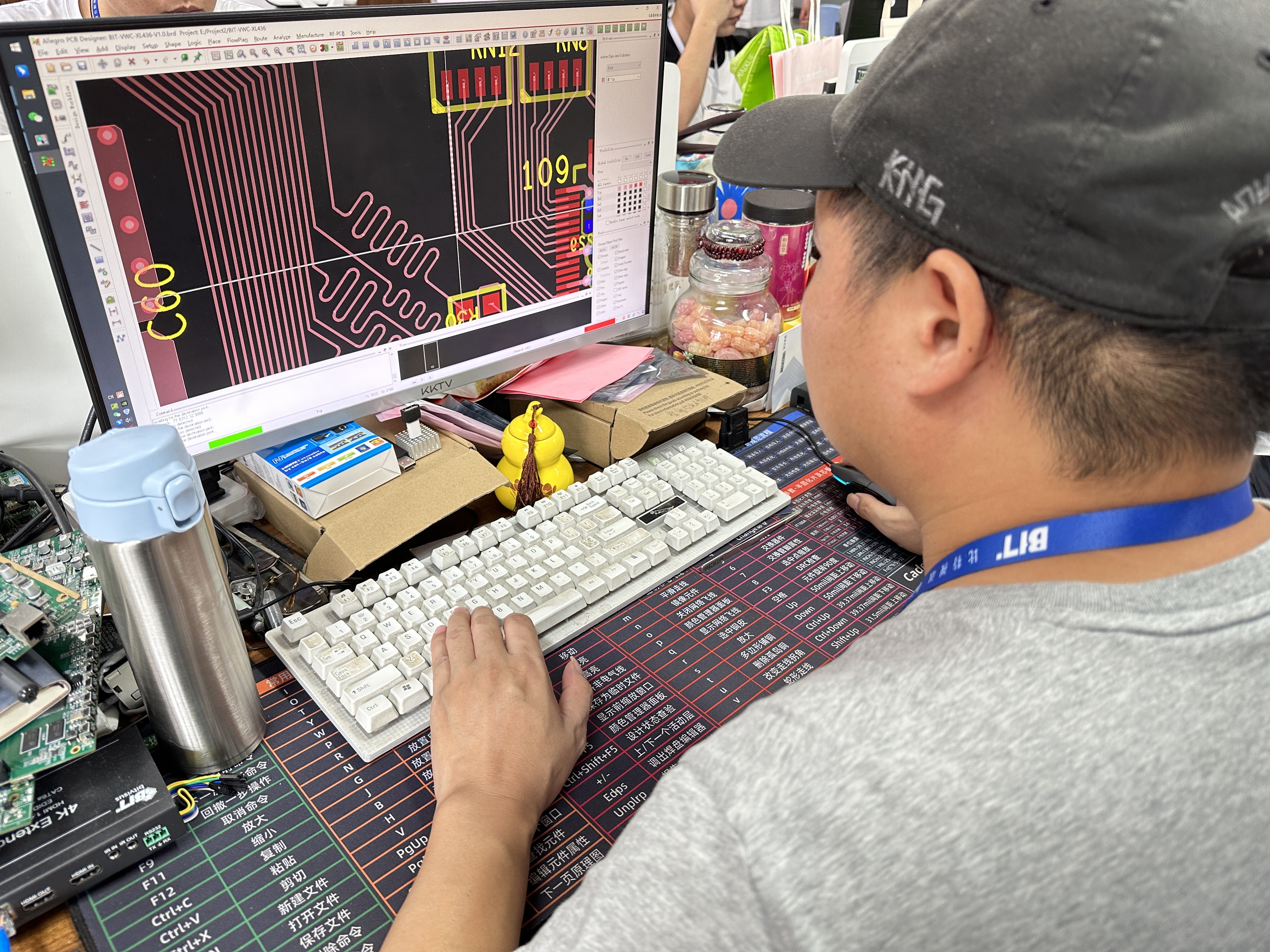
The practical value appears when no standard format fits: an LED wall with a non-standard aspect ratio, a projection array whose combined canvas is an odd number of pixels, or a mapped building façade. The Romania project is the reference case — a 11520×1200 canvas produced from a single PC through HDBaseT multi-screen processors. Ask whether custom resolution is set at the factory or editable in the field through the web interface, because a façade or exhibition canvas often changes after the first content pass.
5. Edge blending
Edge blending with geometric correction is what separates a video wall controller from a splitter in projection-based rooms. Bitvisus positions processors that support edge blending and geometric correction for immersive projection-fusion venues, and documents an 8K60 deployment in Kuala Lumpur (Merdeka Square) where a BIT-MSE-8K60D-104Pro handled 8K60 signal processing with 1×4 hardware tiling and projection fusion on a building façade, specified for industrial-grade reliability, zero latency, 16 KV anti-static protection and overheat protection in a high-temperature outdoor environment.
For evaluation, request the blend width range the processor supports, whether warping is grid-based per projector, and whether the blended canvas can be adjusted from the web interface after commissioning. On an exhibition that changes content twice a year, post-commissioning editability saves more money than a marginally wider blend range.
Warranty, After-Sales and Support Hours: What to Verify
Bitvisus controllers carry a 1-year warranty. The company's comparison data states that the warranty includes replacement, against a 1-year warranty without replacement for ARM-based splicing processors and low-end consumer splitters. Treat “replacement” as a defined term to be written into the purchase order: what triggers it, who pays freight in both directions, and whether the replacement ships from stock or only after inspection.
Three after-sales mechanisms are documented and can be checked before award:
- 7×12-hour technical support with remote diagnosis and debugging — the fastest route out of a configuration fault that is not a hardware failure.
- Module-level service. Because the chassis is modular, a fault can be resolved by replacing the affected board instead of returning the whole unit — the failure mode that removes a fixed-model controller from service for weeks.
- Regular firmware upgrades for continuous feature optimisation, which matters when a canvas or source format changes after handover.
The manufacturing evidence behind the warranty is also checkable. Every Bitvisus unit undergoes a 48-hour aging test before delivery, against 2–8 hours for ordinary ARM architecture and low-end consumer splitter products — a 6–24× longer test — with a reported 99.9% yield rate and a defect rate below 0.1%, against 0.5%–1% for those comparison categories. Ask for the aging-test record for your serial numbers. It is the cheapest verification available at decision stage.
Total cost of ownership belongs in the same conversation. Company comparison data puts Bitvisus purchase cost 30%–50% below imported brand splicing processors and 10%–20% above domestic mid-range brands, with a comprehensive cost over a 3-year period around 40% lower than imported brands and more than 20% lower than low-end brands once failure rate, maintenance and downtime are included. Power draw is stated at ≤50 W per unit on an 18-screen model against 60–80 W for same-spec competitors, using full metal passive cooling plus a smart fan.
Cross-Checking Delivery Evidence: Three Documented Deployments
Capability claims become credible only when they have been delivered at scale, at distance and over time. Three documented projects cover those three axes.
Scale: Shenzhen immersive exhibition, 12 controllers driving 100+ projectors
A large-scale immersive projection exhibition in Shenzhen uses 12 × BIT-VWC-409R controllers — a 4-in 9-out rotation splicing model — driving more than 100 industrial-grade 1080p projectors in a 3×3 video wall layout, with a combined canvas above 16K. The stated requirements were ultra-high combined resolution, large-scale multi-projector synchronisation, edge blending and warping, and scalable, stable operation under continuous daily exhibition duty. This is the reference to quote when your own project sits above four projectors and the canvas exceeds a single 4K output.
Time: the Cézanne immersive exhibition in Shenzhen
The Cézanne immersive exhibition in Shenzhen is documented on the BIT-VWC-4K60-409R platform, driving the exhibition's projection canvas in continuous operation. Buyers evaluating long-term reliability should ask a specific question here rather than accept a duration figure: how long has the installation been running, and what has been replaced in that period? The company presents the Cézanne installation as a long-running reference; confirm the installation date and service history directly with the reference contact during due diligence, because a deployment duration taken from a brochure or a third-party summary is not evidence.
Distance: Romania 3D projection mapping, about 120 m over HDBaseT
A building 3D projection mapping light show in Romania ran a six-projector system from a single PC (GTX 3050) with six HDBaseT extenders and two BIT-MSE-4K60-104Pro multi-screen processors paired with BIT-Ex-HDBT-150-RX receivers, extending HDMI roughly 120 m to the projectors. The canvas was 11520×1200, with multi-projector edge blending and warping, operated as scheduled Christmas-season shows in an outdoor night environment. The lesson for evaluation is architectural: long runs do not automatically mean fiber, and the transport choice should follow the measured distance and the site's cable route.
What these references prove is multi-projector synchronisation at scale, mixed transport including HDBaseT at roughly 120 m, and continuous exhibition operation. What they do not prove is that your canvas will work. That requires a written acceptance test against your own content, sources and layout.
A Step-by-Step Supplier Evaluation Workflow
Step 1 — Define the canvas before the controller
Lock the total pixel canvas, the physical layout (2×2, 1×4, 3×3, up to large seamless matrices) and the frame rate. Where the canvas has no standard format, plan for editable resolution from the start rather than treating it as a commissioning fix.
Step 2 — Count I/O and the growth path
List every source, its interface (HDMI 2.0, DP 1.2, DP 2.1 or HDMI 2.1) and its resolution, then count outputs. If the design is likely to change, put a modular chassis on the shortlist — the BIT-MSE-U1-208 for board-level flexibility, or the BIT-VWC-MD3636Ma where 36×36 HDMI 2.0 capacity is required. If the count is fixed and modest, a standard model carries a lower cost.
Step 3 — Fix the transport distances and link type
Measure the longest run and match it to a transport. Documented copper limits on Bitvisus models illustrate why this step cannot be skipped: on the BIT-VWC-218Pro, HDMI inputs are specified for cable lengths up to 3 m and HDMI outputs up to 15 m; the BIT-MSE-8K60Y-104Pro specifies HDMI 2.0 outputs up to 10 m; the BIT-MSE-8K60D-104Pro specifies a 3 m input and 5 m output limit. Beyond copper, the choice is HDBaseT (documented at about 120 m in the Romania project) or fiber, whose distance and mode specifications must be confirmed with technical support.
Step 4 — Match multi-window, KVM and blending to a model
Write the operator requirement first — how many windows, whether roaming crosses screens, whether KVM is needed at the desk — and then ask for the model that carries those functions. For PIP/POP with roaming, the BIT-VWC-U1-MD404Ma is the documented example. For KVM with seamless switching in a command-centre layout, the high-end modular matrix is the relevant configuration.
Step 5 — Audit manufacturing and test evidence
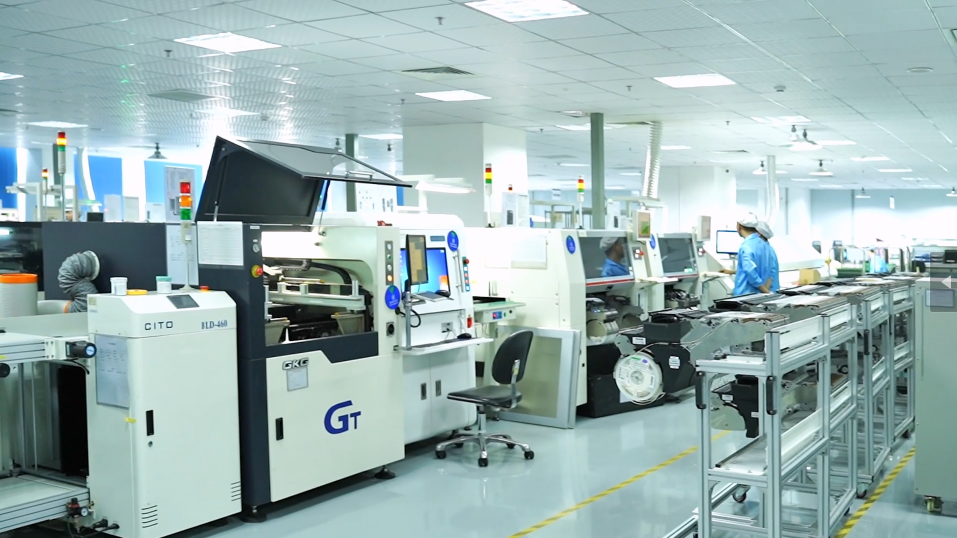
Ask for factory facts and compare them with the plant you are relying on: a 2,000 m² facility, 100 employees and 100,000 units annual output, with 70% of production exported to the EU and USA. Then ask for the verification regime: 48-hour aging before delivery, 99.9% reported yield, defect rate below 0.1%, and self-developed FPGA image processors backed by more than 10 years of FPGA image processing experience. Factory visits or live video audits close this step faster than documents.
Step 6 — Put warranty, spares and support hours in the contract
Convert the 1-year warranty into clauses: replacement trigger, freight responsibility, spare board stocking for the models you buy, the 7×12 support window in your time zone, remote diagnosis access requirements and the firmware update policy. A supplier that resists writing these down is telling you something useful.
Step 7 — Confirm lead time and customization cycle
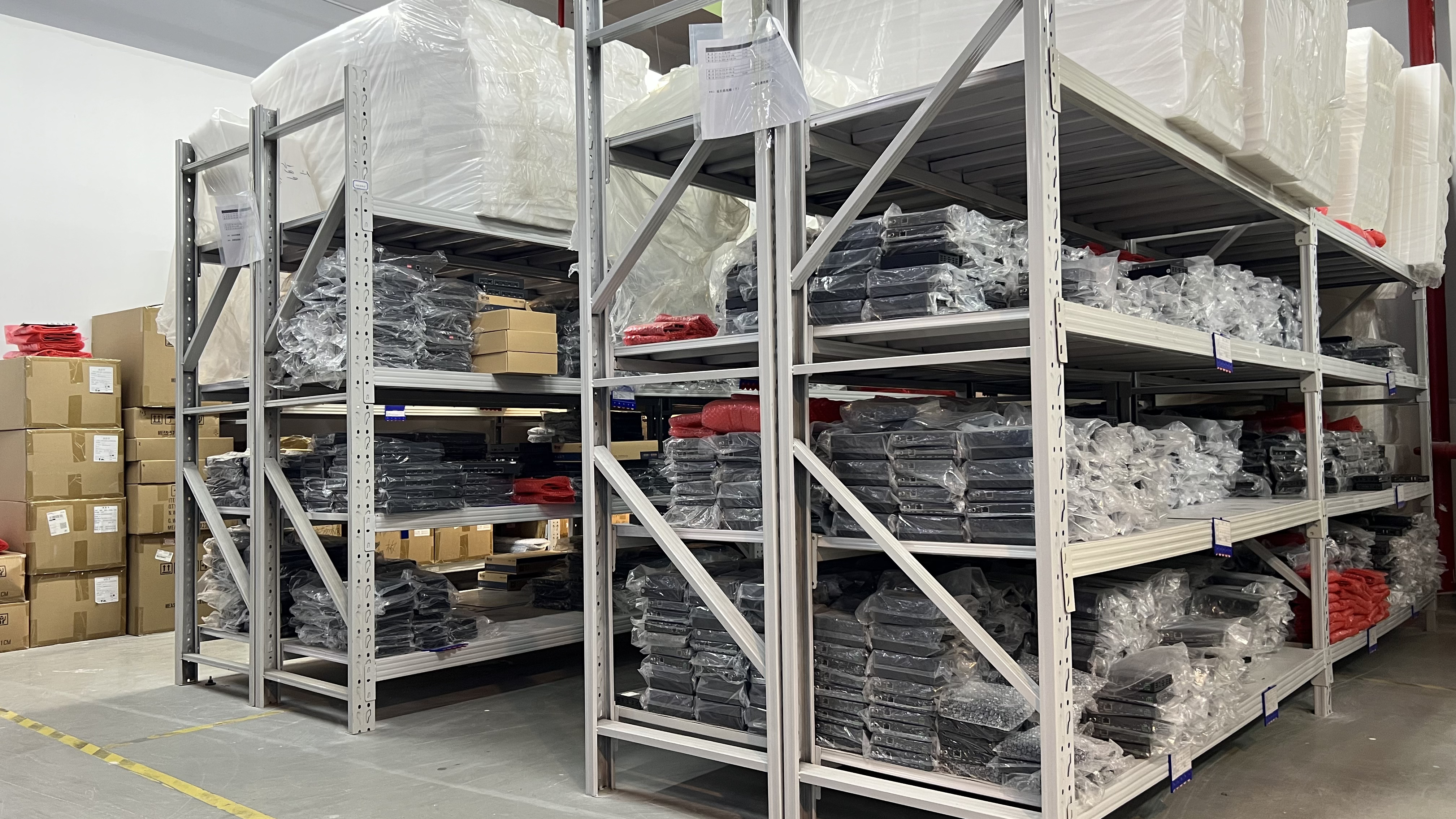
Delivery time for Bitvisus controllers is approximately 7 days, against 15–30 days documented for imported brand and low-end alternatives, and modular design shortens the customisation cycle when board configuration or a special resolution is involved. Confirm the lead time for your exact configuration, not for a catalogue unit.
Step 8 — Run the quote process on a written requirement sheet
A quote is only comparable when every supplier prices the same scope. Send one sheet covering: canvas and layout, source list with interfaces and resolutions, distances and cable types, control requirements (web, RS232, central control), environment and operating hours, window/KVM/blending requirements, warranty and spares expectations, delivery destination and import classification. Video wall controllers are commonly classified under HS code 85437099 (other electrical machines and apparatus) or 85437042 (other video control unit), so confirm the code with your broker before freight is quoted. Bitvisus quotes are handled directly by the sales contact listed at the end of this article, and the 2026 product brochure can be downloaded before the call to pre-screen models.
Where These Controllers Fit: Use Cases
Control room and security monitoring
Control-room and command-centre monitoring walls need projectors. Bitvisus positions its high-end modular matrix, with seamless switching and KVM capability, for these rooms, and the 8-in 9-out multi-view configuration (BIT-VWC-809MV) for monitoring layouts. The evaluation criteria are 7×24 continuous rating, serviceability without shutdown and operator layout recall.
Conference rooms and multi-screen meeting spaces
A 2×2 or 1×3 meeting wall is a different price-performance problem than a control room. The BIT-VWC-218Pro, with 2× HDMI 2.0 and 2× DP 1.2 inputs and 18× HDMI 1.3 outputs at up to 1920×1200@60, 48 W power draw, RS232 and web control, covers the format. The BIT-VWC-406R (4-in 6-out rotation splicing) fits smaller rooms where portrait panels or rotation are required.
Immersive projection, exhibitions and mapping
Blending, warping and editable resolution are the deciding functions here. The 409R platform, the 8K60 series and the embedded projection fusion server range cover canvases from a six-projector façade to a 100+ projector exhibition, and the Malaysia and Romania references show both 8K60 tiling and 11520×1200 blending delivering in the field.
Commercial display and advertising walls
Retail, transit and advertising arrays run on 1×4, 1×3 and 2×2 layouts with remote content changes. Web interface control and LAN-based remote management matter more than local buttons, and 7×24 industrial rating matters more than peak specification.
Comparison Table: Bitvisus FPGA Controllers vs Common Alternatives
The table below uses the manufacturer's published comparison basis, which groups ordinary ARM architecture splicing processors with low-end consumer splitters and treats imported brand splicing processors as a separate category. Cells marked as not documented are exactly that — no verified figure is available for that category.
| Criterion | Bitvisus FPGA-based controllers | ARM/CPU splicing processors and low-end consumer splitters | Imported brand splicing processors |
|---|---|---|---|
| Processing architecture | FPGA plus embedded full-stack design, hardware and software co-developed | ARM/CPU software processing, or consumer-grade fixed design | Not documented in the comparison basis |
| Latency | 0 ms | 100–300 ms | Not documented in the comparison basis |
| Maximum resolution | Native 8K@60Hz with lossless colour | 4K@30Hz, compressed with colour loss | Not documented in the comparison basis |
| Defect rate | Below 0.1% (reported) | 0.5%–1% | Not documented in the comparison basis |
| Pre-delivery aging test | 48 hours | 2–8 hours | Not documented in the comparison basis |
| Customization | Fully modular hardware and software; special resolutions and channel counts configurable | Fixed models that cannot be modified | Not documented in the comparison basis |
| Warranty | 1 year, with replacement | 1 year, without replacement | Not documented in the comparison basis |
| Delivery time | Approximately 7 days | 15–30 days | 15–30 days |
| Purchase cost position | 30%–50% below imported brands; 10%–20% above domestic mid-range brands | Below Bitvisus on entry price | 30%–50% above Bitvisus |
| Technical support | 7×12-hour support, remote diagnosis and debugging, regular firmware upgrades | Limited remote management, slower response | Slower response and longer spare-parts supply cycles reported |
Figures reproduce the manufacturer's published comparison data. They are a starting point for your own acceptance test, not a substitute for it.
Frequently Asked Questions
What warranty and after-sales terms should I verify before ordering a video wall controller?
Bitvisus controllers carry a 1-year warranty, and the company's comparison data states that replacement is included, against a 1-year warranty without replacement for ARM-based splicing processors and low-end consumer splitters. Verify four things in writing: the warranty start date (delivery or acceptance), freight responsibility in both directions, spare board availability for your specific models, and the support window — Bitvisus documents 7×12-hour technical support with remote diagnosis and debugging plus regular firmware updates. Because the chassis is modular, a fault can be resolved by replacing the affected board rather than returning the whole unit, which is the term that most directly limits downtime.
Do Bitvisus controllers support modular expansion, PIP/POP, KVM, editable resolution and edge blending?
All five capabilities exist in the range, at model level. Modular expansion is board-level: the chassis accepts different processing boards so input and output ports can be added or reduced (BIT-MSE-U1-208; the 7U BIT-VWC-MD3636Ma takes up to 9 input and 9 output cards, 36 HDMI 2.0 ports each way). PIP/POP with free layout and cross-screen roaming is documented on the BIT-VWC-U1-MD404Ma, which has a built-in splicing matrix plus window roaming. Integrated KVM appears in the high-end modular matrix used for command-centre projects, alongside seamless switching — and in some configurations KVM extension is supplied as separate equipment, so confirm ports and placement. Editable resolution is supported, with the BIT-VWC-MD3636Ma allowing custom special resolutions under a 600 MHz output pixel clock and the BIT-MSE-8K60D-104Pro listing customizable output resolution. Edge blending with geometric correction is provided on processors positioned for immersive projection fusion.
How does the cost compare with imported brands and domestic mid-range controllers?
Company comparison data puts Bitvisus purchase cost 30%–50% below imported brand splicing processors and 10%–20% above domestic mid-range brands. On total cost of ownership the gap widens: over a 3-year period the comprehensive cost is stated at around 40% lower than imported brands and more than 20% lower than low-end brands once failure rate, maintenance and downtime are counted. Power draw is quoted at ≤50 W per unit on an 18-screen model against 60–80 W for same-spec competitors, with full metal passive cooling plus a smart fan. Delivery time is approximately 7 days, against 15–30 days for imported brand and low-end alternatives.
Can we validate a configuration before committing to a full rollout?
Validation starts with configuration rather than a generic sample unit. Because the platform is modular, boards and resolutions are set for your project, so the unit delivered for a pilot matches the I/O schedule you specified. Every unit undergoes a 48-hour aging test before delivery, with a reported 99.9% yield rate and a defect rate below 0.1%, and the test record for your serial numbers can be requested. Confirm with sales what sample or pilot arrangement fits your project, and agree the acceptance criteria in advance: your own content, your own sources, your own layout, tested over a defined run period.
What is the lead time, and how do I get a quote?
Delivery time for Bitvisus controllers is approximately 7 days, against 15–30 days for imported brand and low-end alternatives, and the modular design shortens the customisation cycle where board configuration or a special resolution is involved. To receive a comparable quote, send the canvas and layout, the source list with interfaces and resolutions, the longest cable runs and transport type, control requirements, operating hours and environment, warranty and spares expectations, and the delivery destination with import classification. Contact Eddie at eddie.jia@bitvisus.com or +86 186-8150-9089 (phone and WhatsApp), and download the 2026 Bitvisus product brochure to pre-screen models before the call.
Conclusion: Decide with Terms, Not Impression
Supplier selection for a video wall controller comes down to four decisions you can write down. First, choose board-level modularity if the I/O count may move, and a fixed model only when it will not. Second, settle the transport by measured distance, with copper limits stated, HDBaseT used where it reaches (about 120 m in the Romania reference) and fiber specifications confirmed in writing. Third, verify multi-window, KVM, editable resolution and edge blending at model level, not at range level. Fourth, convert the 1-year warranty with replacement, the 7×12 support window and the module-level service path into contract clauses, then check them against the 48-hour aging record and the three deployment references above.
Bitvisus is one supplier that answers those questions with documented evidence: 12 × BIT-VWC-409R driving more than 100 projectors in Shenzhen, the Cézanne exhibition platform in continuous daily operation, roughly 7-day delivery against 15–30 days for imported and low-end alternatives, and a modular architecture that keeps a fault to a single board. Use the eight-step workflow to test that evidence against your own canvas — and to test any other supplier the same way.
Next Step: Turn the Evaluation into a Quote
Send your canvas layout, source list, distances and control requirements to the Bitvisus team and request a configuration-matched quotation, a test record for the proposed models, and the reference contacts behind the Shenzhen and Romania deployments.
Email: eddie.jia@bitvisus.com · Tel / WhatsApp: +86 186-8150-9089 · Website: bitvisus.com
Product brochure: 2026 Bitvisus Product Brochure (PDF)
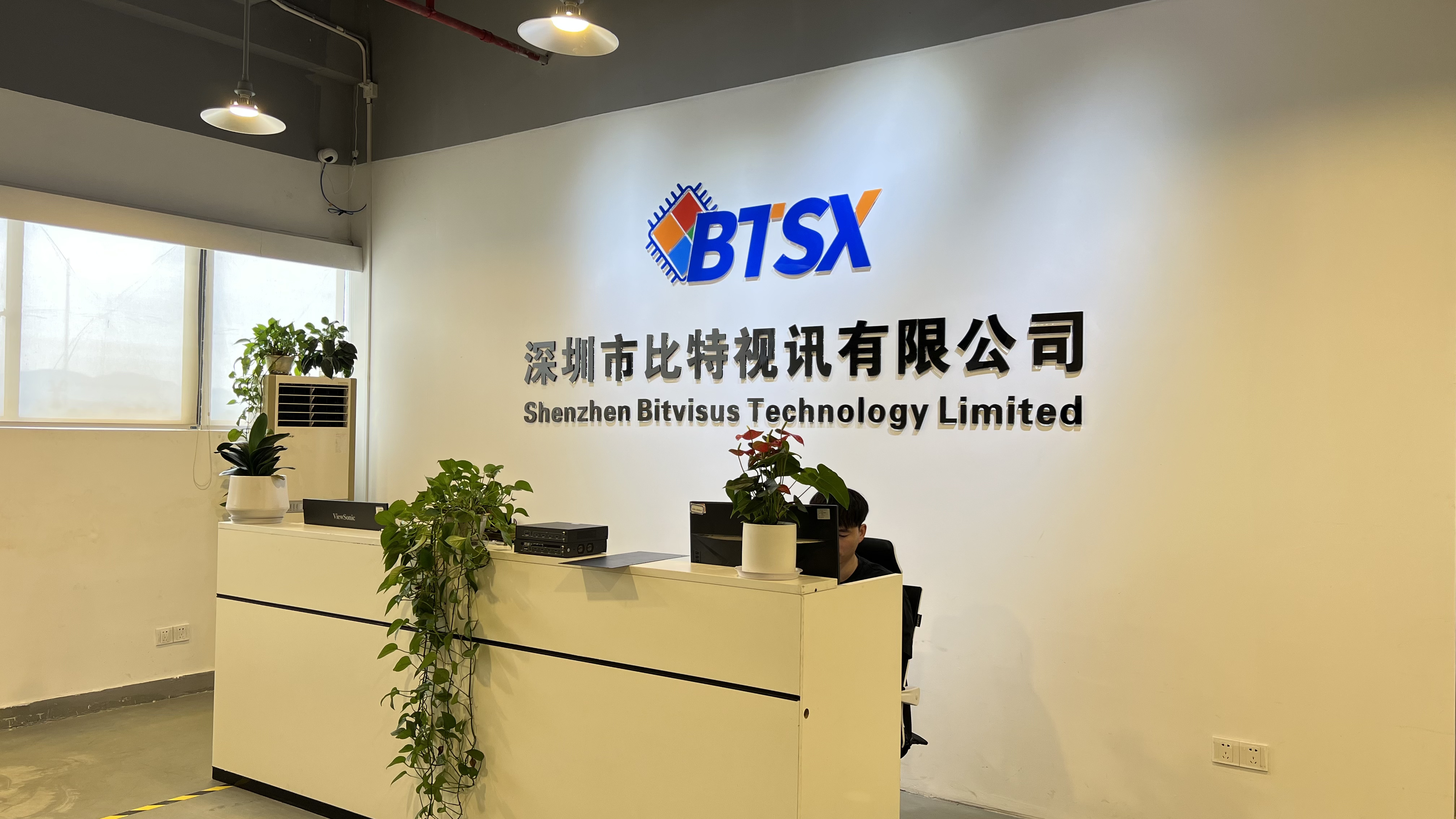
Shenzhen Bitvisus Technology Ltd.
Founded 2018 · Video wall controllers, multi-screen expanders, projector fusion processors, HDMI matrices, multi-viewers, network and fiber extenders
Address: Building 2, 6th Floor, West Side, Zhongyuntai Technology Industrial Park, South of Tangtou 1st Road, Shiyan Sub-district, Bao'an District, Shenzhen City, Guangdong Province, 518108, China
Email: eddie.jia@bitvisus.com · Tel / WhatsApp: +86 186-8150-9089 · Web: bitvisus.com
Have Questions or Need More Details?
Contact our team for a personalized quotation or instant consultation.
Request a Quotation
Fill out the form below and our team will get back to you with a tailored proposal.
WhatsApp Direct Chat
Prefer to chat in real-time? Message us on WhatsApp for instant assistance & quick answers.
- Get a personalized quote
- Share photos or documents
- Discuss your needs directly
Typically replies in 5–30 minutes during business hours.