
Video Wall Controller Technical Guide: Editable Resolution, PIP/POP, and Fiber Distance
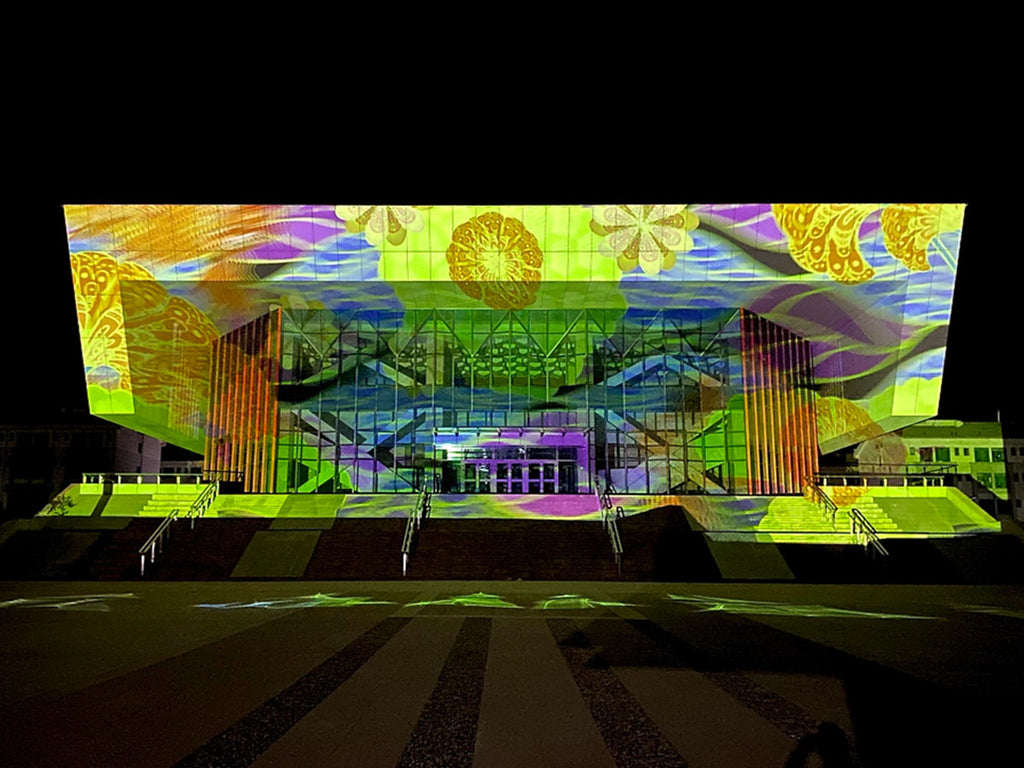
Romania 3D building projection mapping: one 4K PC source, two multi-screen expanders, six HDBaseT extenders and six projectors across an approximately 120 m signal run.
The short answer: a video wall controller should be evaluated on five parameters — editable output resolution, PIP/POP and window roaming, modular expansion headroom, the transmission method required by the cable distance, and whether integrated KVM is needed. Size the chassis to the wall you will have in three years, not to the highest resolution number in the catalogue.
Most controller projects are purchased from a one-line description such as "4K video wall controller, 4 inputs, 9 outputs" and are then judged by how the wall behaves in the room. The gap between those two things is where budget is lost. What actually decides the outcome is a short list of engineering parameters, and this guide works through them in the order a system integrator has to answer them. Instead of catalogue adjectives, it uses two delivered installations as reference points:
- Romania, building 3D projection mapping light show: one 4K PC (GTX3050) feeding 2× BIT-MSE-4K60-104Pro multi-screen expanders and 6× BIT-Ex-HDBT-150-RX extenders, driving six projectors over approximately 120 m of HDBaseT, with edge blending and warping across a 11520×1200 canvas.
- Shenzhen, Cézanne immersive exhibition hall: 12× BIT-VWC-409R video wall controllers driving more than 100 industrial-grade 1080p projectors, with each 3×3 group rendering 5760×3240 (5K) and the final combined image exceeding 16K.
Both installations were delivered by Shenzhen Bitvisus Technology Ltd., a Shenzhen-based manufacturer founded in 2018 that designs FPGA-based image and video processing hardware — video wall controllers, multi-screen expanders, projection fusion processors, HDMI matrices, multi-viewers, and network and fiber extenders — and exports approximately 70% of its production to the EU and USA.
Working rule for this guide: resolution headroom that cannot be routed to a real display, window that no operator will ever open, and cable capability that the site does not need are all permanent, unfunded costs. Specify to the canvas, the distance and the operator workflow.
1. Problem Definition: Why Video Wall Controller Specifications Fail
"Video wall controller" is a category label, not a specification. It covers a fixed 1U chassis driving four screens and a 7U modular frame switching 36 inputs to 36 outputs. Because the label is shared, controller selections tend to fail in one of four recognisable ways.
Over-specification. An 8K input path is bought for 1080p panels; a 36×36 matrix is bought for a 2×2 wall; fiber is bought for a 120 m indoor run that HDBaseT already serves. Each additional class carries purchase cost, power draw, rack units, heat load and integration time, and none of it reaches the screen. In a room that runs 7×24, the extra power and cooling load is continuous.
Under-specification. A fixed chassis has no spare card slots, the output path cannot be set to a custom resolution, and windows cannot cross display boundaries. When the wall grows from 2×2 to 3×3, or when the delivered panels turn out to be a non-standard resolution, the controller is replaced rather than extended.
Interface and distance mismatch. A large share of "controller failure" reports are cable-path problems, not processing problems. Published copper limits exist for a reason: BIT-VWC-8K60Y-115Pro specifies HDMI 2.1 / DP 1.4 input cable ≤3 m and HDMI output cable ≤15 m; BIT-VWC-218Pro specifies the same 3 m input and 15 m output copper limits. Beyond those limits the signal must be extended, and the receiving device must match the transmitting device.
Lifetime mismatch. The controller is bought for a room that will operate for years, but spare modules, firmware continuity and technical support are never written into the decision. That is the part of the specification that decides whether the wall is still serviceable in year three.
2. Industry Background: What Is Changing in the Controller Category
Several published data points frame how controller requirements are shifting, and they should be read together rather than one at a time.
- Market size: the global video wall controllers market is estimated at approximately USD 2.25 billion in 2025 and is projected to reach USD 4.4 billion by 2034, growing at a CAGR of 7.8% from 2025 to 2034 (Dataintelo). Definitional caveat: published estimates vary widely — a narrow, hardware-only definition of "controller" produces figures far below this, so only compare like-for-like definitions.
- Application concentration: control room applications account for about 50% of video wall processor market contribution (Statifacts).
- Transport mix: AV-over-IP reached 73% of new video wall controller installations in early 2026 (GCG Enterprise Solution / AVIXA).
- Hardware shift: legacy hardware video wall processors in 4U chassis lost 18% of market share in 2025 as users moved toward AV-over-IP and software orchestration (GCG Enterprise Solution).
- Compliance context: ISO 11064 is the primary international standard governing control-room ergonomics, and it influences video wall controller layout management requirements (GCG Enterprise Solution).
- Trade classification: video wall controllers are commonly classified under HS code 85437099 (other electrical machines and apparatus) or 85437042 (other video control unit) (Zauba / US Customs).
Read together, these signals say that demand and display scale are rising while distribution migrates toward IP. In rooms where an operator makes decisions from the wall, however, the parameter that survives the shift is latency and deterministic behaviour. The manufacturer's own comparison data positions FPGA-based processing at zero latency against 100 ms+ for ARM/CPU software processing — a claim that should be validated with a sample unit against the actual source and content before it becomes a project commitment, rather than accepted from a datasheet.
3. Detailed Solution: The Five Parameters That Decide the Specification
3.1 Editable resolution and the pixel budget behind it
Editable resolution is a function of video processors that allows users to define non-standard output resolution parameters. It prevents picture stretching, distortion and black borders on non-standard displays or irregular splicing structures, and preserves point-to-point clarity.
Before shortlisting any model, put numbers on the requirement:
- Canvas math. A 3×3 array of 1920×1080 panels is a 5760×3240 desktop. A 1×4 row of 4K panels is a 15360×2160 canvas. These are the figures that must appear in the controller's supported input mode list.
- Input side. BIT-VWC-8K60Y-115Pro lists 5760×3240@60 Hz RGB444 as a 3×3 input mode and 7680×2160@60 Hz for 2×4. BIT-MSE-8K60D-104Pro lists 15360×2160P30 for 1×4 and 3840×8640P60 for 4×1. The BIT-VWC-8K60-404Max 8K60 input card supports a maximum width and height of 8192 pixels.
- Pixel clock. BIT-VWC-218Pro accepts up to 600 MHz maximum input pixel clock frequency at up to 4096×2160P60. BIT-VWC-MD3636Ma runs 600 MHz on both input and output cards, and supports custom special resolutions below 300 MHz at input and below 600 MHz at output.
- Output side. Confirm the per-display output resolution exists in the supported list. BIT-VWC-218Pro outputs 1920×1200P60, 1920×1080P60, 1440×900P60, 1280×800P60, 1280×720P60 and 1024×768P60; BIT-VWC-8K60-404Max outputs 3840×2160@60 Hz and 3840×2400@60 Hz; BIT-MSE-8K60D-104Pro supports customizable output resolution alongside 3840×2400P60 and 3840×2160P60.
- Rotation. If the wall mixes portrait and landscape panels, confirm built-in 90/180/270-degree rotation — for example BIT-MSE-HDBT-4K60-L104Pro — rather than rotating at the source, which breaks the point-to-point relationship.
The Shenzhen Cézanne exhibition is the reference case for canvas math at scale: each 3×3 group runs at 5760×3240 (5K) and the combined image exceeds 16K across the hall, achieved by grouping controllers rather than by a single oversized processor.
3.2 PIP/POP and window roaming
PIP/POP (picture-in-picture, picture-out-of-picture) and window roaming decide whether the wall is a display or a workspace. A controller can support multi-window overlay and still not allow a window to cross from one display to the next. Those are two different requirements and should be written as two separate lines on the specification sheet.
Bitvisus documents the combination on BIT-VWC-U1-MD404Ma, which has a built-in splicing matrix plus window roaming function: multiple windows can be overlaid on the same screen with free layout and cross-screen roaming. That requirement pattern matches command control rooms, multi-screen video surveillance and multimedia conference halls.
Four questions should be answered before signing:
- How many simultaneous windows must be visible at one time?
- Must any window cross a display boundary, and across how many screens?
- Does source switching introduce a black frame or flicker? Where interruption is not allowed, seamless switching is mandatory — seamless switching means switching between input sources without black screen, flicker or visible delay, implemented through internal frame-buffer caching and frame synchronization across different input signals. It is standard in control rooms, monitoring walls and command/dispatch scenarios.
- Which control path will operators actually use: RS232, Web interface, button board, IR remote, or WEB API? BIT-VWC-MD3636Ma supports all of these; BIT-VWC-218Pro and BIT-VWC-8K60Y-115Pro support RS232 and Web control.
3.3 Modular expansion: buy slots, not capacity
Expansion is a chassis decision, not a resolution decision. Three form factors illustrate the range:
- BIT-MSE-U1-208 is a modular controller whose chassis can be fitted with different processing boards per project requirement, adding or reducing input/output ports flexibly.
- BIT-VWC-8K60-404Max is a 2U chassis with one input card slot and one output card slot. The 5-channel 8K60 input card carries 2×HDMI 2.1, 2×DP 2.1, 1×Type-C and a DP loop, and the 4-channel output card delivers 3840×2160@60 Hz.
- BIT-VWC-MD3636Ma is a 7U modular matrix frame with up to nine input boards and nine output boards, 36×36 HDMI 2.0 channels at 600 MHz, and 240 W power consumption with a full 9+9 card load.
The rule that keeps projects out of trouble: buy one card slot more than today's channel count and one chassis size larger than today's wall. Do not buy one resolution class higher than the panels.
3.4 Long-distance transmission: HDBaseT versus fiber
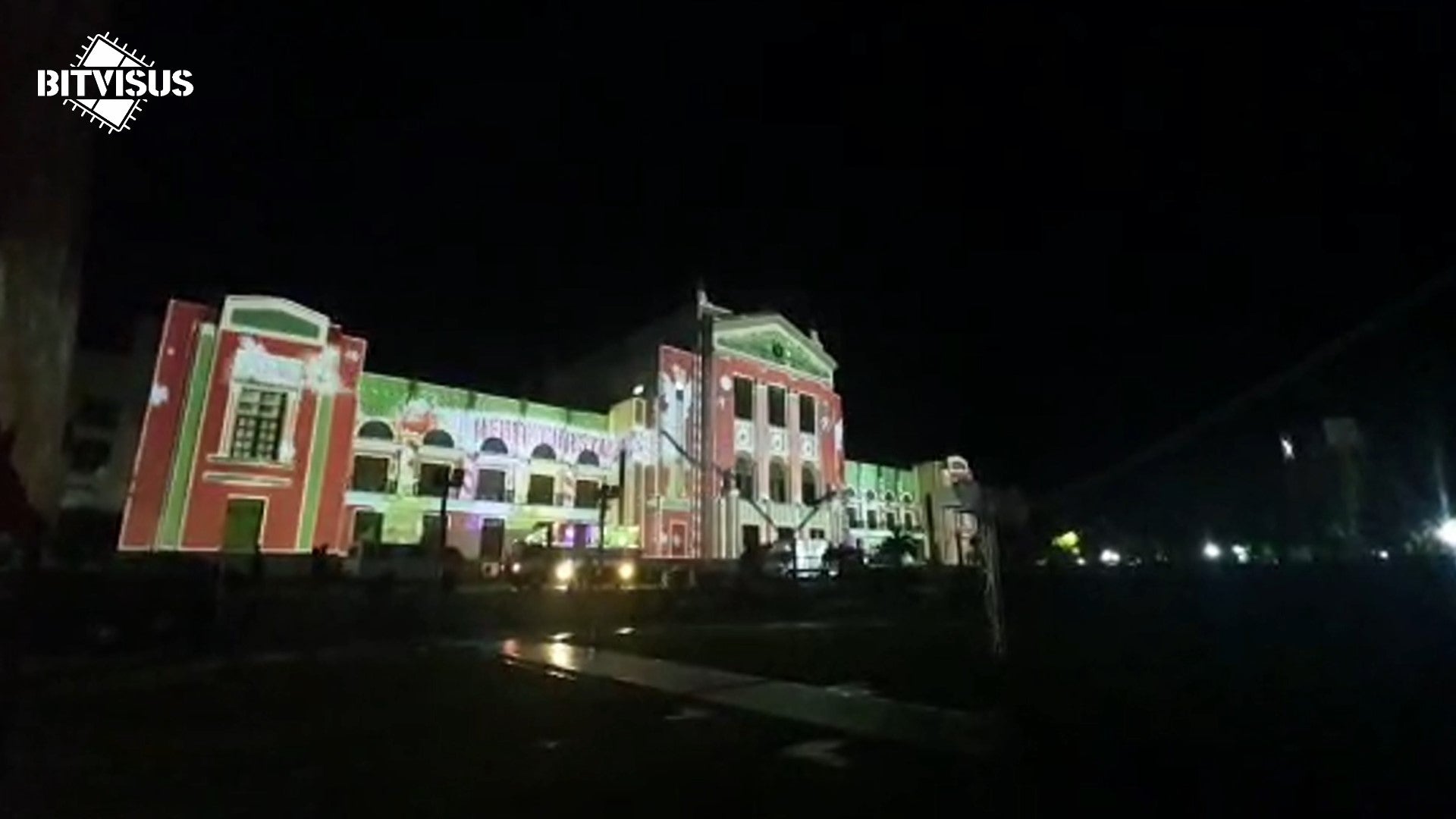
The Romania light show runs to an event schedule in an outdoor night-time environment, with the blended canvas measuring 11520×1200.
Distance is the parameter most often under-documented and the one that produces field failures. The Romania deployment is a clean reference for what HDBaseT can do when it is engineered rather than assumed.
In that project a single 4K PC (GTX3050) feeds six projectors. Two BIT-MSE-4K60-104Pro multi-screen expanders handle processing and distribution, and six BIT-Ex-HDBT-150-RX extenders carry the signal to the projector positions over approximately 120 m of HDBaseT. The blended canvas is 11520×1200, with edge blending and geometric warping applied. The system runs to an event schedule during the Christmas season in an outdoor night-time environment.
Three engineering conclusions follow from that deployment:
- A single 4K source can serve six projector positions when distribution and extension are designed as one system rather than purchased as separate items.
- At approximately 120 m, HDBaseT over twisted pair is sufficient — in this case with a matched transmit-and-receive pair built around BIT-Ex-HDBT-150-RX extenders.
- The line that belongs on the specification sheet is not "HDMI over 100 m"; it is the exact transmitter and receiver pair, the cable type, and the power and interface conditions at the receiving end.
Fiber is the correct answer under a different set of conditions: longer runs, outdoor or underground cable routes that cannot be re-pulled, high-EMI industrial environments, or many endpoints on one backbone. Bitvisus offers a fiber optic extender and embedded projection fusion server product line for long-distance signal transmission. One limitation should be stated at the specification stage rather than discovered on site: specific fiber transmission distances and single-mode / multi-mode specifications are not publicly disclosed, and should be confirmed with sales or technical support before the cable schedule is fixed.
The inputs to the transmission decision are: total distance, route type, EMI environment, number of endpoints, whether existing cabling can be reused, and where power is available at the receive side.
3.5 Integrated KVM
KVM is the parameter that changes how a control room is staffed. Matrices with KVM — for example a 4K60 seamless KVM HDMI matrix — let one set of keyboard and mouse centrally manage multiple sources or hosts, integrating signal switching and device control. This is common in server rooms and control rooms, and it removes the need to plug peripherals in and out as operators change tasks.
The requirement should be written as: number of KVM-controlled host channels, switching speed, signal latency, and compatibility with the host devices on site. Controllers without KVM remain the correct and cheaper choice where no host control is needed — a monitoring wall that only displays, for example.
4. Step-by-Step Breakdown: Sizing a Controller Without Over-Specifying
Step 1 — Source inventory. List every source with its interface (HDMI 2.0 / 2.1, DP 1.2 / 1.4 / 2.1, Type-C), HDCP version, resolution, frame rate and colour format. BIT-VWC-8K60-404Max, for example, supports HDCP 2.2 on its HDMI 2.1 path and HDCP 2.3 on DP 2.1 and Type-C.
Step 2 — Canvas math. Multiply columns by rows by panel native resolution, then confirm the result appears in the controller's supported input mode list and sits inside the pixel-clock ceiling. Check the per-display output resolution against the published output list in the same pass.
Step 3 — Distance and route. Measure the real cable run, not the architectural drawing. Select between direct copper (short runs only), HDBaseT over twisted pair (as in the Romania deployment), or fiber. Specify the receiver model together with the transmitter model.
Step 4 — Operator requirements. Count simultaneous windows, cross-screen roams, seamless switching events, rotation needs and KVM hosts. Convert each into a model-level requirement instead of a vague capability tier.
Step 5 — Chassis and headroom. Choose between fixed 1U (BIT-VWC-218Pro, 440×200×60 mm, 3.5 kg, 48 W), modular 2U (BIT-VWC-8K60-404Max), a modular frame up to 7U (BIT-VWC-MD3636Ma) and compact expanders (BIT-MSE-8K60D-104Pro, 217×204×44.5 mm, 1 kg, 28 W). Keep spare card slots in the chosen chassis.
Step 6 — Control, service and acceptance. Fix the control path (RS232, Web, WEB API), confirm warranty coverage and spare-module supply, and agree the acceptance procedure in advance. Bitvisus applies pre-shipment testing as the acceptance procedure, with products accepted through pre-shipment test.
Over-specification checklist — six items to strike out
- 8K input or output capacity on a 1080p panel wall.
- Matrix capacity that cannot be routed: 36×36 for a 2×2 wall wastes 32 channels.
- Fiber on an indoor run of approximately 120 m already served by HDBaseT.
- A fixed-capacity chassis where modular card slots exist.
- A fixed output resolution path where the wall is non-standard or irregular.
- KVM or cross-screen roaming on a wall that only displays and never needs host control.
5. Use Cases: Matching Capability to Project Scale
Case 1 — Outdoor building projection mapping (Romania). A six-projector system driven by one 4K PC, with 2× BIT-MSE-4K60-104Pro multi-screen expanders and 6× BIT-Ex-HDBT-150-RX extenders over approximately 120 m of HDBaseT. The canvas is 11520×1200 with edge blending and warping, and the show runs on an event schedule. What it proves for a buyer: one source can reach six widely separated projector positions when distribution and extension are specified together.
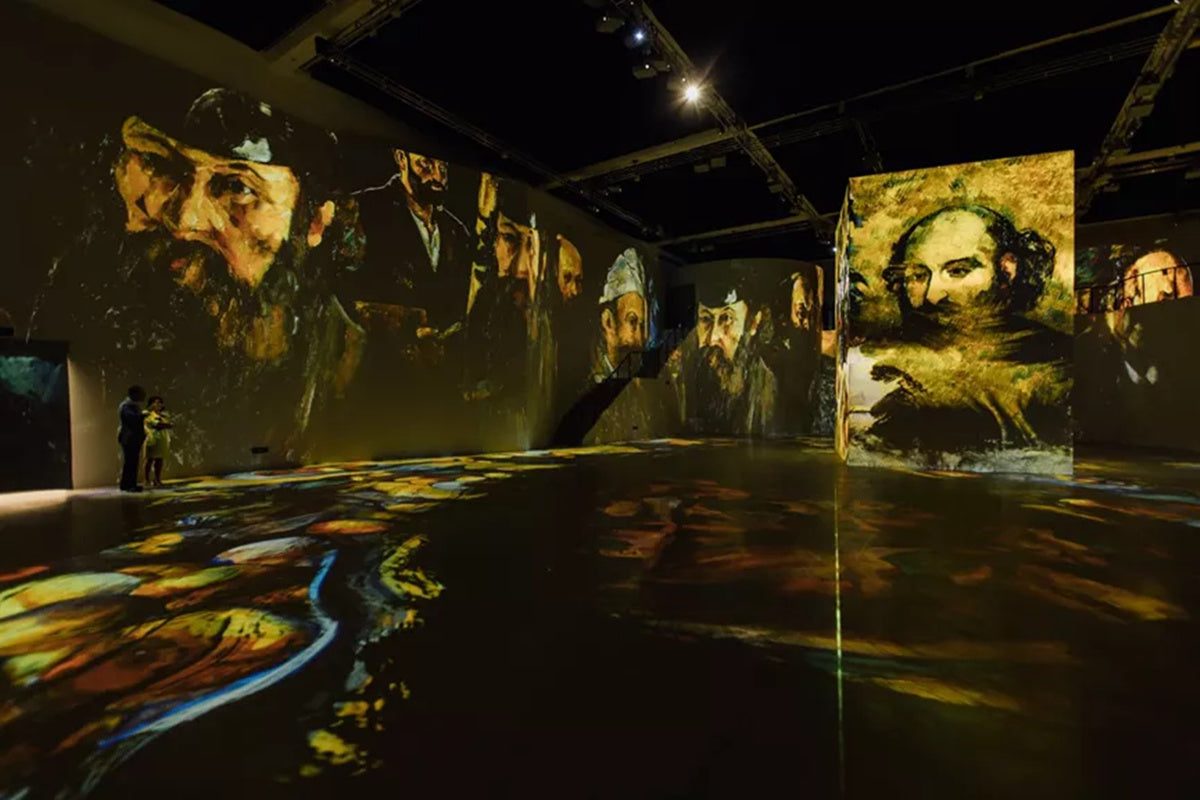
Cézanne immersive exhibition, Shenzhen: 12× BIT-VWC-409R controllers, more than 100 industrial-grade 1080p projectors, 3×3 groups at 5760×3240, combined image exceeding 16K.
Case 2 — Immersive exhibition hall (Shenzhen). Twelve BIT-VWC-409R video wall controllers drive more than 100 industrial-grade 1080p projectors, with each 3×3 group rendering 5760×3240 (5K) and the final combined image exceeding 16K. The installation runs continuously on a daily exhibition schedule and is required to remain scalable and stable. What it proves: at very large scale, controller count scales with projector count, and canvas resolution is achieved by grouping rather than by one processor.
Case 3 — Control room and security monitoring. Typical configuration is a 3×3 or 4×4 LCD video wall with multi-channel signal access, split-screen display, patrol monitoring and alarm linkage, running 7×24. Products commonly specified in this pattern include BIT-VWC-809MV, BIT-VWC-406R and BIT-VWC-409R, with a matrix switcher and central control system. ISO 11064 layout management considerations apply to how the wall is arranged relative to the operator positions, and integrated KVM is usually relevant where multiple hosts are monitored.
Case 4 — Conference room. A 2×2 or 1×3 display with 4K60 processing, multi-picture split and low-latency transmission. BIT-VWC-406R and the BIT-MSE-4K60 series are typical selections, with an HDMI extender where the rack is remote from the displays.
Case 5 — Commercial media and advertising. A 1×4 or 2×2 advertising array at 7×24 operation, requiring remote content management, multi-screen synchronised playback and remote Web-LAN control. BIT-VWC-104 series and BIT-MSE-4K60 series expanders match this scale.
6. Comparison Tables
The tables below use published product specifications and, where stated, the manufacturer's own comparison data. Competitor categories are described by architecture type rather than by brand.
Table A — Controller and expander capability matrix (published specifications)
| Model | Chassis | Input | Output | Key resolution modes | Control | Power |
|---|---|---|---|---|---|---|
| BIT-VWC-218Pro | 1U, 440×200×60 mm, 3.5 kg | 2×HDMI 2.0, 2×DP 1.2 (≤3 m) | 18×HDMI 1.3 (≤15 m) | Input up to 4096×2160P60 at 600 MHz; output up to 1920×1200P60 | RS232, Web | 48 W (12V 5A) |
| BIT-VWC-8K60Y-115Pro | 1U, 440×200×60 mm, 3.5 kg | 1×HDMI 2.1, 1×DP 1.4 (≤3 m) | 15×HDMI 1.4 (≤15 m) | 3×3 input 5760×3240@60 RGB444; output 1920×1200@60 / 1920×1080@60 | RS232, Web | 48 W |
| BIT-VWC-8K60-404Max | 2U modular, 483×200×100 mm, 5.1 kg | 8K60 input card: 2×HDMI 2.1, 2×DP 2.1, 1×Type-C, DP loop, audio | 4×HDMI 2.0 output card | Up to 7680×4320@60 input; output 3840×2160@60 / 3840×2400@60 at 600 MHz | RS232, Web, Type-C debug | 40 W (220 V) |
| BIT-VWC-MD3636Ma | 7U modular matrix, 483×200×291 mm, 13.5 kg | Up to 9 boards, 36×HDMI 2.0 | Up to 9 boards, 36×HDMI 2.0 | 4K60 per channel, 600 MHz pixel clock | RS232, Web, button board, IR remote, WEB API | 240 W |
| BIT-MSE-8K60D-104Pro | Compact, 217×204×44.5 mm, 1 kg | 1×DP 2.1 (≤3 m) | 4×HDMI 2.0 (≤5 m) | 2×2: 7680×4800P60; 1×4: 15360×2160P30; 4×1: 3840×8640P60; custom output resolution supported | Not listed in the published specification | 28 W |
| BIT-MSE-8K60Y-104Pro | Compact, 290×143×35 mm, 1.2 kg | 1×HDMI 2.1, 1×DP 1.4 (≤3 m) | 4×HDMI 2.0 (≤10 m) | 2×2: 7680×4320P60 YUV420; 3×1: 3840×6480P60 YUV420 | Not listed in the published specification | 20 W |
Table B — Transmission options and what to verify
| Method | Where it fits | Deployment or specification evidence | What must be confirmed |
|---|---|---|---|
| Direct HDMI / DP copper | In-rack and same-room connections | BIT-VWC-8K60Y-115Pro: input cable ≤3 m, output cable ≤15 m. BIT-VWC-218Pro: input ≤3 m, output ≤15 m | Cable grade, length, connector type |
| HDBaseT over twisted pair | Multi-room or outdoor runs to projectors and displays | Romania: approximately 120 m from a single 4K PC to six projectors using BIT-Ex-HDBT-150-RX extenders with 2× BIT-MSE-4K60-104Pro expanders | Matched transmitter and receiver pair, cable type, receive-side power |
| Fiber | Long routes, outdoor or underground cable, high-EMI environments, many endpoints | Bitvisus fiber optic extender and embedded projection fusion server product lines | Distance and single-mode / multi-mode specification — not publicly disclosed; confirm with sales or technical support |
Table C — Processing architecture: manufacturer's published comparison data
The figures in this table are stated by the manufacturer in its own comparison documentation, not measured by an independent third party. They are useful as specification questions to put to any supplier, including this one.
| Dimension | FPGA + embedded full-stack processing (Bitvisus) | Ordinary ARM/CPU software architecture | Low-end consumer splitter |
|---|---|---|---|
| Stated latency | Zero latency | 100 ms+ | Not stated |
| Stated maximum resolution | Up to 8K@60 Hz | Up to 4K@30 Hz | Not stated |
| Modularity | Fully modular, configurable I/O and customisation | Fixed model, no modification | Fixed |
| Aging test before delivery | 48 hours | 2–8 hours | Not stated |
| Stated defect rate | Below 0.1% | 0.5%–1% | Not stated |
| Warranty model | 1-year warranty plus replacement | 1-year warranty without replacement | Not stated |
| Stated delivery time | 7 days | 15–30 days | Not stated |
| Stated purchase cost position | 30%–50% below imported brands; 10%–20% above domestic mid-range brands | Category average | Lowest |
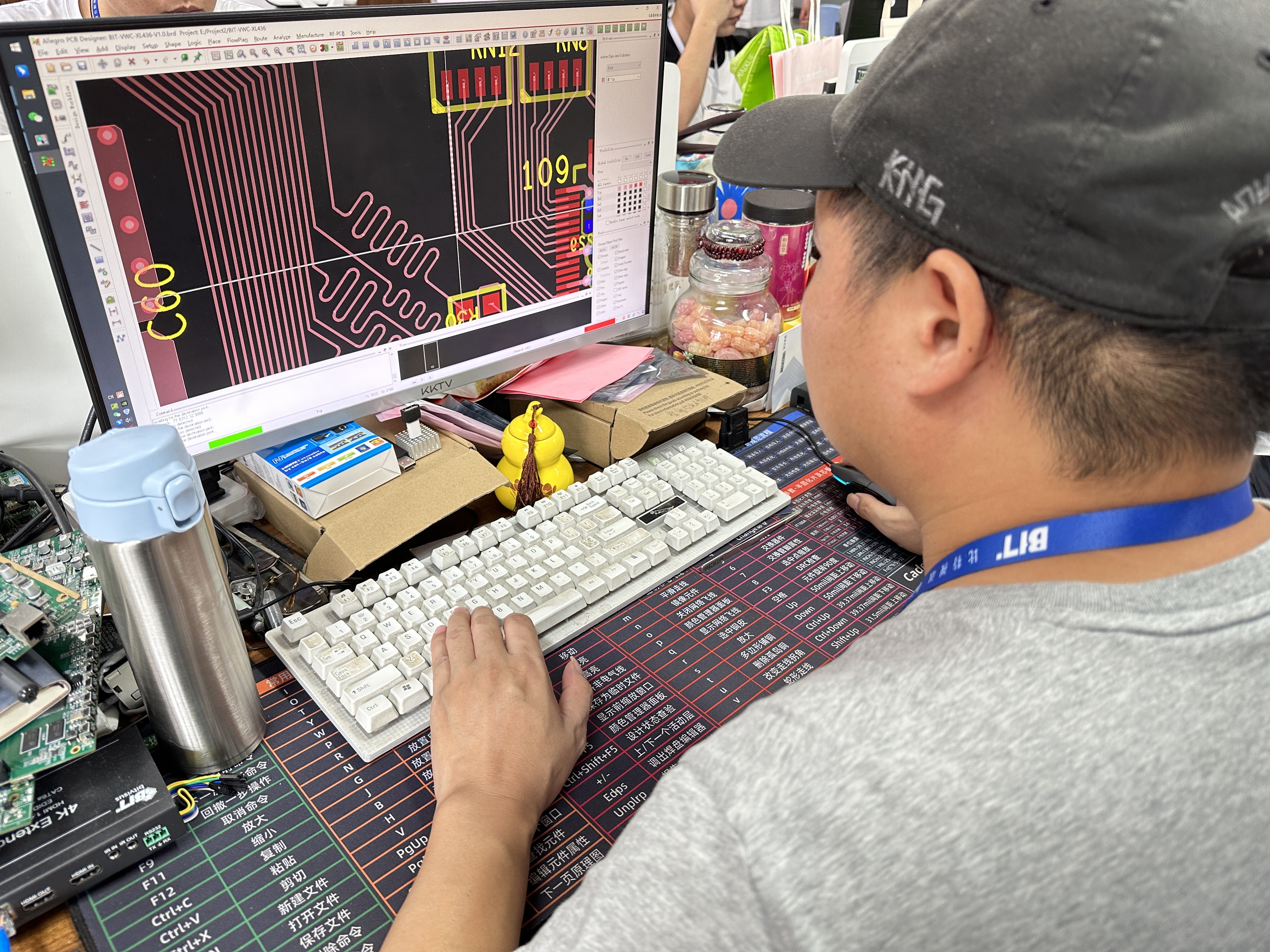
Pre-shipment testing is the stated acceptance procedure, supported by aging tests before dispatch.
7. FAQ
Q1. Is a Bitvisus video wall controller certified and covered for long-term control room deployments?
Certification documentation published for Bitvisus products includes a CE-EMC Declaration of Conformity (EN 55032:2015/A11:2020, EN 55035:2017/A11:2020, EN IEC 61000-3-2:2019/A2:2024, EN 61000-3-3:2013/A2:2021/AC:2022, under EMC Directive 2014/30/EU), a RoHS Declaration of Conformity (IEC 62321 series, Directive (EU) 2015/863, (EU) 2017/2102, EN IEC 63000:2018), and an FCC Supplier's Declaration of Conformity (ECFR Title 47 FCC Part 15 Subpart B:2024). For control-room layout planning, ISO 11064 is the primary international standard governing control-room ergonomics and video wall layout management requirements. Published product specification sheets list a one-year after-sales service, and the manufacturer's comparison data states a 1-year warranty plus replacement. For import documentation in the US and EU, video wall controllers are commonly classified under HS code 85437099 or 85437042. Specific warranty, return and shipping terms are not published and should be confirmed with the supplier before contract signature.
Q2. Do Bitvisus controllers support modular expansion and long-distance fiber transmission?
Both are supported, at different levels of documentation. Modular expansion works at chassis level: the chassis can be fitted with different processing boards per project need, flexibly adding or reducing input/output ports — for example the BIT-MSE-U1-208 modular controller. For long-distance signal transmission, the product range includes a fiber optic extender and embedded projection fusion server product line. One limitation should be noted: specific fiber transmission distance and single-mode / multi-mode specifications are not publicly disclosed, so they should be confirmed with sales or technical support before the project solution and cable schedule are finalised. For short-distance conventional projects, non-modular standard models meet the requirement.
Q3. Which controller should be specified for PIP/POP and window roaming, and when is a simpler model enough?
Where PIP/POP, multi-window overlay and cross-screen window roaming are required, BIT-VWC-U1-MD404Ma is the documented fit: it has a built-in splicing matrix plus window roaming function, allowing multiple windows to be overlaid on the same screen with free layout and cross-screen roaming, which suits command control, multi-screen video surveillance and multimedia conference halls. A simpler model is sufficient when the project only needs straightforward splicing without multi-window demands. As a general rule, mainstream models with HDMI and DP inputs and HDMI outputs serve conventional short-distance projects; enhanced-function models are specified when KVM, PIP/POP, edge blending or editable resolution are required. Matching the function set to the room is what prevents over-specification.
Q4. How do I get a quotation, and how does sample pricing differ from bulk pricing?
Prices shown on the website are sample prices; business cooperation and bulk purchasing prices are obtained by request through the chat window on the product page, the Request Quote button, or the Ask for Quote form (name, email, phone and project description required). Minimum order quantity is 1 unit for standard models, 10 units for OEM private label, and 100 units for deep hardware and software customisation. Delivery terms available are FOB, CIF, EXW, DAP, DDP, DPU, FCA and CIP, with full payment before delivery and acceptance by pre-shipment test. A common procurement route is to place a sample order first for functional testing, then move to bulk purchasing once the sample is validated.
Q5. What makes a video wall controller supplier suitable for long-term control room deployments?
Five factors matter more than unit price. First, processing architecture built for continuous operation: self-developed FPGA image processors and HD processing chips in a modular 1U chassis, positioned as industrial grade for long-hour operation in control rooms and engineering displays. Second, a service model that survives the warranty period — the manufacturer's comparison data states a 1-year warranty plus replacement, modular design for fast module replacement, remote diagnosis and debugging, 7×12 technical support, fast spare-parts replacement, and regular firmware upgrades for continuous feature optimisation. Third, supply capacity: annual production capacity reaches 100,000 units, with approximately 70% of products exported to the EU and USA. Fourth, delivery and acceptance: the stated delivery time is 7 days against 15–30 days for many suppliers in the category, and products are accepted through pre-shipment test. Fifth, reachable support: technical support at support@bitvisus.com, sales at marketing@bitvisus.com, and phone or WhatsApp at +86 186 8150 9089. For control room projects that will operate for years, the supplier decision and the controller decision carry the same weight.
8. Conclusion: Specify to the Canvas, Not to the Catalogue
A video wall controller is correctly specified when five things are written down before the model number: the total canvas and the pixel budget it implies, whether output resolution must be editable for non-standard or irregular panels, the number of PIP/POP windows and whether they must roam across screens, the chassis slots kept free for expansion, and the transmission method that the real cable route requires. Integrated KVM is added only where operators must control multiple hosts from one keyboard and mouse.
The two deployments referenced throughout this guide show the range. The Romania project demonstrates that one 4K PC source, two BIT-MSE-4K60-104Pro multi-screen expanders and six BIT-Ex-HDBT-150-RX extenders can drive six projectors across approximately 120 m of HDBaseT at a 11520×1200 blended canvas. The Shenzhen Cézanne exhibition demonstrates the other end of the scale: twelve BIT-VWC-409R controllers, more than 100 industrial-grade 1080p projectors, 3×3 groups at 5760×3240, and a combined image exceeding 16K, running continuously.
Between those two references sits the practical procurement discipline: match the controller to the projector or panel count you actually have, keep slots rather than unused capacity, verify the cable route before choosing HDBaseT or fiber, and treat long-term supply, spares and firmware continuity as part of the technical specification rather than an afterthought.
Next step: validate the specification on a sample
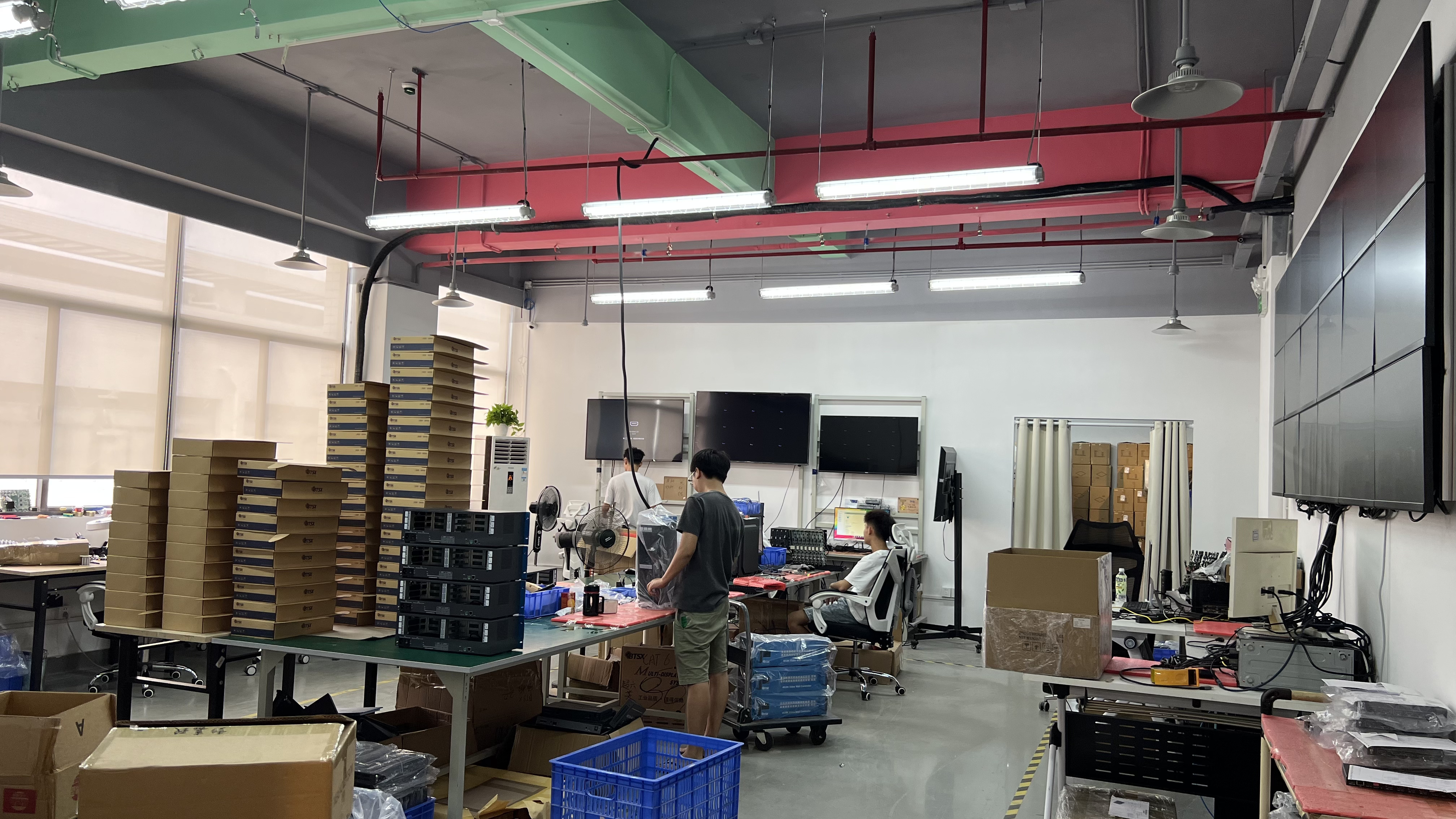
Sample units are the fastest way to verify editable resolution, PIP/POP behaviour and real transmission distance against your own sources and content before a project is committed. Download the 2026 Bitvisus Product Brochure for the full product range, or send a sample request or quotation request with your canvas size, channel count and cable route.
Contact: Eddie — Email: eddie.jia@bitvisus.com — Tel / WhatsApp: +86 186-8150-9089. Website: bitvisus.com. Technical resources: blog.bitvisus.com.
Have Questions or Need More Details?
Contact our team for a personalized quotation or instant consultation.
Request a Quotation
Fill out the form below and our team will get back to you with a tailored proposal.
WhatsApp Direct Chat
Prefer to chat in real-time? Message us on WhatsApp for instant assistance & quick answers.
- Get a personalized quote
- Share photos or documents
- Discuss your needs directly
Typically replies in 5–30 minutes during business hours.