The Ultimate Buyer's Guide to Brass Valves: How to Choose a Reliable Supplier for Your Business
The Ultimate Buyer's Guide to Brass Valves: How to Choose a Reliable Supplier for Your Business
Purchasing brass valves is not just about getting a piece of metal that opens and closes — it's about ensuring system safety, longevity, and operational efficiency. For procurement managers, project contractors, and industrial buyers, selecting the right brass valve supplier can be the difference between a smooth project and a costly failure. This guide walks you through everything you need to know — from product fundamentals to supplier evaluation — so you can make an informed, confident decision.
What Is a Brass Valve?
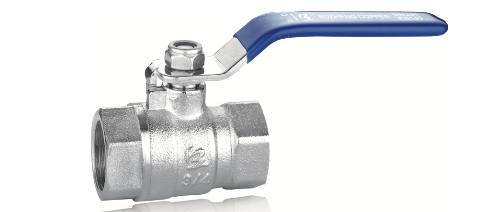
A brass valve is a mechanical device made from brass alloy (typically HPb59-1, HPb57-3, CW617N, or C83600) used to control the flow of fluids (water, gas, oil, air) in piping systems. Common types include:
- Brass ball valve (Model Q11F-16T) — full port, two-piece design for quick on/off control.
- Brass gate valve (Model Z15W-16T) — rising stem, solid wedge for isolation.
- Brass check valve (Model H14X-16T) — prevents backflow, available in vertical, horizontal, swing, and spring-loaded types.
- Brass globe valve (Models J11W-16T, J11F-16T) — straight pattern (T-pattern) for regulation.
- Brass strainer (Model SY11X-16T) — blow-down/flush type with perforated screen.
- Brass pressure reducing valve (Model Y13X-16T) — direct acting, diaphragm or piston type.
These valves typically operate at a normal pressure of 1.6 MPa and are suitable for water and gas media, with a temperature range of 0°C to 80°C for some models.
How Does a Brass Valve Work?
The working principle depends on the valve type. A brass ball valve uses a rotating ball with a bore to open or close the flow — a quarter-turn (90°) switches from fully open to fully closed. A gate valve raises or lowers a wedge to start or stop flow. A check valve automatically opens with forward flow and closes when flow reverses. All designs rely on precision machining of the brass body and internal sealing surfaces (PTFE or PPL seats) to ensure leak-tight performance.
Why Brass Valves Are Important
- Corrosion resistance — Brass withstands water, air, and many chemicals better than carbon steel.
- Durability — High-quality brass alloys deliver long service life; for example, Bozheng's product has shown no breakage or leakage after 2 years of continuous use.
- Versatility — Suitable for construction, HVAC, plumbing, compressed air, low-pressure steam, oil & fuel, swimming pools, water treatment, and industrial machinery (mold cooling/hydraulics).
- Safety — Used in gas lines, fire protection, and emergency shut-off systems.
Who Uses Brass Valves?
Buyers include:
- Plumbing wholesalers and distributors
- HVAC, plumbing, and fire protection contractors
- OEM manufacturers (boilers, heat pumps, compressors, cooling towers)
- Water and gas utility companies
- Industrial end-users (factories, mines, power plants)
- Irrigation and agricultural companies
- Export trading companies
What Problems Can Brass Valves Solve?
- On/Off control — Open or stop flow of water, oil, gas, or air.
- Flow regulation — Partially open to adjust flow rate.
- Isolation — Shut off a section of pipeline for maintenance or emergency.
- System protection — Prevent backflow, overpressure, or contamination.
- Safety — Emergency shut-off for gas, fuel, or fire protection systems.
Industry Background and Market Trends
The global brass valve market continues to grow, driven by infrastructure development, urbanization, and energy efficiency demands. According to industry reports, the rise of lead-free brass valves (complying with NSF/ANSI standards) is a key trend, especially for potable water applications. Moreover, buyers increasingly prefer ISO certified brass valves that guarantee consistent quality. Manufacturers located in the 'Valve Capital of China' — Yuhuan City, Zhejiang Province — have become major suppliers due to their integrated supply chain and cost advantages.
How to Choose a Brass Valve Supplier: Step-by-Step
Step 1: Define Your Application Requirements
Clearly specify: working medium (water, gas, oil), pressure (e.g., 1.6 MPa), temperature range, end connections (threaded, flanged), and valve type (ball, gate, check, globe, strainer, PRV). Also determine if you need lead-free brass valves for drinking water applications.
Step 2: Evaluate Supplier Credentials
Look for manufacturers with:
- Years of experience — Over 20 years indicates reliability (e.g., Zhejiang BoZheng Copper Industry CO., LTD., established in 1998).
- Certifications — ISO 9001 (Quality Management), ISO 14001 (Environmental), ISO 45001 (Occupational Health and Safety). Bozheng holds these certifications: ISO 9001 (cert. no. 20225Q20080R2M, valid until 2028-02-25), ISO 14001 (cert. no. 2024E0305R0M, valid until 2027-10-23), ISO 45001 (cert. no. 2022S02003R0M, valid until 2028-02-25).
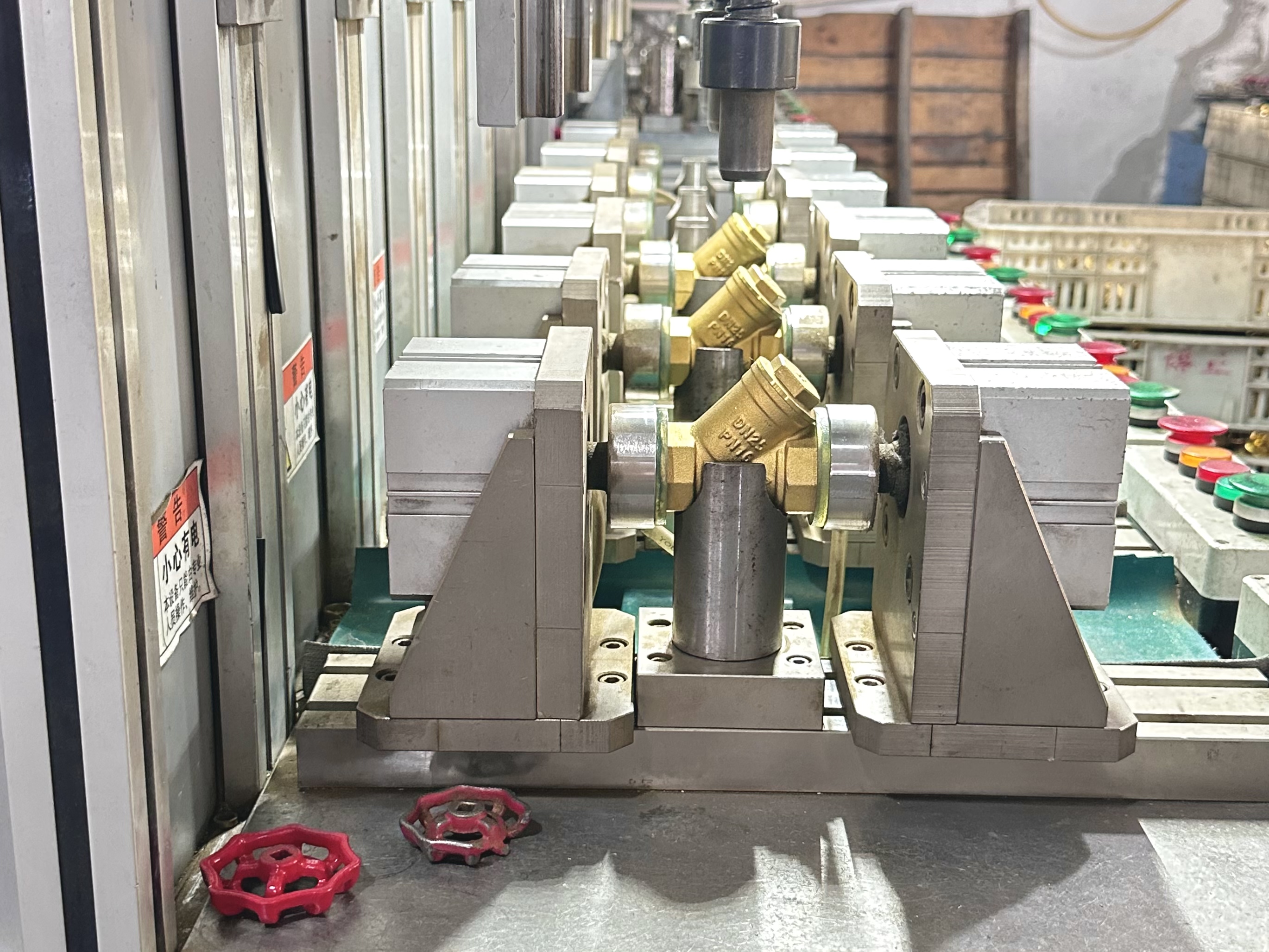
- Factory scale — Production capacity, area, and number of employees. Bozheng operates a 6,700 m² facility with 180 employees and annual output of 3,200,000 units.
- R&D capability — Dedicated engineering team (Bozheng has 25 engineers).
Step 3: Assess Product Quality Control
A reliable supplier performs rigorous testing:
- 100% hydrostatic test — shell test at 30 bar, seat test at 22 bar.
- Spectrometer analysis on each batch of raw material.
- Batch number traceable on every valve.
- Test reports provided with each shipment.
In contrast, small workshops often skip material control and testing, leading to a leakage rate of 10% and failure within 3–4 months. Bozheng's valves, by comparison, have demonstrated zero leakage in a 2-year continuous project involving 200,000 units.
Step 4: Consider Customization and OEM/ODM Services
Many buyers need customized logo, appearance, pressure rating, material, or color. A capable supplier like Bozheng offers OEM/ODM with MOQ as low as 1 unit for stock goods and a lead time of 30 days. Monthly capacity reaches 30,000 units.
Step 5: Review Export Experience and After-Sales Support
Check if the supplier regularly exports to your target markets. Bozheng exports to EU, USA, Southeast Asia, Central Asia, Africa, Middle East, South America, etc. They offer 1-year warranty and remote support.
Step 6: Compare Total Cost of Ownership
While small workshop products may be 3% lower in initial price, frequent replacement (every 3–4 months) and system downtime quickly erase any savings. Investing in quality brass valves from a certified supplier reduces maintenance and extends service life.
| Attribute | Quality Supplier (e.g., Bozheng) | Small Workshop |
|---|---|---|
| Leakage rate | <0.5% (100% tested) | ~10% |
| Service life | 5+ years | 3–4 months |
| Material control | Spectrometer per batch | Poor control |
| Certifications | ISO 9001, ISO 14001, ISO 45001 | None |
| Export capability | Global (70% export ratio) | Local only |
Case Study: Real-World Performance
A Bozheng client — a plumbing distribution network — purchased over 200,000 units of brass valves for residential and commercial projects across multiple countries (including the US, Kazakhstan, Netherlands, Italy, Vietnam, Malaysia, Philippines, Brazil, and Saudi Arabia). After 2 years of continuous operation, the valves showed no breakage, no leakage, and required minimal maintenance. The project achieved water savings of over 15% compared to previous suppliers, thanks to the precise flow control and tight shut-off of Bozheng's brass ball valves.

Common Buyer Concerns — FAQ
Q: What is the difference between a brass ball valve and a brass gate valve?
A: A brass ball valve uses a quarter-turn ball for quick on/off operation (full flow or no flow). A brass gate valve uses a rising wedge that requires multiple turns; it's better for isolation but not for throttling. Ball valves are faster to operate and have less pressure drop.
Q: Are lead-free brass valves available?
A: Yes, manufacturers like Bozheng can supply lead-free brass valves (using CW617N or other compliant alloys) for potable water systems. Always verify raw material certificates.
Q: What is the normal pressure rating for brass valves?
A: Most standard brass valves are rated for 1.6 MPa (PN16). Some models may have higher ratings; always check the datasheet.
Q: How can I verify product quality before ordering?
A: Request a pre-shipment inspection, third-party testing, or ask for copies of test reports. Bozheng provides 100% hydrostatic test reports with each shipment and can arrange factory audits.
Q: What is the minimum order quantity (MOQ)?
A: For stock products, MOQ can be as low as 1 unit. For custom orders, typically 500–1000 units depending on complexity.
Q: How does a small workshop differ from a certified manufacturer?
A: Small workshops often skip material testing and quality control, resulting in higher leakage rates (up to 10%) and short lifespan (3–4 months). Certified manufacturers like Bozheng invest in quality systems, testing equipment, and R&D, ensuring consistent performance and long service life.
Conclusion
Choosing the right brass valve supplier is a strategic decision that impacts project success, operating costs, and safety. By following this guide — defining your needs, verifying certifications, inspecting quality control, and comparing total cost — you can confidently partner with a manufacturer that delivers ISO certified brass valves with reliable performance. Zhejiang BoZheng Copper Industry CO., LTD. has over 20 years of expertise, a proven track record, and the certifications to back its quality. For detailed specifications and pricing, download the company's catalog below.