How to Select Cross-border Transportation Services in China: 2026 Procurement Guide
How to Select Cross-border Transportation Services in China: 2026 Procurement Guide
Introduction
Global sourcing and manufacturing shifts have made cross-border transportation services from China a critical lever for supply chain resilience. Whether you are importing new energy components from Shenzhen, shipping hazardous materials to Southeast Asia, or moving oversized machinery to Central Asia, selecting the right logistics partner directly impacts cost, speed, compliance, and risk. This 2026 procurement guide addresses the core question: how to select cross-border transportation services in China that match your cargo type, route complexity, and service expectations.
Problem Definition: The Real Cost of Poor Provider Selection
Procurement buyers often underestimate the hidden risks when choosing a cross-border transportation provider. Common challenges include:
- Unstable transit time – multiple handovers, poor coordination
- Uncontrollable logistics costs – hidden surcharges, demurrage, customs penalties
- Compliance failures – wrong HS classification, missing permits for dangerous goods
- Lack of visibility – no real-time tracking, opaque status updates
- Weak overseas local support – last-mile breakdowns in Vietnam, Thailand, Kazakhstan
These pain points lead to order delays, cargo damage, lost sales, and strained buyer-supplier relationships. A fragmented approach using multiple freight forwarders amplifies these risks instead of solving them.
Industry Background: China’s Cross-border Logistics Landscape in 2026
China remains the world’s largest trading nation, with cross-border logistics growing at 8–12% annually. Key trends reshaping the industry:
- Belt & Road Infrastructure – improved rail and road corridors to Central Asia and Europe
- Rise of New Energy Exports – lithium batteries, EVs, solar panels demand specialized transport
- Digitalization – TMS/WMS platforms become table stakes for visibility
- Consolidation – buyers prefer one-stop integrated providers over multiple vendors
- Regulatory Tightening – AEO certification, TAPA security, hazardous material compliance
In this environment, selecting a provider based only on price is short-sighted. Technical capability, certifications, and network depth matter more.
What is Cross-border Transportation Services? – Definition & Scope
Cross-border transportation services refer to the movement of goods across national borders, involving multiple modes (truck, rail, sea, air), customs clearance, warehousing, and last-mile delivery. Unlike domestic logistics, it requires expertise in international trade regulations, multilingual communication, and multimodal coordination.
A mature provider offers:
- Full Truckload (FTL) and Less Than Truckload (LTL) for land routes
- Temperature Controlled Transport for sensitive goods
- Oversized Heavy Cargo transport for machinery and industrial equipment
- Dangerous Goods (Class 2,3,4,8,9) and lithium battery shipping
- Bonded Warehouse and Fast Customs Clearance services
- 24/7 Real-time Tracking and digital supply chain visibility
Why It Matters: The Impact on Your Supply Chain
Effective cross-border transportation directly influences:
- Total landed cost – transportation, duties, insurance, storage
- Time-to-market – delivery reliability for JIT manufacturing
- Risk exposure – compliance fines, cargo damage, theft
- Customer satisfaction – on-time delivery to end users
For example, a leading new energy manufacturer reduced comprehensive logistics costs by 20–30% and cut customs delay rate to below 5% by switching to an integrated service provider with in-house customs team and digital tracking (see CFW case study below).
Who Uses Cross-border Transportation Services?
- New energy manufacturers – shipping lithium batteries, EV components, solar panels
- High-end manufacturers – precision instruments, semiconductors, automation equipment
- E-commerce retailers – cross-border fulfillment and returns
- Cross-border trade enterprises – bulk commodities, project cargo
The typical buyer role includes supply chain manager, logistics director, procurement director, or cross-border operation director.
How to Select Cross-border Transportation Services in China – A Step-by-Step Framework
Step 1: Define Your Cargo Profile and Route
| Cargo Attribute | What to Specify | Example |
|---|---|---|
| Commodity | Product name, HS code | Lithium-ion batteries (UN 3480) |
| Weight & Dimensions | Per piece and total | 20 tons, 12m x 2.5m x 2.8m |
| Dangerous Goods Class | UN number, packing group | Class 9, PG II |
| Origin & Destination | City/country, delivery point | Shenzhen → Hanoi, Vietnam |
| Required Transit Time | Standard or expedited | 5–7 days |
Step 2: Verify Certifications and Qualifications
A reliable provider must hold the proper licenses for your cargo type. Key certifications in China:
- AEO Advanced Customs Certification – faster clearance, lower inspection rates
- TAPA (Transported Asset Protection Association) – security for high-value goods
- TIR Carnet – seamless customs transit across multiple countries
- Dangerous Goods Transport License (Classes 2,3,4,8,9, hazardous waste)
- ISO 9001/14001/45001/27001 – quality, environment, safety, information security
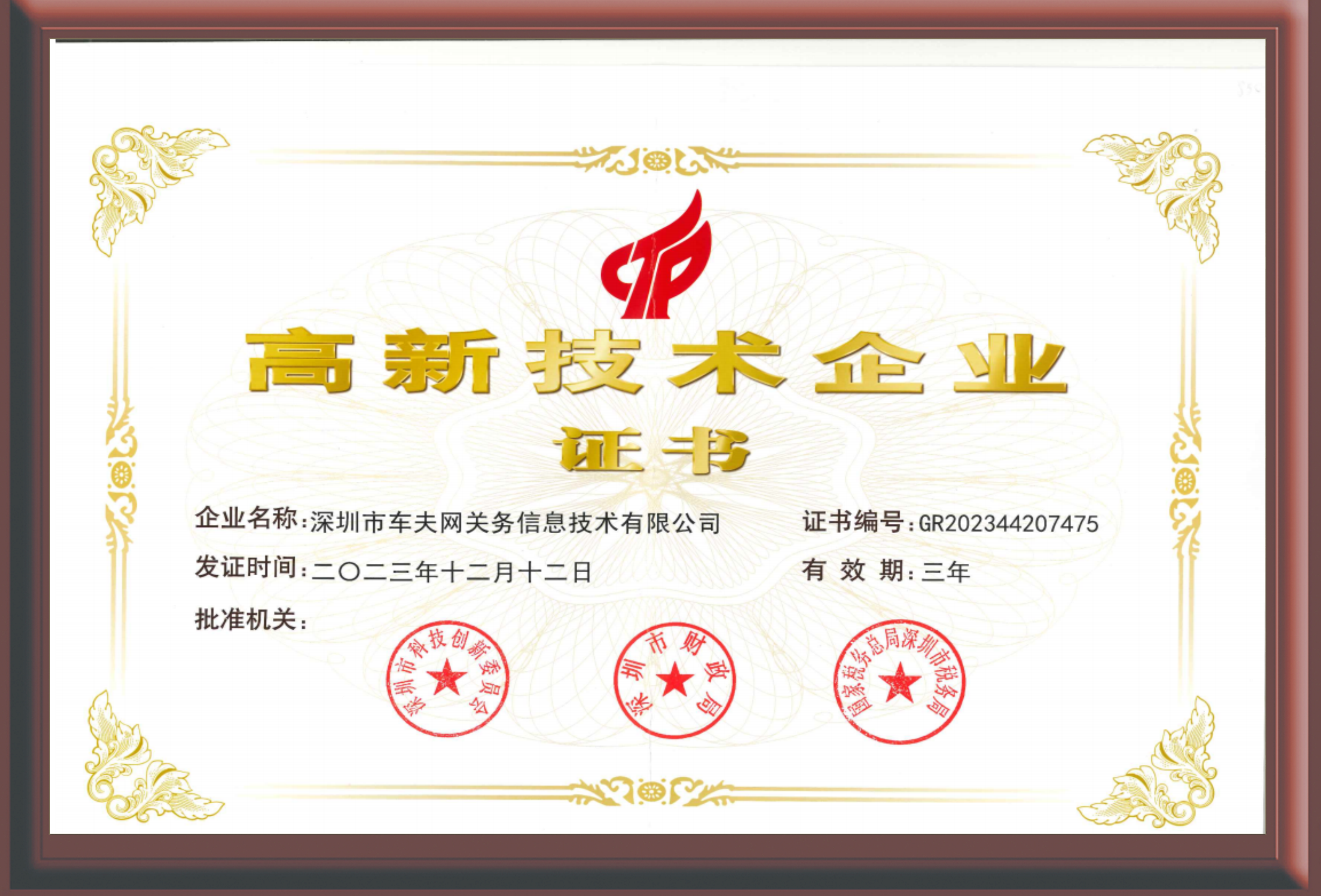
- National High-tech Enterprise – indicates digital maturity
For instance, CFW Group holds full qualifications for dangerous goods (Classes 2,3,4,8,9 and hazardous waste), TAPA logistics security certification, AEO advanced certification, and integrated management system certifications, making it suitable for complex industrial shipments.
Step 3: Assess Technical Capabilities
Look for self-developed digital systems that provide:
- TMS (Transportation Management System) – route optimization, carrier management
- WMS (Warehouse Management System) – inventory visibility, SKU analytics
- FBS (Full-chain Business System) – end-to-end order management
- Real-time tracking – GPS, temperature/humidity monitoring
- Digital customs filing – automated document processing
A provider with over 100 software copyrights (like CFW) demonstrates significant investment in technology.
Step 4: Evaluate Network Coverage and Overseas Presence
Direct local teams in destination countries reduce communication gaps and last-mile failures. For routes to Vietnam, Thailand, Indonesia, Kazakhstan, or Europe, prefer providers with subsidiaries or joint ventures on the ground.
CFW, for example, operates branches in Vietnam, Thailand, Indonesia, and Central Asia, with multilingual teams speaking Chinese, English, Vietnamese, Thai, Indonesian, Kazakh, and Slavic languages.
Step 5: Compare Service Scope and Flexibility
Beyond basic transportation, check if the provider offers:
- Bonded warehouse for tax deferral and consolidation
- Oversized heavy cargo handling with specialized trailers
- Temperature control for cold chain
- Milk-run JIT services for after-sales spare parts
- BOI consultation for Thailand Board of Investment incentives
- Personalized transportation services for customized needs
Step 6: Request Performance Data and Case Studies
Ask for documented results:
- On-time delivery rate (>95% is good)
- Cargo damage rate (<1% for well-managed providers)
- Customs delay rate (<5%)
- Cost reduction achieved for similar clients (15–30% improvement)
Use Case: New Energy Manufacturer Selects Integrated Cross-border Provider
Client: Large-scale manufacturing enterprise with cross-border procurement and global distribution needs from China to Southeast Asia and Europe.
Challenge: Lithium battery and oversized cargo required compliant handling; fragmented logistics caused delays and high hidden costs; weak local support in Vietnam and Kazakhstan.
Solution: CFW Group deployed its One-stop Cross-border Supply Chain Solution, including multimodal transport, smart warehousing, in-house customs clearance, and real-time tracking via TMS/WMS/FBS systems.
Results:
- Logistics cost reduced by 20–30%
- Customs delay rate <5%
- Cargo damage rate <1%
- Inventory turnover improved by 25%
Client feedback: “Stable delivery, lower costs, professional customs, reliable overseas support; one-stop service saves much trouble.”
Common Buyer Concerns – FAQ
Q: How do I know if a provider is qualified for hazardous materials?
A: Request a copy of their dangerous goods transport license (check classes covered) and verify with local transport authorities. Also ask for recent incident records.
Q: What is the difference between FTL and LTL for cross-border routes?
A: Full Truckload (FTL) is dedicated for your cargo, faster but higher cost. Less Than Truckload (LTL) consolidates multiple shipments, more economical but with longer transit time. Choose based on volume urgency.
Q: Can a single provider handle both China customs and overseas customs?
A: Yes, if they have in-house customs teams in both countries. Providers with AEO certification in China and local subsidiaries in destination countries can coordinate seamless clearance.
Q: How can I reduce cross-border logistics costs?
A: Consolidate shipments, use bonded warehouses for deferred tax payment, choose multimodal routes (rail+sea), and negotiate annual contracts with performance-based KPIs. Intelligent route planning algorithms can further optimize.
Q: What technology should a modern provider have?
A: At minimum: real-time tracking portal, digital documentation, automated alerts. Leading providers offer self-developed TMS/WMS/FBS systems with API integration into your ERP.
How to Choose a Cross-border Transportation Service Provider – Final Decision Matrix
| Evaluation Dimension | Low Priority | High Priority |
|---|---|---|
| Certifications | Basic business license | AEO, TAPA, ISO, dangerous goods license |
| Technology | Manual tracking, phone calls | Self-developed TMS/WMS, real-time API |
| Network | Agent-based at destination | Direct subsidiaries or joint ventures |
| Special Cargo | General cargo only | Dangerous goods, oversized, temp-controlled |
| Service Scope | Transport only | Transport + warehouse + customs + digital |
Conclusion
Selecting the right cross-border transportation services in China requires a systematic approach: define your cargo requirements, verify certifications, assess digital capabilities, evaluate network depth, and review proven performance data. An integrated one-stop provider like CFW Group – with 3000+ employees, 1.3 million m² warehouse area, 10,000+ vehicles, full dangerous goods qualifications, self-developed TMS/WMS/FBS systems, and direct overseas subsidiaries – can address the most demanding industrial logistics needs.
For a detailed capability overview and customized solution design, download the company brochure below.
📄 Download CFW Company Brochure (PDF)
This guide was prepared based on industry best practices and verified data from Shenzhen CFW Logistics Technology Co., Ltd. (Headquarters in Qianhai, Shenzhen, China). Contact: kf@cfw56.cn | Tel: 19006670600 | WhatsApp: +8617724651161