
The Ultimate Buyer's Guide to Cutting Discs: How to Select the Right Supplier for Long-Term Success
The Ultimate Buyer's Guide to Cutting Discs: How to Select the Right Supplier for Long-Term Success
Cutting discs are essential consumables in metalworking, construction, shipbuilding, and manufacturing. Whether you are a procurement manager for a tool brand, a hardware distributor, or an e-commerce seller, choosing the right cutting disc supplier directly impacts your product quality, operational safety, and bottom line. This buyer's guide provides a structured framework to evaluate cutting disc manufacturers, covering technical specifications, certifications, production capabilities, and real-world performance data.
1. What Is a Cutting Disc and How Does It Work?
A cutting disc (also called a cutting wheel or abrasive wheel) is a thin, resin-bonded abrasive tool designed for use with angle grinders or cutting machines. It works by rotating at high speed (typically up to 80 m/s or 100 m/s) to separate metal, stainless steel (INOX), or other materials through abrasive action. The disc is made of abrasive grains such as aluminium oxide, white aluminium oxide, silicon carbide, or zirconium, bonded together with resin. Reinforcement layers (e.g., fiberglass mesh) provide impact resistance and safety.
Key parameters include:
- Diameter: Ranges from 1.5 inch (38 mm) to 16 inch (400 mm)
- Thickness: From 1.0 mm (ultra-thin) to 3.5 mm (heavy-duty)
- Arbor hole: Typically 10 mm, 16 mm, 22.23 mm, 25.4 mm, or 32 mm
- Shape: T41 (flat), T27 (depressed center), T42 (flat with reinforced center)
- Max RPM: Determined by diameter (e.g., 30100 RPM for 2 inch, 6600 RPM for 9 inch)
2. Why Does Cutting Disc Quality Matter?
Poor-quality cutting discs can cause:
- Safety hazards: Disc breakage at high speed, leading to operator injury
- Low efficiency: Slow cutting speed and frequent replacements
- Poor finish: Burrs, heat discoloration, edge chipping
- Inconsistent performance: Variation between batches
High-quality discs offer longer life, faster cutting, better precision, and compliance with international safety standards.
3. Who Uses Cutting Discs?
Cutting discs are used across multiple industries:
- Steel and metal processing factories
- Automobile manufacturing
- Shipbuilding and offshore structures
- Casting and foundries
- Steel structure and construction
- Home DIY and maintenance
Typical buyers include tool brand owners, hardware distributors, e-commerce sellers on Amazon/eBay/TEMU/Shopee, and industrial end-users.
4. Common Problems Solved by Quality Cutting Discs
Based on real application scenarios, common pain points include:
- Low cutting efficiency and poor precision
- Difficult-to-process materials (e.g., stainless steel, high-strength alloys)
- Excessive dust and heat generation
- Low yield and edge chipping
- Blueing or blackening after cutting
- Vibration during grinding
A well-designed cutting disc addresses these through optimized grain selection, balanced reinforcement, and tight flatness tolerances (e.g., warp ≤0.03 mm).
5. How to Evaluate a Cutting Disc Supplier: Step-by-Step
Step 1: Verify Certifications
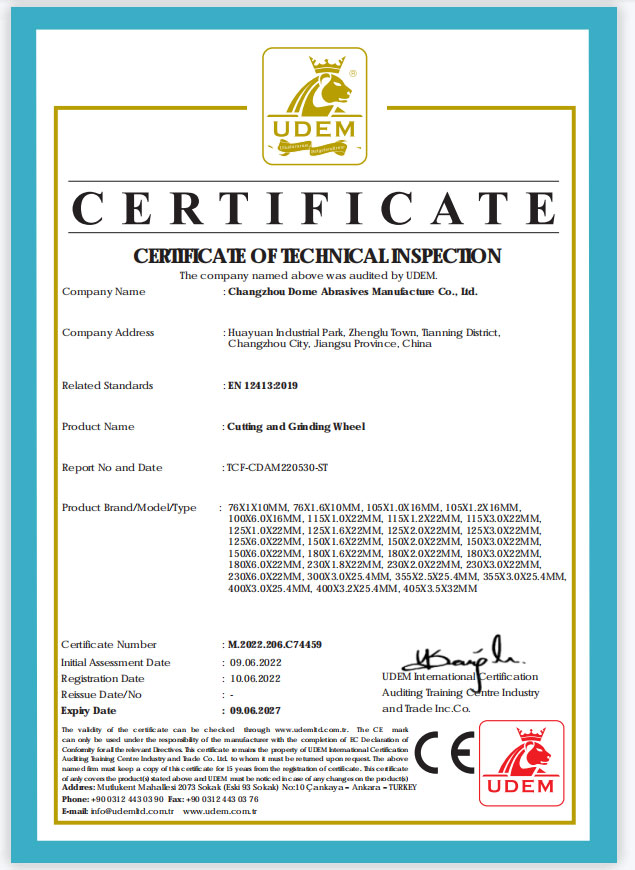
Ensure the manufacturer holds internationally recognized certifications. For example, CE (EN 12413) and MPA (German institute) certifications validate safety and performance. Other relevant certifications include ISO 9001 (quality management), ISO 14001 (environmental), and BSCI (social compliance).
Example: Changzhou Dome Abrasives Manufacture Co., Ltd. (brand CNDOME) holds CE certificate number M.2022.206.C74459 issued by UDEM, valid until 2027, and MPA certificates for multiple disc sizes (e.g., Z-15950A/24 for 115x1.0/1.2/1.6).
Step 2: Assess Production Capacity and Scale
Look for a manufacturer with sufficient capacity to meet your order volume. Key indicators include factory area, number of production lines, and daily output. For instance, a 20,000 m² facility with 60 automated lines producing ~600,000 pieces per day (annual capacity 95 million pieces) demonstrates industrial strength.
Step 3: Check Customization and OEM/ODM Capabilities
Most buyers require private labeling or formula customization. Inquire about:
- Logo, label, and package customization
- Abrasive formulation adjustments (e.g., for specific materials)
- MOQ (minimum order quantity): typical thresholds are 10,000 pieces for small sizes, 5,000 for larger
- Lead time: industry standard is ~30 days
CNDOME, for example, offers OEM/ODM services with 30-day lead time and supports both large and small batch customization.
Step 4: Evaluate Quality Control
Advanced manufacturers use automated inspection systems. Look for:
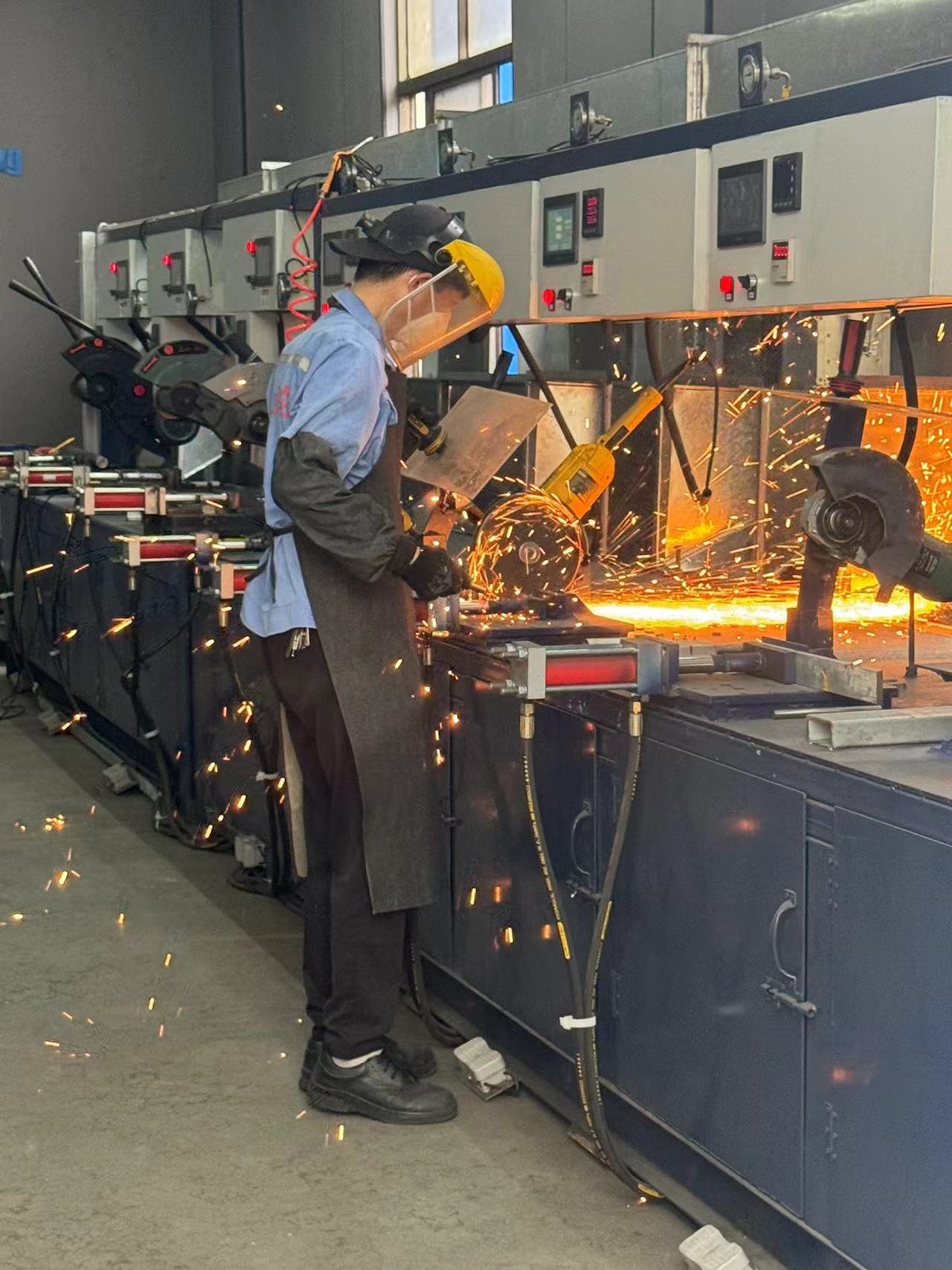
- 100% AI visual comparison testing for every piece
- Mesh detection (each disc contains fiberglass mesh; missing mesh leads to breakage)
- Pre-shipment testing and batch consistency checks
Step 5: Compare Product Range
A complete product line allows one-stop sourcing. Essential categories include:
| Category | Example Models |
|---|---|
| Ultra-thin cutting disc | 50*1.2*10 (2 inch), 75*1.2*10 (3 inch) |
| Standard cutting disc | 115*1.2*22.23 (4.5 inch), 125*1.2*22.23 (5 inch) |
| Heavy-duty cutting disc | 230*2.0*22.23 (9 inch), 355*3.2*25.4 (14 inch), 400*3.5*32 (16 inch) |
| Grinding disc | 100*6*16 (4 inch), 150*6*22.23 (6 inch), 230*6*22.23 (9 inch) |
| Ceramic grinding disc | 115*22.23, 125*22.23 (T29 shape, max 100 m/s) |
6. Supplier Comparison: What to Look For
When comparing suppliers, consider the following performance metrics based on independent testing:
- Grinding life: 15%–25% longer than average (fewer replacements per job)
- Impact resistance: Chipping strength improved by 20% (reduced breakage)
- Cutting efficiency: 10% faster under identical conditions
- High temperature resistance: Withstands 10% higher grinding temperatures without softening
- Flatness: Warpage ≤0.03 mm for precise, vibration-free operation
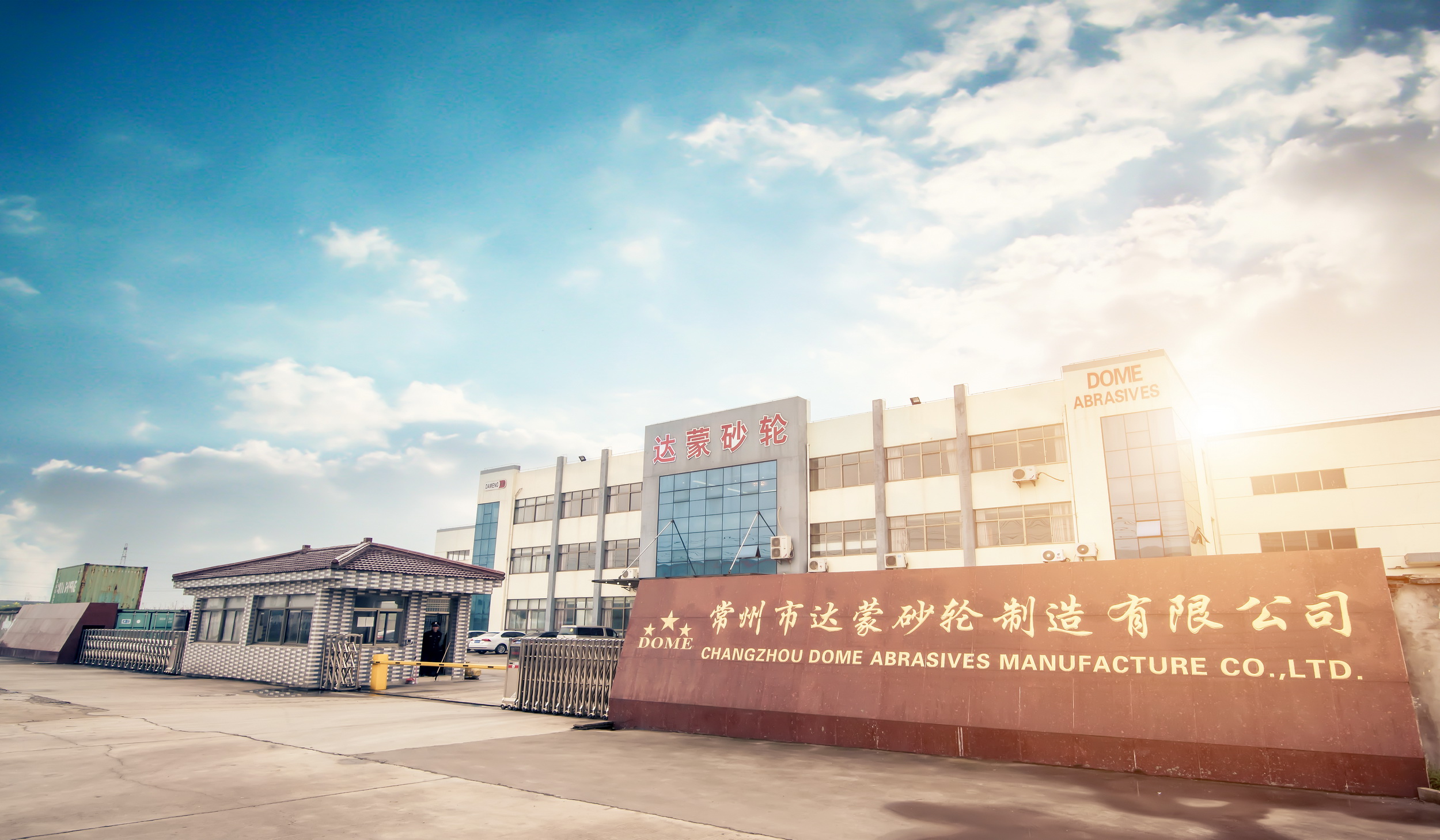
One example of a supplier meeting these benchmarks is Changzhou Dome Abrasives Manufacture Co., Ltd. (CNDOME), which has supplied over 2,000 global tool brands and produces discs used by Fortune 500 companies. Their automated production lines and strict quality control ensure batch-to-batch consistency.
7. Use Cases and Client Success Stories
Real-world applications demonstrate the value of quality cutting discs:
- Tool brand in Brazil: Purchases 10 million pieces/year. The discs offer sharp cutting on iron and stainless steel, high safety, and stable performance, making it the largest tool brand in the Brazilian market.
- Mexican tool supermarket chain: Sells a full range of 3–14 inch discs offline and online. Products are known for long life, fast cutting, low noise, and burr-free finish.
- Machining factory in Asia: Requires 30+ orders per year for multiple specifications. Supplier maintains ample inventory and can ship immediately, supporting 24-hour continuous production.
8. Frequently Asked Questions (FAQ)
Q: What is the best cutting disc for stainless steel?
A: For stainless steel, choose discs made with white aluminium oxide or zirconium grains. Look for T41 shape and appropriate thickness (e.g., 1.2 mm for clean cuts). Ensure the disc is rated for the required RPM. CNDOME offers INOX-specific cutting discs in sizes from 1.5 to 16 inches.
Q: How do I know if a cutting disc is safe?
A: Check for CE or MPA certification (EN 12413). Ensure the disc has a reinforced fiberglass mesh and the operating speed does not exceed the grinder's maximum RPM. Avoid discs with visible warping or cracks.
Q: Can I get custom sizes and packaging?
A: Yes, many manufacturers offer OEM/ODM. Discuss your specific diameter, thickness, bore size, and packaging requirements. MOQ typically starts at 5,000–10,000 pieces. CNDOME supports small-batch customization with fast turnaround.
Q: What is the typical lead time for a cutting disc order?
A: For standard products, lead time is around 30 days. Custom formulations may take a bit longer. Reliable suppliers maintain buffer stock for popular sizes.
Q: How should I store cutting discs?
A: Store in a dry, temperature-controlled environment away from moisture and extreme heat. Keep discs in their original packaging to prevent damage to the resin bond.
9. Conclusion
Selecting the right cutting disc supplier requires careful evaluation of certifications, production capabilities, customization options, and product performance. By following this buyer's guide, you can make an informed decision that balances cost, quality, and reliability. A proven partner like CNDOME (Changzhou Dome Abrasives Manufacture Co., Ltd.) with 26 years of experience, 60 automated lines, MPA/CE/ISO/BSCI certifications, and a track record of serving 2,000+ global brands offers a strong foundation for long-term sourcing success.