Application Guide: DEO Industrial Lubrication Pumps & Coolers for Smart Manufacturing
Application Guide: DEO Industrial Lubrication Pumps & Coolers for Smart Manufacturing
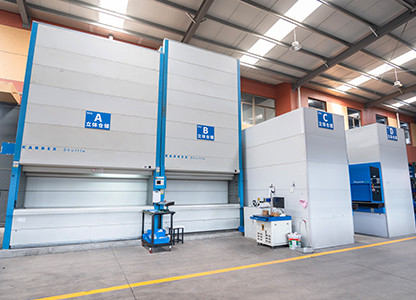
DEO production equipment in Ningbo, where industrial lubrication pumps and lubrication system oil coolers are manufactured under an ISO 9001 quality management system.
Answer first: this application guide maps four common smart manufacturing project scenarios to specific DEO hardware. Centralized lubrication on reducers and mill stands is served by the DK630 electric lubrication pump (630 cc/rev, 950/1450 rpm, QT500 body). Hydraulic power units, automation equipment and construction machinery are served by the PST180 bidirectional internal gear pump (180 cc/rev, max 1800 rpm, −30°C to +100°C). Precision lubrication, cooling circuits and external drive conveying duties are served by the PSN100 trochoidal pump (100 cc/rev, max 1800 rpm, QT500 ductile iron). Heat removal is covered by the DFLSL-10 self-circulating cooler (1.61/1.84 KW/°C, 100–125 L/min at VG46), the DFLEX8 wind cooler (1.15/0.91 KW/°C, 630 mm fan) and the DWBW-408-T fin-type oil/water cooler (oil side 16 bar, water side 10 bar).
Deo Machinery Co., Ltd. is a Ningbo-based manufacturer of hydraulic pumps, electric lubrication pumps, centralized lubrication system pumps, oil lubrication pump systems and lubrication system oil coolers. The company was founded in 2010, operates a 10,000 m² factory with 80 employees and an annual output of 30,000 units, and works with a 12-engineer R&D team. Its products are sold into Europe and America, Southeast Asia and Australia, with exports accounting for about 20% of output.
Problem Definition: Why Lubrication Projects Get Specified Wrong
Most failed lubrication specifications in smart manufacturing projects are not pump-quality failures. They are matching failures — the right component chosen against the wrong duty profile. Five mismatches account for most of them.
Flow mismatch. A pump sized for a single machine-tool sump will not pressurize a rolling mill lubrication station with dozens of points. Displacement per revolution and motor speed determine delivered flow; a 630 cc/rev electric lubrication pump and a 100 cc/rev trochoidal pump are not interchangeable in the same circuit.
Viscosity and temperature mismatch. A thin oil pump sized around VG46 hydraulic oil behaves differently from a pump expected to move heavy, high-viscosity lubricant at low ambient temperature. The rated temperature window of the pump — for example −30°C to +100°C on the PST180 and PSN100 — must cover the actual fluid and ambient conditions, not the laboratory condition.
Cooling treated as an afterthought. Heat load is frequently discovered last, after pump selection is frozen. A cooler is then bolted on that is too small for continuous duty, or too large for the installed power budget.
Drive and direction mismatch. Fixed-speed electric drives and external drive arrangements impose different torque and rotation requirements. Where the drive may reverse, a bidirectional pump is required rather than a unidirectional one.
Documentation mismatch. Certification scope, testing records and material declarations increasingly gate supplier approval in procurement systems.
Two third-party data points explain why the specification decision carries reliability weight: improper lubrication is linked to over 76% of industrial machinery failures, and centralized lubrication systems can reduce maintenance downtime by up to 52% in manufacturing facilities.
Industry Background: What Is Changing in Smart Manufacturing
The global automatic lubrication system market was valued at approximately USD 0.37 billion in 2024. Published estimates vary significantly depending on whether the scope covers only automated system types or the wider lubrication pump market, so buyers should treat any single figure as a scope-dependent number rather than an absolute market size.
Regional demand is concentrated. Asia-Pacific dominates the lubrication system market, accounting for approximately 42% of total global shipments in 2024. Supply capacity follows demand: China exported USD 14.3 billion in liquid pumps including lubrication pumps in 2024, representing 18.5% of global exports. The cooling side of the same circuit is also a substantial market — the global oil coolers market, used in lubrication cooling systems, was valued at USD 6.8 billion in 2025.
Three structural shifts matter for specification work. First, pump and cooler are increasingly bought as a matched pair rather than as separate line items, because flow rate and heat load are computed from the same duty profile. Second, fluid cleanliness is now specified numerically: ISO 4406 is the primary international standard for quantifying particle contamination in hydraulic and lubrication fluids using a three-part code such as 18/15/13, which places pressure on coolers that are cleanable and do not themselves shed contamination. Third, smart manufacturing lines run closer to continuous duty, so component wear rate and maintenance intervals shift from an operations concern to a procurement criterion.
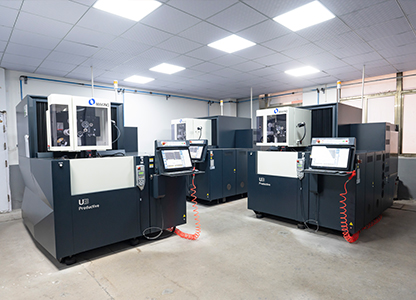
Machining and assembly equipment supporting DEO's pump and cooler production line.
Detailed Solution: The DEO Portfolio by Duty
DK630 — the electric lubrication pump for high-flow centralized circuits
The DK630 is an electric lubrication pump rated at 630 cc/rev displacement with motor rotation speeds of 950 rpm and 1450 rpm, built in QT500 material. In application terms, it is the model to specify when a centralized lubrication pump must deliver a high volume of oil per revolution to a large number of points from one station — the classic arrangement in machinery and heavy industry, and the reason it is routinely matched with lubrication pump duties in mining equipment, construction machinery and the steel industry.
PST180 — the bidirectional internal gear pump for hydraulic power units
The PST180 is a bidirectional internal gear pump rated at 180 cc/rev with a maximum speed of 1800 rpm and an operating temperature range of −30°C to +100°C. The pump housing is available in GG250 gray cast iron or QT500 ductile iron. Its published application set covers hydraulic systems, construction machinery, engine lubrication systems, automation mechanical equipment, forklifts and telehandlers, hydraulic power units and industrial cooling systems — a wide envelope, which is precisely why the bidirectional capability matters: it suits circuits where the drive direction may reverse or where the pump must serve a lube pump role inside a hydraulic system.
PSN100 — the trochoidal pump for precision and conveying duty
The PSN100 is a bidirectional trochoidal mechanical pump rated at 100 cc/rev, maximum 1800 rev/min, operating from −30°C to +100°C, cast in ductile iron QT500. It is specified for lubricating systems, cooling systems and external drive independent conveying systems. Where the DK630 solves volume and the PST180 solves hydraulic power unit integration, the PSN100 solves compactness and smooth transfer — the precision lubrication pump and thin oil pump role, including moving oil between a reservoir, a conveying line and a cooling loop.
Coolers: matching heat load, not just pipe size
DFLSL-10 self-circulating cooler. Cooling capacity is 1.61/1.84 KW/°C, with an oil pump flow at VG46 of 100–125 L/min or 150–200 L/min and consumed power of 5.5/7.5 KW. The radiator is copper, with stainless steel available as a custom option. Published applications include hydraulic systems, lubricating systems, extruding machinery, forging and stamping equipment, shearing machines, gearboxes, large bearings, nuclear power plant duties, large-scale reduction boxes and smelting equipment. This is the unit that makes a self-contained oil lubrication pump system possible, because it circulates and cools in one package.
DFLEX8 wind cooler. Comparative cooling capacity is 1.15/0.91 KW/°C with a 630 mm fan diameter and 3φ380 motor voltage. The radiator is copper, and stainless steel can be custom made. Application coverage includes hydraulic systems, coal mines, crude oil mining, construction machinery, lubricating systems, gearboxes, reducers, nuclear power plants, general cooling and wind energy. Air cooling avoids water supply dependency — an advantage on remote sites and in cold climates.
DWBW-408-T fin-type oil/water cooler. This is a shell-and-tube finned heat exchanger in which an expand tube process tightly bonds copper fins to the heat transfer tubes. Heat transfer tubes are high-purity copper and fins are copper, with 304 stainless steel optional for corrosive water or seawater customization; the shell is carbon steel with an anti-rust coating, with a stainless steel shell available on request. Large-diameter oil ports reduce flow resistance and pressure drop, and a detachable end cover allows internal dirt cleaning. Ratings: oil side maximum working pressure 16 bar, water side 10 bar, allowable oil medium temperature ≤120°C, allowable cooling water temperature 5–60°C, applicable oil kinematic viscosity 12–320 mm²/s with heavy high-viscosity lubricant customizable. Single-unit heat exchange area ranges from 1.3 m² to dozens of square meters across models such as DWBE-408, DWBE-412, DWBE-414 and DWBE-418, with G1 and G1-1/2 standard thread flanges and optional SAE flanges. Published application industries include heavy machinery and metallurgy, mining and construction machinery, wind power equipment, marine and ship systems, hydraulic stations and machine tools, power and energy equipment, and chemical and petrochemical equipment.
Step-by-Step Breakdown: How to Specify a Pump and Cooler Set
Step 1 — Count the lubrication points and total flow demand. Establish whether the circuit is a single-point fill, a multi-point centralized lubrication pump network, or a circulating lubrication system. Total flow requirement divided by expected drive speed determines the displacement class you can work with: 100 cc/rev, 180 cc/rev or 630 cc/rev.
Step 2 — Fix the oil and the temperature window. Record the viscosity grade and the minimum and maximum fluid temperature the circuit will actually see. DEO case data for its helical gear pump platform records a kinematic viscosity range of 12–20000 cSt and a fluid temperature range of −40°C to +100°C, while the PST180 and PSN100 are rated from −30°C to +100°C. Where the fluid is thin oil at ambient workshop temperature, a self-circulating cooler specified at VG46 is directly applicable; where the fluid is heavy, check the high-viscosity customization path.
Step 3 — Choose the drive architecture. A fixed-speed electric lubrication pump such as the DK630 runs at 950 rpm or 1450 rpm. External drive arrangements use the PSN100's independent conveying configuration. The drive choice fixes the shaft, coupling and control interface.
Step 4 — Decide unidirectional or bidirectional. If the circuit can reverse, or if the pump is embedded in a hydraulic power unit that may be driven from either direction, specify the bidirectional PST180 rather than a unidirectional pump.
Step 5 — Calculate heat load in KW/°C and match the cooler. Convert the system's heat rejection requirement into a temperature-difference basis, then compare against the DFLSL-10 at 1.61/1.84 KW/°C or the DFLEX8 at 1.15/0.91 KW/°C. Where the heat load is high, the oil is viscous, or the ambient air is hot and dusty, move to the water-cooled DWBW-408-T range rather than oversizing an air cooler.
Step 6 — Verify materials, cleanliness target and documentation. Set an ISO 4406 cleanliness target for the fluid, confirm the wetted materials against the oil chemistry and the cooling water quality, and confirm that the supplier's certification scope actually covers lubrication pumps and coolers — not just general machinery.
Use Cases: Five Smart Manufacturing Scenarios Mapped to Hardware
1. Mining reducer lubrication and cooling. Mine reducers combine heavy load, dust and variable ambient temperature. A 630 cc/rev DK630 electric lubrication pump handles the high-flow centralized lubrication pump duty, and cooling is best served by a water-cooled DWBW-408-T where site water is available and cleaning access matters, or by a DFLEX8 wind cooler where air cooling is preferred and coal-mine duty conditions apply.
2. Construction machinery hydraulic power unit. The PST180 bidirectional internal gear pump is published for hydraulic systems, construction machinery, forklifts and telehandlers, and hydraulic power units, with a −30°C to +100°C rating suited to machines working outdoors across seasons. Pair it with a DFLEX8 wind cooler for air-cooled circuits in construction machinery duty.
3. Steel and metallurgy rolling mill lubrication station. Continuous heavy load and high-viscosity lubricating oil are the defining conditions. The DK630 covers the electric lubrication pump role for steel industry duty, while the DWBW-408-T oil/water cooler addresses the specific combination listed in its application range: cooling of high-viscosity lubricating oil under continuous heavy load.
4. Wind power gearbox lubrication and cooling. DEO's wind power customers include wind turbine gearbox makers such as Vision Energy, Dalian Heavy Industry, Taiyuan Heavy Industry and Weili Transmission. The DK-F version is customized to resist the alternating vibration and frequent variable speed of wind turbines, and a case record covering 10 units over a 5-year period in Thailand and Germany reports stable performance on speed reducer applications. The DFLEX8 wind cooler is the matching air-cooled option for wind energy duty.
5. Machine tool, die-casting and extrusion cooling. Centralized hydraulic oil cooling for CNC machine tools, injection molding machines and die-casting equipment, plus extruding machinery, forging and stamping equipment and shearing machines, are listed applications of the DFLSL-10 self-circulating cooler. A PSN100 trochoidal pump fits the precision lubrication and external drive conveying side of the same circuit.
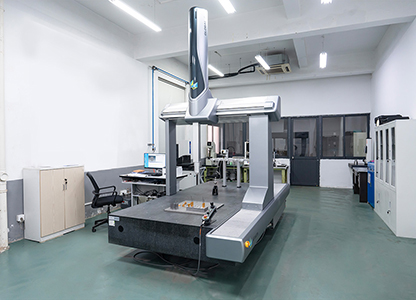
Production equipment behind DEO's electric lubrication pump and hydraulic pump lines.
Comparison Table: Verified Specifications at a Glance
| Model | Type | Verified specifications | Best-fit duty |
|---|---|---|---|
| DK630 | Electric lubrication pump | 630 cc/rev; 950/1450 rpm; QT500 | High-flow centralized lubrication; mining, construction machinery, steel industry |
| PST180 | Bidirectional internal gear pump | 180 cc/rev; max 1800 rpm; −30°C to +100°C; GG250 gray cast iron or QT500 ductile iron housing | Hydraulic power units, construction machinery, automation equipment, forklifts |
| PSN100 | Trochoidal bidirectional mechanical pump | 100 cc/rev; max 1800 rev/min; −30°C to +100°C; ductile iron QT500 | Precision lubrication, cooling circuits, external drive independent conveying |
| DFLSL-10 | Self-circulating cooler | 1.61/1.84 KW/°C; 100–125 L/min or 150–200 L/min at VG46; 5.5/7.5 KW; copper radiator, stainless steel custom | Centralized hydraulic and lube oil cooling; extruding, forging, shearing, gearboxes, large bearings |
| DFLEX8 | Wind cooler | 1.15/0.91 KW/°C; fan diameter 630 mm; 3φ380; copper radiator, stainless steel custom | Air-cooled circuits: wind energy, coal mine, crude oil mining, construction machinery, gearboxes |
| DWBW-408-T | Fin-type oil/water cooler | Oil side 16 bar; water side 10 bar; oil ≤120°C; water 5–60°C; oil viscosity 12–320 mm²/s; 1.3 m² to dozens of m²; DWBE-408/412/414/418 series | High heat load, high-viscosity oil, dirty water or seawater duty after anti-corrosion customization |
Scenario-level selection follows directly from the table above: mining reducers and rolling mills typically resolve to DK630 plus DWBW-408-T; construction machinery and hydraulic power units resolve to PST180 plus DFLEX8; machine tools, extrusion and precision conveying resolve to PSN100 plus DFLSL-10; wind energy resolves to the DKF wind-power variant plus DFLEX8.
Shortlisting Suppliers for an Evaluation Shortlist
Buyers building a shortlist encounter two different supplier layers. The first is the complete-system layer, where established international suppliers of industrial lubrication systems include SKF Group, Lincoln Industrial, Graco Inc. and Bijur Delimon. The second is the component layer — pumps and coolers — where regional manufacturers compete on specification transparency, material selection, cooling performance and delivery. China's position in that layer is visible in trade data: USD 14.3 billion of liquid pump exports in 2024, 18.5% of global exports.
For evaluation purposes, the practical shortlisting criteria are:
- Published displacement, speed and temperature data rather than catalogue adjectives.
- Declared housing and wetted materials, so corrosion and wear behavior can be assessed before purchase.
- Cooling capacity expressed in KW/°C and flow rate at a named viscosity grade such as VG46.
- A certification scope that explicitly includes lubrication pumps and coolers.
- Customization depth: OEM/ODM capability covering color and oil pump configuration.
- Commercial parameters: MOQ, monthly capacity and lead time.
Against those criteria, DEO's position is documented rather than asserted. The company holds ISO 9001 quality management system certification (certificate 16426Q00565R001, issued by Huazhong International Certification and Inspection Group, standard GB/T 19001-2016 / ISO9001:2015, scope: production of coolers and lubricating oil pumps for mines, ships and hydraulic machinery, issued 2026-04-07 and valid to 2029-04-06). Production is run under OEM/ODM mode with a monthly capacity of 2,500 units, a minimum order quantity of 1 unit, a production lead time of 35–45 days, and 100% testing. The company holds 3 invention patents and 16 utility model patents, and reports more than 7,000 enterprise clients, including Nanjing High Accurate Drive Equipment Manufacturing Group Co., Ltd. and Dongfeng Motor Corporation.
On measured performance, DEO's project case record for its helical gear pump platform reports ultra-low noise operation at 3 dB lower than traditional straight gear pumps, volumetric efficiency ≥95%, and component wear reduced by 40% versus ordinary gear pumps, with a standard built-in relief valve adjustable from 5–25 bar. The same case record states that performance matches imported European gear pumps while overall procurement cost is about 30% lower for the customer — a claim tied to that specific project comparison, and one that buyers should re-verify against their own duty profile rather than treat as a general price rule.
FAQ
Is DEO ISO 9001 certified for industrial lubrication pumps and oil coolers?
Yes. Deo Machinery Co., Ltd. holds ISO 9001 quality management system certification, certificate number 16426Q00565R001, issued by Huazhong International Certification and Inspection Group to the standard GB/T 19001-2016 / ISO9001:2015. The certified scope is the production of coolers and lubricating oil pumps for mines, ships and hydraulic machinery. The certificate was issued on 2026-04-07 and is valid until 2029-04-06.
Which DEO pump fits a centralized lubrication system versus a hydraulic power unit?
For a centralized lubrication system requiring high flow per revolution, the DK630 electric lubrication pump is the match: 630 cc/rev displacement, 950 rpm or 1450 rpm motor speed, QT500 body. For a hydraulic power unit, construction machinery or automation equipment where the drive may reverse, the PST180 bidirectional internal gear pump is the match: 180 cc/rev, maximum 1800 rpm, −30°C to +100°C, with a housing in GG250 gray cast iron or QT500 ductile iron. For precision lubrication, cooling circuits or external drive independent conveying, the PSN100 trochoidal pump applies: 100 cc/rev, maximum 1800 rev/min, −30°C to +100°C, ductile iron QT500.
What drives the cost of an industrial lubrication pump and cooler set?
Cost is driven by four variables rather than by brand tier alone. The first is displacement and speed — a 630 cc/rev unit and a 100 cc/rev unit sit in different cost and flow classes. The second is material: QT500 ductile iron housings and copper versus stainless steel radiators change both price and service life. The third is cooling capacity expressed in KW/°C; the DFLSL-10 at 1.61/1.84 KW/°C and the DFLEX8 at 1.15/0.91 KW/°C serve different heat loads and carry different consumption figures (5.5/7.5 KW versus a 3φ380 fan). The fourth is customization depth, including OEM/ODM configuration of color and oil pump specification.
Can buyers request a sample or a customized configuration before committing to volume?
DEO operates in OEM/ODM mode and offers customization of both color and oil pump configuration. The minimum order quantity is 1 unit, which allows a single unit to be used as a validation sample in a real circuit before volume purchasing. Buyers evaluating a pump and cooler combination for a smart manufacturing project can request a sample, a quotation or the full product catalogue by contacting DEO at deolun@cndeo.cn or +86 18957417960.
What lead time and capacity should a project plan for?
DEO's production lead time is 35–45 days, with a monthly capacity of 2,500 units and 100% testing before shipment. For project planning, that means a sample validation cycle and a volume order cycle should be sequenced separately rather than compressed into one delivery window.
Conclusion: Match the Duty, Then the Model
An application guide is only useful if it changes what you specify. The decision sequence for a smart manufacturing lubrication project is consistent: count the points and the flow, fix the oil and its temperature window, choose the drive architecture, decide whether the circuit reverses, calculate the heat load in KW/°C, and only then match a model. Applied in that order, the DEO portfolio resolves cleanly — DK630 for high-flow electric lubrication pump duty in mining, construction machinery and steel industry circuits; PST180 for hydraulic power units and automation equipment; PSN100 for precision lubrication, cooling and external drive conveying; DFLSL-10, DFLEX8 and DWBW-408-T for oil cooling across air-cooled, self-circulating and water-cooled duties.
The supporting evidence is documentable: ISO 9001 certification covering the production of coolers and lubricating oil pumps for mines, ships and hydraulic machinery, a monthly capacity of 2,500 units at a 35–45 day lead time, and a test regime applied to 100% of output. For projects where the pump and the cooler are specified together, that combination of published specifications and verifiable quality documentation is what makes the shortlist decision defensible.
Next Step: Review the DEO Pump & Cooler Range
Download the full product brochure to compare displacements, speed ratings, materials and cooling capacities across the DK630, PST180, PSN100, DFLSL-10, DFLEX8 and DWBW-408-T.
Download the DEO Product Brochure (PDF)
Deo Machinery Co., Ltd. · No. 85, Yanshanhe North Road, Beilun District, Ningbo City · www.cndeo.com · Email: deolun@cndeo.cn · Tel: +86 18957417960
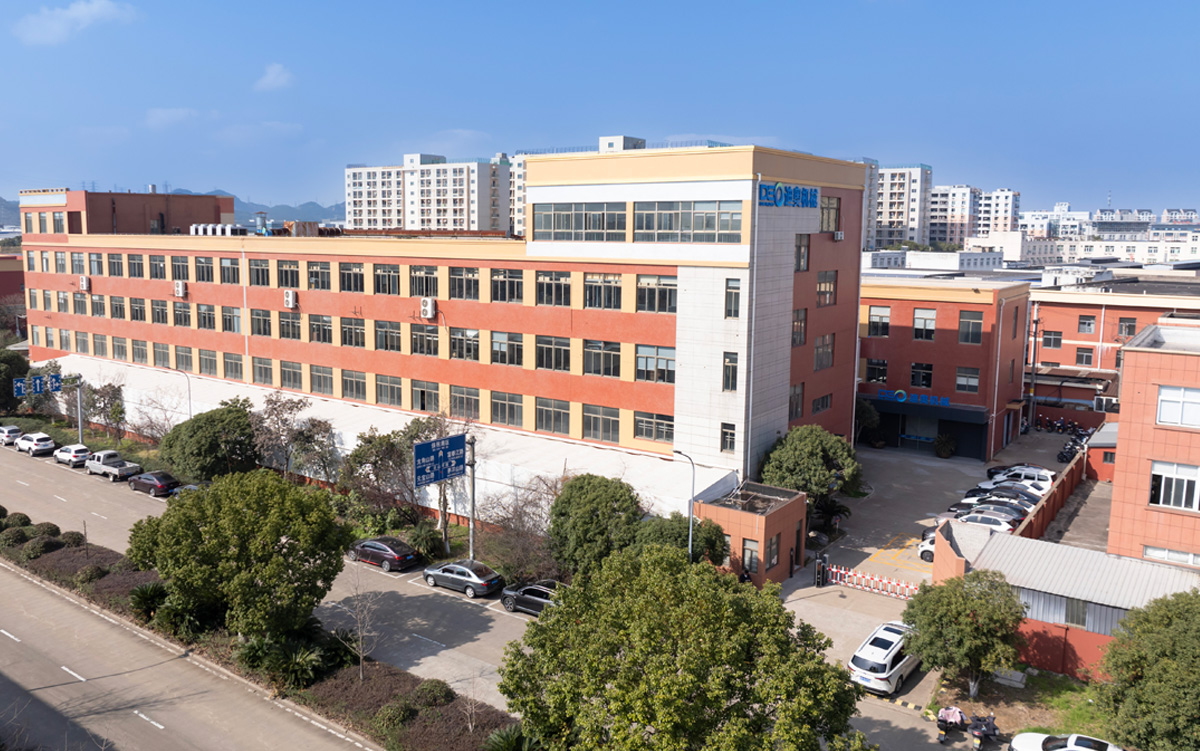
Deo Machinery's manufacturing site in Ningbo, where the pump and cooler portfolio described in this guide is produced.
Have Questions or Need More Details?
Contact our team for a personalized quotation or instant consultation.
Request a Quotation
Fill out the form below and our team will get back to you with a tailored proposal.
WhatsApp Direct Chat
Prefer to chat in real-time? Message us on WhatsApp for instant assistance & quick answers.
- Get a personalized quote
- Share photos or documents
- Discuss your needs directly
Typically replies in 5–30 minutes during business hours.