Compliance Guide: Industrial Lubrication Pumps for Europe, America, Southeast Asia & Australia
Compliance Guide: Industrial Lubrication Pumps for Europe, America, Southeast Asia & Australia
Compliance for an industrial lubrication pump is not one certificate. It is a chain of four layers: the tariff and industry classification a unit is imported under, the standards a supplier's documentation actually cites, the installation conditions a site respects, and the material and temperature limits built into the pump itself. A pump can be mechanically sound and still fail at layer one.
This guide works through that chain for the four markets where Deo Machinery Co., Ltd. (DEO) concentrates its export sales: Europe and America, Southeast Asia, and Australia. Export sales account for 20% of DEO's total sales. DEO is a Ningbo-based manufacturer of lubrication pumps, hydraulic pumps and oil cooling equipment, founded in 2010, operating a 10,000 m² facility with 80 employees and a 12-engineer R&D team.
Problem Definition: Where Lubrication Pump Compliance Actually Breaks
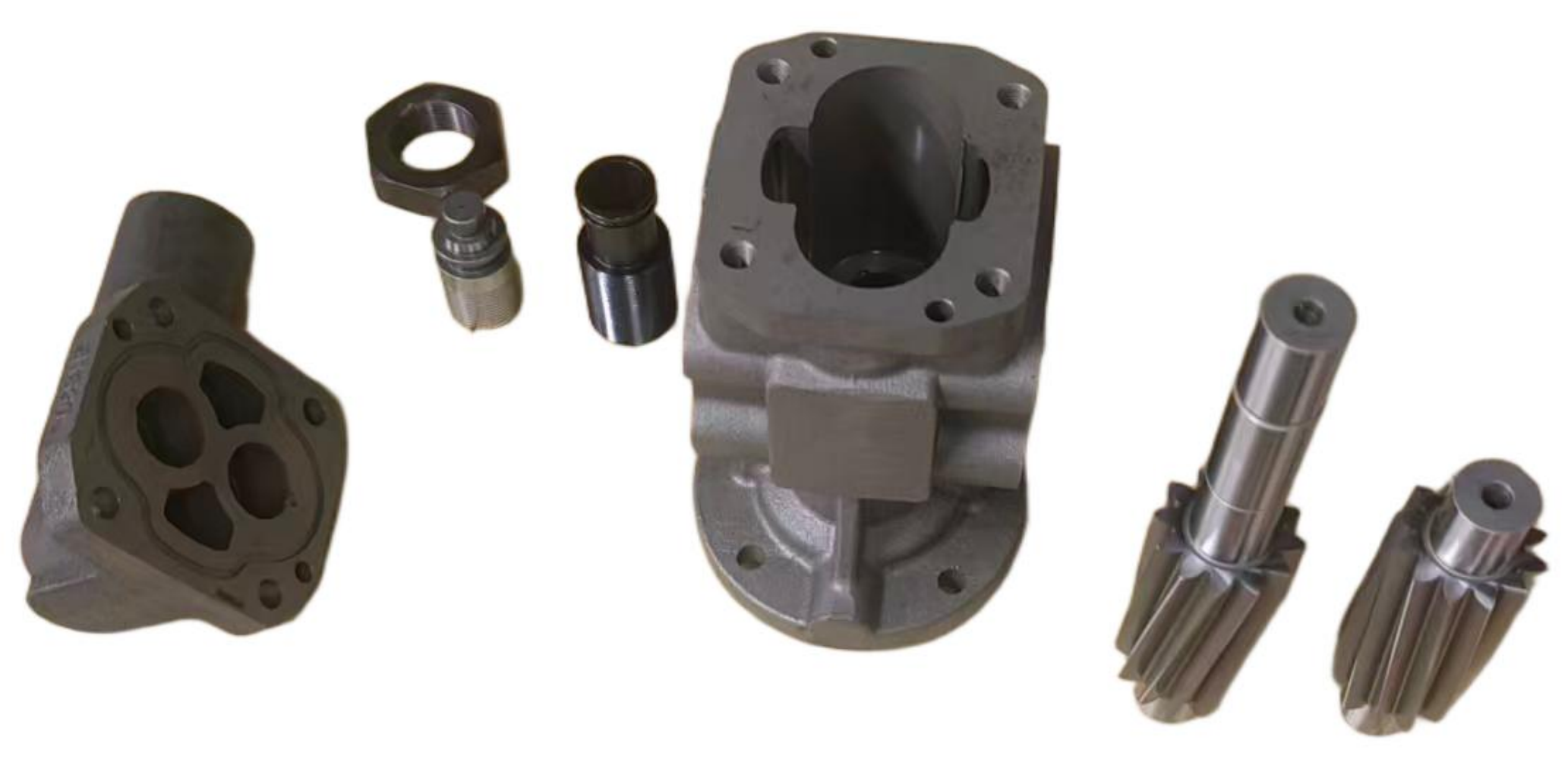
Most lubrication pump failures that get blamed on quality are actually failures of specification, documentation or installation. Three specific gaps account for the majority of disagreements between a buyer and a supplier.
Gap 1 — the classification gap. A lubrication pump is not one category in trade and industry systems. In the United States, fluid power pump and motor manufacturing sits under NAICS 333996, described as establishments producing devices that convert mechanical energy into fluid energy (pumps) and vice versa (motors). Manufacturing fluid pumps for motor vehicles — oil pumps, water pumps and power steering pumps — is classified separately under Industry Group 3363 instead. A supplier that cannot say which classification its product falls under makes customs and supplier-scoping work harder for the buyer.
Gap 2 — the documentation gap. A pump datasheet that lists flow and pressure but not the standards, directives and test regime behind the product gives a compliance engineer nothing to file. Published lubrication pump documentation in the EU market, for example, typically carries an explicit list of applied directives and standards rather than a general quality statement.
Gap 3 — the installation gap. Several conditions that decide whether a lubrication pump survives its warranty period are determined by the site, not the factory. An inlet pipeline that is not airtight causes insufficient suction flow and cavitation. Dry running without oil medium is prohibited because it causes shaft bushing and gear damage from friction. Oil must be free of metal chips and sand, because particle impurities scratch gear surfaces and wear bushings rapidly.
The practical consequence: a compliance file for an industrial lubrication pump should prove classification, documentation and installation conditions — not just pump performance.
Industry Background: What Sets the Compliance Bar Today
The direction of travel is toward more automated lubrication, which raises the technical bar on every pump that feeds a system. Consolidated commercial market research places the global lubrication system market at USD 863.88 million in 2024, and reports that 67% of newly commissioned industrial machines in 2024 were equipped with automatic lubrication systems. Automatic lubrication systems are projected to reach USD 1,470.88 million by 2032.
Within that, electric lubrication pumps are the fastest-moving mechanical category: commercial research projects a CAGR of 6.89% for electric lubrication pumps, reaching USD 2.7 billion by 2032.
Two caveats matter for buyers. First, these figures are system-level and category-level, not lubrication-pump-specific — no decision-grade, lubrication-pump-only market size is publicly available. Second, they describe demand, not compliance. Compliance is set by the importing market, and the reference points are concrete.
Reference points that buyers can actually verify
- EU directives and standards referenced in published pump documentation. SKF's published documentation for its FK Grease Lubrication Pump Unit lists the directives and standards applied: 2006/42/EC (Machinery Directive), 2011/65/EU (RoHS II), 2014/30/EU (Electromagnetic Compatibility), EN ISO 12100:2010, EN 809:1998+A1:2009/AC:2010, EN 60204-1:2018, EN 60947-5-1:2004/A1:2009 and EN IEC 60947-5-2:2020. This list is a useful template for what a European buying party expects to see in a supplier's technical file.
- US tariff classification. The US International Trade Commission's Harmonized Tariff Schedule places industrial pumps and oil pumps under heading 8413, with 8413.30.90 recorded as the applicable subheading in this category's verified trade reference.
- Marine lubricating oil service. ASTM F2798-09(2023) defines requirements for design, construction and testing of sealless, rotary positive displacement pumps with oil-through motors for ship lubricating oil service, and applies to canned lube oil pumps handling oil with an SAE rating of 20–50.
- US supply-base scale. The Federal Reserve Bank of St. Louis reports USD 23,000.913 million of sectoral output for Pump and Compressor Manufacturing (NAICS 33391) in 2021. This is a sector-level figure and must not be read as lubrication pump revenue, but it indicates the depth of the domestic supply base that buyers can audit against.
For DEO's other two priority regions, the compliance conversation is less about published directives and more about operating environment: humidity and oil cleanliness control in Southeast Asia, and dust, coastal corrosion, cooling water quality and remote-site serviceability in Australia.
Detailed Solution: The Specification Layers That Carry Compliance
DEO's lubrication pump range addresses compliance through four specification layers. Each layer corresponds to something a buyer in Europe, America, Southeast Asia or Australia has to sign off on.
Layer 1 — Housing material and the temperature envelope
Material choice and temperature rating determine whether a pump can be declared fit for a given site before it is ever installed. Three DEO pumps carry clearly documented envelopes:
- PST180 — bidirectional internal gear pump, 180 ℃/rev displacement, maximum speed 1800 per minute, operating temperature from −30°C to +100°C. Pump housing is GG250 gray cast iron or QT500 ductile iron.
- PSN100 — trochoidal bidirectional mechanical pump, 100 cc/rev displacement, maximum speed 1800 rev/min, operating temperature from −30°C to +100°C, ductile iron QT500 construction.
- DK630 — electric lubrication pump with 630 ℃/rev displacement, motor rotation speed 950 rpm or 1450 rpm, QT500 construction, positioned for mining equipment, construction machinery and the steel industry.
On the DK series as a whole, the wider duty envelope is documented as an oil flow range of 6–200 L/min matched to different model pump displacements, a kinematic viscosity range of 12–20,000 cSt, fluid operating temperature from −40°C to +100°C, and a built-in relief valve with a standard setting range of 5–25 bar.
That spread matters by region. A −30°C to +100°C pump rating gives a European or North American site a defined cold-start envelope, while the same rating in a Southeast Asian plant is about sustained high-temperature stability under continuous load. In both cases the buyer is comparing a declared number, not a marketing adjective.
Layer 2 — Installation conditions that are part of the specification
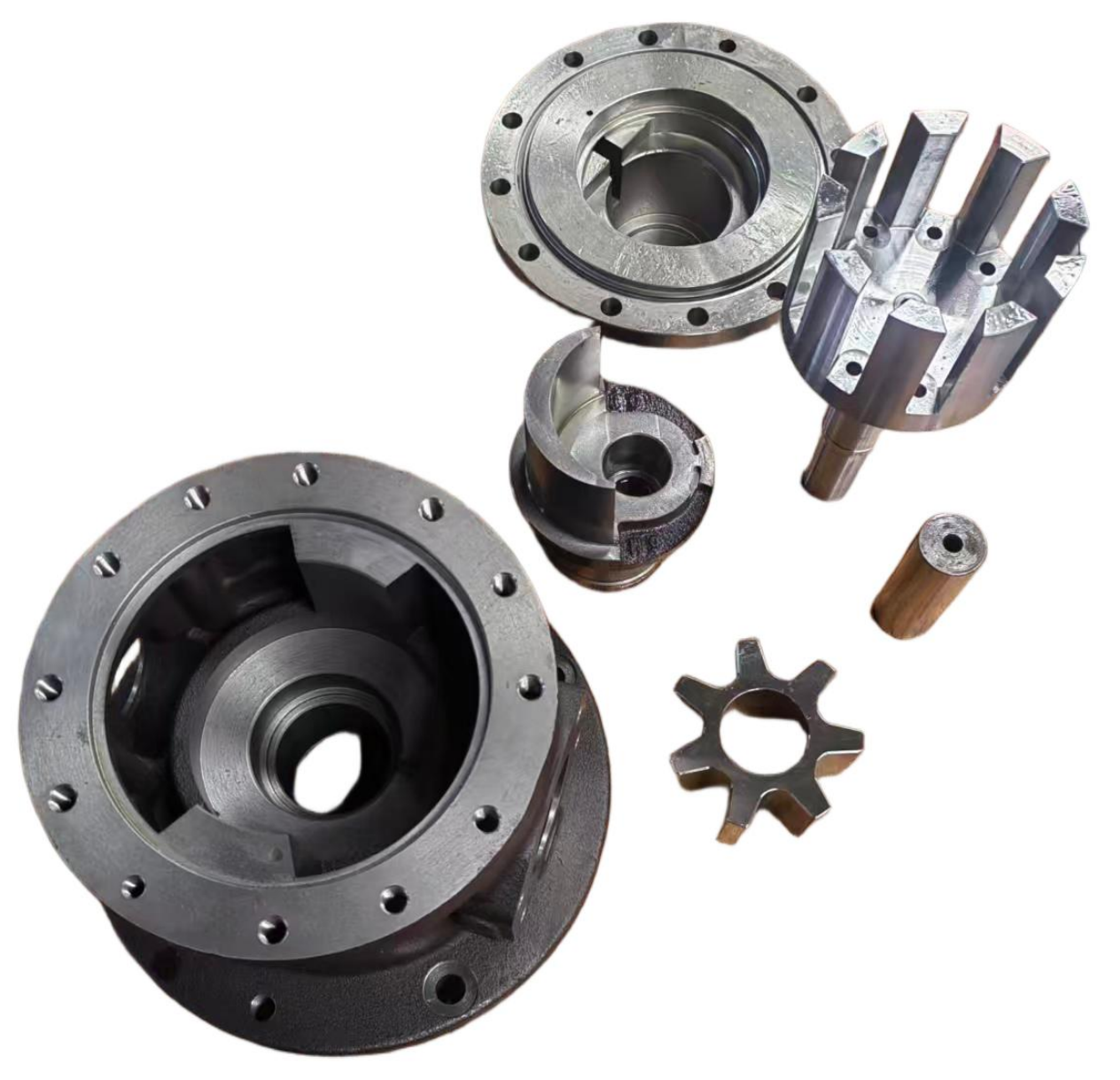
For DEO's DK series lubrication pumps, several installation conditions are written into the product requirements. They are worth treating as acceptance criteria rather than installation advice, because violating them removes the pump from its designed operating envelope.
| Requirement | Why it is a compliance item |
|---|---|
| Pump inlet pipeline must be airtight, with no air leakage | Air leakage causes insufficient suction flow and cavitation, which degrades both delivery and pump life |
| Inlet pipe diameter must not be smaller than the pump inlet port | Undersized inlet piping creates flow restriction and pressure loss |
| No dry running without oil medium | Dry friction burns shaft bushings and gears in a short time |
| Rotation direction must follow the pump nameplate | Reverse rotation invalidates sealing and causes leakage failure |
| Built-in relief valve for transient protection only | Continuous overflow operation leads to pump overheating and early wear |
| Oil free of metal chips, sand and solid impurities | Particle impurities scratch gear surfaces and wear bushings rapidly; filtration is mandatory in heavy-pollution conditions |
| Reduce speed when oil viscosity exceeds 1000 cSt | Ultra-high viscosity increases suction resistance and risks cavitation |
| Bell housing and motor shaft coaxiality on MDK pump units | Misalignment is a documented assembly requirement for the integrated pump+motor unit |
Layer 3 — The thermal side of the lubrication circuit
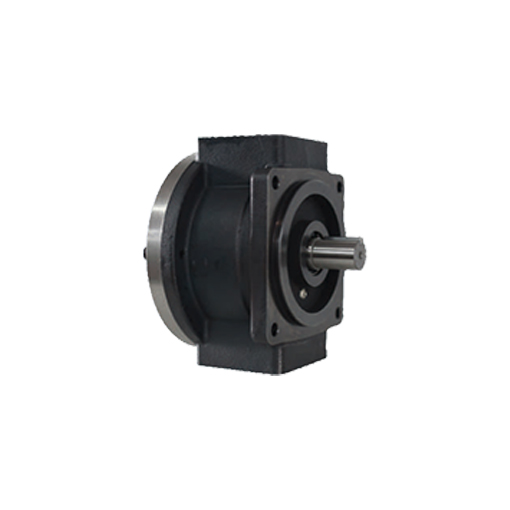
Oil temperature is the quiet compliance risk in continuous-operation sites. A lubrication circuit that meets its flow specification but exceeds its temperature limit ages the oil, loads seals and eventually invalidates the duty assumptions the pump was selected on. DEO's cooling range addresses this with documented ratings.
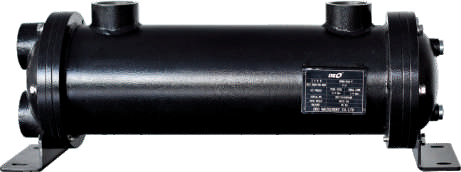
- DWBW-408-T fin-type oil/water cooler — maximum working pressure 16 bar on the oil side and 10 bar on the water side; allowable oil medium temperature ≤120°C; allowable cooling water temperature 5–60°C; applicable oil kinematic viscosity 12–320 mm²/s, with heavy high-viscosity lubricant versions available. Single-unit heat exchange area starts at 1.3 m² and scales upward, with G1 and G1-1/2 thread flanges standard and SAE flanges optional. For coastal and marine sites, 304 stainless steel fins and copper-nickel tubes are available for corrosive water or seawater service.
- DFLEX8 wind cooler — comparative cooling capacity 1.15/0.91 KW/°C, fan diameter 630 mm, motor voltage 3φ380 V. Sites running a different supply must confirm the motor configuration with the supplier before ordering.
- DFLSL-10 self-circulating cooler — cooling capacity 1.61/1.84 KW/°C, oil pump flow with VG46 oil of 100–125 L/min or 150–200 L/min, consumed power 5.5/7.5 KW.
Installation requirements on the cooling side follow the same logic: the unit can be floor- or bracket-mounted but the mounting base needs shock-absorbing gaskets to limit vibration transmission, ventilation space around the radiator must be reserved, and the oil inlet direction is selectable left (INL) or right (INR) to match plant layout.
Layer 4 — Documentation, testing and commercial terms
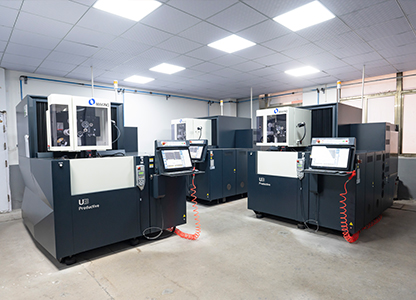
Compliance is proven on paper as much as in metal. DEO's documented production model is OEM/ODM with customization of colour and oil pump configuration, 100% testing of units, a monthly capacity of 2,500 units, a lead time of 35–45 days and a minimum order quantity of one unit.
For a regional compliance file, that translates into a specific document request list: pump dimensions and performance data, material documentation confirming QT500 or GG250 housings where specified, unit test records, motor data including voltage and frequency, cooling water quality requirements for cooler-integrated circuits, and a written standards reference list where the importing market expects one.
Step-by-Step Breakdown: A Six-Step Compliance Workflow Before You Release a PO
This is the sequence used to align a lubrication pump order with four different export regions without changing the pump platform.
- Confirm the duty and the fluid. Establish the required oil flow (DEO DK series covers 6–200 L/min) and the actual viscosity range. The DK series is documented for 12–20,000 cSt; self-circulating coolers are specified around VG46 flows. Viscosity above 1000 cSt triggers a speed reduction requirement, so it must be settled before selection, not after installation.
- Fix the temperature envelope. Match the site's minimum ambient and maximum oil temperature against the pump rating. PST180 and PSN100 are documented at −30°C to +100°C; the wider DK series duty covers fluid from −40°C to +100°C. Where oil exceeds those limits on the cooling side, the DWBW-408-T allows oil medium up to 120°C.
- Match the classification and import paperwork. Confirm the correct tariff heading for the destination market — heading 8413 with 8413.30.90 in the US reference schedule — and classify the supplier correctly, for example NAICS 333996 for fluid power pump and motor manufacturing. If the pump serves ship lubricating oil duty, screen it against ASTM F2798-09(2023) and its SAE 20–50 oil applicability.
- Request the documentation set your market expects. In Europe, ask for the applied directive and standard list in the form published by major lubrication pump suppliers (Machinery Directive, RoHS II, EMC and the referenced EN standards). In the US, ask for classification data, motor data and test records. In Southeast Asia and Australia, ask for material documentation, cooling water specs and spare-part availability.
- Validate the installation conditions before commissioning. Check inlet pipeline airtightness, inlet pipe diameter against the pump inlet port, correct rotation direction, oil cleanliness and filtration, and that the built-in relief valve is used only for transient pressure protection. These are the conditions that most often void an otherwise compliant installation.
- Lock the commercial terms. Confirm model, customization scope, MOQ (one unit minimum on DEO's side), the 35–45 day lead time and the 2,500-unit monthly capacity ceiling against your project schedule and any seasonal freight constraints.
Use Cases: What Changes Between the Four Regions
Mining — Southeast Asia and Australia
Mining lubrication duty combines heavy load, dust and, in Australia, coastal or high-ambient conditions. The DK630, with 630 ℃/rev displacement and QT500 housing, is positioned specifically for mining equipment. Dust and temperature resilience can be extended further: DEO's platform can be upgraded for dust-proof, low-temperature and plateau working conditions. Where oil temperature becomes the limiting factor, the DFLEX8 wind cooler is applied in coal mine and crude oil mining environments, and the DWBW-408-T handles dirty cooling water with a detachable end cover designed for regular descaling and sludge cleaning.
Construction machinery and mobile hydraulics
Construction sites rarely offer clean oil or stable conditions. The PST180 bidirectional internal gear pump is documented for hydraulic systems, construction machinery, engine lubrication systems, forklift and telehandler duty and hydraulic power units. The compliance-relevant point on these applications is the oil cleanliness requirement: solid impurities such as metal chips and sand scratch gear surfaces and wear bushings rapidly, so filtration is a specification item, not an accessory.
Steel, metallurgy and heavy industry in Europe and America
Steel and metallurgy duty is defined by continuous high load and high-viscosity oil. The DK series duty envelope — 12–20,000 cSt at fluid temperatures of −40°C to +100°C — is the relevant selection window, and DWBW-408-T water coolers are applied to rolling mill lubrication stations, large gearboxes, hydraulic presses and forging equipment where cooling water quality varies.
Wind energy and remote sites
Wind turbine gearbox lubrication combines alternating load, vibration and service access constraints. The DK series includes a DKF special model developed for the wind power generation industry with enhanced anti-shock and anti-vibration behaviour, and DEO's project records for wind power customers include wind turbine gearbox manufacturers such as Vision Energy, Dalian Heavy Industry, Taiyuan Heavy Industry and Weili Transmission. DEO's case records state that the helical gear meshing structure runs 3 dB quieter than traditional straight gear pumps, that volumetric efficiency is ≥95%, and that component wear is reduced by 40% versus ordinary gear pumps in the same comparison. The same records state that DEO positions these pumps against imported European gear pumps such as KRACHT and NOP, with procurement cost recorded as approximately 30% lower in that comparison. These are DEO-reported case figures, not independently audited benchmarks, and should be treated as a starting point for your own validation.
| Region | Typical verification focus for a lubrication pump order | Relevant DEO platform |
|---|---|---|
| Europe | Applied directive and standard list in the technical file; material and test documentation; EMC and RoHS references where electrical drive is involved | DK630, PST180, PSN100 with DWBW-408-T / DFLSL-10 cooling |
| America | Tariff classification under heading 8413 (8413.30.90 in the US reference schedule); supplier classification under NAICS 333996; ASTM F2798-09(2023) where ship lubricating oil service applies | DK630, PST180, DK pump unit (MDK configuration) |
| Southeast Asia | Oil cleanliness control under high humidity; sustained high-temperature stability; local power supply matching; spare-part availability | DK630, PSN100, DFLEX8 wind cooler |
| Australia | Dust and coastal corrosion resilience; cooling water quality; remote-site serviceability and maintenance access | DK630, DWBW-408-T with stainless steel or copper-nickel options, DFLEX8 |
Comparison Table: DEO Lubrication Pump Portfolio and Compliance-Relevant Parameters
The table below compares DEO's lubrication pump models on the parameters that regional compliance checks usually turn on: displacement, speed, temperature envelope and housing material.
| Model | Type | Displacement | Speed | Temperature / duty | Housing material | Documented application focus |
|---|---|---|---|---|---|---|
| DK630 | Electric lubrication pump (DK series: low-noise helical external gear positive displacement pump) | 630 ℃/rev | 950 rpm / 1450 rpm | Oil flow 6–200 L/min; DK series fluid range −40°C to +100°C | QT500 | Mining equipment, construction machinery, steel industry, heavy machinery |
| PST180 | Bidirectional internal gear pump | 180 ℃/rev | Max 1800 per minute | −30°C to +100°C | GG250 gray cast iron or QT500 ductile iron | Hydraulic systems, construction machinery, engine lubrication, forklift and telehandler, hydraulic power units, industrial cooling systems |
| PSN100 | Trochoidal bidirectional mechanical pump | 100 cc/rev | Max 1800 rev/min | −30°C to +100°C | Ductile iron QT500 | Lubricating systems, cooling systems, external-drive independent conveying systems |
| DWBW-408-T | Fin-type oil/water cooler | Heat exchange area from 1.3 m² upward | — | Oil ≤120°C; cooling water 5–60°C; oil viscosity 12–320 mm²/s; 16 bar oil side, 10 bar water side | Carbon steel shell with anti-rust coating (stainless optional); high-purity copper tubes and fins | Large gearboxes, rolling mill lubrication stations, hydraulic presses, forging equipment, marine and coastal service |
| DFLEX8 | Wind cooler | Cooling capacity 1.15/0.91 KW/°C | Fan diameter 630 mm | Motor voltage 3φ380 V | Copper radiator, stainless steel optional | Wind energy, coal mine, crude oil mining, construction machinery, reducers, nuclear power plant |
| DFLSL-10 | Self-circulating cooler | Cooling capacity 1.61/1.84 KW/°C | Oil pump flow (VG46) 100–125 L/min or 150–200 L/min | Consumed power 5.5/7.5 KW | Copper radiator, stainless steel customization available | Hydraulic and lubricating systems, extruding machinery, forging and stamping equipment, shearing machines, gearboxes, large bearings, smelting equipment |
How to read this table. The three pumps differ mainly in displacement and speed, not in their temperature philosophy: PST180 and PSN100 share a −30°C to +100°C rating, while the DK series extends the fluid range to −40°C to +100°C at the system level. DK630 is the high-displacement option at 630 ℃/rev and is the model most often specified where mining, construction or steel duty demands volume. The cooling products are selected against oil temperature and cooling water conditions rather than against pump displacement alone.
FAQ
What installation and operating conditions must be met to keep an industrial lubrication pump within its complied operating envelope?
For DEO's DK series lubrication pumps, the documented conditions are specific: the pump inlet pipeline must be airtight without air leakage, otherwise insufficient suction flow and cavitation occur; the inlet pipe diameter must not be smaller than the pump inlet port; dry running without oil medium is prohibited because dry friction burns shaft bushings and gears in a short time; rotation direction must follow the pump nameplate, since reverse rotation invalidates sealing and causes leakage failure; and the built-in relief valve is intended for transient pressure protection only, because continuous overflow causes overheating and early wear. The oil itself must be free of metal chips and sand, with filtration mandatory in heavy-pollution conditions, and pump speed must be reduced when oil viscosity exceeds 1000 cSt.
How do I evaluate an industrial lubrication pump manufacturer for mining equipment?
Evaluate three things: the declared duty envelope, the housing material, and the ability to document both. For mining duty, DEO's DK630 electric lubrication pump is documented at 630 ℃/rev displacement with motor speeds of 950 rpm and 1450 rpm, a QT500 housing, and an application scope covering mining equipment, construction machinery and the steel industry. Mining sites in Southeast Asia and Australia also need dust and ambient temperature resilience, and DEO's platform can be upgraded for dust-proof, low-temperature and plateau working conditions. Supporting cooling equipment matters as much as the pump: the DFLEX8 wind cooler is documented for coal mine and crude oil mining environments. Finally, check manufacturing evidence — DEO documents 100% unit testing, a monthly capacity of 2,500 units and a 35–45 day lead time, with export sales accounting for 20% of total sales across Europe and America, Southeast Asia and Australia.
What are the commercial thresholds for an export lubrication pump order?
DEO's documented commercial terms are a minimum order quantity of one unit, a lead time of 35–45 days, and a monthly production capacity of 2,500 units. Production mode is OEM/ODM, with customization documented for colour and oil pump configuration. Cost drivers on an export order are the specification items rather than the pump platform: housing material grade such as QT500 versus GG250, motor voltage and frequency matching the destination market, cooler options such as stainless steel fins or copper-nickel tubes for corrosive water, and the documentation set required by the importing region.
Can a lubrication pump be validated before committing to a full purchase order?
Yes. Because DEO's minimum order quantity is one unit and every unit is 100% tested, a single pump can be ordered and validated against the declared parameters before volume procurement. The recommended validation list is: measured flow against the documented 6–200 L/min range, temperature behaviour against the −30°C to +100°C rating (PST180, PSN100) or the −40°C to +100°C fluid range (DK series), housing material confirmation, and a site check of the installation conditions — airtight inlet, correct rotation direction, oil cleanliness and filtration. On the cooling side, a trial unit should be checked against oil temperature (up to 120°C for the DWBW-408-T) and cooling water temperature (5–60°C) rather than pump displacement alone.
How long does delivery take, and what affects it?
DEO's documented lead time is 35–45 days, with a monthly capacity of 2,500 units. The two factors that most often extend that window are customization scope — colour and oil pump configuration are the documented customization dimensions — and the documentation set required by the destination market, since classification, material and test records are prepared per order. Buyers planning a mining, construction or steel project should confirm the required documentation before the order is placed, not after, so that the 35–45 day production window is not consumed by paperwork. If you want to test this workflow, you can start with a sample inquiry or a quote request through DEO's contact channels.
Conclusion: Compliance Is a Chain You Can Inspect
For industrial lubrication pumps exported into Europe, America, Southeast Asia and Australia, compliance is not a badge on a datasheet. It is a chain: correct classification under heading 8413 or NAICS 333996, a documented standards reference list in the technical file, installation conditions that are treated as acceptance criteria, and material and temperature limits that match the site.
DEO's contribution to that chain is a documented range rather than a claim: the DK630 at 630 ℃/rev with a QT500 housing for mining, construction and steel duty; PST180 and PSN100 at −30°C to +100°C; a DK series duty envelope covering 6–200 L/min and 12–20,000 cSt; and a cooling line from the DWBW-408-T oil/water cooler to the DFLEX8 wind cooler and DFLSL-10 self-circulating unit. Combined with 100% unit testing, a one-unit minimum order quantity and a 35–45 day lead time, that range is designed to make regional compliance verifiable before installation rather than discovered after it.
Next step: build your regional compliance file
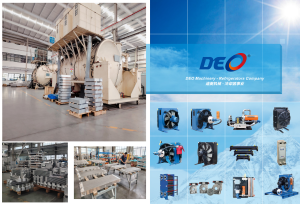
DEO can supply product documentation, material and test records, and cooling system specifications for Europe, America, Southeast Asia and Australia. Start with a sample or quote request, or download the product brochure.
Brochure: DEO product catalogue (PDF)
Website: www.cndeo.com
Email: deolun@cndeo.cn | Tel / WhatsApp: +86 18957417960
Company: Deo Machinery Co., Ltd., No. 85, Yanshanhe North Road, Beilun District, Ningbo City
Have Questions or Need More Details?
Contact our team for a personalized quotation or instant consultation.
Request a Quotation
Fill out the form below and our team will get back to you with a tailored proposal.
WhatsApp Direct Chat
Prefer to chat in real-time? Message us on WhatsApp for instant assistance & quick answers.
- Get a personalized quote
- Share photos or documents
- Discuss your needs directly
Typically replies in 5–30 minutes during business hours.