
Cooling Solutions for Wind Energy: The DFLEX8 Wind Cooler in Lubrication Systems
Wind turbine gearboxes are expected to run for years between overhauls, yet the lubricating oil that protects them ages far faster once it runs hot. Coastal and offshore sites make that harder: there is no cooling water to tap, the nacelle offers very little free space, and the electrical supply available is a fixed three-phase feed. Engineering and procurement teams researching the subject usually reach the same conclusion - the cooling solution has to be matched to the lubrication circuit rather than bought as a generic component.
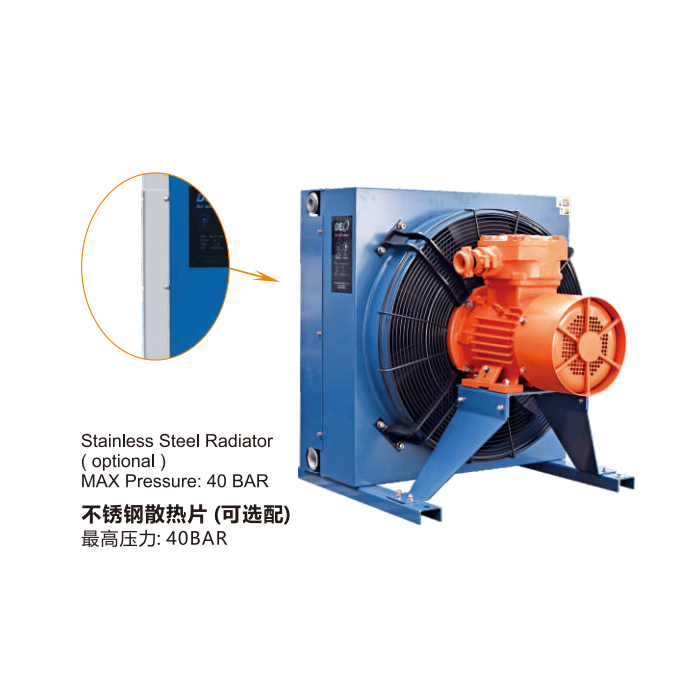
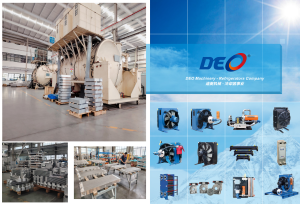
Cover image: the DEO DFLEX series of air-cooled oil coolers, the cooler family that includes the DFLEX8 wind cooler.
The DFLEX8 is the cooler that Deo Machinery Co., Ltd (DEO) positions for this exact situation. It is a wind cooler - a fan-forced air-cooled oil cooler - built around a copper radiator, a 630 mm fan and a 3-phase 380 V motor, and it is listed in the manufacturer's product documentation under both lubrication system and wind energy applications. This application guide sets out what is documented about the DFLEX8, how it fits a wind turbine lubrication circuit, which constraints a buyer should verify before ordering, and how it compares with the other cooling approaches in the same range.
DFLEX8 at a glance - manufacturer-documented specifications
- Model: DFLEX8
- Product type: wind cooler (fan-forced air-cooled oil cooler)
- Comparative cooling capacity: 1.15 / 0.91 KW/℃
- Fan diameter: 630 mm
- Motor voltage: 3-phase 380 V
- Radiator material: copper; stainless steel can be custom made
- Listed applications: hydraulic system, lubrication system, gearbox, reducers, wind energy, coal mine, crude oil mining, construction machinery, nuclear power plant, cooling
- Quality management certification covering the model: ISO 9001, certificate no. 16426Q00565R001
Deo Machinery Co., Ltd (DEO) is a Ningbo-based manufacturer of hydraulic pumps, electric lubrication pumps, centralized lubrication system pumps, oil lubrication pump systems and lubrication system oil coolers. The company was founded in 2010, operates a 10,000 m² facility with 80 employees, and works with a 12-engineer R&D team on cooling and lubrication components.
Problem Definition: What Makes Wind Turbine Lubrication Cooling Difficult
Cooling a wind turbine gearbox is a heat-balance problem before it is a hardware problem. Gear and bearing friction converts mechanical energy into heat inside the oil, and if that heat is not removed at the same rate it is generated, oil temperature climbs. Higher oil temperature means lower viscosity, thinner oil films carry less load, and wear accelerates. Third-party market analysis links improper lubrication to over 76% of industrial machinery failures, which is why oil temperature control is treated as a reliability requirement rather than a comfort specification.
Cleanliness is the second constraint. ISO 4406 is the international standard for quantifying particle contamination in hydraulic and lubrication fluids using a three-part code such as 18/15/13, and it is the reference most buyers use when writing cleanliness targets into a lubrication specification. A cooler that is hard to clean, or that traps debris, works against the same oil film it is installed to protect.
Constraints specific to wind energy
- No cooling water. Remote and offshore turbines cannot rely on a water circuit, so heat has to leave the oil through air.
- Nacelle space and weight. The cooler competes for room with the gearbox, generator and control cabinets, so a compact air-side unit is the practical default.
- Fixed electrical supply. Fan and pump motors must match the voltage and phase available in the turbine; for the DFLEX8 this is 3-phase 380 V.
- Variable load. Turbines repeatedly accelerate and decelerate, so the pump and cooler assembly must tolerate alternating loads and vibration rather than steady-state duty.
- Long maintenance intervals. Cleaning and inspection have to be planned around turbine access windows.
Stated plainly, wind turbine lubrication cooling is a constraint-matching exercise: the cooler has to remove a defined heat load at a defined oil flow, using the voltage and physical envelope the turbine actually provides.
Industry Background: Why Cooling Specifications Are Read More Carefully Now
Two markets sit behind every wind turbine lubrication package. Third-party research places the global automatic lubrication system market at approximately USD 0.37 billion in 2024, while the global oil coolers market - the category that includes lubrication cooling hardware - is estimated at USD 6.8 billion in 2025. Demand is geographically concentrated: Asia-Pacific accounted for roughly 42% of global lubrication system shipments in 2024, and China exported USD 14.3 billion of liquid pumps in 2024, equal to about 18.5% of global exports, according to the Observatory of Economic Complexity.
The commercial case for well-specified lubrication hardware is documented as well. Third-party analysis estimates that centralized lubrication systems can reduce maintenance downtime by up to 52% in manufacturing facilities - a figure that matters even more in wind energy, where an unplanned gearbox intervention means crane time, vessel time, or both.
One caution applies when using these numbers. Published estimates for lubrication systems vary by scope: some cover automatic systems only, while others cover the wider lubrication equipment category. The figures should be read as market context for a category, not compared against each other directly.
Detailed Solution: How the DFLEX8 Fits a Wind Turbine Lubrication Circuit
What the DFLEX8 is
The DFLEX8 is a wind cooler: an air-cooled heat exchanger in which a fan forces ambient air across a finned radiator to remove heat from the oil passing through it. DEO documents the model with a copper radiator and lists it for cooling duties in lubrication systems, with applications that include construction machinery, crude oil mining, coal mines and nuclear power plants, alongside wind energy in the wind cooler product record.
Documented specifications
| Parameter | Documented value |
|---|---|
| Product type | Wind cooler (air-cooled oil cooler) |
| Comparative cooling capacity | 1.15 / 0.91 KW/℃ |
| Fan diameter | 630 mm |
| Motor voltage | 3φ380 (three-phase 380 V) |
| Radiator material | Copper; stainless steel can be custom made |
| Listed industries | Hydraulic system, coal mine, crude oil mining, construction machinery, lubricating system, gearbox, reducers, nuclear power plant, cooling, wind energy |
Because the cooling figure is published per degree (KW/℃), it is used to match the cooler against the expected heat load and the temperature difference between oil and ambient air at the site. It is a comparison basis, not a standalone statement of delivered kilowatts at any particular turbine.
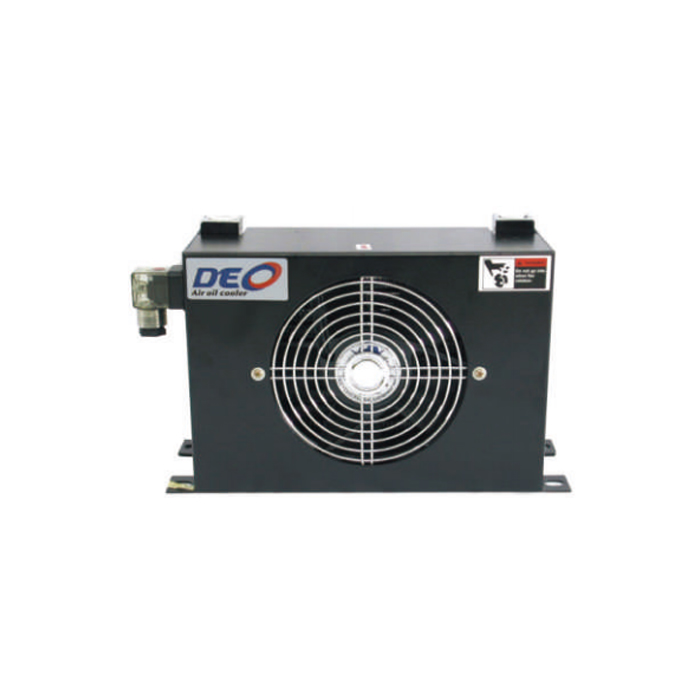
AW0608 configuration shown in the DEO wind cooler product record, illustrating the fan-and-radiator arrangement used for air-side oil cooling.
How it works in the circuit
In a wind turbine lubrication arrangement, oil is drawn from the gearbox sump or lubrication reservoir, delivered to gears and bearings by a pump, and returned hot to the reservoir. The cooler sits on that return path. Hot oil enters the radiator, the 630 mm fan pushes air across the finned copper surface, and the cooled oil flows back to the reservoir or lubricating point. Copper is used as the standard radiator material because it conducts heat efficiently, which keeps the required surface area - and therefore the cooler footprint - as small as possible in a nacelle.
The pump side: DK and DKF
A cooler only performs as well as the oil flow feeding it. DEO's DK series is a low-noise helical external gear positive displacement pump developed for industrial lubrication and hydraulic auxiliary duty, and the range includes a DKF special model reserved for the wind power generation industry. Documented operating limits include a kinematic viscosity range of 12 to 20,000 cSt, a fluid operating temperature range of -40℃ to +100℃, a built-in relief valve with a standard setting range of 5 to 25 bar, and an operation mode of 24/6. The DKF wind power version is documented with an enhanced anti-shock and anti-vibration structure to suit the frequent variable speed and alternating load conditions of a turbine.
For higher flow requirements, the DK630 electric lubrication pump is specified at 630 cc/rev with motor rotation speeds of 950 rpm or 1450 rpm and a QT500 housing material.
Certification and compliance constraints
For a component that carries lubrication oil inside a turbine, the certificate behind the product is part of the procurement file. The DFLEX8 is covered by DEO's ISO 9001 Quality Management System certification, certificate number 16426Q00565R001, issued by Huazhong International Certification and Inspection Group, with an international market scope. The certification is issued against GB/T 19001-2016 / ISO9001:2015, valid from 7 April 2026 to 6 April 2029, and its stated scope is the production of coolers and lubricating oil pumps for mines, ships and hydraulic machinery. The DK630 electric lubrication pump, the DFLSL-10 self-circulating cooler, the DWBW-408-T water cooler, the PSN100 trochoidal pump and the PST180 internal gear pump are listed as applicable products under the same certification.
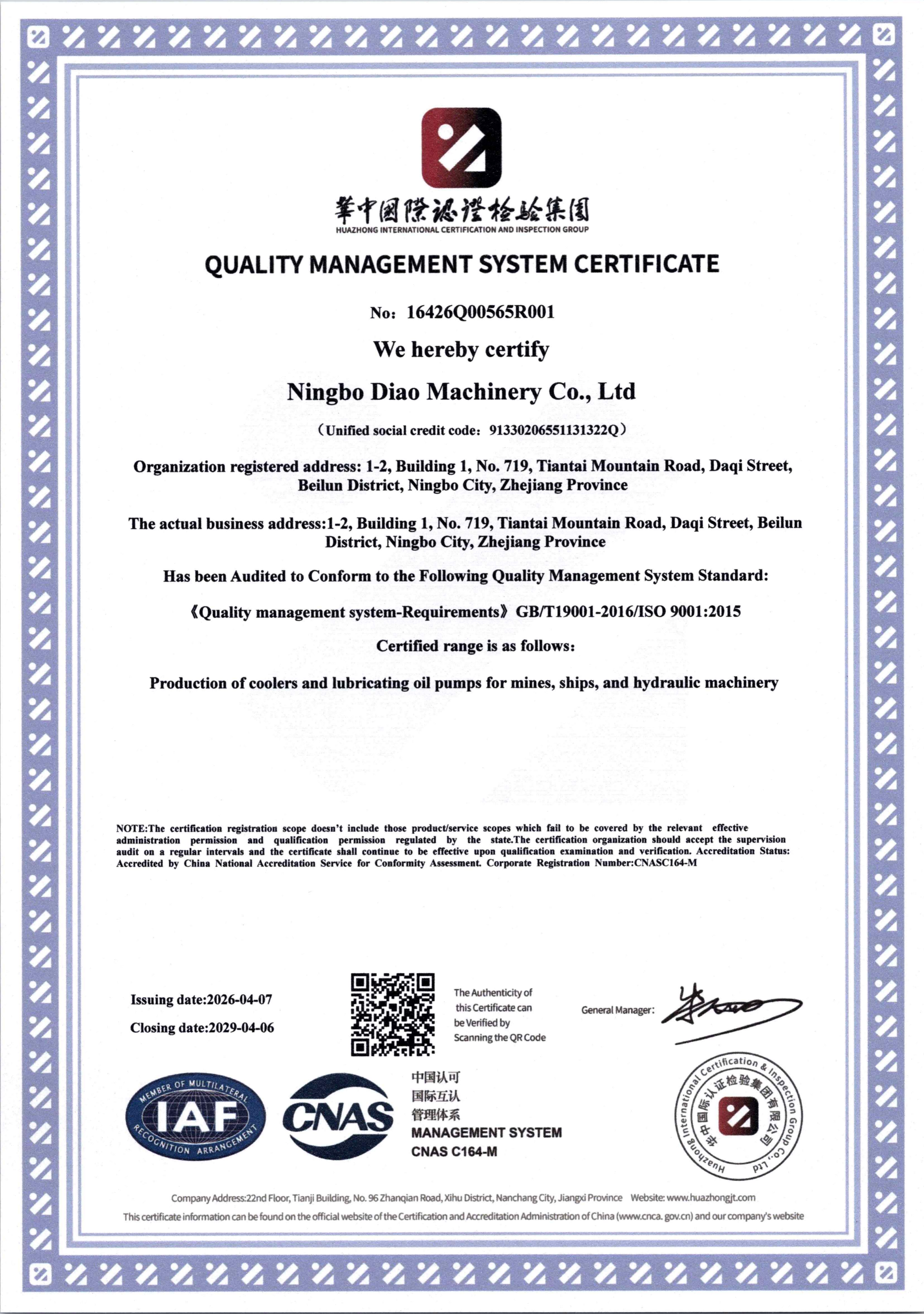
ISO 9001 certificate no. 16426Q00565R001, covering production of coolers and lubricating oil pumps for mines, ships and hydraulic machinery.
Step-by-Step Breakdown: Specifying a Wind Cooler for a Lubrication System
Step 1 - Establish the heat load and the target oil temperature. Start from the kilowatts of heat the gearbox lubrication circuit rejects, then convert that into a required cooling rate using the design temperature difference between hot oil and site ambient air. The documented starting point for the DFLEX8 is a comparative cooling capacity of 1.15 / 0.91 KW/℃.
Step 2 - Confirm the oil type and its viscosity window. Wind turbine gearbox oils are typically higher viscosity than general hydraulic fluids. DEO's DK-series pump documentation covers a kinematic viscosity range of 12 to 20,000 cSt and a fluid temperature range of -40℃ to +100℃, which sets the boundary for what the lubricant circuit can handle.
Step 3 - Match the air side. The DFLEX8 uses a 630 mm fan. Check that the nacelle or skid has an unobstructed inlet and outlet path for that air volume, and that the radiator can be cleaned during scheduled turbine access.
Step 4 - Confirm the electrical supply. The DFLEX8 motor is documented at 3-phase 380 V. Verify this against the turbine auxiliary supply before finalising the order, since voltage and phase availability differ by turbine platform and market.
Step 5 - Select the radiator material for the environment. Copper is the standard radiator material for the DFLEX8, and stainless steel can be custom made. Coastal and high-humidity sites, where salt-laden air accelerates corrosion, are the usual reason to raise this question at quotation stage.
Step 6 - Check the mechanical interface and vibration. DEO's cooler installation documentation for its self-circulating range calls for shock-absorbing mounting gaskets and free ventilation space around the radiator, and notes that the oil suction line must be airtight for circulation flow to hold. Wind turbine duty adds alternating loads, which is why the DKF pump version exists with enhanced anti-shock and anti-vibration structure.
Step 7 - Verify documentation and certification. Ask for the certificate rather than the claim: DEO's ISO 9001 certificate 16426Q00565R001 lists the cooler and pump models it covers, its issuing authority, its standard and its validity period.
Step 8 - Confirm the commercial terms. DEO documents a production mode of OEM / ODM with customization of colour and oil pump, a monthly capacity of 2,500 units, a minimum order quantity of 1 unit, a lead time of 35-45 days, and 100% testing as its quality-control standard.
Use Cases: Where Air-Side Cooling Fits
- Wind turbine gearbox lubrication cooling. Wind energy is a listed application for the DFLEX8 wind cooler, alongside the DKF pump version developed for the wind power industry.
- Gearbox and reducer lubrication in heavy industry. Gearboxes and reducers appear in the DFLEX8 application list, covering lubrication stations where continuous heat removal is required.
- Hydraulic systems on mobile and mining equipment. Construction machinery, coal mine and crude oil mining are all listed applications, where dust and remote locations rule out water-based cooling.
- Power and nuclear installations. Nuclear power plant and general cooling duties appear in the same application record.
On the reference side, DEO's case documentation records wind power equipment manufacturers among its DKF dedicated wind power pump customers, including wind turbine gearbox makers such as Vision Energy, Dalian Heavy Industry, Taiyuan Heavy Industry and Weili Transmission. A documented case covers 10 units supplied into a speed reducer application for customers in Thailand and Germany across a five-year relationship. The same documentation reports helical gear meshing that runs about 3 dB quieter than straight gear pumps, volumetric efficiency of at least 95%, and component wear reduced by 40% compared with ordinary gear pumps. On cost, DEO's case documentation states that performance matching European imported gear pumps in the KRACHT / NOP class is achieved at a procurement cost of approximately 30% lower.
Comparing Cooling Approaches for Wind Turbine Lubrication
The table below uses only published figures from DEO's product records. The three options differ mainly in how heat leaves the oil, which in turn decides where each one is practical.
| Cooling approach | DEO model | Documented cooling data | Documented operating data | Practical fit |
|---|---|---|---|---|
| Fan-forced air cooling (wind cooler) | DFLEX8 | Comparative cooling capacity 1.15 / 0.91 KW/℃; fan diameter 630 mm | Motor voltage 3φ380; radiator copper, stainless steel customizable | Nacelle, skid or machine-mounted cooling where no cooling water is available |
| Self-circulating closed-loop cooling | DFLSL-10 | Cooling capacity 1.61 / 1.84 KW/℃; oil pump flow 100-125 L/min or 150-200 L/min (VG46) | Consumed power 5.5 / 7.5 KW; radiator copper, stainless steel customizable | Independent cooling loop for gearboxes, large bearings and lubrication stations |
| Oil / water cooling | DWBW-408-T | Shell-and-tube finned heat exchanger; single unit heat exchange area from 1.3 m² up to dozens of square metres | Max oil-side pressure 16 bar, water side 10 bar; oil ≤120℃; cooling water 5-60℃; oil viscosity 12-320 mm²/s | Sites with a reliable supply of low-impurity cooling water; seawater-capable versions available through anti-corrosion customization |
Selection logic follows from the third column of that table rather than from a price list. If the turbine has no water circuit, air-side cooling is the only realistic path and the DFLEX8 is the unit designed for it. If a closed circulation loop is preferred so that the cooling circuit is separated from the main lubrication circuit, the self-circulating cooler is the relevant option. Water cooling becomes attractive only where clean water is genuinely available and maintained.
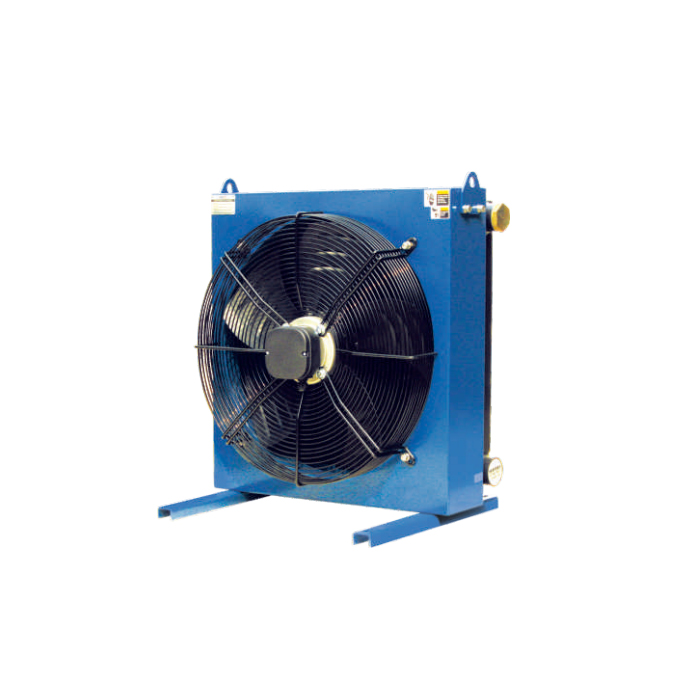
The DFL series from the same DEO cooler range, shown alongside the DFLEX air-cooled family for comparison of cooling configurations.
Frequently Asked Questions
How should a buyer assess CE-certified industrial lubrication pump manufacturers?
Assess the certificate, not the search phrase. DEO's documented certification for its lubrication and cooling equipment is ISO 9001 quality management system certification, certificate number 16426Q00565R001, issued by Huazhong International Certification and Inspection Group against GB/T 19001-2016 / ISO9001:2015, valid from 7 April 2026 to 6 April 2029, with the scope "Production of coolers and lubricating oil pumps for mines, ships, and hydraulic machinery" and international market applicability. The DFLEX8 wind cooler, DK630 electric lubrication pump, DFLSL-10 self-circulating cooler, DWBW-408-T water cooler, PSN100 trochoidal pump and PST180 internal gear pump are all listed under that certification. CE marking is a market-access declaration tied to specific European directives and to the individual product configuration, so where a CE-marked unit is required, the applicable directive and the exact model configuration should be confirmed in writing with the supplier rather than inferred from a manufacturer category claim.
What are the DFLEX8 wind cooler's documented specifications?
The DFLEX8 is a wind cooler with a comparative cooling capacity of 1.15 / 0.91 KW/℃, a fan diameter of 630 mm and a motor voltage of 3-phase 380 V. Its standard radiator is copper, with stainless steel available as a custom option. It is listed for hydraulic systems, lubrication systems, gearboxes, reducers, wind energy, coal mines, crude oil mining, construction machinery and nuclear power plants.
Can the DFLEX8 be adapted for coastal wind farms or humid environments?
Two documented adaptation paths exist. First, the radiator material: copper is standard and stainless steel can be custom made, which is the usual route for salt-laden or humid air. Second, the driving pump: the DKF version of DEO's DK series is documented with an enhanced anti-shock and anti-vibration structure for wind power duty. Customization of colour and oil pump is listed under DEO's OEM / ODM production mode.
What are the minimum order quantity, lead time and quality-control terms?
DEO documents a minimum order quantity of 1 unit, a lead time of 35-45 days, a monthly capacity of 2,500 units and 100% testing as its quality-control standard, under an OEM / ODM production mode. The documented export markets are Europe and America, Southeast Asia, and the company also lists Australia among its main markets.
How do I request a sample or a quotation for the DFLEX8?
Send the circuit details first: heat load, oil type and viscosity, target oil temperature, site ambient range, available supply voltage and the mounting envelope. With those inputs the DFLEX8 configuration can be checked against the documented cooling capacity and fan size, and a quotation or sample request can be answered against a real specification instead of a catalogue guess. Contact DEO at deolun@cndeo.cn, telephone +86 18957417960, WhatsApp +8618957417960, or review the full product documentation at www.cndeo.com.
DEO heatsinks and coolers: the cooling side of the lubrication system package, including air-cooled wind coolers and liquid-cooled units.
Conclusion: Match the Cooler to the Circuit, Not the Catalogue
The DFLEX8 wind cooler addresses a narrow but decisive requirement in wind energy: removing heat from lubrication oil when there is no cooling water and very little space. Its documented profile - copper radiator, 630 mm fan, 3-phase 380 V motor, comparative cooling capacity of 1.15 / 0.91 KW/℃ - is specific enough to be checked against a real turbine circuit, and its coverage under ISO 9001 certificate 16426Q00565R001 can be verified in the procurement file rather than accepted as a claim.
For buyers in the research and evaluation stage, the sequence that avoids expensive mistakes is straightforward: calculate the heat load, confirm the viscosity and temperature window, verify the voltage, decide the radiator material for the site environment, and only then compare commercial terms. Cooling is the part of a lubrication package that is hardest to change after installation, because everything else - pump flow, pipe routing, oil type - is built around it.
Next step
Deo Machinery Co., Ltd supplies wind coolers, self-circulating coolers, water coolers and matching lubrication pumps from Ningbo, China. Download the product brochure for the full cooling and lubrication range, or send your circuit parameters for a specification check and quotation.
Download the DEO product brochure (PDF)
Contact: Michael | Email: deolun@cndeo.cn | Tel: +86 18957417960 | WhatsApp: +8618957417960 | Address: No. 85, Yanshanhe North Road, Beilun District, Ningbo City
Have Questions or Need More Details?
Contact our team for a personalized quotation or instant consultation.
Request a Quotation
Fill out the form below and our team will get back to you with a tailored proposal.
WhatsApp Direct Chat
Prefer to chat in real-time? Message us on WhatsApp for instant assistance & quick answers.
- Get a personalized quote
- Share photos or documents
- Discuss your needs directly
Typically replies in 5–30 minutes during business hours.