Evaluating Pump Suppliers: A Checklist From Casting Material to Global Export Experience
An industrial lubrication pump is specified for years of service, not for a single commissioning day. Evaluating the supplier is therefore an engineering exercise: it decides whether the pump that arrives in month one is still the pump you can reorder in year three. The checklist below moves from casting material to global export experience in seven verifiable steps, using Deo Machinery Co., Ltd. (brand: DEO) as a worked reference point so that every criterion has a concrete example behind it rather than an abstract recommendation.
Direct answer: evaluate a lubrication pump supplier on documents and process records rather than on catalogue claims — casting-grade material certificates, dimensional inspection reports, a 100% performance test record covering flow, pressure, noise, leakage and relief valve calibration, a defensible explanation of the price position, and a verifiable export and delivery record. Deo Machinery Co., Ltd., founded in 2010 in Ningbo, China, manufactures hydraulic pumps, electric lubrication pumps, centralized lubrication system pumps, oil lubrication pump systems and lubrication system oil coolers, and exports roughly 20% of its sales to Europe and America, Southeast Asia and Australia.

Cover — supplier evaluation starts with what a factory can show, not with what a brochure can claim.
Why lubrication pump supplier evaluation breaks down
Sourcing failures rarely happen because the wrong pump type was chosen. They happen because of four gaps between what a supplier claims and what a buyer can actually verify.
- Material claims without documents. A housing described as nodular cast iron, or a shaft described as hardened alloy steel, remains a claim until a material certificate and a mechanical test report are attached to a specific production lot.
- Invisible process control. Two suppliers can quote the same gear pump type, displacement and mounting flange while running very different machining tolerances, assembly procedures and internal cleanliness routines.
- Unexplained price positions. A wide gap between quotations is not evidence of a better deal. It is a question that needs an answer about material, process yield, market positioning or after-sales support.
- Lifecycle decisions made too late. Maintenance intervals, wear-part availability and reorder lead time are usually settled after commissioning, when the pump is already in service and downtime carries a cost.
The consequences are visible at industry level. Market Research Future's 2026 lubrication systems report links improper lubrication to more than 76% of industrial machinery failures, and a related industry report published through the same research house indicates that centralized lubrication systems can reduce maintenance downtime by up to 52% in manufacturing facilities. Both figures are directional: the real result depends on duty cycle, fluid cleanliness and how consistently maintenance is performed.
Industry background: a large, export-heavy and fragmented supply base
Market Research Future valued the global automatic lubrication system market at approximately USD 0.37 billion in 2024. Published estimates differ by scope — Technavio, for example, frames the same segment as a growth increment across 2023–2028 rather than a single-year valuation — so any single market number should be read as a scope-dependent indicator rather than as a precise total.
Two structural facts matter more to a buyer than the headline size of the market. First, production is concentrated: Asia-Pacific accounted for approximately 42% of global lubrication system shipments in 2024. Second, China is a major export origin for the pump category itself — the Observatory of Economic Complexity records USD 14.3 billion of Chinese liquid pump exports in 2024, equal to 18.5% of global exports in that category, which includes lubrication pumps.
Cooling belongs to the same procurement decision. Dataintelo valued the global oil coolers market at USD 6.8 billion in 2025, and lubrication circuits in heavy equipment frequently integrate an oil cooler or a self-circulating cooling unit alongside the pump. A supplier that can engineer both sides of the circuit is worth more than one that can only quote a pump model.
At the top of the supply market, the named manufacturers in industrial lubrication systems include SKF Group, Lincoln Industrial, Graco Inc. and Bijur Delimon. Buyers comparing a mid-market manufacturer against these names are usually weighing specification fit and cost position rather than basic category credibility.
One technical standard appears in almost every lubrication specification and should be agreed before the first quotation: ISO 4406, the international standard for quantifying particle contamination in hydraulic and lubrication fluids using a three-part code such as 18/15/13. A pump supplier that cannot discuss a target cleanliness code is not yet part of the engineering conversation.
Detailed solution: the seven-point supplier evaluation checklist
1. Casting material and grade verification
Start with the material, because it sets the ceiling on everything else. A grade designation such as QT500 nodular cast iron on a pump housing drawing is a specification, not a proof. It becomes verifiable only when the supplier can produce a material certificate for the delivered lot together with mechanical test results. Ask three questions: which grade is used for the housing, which grade for the gears and shaft, and how the supplier confirms that a received casting matches the drawing. A supplier with an internal inspection routine answers with a document reference; a supplier without one answers with adjectives.
Material verification also has a system-level companion. Because wear particles circulate through the same oil that lubricates the circuit, the material discussion should end with an agreed target cleanliness code under ISO 4406 and a filtration strategy that can hold it.
2. Design and application understanding
The second checkpoint is whether the supplier can reason about your application or only quote a model number. A supplier that genuinely understands lubrication can explain why one pump suits a reducer circuit while another suits a high-flow central system, and can say what changes when viscosity, ambient temperature or duty cycle move outside the catalogue envelope.
Deo Machinery is a useful illustration of the engineering side of this question. The company was founded in 2010 by a team with 20 years of experience in the field, works from a 10,000 m² facility with around 80 employees and a 12-engineer R&D team, and reports an annual output volume of 30,000. It invests 20% of its profits annually into R&D and holds 3 invention patents and 16 utility model patents. Its product range covers hydraulic pumps, electric lubrication pumps, centralized lubrication system pumps, oil lubrication pump systems, lubrication system oil coolers and industrial lube oil cooling systems, which means the pump and the cooling side of a circuit can be engineered together rather than sourced separately.
3. Machining and assembly process control
Process control is where pump performance is either created or lost. Three failure modes are worth naming explicitly. Dimensional deviation in gears, shafts and housings reduces volumetric efficiency, raises noise and can cause pressure loss. Assembly errors — misaligned gears, loose seals or incorrect bolt torque — produce oil leakage and shorten service life. Metal chips left inside the pump body scratch gear surfaces during the first hours of operation.
A credible supplier answers each of these with a control rather than a promise. Deo Machinery's documented controls include DMG and MAZAK CNC machining centers, CNC gear grinders and dedicated gear detection equipment for high-precision processing; standard operating procedures with specified torque values for all fasteners and first article inspection on each shift; 5S production-line management with a dedicated chip-cleaning and air-blowing process for pump inner cavities before assembly; and an intelligent production scheduling system that reserves capacity buffer stock for large OEM orders.
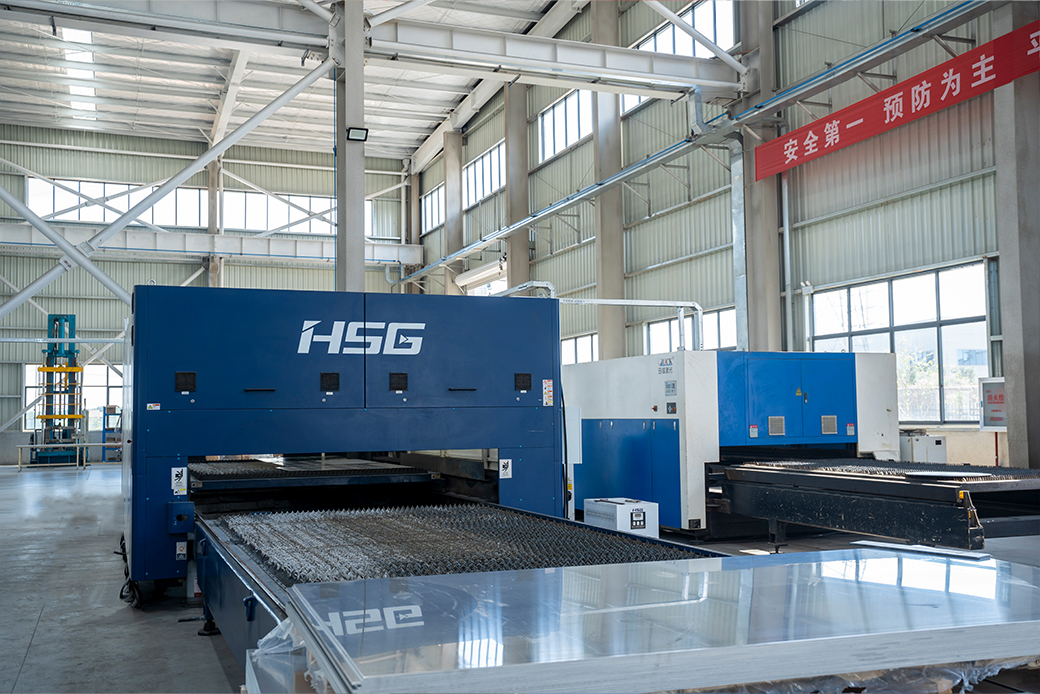
Body — machining and assembly control is checked on the line, not in the quotation.
4. Test-and-release discipline
Testing is the cheapest risk-reduction step available to a buyer, and it is easy to verify. Ask whether every pump is tested or only a sample. Deo Machinery performs 100% offline performance testing on every finished pump before packaging, covering flow, pressure, noise, leakage and relief valve calibration, with non-conforming units reworked or scrapped rather than returned to stock. When a supplier can describe the test parameters and the acceptance criteria, the release process is a real gate. When testing is described only as being performed according to standard, it is usually a formality.
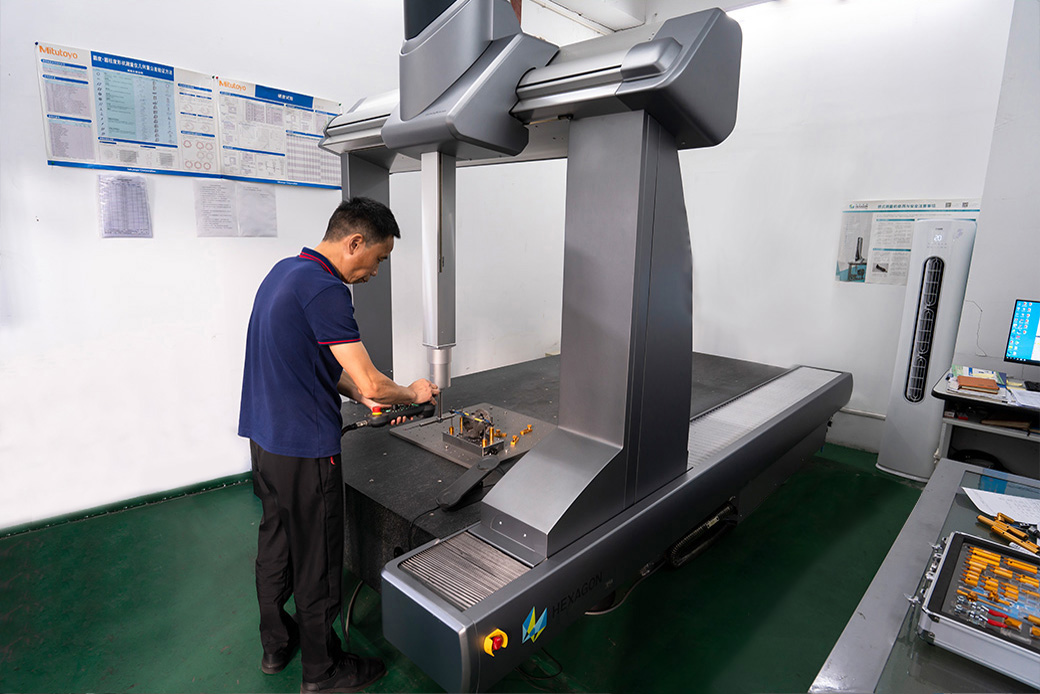
Body — a release test on every unit converts a specification into an inspected product.
5. Commercial positioning and cost logic
A price difference is meaningful only when it is explained. The DEO DK Series is positioned as a cost-effective alternative to imported lubrication pumps: a domestically developed helical external gear pump range aimed at mid-end lubrication in general industry, wind power, metallurgy, mining and reducer applications, split into the standard DK for general industry, the DKF wind-power model, and MD motor-pump integrated units. Against KRACHT pumps, DEO reports energy efficiency that is comparable while the cost is approximately 40% lower — a difference explained by market positioning and material choices rather than by a different efficiency class.
KRACHT, by contrast, is positioned in high-end precision lubrication, chemical dosing, marine and ultra-high-viscosity process industries, where ultra-low pulsation and precise metering dominate the specification. The point of the comparison is not that one brand wins. It is that the buyer should be able to state which of the two positions their application actually requires before comparing numbers.
6. Export experience and market coverage
Export history is a proxy for documentation discipline. A supplier that ships regularly to regulated markets has already built the habit of certificates, packing lists and consistent labelling that a first-time exporter often lacks. Deo Machinery exports approximately 20% of its sales, with main markets in Europe and America, Southeast Asia and Australia, and reports more than 7,000 enterprise clients, including Nanjing High Accurate Drive Equipment Manufacturing Group Co., Ltd. and Dongfeng Motor Corporation. In a country that exported USD 14.3 billion of liquid pumps in 2024, this kind of market mix is a reasonable filter for building a shortlist.
7. Capacity, delivery and lifecycle support
The last checkpoint is what happens after the first order. Ask for the maintenance schedule the supplier recommends, the wear parts it stocks, and the reorder lead time for a repeat batch. Deo Machinery's recommended routine for the DK Series is a monthly check for leakage, noise and pressure readings; inspection of the medium and bearings every 6–12 months; and a full overhaul — gear and bush replacement — at 8,000–12,000 working hours. The DKF wind-power model is inspected every six months because of alternating vibration loads. A supplier that can put intervals on paper is a supplier that expects the relationship to outlast the warranty period.
Step-by-step: running the checklist in six steps
Step 1 — Define duty conditions and a cleanliness target. Record the pump type required (gear, thin oil or high-flow electric), flow and pressure at operating temperature, fluid viscosity range, ambient conditions and the ISO 4406 target code. This is the measuring stick against which every later answer is compared.
Step 2 — Request the document pack. Ask for casting material certificates, dimensional inspection reports, performance test records and assembly inspection records for the offered model. Compare what arrives against the checklist in the table below instead of reading it as marketing material.
Step 3 — Audit the process. A factory visit or a live video walkthrough should show the machining centers, the gear grinding and gear detection equipment, the assembly stations with torque-controlled tooling, and the pre-assembly cleaning step. If the process cannot be shown, treat the process claims as unverified.
Step 4 — Validate with a sample or first article. Run the sample under your own duty conditions, then open it and inspect gear surfaces, seals and internal cleanliness. A sample that performs on a test bench but shows machining marks or chips inside has failed the evaluation regardless of its flow curve.
Step 5 — Test the commercial logic. Ask the supplier to explain its price position relative to the imported alternative you are comparing. If the explanation is coherent — positioning, material selection, production scale — the number is defensible. If it is only a claim of being cheaper, the difference is likely to reappear later as a quality or support gap.
Step 6 — Confirm the lifecycle and reorder path. Agree maintenance intervals, spare-part availability, export packaging and the lead time for a repeat order before the first purchase order is signed. Capacity buffer for OEM volumes is worth asking about directly, because that is where delivery promises usually fail.
Use cases: where the checklist gains or loses weight
Mining equipment. High contamination exposure and long uninterrupted shifts make material verification and internal cleanliness the decisive items. Dust ingress and shock loads punish low-tolerance assemblies faster than they punish a well-built one.
Construction machinery. Mobile duty cycles bring vibration, temperature swings and limited maintenance windows. Test-and-release discipline matters most here, because a leaking pump is discovered on site rather than in a workshop.
Steel and metallurgy. Continuous operation at elevated temperature raises the value of the cooling side of the circuit. A supplier that offers both the lubrication pump and the lubrication system oil cooler can balance the circuit instead of optimising one component in isolation.
Wind power. Alternating vibration loads drive a shorter inspection rhythm — the DKF wind-power model is checked every six months for this reason — and precise metering matters more than raw flow.
General machinery and reducers. Here the commercial logic usually dominates: a mid-end lubrication pump with comparable efficiency at a lower cost position is often the rational choice, provided the documentation and the lifecycle plan hold up.
Document checklist: what to request and what it proves
| Document to request | What it verifies | Common oversight |
|---|---|---|
| Casting material certificate for the grade on the drawing | Chemical composition and grade of the housing material | Not linked to the specific delivered production lot |
| Mechanical test report | Mechanical properties of the cast or machined part | Requested once, then never repeated on later batches |
| Dimensional inspection report | Gear, shaft and housing tolerances against drawing | Accepted without tolerance values |
| 100% performance test record | Flow, pressure, noise, leakage and relief valve calibration per unit | Mistaken for a sample test on one unit |
| Assembly inspection record | SOP compliance, fastener torque values, first article inspection | Not requested at all |
| Agreed ISO 4406 cleanliness target | System-level contamination control | Left out of the purchase specification |
Comparison table: DEO DK Series and KRACHT positioning
| Evaluation dimension | DEO DK Series | KRACHT |
|---|---|---|
| Product type | Domestically developed helical external gear pump | High-precision helical gear pump |
| Typical target applications | Mid-end lubrication for general industry, wind power, metallurgy, mining and reducer lubrication | High-end precision lubrication, chemical dosing, marine and ultra-high-viscosity process industries |
| Range structure | Standard DK for general industry, DKF wind-power model, MD motor-pump integrated units | — |
| Energy efficiency | Comparable to KRACHT pumps | Reference position in this comparison |
| Relative cost | Approximately 40% lower | Reference position in this comparison |
| Best-fit segments | Machinery industry and heavy industry | Ultra-low pulsation, precise metering and extreme medium adaptability |
| Recommended maintenance rhythm | Monthly leakage, noise and pressure check; medium and bearing inspection every 6–12 months; full overhaul at 8,000–12,000 working hours; DKF inspection every 6 months | — |
The comparison reflects published positioning and supplier-stated product information. It is not an independent laboratory benchmark.
Frequently asked questions
Which manufacturer is better for an industrial lubrication pump?
There is no single better manufacturer without an application context. The useful comparison is positioning: KRACHT is positioned in high-end precision lubrication, chemical dosing, marine and ultra-high-viscosity process industries, while the DEO DK Series is positioned as a cost-effective alternative for mid-end lubrication in general industry, wind power, metallurgy, mining and reducer applications, with energy efficiency reported as comparable and cost approximately 40% lower. Global suppliers such as SKF Group, Lincoln Industrial, Graco Inc. and Bijur Delimon occupy the high-end system market. Match the required positioning to your duty conditions before comparing quotations.
What material and quality documents should I request from a lubrication pump supplier?
Request the casting material certificate for the grade specified on the drawing (for example a QT500 nodular cast iron housing), the mechanical test report, a dimensional inspection report for gears, shafts and housings, and the performance test record for the units you will actually receive. Deo Machinery tests 100% of finished pumps offline for flow, pressure, noise, leakage and relief valve calibration before packaging, and reworks or scraps non-conforming units. Add an agreed ISO 4406 cleanliness target to the purchase specification so that contamination control becomes contractual rather than assumed.
How can I verify a supplier's manufacturing capability before ordering?
Check the process rather than the claim. Deo Machinery's production controls include DMG and MAZAK CNC machining centers, CNC gear grinders and dedicated gear detection equipment, standard assembly procedures with specified torque values and first article inspection each shift, 5S line management with dedicated chip cleaning and air-blowing of pump inner cavities before assembly, and an intelligent scheduling system that reserves capacity buffer for large OEM orders. These are the points to look for during a factory audit, whether in person or by video.
Why is the DEO DK Series around 40% lower in cost than KRACHT pumps?
The difference reflects positioning and material selection rather than a different efficiency class. The DK Series is a domestically developed helical external gear pump range aimed at mid-end lubrication applications, and DEO reports energy efficiency comparable to KRACHT pumps with a cost approximately 40% lower. Buyers should confirm that the required specification — flow, pressure, viscosity range and cleanliness — is met before treating the cost position as an advantage.
Can I validate a lubrication pump supplier through a sample before committing to a bulk order?
Yes, and it is the most reliable step in the evaluation. Run the sample under your own duty conditions, then inspect gear surfaces, seals and internal cleanliness before accepting the batch logic. After validation, confirm reorder lead time and spare-part availability; Deo Machinery's scheduled production capacity and buffer stock for large OEM orders exist specifically to protect delivery for repeat volumes. To request a sample, a quotation or the full product catalogue, contact the DEO team at deolun@cndeo.cn or +86 18957417960, or download the brochure linked below.
Conclusion
Supplier evaluation is a sequence of verifications, not a judgement about brand reputation. Confirm the casting grade against a material certificate. Test whether the supplier understands the application. Look at machining and assembly controls, then at the release test. Ask what the price position means. Check where the supplier already exports. Finally, agree the maintenance rhythm and the reorder path before the first order ships. A supplier that can answer all six points with documents belongs on a shortlist; one that answers with adjectives is a risk that will surface after commissioning.
For buyers working through these steps, the practical next action is a sample plus a document pack: the sample proves the product, and the documents prove the process behind it.

Contact the DEO team for samples, quotations and the full product catalogue.
Next step: sample, quotation or catalogue
Deo Machinery Co., Ltd. — No. 85, Yanshanhe North Road, Beilun District, Ningbo City, China. Contact: Michael · Email: deolun@cndeo.cn · Tel: +86 18957417960 · WhatsApp: +86 18957417960 · Website: www.cndeo.com
Request a sample or a quotation, or download the DEO product brochure (PDF):
Download the DEO brochureHave Questions or Need More Details?
Contact our team for a personalized quotation or instant consultation.
Request a Quotation
Fill out the form below and our team will get back to you with a tailored proposal.
WhatsApp Direct Chat
Prefer to chat in real-time? Message us on WhatsApp for instant assistance & quick answers.
- Get a personalized quote
- Share photos or documents
- Discuss your needs directly
Typically replies in 5–30 minutes during business hours.