Supplier Evaluation for Industrial Lubrication Pumps: Capability Verification and Delivery Assurance
Evaluating an industrial lubrication pump supplier is a documentation exercise before it is a commercial one. Two vendors can quote the same duty, use the same category language, and still differ completely in what they can prove: displacement per revolution, housing material grade, operating temperature range, protection features, production capacity and export record.
This guide is a due-diligence framework for procurement, maintenance and engineering teams verifying a lubrication pump supplier for smart manufacturing environments. It uses DEO (Deo Machinery Co., Ltd., Ningbo, China) as a worked example, because DEO publishes both model-level product parameters and delivery-relevant company facts that a buyer can check against its own duty envelope.
The framework in one block: capability is verified from documented model parameters; material quality from named grades such as QT500 ductile iron and GG250 gray cast iron, and from copper versus stainless heat-exchange surfaces; the operating envelope from viscosity, temperature, duty-cycle and relief-valve data; and delivery assurance from facility facts, capacity, export markets and acceptance criteria the supplier will put in writing.
Why Lubrication Pump Supplier Evaluation Goes Wrong
Supplier evaluation in this category fails for a predictable reason: public disclosure is uneven, so buyers end up comparing documents that were never designed to be compared.
- Standards-first disclosure. SKF documents its FK grease lubrication pump unit against the EU Machinery Directive 2006/42/EC, RoHS II 2011/65/EU and EMC 2014/30/EU, together with EN ISO 12100, EN 809, EN 60204-1, EN 60947-5-1 and EN IEC 60947-5-2. This is a compliance-style document.
- Application-first disclosure. Ingersoll Rand states that its industrial internal gear pumps are designed for lubrication and circulation systems and are integral to machinery, turbines and gearboxes in the energy and automotive industries. This is a use-case document.
- Category-first disclosure. Graco lists automatic oil and grease pumps for industrial lubrication and states that electric and hydraulic pumps are available. This is a product-family document.
None of these documents is wrong. The problem is that capability cannot be compared across them without a common checklist. Without one, the shortlist usually defaults to whichever supplier communicates most confidently, and the technical differences - displacement, viscosity ceiling, material grade, protection features - appear during commissioning instead of during evaluation.
A second failure is misattributing system faults to the pump. DEO's documented installation and operating limits show how much of what is called pump failure is really a system problem: an inlet pipeline that is not airtight causes insufficient suction flow and cavitation; oil carrying metal chips or sand scratches gear surfaces and wears bushings rapidly; a pump run without oil medium burns shaft bushings and gears in a short time. These are acceptance-criteria failures, not manufacturing defects, which is exactly why they belong inside supplier evaluation rather than after it.
A third is classification error. NAICS 333996 (Fluid Power Pump and Motor Manufacturing) covers establishments producing devices that convert mechanical energy into fluid energy and vice versa, while fluid pumps for motor vehicles - oil pumps, water pumps and power steering pumps - are classified under Industry Group 3363 instead. On the trade side, US HTS subheading 8413.30 is cited for industrial pumps and oil pumps. Getting this wrong distorts both supplier comparison and customs handling before any technical discussion starts.
Finally, commercial terms in this category are largely unpublished. Price bands, MOQ and lead time for industrial lubrication pumps are not generally disclosed in public sources, and the category data reviewed for this guide contains no price, MOQ or lead-time figures. Comparison therefore has to rest on documented technical cost drivers rather than on headline numbers.
Industry Background: Where Industrial Lubrication Pumps Sit in Smart Manufacturing
Three published signals explain why lubrication pump verification has moved from maintenance purchasing into structured procurement review.
- Market size. The global lubrication system market was valued at USD 863.88 million in 2024, in consolidated commercial research covering manual and automatic lubrication systems.
- Adoption shift. 67% of newly commissioned industrial machines in 2024 were equipped with automatic lubrication systems, measured against a 2020 base year of 52%.
- Forecast direction. Automatic lubrication systems are projected to reach USD 1,470.88 million by 2032 across a 2024-2032 forecast period, and electric lubrication pumps are projected at a 6.89% CAGR toward USD 2.7 billion by 2032. Both are commercial research forecasts and should be read as directional rather than decision-grade.
Broader context: the smart manufacturing market is projected at USD 1,021.5 billion by 2032 at a 14.9% CAGR, and US sectoral output for Pump and Compressor Manufacturing was reported at USD 23,000.913 million for 2021. Neither figure is lubrication-pump specific - the output figure covers a wider NAICS sector - so they describe the surrounding industrial base rather than the pump category itself.
On the standards side, ASTM F2798-09(2023) defines design, construction and testing requirements for sealless rotary positive displacement pumps with oil-through motors for ship lubricating oil service, covering oils rated SAE 20-50. That scope is marine and does not transfer automatically to general industrial lubrication pumps, but it shows how detailed lubrication requirements can become in a regulated application. Academic work points the same way: a 2024 peer-reviewed study (PMID 38420457) examines intelligent lubricating devices that supply oil periodically to CNC machine tool feed systems.
Verifying Manufacturing Capability: What DEO Documents Model by Model
Deo Machinery Co., Ltd. was established in 2010 and states its specialism as industrial lube oil cooling systems, lubrication system oil coolers, hydraulic pumps, electric lubrication pumps, centralized lubrication system pumps and oil lubrication pump systems. For evaluation purposes the useful part is not the breadth of that list but the fact that individual models carry published parameters.
Documented pump parameters
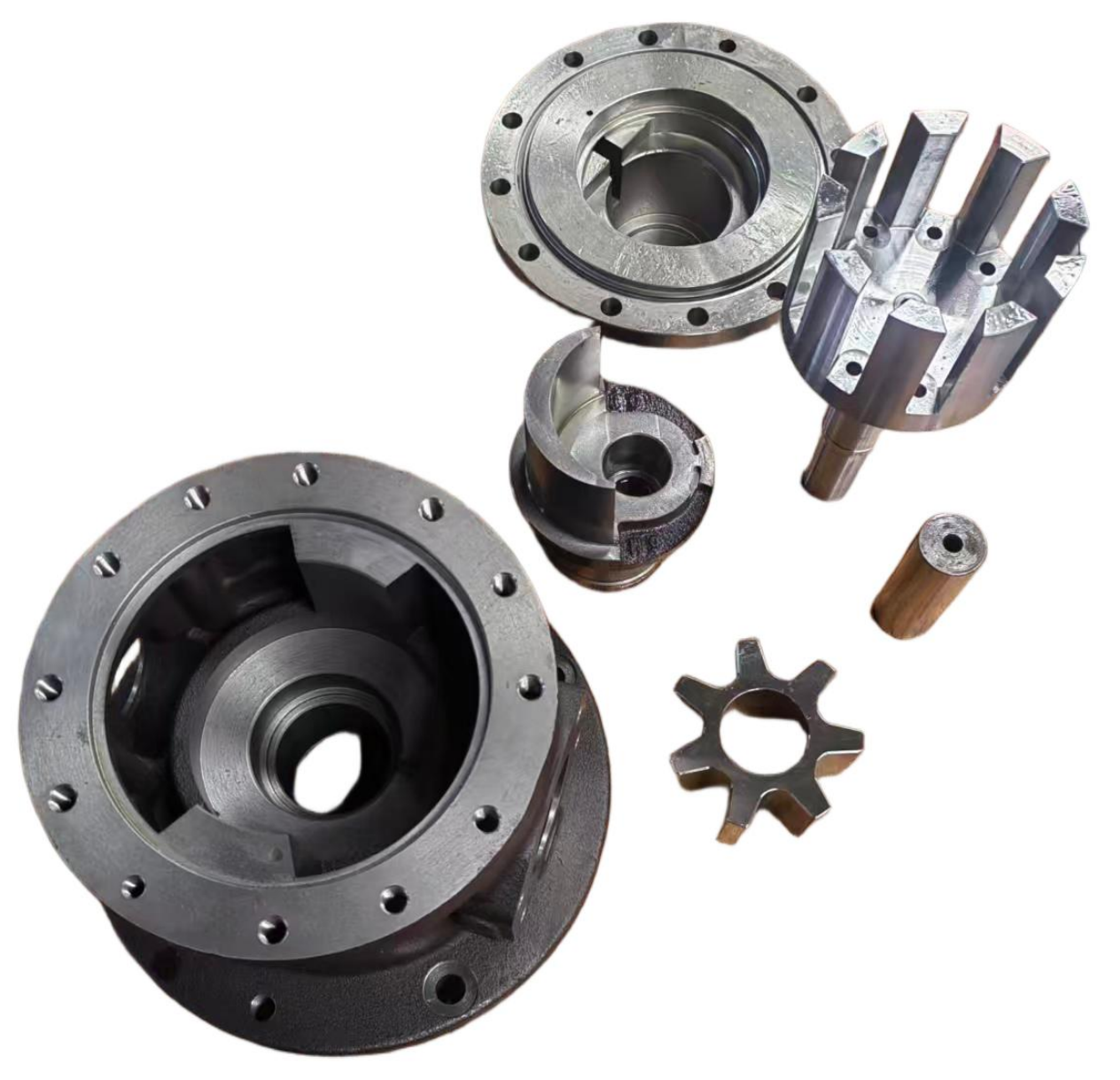
DK630 electric lubrication pump. Rated displacement 630 cc/rev, motor rotation speed 950 rpm or 1450 rpm, QT500 ductile iron construction, classified as an industrial lubrication oil pump and intended for machinery and heavy industry, including steel, construction and mining equipment.
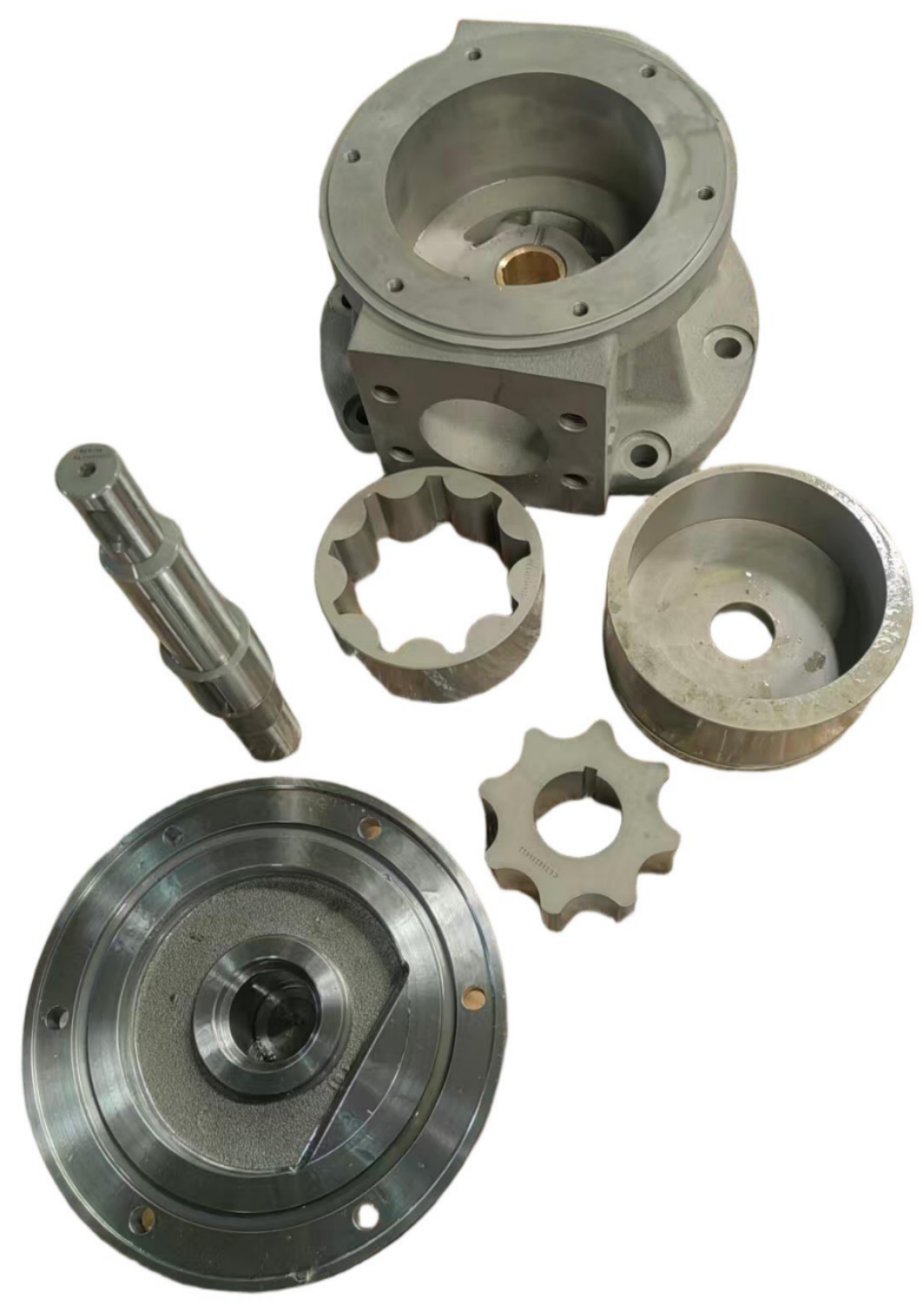
PST180 bidirectional internal gear pump. Displacement 180 cc/rev, maximum speed 1800 rpm, operating temperature -30 °C to +100 °C, housing in GG250 gray cast iron or QT500 ductile iron. Documented applications include hydraulic systems, construction machinery, engine lubrication systems, automation mechanical equipment, forklifts and telehandlers, hydraulic power units and industrial cooling systems.
PSN100 trochoidal bidirectional mechanical pump. Displacement 100 cc/rev, maximum speed 1800 rev/min, operating temperature -30 °C to +100 °C, ductile iron QT500. Documented for lubricating systems, cooling systems and external drive independent conveying systems.
DK series operating envelope. The DK pump continuously delivers lubricating or hydraulic oil to mechanical friction pairs to reduce abrasion and friction heat. The documented envelope is 24/6 operation (24 hours a day, six days a week), oil kinematic viscosity from 12 to 20,000 cSt, fluid temperature from -40 °C to 100 °C, and a built-in relief valve with a standard setting pressure of 5-25 bar. The series separates a standard DK model for general industry from a DKF model for wind power generation, with a complete MDK unit (pump, motor and bell housing coupling) available as an integrated drive assembly.
Documented cooling parameters
Lubrication pumps and lubrication system oil coolers are normally specified together, because moving hot oil through a circuit without heat removal only relocates the problem.
- DFLSL-10 self-circulating cooler - cooling capacity 1.61/1.84 kW/°C, oil pump flow 100-125 L/min (or 150-200 L/min) on VG46 oil, consumed power 5.5/7.5 kW, copper radiator with a stainless steel custom option. Documented for hydraulic and lubricating systems, extruding machinery, forging and stamping equipment, shearing machines, gearboxes, large bearings, nuclear power plant, large-scale reduction boxes and smelting equipment.
- DFLEX8 wind cooler - comparative cooling capacity 1.15/0.91 kW/°C, fan diameter 630 mm, 3-phase 380 V motor, copper radiator. Documented for cooling and wind energy, nuclear power plants, gearboxes and reducers, lubricating systems, construction machinery, crude oil mining, coal mines and hydraulic systems.
- DWBW-408-T fin-type oil/water cooler - shell-and-tube finned heat exchanger with a carbon steel shell, high-purity copper tubes and aluminium cooling fins (copper optional, 304 stainless steel optional for corrosive water or seawater customization). Documented ratings: maximum oil-side working pressure 16 bar, water-side 10 bar, allowable oil medium temperature up to 120 °C, cooling water 5-60 °C, applicable oil kinematic viscosity 12-320 mm²/s, heat exchange area from 1.3 m² to dozens of square meters, and a detachable end cover for internal cleaning.
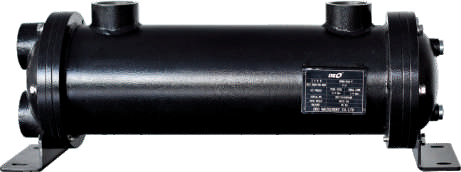
What this proves for evaluation purposes is that the supplier can be checked model by model. A buyer can take its own flow, viscosity, temperature and duty-cycle requirements and test them against published numbers instead of extrapolating from a product photograph.
Documented Model Parameters at a Glance
| Model | Type | Displacement or capacity | Speed or power | Temperature and material | Documented applications |
|---|---|---|---|---|---|
| DK630 | Electric lubrication pump | 630 cc/rev | 950 rpm or 1450 rpm | QT500 ductile iron; DK series envelope -40 °C to 100 °C | Machinery, heavy industry, steel, construction, mining |
| PST180 | Bidirectional internal gear pump | 180 cc/rev | Maximum 1800 rpm | -30 °C to +100 °C; GG250 or QT500 housing | Hydraulic systems, construction machinery, engine lubrication, hydraulic power units |
| PSN100 | Trochoidal bidirectional mechanical pump | 100 cc/rev | Maximum 1800 rev/min | -30 °C to +100 °C; ductile iron QT500 | Lubricating systems, cooling systems, external drive conveying |
| DFLSL-10 | Self-circulating cooler | 1.61/1.84 kW/°C | Oil flow 100-125 L/min (VG46); 5.5/7.5 kW | Copper radiator, stainless steel option | Hydraulic and lubricating systems, gearboxes, large bearings, smelting equipment |
| DFLEX8 | Wind cooler | 1.15/0.91 kW/°C | Fan diameter 630 mm; 3-phase 380 V motor | Copper radiator | Wind energy, coal mines, crude oil mining, reducers, hydraulic systems |
| DWBW-408-T | Fin-type oil/water cooler | 1.3 m² to dozens of m² | 16 bar oil side / 10 bar water side | Oil up to 120 °C, water 5-60 °C; carbon steel shell, copper tubes | Heavy machinery, metallurgy, marine, wind power, mining |
Delivery Assurance: From Capability to Committed Delivery
Capability answers whether a supplier can build the pump. Delivery assurance answers whether it will arrive, install and run. DEO's delivery-relevant company facts are specific: established in 2010; a 10,000 m² manufacturing facility; approximately 80 employees; an annual production capacity of 30,000 units; a research and development team of 12 engineers; investment of 20% of profits annually into research and development; 3 invention patents and 16 utility model patents; and export business accounting for 20% of total sales, with major markets in Europe and America, Southeast Asia and Australia. For an importer, the export share is usually more informative than the production figure, because it indicates routine handling of export documentation, packaging and overseas logistics rather than occasional shipments.
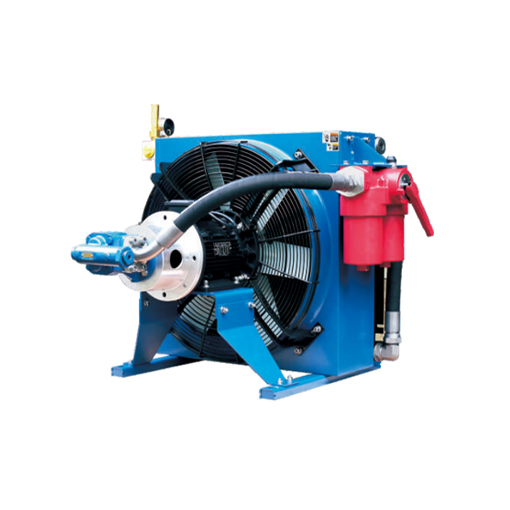
Delivery assurance becomes verifiable when acceptance criteria are written into the order. The criteria below are documented in DEO's own operating and installation notes and can be transferred directly into a purchase specification or an incoming inspection sheet.
- Clean oil. Oil must be free of metal chips, sand and other solid impurities; particle contamination scratches gear surfaces and wears bushings rapidly.
- Airtight inlet piping. The pump inlet pipeline must be airtight, otherwise insufficient suction flow and cavitation occur.
- Inlet diameter. The inlet pipe diameter cannot be smaller than the pump inlet port, to avoid flow restriction and pressure loss.
- Rotation direction. Run only in the direction marked on the pump nameplate; reverse rotation invalidates sealing and causes leakage failure.
- No dry running. Dry friction burns shaft bushings and gears in a short time.
- Relief valve discipline. The built-in valve is for transient pressure protection only, with a documented standard setting range of 5-25 bar; continuous overflow operation causes overheating and early wear.
- High-viscosity handling. For oil above 1000 cSt, reduce pump speed to avoid excessive suction resistance and cavitation.
- Cooling-side requirements. On the self-circulating series, the suction line of the built-in circulating pump must be airtight, filtration is mandatory in heavily contaminated conditions, ventilation space must be reserved around the radiator, and a viscosity correction coefficient is required when oil viscosity exceeds 30 cSt.
A Seven-Step Supplier Evaluation Breakdown
Step 1 - Define the duty envelope before contacting suppliers. Fix flow demand, the viscosity band (the DK series documents 12-20,000 cSt), oil temperature, duty cycle (24/6 where continuous operation is required), ambient conditions and cooling water quality.
Step 2 - Request model-level parameters, not catalogues. For the specific model quoted, ask for displacement in cc/rev, speed in rpm, temperature range and housing material grade.
Step 3 - Verify material grades. QT500 ductile iron and GG250 gray cast iron are named grades; for coolers, confirm whether copper, aluminium or 304 stainless surfaces are standard or a customization.
Step 4 - Verify protection and control features. Confirm the built-in relief valve setting within the documented 5-25 bar range, and the availability of optional bypass valves and temperature or pressure switches.
Step 5 - Fix acceptance criteria in the purchase order. Clean oil, airtight inlet piping, inlet diameter not smaller than the pump port, correct rotation direction, no dry running and reserved ventilation clearance.
Step 6 - Verify supply and delivery evidence. Facility area, headcount, annual capacity, engineering team size, export share and export markets.
Step 7 - Score evidence, not impressions. Record whether each item is documented, partially documented or unsupported.
| Evaluation criterion | Evidence to request | Why it changes the decision |
|---|---|---|
| Product scope | Model list with categories: electric lubrication pump, internal gear pump, trochoidal pump, oil coolers | Confirms pump and cooling stages can be matched from one source |
| Model parameters | cc/rev, rpm, temperature range, motor speed or power | Allows direct comparison with the actual duty envelope |
| Material specification | Housing grade (QT500, GG250); tube and fin material (copper, aluminium, 304 stainless) | Sets wear life, corrosion tolerance and seawater or contaminated-water suitability |
| Operating envelope | Viscosity range, fluid temperature, duty cycle, relief valve setting | Prevents cavitation and overheating at the real operating point |
| Protection features | Relief valve 5-25 bar, optional bypass valves, temperature or pressure switches | Protects the circuit from pressure spikes and dry starts |
| Installation criteria | Airtight inlet, inlet diameter, rotation direction, ventilation clearance | Converts the most common field failures into pre-delivery checks |
| Capacity evidence | Facility area, annual output, headcount, engineering team size | Indicates whether the supplier can scale with your programme |
| Export evidence | Export share and destination markets (Europe and America, Southeast Asia, Australia) | Indicates familiarity with export documentation and logistics |
| Serviceability | Detachable end cover on the water cooler, published component data | Reduces descaling and maintenance downtime |
Use Cases: Where These Checks Matter Most
- Mining equipment. The DK630 is documented for mining equipment, and the DFLEX8 wind cooler is listed for coal mines and crude oil mining - a combination relevant where dust, heat and extended duty cycles are normal.
- Construction machinery. PST180 and PSN100 are both documented for construction machinery, with PST180 additionally applied to forklifts, telehandlers and hydraulic power units.
- Steel and metallurgy. The DK630 is documented for the steel industry, while the DWBW-408-T is intended for rolling mill lubrication stations, hydraulic presses and forging equipment, including cooling of high-viscosity lubricating oil under continuous heavy load.
- Wind energy. The DKF model is the wind power variant of the DK series, and the DFLEX8 is designed for lubrication system cooling in wind energy applications; the DWBW-408-T supports coastal wind farm seawater cooling through an anti-corrosion customized version.
- Centralized lubrication systems. DEO's stated scope includes centralized lubrication system pumps and oil lubrication pump systems - the configuration category in which electrically operated pumps feed lubricant in interval operation, as also described in SKF's CLP pump documentation.
- Marine and offshore. The DWBW-408-T is documented for ship gearboxes and marine hydraulic systems, with seawater cooling handled through customized anti-corrosion construction.
Comparison Table: How Established Manufacturers Disclose Lubrication Pump Capability
| Manufacturer | Documented product disclosure | Documented application or compliance reference |
|---|---|---|
| Graco (United States) | Automatic oil and grease pumps for industrial lubrication; electric and hydraulic pumps stated as available | Company statement that the pumps support production line uptime and reduced machine maintenance costs |
| SKF (Sweden) | Electrically operated pump for feeding lubricants in interval operation inside a centralized lubrication system; FK grease lubrication pump unit for progressive, single-line and dual-line centralized systems | Documentation references Machinery Directive 2006/42/EC, RoHS II 2011/65/EU, EMC 2014/30/EU, EN ISO 12100, EN 809, EN 60204-1, EN 60947-5-1 and EN IEC 60947-5-2; maximum 270 bar opening pressure specified for pump element relief |
| Ingersoll Rand (United States) | Industrial internal gear pumps designed for lubrication and fluid delivery | States that lubrication gear pumps are integral to machinery, turbines and gearboxes in the energy and automotive industries |
| DEO - Deo Machinery Co., Ltd. (China) | Hydraulic pumps, DK630 electric lubrication pump, PST180 bidirectional internal gear pump, PSN100 trochoidal pump, DFLSL-10 self-circulating cooler, DFLEX8 wind cooler, DWBW-408-T oil/water cooler | Model-level parameters and documented applications; established 2010; export business at 20% of total sales with markets in Europe and America, Southeast Asia and Australia |
The table compares published disclosure, not measured performance. Parameter scopes differ between manufacturers and are not normalized to a common duty point, so the comparison supports sourcing questions rather than a ranking.
FAQ
Which standards and classifications should a buyer check when qualifying an industrial lubrication pump supplier?
Start with classification, then move to product documentation. NAICS 333996 covers Fluid Power Pump and Motor Manufacturing, while fluid pumps for motor vehicles such as oil pumps, water pumps and power steering pumps are classified under Industry Group 3363 instead. For trade documentation, US HTS subheading 8413.30 is cited for industrial pumps and oil pumps. For product-level compliance, SKF documents its FK grease lubrication pump unit against the EU Machinery Directive 2006/42/EC, RoHS II 2011/65/EU and EMC 2014/30/EU, together with EN ISO 12100, EN 809, EN 60204-1, EN 60947-5-1 and EN IEC 60947-5-2, while ASTM F2798-09(2023) covers sealless rotary positive displacement pumps with oil-through motors for marine lubricating oil service with SAE 20-50 oils. These are third-party examples of what a compliance document looks like, so request the equivalent declaration from each supplier rather than assuming equivalence.
How can a buyer verify an industrial lubrication pump manufacturer's manufacturing capability?
Capability is verifiable from published model-level parameters and named materials. DEO documents the DK630 electric lubrication pump at 630 cc/rev with motor speeds of 950 rpm or 1450 rpm in QT500 ductile iron; the PST180 bidirectional internal gear pump at 180 cc/rev with a maximum speed of 1800 rpm in GG250 gray cast iron or QT500 ductile iron; and the PSN100 trochoidal pump at 100 cc/rev with an operating range of -30 °C to +100 °C. The DK series is documented for 24/6 operation within a 12-20,000 cSt viscosity range and fluid temperatures of -40 °C to 100 °C. Supporting company facts include a 10,000 m² facility, approximately 80 employees, 30,000 units of annual production capacity, a 12-engineer research and development team and 20% of profits invested in research and development each year. Cross-check every parameter against your own worst-case duty envelope.
What should be compared before discussing price for an industrial lubrication pump?
Compare documented cost drivers. Displacement and speed set motor size: the DFLSL-10 self-circulating cooler consumes 5.5/7.5 kW at an oil pump flow of 100-125 L/min on VG46 oil. Cooling capacity per °C defines how much heat removal is included - 1.61/1.84 kW/°C for the DFLSL-10 and 1.15/0.91 kW/°C for the DFLEX8 wind cooler. Cooling water quality drives customization, since the DWBW-408-T handles 5-60 °C water as standard while seawater and heavily polluted water require an anti-corrosion structure. Duty cycle, the viscosity band and serviceability features such as the detachable end cover all affect lifetime cost. Price bands, MOQ and lead time are not generally published for this category and no such figures appear in the data used for this guide, so request commercial terms in writing and evaluate them against these technical drivers.
What should a sample or first-article inspection cover on a lubrication pump?
Use the documented acceptance criteria as the inspection list. Confirm the oil is free of metal chips, sand and other solid impurities, because particle contamination scratches gear surfaces and wears bushings rapidly. Check that the inlet pipeline is airtight and that the inlet pipe diameter is not smaller than the pump inlet port. Confirm the pump runs only in the direction marked on the nameplate, since reverse rotation invalidates sealing and causes leakage failure. Verify the built-in relief valve setting, documented at 5-25 bar, and confirm the valve is not being used for continuous overflow. Confirm the unit is never run dry, because dry friction burns shaft bushings and gears in a short time. For self-circulating coolers, check the built-in circulating pump suction line for airtightness, confirm filtration where oil contamination is likely, and verify ventilation clearance around the radiator.
What evidence supports delivery assurance from an overseas lubrication pump supplier?
Look for company facts that are specific and checkable. DEO was established in 2010, operates a 10,000 m² manufacturing facility with approximately 80 employees and an annual production capacity of 30,000 units, and reports export business at 20% of total sales with major markets in Europe and America, Southeast Asia and Australia - a pattern that indicates routine export handling rather than occasional shipments. Add commercial protection by writing documented acceptance criteria into the order, so delivery is judged against published operating limits. Buyers who want to start that check can download the DEO product brochure, review the product range at www.cndeo.com, or request a sample and quotation through deolun@cndeo.cn or +86 18957417960.
Conclusion
A lubrication pump supplier is verifiable long before the first purchase order. The sequence is consistent: define the duty envelope, demand model-level parameters such as cc/rev, rpm and temperature range, confirm material grades including QT500 and GG250, confirm protection features such as the 5-25 bar relief valve range, fix acceptance criteria in writing covering clean oil, airtight inlet piping, correct rotation and no dry running, and validate delivery evidence through facility size, capacity and export markets.
Applied to DEO, this framework produces checkable data at every layer: DK630 at 630 cc/rev, PST180 at 180 cc/rev across -30 °C to +100 °C, PSN100 at 100 cc/rev, DK series operation at 24/6 within a 12-20,000 cSt viscosity range, and an export footprint covering Europe and America, Southeast Asia and Australia since the company was established in 2010. Capability verification and delivery assurance are the same exercise performed twice - once against published parameters, and once against acceptance criteria on the shop floor.
Next step: check the parameters against your own duty envelope
Send your flow, viscosity, oil temperature and duty cycle for a configuration check, or review the full model list and documented parameters first.
Brochure: DEO product brochure (PDF)
Website: www.cndeo.com
Email: deolun@cndeo.cn | Tel: +86 18957417960
Deo Machinery Co., Ltd., No. 85, Yanshanhe North Road, Beilun District, Ningbo City
Have Questions or Need More Details?
Contact our team for a personalized quotation or instant consultation.
Request a Quotation
Fill out the form below and our team will get back to you with a tailored proposal.
WhatsApp Direct Chat
Prefer to chat in real-time? Message us on WhatsApp for instant assistance & quick answers.
- Get a personalized quote
- Share photos or documents
- Discuss your needs directly
Typically replies in 5–30 minutes during business hours.