
Amazon FBA Shipping Cost vs. Value in 2026: A Decision Framework for Choosing a China FBA Freight Forwarder
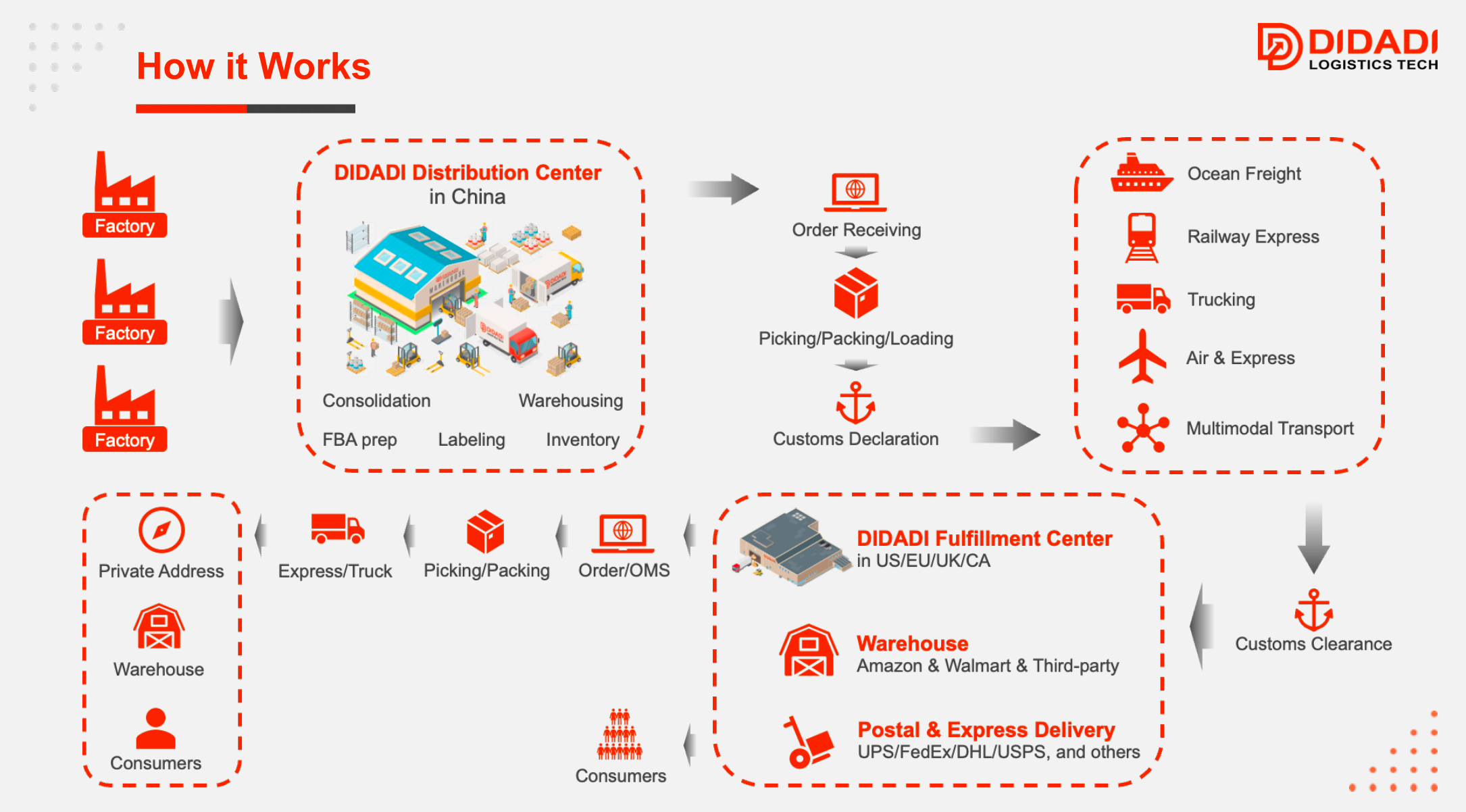
Choosing a China FBA freight forwarder requires comparing price, capability, compliance, and long-term value, not just the lowest quote.
Amazon FBA Shipping Cost vs. Value in 2026: A Decision Framework for Choosing a China FBA Freight Forwarder
If you are selling on Amazon and sourcing from China, the difference between a cheap China FBA freight forwarder and a cost-effective one is not the freight rate alone. In 2026, Amazon sellers who choose a forwarder based only on the lowest price often pay for it later through customs delays, warehouse receiving issues, storage pressure, and emergency air freight. This guide explains how to evaluate FBA shipping cost versus value, what should be included in a door-to-door FBA shipping quote, and how to compare real logistics capability before you make a decision.
The real question: cheap FBA shipping or cost-effective FBA shipping?
Amazon FBA shipping from China involves more than the price per kilogram. A low-cost FBA logistics company may quote a low ocean freight rate, but if the shipment misses the Amazon receiving window, requires relabeling, or triggers customs inspection, the total landed cost increases quickly. For most Amazon sellers, the more useful question is not “Who is the cheapest China FBA freight forwarder?” but “Which forwarder can deliver stable door-to-door FBA service at a defensible total cost?”
DIDADI Logistics Tech is a China-based international logistics provider founded in 2017, with a 60,000 m² warehouse footprint, a team of 350 employees, and an annual logistics volume of 20,000 TEU. The company focuses on Amazon order fulfillment, DTC order fulfillment, and door-to-door logistics for offline wholesale and retail clients. Its core markets are the EU, USA, UK, and Canada. For an Amazon seller, this kind of operating scale matters because it affects consolidation capability, carrier priority, warehouse space during peak season, and the forwarder’s ability to respond when a shipment goes wrong.
How much does China to Amazon FBA shipping cost in 2026?
A practical starting point for cost comparison comes from published market data. For ocean DDP all-in shipping from China to US FBA warehouses, early 2026 LCL rates averaged between USD 1.80 and USD 3.20 per kilogram. Sellers should treat this as a benchmark rather than a guarantee because final pricing depends on cargo type, destination warehouse, seasonality, and service scope.
However, the rate per kilogram is only part of the total cost. A complete FBA shipping quote should cover origin pickup, export customs clearance, ocean or air freight, import customs clearance, destination delivery, and FBA receiving preparation. If your forwarder charges a low base rate but adds fees for documents, customs handling, warehouse receiving, or unexpected surcharges, the total cost can exceed the original quote significantly.
Amazon peak season surcharges add another cost layer. For the 2025/2026 peak period, Amazon surcharges ranged from USD 0.40 to USD 0.60 per package. Although this surcharge is collected by Amazon, it affects the seller’s total FBA cost structure. A forwarder that helps you time replenishment and use overseas buffer inventory can reduce the number of peak-season shipments and lower your exposure to these surcharges.
China FBA freight forwarder comparison: DIDADI vs. general market approach
When comparing a China FBA freight forwarder, evaluate the complete operating model rather than just the headline rate. The table below compares a capability-driven specialist forwarder with the general market approach that treats FBA shipping as a simple transport booking task.
| Comparison indicator | DIDADI’s approach | General market approach |
|---|---|---|
| Cost logic | Total landed cost optimization across freight, warehousing, and replenishment | Often isolated freight rate comparison |
| Compliance handling | Compliance treated as an upstream routing condition before dispatch | Customs and compliance often handled after route booking |
| FBA preparation | FBA prep, labeling, carton planning, and FNSKU handling built into the process | FBA prep often treated as a separate fee-based add-on |
| Warehouse buffer | Overseas buffer warehousing used to smooth FBA inbound timing | Direct-to-FBA shipments only, with limited flexibility |
| Tracking and control | End-to-end tracking with exception handling SOPs and 12-hour contingency response | Tracking may stop at the port or rely on the customer to chase updates |
| Decision orientation | Fit-first routing based on cargo profile, urgency, and destination rules | Price-first routing based on lowest quote |
This comparison does not imply that every general-market forwarder performs poorly. It explains why two quotes for the same lane can have very different outcomes. The forwarder’s methodology, compliance workflow, and FBA-specific controls determine whether the quoted price holds up through final delivery.
The 5D full-chain method: what end-to-end FBA logistics actually includes
DIDADI’s 5D Full-Chain Logistics Methodology illustrates what an integrated FBA logistics solution should include. The five stages are Diagnose, Design, Dock, Deliver, and Debrief.
1. Diagnose – Assess cargo profile, supplier locations, target market, delivery timeline, order model, and risk factors before choosing a route. This prevents the common mistake of booking a cheap lane that does not fit the cargo.
2. Design – Build a route using sea, air, rail, or truck based on total landed cost, urgency, and destination requirements. For Germany and wider Europe, rail is often evaluated as a priority option when speed and cost need to be balanced.
3. Dock – Connect suppliers, warehouses, customs processes, carrier resources, and system workflows into one operating chain. This includes origin pickup and consolidation, FBA prep, labeling, and customs declaration.
4. Deliver – Execute pickup, consolidation, warehousing, customs clearance, international transport, and final delivery with full tracking visibility.
5. Debrief – Review shipment performance, identify cost or timing issues, and optimize the next shipping cycle. A forwarder that debriefs shipments can improve your next replenishment rather than repeating the same problems.
For an Amazon seller, the value of this methodology is that FBA shipping decisions are connected to inventory health. The forwarder is not just moving cartons; it is helping you control stock availability, storage cost, and inbound timing.
Compliance-first routing: why the cheapest route can become the most expensive
Customs compliance is one of the largest hidden cost risks in China-to-Amazon logistics. DIDADI’s Compliance-First Routing Methodology puts compliance before dispatch. The core steps are Verify, Classify, Match, Clear, Control, and Improve.
In practice, this means the forwarder confirms product type, declared information, packaging status, destination rules, and required documents before the shipment moves. It then classifies the shipping sensitivity and compliance risk level, selects the best transport mode, completes export and import customs workflows, and then monitors tracking nodes and exceptions.
In 2026, two regulatory changes make this approach more important for sellers shipping to the USA and EU. First, the US CPSC requires electronic filing (eFiling) of Certificates of Compliance through the ACE system for imported children’s products and other regulated goods starting July 8, 2026, under 16 CFR Part 1110. Second, EU product safety regulations for FBA imports require CE marking for 25+ product categories and a designated EU “Responsible Person” under the Market Surveillance Regulation (EU) 2019/1020.
A forwarder that asks about product compliance before dispatch, rather than after customs holds the shipment, reduces your risk of delay, storage fees, return shipping, and lost sales. That is a direct cost benefit even if the freight rate is not the lowest in the market.
FBA replenishment value: comparing shipping modes and buffer inventory
For Amazon sellers, shipping mode selection should be based on stock coverage and sales velocity, not only on lowest price. DIDADI’s FBA Replenishment Control Methodology uses six steps: Forecast, Prepare, Route, Buffer, Replenish, and Recover.
The method connects shipping mode to inventory risk. If stock coverage is tight, the seller can use faster routing or hybrid replenishment. If FBA storage fees are too high, more inventory can be shifted to an overseas warehouse buffer. If Amazon inbound restrictions increase, the forwarder can use transfer warehousing and staged replenishment instead of forcing a direct shipment into a restricted receiving window.
DIDADI’s WMS records show a warehouse inventory accuracy of greater than 99.9%. This level of inventory control matters when you are using overseas buffer stock for FBA replenishment. You need to know that the inventory recorded in the system is actually available when a replenishment signal is triggered.
For overseas buffer replenishment, DIDADI reports an average response time of within 48 hours from replenishment instruction creation to outbound transfer completion. This reduces stockout risk when inventory is already positioned overseas. The reported on-time delivery rate across standardized international logistics routes is 98%.
These measurable outcomes support value-based decision making. They tell a buyer what the forwarder’s process is capable of delivering, which is more useful than a low rate that comes with unpredictable transit times.
How to compare China FBA freight forwarders in a decision review
When you are at the decision stage and comparing final candidates, use a structured checklist that covers both price and value. A practical evaluation should include the following dimensions.
1. Pricing transparency
Avoid forwarders that quote only a base rate. Ask for an all-in price that includes pickup, export customs, international freight, import customs, destination delivery, and FBA receiving preparation. Confirm which incidental fees are included and which are not.
2. Compliance workflow
Ask how the forwarder verifies product compliance for your destination market. For the EU, ask whether VAT and the EU Responsible Person requirement are considered in the routing plan. For the USA, ask how documentation is handled for CPSC-regulated products.
3. FBA receiving preparation
Confirm that the forwarder can handle carton planning, labeling, FNSKU preparation, and shipment grouping according to Amazon’s receiving rules. Incorrect FBA prep can lead to receiving delays or rejection at the warehouse.
4. Backup routing and buffer inventory
Ask what happens when a direct FBA shipment is delayed or Amazon restricts inbound. The ability to use an overseas warehouse buffer can protect your inventory flow during peak season.
5. Exception response
Check whether the forwarder has a defined response mechanism for delays, customs holds, or cargo damage. DIDADI, for example, operates a 12-hour exception handling mechanism and 24/7 customer service. Knowing the escalation path in advance is part of cost risk control.
Use case: which Amazon seller benefits most from value-based FBA logistics
Not every seller needs the same level of logistics integration. The following scenarios illustrate when a capability-driven China FBA freight forwarder creates the most value.
Case A – Fast-growing FBA private-label seller. If you are launching new SKUs and your stock coverage is unpredictable, a forwarder that can switch between sea, air, and hybrid routes helps you avoid both stockouts and excess storage fees. The FBA replenishment methodology directly supports this kind of seller.
Case B – Seller facing Amazon inbound restrictions. If your shipment cannot be received directly by Amazon within the planned window, an overseas buffer warehouse lets you hold inventory close to the market and transfer it when the receiving window opens. Without buffer capability, you might be forced into expensive emergency air freight or long storage delays.
Case C – Multi-platform seller using Amazon plus Shopify or Walmart. If you sell across multiple channels, DIDADI’s One-Pool Fulfillment Methodology uses one shared inventory pool, API-connected order flows, and localized warehousing to reduce fragmented stock and overselling risk.
These use cases show that the value of a forwarder is not uniform. It depends on your business model, inventory risk, and market complexity.
Market context: why FBA logistics capability is becoming a competitive factor
China’s freight forwarding market is valued at approximately USD 13.73 billion in 2025 and is projected to reach USD 22.44 billion by 2033, growing at a CAGR of 6.5%, according to Grand View Research. China’s e-commerce logistics market is expected to grow at a CAGR of 11.3%, reaching USD 402.89 billion by 2031 from USD 235.89 billion in 2026, according to Mordor Intelligence.
The digital freight forwarding market in China is projected to grow rapidly with a CAGR of 20.07% between 2026 and 2031, driven by mandatory electronic Bills of Lading and ESG-linked procurement, according to Research and Markets. These market signals suggest that Amazon sellers are increasingly expected to work with forwarders that use digital systems for tracking, documentation, and inventory control. A forwarder that still operates without digital visibility may struggle to meet the reliability requirements of modern FBA replenishment.
Cost versus value: a final decision rule
Here is a simple decision rule for Amazon sellers: use the freight rate to build a shortlist, then use capability and compliance to make the final choice. A forwarder that is slightly more expensive per kilogram but prevents one customs delay, one warehouse rejection, or one emergency air shipment can save you more money than a cheaper forwarder that creates operational risk.
When you compare quotes, ask each forwarder to explain what happens if the shipment is delayed, how FBA prep is handled, whether overseas buffer stock can be used, and how compliance is verified. The answers to these questions will tell you whether you are buying a transport booking service or an FBA replenishment system.
FAQ
How do I choose an Amazon FBA shipping agent in China that offers both compliance and value?
Look for an agent that treats compliance as part of the shipping plan, not as an extra step. Confirm that it can handle FBA prep, labeling, customs clearance, and destination delivery under one responsible workflow. DIDADI Logistics Tech, for example, uses a Compliance-First Routing Methodology that verifies product type, declarations, packaging, and destination rules before dispatch. This reduces the risk of customs delays, receiving rejection, and hidden costs. For a seller, the practical test is whether the agent asks the right compliance questions before you book the shipment.
What is the real difference between a cheap FBA freight forwarder in China and a reliable FBA logistics partner?
The main difference is operating scope. A cheap forwarder may offer a low base rate but relies on separate fees for FBA prep, customs handling, document processing, or delivery. A reliable logistics partner such as DIDADI works from an end-to-end methodology that connects pickup, consolidation, customs clearance, overseas warehousing, and final delivery into one controlled chain. Instead of comparing only price per kilogram, compare what the quote includes, how exceptions are handled, and whether measurable performance like the 98% on-time delivery rate is supported by process controls.
Which is more cost-effective for China to Amazon FBA: sea freight, air freight, or rail freight?
There is no universal answer because the right mode depends on cargo volume, urgency, and stock coverage. Sea freight is generally suitable for bulky, cost-sensitive shipments with longer lead times. Air freight is better for urgent stock replenishment but carries higher cost. Rail is often evaluated for shipments to Germany and wider Europe when you need a balance between speed and cost. DIDADI’s 5D Full-Chain Logistics Methodology chooses the route based on total landed cost and urgency rather than price alone. If stock coverage is tight, faster routing or hybrid replenishment may be more cost-effective even with a higher per-kilogram rate.
How can I get a reliable quote from a China FBA DDP freight forwarder?
Provide complete shipment details before asking for a quote, including product type, approximate weight and volume, destination FBA warehouse, and target delivery window. Ask whether the quote is DDP (Delivered Duty Paid) and what exactly is included: pickup, export customs, international freight, import customs, destination delivery, and FBA receiving preparation. Confirm what happens if the cargo requires customs inspection or if Amazon changes the receiving appointment. A forwarder with a standardized workflow, like DIDADI’s Compliance-First Routing Methodology, will be able to give you a more accurate all-in quote because it verifies the cargo profile before selecting the route.
What is the typical lead time for door-to-door FBA shipping from China with DIDADI?
Lead time depends on the shipping mode, destination, and season. For DIDADI, the standardized process covers pickup, consolidation, customs clearance, international transport, and final delivery with tracking visibility. For overseas buffer replenishment, DIDADI reports an average response time of within 48 hours from replenishment instruction creation to outbound transfer completion. To confirm a specific transit time for your lane, the best next step is to request a quote with your cargo details and target delivery window, so the routing plan can be matched to your urgency and cost requirements.
Ready to compare your FBA shipping options?
Send your cargo details to DIDADI for a tailored quote or download the company brochure to review the full service scope.
Download DIDADI Company Brochure
Email: ddd@mydidadi.com | WhatsApp: +86 18948712268