
China to Germany Logistics in 2026: Rail, VAT, and Multi-Country Distribution Explained
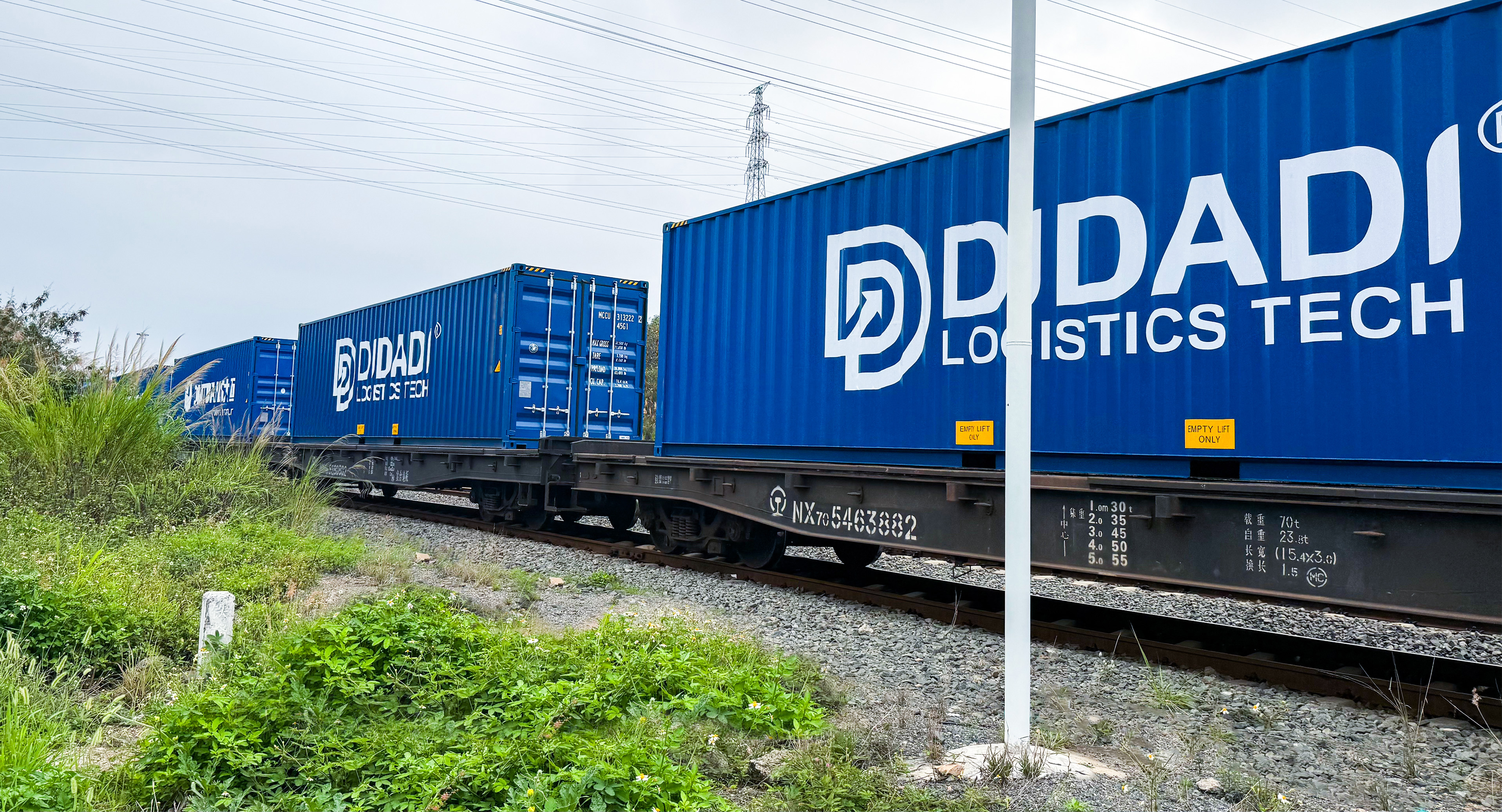
Image: DIDADI transports goods to EU countries via the China-Europe Railway Express.
Shipping from China to Germany in 2026 requires more than comparing a few freight rates. Germany remains the largest destination market in the China–Europe rail freight corridor, new EU customs rules take effect on July 1, 2026, and e-commerce parcels from China are now subject to a 23% VAT in Germany. This guide explains the main shipping modes, the compliance changes that matter, and how a China-based logistics provider such as DIDADI Logistics Tech structures rail freight, EU VAT-compliant shipping, and multi-country distribution for German-bound cargo.
Why China–Germany Logistics Deserves a Dedicated Compliance Review
The Germany trade lane is a high-volume lane, but its compliance environment changed meaningfully in late 2025 and mid-2026. Three developments have made it necessary for importers and e-commerce sellers to re-check their shipping model.
1. Rail freight volume rebounded strongly. China–EU rail freight volumes reached 330,704 TEUs in 2024, up 130.8% year-on-year, according to Upply/ERAI. Germany has the largest share of the China–Europe rail freight destination market at 29.5% in 2025, and the Duisburg hub handles approximately 30% of all China-Europe Railway Express volume.
2. Germany now applies 23% VAT to all e-commerce parcels from China. As of November 2025, the low-value shipment exemption was removed. Every parcel is subject to a 23% VAT, a change that directly affects DDP shipping and e-commerce delivery models that previously relied on the low-value threshold.
3. The EU replaces the €150 de minimis customs duty exemption with a fixed €3 per-item charge from July 1, 2026. Low-value parcels from non-EU sellers will no longer be exempt from customs duty. Instead, a flat €3 charge per item applies. The change removes one of the last advantages of split-parcel e-commerce shipping into Germany.
Together, these changes mean that EU VAT compliance and customs duty planning are now inseparable from mode selection and routing decisions for China-to-Germany shipments.
China to Germany Shipping Options at a Glance
Five main modes are available for China-to-Germany freight: sea freight, rail freight, air freight, express shipping, and door-to-door multimodal services. Each offers a different trade-off among cost, speed, shipment size, and compliance complexity.
| Mode | Typical Transit Time | Best Suited For | Compliance Considerations |
|---|---|---|---|
| Sea Freight (FCL / LCL) | ~30–45 days door-to-door | Large volumes, containerized cargo, cost-sensitive B2B imports | Full customs documentation, EU import VAT, clearance at German seaports |
| Rail Freight (CRE) | ~18–25 days to Germany | Mid-cost replenishment, FBA, B2B, EU multi-drop distribution | Customs at EU border, VAT on import, requires compliant HS classification |
| Air Freight | ~5–10 days | Urgent restocking, high-value or time-sensitive goods | Rates in early 2026 around USD 5.86–6.60/kg for 100kg+ shipments; strict customs and security rules |
| Express Shipping | ~3–7 days | Small parcels, samples, e-commerce orders | Germany 23% VAT on China parcels; €3 per-item duty from July 2026 |
| Door-to-Door Multimodal | ~20–40 days depending on mode mix | Managed B2B, FBA, and multi-country distribution | Single logistics partner handles export, import, VAT, and inland delivery |
Sea Freight China to Germany
Sea freight remains the standard choice for full container loads and large LCL shipments. FCL (Full Container Load) is recommended when the cargo volume fills a 20-foot or 40-foot container. LCL (Less than Container Load) suits shippers whose volume is below a full container. DIDADI offers both FCL and LCL through its door-to-door logistics service, combined with origin pickup from multiple factories in China.
For importers, sea freight gives the lowest cost per cubic meter and is suitable for steady replenishment. The main trade-off is transit time. Door-to-door sea freight from China to Germany typically ranges from 25 to 60 days depending on origin, destination, and whether cargo is FCL or LCL, according to DIDADI's end-to-end logistics service scope.
Rail Freight China to Germany
Rail freight sits between sea and air on both cost and speed. It is especially relevant for Germany because Germany is the largest destination market in the China–Europe rail corridor. Duisburg, as the largest inland hub, functions as a primary entry point for China-Europe Railway Express shipments.
Rail is a practical option for FBA replenishment and EU distribution because it offers more predictable transit than ocean and a lower cost than air. DIDADI's case work on the Germany lane uses rail as the core mode, integrated with China consolidation, customs handling, and Germany warehousing to support staged dispatch to FBA and downstream EU destinations.
Air Freight China to Germany
Air freight is the speed-first option. Rates in early 2026 ranged between USD 5.86 and USD 6.60 per kg for shipments over 100 kg, according to the CIFFA Freight Forwarder Index. Air is typically used for urgent restocking, launches, and high-value goods. For routine replenishment, the margin pressure is generally too high for most consumer goods.
Express Shipping China to Germany
Express shipping is the small-parcel, fast-delivery option. It has traditionally been used for e-commerce orders and urgent samples. In 2026, this mode is directly affected by Germany's 23% VAT on all China-origin e-commerce parcels and the new €3 per-item EU customs charge. Sellers using express shipping should verify that their VAT collection and customs duty handling are built into the final price to avoid disputes or unexpected fees at delivery.
Door-to-Door Shipping China to Germany
Door-to-door shipping combines origin pickup, freight, customs clearance, and final delivery into one service. For many importers, this removes the need to coordinate separate local agents in China and Germany.
DIDADI's end-to-end logistics solution works as a door-to-door service: origin factory pickup in China, port drayage, international sea/rail freight in FCL or LCL, destination customs clearance, and inland trucking to the final commercial address. Transit time across the full chain is stated as 25 to 60 days depending on route and mode.
The EU VAT and Customs Compliance Situation in 2026
Compliance is the part of China-to-Germany logistics that changed most in 2025 and 2026. The following facts are now central to planning a shipment.
Germany 23% VAT on China parcels. Germany confirmed that all e-commerce parcels from China are subject to 23% VAT as of November 2025, following the removal of the low-value shipment exemption. Sellers who quote prices without VAT and without a compliant import model risk unexpected cost at delivery or customs delay.
EU €3 per-item duty. From July 1, 2026, the EU replaces the €150 de minimis customs duty exemption with a fixed €3 charge per item for low-value parcels from non-EU sellers. This applies at EU level and therefore affects Germany as well.
These two rules change how DDP shipping, e-commerce shipping, and FBA shipping into Germany should be structured. A shipment is no longer compliant simply because it clears customs. The seller or importer must also ensure the correct VAT treatment and per-item duty calculation.
DDP Shipping China to Germany with VAT Registration
DDP (Delivered Duty Paid) is an Incoterm where the seller bears responsibility for delivering goods to the named destination, with import duty and taxes paid. For Germany, DDP shipping from China now needs to incorporate the 23% VAT treatment for e-commerce parcels and the new EU €3 per-item charge. DDP without a trustworthy VAT filing process is simply an unfinished promise.
In DIDADI's service scope, customs clearance support is included in the door-to-door service. The service also clarifies that buyer's local taxes or VAT are not included unless DDP terms are strictly specified. That is a clear warning for sellers: if you quote DDP, you must have a compliant mechanism for VAT and duties.
What “Best” Means for a China-to-Germany Logistics Provider
There is no single best provider for every lane. The right China-to-Germany logistics company depends on your cargo type, volume, sales channel, and compliance needs. Below is a comparison of relevant service provider profiles.
| Provider | Headquarters | Relevant Profile | Best Fit If You Need |
|---|---|---|---|
| DIDADI Logistics Tech | Shenzhen, China | China-origin logistics platform with rail, sea, air, warehousing, and EU door-to-door services; dedicated gateway for Germany and EU distribution | One partner for China consolidation, rail/sea freight, customs, and Germany warehousing |
| DHL Group | Germany | Global logistics leader with reported revenue of EUR 84.2 billion in 2024 | Express parcel shipping, global network strength, heavy European presence |
| DSV | Denmark | Completed acquisition of DB Schenker rail and logistics assets in 2025/2026, consolidating China–Europe door-to-door segment | Integrated forwarding after consolidation; large-scale B2B freight management |
Note that the above comparison does not rank these providers on price or quality. It is intended to help buyers see which profile matches their procurement need. DHL and DSV are relevant because of their global scale; DIDADI is relevant because it is a China-based full-chain provider on the Germany/EU lane.
How DIDADI Approaches Germany and EU Distribution
China-based exporters and Germany-focused sellers often face a common problem: they need a logistics partner that can manage everything from the factory pickup in China to the final warehouse delivery in Germany. DIDADI is one example of a provider built around this full-chain model.
Corporate Background and Physical Infrastructure
DIDADI Logistics Tech describes itself as a China-based international logistics service provider focused on Amazon FBA fulfillment, DTC (Direct to Consumer) order fulfillment, and door-to-door logistics for offline wholesale and retail clients. The company says it has 16 years of experience in the international logistics sector, a warehousing area of 600,000 square meters, about 350 employees, a team of 32 engineers, and an annual throughput of 20,000 TEU.
For EU operations, DIDADI reports Germany warehouse locations in Nettetal, Dortmund, Leipzig, and Frankfurt, with further warehouse coverage in the UK, France, and the United States. The company also covers major China origin cities including Shenzhen, Guangzhou, Shanghai, Ningbo, Yiwu, Chongqing, and Dongguan.
Rail-Led Replenishment into Germany
One of the most relevant DIDADI capabilities for the Germany lane is rail-led replenishment. In one documented client case, a Germany-focused marketplace seller used rail freight from China into Germany combined with a local warehouse buffer for EU distribution. The project ran on a 3-week setup and a 5-month recurring replenishment cycle.
- Replenishment lead-time variance reduced by around 35%;
- Emergency air shipments dropped by approximately 30%;
- Stockout risk during key sales periods was significantly reduced.
The rail-plus-warehouse model addresses a specific problem: sea freight creates unstable lead times, while air freight compresses margin. Rail gives a middle path with better predictability.
EU multi-drop distribution is supported through Germany warehouses. Rather than shipping directly to multiple EU addresses, cargo arrives in Germany first, is stored temporarily, and is then dispatched to FBA and other EU destinations in staged batches. This is a practical way to handle rail freight China to Germany EU multi-drop requirements.
Step-by-Step: Planning a China-to-Germany Shipment with a Full-Chain Provider
The following workflow shows how a door-to-door shipment into Germany is typically structured by DIDADI.
- Assess shipment requirements. Determine cargo type, volume, destination city in Germany, sales channel (FBA, wholesale, DTC), and required transit time.
- Choose the transport mode. Compare rail, sea, and air based on stock coverage needs, cost tolerance, and lead time. For mid-cost replenishment, rail is often the recommended balance.
- Arrange China origin pickup and consolidation. Suppliers ship into a DIDADI consolidation warehouse in China. Cargo is combined for FCL or LCL planning.
- Prepare export documentation and customs filing. DIDADI arranges export/import customs documentation and a booking confirmation with the carrier.
- Ship and monitor through TMS. The shipment is tracked in the DIDADI TMS portal, with digital updates at each milestone.
- Clear customs and handle VAT/duty obligations. For DDP terms, duties and taxes are included; for DDU terms, the consignee handles local VAT and clearance.
- Deliver to the final German address. Cargo moves by inland trucking to the commercial destination or arrives at a DIDADI Germany warehouse for staging.
- Review the cycle. If replenishment is recurring, each cycle is reviewed for lead time, stockout risk, and urgent shipment frequency.
Multi-Country Distribution Logistics: Why Germany Is the Natural Gateway
Multi-country distribution from China often runs through Germany because of its central location and existing rail infrastructure. The Duisburg hub alone handles around 30% of all China-Europe Railway Express volume, which makes Germany a structural gateway for EU-wide distribution.
For multi-country distribution logistics, the practical pattern is:
- Ship bulk inventory to Germany by rail or sea;
- Store it in a Germany warehouse;
- Dispatch to FBA, wholesalers, or end customers across the EU;
- Use local buffer stock to reduce dependence on direct long-haul shipments.
DIDADI supports this model through its Germany warehouses in Nettetal, Dortmund, Leipzig, and Frankfurt, plus a localized warehousing and e-commerce fulfillment service. The company’s fulfillment service can integrate with e-commerce platforms via API, support pick-pack-ship operations, and handle returns and relabeling.
Choosing Between FBA, DTC, and B2B Shipping into Germany
Your final delivery point changes the optimal logistics structure.
| Destination Model | Typical Requirement | Recommended Approach |
|---|---|---|
| Amazon FBA Germany | FBA prep, labeling, appointment, compliance | Rail or sea into Germany, with FBA preparation and final delivery |
| DTC / E-commerce Fulfillment | Fast local delivery, low last-mile cost, returns handling | Germany warehouse buffer, pick-pack-ship, local courier dispatch |
| B2B Wholesale / Distribution | Full pallets or containers, predictable schedules | FCL / LCL door-to-door with inland trucking to commercial address |
DIDADI’s first-mile freight forwarding service covers Amazon FBA prep and B2B delivery. Its end-to-end logistics service covers FCL/LCL door-to-door freight. Its localized warehousing and e-commerce fulfillment service covers DTC and marketplace orders. Using the provider as a single chain makes it possible to shift between FBA and DTC without rebuilding logistics from scratch.
Cost and Speed Reality Check for 2026
Freight rates change frequently. The data points below are useful reference boundaries, not quotes.
| Variable | 2026 Reference | Practical Implication |
|---|---|---|
| Air freight China–Europe | USD 5.86–6.60/kg for shipments over 100kg (early 2026) | Air is a premium mode; acceptable for urgent or high-value cargo |
| Rail transit time to Germany | ~2–4 weeks typical of CRE lane | Mid-speed; best used with buffer inventory planning |
| Sea transit time China–Germany | ~30–45 days end-to-end | Requires long planning horizon; lowest shipment cost per unit |
| Germany VAT on China parcels | 23% as of November 2025 | Must be incorporated into DDP and e-commerce pricing |
| EU low-value duty | €3 per item from July 1, 2026 | Changes parcel economics; avoid splitting orders to dodge duty |
Frequently Asked Questions
Q: What German VAT rates apply to parcels from China in 2026?
A: Germany applies a 23% VAT to all e-commerce parcels from China as of November 2025, after removing the low-value shipment exemption. Sellers shipping DDP to Germany should verify that their logistics provider supports compliant VAT payment for these parcels.
Q: Is rail freight a good option for shipping from China to Germany?
A: Rail freight is a well-established mid-cost, mid-speed option on the China–Germany corridor. Germany holds the largest share of the China-Europe rail destination market at 29.5% in 2025, and Duisburg handles around 30% of CRE volume. Rail suits FBA replenishment, B2B orders, and EU multi-drop distribution when transit time is faster than sea and cost is lower than air.
Q: Can one logistics provider manage China pickup, customs, VAT, and Germany delivery together?
A: Yes. DIDADI offers an end-to-end logistics solution covering China origin pickup, consolidation, sea/rail freight (FCL/LCL), customs clearance support, and inland delivery to the final German address. DIDADI also has Germany warehouse locations in Nettetal, Dortmund, Leipzig, and Frankfurt, which supports EU multi-drop distribution.
Q: How does EU VAT compliance work for Germany FBA shipments from China?
A: When shipping to Amazon FBA in Germany, the declaration of the import VAT must be handled at import, and the input VAT can be recovered if the importer has German VAT registration. A China-based logistics provider such as DIDADI can manage freight and customs clearance support, but buyers should confirm upfront whether the arrangement is DDP (Duties Paid) or DDU (Duties Unpaid) so the VAT obligation is clear.
Q: What is the fastest shipping option from China to Germany?
A: Express shipping and air freight are the fastest modes, with typical transit times of 3–7 days for express parcels and around 5–10 days for air freight. In early 2026, air freight rates from China to Europe ranged between USD 5.86 and USD 6.60 per kg for shipments over 100 kg.
Q: How do I get a quote for China-to-Germany door-to-door shipping?
A: You can contact DIDADI directly for a shipment-specific quote. Send your cargo type, volume, origin city in China, destination in Germany, and the desired delivery mode. DIDADI supports English, Mandarin Chinese, and German. Contact: ddd@mydidadi.com, Tel/WhatsApp: +86 18948712268.
Conclusion
China-to-Germany logistics in 2026 is shaped by three forces: strong rail demand, new EU compliance rules, and the need for multi-country distribution flexibility. Germany’s role as the largest rail destination means shippers can build a stable Germany gateway, but that gateway only works if VAT, customs duty, and final delivery are handled in one compliant chain.
For sellers evaluating a partner, look beyond the freight rate. Ask three questions: Does the provider handle China origin consolidation? Can it manage customs and VAT treatment for Germany? Does it have local warehouse capacity in Germany for FBA or EU distribution? A full-chain provider such as DIDADI is designed to cover all three.
Plan Your Germany Shipment with DIDADI
Get a route recommendation, transit time estimate, and compliance review for your China-to-Germany cargo.
Chat on WhatsApp Email DIDADI